1. Search Result
Search Result
Results for "

CDK1-IN-2

" in MedChemExpress (MCE) Product Catalog:

44

Inhibitors & Agonists

1

Natural
Products

1

Isotope-Labeled Compounds

1

Oligonucleotides

Cat. No. Product Name Target Research Areas Chemical Structure
  • HY-10005
    Flavopiridol
    Maximum Cited Publications
    52 Publications Verification

    HMR-1275; Alvocidib; L86-8275

    CDK Autophagy HIV Apoptosis Cancer
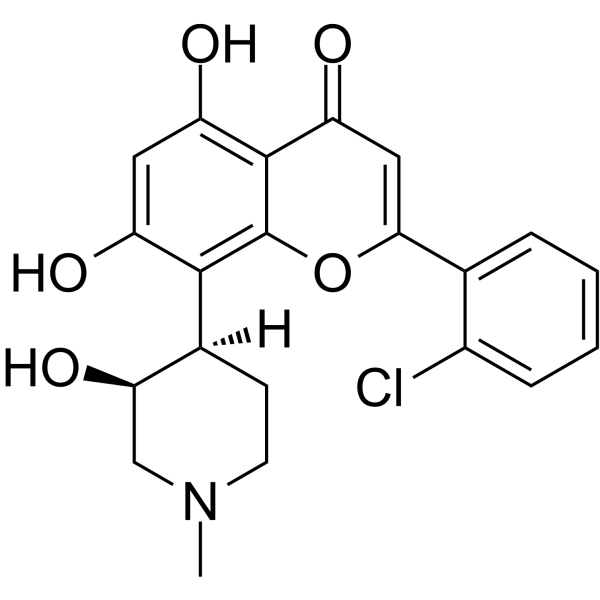
    Flavopiridol (Alvocidib) is a broad spectrum and competitive inhibitor of CDKs, inhibiting CDK1, CDK2, CDK4 with IC50s of 30, 170, 100 nM, respectively.
    Flavopiridol
  • HY-10006
    Flavopiridol Hydrochloride
    Maximum Cited Publications
    52 Publications Verification

    Alvocidib Hydrochloride; L86-8275 Hydrochloride; HMR-1275 Hydrochloride

    CDK Autophagy HIV Cancer
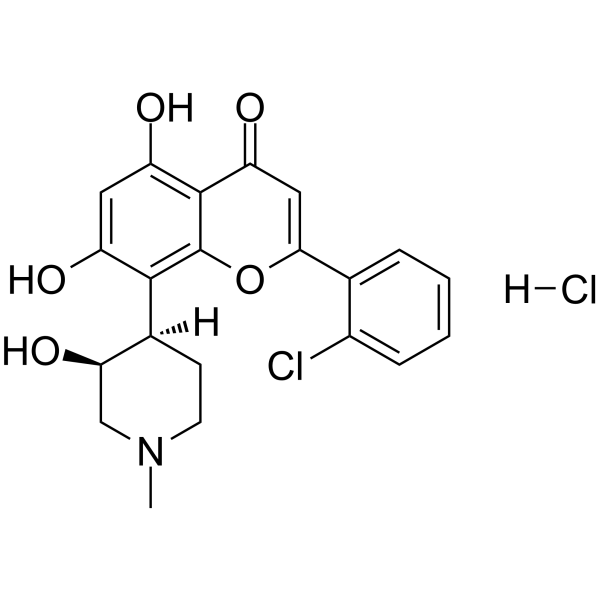
    Flavopiridol Hydrochloride (Alvocidib Hydrochloride) is a broad inhibitor of CDK, competing with ATP to inhibit CDKs including CDK1, CDK2, CDK4 with IC50s of 30, 170, 100 nM, respectively.
    Flavopiridol Hydrochloride
  • HY-10329
    JNJ-7706621
    5 Publications Verification

    Aurora Kinase CDK Apoptosis Cancer
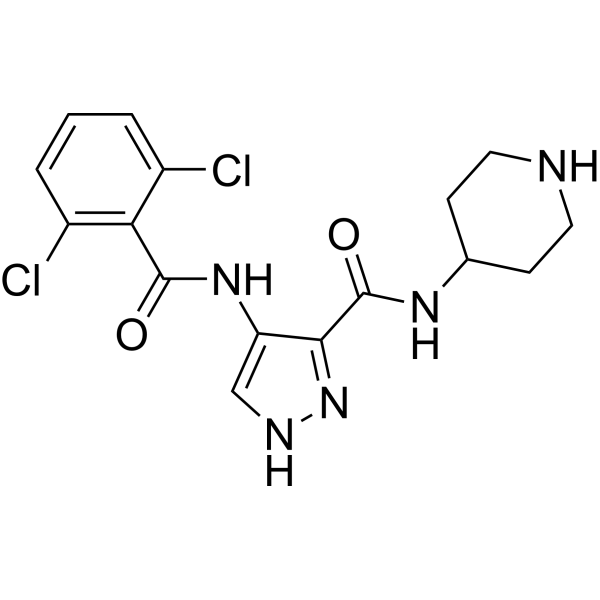
    JNJ-7706621 is a potent aurora kinase inhibitor, and also inhibits CDK1 and CDK2, with IC50s of 9 nM, 3 nM, 11 nM, and 15 nM for CDK1, CDK2, aurora-A and aurora-B, respectively .
    JNJ-7706621
  • HY-10012
    AZD-5438
    10+ Cited Publications

    CDK Cancer
    AZD-5438 is a potent CDK1, CDK2, and CDK9 inhibitor, with IC50s of 16 nM, 6 nM, and 20 nM in cell-free assays, respectively. AZD-5438 shows less inhibition activity against GSK3β, CDK5 and CDK6 .
    AZD-5438
  • HY-103712A
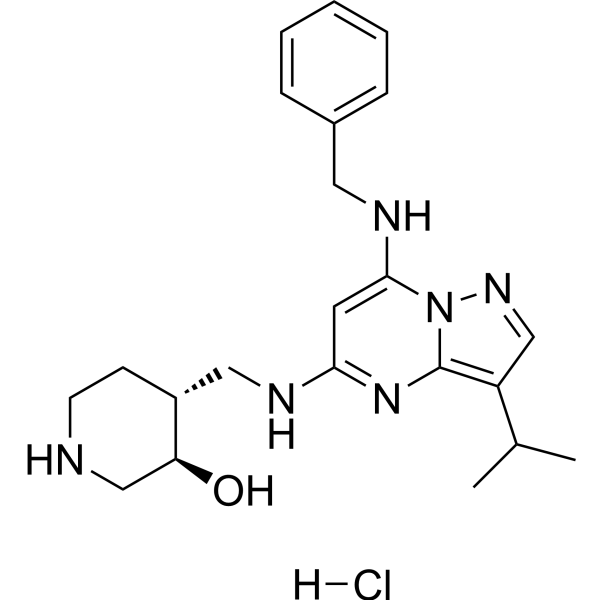
    Samuraciclib hydrochloride
    10+ Cited Publications

    CT7001 hydrochloride; ICEC0942 hydrochloride

    CDK Apoptosis Cancer
    Samuraciclib hydrochloride (CT7001 hydrochloride) is a potent, selective, ATP-competitive and orally active CDK7 inhibitor, with an IC50 of 41 nM. Samuraciclib hydrochloride displays 45-, 15-, 230- and 30-fold selectivity over CDK1, CDK2 (IC50 of 578 nM), CDK5 and CDK9, respectively. Samuraciclib hydrochloride inhibits the growth of breast cancer cell lines with GI50 values between 0.2-0.3 µM. Samuraciclib hydrochloride has anti-tumor effects .
    Samuraciclib hydrochloride
  • HY-124719
    hSMG-1 inhibitor 11j
    10+ Cited Publications

    PI3K mTOR GSK-3 CDK Cancer
    hSMG-1 inhibitor 11j, a pyrimidine derivative, is a potent and selective inhibitor of hSMG-1, with an IC50 of 0.11 nM. hSMG-1 inhibitor 11j exhibits >455-fold selectivity for hSMG-1 over mTOR (IC50=50 nM), PI3Kα/γ (IC50=92/60 nM) and CDK1/CDK2 (IC50=32/7.1 μM). hSMG-1 inhibitor 11j can be used for the research of cancer .
    hSMG-1 inhibitor 11j
  • HY-13914
    Roniciclib
    2 Publications Verification

    BAY 1000394

    CDK Cancer
    Roniciclib is an orally bioavailable pan-cyclin dependent kinase (CDK) inhibitor, with IC50s of 5-25 nM for CDK1, CDK2, CDK3, CDK4, CDK7 and CDK9.
    Roniciclib
  • HY-50940
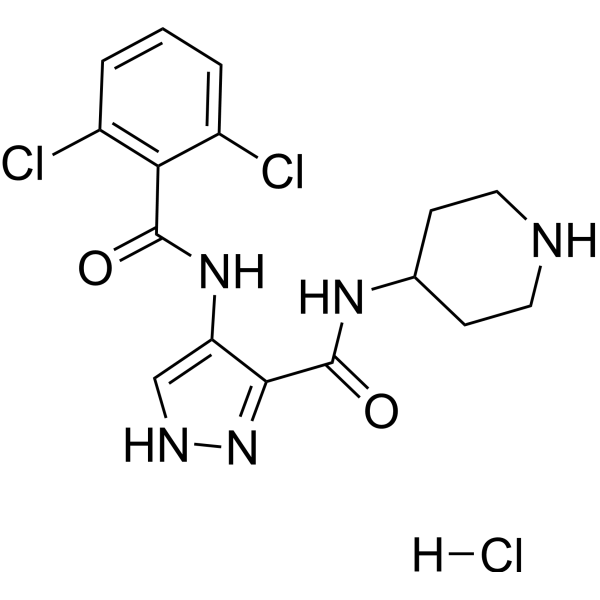
    AT7519
    10+ Cited Publications

    AT7519M

    CDK Apoptosis Cancer
    AT7519 (AT7519M) as a potent inhibitor of CDKs, with IC50s of 210, 47, 100, 13, 170, and <10 nM for CDK1, CDK2, CDK4 to CDK6, and CDK9, respectively.
    AT7519
  • HY-103712
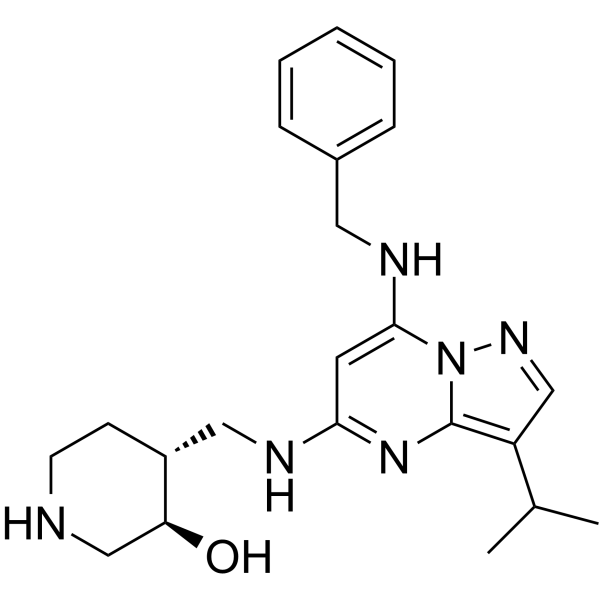
    Samuraciclib
    10+ Cited Publications

    CT7001; ICEC0942

    CDK Apoptosis Cancer
    Samuraciclib (CT7001) is a potent, selective, ATP-competitive and orally active CDK7 inhibitor, with an IC50 of 41 nM. Samuraciclib displays 45-, 15-, 230- and 30-fold selectivity over CDK1, CDK2 (IC50 of 578 nM), CDK5 and CDK9, respectively. Samuraciclib inhibits the growth of breast cancer cell lines with GI50 values between 0.2-0.3 μM. Samuraciclib has anti-tumor effects .
    Samuraciclib
  • HY-15569

    CDK Cancer
    NU6102 is a potent CDK1 and CDK2 inhibitor with IC50s of 9.5 nM and 5.4 nM for CDK1/cyclinB and CDK2/cyclinA3, respectively. NU6102 shows selectivity for CDK1/CDK2 over CDK4 (IC50 of 1.6 μM), DYRK1A (IC50 of 0.9 μM), PDK1 (IC50 of 0.8 μM) and ROCKII (IC50 of 0.6 μM) .
    NU6102
  • HY-112463

    CDK Cancer
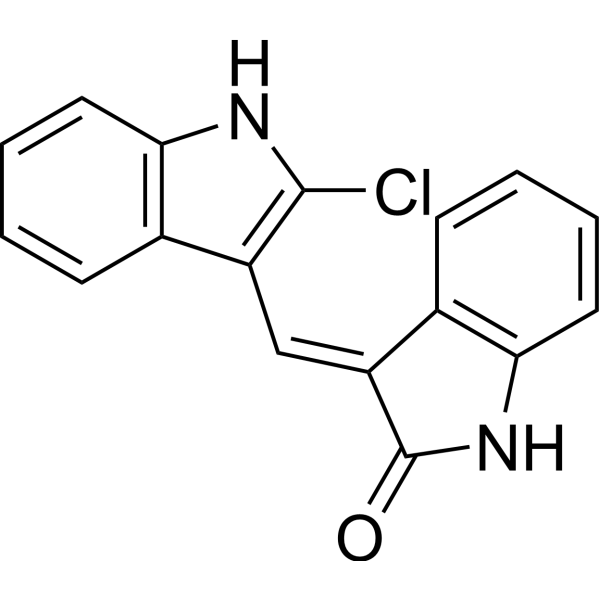
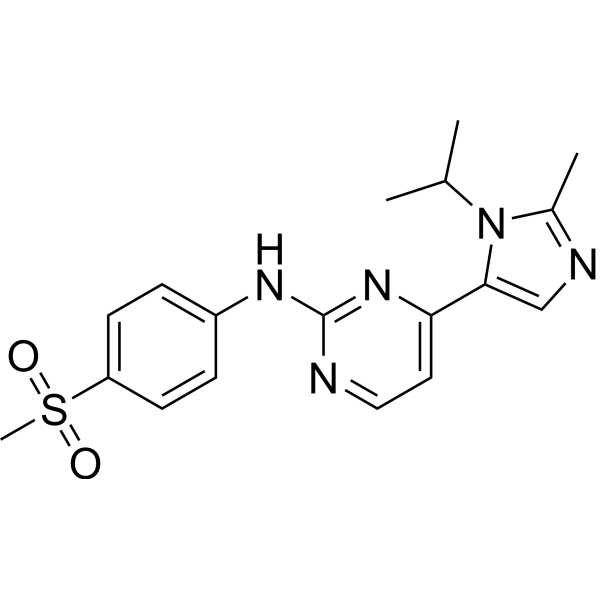
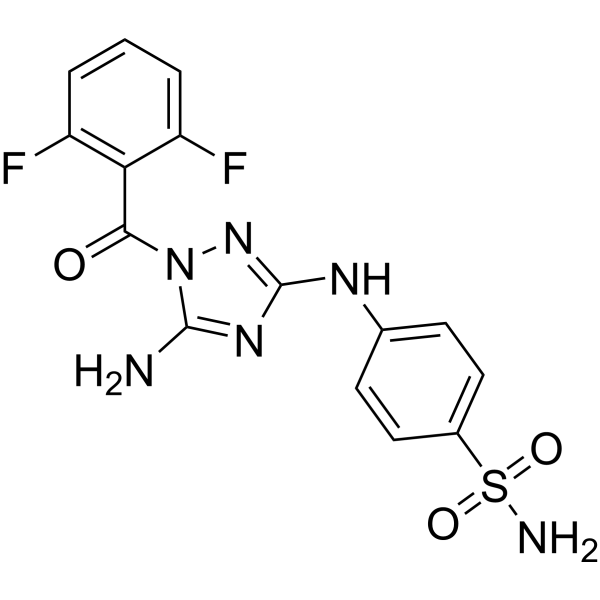
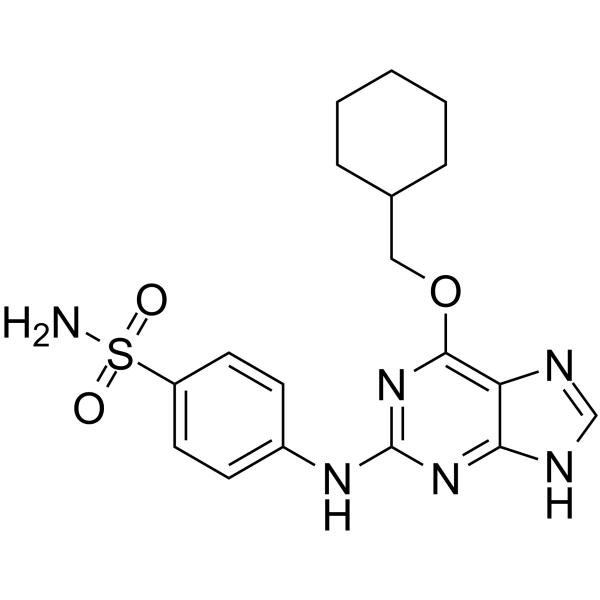
    CDK1-IN-2 is a CDK1 inhibitor (IC50: 5.8 μM) .
    CDK1-IN-2
  • HY-15491

    COX Apoptosis Cancer
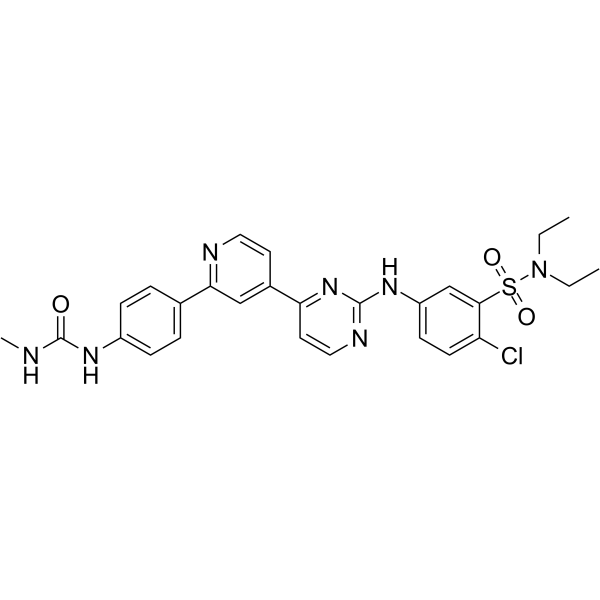
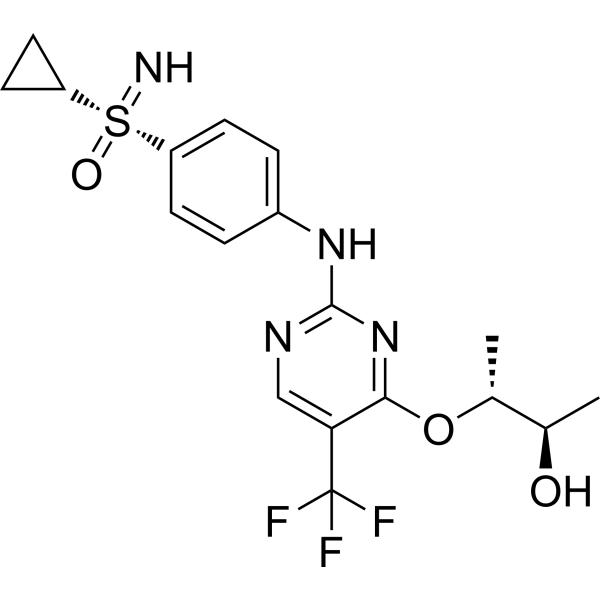
    AG-024322 is a potent ATP-competitive pan-CDK inhibitor against cell cycle kinases CDK1, CDK2, and CDK4 with Ki values in the 1-3 nM range . AG-024322 displays broad-spectrum anti-tumor activity and clear target modulation in vivo. AG-024322 induces cell apoptosis .
    AG-024322
  • HY-124760
    hSMG-1 inhibitor 11e
    3 Publications Verification

    mTOR PI3K CDK Cancer
    hSMG-1 inhibitor 11e is a potent and selective hSMG-1 kinase inhibitor with an IC50 of <0.05 nM. hSMG-1 inhibitor 11e shows >900-fold selectivity over mTOR (IC50 of 45 nM), PI3Kα/γ (IC50s of 61 nM and 92 nM) and CDK1/CDK2 (IC50s of 32 μM and 7.1 μM) .
    hSMG-1 inhibitor 11e
  • HY-50943
    AT7519 Hydrochloride
    10+ Cited Publications

    CDK Apoptosis Cancer
    AT7519 Hydrochloride is a potent inhibitor of CDKs, with IC50s of 210, 47, 100, 13, 170, and <10 nM for CDK1, CDK2, CDK4 to CDK6, and CDK9, respectively.
    AT7519 Hydrochloride
  • HY-151071

    Ligands for Target Protein for PROTAC CDK Cancer
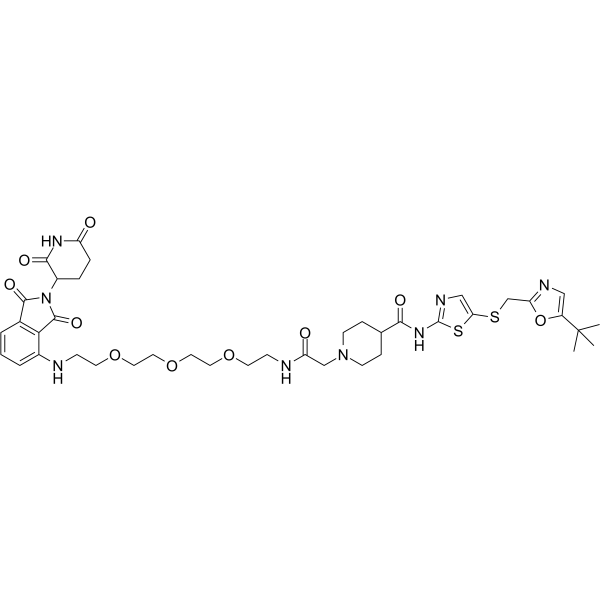
    TMX-3013 is a CDK inhibitor capable of inhibiting the activity of CDK1, CDK2, CDK4, CDK5, and CDK6, with IC50 values of 0.9 nM, <0.5 nM, 24.5 nM, 0.5 nM, and 15.6 nM, respectively. TMX-3013 can be used as a target protein ligand, conjugated with the PROTAC linker and the CRBN ligand Thalidomide (HY-14658) for the synthesis of PROTAC TMX-2138 (HY-164906). TMX-3013 can also act as an effector ligand, binding to target proteins HaloTag or FKBP, and can be used in the synthesis of regulated induced proximity targeting chimeras (RIPTACs) .
    TMX-3013
  • HY-50940A
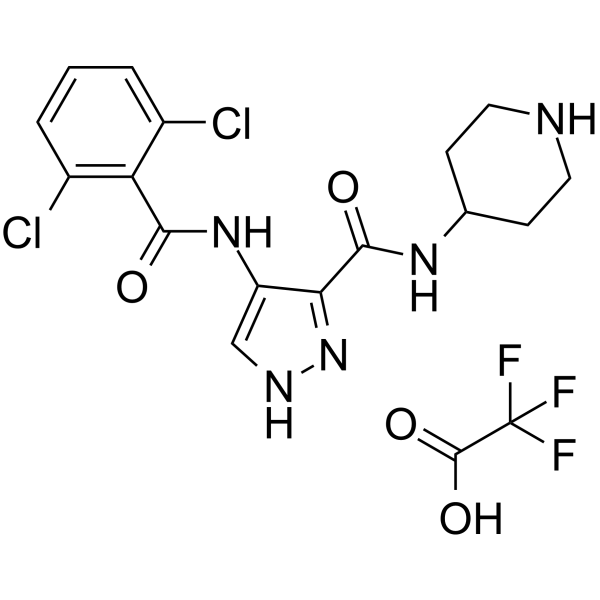
    AT7519 TFA
    10+ Cited Publications

    AT7519M TFA

    CDK Cancer
    AT7519 (AT7519M) TFA as a potent inhibitor of CDKs, with IC50s of 210, 47, 100, 13, 170, and <10 nM for CDK1, CDK2, CDK4 to CDK6, and CDK9, respectively.
    AT7519 TFA
  • HY-157647

    PC(18:0/22:4)

    CDK Apoptosis Cancer
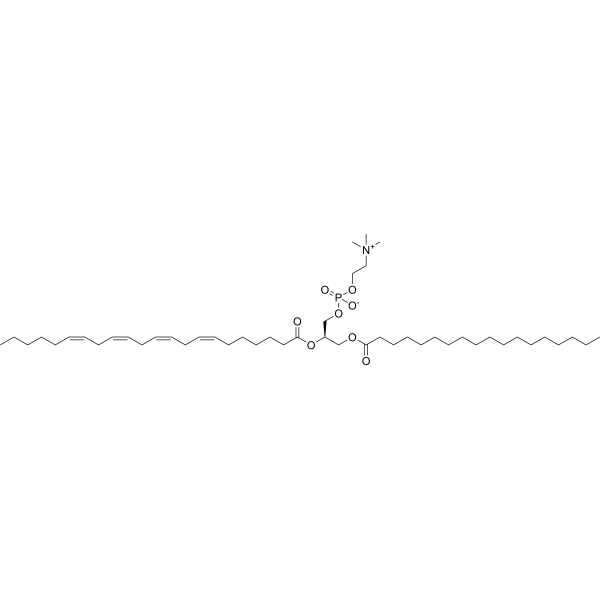
    1-Stearoyl-2-Adrenoyl-sn-glycero-3-PC (PC(18:0/22:4)) is an inhibitor of cyclin-dependent kinases (CDKs). 1-Stearoyl-2-Adrenoyl-sn-glycero-3-PC induces apoptosis and inhibits the growth of various cancer cell lines .
    1-Stearoyl-2-Adrenoyl-sn-glycero-3-PC
  • HY-103712C

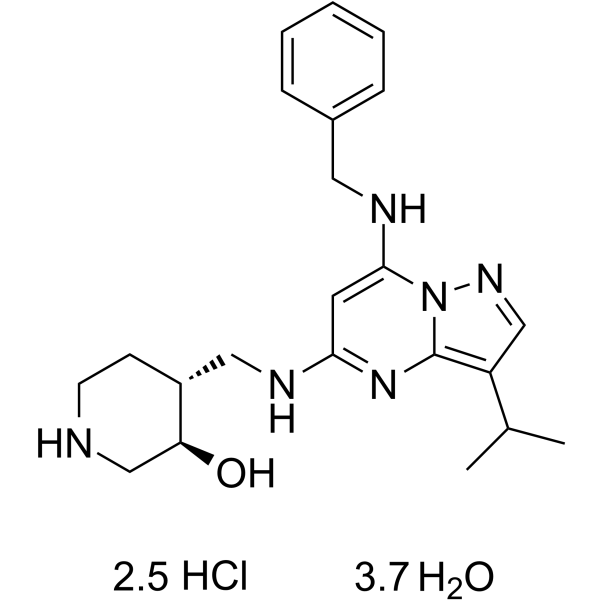
    CT7001 hydrochloride hydrate; ICEC0942 hydrochloride hydrate

    CDK Apoptosis Cancer
    Samuraciclib (CT7001) hydrochloride hydrate is a potent, selective, ATP-competitive and orally active CDK7 inhibitor, with an IC50 of 41 nM. Samuraciclib hydrochloride hydrate displays 45-, 15-, 230- and 30-fold selectivity over CDK1, CDK2 (IC50 of 578 nM), CDK5 and CDK9, respectively. Samuraciclib hydrochloride hydrate inhibits the growth of breast cancer cell lines with GI50 values between 0.2-0.3 μM. Samuraciclib hydrochloride hydrate has anti-tumor effects .
    Samuraciclib hydrochloride hydrate
  • HY-103712B

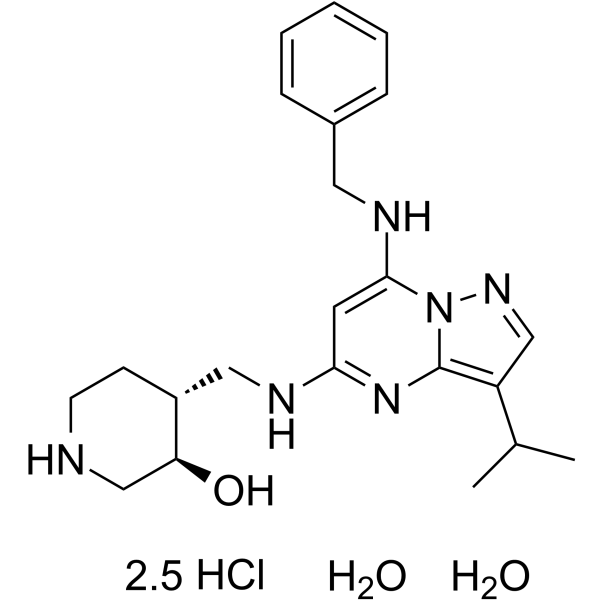
    CT7001 hydrochloride dihydrate; ICEC0942 hydrochloride dihydrate

    CDK Apoptosis Cancer
    Samuraciclib (CT7001) hydrochloride hydrate is a potent, selective, ATP-competitive and orally active CDK7 inhibitor, with an IC50 of 41 nM. Samuraciclib hydrochloride hydrate displays 45-, 15-, 230- and 30-fold selectivity over CDK1, CDK2 (IC50 of 578 nM), CDK5 and CDK9, respectively. Samuraciclib hydrochloride hydrate inhibits the growth of breast cancer cell lines with GI50 values between 0.2-0.3 μM. Samuraciclib hydrochloride hydrate has anti-tumor effects .
    Samuraciclib hydrochloride dihydrate
  • HY-119715

    CDK Apoptosis Inflammation/Immunology Cancer
    AG-012986 is a pan-CDK inhibitor with Ki values of 44 nM (CDK1), 9.2 nM (CDK4), 94 nM (CDK2), and IC50 values of 22 nM (CDK5), 4 nM (CDK9). AG-012986 causes apoptosis of T-cells by targeting upstream kinases in the p38 Mitogen-activated protein kinase (MAPK) pathway and impairing cellular survival. AG-012986 induces cell cycle arrest, retinoblastoma protein hypophosphorylation, and reduces Ki-67 expression. AG-012986 exerts antiproliferative activity in tumor cells, demonstrates antitumor efficacy in human xenograft models, and causes retinal and peripheral neurotoxicity, plus immune cell toxicity. AG-012986 can be used for the research of colon carcinoma, non-small cell lung carcinoma, lung carcinoma, breast carcinoma, ovarian tumor, pancreatic carcinoma, osteosarcoma, lymphoma, leukemia, retinotoxicity .
    AG-012986
  • HY-151069

    Ligands for Target Protein for PROTAC CDK Cancer
    TMX-2039 is a pan-CDK inhibitor for both cell cycle CDKs (CDK1, CDK2, CDK4, CDK5 and CDK6) and transcriptional CDKs (CDK7 and CDK9), with IC50s of 2.6, 1.0, 52.1, 0.5, 35.0, 32.5 and 25 nM, respectively. TMX-2039 acts as a Ligands for Target Protein for PROTACs .
    TMX-2039
  • HY-15777S1

    LEE011-d8

    CDK Cancer
    Ribociclib-d8 is the deuterium labeled Ribociclib . Ribociclib (LEE01) is a highly specific CDK4/6 inhibitor with IC50 values of 10 nM and 39 nM, respectively, and is over 1,000-fold less potent against the cyclin B/CDK1 complex .
    Ribociclib-d8
  • HY-151878

    CDK GSK-3 Metabolic Disease
    CDK7-IN-20 is a potent, selective and irreversible CDK7 (CDK) inhibitor with an IC50 value of 4 nM. CDK7-IN-20 displays >206-fold selectivity for CDK7 over CDK1, CDK2, CDK3, CDK5, CDK6, CDK9 and CDK12 . CDK7-IN-20 has the potential for autosomal dominant polycystic kidney disease (ADPKD) research .
    CDK7-IN-20
  • HY-153221

    CDK Cancer
    QR-6401 is an orally active and selective macrocyclic CDK2 inhibitor with IC50 values of 0.37, 10, 22, 34 and 45 nM for CDK2/E1, CDK9/T1, CDK1/A2, CDK6/D3 and CDK4/D1, respectively. QR-6401 has potent antitumor activity in an OVCAR3 ovarian cancer xenograft model. QR-6401 has the potential to be used in the study of cancer .
    QR-6401
  • HY-50940R

    AT7519M (Standard)

    CDK Apoptosis Reference Standards Cancer
    AT7519 (Standard) is the analytical standard of AT7519. This product is intended for research and analytical applications. AT7519 (AT7519M) as a potent inhibitor of CDKs, with IC50s of 210, 47, 100, 13, 170, and <10 nM for CDK1, CDK2, CDK4 to CDK6, and CDK9, respectively.
    AT7519 (Standard)
  • HY-151407

    CDK Cancer
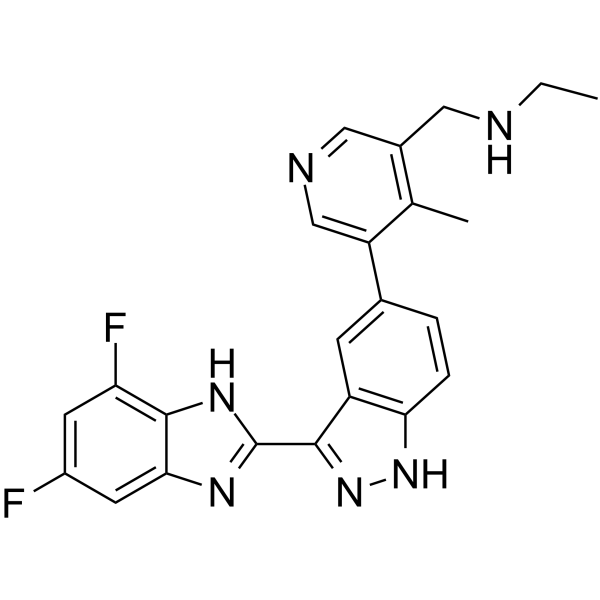
    CDK1-IN-3 (8g) is a selective CDK1 inhibitor with IC50s of 36.8, 305.17 and 369.37 nM for CDK1, CDK2 and CDK5, respectively. CDK1-IN-3 inhibits the growth of cancer cells by affecting cell cycle. CDK1-IN-3 can be used for the research of cancer .
    CDK1-IN-3
  • HY-145394

    CDK Cancer
    CDK7-IN-6 is a potent and selective cyclin-dependent kinase (CDK7) inhibitor (IC50≤100 nM), extracted from patent WO2019197549 A1, compound 210. CDK7-IN-6 is > 200-fold selective for CDK7 over CDK1, CDK2, and CDK5. CDK7-IN-6 can be used for the research of cancer .
    CDK7-IN-6
  • HY-176736

    CDK Apoptosis Cancer
    CDK9-IN-40 is a potent and orally active CDK9 inhibitor with an IC50 of 5.5 nM. CDK9-IN-40 shows high selectivity for CDK9 versus CDK1, CDK2, CDK4, and CDK6, respectively. CDK9-IN-40 can arrest cell cycle, induce cell apoptosis and inhibit tumor growth. CDK9-IN-40 exhibits strong anti-cancer activity .
    CDK9-IN-40
  • HY-146276

    HDAC CDK Apoptosis Cancer
    CDK/HDAC-IN-2 is a potent HDAC/CDK dual inhibitor with IC50 of 6.4, 0.25, 45, >1000, 8.63, 0.30, >1000 nM for HDAC1, HDAC2, HDAC3, HDAC6,8, CDK1, CDK2, CDK4,6,7, respectively. CDK/HDAC-IN-2 shows excellent antiproliferative activities. CDK/HDAC-IN-2 induces apoptosis and cell cycle arrest at G2/M phase. CDK/HDAC-IN-2 shows potent antitumor efficacy .
    CDK/HDAC-IN-2
  • HY-146253

    CDK Apoptosis Bcl-2 Family Caspase Cancer
    CDK1/2/4-IN-1 (compound 3a) is a potent CDK inhibitor with IC50 values of 1.47, 0.78 and 0.87 μM for CDK1, CDK2 and CDK4, respectively. CDK1/2/4-IN-1 arrests cell cycle at G2/M phase and induces apoptosis. CDK1/2/4-IN-1 elevates Bax, caspase-3, P53 levels and decreases Bcl-2 level. CDK1/2/4-IN-1 can be used for cancer research .
    CDK1/2/4-IN-1
  • HY-E70655

    CDK Cancer
    CDK1 is a cyclin-dependent kinase that functions as a serine/threonine protein kinase, and is a key player in cell cycle regulation. CDK1/CycE2 Recombinant Human Active Protein Kinase is an ortholog of CDK1 .
    CDK1/CycE2 Recombinant Human Active Protein Kinase
  • HY-47733

    CDK Cancer
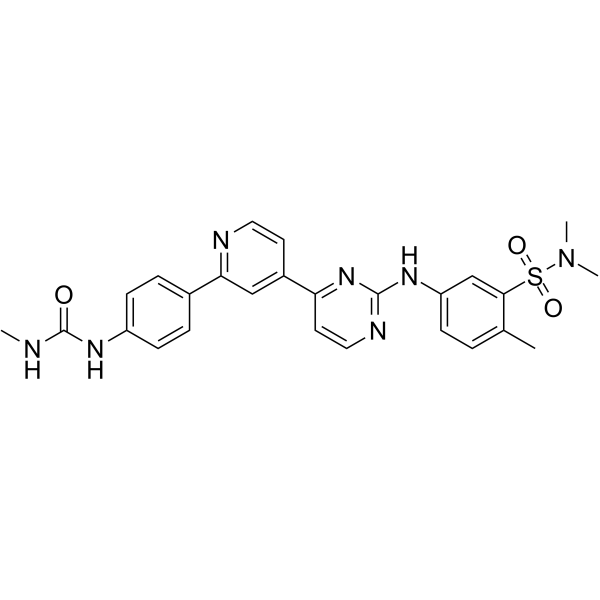
    WAY-643018 (Compound 2), an indazolecarboxamide derivative, is a CDK1, CDK2, and CDK4 inhibitor. CDK1/2/4-IN-2 has the potential for cancer research .
    CDK1/2/4-IN-2
  • HY-50943R

    CDK Apoptosis Reference Standards Cancer
    AT7519 (Hydrochloride) (Standard) is the analytical standard of AT7519 (Hydrochloride). This product is intended for research and analytical applications. AT7519 Hydrochloride is a potent inhibitor of CDKs, with IC50s of 210, 47, 100, 13, 170, and <10 nM for CDK1, CDK2, CDK4 to CDK6, and CDK9, respectively.
    AT7519 Hydrochloride (Standard)
  • HY-151409

    CDK Cancer
    CDK1-IN-5 (10h) is a selective CDK1 inhibitor with IC50s of 42.19, 188.71 and 354.15 nM for CDK1, CDK2 and CDK5, respectively. CDK1-IN-5 inhibits growth of cancer cells by affecting cell cycle. CDK1-IN-5 can be used for the research of cancer .
    CDK1-IN-5
  • HY-151408

    CDK Cancer
    CDK1-IN-4 (10d) is a selective CDK1 inhibitor with IC50s of 44.52, 624.93 and 135.22 nM for CDK1, CDK2 and CDK5, respectively. CDK1-IN4 inhibits the growth of cancer cells by affecting cell cycle. CDK1-IN-4 can be used for the research of cancer .
    CDK1-IN-4
  • HY-10012R

    Reference Standards CDK Cancer
    AZD-5438 (Standard) is the analytical standard of AZD-5438. This product is intended for research and analytical applications. AZD-5438 is a potent CDK1, CDK2, and CDK9 inhibitor, with IC50s of 16 nM, 6 nM, and 20 nM in cell-free assays, respectively. AZD-5438 shows less inhibition activity against GSK3β, CDK5 and CDK6 .
    AZD-5438 (Standard)
  • HY-174321

    p38 MAPK PI3K Akt NF-κB Cancer
    A2073 is a flavagline derivative that potently inhibits the proliferation of erythroleukemia cells by causing cell cycle arrest and suppressing the MAPK, NF-κB, and PI3K signaling pathways. A2073 formes stable interactions with cell cycle-related proteins (CDK1, CCNA2, PRIM1). A2073 exhibits significant anti-proliferative activity against tumor cells while maintaining a favorable toxicity profile in a zebrafish xenograft tumor model. A2073 can be used for the study of acute erythroleukemia.
    A2073
  • HY-170965

    CDK DNA/RNA Synthesis Cancer
    Anticancer agent 264 (Compound 5w) is an anticancer agent that exhibits significant antiproliferative activity across tumor cell lines, with an IC50 range of 7.5-33.67 μM. Anticancer agent 264 significantly induces G2/M phase arrest in MDA-MB-231, MIA PaCa-2, and DU-145 cell lines. Anticancer agent 264 reduces the expression of key cell cycle proteins, including CDK1, CDK2, and Cyclin B1, in a dose-dependent manner, and shows strong binding affinity with inhibitor of differentiation (ID) proteins and DNA-binding proteins. Anticancer agent 264 can be used for research in the field of cancer-related diseases .
    Anticancer agent 264
  • HY-10005R

    HMR-1275 (Standard); Alvocidib (Standard); L86-8275 (Standard)

    CDK Reference Standards Autophagy HIV Apoptosis Cancer
    Flavopiridol (Standard) is the analytical standard of Flavopiridol (HY-10005). This product is intended for research and analytical applications. Flavopiridol (Alvocidib) is a broad spectrum and competitive inhibitor of CDKs, inhibiting CDK1, CDK2, CDK4 with IC50s of 30, 170, 100 nM, respectively.
    Flavopiridol (Standard)
  • HY-181620

    Molecular Glues CDK Cancer
    CDK2 degrader 9 (compound 1) is a CDK2-targeting Molecular Glue with selectivity for GSPT1 and CDK1. CDK2 degrader 9 promotes the ubiquitination and degradation of CDK2 via the ubiquitin ligase pathway. CDK2 degrader 9 is applicable to research related to cancer, solid tumors and hematologic malignancies .
    CDK2 degrader 9
  • HY-10329R

    Reference Standards Aurora Kinase CDK Apoptosis Cancer
    JNJ-7706621 (Standard) is the analytical standard of JNJ-7706621 (HY-10329). This product is intended for research and analytical applications. JNJ-7706621 is a potent aurora kinase inhibitor, and also inhibits CDK1 and CDK2, with IC50s of 9 nM, 3 nM, 11 nM, and 15 nM for CDK1, CDK2, aurora-A and aurora-B, respectively .
    JNJ-7706621 (Standard)
  • HY-103712AR

    CT7001 hydrochloride (Standard); ICEC0942 hydrochloride (Standard)

    Reference Standards CDK Apoptosis Cancer
    Samuraciclib hydrochloride (Standard) is the analytical standard of Samuraciclib hydrochloride (HY-103712A). This product is intended for research and analytical applications. Samuraciclib hydrochloride (CT7001 hydrochloride) is a potent, selective, ATP-competitive and orally active CDK7 inhibitor, with an IC50 of 41 nM. Samuraciclib hydrochloride displays 45-, 15-, 230- and 30-fold selectivity over CDK1, CDK2 (IC50 of 578 nM), CDK5 and CDK9, respectively. Samuraciclib hydrochloride inhibits the growth of breast cancer cell lines with GI50 values between 0.2-0.3 µM. Samuraciclib hydrochloride has anti-tumor effects .
    Samuraciclib hydrochloride (Standard)
  • HY-181490

    PROTACs CDK Apoptosis Cancer
    WWZ-11-098 is a selective CDK6 PROTAC degrader with DC50 of 2.6 nM. WWZ-11-098 induces degradation of CDK6 in a CRBN-dependent manner, while sparing CDK1, CDK2, CDK4, and CDK9. WWZ-11-098 induces apoptosis, G1-S cell cycle arrest and shows anti-proliferative activity in cancer cells. WWZ-11-098 exhibits antitumor efficacy in a xenograft model without signs of toxicity. WWZ-11-098 can be used for the research of leukemia .
    WWZ-11-098
  • HY-182470

    CDK
    AG-012986 (dihydrochloride) is a pan-CDK inhibitor with Ki values of 44 nM (CDK1), 9.2 nM (CDK4), 94 nM (CDK2), and IC50 values of 22 nM (CDK5), 4 nM (CDK9). AG-012986 (dihydrochloride) causes apoptosis of T-cells by targeting upstream kinases in the p38 Mitogen-activated protein kinase (MAPK) pathway and impairing cellular survival. AG-012986 (dihydrochloride) induces cell cycle arrest, retinoblastoma protein hypophosphorylation, and reduces Ki-67 expression. AG-012986 (dihydrochloride) exerts antiproliferative activity in tumor cells, demonstrates antitumor efficacy in human xenograft models, and causes retinal and peripheral neurotoxicity, plus immune cell toxicity. AG-012986 (dihydrochloride) can be used for the research of colon carcinoma, non-small cell lung carcinoma, lung carcinoma, breast carcinoma, ovarian tumor, pancreatic carcinoma, osteosarcoma, lymphoma, leukemia, retinotoxicity .
    AG-012986 dihydrochloride

Inquiry Online

Your information is safe with us. * Required Fields.

Salutation


Country or Region *

Applicant Name *


Organization Name *

Department *


Email Address *


Product Name *

Cat. No.


Requested quantity *

Phone Number *


Remarks

Inquiry Online

Inquiry Information

Product Name:
Cat. No.:
Quantity:
MCE Japan Authorized Agent:

