Search Result
Results for "
DAT/NET/SERT
" in MedChemExpress (MCE) Product Catalog:
5
Isotope-Labeled Compounds
| Cat. No. |
Product Name |
Target |
Research Areas |
Chemical Structure |
-
- HY-B0527A
-
|
|
Serotonin Transporter
5-HT Receptor
mAChR
Histamine Receptor
Adrenergic Receptor
Trk Receptor
Sodium Channel
Potassium Channel
Dopamine Transporter
Apoptosis
|
Neurological Disease
Inflammation/Immunology
Endocrinology
|
|
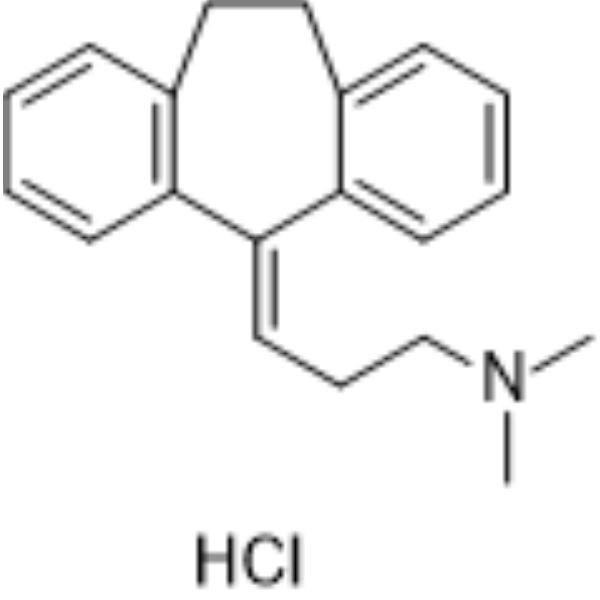
Amitriptyline hydrochloride is an orally active tricyclic antidepressant (TCA). Amitriptyline hydrochloride mainly exerts its antidepressant effect by blocking SERT (Ki = 3.45 nM) and NET (Ki = 13.3 nM), thereby increasing the concentrations of 5-hydroxytryptamine (5-HT) and norepinephrine (NE) in the synaptic cleft. Amitriptyline hydrochloride is also an agonist at α2A and TrkA/TrkB receptors, thereby exerting analgesic and neurotrophic activities (inhibiting cell apoptosis). Amitriptyline hydrochloride can reduce inflammation, angiogenesis and fibrosis. Amitriptyline hydrochloride binds to DAT (with Ki = 2.58 μM). Amitriptyline hydrochloride has high affinity for a series of receptors and can antagonize muscarinic cholinergic receptors (M1/M2/M3/M4/M5 receptors) (Ki = 11-24 nM), H1 receptors (Ki = 0.5-1.1 nM), adrenergic α1 receptors (Ki = 4.4 nM), etc., resulting in a series of side effects. Amitriptyline hydrochloride can block sodium channels and hERG potassium channel (IC50 = 4.78 μM) and it has cardiotoxicity .
|
-
-
- HY-B0527
-
Amitriptyline
Maximum Cited Publications
8 Publications Verification
|
Serotonin Transporter
Trk Receptor
Sodium Channel
5-HT Receptor
Histamine Receptor
Adrenergic Receptor
mAChR
Potassium Channel
Dopamine Transporter
Apoptosis
|
Neurological Disease
Inflammation/Immunology
Endocrinology
|
|
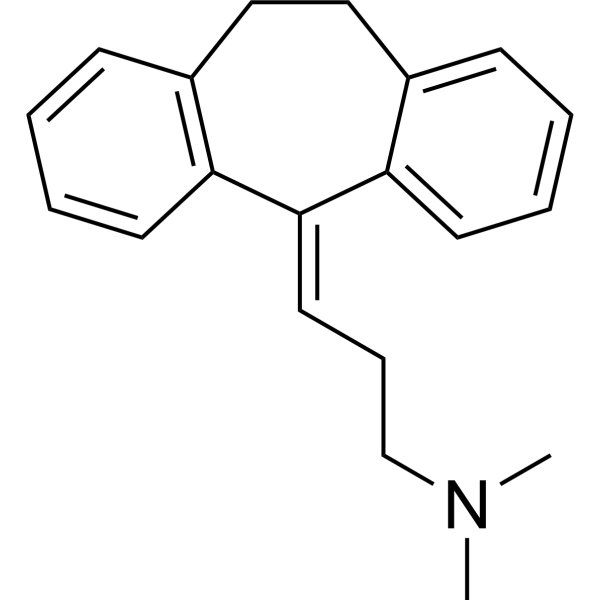
Amitriptyline is an orally active tricyclic antidepressant (TCA). Amitriptyline mainly exerts its antidepressant effect by blocking SERT (Ki = 3.45 nM) and NET (Ki = 13.3 nM), thereby increasing the concentrations of 5-hydroxytryptamine (5-HT) and norepinephrine (NE) in the synaptic cleft. Amitriptyline is also an agonist at α2A and TrkA/TrkB receptors, thereby exerting analgesic and neurotrophic activities (inhibiting cell apoptosis). Amitriptyline can reduce inflammation, angiogenesis and fibrosis. Amitriptyline binds to DAT (with Ki = 2.58 μM). Amitriptyline has high affinity for a series of receptors and can antagonize muscarinic cholinergic receptors (M1/M2/M3/M4/M5 receptors) (Ki = 11-24 nM), H1 receptors (Ki = 0.5-1.1 nM), adrenergic α1 receptors (Ki = 4.4 nM), etc., resulting in a series of side effects. Amitriptyline can block sodium channels and hERG potassium channel (IC50 = 4.78 μM) and it has cardiotoxicity .
|
-
-
- HY-19907
-
|
BMS-820836
|
Dopamine Transporter
Monoamine Transporter
Serotonin Transporter
|
Neurological Disease
|
|
Liafensine (BMS-820836) is an orally active, blood-brain barrier-permeable monoamine reuptake inhibitor, with an IC50 of 5.67 nM against DAT, 1.08 nM against SERT, and 7.99 nM against NET. Liafensine binds to DAT to block dopamine reuptake. Liafensine binds to SERT to block serotonin reuptake. Liafensine binds to NET to block norepinephrine reuptake. Liafensine can be used in studies related to depression .
|
-

-
- HY-133116
-
|
|
Adrenergic Receptor
|
Neurological Disease
|
|
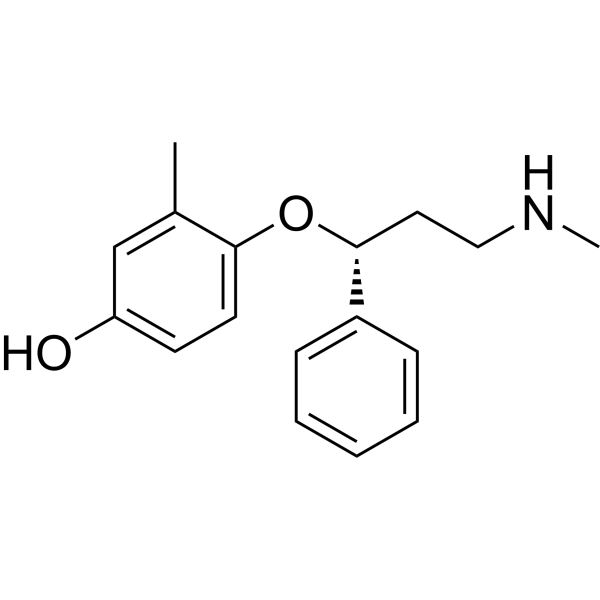
4-Hydroxyatomoxetine is an active metabolite of Atomoxetine. 4-Hydroxyatomoxetine is metabolized by the enzyme cytochrome P450 2D6 (CYP2D6). Atomoxetine hydrochloride is a potent and selective noradrenalin re-uptake inhibitor (Ki values are 5 nM, 77 nM and 1451 nM for inhibition of radioligand binding to human NET, SERT and DAT respectively) .
|
-
-
- HY-N7506
-
|
Delta3,2-Hydroxylbakuchiol
|
Monoamine Transporter
Dopamine Transporter
|
Neurological Disease
|
|
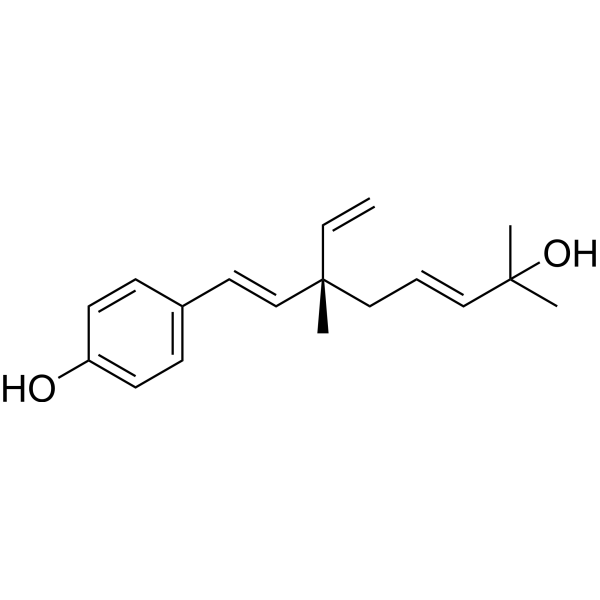
13-Hydroxyisobakuchiol (Delta3,2-Hydroxylbakuchiol), an analog of Bakuchiol (HY-N0235) that can be isolated from Psoralea corylifolia (L.), is a potent selective monoamine transporter inhibitor. 13-Hydroxyisobakuchiol is more selective for the dopamine transporter (DAT) (IC50 = 0.58 μM) and norepinephrine transporter (NET) (IC50 = 0.69 μM) than for the serotonin transporter (SERT) (IC50 = 312.02 μM). 13-Hydroxyisobakuchiol increases the activity of intact mice and improves the decreased activity of reserpinized mice in vivo. 13-Hydroxyisobakuchiol can be used for the research of disorders such as Parkinson's disease and depression .
|
-
-
- HY-B0527AR
-
|
|
Reference Standards
Serotonin Transporter
5-HT Receptor
Histamine Receptor
mAChR
Adrenergic Receptor
Trk Receptor
Sodium Channel
Potassium Channel
Dopamine Transporter
Apoptosis
|
Neurological Disease
Inflammation/Immunology
Endocrinology
|
|
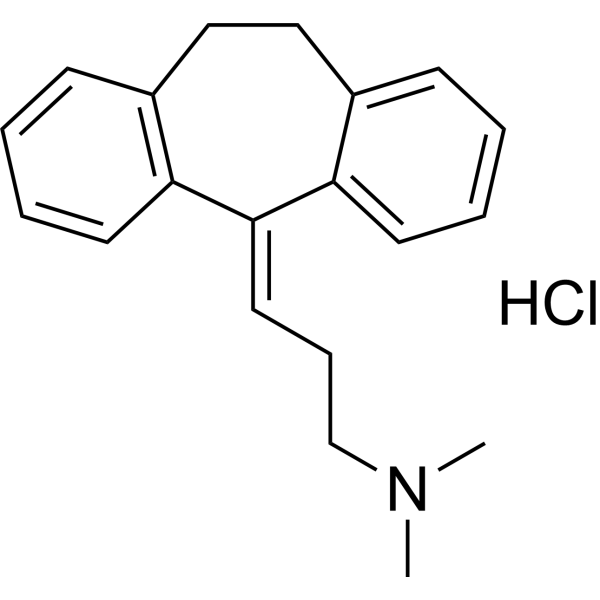
Amitriptyline hydrochloride (Standard) is the analytical standard of Amitriptyline hydrochloride (HY-B0527A). This product is intended for research and analytical applications. Amitriptyline hydrochloride is an orally active tricyclic antidepressant (TCA). Amitriptyline hydrochloride mainly exerts its antidepressant effect by blocking SERT (Ki = 3.45 nM) and NET (Ki = 13.3 nM), thereby increasing the concentrations of 5-hydroxytryptamine (5-HT) and norepinephrine (NE) in the synaptic cleft. Amitriptyline hydrochloride is also an agonist at α2A and TrkA/TrkB receptors, thereby exerting analgesic and neurotrophic activities (inhibiting cell apoptosis). Amitriptyline hydrochloride can reduce inflammation, angiogenesis and fibrosis. Amitriptyline hydrochloride binds to DAT (with Ki = 2.58 μM). Amitriptyline hydrochloride has high affinity for a series of receptors and can antagonize muscarinic cholinergic receptors (M1/M2/M3/M4/M5 receptors) (Ki = 11-24 nM), H1 receptors (Ki = 0.5-1.1 nM), adrenergic α1 receptors (Ki = 4.4 nM), etc., resulting in a series of side effects. Amitriptyline hydrochloride can block sodium channels and hERG potassium channel (IC50 = 4.78 μM) and it has cardiotoxicity.
|
-
-
- HY-135096
-
|
|
Serotonin Transporter
5-HT Receptor
Histamine Receptor
mAChR
Adrenergic Receptor
Sodium Channel
Trk Receptor
|
Neurological Disease
|
|
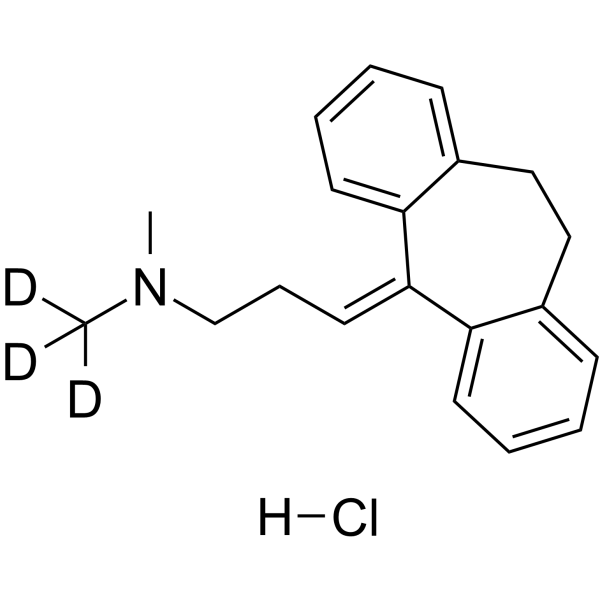
Amitriptyline-d3 hydrochloride is the deuterium labeled Amitriptyline (hydrochloride). Amitriptyline hydrochloride is an inhibitor of serotonin reuptake transporter (SERT) and noradrenaline reuptake transporter (NET), with Kis of 3.45 nM and 13.3 nM for human SERT and NET, respectively. Amitriptyline hydrochloride also weakly binds to dopamine reuptake transporter (DAT) with a Ki of 2.58 μM. Amitriptyline hydrochloride also inhibits adrenergic, muscarinic, histamine and 5-HT receptors. Amitriptyline hydrochloride is a TrkA and TrkB receptors agonist with potent neurotrophic activity. Amitriptyline hydrochloride has antidepressant activity .
|
-
-
- HY-B0527AS
-
|
|
Isotope-Labeled Compounds
Serotonin Transporter
5-HT Receptor
Histamine Receptor
mAChR
Adrenergic Receptor
Trk Receptor
Sodium Channel
Potassium Channel
Dopamine Transporter
Apoptosis
|
Neurological Disease
Inflammation/Immunology
Endocrinology
|
|
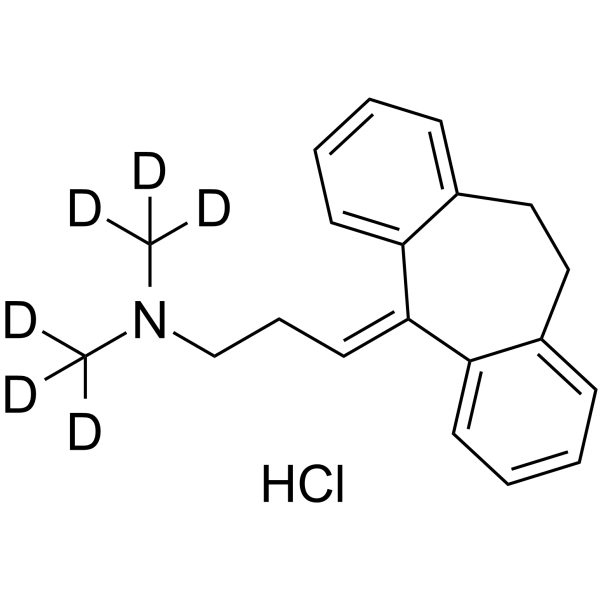
Amitriptyline-d6 hydrochloride is the deuterium labeled Amitriptyline hydrochloride (HY-B0527A). Amitriptyline hydrochloride is an orally active tricyclic antidepressant (TCA). Amitriptyline hydrochloride mainly exerts its antidepressant effect by blocking SERT (Ki = 3.45 nM) and NET (Ki = 13.3 nM), thereby increasing the concentrations of 5-hydroxytryptamine (5-HT) and norepinephrine (NE) in the synaptic cleft. Amitriptyline hydrochloride is also an agonist at α2A and TrkA/TrkB receptors, thereby exerting analgesic and neurotrophic activities (inhibiting cell apoptosis). Amitriptyline hydrochloride can reduce inflammation, angiogenesis and fibrosis. Amitriptyline hydrochloride binds to DAT (with Ki = 2.58 μM). Amitriptyline hydrochloride has high affinity for a series of receptors and can antagonize muscarinic cholinergic receptors (M1/M2/M3/M4/M5 receptors) (Ki = 11-24 nM), H1 receptors (Ki = 0.5-1.1 nM), adrenergic α1 receptors (Ki = 4.4 nM), etc., resulting in a series of side effects. Amitriptyline hydrochloride can block sodium channels and hERG potassium channel (IC50 = 4.78 μM) and it has cardiotoxicity.
|
-
-
- HY-178907
-
|
|
Serotonin Transporter
5-HT Receptor
|
Neurological Disease
|
|
SERT/5-HT-IN-1 (compound D17) is an orally active and potent dual target inhibitor of SERT/5-HT3A (SERT IC50 = 1.5 nM, NET IC50 = 49 nM, DAT IC50 = 91 nM, 5-HT3A Ki = 12 nM). SERT/5-HT-IN-1 has an IC50 of 39 nM to 5-HT3A. SERT/5-HT-IN-1 has a lower risk of liver, kidney, and cardiac toxicity. SERT/5-HT-IN-1 can be used for research on depressive disorders .
|
-

-
- HY-W703376
-
-

-
- HY-126158
-
|
|
Dopamine Transporter
Serotonin Transporter
|
Neurological Disease
|
|
SRI-29574 is an allosteric modulator of the dopamine transporter (DAT). SRI-29574 partially inhibits the uptake of the DAT (IC50=2.3 nM) and also partially inhibits the uptake of the serotonin transporter (SERT) and norepinephrine transporter (NET). SRI-29574 may serve as a useful probe to study the function and regulatory mechanisms of DAT .
|
-

-
- HY-172421
-
-

-
- HY-107128
-
|
TD-9855 hydrochloride
|
Serotonin Transporter
|
Neurological Disease
|
|
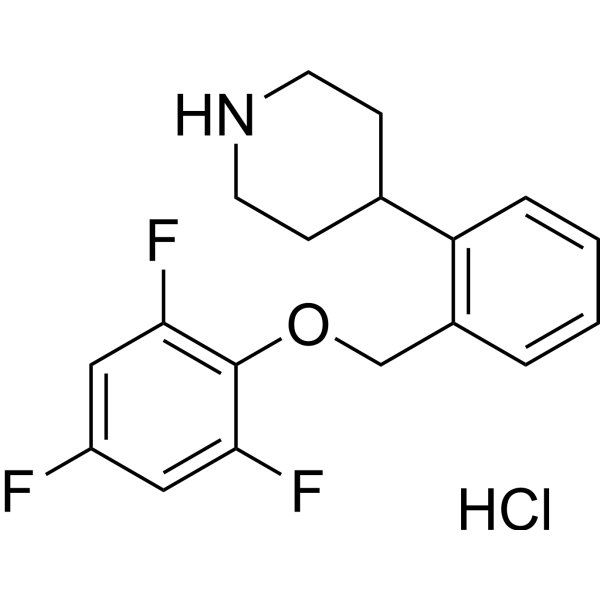
Ampreloxetine (TD-9855) hydrochloride is an orally active and CNS-penetrant inhibitor of Norepinephrine transporter (NET) and Serotonin 5-HT uptake transporter (SERT), but not Dopamine transporter (DAT). Ampreloxetine hydrochloride binds norepinephrine transporters (NET) and serotonin transporters (SERT) with EC50 values of 11.7 ng/mL and 50.8 ng/mL, respectively, in plasma .
|
-
-
- HY-B0457S
-
|
Chlorimipramine-d3 hydrochloride; G-34586-d3 hydrochloride; NSC-169865-d3 hydrochloride
|
Serotonin Transporter
Dopamine Receptor
|
Neurological Disease
|
|
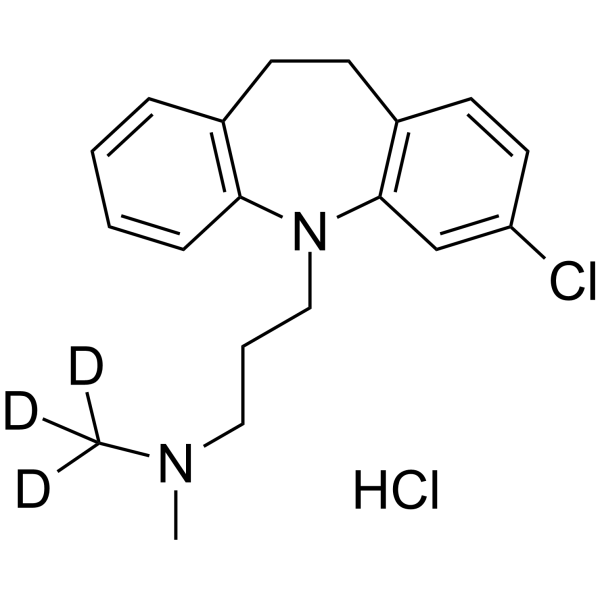
Clomipramine-d3 (hydrochloride) is a deuterium labeled Clomipramine hydrochloride. Clomipramine hydrochloride is a serotonin transporter (SERT), norepinephrine transporter (NET) dopamine transporter (DAT) blocker with Ki of 0.14, 54 and 3 nM, respectively .
|
-
-
- HY-B0457AS
-
-
-
- HY-107370AS
-
|
(Rac)-Tomoxetine d7 hydrochloride; (Rac)-LY 139603 d7
|
Serotonin Transporter
Sodium Channel
Isotope-Labeled Compounds
|
Neurological Disease
|
|
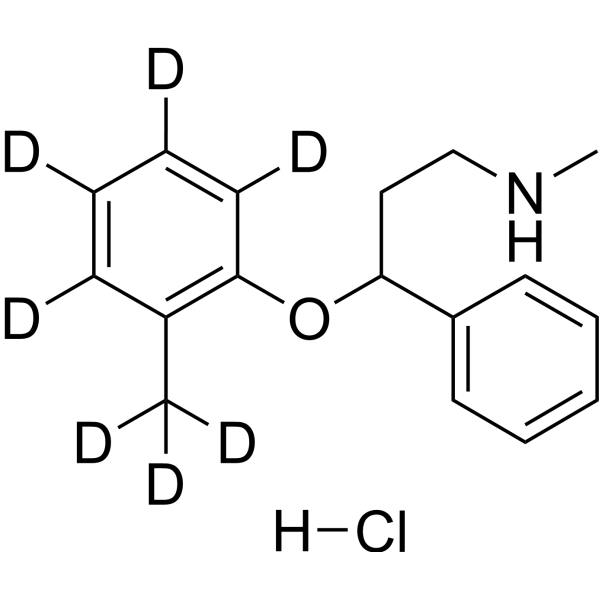
(Rac)-Atomoxetine-d7 (hydrochloride) is a deuterium labeled (Rac)-Atomoxetine hydrochloride. (Rac)-Atomoxetine hydrochloride is a racemic form of Atomoxetine hydrochloride. Atomoxetine hydrochloride is a potent and selective noradrenalin re-uptake inhibitor (Ki values are 5 nM, 77 nM and 1451 nM for inhibition of radioligand binding to human NET, SERT and DAT respectively) .
|
-
-
- HY-173398
-
|
|
iGluR
Monoamine Transporter
Serotonin Transporter
Dopamine Transporter
|
Neurological Disease
|
|
NMDAR antagonist 5 (Compound A17) is a multi-target antagonist against NMDAR and monoamine transporters (SERT、DAT and NET). NMDAR antagonist 5 shows good NMDAR antagonistic potency (IC50 = 0.3 μM) and monoamine transporter activities (SERT IC50 = 1.1 μM、DAT IC50 = 0.7 μM、NET IC50 = 2.7 μM). NMDAR antagonist 5 is highly safe and has low toxicity (hepatotoxicity and nephrotoxicity (IC50 > 100 μM); cardiotoxicity (IC50 = 24.5 μM)). NMDAR antagonist 5 has antidepressant effects and can be used in the study of depression .
|
-

-
- HY-18332B
-
|
|
Dopamine Transporter
Adrenergic Receptor
5-HT Receptor
|
Neurological Disease
|
|
DOV-102,677 is an orally sctive triple monoamine neurotransmitter reuptake inhibitor that simultaneously inhibits the dopamine (DAT) (IC50 = 129 nM; Ki = 222 nM), norepinephrine (NET) (IC50 = 103 nM; Ki = 1030 nM), and serotonin (SERT) (IC50 = 133 nM; Ki = 740 nM) transporters. DOV-102,677 demonstrated significant antidepressant-like activity and sensory-motor gating regulatory effects in mouse experiments. DOV-102,677 can be used for research on depression .
|
-

-
- HY-162585
-
|
|
5-HT Receptor
|
Neurological Disease
|
|
5-HT1AR agonist 1 (Compound A3) emerges as a relatively balanced multi-target activity profile, including 5-HT1AR agonist with an EC50 value of 34 nM, SERT reuptake ihibitor (IC50 =12 nM), NET reuptake inhibitor (IC50 =78 nM) and DAT reuptake inhibitor (IC50 =135 nM). 5-HT1AR agonist 1 performs significant antidepressant effects and exhibits excellent bioavailability and low clearance in mice, which is promising for research in the field of antidepressant drugs .
|
-

-
- HY-172029
-
|
|
Monoamine Transporter
|
Neurological Disease
|
|
3,4-Methylenedioxy pyrovalerone metabolite 2 hydrochloride is an analog of Pyrovalerone. Pyrovalerone inhibits the dopamine transporter (DAT),serotonin transporter (SERT),and the norepinephrine transporter (NET) .
|
-

-
- HY-110223
-
|
|
Adrenergic Receptor
|
Neurological Disease
|
|
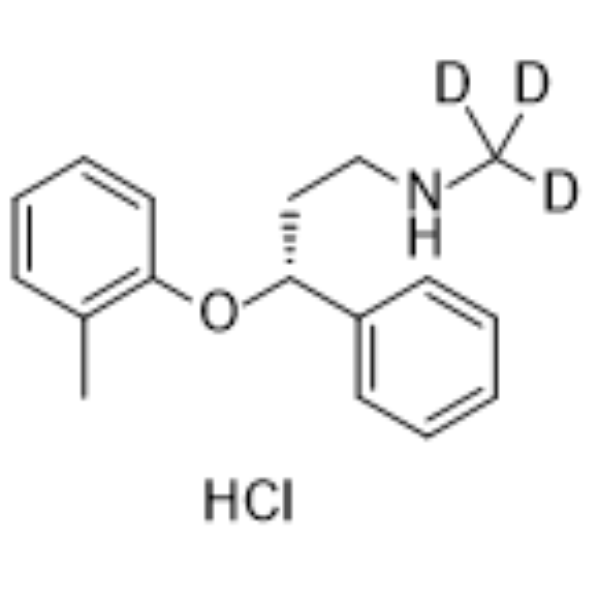
Atomoxetine-d3 hydrochloride is the deuterium labeled Atomoxetine hydrochloride. Atomoxetine hydrochloride is a potent and selective noradrenalin re-uptake inhibitor (Ki values are 5, 77 and 1451 nM for inhibition of radioligand binding to human NET, SERT and DAT respectively) .
|
-
-
- HY-17385S
-
|
Tomoxetine-d5 hydrochloride; LY 139603-d5 ; (R)-Tomoxetine-d5 hydrochloride
|
Isotope-Labeled Compounds
Adrenergic Receptor
|
Neurological Disease
|
|
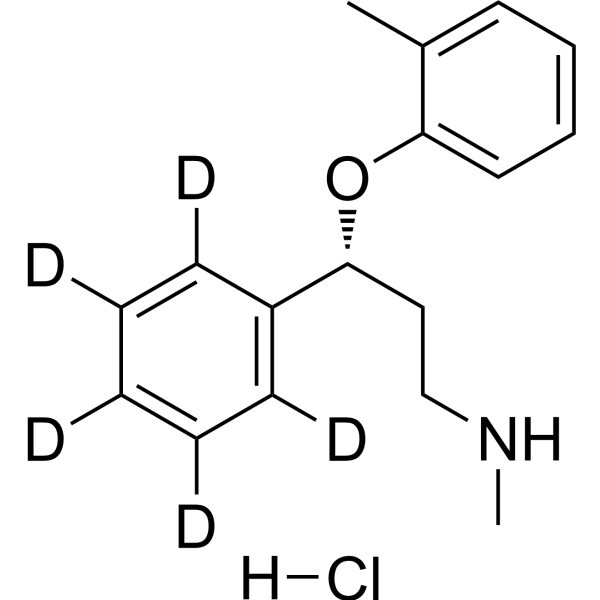
Atomoxetine-d5 (hydrochloride) is the deuterium labeled Atomoxetine hydrochloride. Atomoxetine hydrochloride is a potent and selective noradrenalin re-uptake inhibitor (Ki values are 5, 77 and 1451 nM for inhibition of radioligand binding to human NET, SERT and DAT respectively) .
|
-
-
- HY-116062A
-
|
|
Histone Methyltransferase
|
Neurological Disease
|
|
JNJ-7925476 is a triple reuptake inhibitor that selectively and potently inhibits the activity of the serotonin transporter (SERT), norepinephrine transporter (NET), and dopamine transporter (DAT). JNJ-7925476 is rapidly absorbed into the blood and its concentration in the brain is 7-fold higher than that in plasma. The occupancy ED(50) values of JNJ-7925476 for SERT, NET, and DAT in the rat brain are 0.18, 0.09, and 2.4 mg/kg, respectively. JNJ-7925476 rapidly induces a significant increase in the levels of extracellular serotonin, dopamine, and norepinephrine in the rat cerebral cortex in a dose-dependent manner. JNJ-7925476 exhibits potent antidepressant-like activity in the mouse tail suspension test. These results suggest that JNJ-7925476 has in vivo efficacy in biochemical and behavioral models of depression .
|
-

-
- HY-108513
-
|
|
Sigma Receptor
|
Neurological Disease
|
|
σ1 Receptor antagonist 4 (compound TC1) is a selective sigma1 (σ1) receptor antagonist with a Ki of 10 nM. σ1 Receptor antagonist 4 is weakly active at σ2 receptor (Ki of 370 nM) and has no activity at dopamine (DAT), serotonin (SERT), and norepinephrine (NET) transporters .
|
-

-
- HY-117542
-
|
|
Histone Methyltransferase
|
Neurological Disease
|
|
D595 is a phenylethylamine calcium channel blocker with potent negative inotropic activity. D595 has shown significant efficacy in its corresponding pharmacological studies, especially in inhibiting the uptake of monoamine neurotransmitters. D595 has high affinity in binding to the dopamine transporter (DAT), serotonin transporter (SERT), and norepinephrine transporter (NET). Structural adjustments of D595, especially changes in the hydroxyl stereochemistry, significantly affect its interaction with the transporters, showing a specific preference for stereoisomers .
|
-

-
- HY-172763
-
|
|
Drug Derivative
Serotonin Transporter
Dopamine Transporter
5-HT Receptor
|
Neurological Disease
|
|
EDMA hydrochloride is a derivative of MDMA. EDMA hydrochloride is a substrate for multiple neurotransmitter transporters, including serotonin transporter (SERT), dopamine transporter (DAT), and norepinephrine transporter (NET). EDMA hydrochloride has 5-HT releasing activity at SERT (EC50 = 117 nM) and MPP + releasing activity at DAT (EC50 = 597 nM) and NET (EC50 = 325 nM) .
|
-

-
- HY-W680886
-
|
|
Monoamine Transporter
Serotonin Transporter
Dopamine Transporter
5-HT Receptor
|
Neurological Disease
|
|
6-APDB is a class of monoamine neurotransmitter releaser and Monoamine Transporter modulator that exerts selective effects on human monoamine transporters and acts as a partial agonist at 5-HT2 family receptors. For NET, 6-APDB has an IC50 of 0.56 μM and a Ki of 18 μM; for SERT, it has an IC50 of 2.3 μM and a Ki of 23 μM; for DAT, it has an IC50 of 33 μM and a Ki of >30 μM, and affinity for rat and mouse TAAR1, with Ki values of 1.0 μM and 0.21 μM, respectively. 6-APDB inhibits norepinephrine and 5-HT reuptake, mediates the release of three types of monoamine neurotransmitters, shows a dose-dependent biphasic locomotor effect in mice, and fully substitutes the discriminative stimulus effect of MDMA. 6-APDB shows no significant cytotoxicity at high concentrations, and possesses empathogenic psychoactivity, potential hallucinogenic effects, and behavioral effects associated with intermittent abuse .
|
-

-
- HY-107128R
-
|
TD-9855 hydrochloride (Standard)
|
Reference Standards
Serotonin Transporter
|
Neurological Disease
|
|
Ampreloxetine hydrochloride (Standard) (TD-9855 hydrochloride (Standard)) is the analytical standard of Ampreloxetine (hydrochloride) (HY-107128). This product is intended for research and analytical applications. Ampreloxetine (TD-9855) hydrochloride is an orally active and CNS-penetrant inhibitor of Norepinephrine transporter (NET) and Serotonin 5-HT uptake transporter (SERT), but not Dopamine transporter (DAT). Ampreloxetine hydrochloride binds norepinephrine transporters (NET) and serotonin transporters (SERT) with EC50 values of 11.7 ng/mL and 50.8 ng/mL, respectively, in plasma .
|
-

-
- HY-186169B
-
-

-
- HY-181828
-
|
|
iGluR
Dopamine Receptor
|
Neurological Disease
|
|
SePP is a blood-brain barrier-permeable NMDAR antagonist and dopamine/norepinephrine reuptake inhibitor, with a Ki of 28.7 nM for rat NMDAR. SePP exerts anticonvulsant effects. SePP can be used in research related to fragile X syndrome .
|
-

| Cat. No. |
Product Name |
Category |
Target |
Chemical Structure |
-
- HY-N7506
-
|
Delta3,2-Hydroxylbakuchiol
|
Structural Classification
Monophenols
Leguminosae
Phenols
Psoralea corylifolia L.
Plants
Source Classification
|
Monoamine Transporter
Dopamine Transporter
|
|
13-Hydroxyisobakuchiol (Delta3,2-Hydroxylbakuchiol), an analog of Bakuchiol (HY-N0235) that can be isolated from Psoralea corylifolia (L.), is a potent selective monoamine transporter inhibitor. 13-Hydroxyisobakuchiol is more selective for the dopamine transporter (DAT) (IC50 = 0.58 μM) and norepinephrine transporter (NET) (IC50 = 0.69 μM) than for the serotonin transporter (SERT) (IC50 = 312.02 μM). 13-Hydroxyisobakuchiol increases the activity of intact mice and improves the decreased activity of reserpinized mice in vivo. 13-Hydroxyisobakuchiol can be used for the research of disorders such as Parkinson's disease and depression .
|
-
| Cat. No. |
Product Name |
Chemical Structure |
-
- HY-B0527AS
-
|
|
|
Amitriptyline-d6 hydrochloride is the deuterium labeled Amitriptyline hydrochloride (HY-B0527A). Amitriptyline hydrochloride is an orally active tricyclic antidepressant (TCA). Amitriptyline hydrochloride mainly exerts its antidepressant effect by blocking SERT (Ki = 3.45 nM) and NET (Ki = 13.3 nM), thereby increasing the concentrations of 5-hydroxytryptamine (5-HT) and norepinephrine (NE) in the synaptic cleft. Amitriptyline hydrochloride is also an agonist at α2A and TrkA/TrkB receptors, thereby exerting analgesic and neurotrophic activities (inhibiting cell apoptosis). Amitriptyline hydrochloride can reduce inflammation, angiogenesis and fibrosis. Amitriptyline hydrochloride binds to DAT (with Ki = 2.58 μM). Amitriptyline hydrochloride has high affinity for a series of receptors and can antagonize muscarinic cholinergic receptors (M1/M2/M3/M4/M5 receptors) (Ki = 11-24 nM), H1 receptors (Ki = 0.5-1.1 nM), adrenergic α1 receptors (Ki = 4.4 nM), etc., resulting in a series of side effects. Amitriptyline hydrochloride can block sodium channels and hERG potassium channel (IC50 = 4.78 μM) and it has cardiotoxicity.
|
-
-
- HY-B0457S
-
|
|
|
Clomipramine-d3 (hydrochloride) is a deuterium labeled Clomipramine hydrochloride. Clomipramine hydrochloride is a serotonin transporter (SERT), norepinephrine transporter (NET) dopamine transporter (DAT) blocker with Ki of 0.14, 54 and 3 nM, respectively .
|
-
-
- HY-B0457AS
-
|
|
|
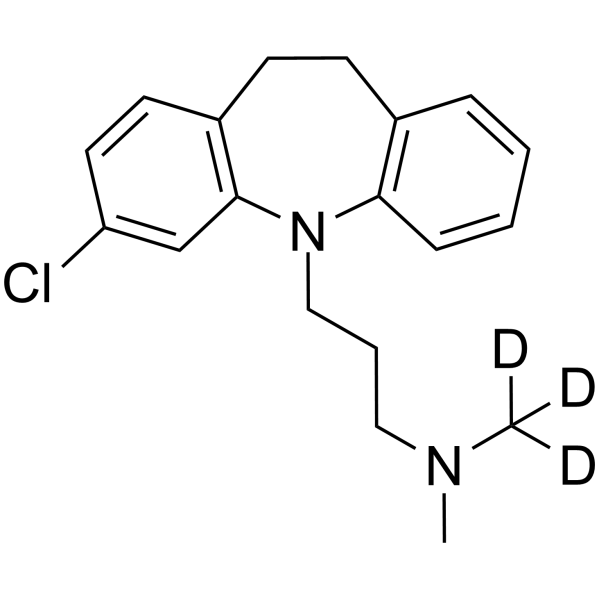
Clomipramine-d3 is the deuterium labeled Clomipramine. Clomipramine is a serotonin transporter (SERT), norepinephrine transporter (NET) dopamine transporter (DAT) blocker with Ki of 0.14, 54 and 3 nM, respectively .
|
-
-
- HY-107370AS
-
|
|
|
(Rac)-Atomoxetine-d7 (hydrochloride) is a deuterium labeled (Rac)-Atomoxetine hydrochloride. (Rac)-Atomoxetine hydrochloride is a racemic form of Atomoxetine hydrochloride. Atomoxetine hydrochloride is a potent and selective noradrenalin re-uptake inhibitor (Ki values are 5 nM, 77 nM and 1451 nM for inhibition of radioligand binding to human NET, SERT and DAT respectively) .
|
-
-
- HY-17385S
-
|
|
|
Atomoxetine-d5 (hydrochloride) is the deuterium labeled Atomoxetine hydrochloride. Atomoxetine hydrochloride is a potent and selective noradrenalin re-uptake inhibitor (Ki values are 5, 77 and 1451 nM for inhibition of radioligand binding to human NET, SERT and DAT respectively) .
|
-
Your information is safe with us. * Required Fields.
Inquiry Information
- Product Name:
- Cat. No.:
- Quantity:
- MCE Japan Authorized Agent:








