1. Search Result
Search Result
Results for "

Klebsiella pneumonia

" in MedChemExpress (MCE) Product Catalog:

29

Inhibitors & Agonists

1

Biochemical Assay Reagents

3

Peptides

1

Natural
Products

1

Isotope-Labeled Compounds

Cat. No. 상품명 Target 연구분야 Chemical Structure
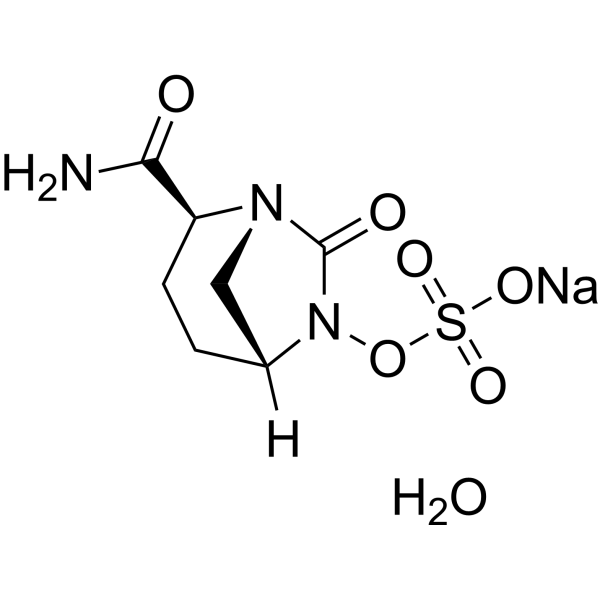
  • HY-14879A
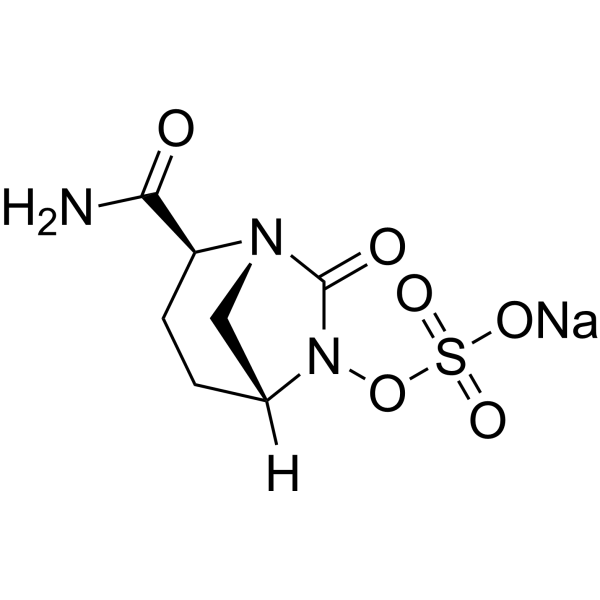
    Avibactam sodium
    Maximum Cited Publications
    92 Publications Verification

    NXL-104

    Beta-lactamase Bacterial Antibiotic Infection
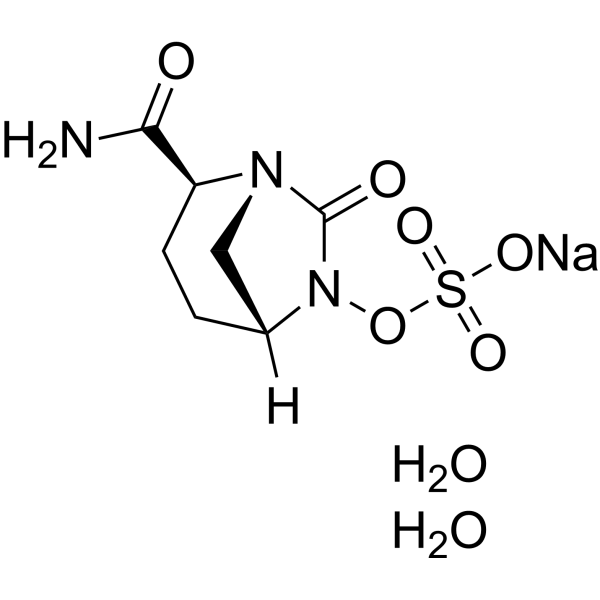
    Avibactam sodium (NXL-104) is a covalent and reversible non-β-lactam β-lactamase inhibitor which inhibits β-lactamase TEM-1 and CTX-M-15 with IC50s of 8 nM and 5 nM, respectively .
    Avibactam sodium
  • HY-164036

    Antibiotic Bacterial Infection
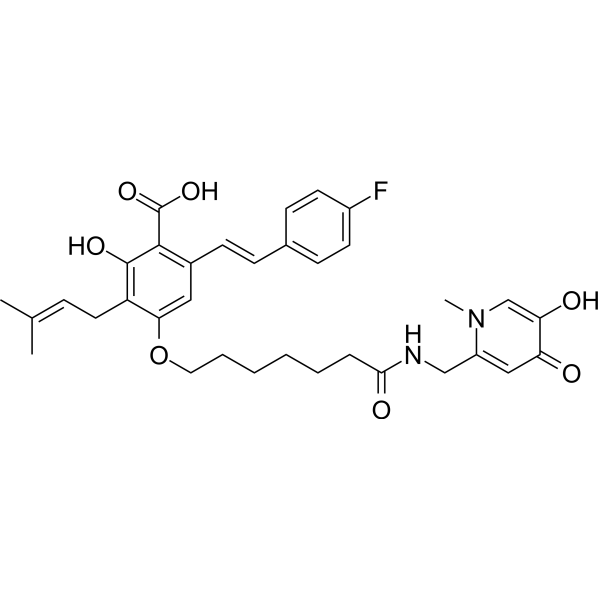
    Lolamicin is an orally effective inhibitor that specifically targets the Gram-negative bacteria lipoprotein transport system LolCDE complex. It selectively inhibits the transmembrane transport of outer membrane lipoproteins by competitively binding to lipoprotein binding sites. Lolamicin destroys the integrity of the bacterial outer membrane, leading to cell death, and has both bactericidal and antibacterial activity. It has significant effects on multidrug-resistant Enterobacteriaceae pathogens (such as Escherichia coli and Klebsiella pneumoniae). Lolamicin can be used to inhibit the study of acute pneumonia, sepsis and other infections caused by Gram-negative bacteria .
    Lolamicin
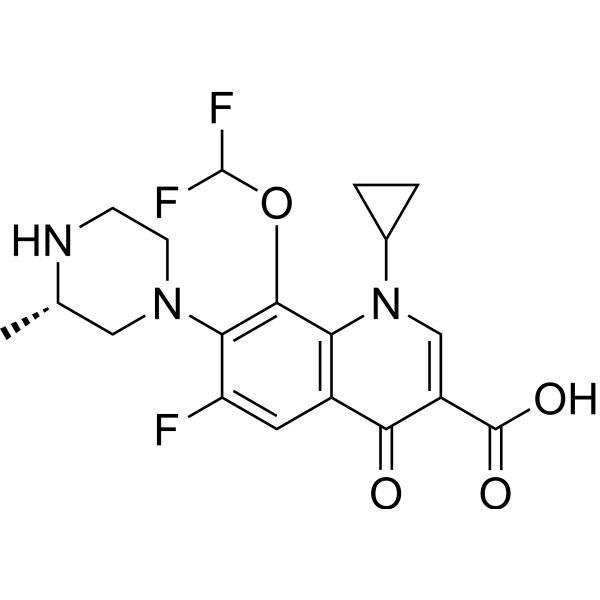
  • HY-14814
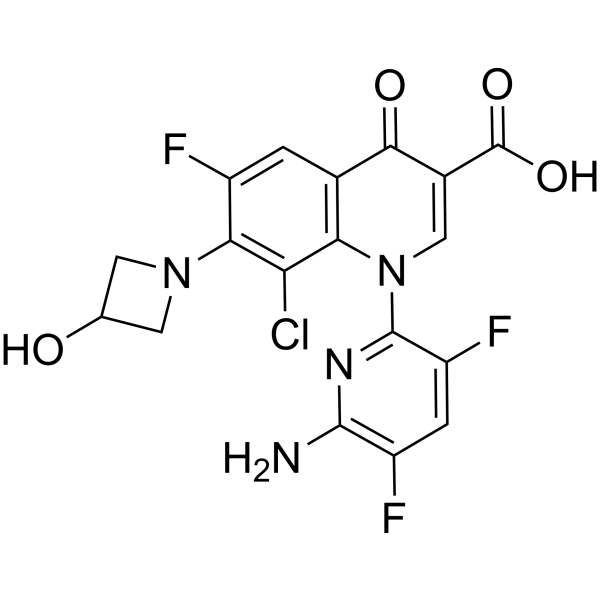
    Delafloxacin
    5 Publications Verification

    RX-3341; WQ-3034; ABT492

    Bacterial Antibiotic Infection
    Delafloxacin (RX-3341; WQ-3034; ABT492) is a broad-spectrum fluoroquinolone antibiotic. Delafloxacin has a broad spectrum of activity that includes drug-resistant Staphylococcus aureus, Streptococcus pneumoniae, and Klebsiella pneumonia .
    Delafloxacin
  • HY-14814A
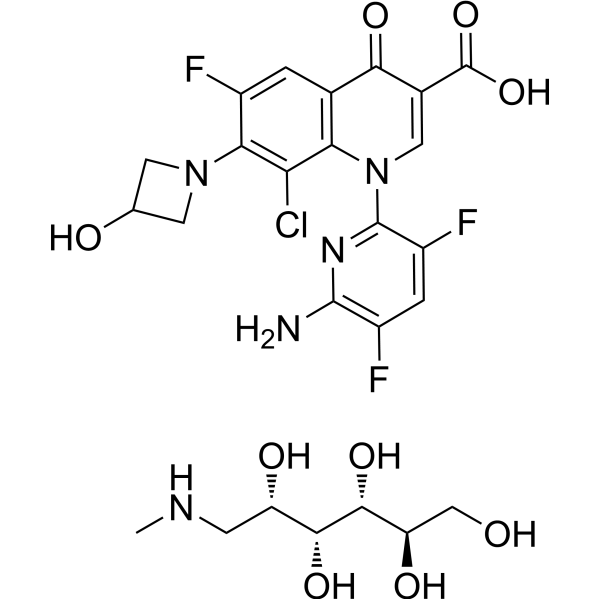
    Delafloxacin meglumine
    5 Publications Verification

    ABT492 meglumine; RX-3341 meglumine; WQ-3034 meglumine

    Bacterial Antibiotic Infection
    Delafloxacin meglumine (ABT492 meglumine; RX-3341 meglumine; WQ-3034 meglumine) is a broad-spectrum fluoroquinolone antibiotic. Delafloxacin has a broad spectrum of activity that includes drug-resistant Staphylococcus aureus, Streptococcus pneumoniae, and Klebsiella pneumonia .
    Delafloxacin meglumine
  • HY-14879
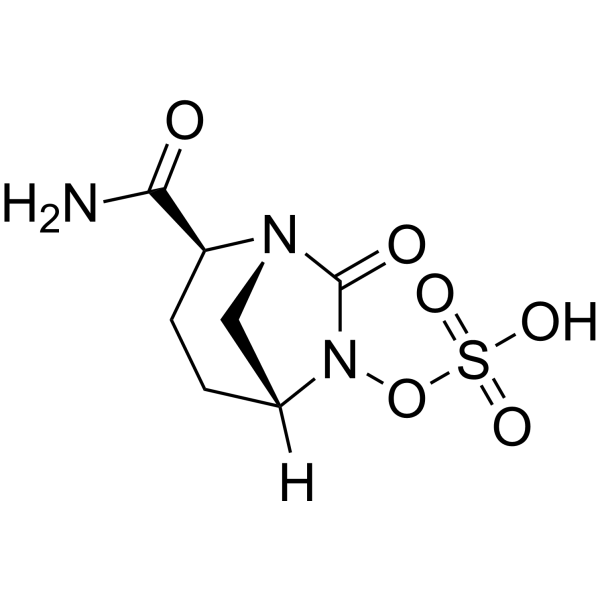
    Avibactam free acid
    Maximum Cited Publications
    92 Publications Verification

    NXL-104 free acid

    Beta-lactamase Bacterial Antibiotic Infection
    Avibactam (NXL-104) free acid is a covalent and reversible non-β-lactam β-lactamase inhibitor which inhibits β-lactamase TEM-1 and CTX-M-15 with IC50s of 8 nM and 5 nM, respectively .
    Avibactam free acid
  • HY-14879AR

    NXL-104 (Standard)

    Beta-lactamase Reference Standards Bacterial Antibiotic Infection
    Avibactam (sodium) (Standard) is the analytical standard of Avibactam (sodium). This product is intended for research and analytical applications. Avibactam sodium (NXL-104) is a covalent and reversible non-β-lactam β-lactamase inhibitor which inhibits β-lactamase TEM-1 and CTX-M-15 with IC50s of 8 nM and 5 nM, respectively .
    Avibactam sodium (Standard)
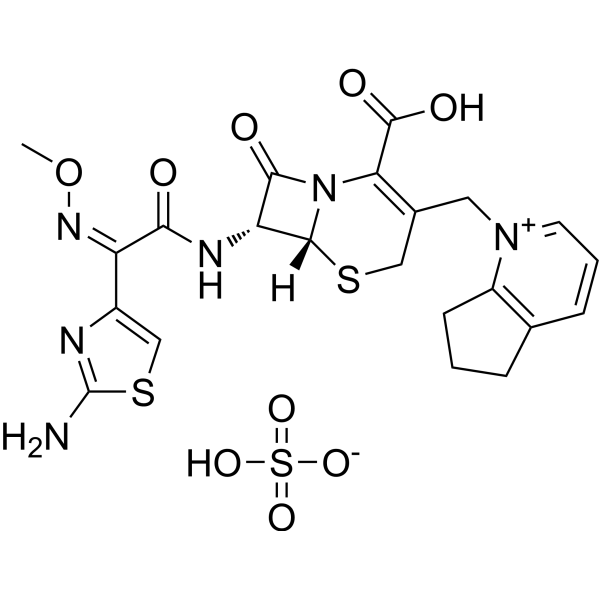
  • HY-B1824
    Cefpirome sulfate
    1 Publications Verification

    HR-810 sulfate

    Bacterial Antibiotic Infection
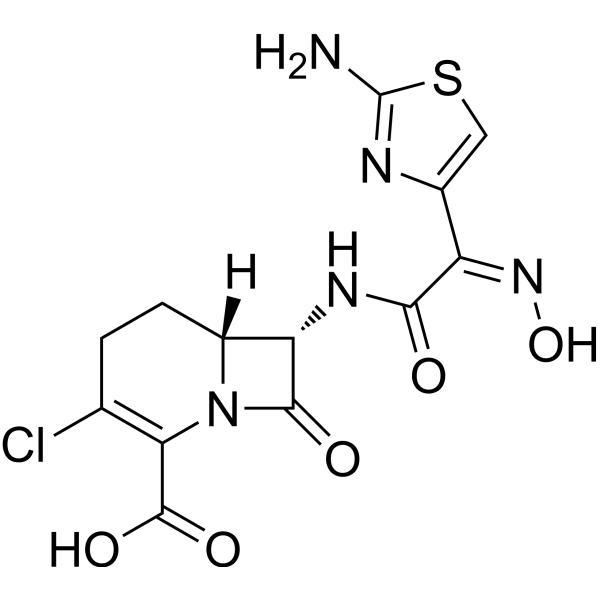
    Cefpirome (HR-810) sulfate is a cephalosporin antibiotic that can cross cell membranes and the blood-brain barrier. Cefpirome sulfate binds to penicillin-binding proteins with high affinity, thereby inhibiting bacterial cell wall synthesis. Cefpirome sulfate exhibits bactericidal and growth-inhibitory activities against Gram-negative bacteria, Gram-positive bacteria, and susceptible anaerobic bacteria (including some β-lactamase-producing strains) .
    Cefpirome sulfate
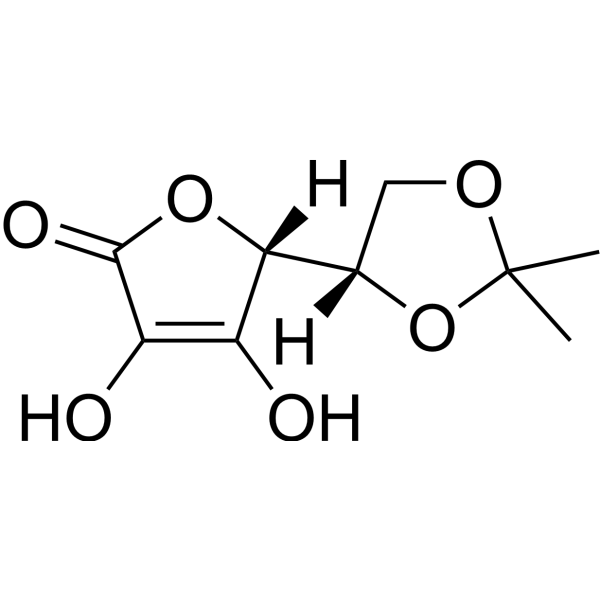
  • HY-W014141

    L-Ascorbic acid 5,6-acetonide

    Biochemical Assay Reagents Infection
    5,6-O-Isopropylidene-L-ascorbic acid (L-Ascorbic acid 5,6-acetonide) is an organic compound and a derivative of L-ascorbic acid (vitamin C). 5,6-O-Isopropylidene-L-ascorbic acid inhibits biofilm formation by pathogenic bacteria. 5,6-O-Isopropylidene-L-ascorbic acid is applicable to studies related to bacterial infections .
    5,6-O-Isopropylidene-L-ascorbic acid
  • HY-116228

    Caderofloxacin; CS-940

    Bacterial Infection
    Cadrofloxacin (Caderofloxacin; CS-940) is an orally active antibacterial agent with significant bactericidal activity against quinolone-resistant Staphylococcus aureus, Gram-positive bacteria, Gram-negative bacteria and anaerobic bacteria. Cadrofloxacin effectively improves systemic infection and experimental Klebsiella pneumoniae pneumonia in mice. Cadrofloxacin can be widely used in research related to systemic bacterial infections and bacterial pneumonia .
    Cadrofloxacin
  • HY-14879B
    Avibactam sodium hydrate
    Maximum Cited Publications
    92 Publications Verification

    NXL-104 hydrate

    Beta-lactamase Bacterial Antibiotic Infection
    Avibactam sodium (NXL-104) hydrate is a covalent and reversible non-β-lactam β-lactamase inhibitor which inhibits β-lactamase TEM-1 and CTX-M-15 with IC50s of 8 nM and 5 nM, respectively .
    Avibactam sodium hydrate
  • HY-135748A

    RIG-I-like receptor (RLR) Toll-like Receptor (TLR) Apoptosis Infection Cancer
    Poly (I:C):Kanamycin (1:1) sodium is an isometric complex of Poly (I:C) (HY-135748) and Kanamycin (HY-16566). Poly(I:C) sodium, a synthetic analog of double-stranded RNA, is a TLR3 and retinoic acid-inducible gene I receptor (RIG-I and b>MDA5) agonist. Poly(I:C) sodium can be used as a vaccine adjuvant to enhance innate and adaptive immune responses and induce apoptosis in cancer cells . Kanamycin is an orally active antibacterial agent (Gram-negative/positive bacteria) that inhibits translocation and causes miscoding by binding to the 70S ribosomal subunit. Kanamycin shows good inhibitory activity against Mycobacterium tuberculosis (susceptible and drug-resistant) and Klebsiella pneumoniae, and can be used in the research of tuberculosis and pneumonia .
    Poly (I:C):Kanamycin (1:1) sodium
  • HY-W004297

    Endogenous Metabolite Bacterial Infection
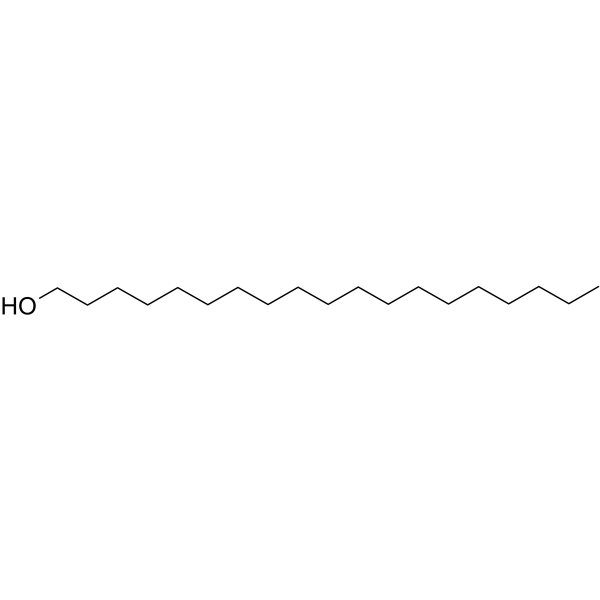
    1-Nonadecanol is an endogenous metabolite that can be produced by Pantoea agglomerans from Medicago sativa rhizosphere, present in Neotinea ustulata scent and Heracleum thomsonii essential oil. 1-Nonadecanol exerts antimicrobial activity against Streptococcus pneumonia, Klebsiella, and S. aureus. 1-Nonadecanol can be used for the research of bacterial infections and pea aphid infestation .
    1-Nonadecanol
  • HY-14814AR

    ABT492 meglumine (Standard); RX-3341 meglumine (Standard); WQ-3034 meglumine (Standard)

    Reference Standards Bacterial Antibiotic Infection
    Delafloxacin (meglumine) (Standard) is the analytical standard of Delafloxacin (meglumine). This product is intended for research and analytical applications. Delafloxacin meglumine (ABT492 meglumine; RX-3341 meglumine; WQ-3034 meglumine) is a broad-spectrum fluoroquinolone antibiotic. Delafloxacin has a broad spectrum of activity that includes drug-resistant Staphylococcus aureus, Streptococcus pneumoniae, and Klebsiella pneumonia[1].
    Delafloxacin meglumine (Standard)
  • HY-14814S

    RX-3341-d5; WQ-3034-d5; ABT492-d5

    Isotope-Labeled Compounds Bacterial Antibiotic Infection
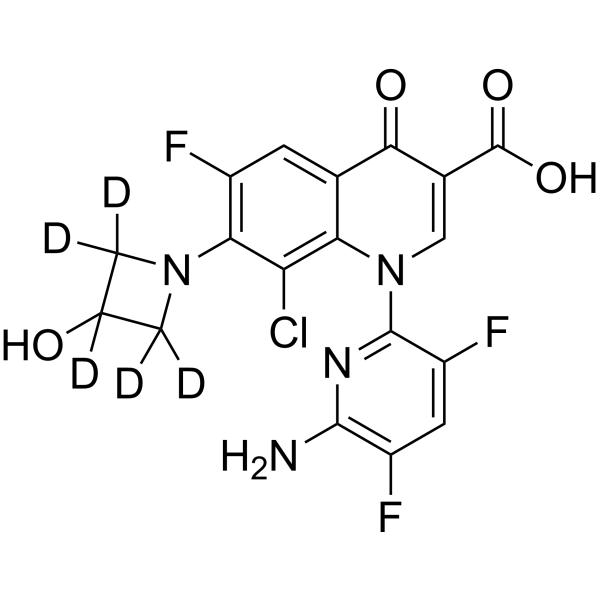
    Delafloxacin-d5 is deuterium labeled Delafloxacin. Delafloxacin (RX-3341; WQ-3034; ABT492) is a broad-spectrum fluoroquinolone antibiotic. Delafloxacin has a broad spectrum of activity that includes drug-resistant Staphylococcus aureus, Streptococcus pneumoniae, and Klebsiella pneumonia .
    Delafloxacin-d5
  • HY-14814R

    RX-3341 (Standard); WQ-3034 (Standard); ABT492 (Standard)

    Reference Standards Bacterial Antibiotic Infection
    Delafloxacin (Standard) is the analytical standard of Delafloxacin. This product is intended for research and analytical applications. Delafloxacin (RX-3341; WQ-3034; ABT492) is a broad-spectrum fluoroquinolone antibiotic. Delafloxacin has a broad spectrum of activity that includes drug-resistant Staphylococcus aureus, Streptococcus pneumoniae, and Klebsiella pneumonia .
    Delafloxacin (Standard)
  • HY-P11100

    Bacterial Infection
    PepW is a potent antimicrobial peptide targeting the capsule of multidrug-resistant Klebsiella pneumoniae (MIC=2-8 μM). PepW achieves bactericidal activity via capsule polysaccharide aggregation and structural disruption. PepW is promising for research of infectious diseases caused by Gram-negative bacteria (e.g., pneumonia, sepsis) .
    PepW
  • HY-14879BR

    NXL-104 hydrate (Standard)

    Beta-lactamase Reference Standards Bacterial Antibiotic Infection
    Avibactam (sodium hydrate) (Standard) is the analytical standard of Avibactam (sodium hydrate). This product is intended for research and analytical applications. Avibactam sodium (NXL-104) hydrate is a covalent and reversible non-β-lactam β-lactamase inhibitor which inhibits β-lactamase TEM-1 and CTX-M-15 with IC50s of 8 nM and 5 nM, respectively[1].
    Avibactam sodium hydrate (Standard)
  • HY-107064

    CGP 9000; Oraspor

    Bacterial Antibiotic Infection
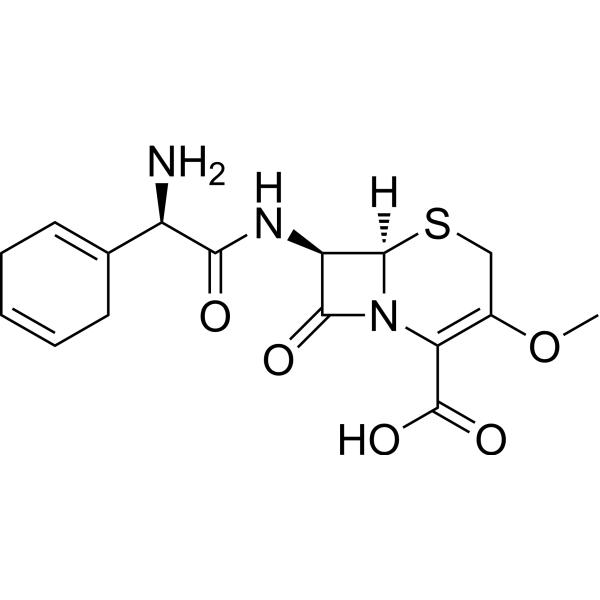
    Cefroxadine (CGP 9000) is an orally active cephalosporin antibiotic. Cefroxadine is more effective than cephalexin against Escherichia coli and Klebsiella pneumoniae with MIC values of 3.13 and 1.56 μg/mL respectively with a concentration of 10 6 μg/mL. Cefroxadine can be used for the research of infection .
    Cefroxadine
  • HY-120382

    Bacterial Infection
    LY 215890 ia an orally active antibacterial agent aganist Escherichia coli EC14 and Klebsiella pneumonia X26 .
    LY 215890
  • HY-114860

    Bacterial Inflammation/Immunology
    LY 215891 (compound 6a) exhibits potent Gram-positive and Gram-negative antibacterial activity with MICs of 0.015 μg/mL and 0.06 μg/mL for Klebsiella pneumoniae X26 and Escherichia coli EC14, respectively .
    LY 215891
  • HY-161404

    Bacterial Infection
    Antibacterial agent 202 (compound 45c) is a low cytotoxicity bacterial inhibitor with good activity against Gram-negative bacteria, including Escherichia coli, Klebsiella pneumonia, especially Pseudomonas aeruginosa, (MIC (minimum inhibitory concentration)=7.8-31.25 μM). Antibacterial agent 202 can exert antibacterial activity by destroying the integrity of cell membranes and can be used in the research of bacterial infections .
    Antibacterial agent 202
  • HY-14879C

    NXL-104 dihydrate

    Beta-lactamase Bacterial Antibiotic Infection
    Avibactam sodium (NXL-104) dihydrate is a covalent and reversible non-β-lactam β-lactamase inhibitor which inhibits β-lactamase TEM-1 and CTX-M-15 with IC50s of 8 nM and 5 nM, respectively .
    Avibactam sodium dihydrate
  • HY-14879R

    NXL-104 free acid (Standard)

    Beta-lactamase Reference Standards Bacterial Antibiotic Infection
    Avibactam (free acid) (Standard) is the analytical standard of Avibactam (free acid). This product is intended for research and analytical applications. Avibactam (NXL-104) free acid is a covalent and reversible non-β-lactam β-lactamase inhibitor which inhibits β-lactamase TEM-1 and CTX-M-15 with IC50s of 8 nM and 5 nM, respectively[1].
    Avibactam free acid (Standard)
  • HY-163615

    Bacterial Infection
    Antimicrobial agent-32 (Compound 4g) is an antimicrobial agent that exhibits significant activity against various bacteria, including Staphylococcus aureus, Bacillus subtilis, Bacillus cereus (MIC=1000 µg/mL), Klebsiella pneumonia, and Staphylococcus aureus (MRSA) (MIC=500 µg/mL), as well as Escherichia coli (MIC=250 µg/mL). Additionally, Antimicrobial agent-32 inhibits the proliferation of MCF-7, HCT-116, and HepG-2 cells, demonstrating anticancer activity .
    Antimicrobial agent-32
  • HY-131050

    Bacterial Fungal Infection
    Aspergillus niger-IN-1 (Compound 17), a derivative of thiazolidine-2,4-dione, acts as an antimicrobial agent. Aspergillus niger-IN-1 exhibited antimicrobial activity against various bacterial and fungal strains, including Bacillus subtilis, Staphylococcus aureus, Klebsiella pneumonia, Escherichia coli, Salmonella typhi, Candida albicans and Aspergillus niger, with MIC values of 11.3, 5.65, 11.3, 5.65, 5.65, 5.65, and 5.65 μM/mL, respectively .
    Aspergillus niger-IN-1
  • HY-P11242

    Bacterial NF-κB p38 MAPK JNK ERK TNF Receptor Interleukin Related Infection
    Cm-CATH2 is an antimicrobial peptide discovered from Chelonia mydas. Cm-CATH2 has a potent, broad-spectrum and rapid bactericidal ability by rapidly destroying the integrity of bacterial cell membranes. It shows strong activity against Gram-positive bacteria (such as VREF, Staphylococcus aureus), Gram-negative bacteria (such as Escherichia coli, Klebsiella pneumoniae), and fungi (such as Candida albicans) with MICs ranges from 1.17 to 18.75 μg/mL. Cm-CATH2 is also effective against various aquatic pathogenic bacteria. Cm-CATH2 not only inhibits biofilm formation but can also remove the formed biofilms. Cm-CATH2 has immunomodulatory functions and chemotactic effects on immune cells, and can inhibit the production of pro-inflammatory cytokines by macrophages stimulated by LPS (HY-D1056). Cm-CATH2 prevents the activation of NF-κB by inhibiting the degradation of IκBα, and also inhibits the phosphorylation of MAPK signaling pathways (p38, JNK, ERK). Cm-CATH2 demonstrates strong anti-infective ability in mouse peritonitis models and pneumonia models .
    Cm-CATH2
  • HY-116228A

    Caderofloxacin (hydrochloride); CS-940 (hydrochloride)

    Bacterial Infection
    Cadrofloxacin (Caderofloxacin; CS-940) hydrochloride is an orally active antibacterial agent with significant bactericidal activity against quinolone-resistant Staphylococcus aureus, Gram-positive bacteria, Gram-negative bacteria and anaerobic bacteria. Cadrofloxacin hydrochloride effectively improves systemic infection and experimental Klebsiella pneumoniae pneumonia in mice. Cadrofloxacin hydrochloride can be widely used in research related to systemic bacterial infections and bacterial pneumonia .
    Cadrofloxacin (hydrochloride)
  • HY-178368

    Bacterial Infection
    Antibacterial agent 293 (Compound 5) is an antibacterial agent, exhibiting potent anti-Gram-negative bacterial activity. Antibacterial agent 293 shows activity against Escherichia coli, Acinetobacter baumannii and Klebsiella pneumonia. Antibacterial agent 293 can be used for the research of diseases related to Gram-negative bacterial infections .
    Antibacterial agent 293
  • HY-P11616

    Bacterial TNF Receptor Infection
    WK2 is an antibacterial agent. WK2 reduces serum TNF-α production induced by Bacterial infection. WK2 reduces wound size and promotes tissue repair in a skin wound infection model. WK2 exerts anti-inflammatory effects in a pneumonia model. WK2 can be used for research on infectious diseases such as pneumonia caused by bacterial infection .
    WK2

온라인 문의

Your information is safe with us. * Required Fields.

호칭


Country or Region *

고객명 *


회사명 *

Department *


메일주소 *


상품명 *

Cat. No.


Requested quantity *

전화번호 *


비고

온라인 문의

Inquiry Information

상품명:
Cat. No.:
수량:
MCE Japan Authorized Agent: