Search Result
Results for "
Kv7 channel
" in MedChemExpress (MCE) Product Catalog:
1
Biochemical Assay Reagents
1
Isotope-Labeled Compounds
| Cat. No. |
Product Name |
Target |
Research Areas |
Chemical Structure |
-
- HY-139791
-
|
XEN1101
|
Potassium Channel
|
Neurological Disease
|
|
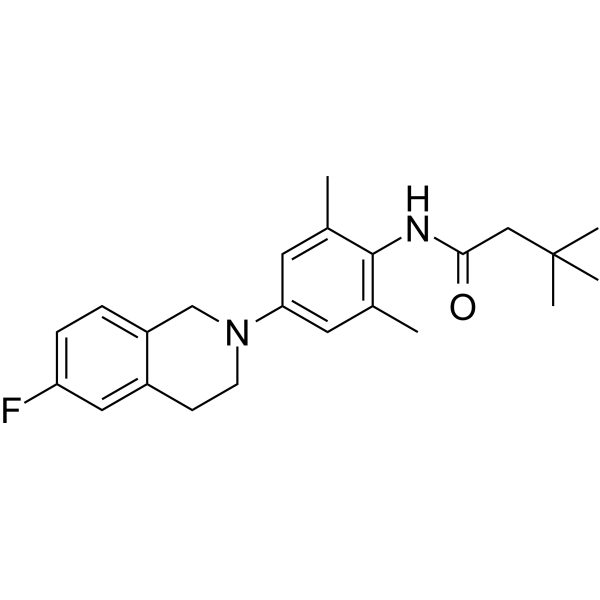
Azetukalner (XEN1101) is a selective and orally active Kv7.2/Kv7.3 potassium channel opener with an EC50 of 27 nM. Azetukalner is approximately 4-fold more selective for Kv7.2/7.3 over Kv7.3/7.5 (EC50 of 94 nM) and Kv7.4 (EC50 of 113 nM) channels. Azetukalner exhibits a selectivity >100-fold for Kv7 channels over other ion channels and receptors. Azetukalner can be used for the study of focal epilepsy .
|
-
-
- HY-17001A
-
|
D 9998
|
Potassium Channel
iGluR
GABA Receptor
|
Neurological Disease
Inflammation/Immunology
|
|
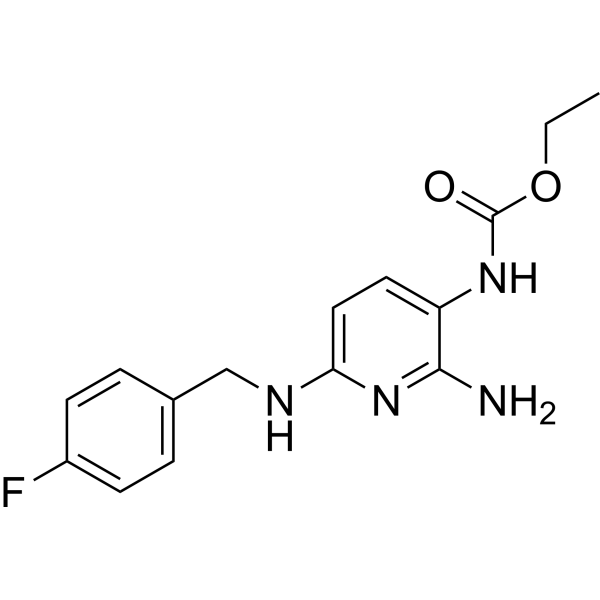
Flupirtine (D 9998) is an orally active, blood-brain barrier-crossing non-opioid analgesic and neuroprotective agent. Flupirtine is a neuronal potassium channel opener (Kv7 activator), a NMDA receptor antagonist and a GABA receptor activator. Flupirtine stabilizes blood-brain-barrier integrity, reduces oxidative stress and brain leukocyte infiltration, enhances angioneurogenesis, suppresses calcium influx, stabilizes neuronal resting membrane potential, and counteracts focal cerebral ischemia. Flupirtine exhibits analgesic, muscle relaxant properties, protects neurons from excitotoxic, ischemic, or cytokine-mediated death. Flupirtine functions as a non-opioid analgesic without antipyretic or antiphlogistic properties, shows no relevant affinity to opiate receptor. Flupirtine can be used for the research of focal cerebral ischemia, pain, Alzheimer’s disease, or multiple sclerosis .
|
-
-
- HY-101843
-
-
-
- HY-108577
-
|
|
Potassium Channel
|
Neurological Disease
|
|
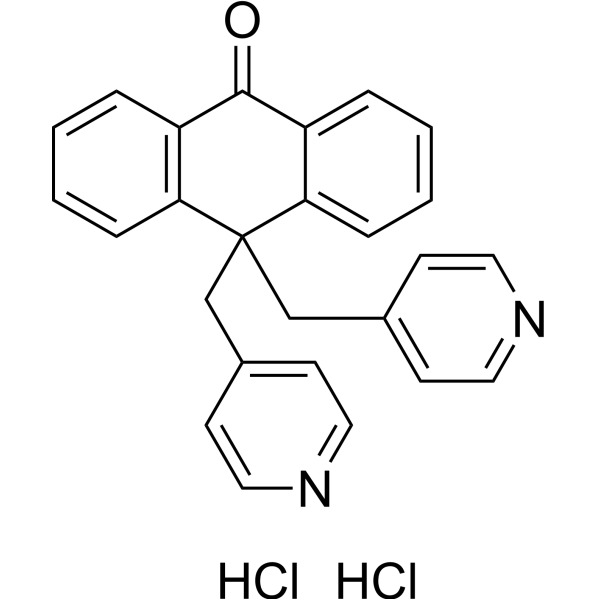
XE991 dihydrochloride, a Kv7 (KCNQ) channels blocker, potently inhibits Kv7.1 (KCNQ1), Kv7.2 (KCNQ2), Kv7.2 + Kv7.3 (KCNQ3) channel, and M-current with IC50s of 0.75 μM, 0.71 μM, 0.6 μM, and 0.98 μM, respectively .
|
-
-
- HY-17001
-
|
D 9998 Maleate
|
Potassium Channel
iGluR
GABA Receptor
|
Neurological Disease
Inflammation/Immunology
|
|
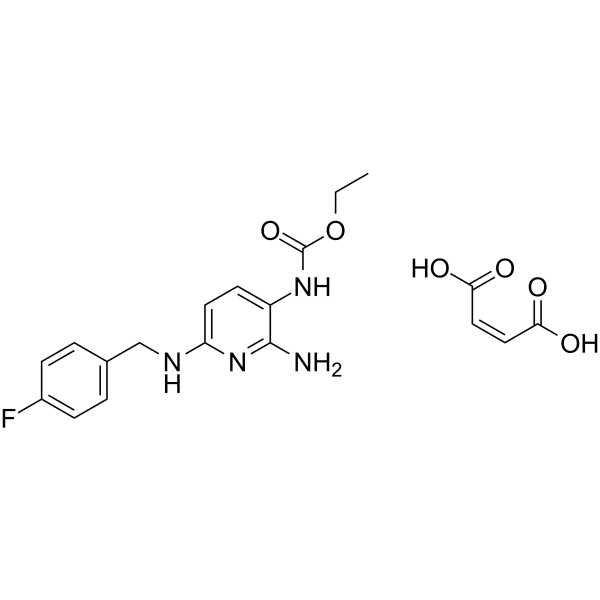
Flupirtine (D 9998) Maleate is an orally active, blood-brain barrier-crossing non-opioid analgesic and neuroprotective agent. Flupirtine Maleate is a neuronal potassium channel opener (Kv7 activator), a NMDA receptor antagonist and a GABA receptor activator. Flupirtine Maleate stabilizes blood-brain-barrier integrity, reduces oxidative stress and brain leukocyte infiltration, enhances angioneurogenesis, suppresses calcium influx, stabilizes neuronal resting membrane potential, and counteracts focal cerebral ischemia. Flupirtine Maleate exhibits analgesic, muscle relaxant properties, protects neurons from excitotoxic, ischemic, or cytokine-mediated death. Flupirtine Maleate functions as a non-opioid analgesic without antipyretic or antiphlogistic properties, shows no relevant affinity to opiate receptor. Flupirtine Maleate can be used for the research of focal cerebral ischemia, pain, Alzheimer’s disease, or multiple sclerosis .
|
-
-
- HY-172431
-
|
BHV-7000
|
Potassium Channel
|
Neurological Disease
|
|
Opakalim (BHV-7000) is a selective Kv7.2/7.3 potassium channels activator with an EC50 of 0.6 μM. Opakalim shows minimal GABAA receptor activation and exhibits potent anti-seizure efficacy in the maximal electroshock seizure (MES) model. Opakalim can be used for the study of seizures .
|
-
-
- HY-108577A
-
XE991
3 Publications Verification
|
Potassium Channel
|
Neurological Disease
|
|
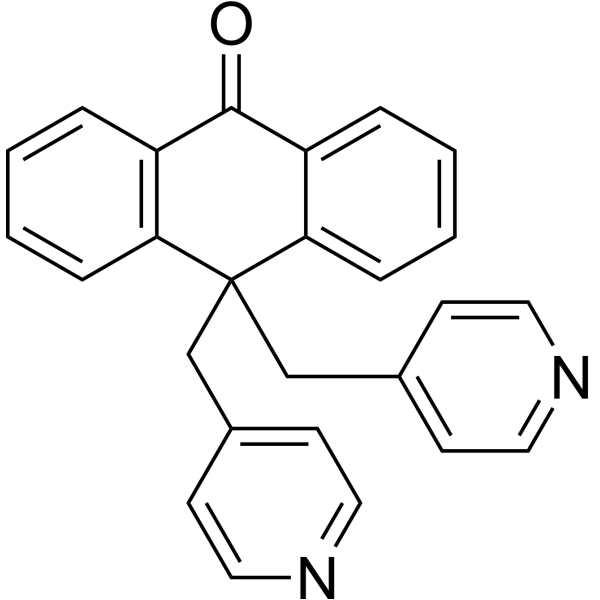
XE 991 dihydrochloride, a Kv7 (KCNQ) channels blocker, potently inhibits Kv7.1 (KCNQ1), Kv7.2 (KCNQ2), Kv7.2 + Kv7.3 (KCNQ3) channel, and M-current with IC50s of 0.75 μM, 0.71 μM, 0.6 μM, and 0.98 μM, respectively .
|
-
-
- HY-108584
-
|
BMS-204352
|
Potassium Channel
|
Neurological Disease
|
|
Flindokalner (BMS-204352) is a potassium channel modulator. Flindokalner is a positive modulator of all neuronal Kv7 channel subtypes expressed in HEK293 cells. Flindokalner is also a large conductance calcium-activated K channel (BKca) positive modulator. Flindokalner shows a negative modulatory activity at Kv7.1 channels (Ki=3.7 μM), and acts as a negative modulator of GABAA receptors. Flindokalner shows anxiolytic efficacy in vivo .
|
-
-
- HY-101396
-
|
|
Potassium Channel
|
Neurological Disease
|
|
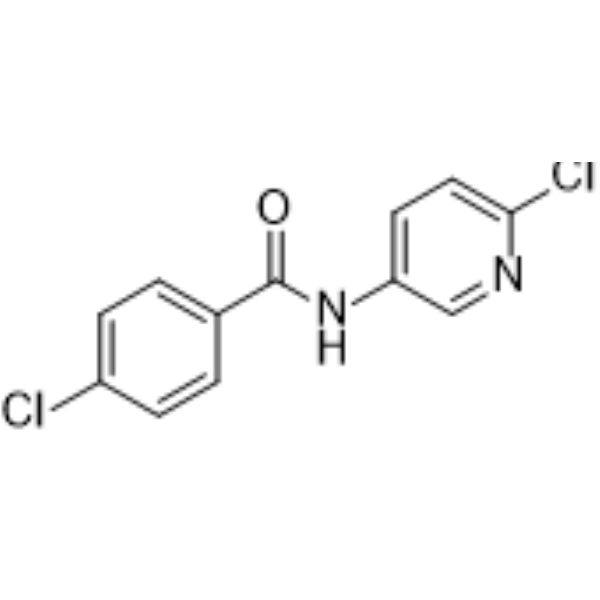
ICA-069673 is a KCNQ2/Q3 potassium channel activator. ICA-069673 demonstrates greater selectivity for KV7.2/7.3 over KV7.3/KV7.5, with EC50s of 0.69 μM and 14.3 μM, respectively. ICA-069673 inhibits spontaneous phasic and nerve-evoked contractions in guinea pig detrusor smooth muscle (DSM). ICA-069673 also decreases the global intracellular Ca(2+) concentration in DSM cells .
|
-
-
- HY-125469
-
|
PF-04895162
|
Potassium Channel
|
Neurological Disease
|
|
ICA-105665 (PF-04895162) is a potent and orally active neuronal Kv7.2/7.3 and Kv7.3/7.5 potassium channels opener. ICA-105665 inhibits liver mitochondrial function and bile salt export protein (BSEP) transport (IC50 of 311 μM). ICA-105665 can penetrate the blood-brain barrier and has antiseizure effects .
|
-
-
- HY-18063
-
|
|
Potassium Channel
Cytochrome P450
|
Neurological Disease
|
|
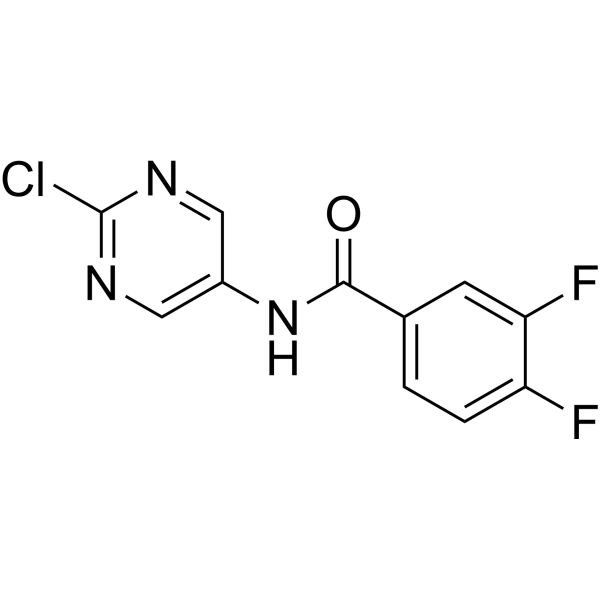
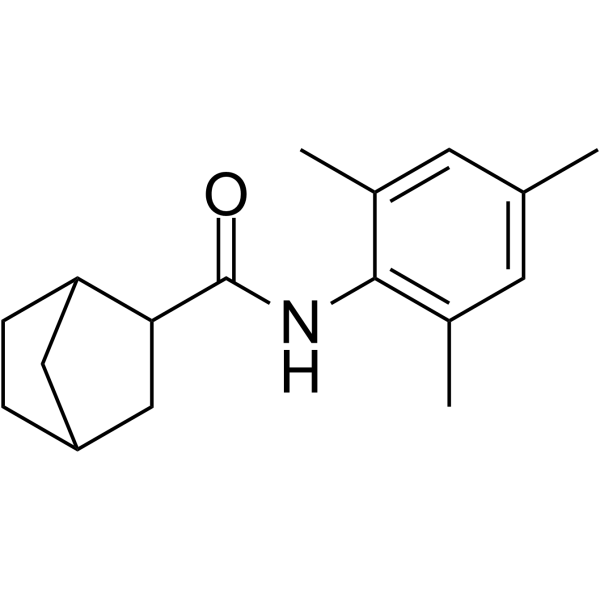
ML252 is a selective inhibitor of KCNQ2 (Kv7.2) channel with an IC50s of 69 nM, 2.92 μM, 0.12 μM and 0.20 μM for KCNQ2, KCNQ1 (Kv7.1), KCNQ2/Q3 and KCNQ4, respectively. ML252 also inhibits Cytochrome P450 with IC50s of 6.1 nM (CYP1A2), 18.9 nM (CYP2C9), 3.9 nM (CYP3A4), 19.9 nM (CYP2D6), respectively. ML252 shows highly brain penetrant .
|
-
-
- HY-W020468
-
|
DuP 996
|
Potassium Channel
TRP Channel
|
Neurological Disease
|
|
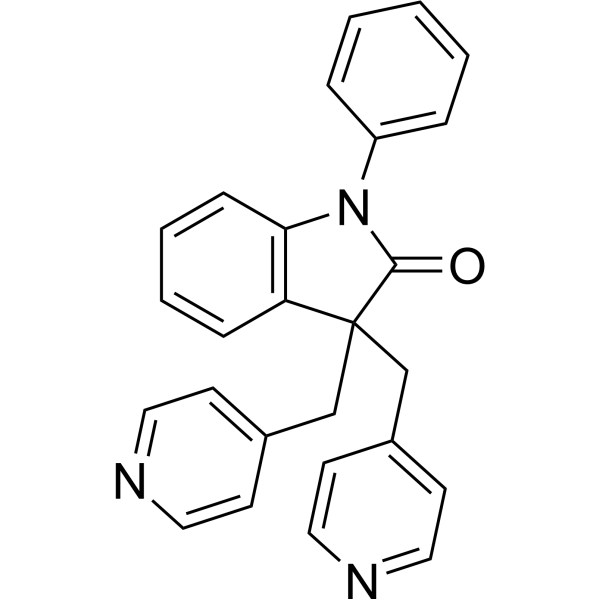
Linopirdine (DuP 996) is an orally active, selective M-type K + current (IM; Kv7; KCNQ Channels) inhibitor with an IC50 of 2.4 μM. Linopirdine is a TRPV1 agonist. Linopirdine, a putative cognition enhancing agent, increases acetylcholine release in rat brain tissue .
|
-
-
- HY-108587
-
|
|
Potassium Channel
|
Neurological Disease
|
|
ICA 110381 is an orally active Kv7.2/Kv7.3 (KCNQ2/3) potassium channel activator with anticonvulsive properties. ICA 110381 is a KCNQ2/Q3 activator (EC50=0.38 μM) as well as KCNQ1 antagonist (IC50=15 μM) .
|
-
-
- HY-W001992
-
|
3-Nitro-2,6-dichloropyridine
|
Biochemical Assay Reagents
|
Neurological Disease
|
|
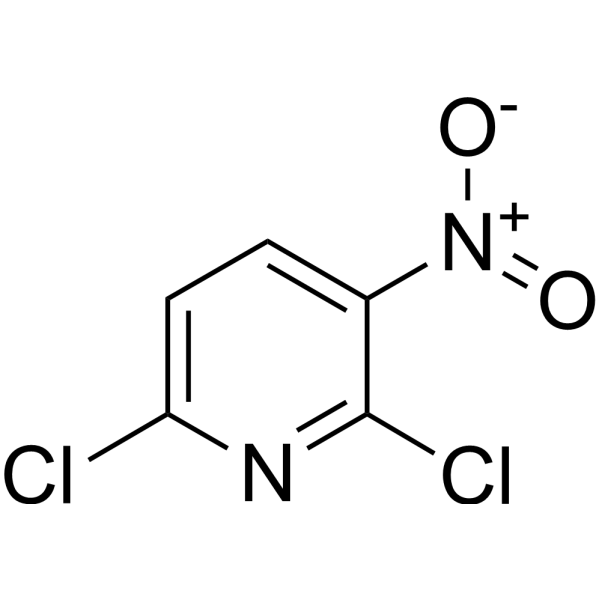
2,6-Dichloro-3-nitropyridine is a starting compound for the synthesis of a sulfide analog of Flupirtine (HY-17001A) with KV7.2/3 channel opening activity. 2,6-Dichloro-3-nitropyridine can be used in pain research .
|
-
-
- HY-178281
-
|
|
Potassium Channel
Sodium Channel
|
Neurological Disease
|
|
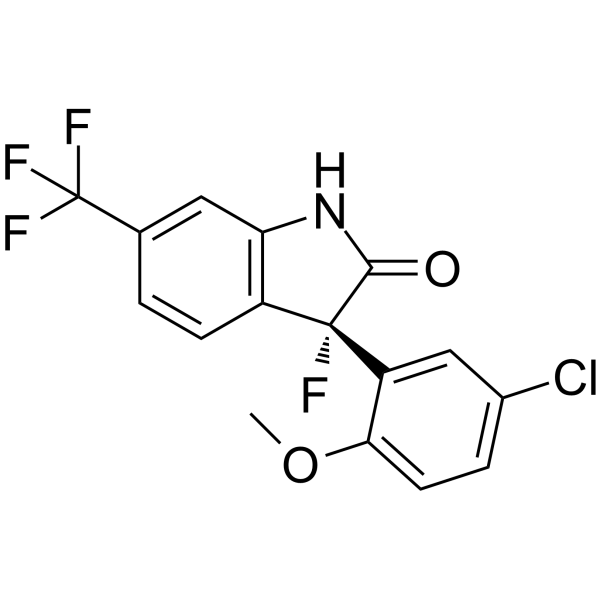
E0199 is a novel potent dual-target KV7/NaV modulator that activates the KV7 channel (KV7.2/7.3 (EC50 = 12.78 nM), KV7.2 (EC50 = 0.50 μM), and KV7.5 (EC50 = 27.14 nM) channels) while simultaneously blocks the NaV1.7 (IC50 = 0.52 μM), NaV1.8 (IC50 = 0.24 μM), and NaV1.9 (IC50 = 0.16 μM) channels. E0199 shows a potent analgesic effect without affecting heart and skeletal muscle ion channels critically in a chronic constriction injury (CCI) mouse model. E0199 can be used for Neuropathic pain (NP) research .
|
-
-
- HY-108591
-
|
R-L3
|
Potassium Channel
|
Cardiovascular Disease
|
|
L-364,373 (R-L3) is a voltage-gated Kv7.1 (KCNQ1)/mink channels activator. L-364,373 activates Iks (slow delayed rectifier potassium current) and shortens action potential duration in guinea pig cardiac myocytes, and suppresses early afterdepolarizations in rabbit ventricular myocytes .
|
-
-
- HY-175668
-
|
|
Potassium Channel
|
Neurological Disease
|
|
IDOR-1104-0086 is an orally active Kv7 potassium channel opener with an EC50 of 210 nM that can cross blood-brain barrier. IDOR-1104-0086 displays strong selectivity against the hERG channel with an IC20 of 25 μM. IDOR-1104-0086 exhibits efficacy in two rodent models of epilepsy and a favorable tolerability profile. IDOR-1104-0086 can used for the study of epilepsy .
|
-
-
- HY-110162
-
|
|
Potassium Channel
|
Neurological Disease
|
|
QO 58 is a potent modulator of K(v)7 channels. QO-58 increases the current amplitudes, shifts the voltage-dependent activation curve in a more negative direction and slows the deactivation of K(v)7.2/K(v)7.3 currents. QO-58 has the potential for the research of diseases associated with neuronal hyperexcitability .
|
-
-
- HY-P5925A
-
|
SsTx Toxin TFA
|
Potassium Channel
|
Neurological Disease
Inflammation/Immunology
|
|
Ssm Spooky Toxin TFA is found in Scolopendra mutilans that potently inhibits KCNQ (voltage-gated potassium channel family 7) channels, with IC50s of 2.8 μM, 5.26 μM and 0.1-0.3 M for Kv7.4, Kv1.3, and Shal channel, respectivily. Ssm Spooky Toxin TFA inhibits cytokine generation by specifically acting on the KV1.3 channel in T cells. Ssm Spooky Toxin TFA plays an essential role in the centipede’s circulatory system .
|
-
-
- HY-180468
-
|
|
Potassium Channel
|
Neurological Disease
|
|
Kv7 activator-2 (A14a) is a Kv7 potassium channel activator. Kv7 activator-2 can be used for the research of neurological disease, such as epilepsy .
|
-
-
- HY-164417
-
|
|
Potassium Channel
|
Neurological Disease
|
|
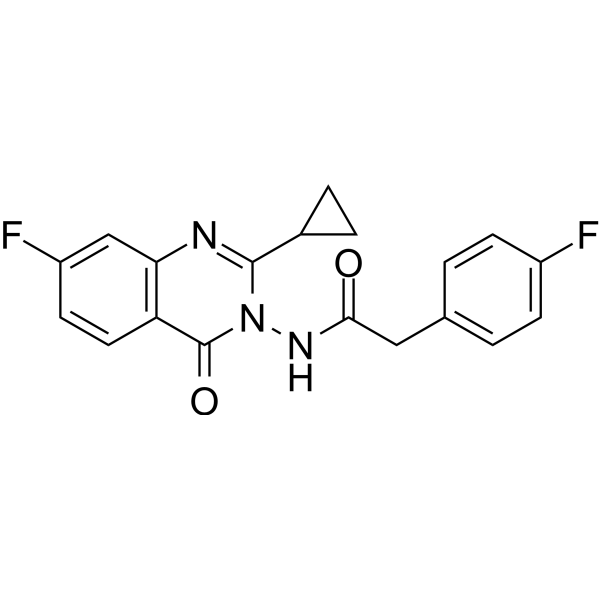
Kv7.2/Kv7.3 activator-1 (compound 517) is a potent Kv7.2/Kv7.3 channel activator with an EC50 value of <1 µM. Kv7.2/Kv7.3 activator-1 has the potential for the research of neurological diseases .
|
-
-
- HY-159506
-
-
-
- HY-110230
-
|
D 9998-d4 hydrochloride
|
Isotope-Labeled Compounds
Potassium Channel
iGluR
GABA Receptor
|
Neurological Disease
Inflammation/Immunology
|
|
Flupirtine-d4 (D 9998-d4) hydrochloride is the deuterium labeled Flupirtine hydrochloride (HY-W709349). Flupirtine hydrochloride is an orally active, blood-brain barrier-crossing non-opioid analgesic and neuroprotective agent. Flupirtine hydrochloride is a neuronal potassium channel opener (Kv7 activator), a NMDA receptor antagonist and a GABA receptor activator. Flupirtine hydrochloride stabilizes blood-brain-barrier integrity, reduces oxidative stress and brain leukocyte infiltration, enhances angioneurogenesis, suppresses calcium influx, stabilizes neuronal resting membrane potential, and counteracts focal cerebral ischemia. Flupirtine hydrochloride exhibits analgesic, muscle relaxant properties, protects neurons from excitotoxic, ischemic, or cytokine-mediated death. Flupirtine hydrochloride functions as a non-opioid analgesic without antipyretic or antiphlogistic properties, shows no relevant affinity to opiate receptor. Flupirtine hydrochloride can be used for the research of focal cerebral ischemia, pain, Alzheimer’s disease, or multiple sclerosis .
|
-
-
- HY-108590
-
-
-
- HY-178300
-
|
|
Potassium Channel
|
Neurological Disease
|
|
Kv7 activator-1 (Page 66) is a Kv7 channel activator. Kv7 activator-1 can be used for the studies of depression disorders, neurodegenerative diseases or pain disorders .
|
-
-
- HY-115823
-
|
|
Potassium Channel
|
Neurological Disease
|
|
ztz240 is a chemical modulator of voltage-gated potassium channel Kv7 (KCNQ) (KCNQ2 and 3: EC50=6.1 μM; KCNQ4: EC50=12.2 μM). ztz240 can be used in analgesia and anti-epileptic research .
|
-
-
- HY-P5925
-
|
SsTx Toxin
|
Potassium Channel
|
Neurological Disease
Inflammation/Immunology
|
|
Ssm Spooky Toxin is found in Scolopendra mutilans that potently inhibits KCNQ (voltage-gated potassium channel family 7) channels, with IC50s of 2.8 μM, 5.26 μM and 0.1-0.3 M for Kv7.4, Kv1.3, and Shal channel, respectivily. Ssm Spooky Toxin inhibits cytokine generation by specifically acting on the KV1.3 channel in T cells. Ssm Spooky Toxin plays an essential role in the centipede’s circulatory system .
|
-
-
- HY-108577R
-
|
|
Potassium Channel
|
Neurological Disease
|
|
XE991 dihydrochloride (Standard) is the analytical standard of XE991 dihydrochloride. This product is intended for research and analytical applications. XE991 dihydrochloride, a Kv7 (KCNQ) channels blocker, potently inhibits Kv7.1 (KCNQ1), Kv7.2 (KCNQ2), Kv7.2 + Kv7.3 (KCNQ3) channel, and M-current with IC50s of 0.75 μM, 0.71 μM, 0.6 μM, and 0.98 μM, respectively .
|
-
-
- HY-161625
-
-
-
- HY-161624
-
-
-
- HY-120960
-
|
ARA-S
|
Akt
p38 MAPK
Apoptosis
Potassium Channel
|
Cardiovascular Disease
Neurological Disease
|
|
N-Arachidonoyl-L-serine (ARA-S) is an endocannabinoid. N-Arachidonoyl-L-serine induces phosphorylation of Akt and MAPK in endothelial cells. N-Arachidonoyl-L-serine also induces endothelium-dependent vasodilation in isolated rat mesenteric and abdominal aortas. N-Arachidonoyl-L-serine exhibits neuroprotective effects after traumatic brain injury by reducing apoptosis. N-Arachidonoyl-L-serine promotes the opening of KV7.1/KCNE1 channels in mammalian cells and shortens the action potential duration in cardiomyocytes. N-Arachidonoyl-L-serine may be used in research on cardiovascular and cerebrovascular diseases and neurological disorders .
|
-
-
- HY-168214
-
|
|
Potassium Channel
|
Neurological Disease
|
|
Kv7.2/Kv7.3 agonist 1 (Compound 16) is an orally active agonist for KV7.2/7.3 channel (KCNQ2/3) with an EC50 of 1.03 μM. Kv7.2/Kv7.3 agonist 1 exhibits analgesic efficacy in mice chronic constriction injury (CCI) model and mice Streptozotocin (HY-13753)-induced diabetic peripheral neuropathic pain (DPNP) model, with ED50 of 12.02 and 9.63 mg/kg .
|
-
-
- HY-108327
-
|
|
Potassium Channel
|
Neurological Disease
|
|
PF-05020182 is an orally active opener for Kv7 channel, that activates human Kv7.2/7.3, Kv7.4 and Kv7.3/7.5 with EC50 of 334, 625 and 588 nM, respectively. PF-05020182 exhibits anticonvulsant activity in rats corneal electric shock-induced tonic seizure (MES) models. PF-05020182 is blood-brain barrier (BBB) penetrable .
|
-
-
- HY-W020468R
-
|
DuP 996 (Standard)
|
Reference Standards
Potassium Channel
TRP Channel
|
Neurological Disease
|
|
Linopirdine (DuP 996) is an orally active, selective M-type K+ current (IM; Kv7; KCNQ Channels) inhibitor with an IC50 of 2.4 μM. Linopirdine is a TRPV1 agonist. Linopirdine, a putative cognition enhancing agent, increases acetylcholine release in rat brain tissue .
|
-
-
- HY-108584R
-
|
BMS-204352 (Standard)
|
Potassium Channel
Reference Standards
|
Neurological Disease
|
|
Flindokalner (Standard) is the analytical standard of Flindokalner. This product is intended for research and analytical applications. Flindokalner (BMS-204352) is a potassium channel modulator. Flindokalner is a positive modulator of all neuronal Kv7 channel subtypes expressed in HEK293 cells. Flindokalner is also a large conductance calcium-activated K channel (BKca) positive modulator. Flindokalner shows a negative modulatory activity at Kv7.1 channels (Ki=3.7 μM), and acts as a negative modulator of GABAA receptors. Flindokalner shows anxiolytic efficacy in vivo .
|
-
-
- HY-181874
-
|
|
Potassium Channel
|
Neurological Disease
|
|
E0714 is a blood-brain barrier-permeable, selective Kv7.2 potassium channel activator, with EC50 values of 1.90 μM and 0.021 μM for homotetrameric Kv7.2 channels and heterotetrameric Kv7.2/7.3 channels, respectively. E0714 exhibits anticonvulsant activity. E0714 can be used in research related to epilepsy .
|
-
-
- HY-18063A
-
|
|
Potassium Channel
Cytochrome P450
|
Neurological Disease
|
|
ML252 hydrochloride is a selective inhibitor of KCNQ2 (Kv7.2) channel with IC50s of 69 nM, 2.92 μM, 0.12 μM and 0.20 μM for KCNQ2, KCNQ1 (Kv7.1), KCNQ2/Q3 and KCNQ4, respectively. ML252 hydrochloride also inhibits Cytochrome P450 with IC50s of 6.1 nM (CYP1A2), 18.9 nM (CYP2C9), 3.9 nM (CYP3A4), 19.9 nM (CYP2D6), respectively. ML252 hydrochloride shows highly brain penetrant .
|
-
-
- HY-172584
-
|
|
Potassium Channel
|
Neurological Disease
|
|
Kv7.2/Kv7.3 modulator-1 (compound 6a) is a Kv7.2/Kv7.3 modulator with the pEC50 of 7.96 (KV7.2/3 channel opening activity). Kv7.2/Kv7.3 modulator-1 can be used for study of epilepsy, depression,brain injury and pain .
|
-
-
- HY-172585
-
|
|
Potassium Channel
|
Neurological Disease
|
|
Kv7.2/Kv7.3 modulator-2 (compound 7d) is a Kv7.2/Kv7.3 modulator with the pEC50 of 7.42 (KV7.2/3 channel opening activity). Kv7.2/Kv7.3 modulator-2 can be used for study of epilepsy, depression,brain injury and pain .
|
-
-
- HY-171116
-
|
|
Potassium Channel
|
Neurological Disease
|
|
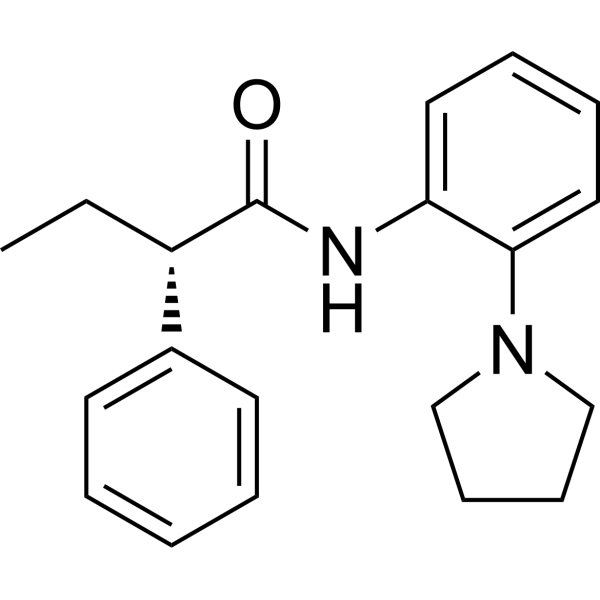
Kv7.2/Kv7.3 activator-4 (example 53) is a Kv7.2/Kv7.3 potassium channel activator that can be used in the research of epilepsy, neuropathic pain and other related diseases .
|
-
-
- HY-101843R
-
|
|
Reference Standards
Potassium Channel
|
Neurological Disease
|
|
ML213 (Standard) is the analytical standard of ML213 (HY-101843). This product is intended for research and analytical applications. ML213 is a selective activator of Kv7.2 and Kv7.4 channels, enhances Kv7.2 and Kv7.4 channels with EC50s of 230 and 510 nM, respectively.
|
-
-
- HY-108577AR
-
|
|
Potassium Channel
Reference Standards
|
Neurological Disease
|
|
XE991 (Standard) is the analytical standard of XE991 (HY-108577A). This product is intended for research and analytical applications. XE 991, a Kv7 (KCNQ) channels blocker, potently inhibits Kv7.1 (KCNQ1), Kv7.2 (KCNQ2), Kv7.2 + Kv7.3 (KCNQ3) channel, and M-current with IC50s of 0.75 μM, 0.71 μM, 0.6 μM, and 0.98 μM, respectively .
|
-
-
- HY-W709349
-
|
D 9998 hydrochloride
|
Potassium Channel
iGluR
GABA Receptor
|
Neurological Disease
Inflammation/Immunology
|
|
Flupirtine (D 9998) hydrochloride is an orally active, blood-brain barrier-crossing non-opioid analgesic and neuroprotective agent. Flupirtine hydrochloride is a neuronal potassium channel opener (Kv7 activator), a NMDA receptor antagonist and a GABA receptor activator. Flupirtine hydrochloride stabilizes blood-brain-barrier integrity, reduces oxidative stress and brain leukocyte infiltration, enhances angioneurogenesis, suppresses calcium influx, stabilizes neuronal resting membrane potential, and counteracts focal cerebral ischemia. Flupirtine hydrochloride exhibits analgesic, muscle relaxant properties, protects neurons from excitotoxic, ischemic, or cytokine-mediated death. Flupirtine hydrochloride functions as a non-opioid analgesic without antipyretic or antiphlogistic properties, shows no relevant affinity to opiate receptor. Flupirtine hydrochloride can be used for the research of focal cerebral ischemia, pain, Alzheimer’s disease, or multiple sclerosis .
|
-
-
- HY-17001R
-
|
D 9998 Maleate (Standard)
|
Reference Standards
Potassium Channel
iGluR
GABA Receptor
|
Neurological Disease
Inflammation/Immunology
|
|
Flupirtine Maleate (Standard) is the analytical standard of Flupirtine Maleate (HY-17001). This product is intended for research and analytical applications. Flupirtine Maleate is an orally active, blood-brain barrier-crossing non-opioid analgesic and neuroprotective agent. Flupirtine Maleate is a neuronal potassium channel opener (Kv7 activator), a NMDA receptor antagonist and a GABA receptor activator. Flupirtine Maleate stabilizes blood-brain-barrier integrity, reduces oxidative stress and brain leukocyte infiltration, enhances angioneurogenesis, suppresses calcium influx, stabilizes neuronal resting membrane potential, and counteracts focal cerebral ischemia. Flupirtine Maleate exhibits analgesic, muscle relaxant properties, protects neurons from excitotoxic, ischemic, or cytokine-mediated death. Flupirtine Maleate functions as a non-opioid analgesic without antipyretic or antiphlogistic properties, shows no relevant affinity to opiate receptor. Flupirtine Maleate can be used for the research of focal cerebral ischemia, pain, Alzheimer’s disease, or multiple sclerosis .
|
-
-
- HY-17001AR
-
|
D 9998 (Standard)
|
Reference Standards
Potassium Channel
iGluR
GABA Receptor
|
Neurological Disease
Inflammation/Immunology
|
|
Flupirtine (Standard) (D 9998 (Standard)) is the analytical standard of Flupirtine (HY-17001A). This product is intended for research and analytical applications. Flupirtine is an orally active, blood-brain barrier-crossing non-opioid analgesic and neuroprotective agent. Flupirtine is a neuronal potassium channel opener (Kv7 activator), a NMDA receptor antagonist and a GABA receptor activator. Flupirtine stabilizes blood-brain-barrier integrity, reduces oxidative stress and brain leukocyte infiltration, enhances angioneurogenesis, suppresses calcium influx, stabilizes neuronal resting membrane potential, and counteracts focal cerebral ischemia. Flupirtine exhibits analgesic, muscle relaxant properties, protects neurons from excitotoxic, ischemic, or cytokine-mediated death. Flupirtine functions as a non-opioid analgesic without antipyretic or antiphlogistic properties, shows no relevant affinity to opiate receptor. Flupirtine can be used for the research of focal cerebral ischemia, pain, Alzheimer’s disease, or multiple sclerosis .
|
-
-
- HY-101396R
-
|
|
Potassium Channel
Reference Standards
|
Neurological Disease
|
|
ICA-069673 (Standard) is the analytical standard of ICA-069673 (HY-101396). This product is intended for research and analytical applications. ICA-069673 is a KCNQ2/Q3 potassium channel activator. ICA-069673 demonstrates greater selectivity for KV7.2/7.3 over KV7.3/KV7.5, with EC50s of 0.69 μM and 14.3 μM, respectively. ICA-069673 inhibits spontaneous phasic and nerve-evoked contractions in guinea pig detrusor smooth muscle (DSM). ICA-069673 also decreases the global intracellular Ca(2+) concentration in DSM cells .
|
-
-
- HY-108590R
-
|
XR-543 (Standard)
|
Reference Standards
Potassium Channel
|
Neurological Disease
|
|
DMP-543 (Standard) is the analytical standard of DMP-543 (HY-108590). This product is intended for research and analytical applications. DMP-543 (XR-543) is a KV7 channel blocker, also acts as a potent neurotransmitter release enhancer .
|
-
-
- HY-181128
-
|
|
Potassium Channel
|
Neurological Disease
|
|
QO-83, Retigabine analogue, is a voltage-gated potassium channel KCNQ2 (Kv7.2) activator with an EC50 of 0.56 μM. QO-83 binds to a single hydrophobic pocket of KCNQ2-CaM complex in closed conformation. QO-83 induces a negative shift in the voltage-dependent activation curve of KCNQ2 channels, increasing the channel's voltage sensitivity. QO-83 can be used for the research of epilepsies .
|
-
-
- HY-108591R
-
|
R-L3 (Standard)
|
Reference Standards
Potassium Channel
|
Cardiovascular Disease
|
|
L-364,373 (Standard) is the analytical standard of L-364,373 (HY-108591). This product is intended for research and analytical applications. L-364,373 (R-L3) is a voltage-gated Kv7.1 (KCNQ1)/mink channels activator. L-364,373 activates Iks (slow delayed rectifier potassium current) and shortens action potential duration in guinea pig cardiac myocytes, and suppresses early afterdepolarizations in rabbit ventricular myocytes .
|
-
-
- HY-W709349S
-
|
D 9998-d6 hydrochloride
|
Isotope-Labeled Compounds
Potassium Channel
iGluR
GABA Receptor
|
Neurological Disease
|
|
Flupirtine-d6 (D 9998-d6) hydrochloride is the deuterium labeled Flupirtine hydrochloride (HY-W709349). Flupirtine hydrochloride is an orally active, blood-brain barrier-crossing non-opioid analgesic and neuroprotective agent. Flupirtine hydrochloride is a neuronal potassium channel opener (Kv7 activator), a NMDA receptor antagonist and a GABA receptor activator. Flupirtine hydrochloride stabilizes blood-brain-barrier integrity, reduces oxidative stress and brain leukocyte infiltration, enhances angioneurogenesis, suppresses calcium influx, stabilizes neuronal resting membrane potential, and counteracts focal cerebral ischemia. Flupirtine hydrochloride exhibits analgesic, muscle relaxant properties, protects neurons from excitotoxic, ischemic, or cytokine-mediated death. Flupirtine hydrochloride functions as a non-opioid analgesic without antipyretic or antiphlogistic properties, shows no relevant affinity to opiate receptor. Flupirtine hydrochloride can be used for the research of focal cerebral ischemia, pain, Alzheimer’s disease, or multiple sclerosis .
|
-
| Cat. No. |
Product Name |
Type |
-
- HY-W001992
-
|
3-Nitro-2,6-dichloropyridine
|
Biochemical Assay Reagents
|
|
2,6-Dichloro-3-nitropyridine is a starting compound for the synthesis of a sulfide analog of Flupirtine (HY-17001A) with KV7.2/3 channel opening activity. 2,6-Dichloro-3-nitropyridine can be used in pain research .
|
| Cat. No. |
Product Name |
Target |
Research Area |
-
- HY-P5925A
-
|
SsTx Toxin TFA
|
Potassium Channel
|
Neurological Disease
Inflammation/Immunology
|
|
Ssm Spooky Toxin TFA is found in Scolopendra mutilans that potently inhibits KCNQ (voltage-gated potassium channel family 7) channels, with IC50s of 2.8 μM, 5.26 μM and 0.1-0.3 M for Kv7.4, Kv1.3, and Shal channel, respectivily. Ssm Spooky Toxin TFA inhibits cytokine generation by specifically acting on the KV1.3 channel in T cells. Ssm Spooky Toxin TFA plays an essential role in the centipede’s circulatory system .
|
-
- HY-P5925
-
|
SsTx Toxin
|
Potassium Channel
|
Neurological Disease
Inflammation/Immunology
|
|
Ssm Spooky Toxin is found in Scolopendra mutilans that potently inhibits KCNQ (voltage-gated potassium channel family 7) channels, with IC50s of 2.8 μM, 5.26 μM and 0.1-0.3 M for Kv7.4, Kv1.3, and Shal channel, respectivily. Ssm Spooky Toxin inhibits cytokine generation by specifically acting on the KV1.3 channel in T cells. Ssm Spooky Toxin plays an essential role in the centipede’s circulatory system .
|
| Cat. No. |
Compare |
Product Name |
Species |
Source |
Image |
Compare Products
|
| Products |
|
| Cat. No. |
|
| Species |
|
| Source |
|
| Tag |
|
| Accession |
|
| Gene ID |
|
| Molecular Weight |
|
| Purity |
|
| Endotoxin Level |
|
| Biological Activity |
|
| Appearance |
|
| Formulation |
|
| Storage & Stability |
|
| Shipping |
|
| Free Sample |
Yes
No
|
| Size |
* This product has been "discontinued".
Optimized version of product available:
|
| Cat. No. |
Product Name |
Chemical Structure |
-
- HY-W709349S
-
|
|
|
Flupirtine-d6 (D 9998-d6) hydrochloride is the deuterium labeled Flupirtine hydrochloride (HY-W709349). Flupirtine hydrochloride is an orally active, blood-brain barrier-crossing non-opioid analgesic and neuroprotective agent. Flupirtine hydrochloride is a neuronal potassium channel opener (Kv7 activator), a NMDA receptor antagonist and a GABA receptor activator. Flupirtine hydrochloride stabilizes blood-brain-barrier integrity, reduces oxidative stress and brain leukocyte infiltration, enhances angioneurogenesis, suppresses calcium influx, stabilizes neuronal resting membrane potential, and counteracts focal cerebral ischemia. Flupirtine hydrochloride exhibits analgesic, muscle relaxant properties, protects neurons from excitotoxic, ischemic, or cytokine-mediated death. Flupirtine hydrochloride functions as a non-opioid analgesic without antipyretic or antiphlogistic properties, shows no relevant affinity to opiate receptor. Flupirtine hydrochloride can be used for the research of focal cerebral ischemia, pain, Alzheimer’s disease, or multiple sclerosis .
|
-
Your information is safe with us. * Required Fields.
Inquiry Information
- Product Name:
- Cat. No.:
- Quantity:
- MCE Japan Authorized Agent:

