



XE991 dihydrochloride
Based on 4 publication(s) in Google Scholar
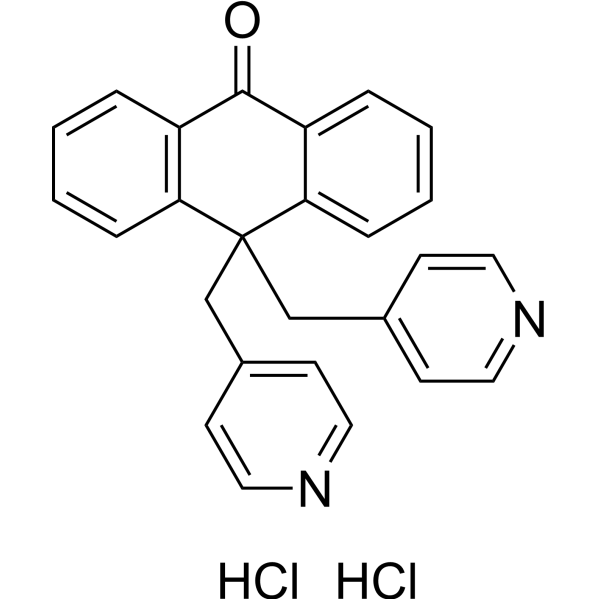
XE991 dihydrochloride, a Kv7 (KCNQ) channels blocker, potently inhibits Kv7.1 (KCNQ1), Kv7.2 (KCNQ2), Kv7.2 + Kv7.3 (KCNQ3) channel, and M-current with IC50s of 0.75 μM, 0.71 μM, 0.6 μM, and 0.98 μM, respectively.
For research use only. We do not sell to patients.
- Purity : 99.97%
- CAS No.: 122955-13-9
- Formula: C26H22Cl2N2O
- Molecular Weight:449.37
-
Storage:
4°C, sealed storage, away from moisture
* In solvent : -80°C, 6 months; -20°C, 1 month (sealed storage, away from moisture)

To place orders, for customer services and technical support, please contact: MedChemExpress USA
Tel: 609-228-6898 E-mail: [email protected] [email protected]


-
 Biological Activity
-
Chemical Information
-
Solvent & Solubility
- Purity & Documentation
- References
-
 Help & FAQs


-
HY-101843
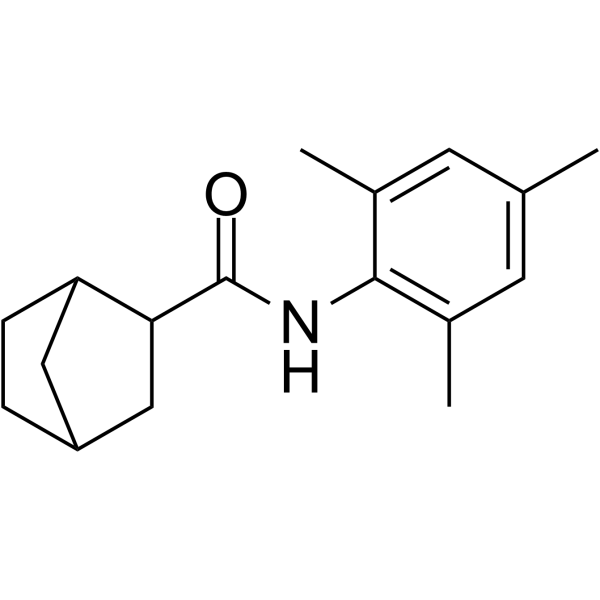
ML213Kv7.2/7.4 Channels Activator -
HY-12343
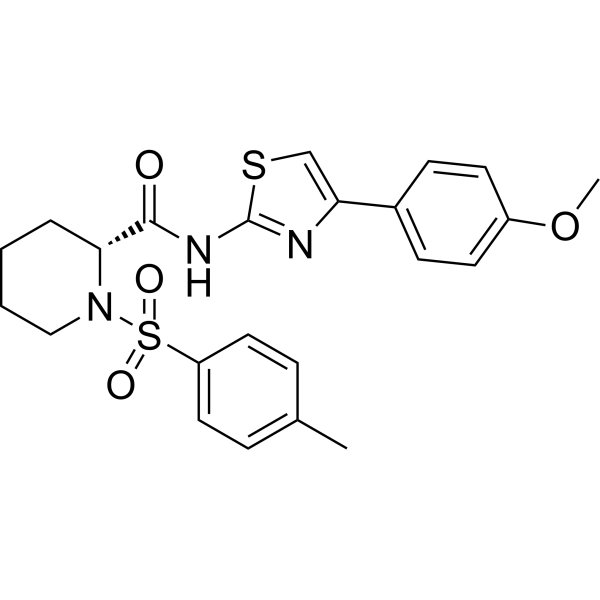
ML277Potassium Channel Activator -
HY-100230A
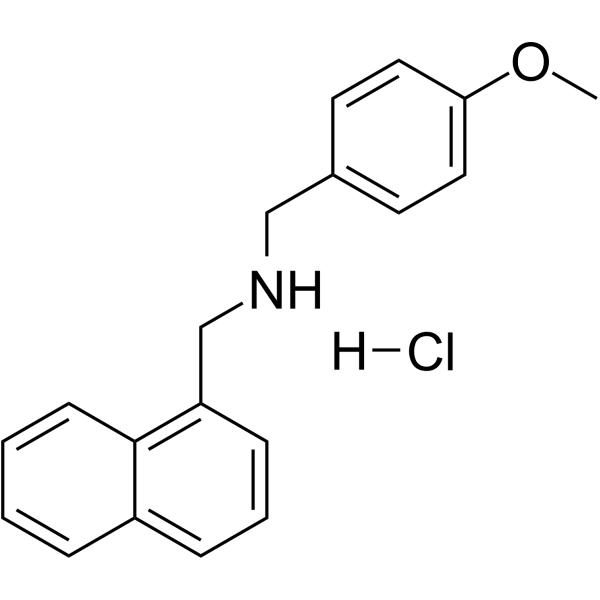
ML133 hydrochlorideKir2 Inhibitor -
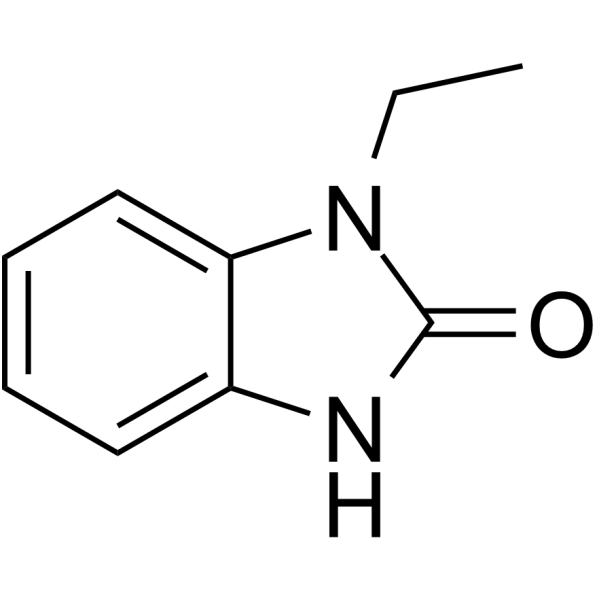
HY-101360
1-EBIOK+ Channels Activator -
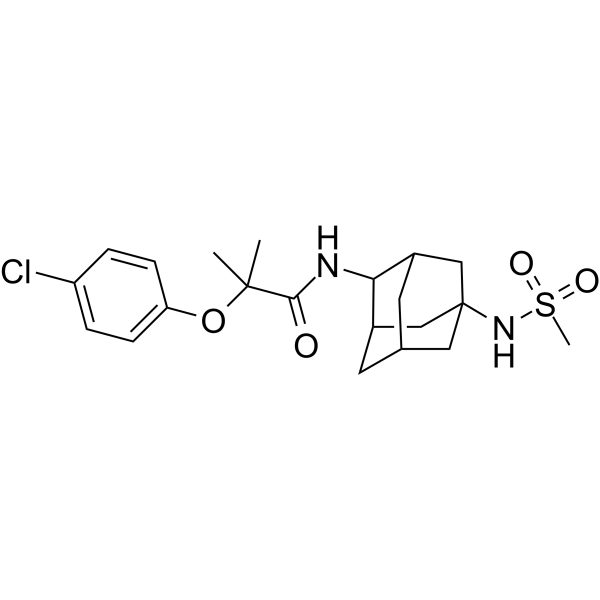
HY-16953
JNJ 303Potassium Channel Inhibitor -
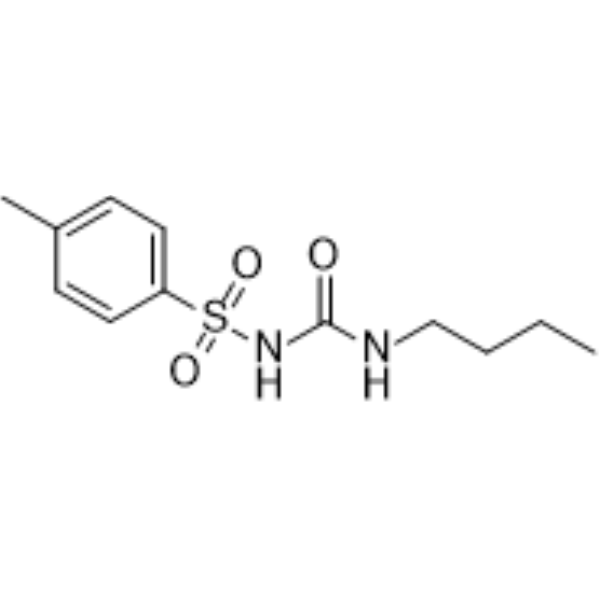
HY-B0401
TolbutamideKATP Inhibitor -
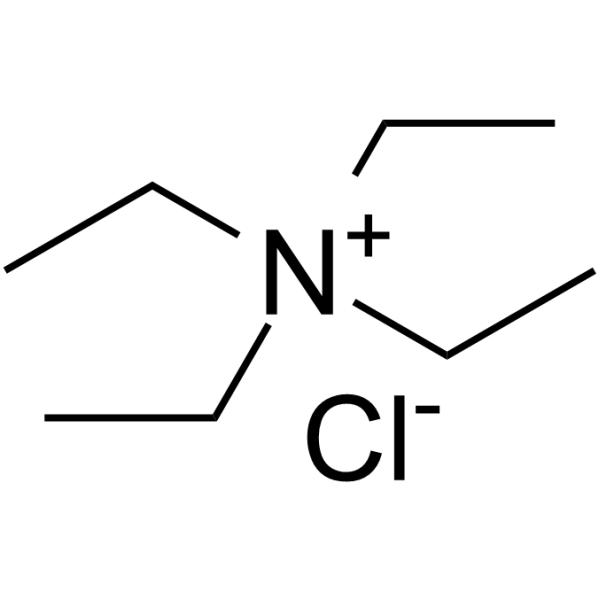
HY-B1793
Tetraethylammonium chloridePotassium Channel Inhibitor -
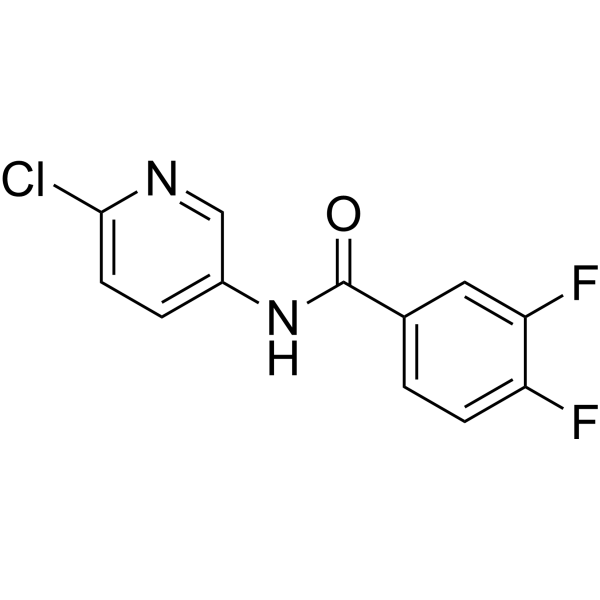
HY-122114
ICA-27243KCNQ2/Q3 Opener -

HY-B0401R
Tolbutamide (Standard)KATP Inhibitor -
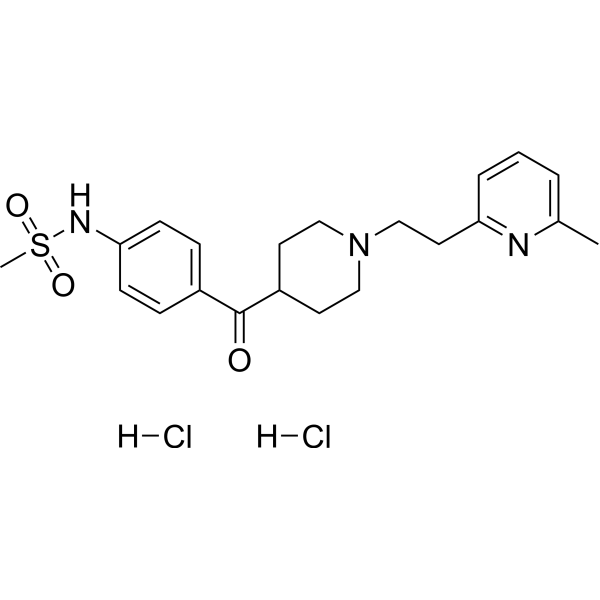
HY-15551
E-4031hERG Channels Blocker -
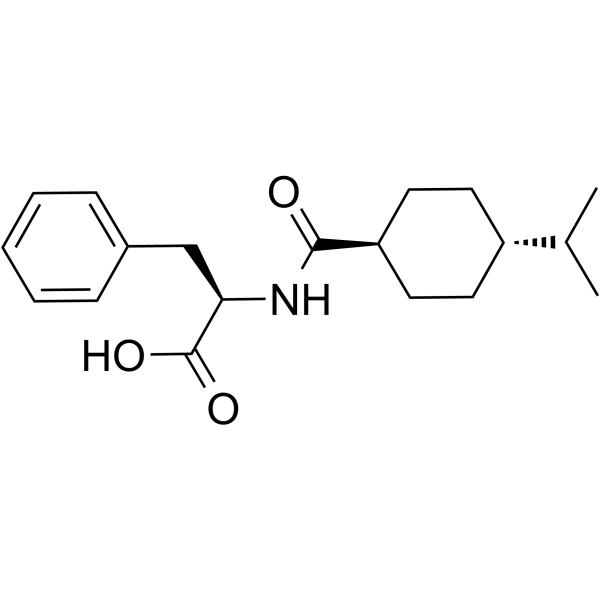
HY-B0422
NateglinideK+ Channel Inhibitor -
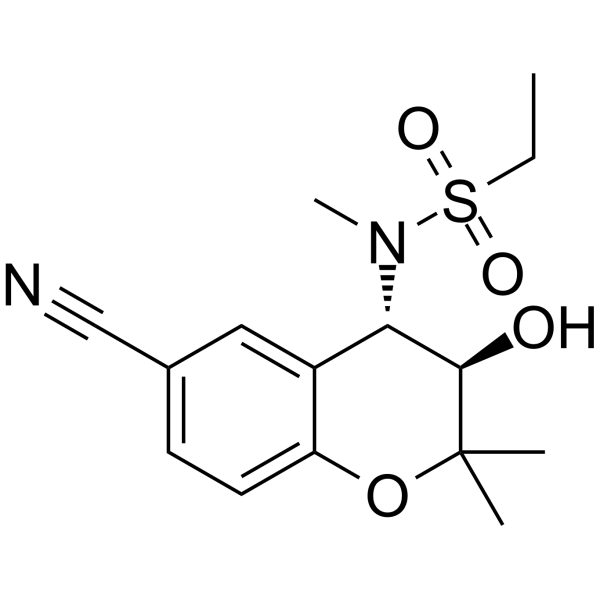
HY-108575
Chromanol 293BIKs Blocker
Publications Citing Use of MedChemExpress (MCE) XE991 dihydrochloride
More Customer Validation & Images

-
Bio/Physico-chemical Assay

-
Bio/Physico-chemical Assay

-
Bio/Physico-chemical Assay


Biological Activity
Description
IC50 & Target
IC50: 0.75 µM ( Kv7.1 channel), 0.71 µM (Kv7.2 channel), 0.6 µM (Kv7.2 + Kv7.3 channel), 0.98 μM (M-current)[1]
In Vitro
XE991 dihydrochloride possesses an EC50 of 490 nM for enhancement of [3H]ACh release from rat brain slices, and shows good in vivo potency and duration of action[2].
MedChemExpress (MCE) has not independently confirmed the accuracy of these methods. They are for reference only. .


Chemical Information
-
CAS No. 122955-13-9
-
Appearance Solid
-
Molecular Weight 449.37
-
Formula C26H22Cl2N2O
-
Color Off-white to light yellow
-
SMILES
O=C1C2=C(C=CC=C2)C(CC3=CC=NC=C3)(CC4=CC=NC=C4)C5=CC=CC=C15.Cl.Cl
-
Shipping
Room temperature in continental US; may vary elsewhere.
-
Storage
4°C, sealed storage, away from moisture
* In solvent : -80°C, 6 months; -20°C, 1 month (sealed storage, away from moisture)


Publications (4)
-
Journal Impact Factor
-
Most Recent
-
J Clin Invest
Potentiation of BKCa channels by cystic fibrosis transmembrane conductance regulator (CFTR) correctors VX-445 and VX-121. [Abstract]2024 Jul 2;134(16):e176328. PMID: 38954478
XE991 dihydrochloride purchased from MedChemExpress. Usage Cited in: J Clin Invest. 2024 Jul 2;134(16):e176328. [Abstract]
Subsequent to amiloride, forskolin (10 μM) stimulated a paxilline-sensitive increase in K+ secretion, which is recognized as an initial transient spike followed by a sustained increase in Isc. Addition of XE991 dihydrochloride (10 μM) had little effect on the remaining current.
-
-
Front Physiol
Kv7(KCNQ)-K+-Channels Influence Total Peripheral Resistance in Female but Not Male Rats, and Hamper Catecholamine Release in Hypertensive Rats of Both Sexes. [Abstract]2018 Feb 20:9:117. PMID: 29515459 -
Front Physiol
M-currents (Kv7.2-7.3/KCNQ2-KCNQ3) Are Responsible for Dysfunctional Autonomic Control in Hypertensive Rats. [Abstract]2016 Nov 29:7:584. PMID: 27965589
XE991 dihydrochloride purchased from MedChemExpress. Usage Cited in: Front Physiol. 2016 Nov 29:7:584. [Abstract]
XE-991 (XE991 dihydrochloride) reduced the TPR-peak-response to 3,4-DAP in WKY.
XE991 dihydrochloride purchased from MedChemExpress. Usage Cited in: Front Physiol. 2016 Nov 29:7:584. [Abstract]
XE-991 (XE991 dihydrochloride) induced an immediate, but transient rise in TPR (P ≤ 0.002) of equal magnitude in the two strains.


Solvent & Solubility
In Vitro:
H2O : 11.11 mg/mL (24.72 mM; Need ultrasonic)
DMSO : 7.14 mg/mL (15.89 mM; Need ultrasonic; Hygroscopic DMSO has a significant impact on the solubility of product, please use newly opened DMSO)
Please refer to the solubility information to select the appropriate solvent. Once prepared, please aliquot and store the solution to prevent product inactivation from repeated freeze-thaw cycles.
Storage method and period of stock solution: -80°C, 6 months; -20°C, 1 month (sealed storage, away from moisture). When stored at -80°C, please use it within 6 months. When stored at -20°C, please use it within 1 month.
* Note: If you choose water as the stock solution, please dilute it to the working solution, then filter and sterilize it with a 0.22 μm filter before use.
Please refer to the solubility information to select the appropriate solvent. Once prepared, please aliquot and store the solution to prevent product inactivation from repeated freeze-thaw cycles.
Storage method and period of stock solution: -80°C, 6 months; -20°C, 1 month (sealed storage, away from moisture). When stored at -80°C, please use it within 6 months. When stored at -20°C, please use it within 1 month.
* Note: If you choose water as the stock solution, please dilute it to the working solution, then filter and sterilize it with a 0.22 μm filter before use.
Concentration (start) × Volume (start) = Concentration (final) × Volume (final)
In Vivo:
Select the appropriate dissolution method based on your experimental animal and administration route.
- For the following dissolution methods, please ensure to first prepare a clear stock solution using an In Vitro approach and then sequentially add co-solvents:
- To ensure reliable experimental results, the clarified stock solution can be appropriately stored based on storage conditions. As for the working solution for In Vivo experiments, it is recommended to prepare freshly and use it on the same day.
- The percentages shown for the solvents indicate their volumetric ratio in the final prepared solution. If precipitation or phase separation occurs during preparation, heat and/or sonication can be used to aid dissolution.
Add each solvent one by one: 10% DMSO 40% PEG300 5% Tween-80 45% Saline
Solubility: ≥ 0.71 mg/mL (1.58 mM); Clear solution
This protocol yields a clear solution of ≥ 0.71 mg/mL (saturation unknown).
Taking 1 mL working solution as an example, add 100 μL DMSO stock solution (7.1 mg/mL) to 400 μL PEG300, and mix evenly; then add 50 μL Tween-80 and mix evenly; then add 450 μL Saline to adjust the volume to 1 mL.
Preparation of Saline: Dissolve 0.9 g sodium chloride in ddH₂O and dilute to 100 mL to obtain a clear Saline solution.
Add each solvent one by one: 10% DMSO 90% (20% SBE-β-CD in Saline)
Solubility: ≥ 0.71 mg/mL (1.58 mM); Clear solution
This protocol yields a clear solution of ≥ 0.71 mg/mL (saturation unknown).
Taking 1 mL working solution as an example, add 100 μL DMSO stock solution (7.1 mg/mL) to 900 μL 20% SBE-β-CD in Saline, and mix evenly.
Preparation of 20% SBE-β-CD in Saline (4°C, storage for one week): 2 g SBE-β-CD powder is dissolved in 10 mL Saline, completely dissolve until clear.
In Vivo Dissolution Calculator
Please enter the basic information of animal experiments:
-
-
-
-
Recommended: Prepare an additional quantity of animals to account for potential losses during experiments.
Please enter your animal formula composition:
-
%DMSO +
Recommended: Keep the proportion of DMSO in working solution below 2% if your animal is weak.
-
%+
-
+%Tween-80 + +
-
%Saline +
The co-solvents required include: DMSO, . All of co-solvents are available by MedChemExpress (MCE). , Tween 80. All of co-solvents are available by MedChemExpress (MCE).
Working solution concentration: 0.22 mg/mL
Method for preparing stock solution: mg drug dissolved in μL DMSO. Stock solution concentration: mg/mL. * In solvent : -80°C, 6 months; -20°C, 1 month (sealed storage, away from moisture)
1. Take μL DMSO stock solution;
2. Add μL .
μL , mix evenly;
3. Then add μL Tween 80, mix evenly;
4. Then add μL
Please ensure that the stock solution in the first step is dissolved to a clear state, and add co-solvents in sequence. You can use ultrasonic heating (ultrasonic cleaner, recommended frequency 20-40 kHz), vortexing, etc. to assist dissolution.


Purity & Documentation
-
Data Sheet (279 KB)
-
SDS (394 KB)
- English - EN (394 KB)
- Français - FR (394 KB)
- Deutsch - DE (394 KB)
- Norwegian - NO (394 KB)
- Español - ES (394 KB)
- Swedish - SV (394 KB)
- Italian - IT (394 KB)
- Korean - KR (394 KB)
- Portuguese - PT (394 KB)
-
Handling Instructions (2659 KB)
References
[1]. Zaczek R, et al. Two new potent neurotransmitter release enhancers, 10,10-bis(4-pyridinylmethyl)-9(10H)-anthracenone and 10,10-bis(2-fluoro-4-pyridinylmethyl)-9(10H)-anthracenone: comparison to linopirdine. J Pharmacol Exp Ther. 1998 May;285(2):724-30. PMID: 9580619.. . . [Content Brief]
[2]. Wang HS, et al. KCNQ2 and KCNQ3 potassium channel subunits: molecular correlates of the M-channel. Science. 1998 Dec 4;282(5395):1890-3. [Content Brief]


Complete Stock Solution Preparation Table
Please refer to the solubility information to select the appropriate solvent. Once prepared, please aliquot and store the solution to prevent product inactivation from repeated freeze-thaw cycles.
Storage method and period of stock solution: -80°C, 6 months; -20°C, 1 month (sealed storage, away from moisture). When stored at -80°C, please use it within 6 months. When stored at -20°C, please use it within 1 month.
| Optional Solvent | Concentration Solvent Mass | 1 mg | 5 mg | 10 mg | 25 mg |
|---|---|---|---|---|---|
| DMSO / H2O | 1 mM | 2.2253 mL | 11.1267 mL | 22.2534 mL | 55.6334 mL |
| 5 mM | 0.4451 mL | 2.2253 mL | 4.4507 mL | 11.1267 mL | |
| 10 mM | 0.2225 mL | 1.1127 mL | 2.2253 mL | 5.5633 mL | |
| 15 mM | 0.1484 mL | 0.7418 mL | 1.4836 mL | 3.7089 mL | |
| H2O | 20 mM | 0.1113 mL | 0.5563 mL | 1.1127 mL | 2.7817 mL |
* Note: If you choose water as the stock solution, please dilute it to the working solution, then filter and sterilize it with a 0.22 μm filter before use.


XE991 dihydrochloride Related Classifications
HY-108577 Related Classifications
 Powered by Bioz