1. Search Result
Search Result
Results for "

Myc target genes

" in MedChemExpress (MCE) Product Catalog:

21

Inhibitors & Agonists

2

Click Chemistry

1

Oligonucleotides

Targets Recommended:
Cat. No. Product Name Target Research Areas Chemical Structure
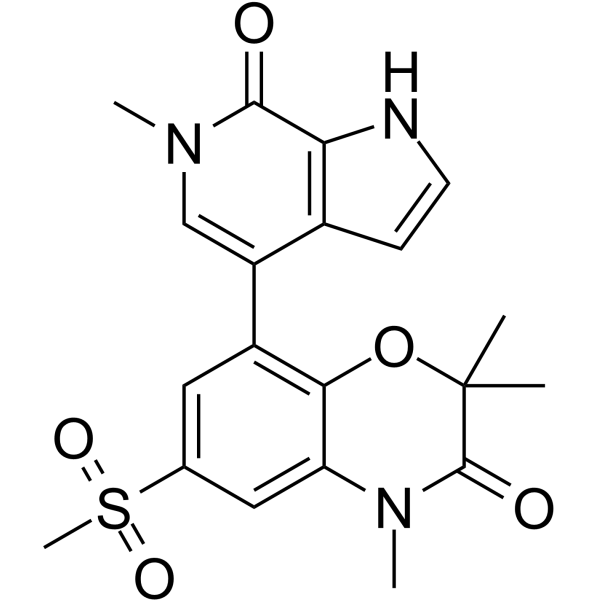
  • HY-174228

    Insulin Receptor Apoptosis Cancer
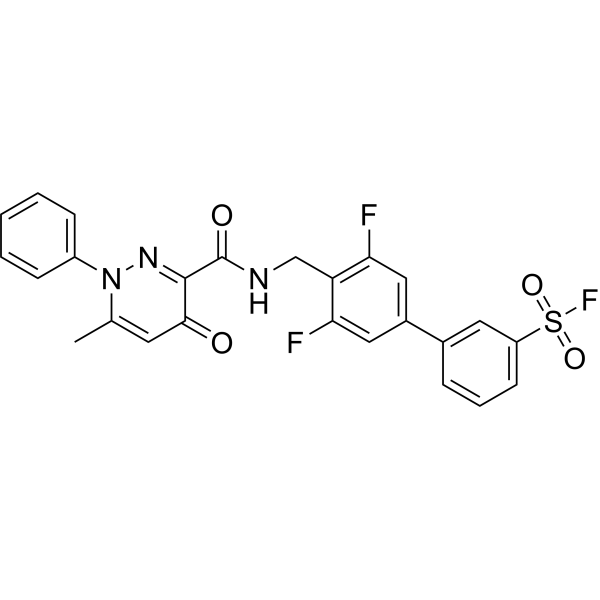
    I3IN-002 is a small-molecule RNA-binding protein IGF2BP3 inhibitor with an IC50 value of approximately 2 μM in SEM cells. I3IN-002 interferes with interaction with m6 A-modified mRNAs, disrupting the stabilization of target genes (such as CDK6, MYC, and BCL2) to inhibit leukemic cell growth, induce cell cycle arrest, and promote apoptosis. I3IN-002 is promising for research of B-cell acute lymphoblastic leukemia .
    I3IN-002
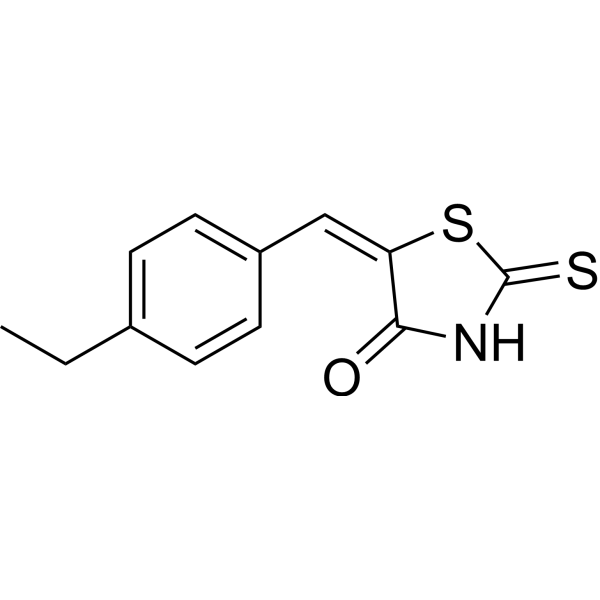
  • HY-12702
    10058-F4
    Maximum Cited Publications
    55 Publications Verification

    c-Myc Autophagy Cancer
    10058-F4 is a c-Myc inhibitor that prevents c-Myc-Max dimerization and transactivation of c-Myc target gene expression.
    10058-F4
  • HY-172113

    PROTACs YAP c-Myc Apoptosis Cancer
    H122 is a PROTAC degrader for TEAD that degrades TEAD1 with a DC50 of 3 nM. H122 exhibits good affinity to TEAD2, TEAD3, and TEAD4 with Ki values of 2.0, 3.6 and 1.6 nM, respectively. H122 relies on binding to TEAD1 and CRBN, functional E3 ligase activity, and a functional proteasome for degradation.H122 induces degradation of TEAD3 and forms a ternary complex with TEAD4 and CRBN/DDB1 to mediate degradation.H122 downregulates expression of Myc target genes. H122 exhibits antitumor efficacy in MSTO-211H mouse xenograft models.H122 can be used for the research of malignant mesothelioma .
    H122
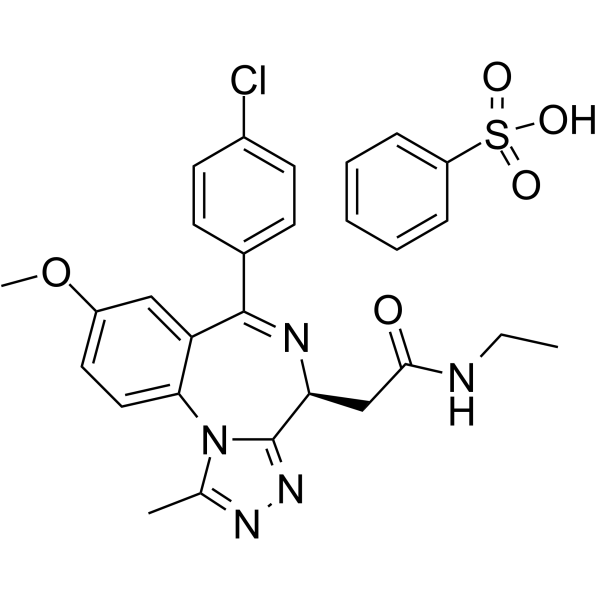
  • HY-13032B
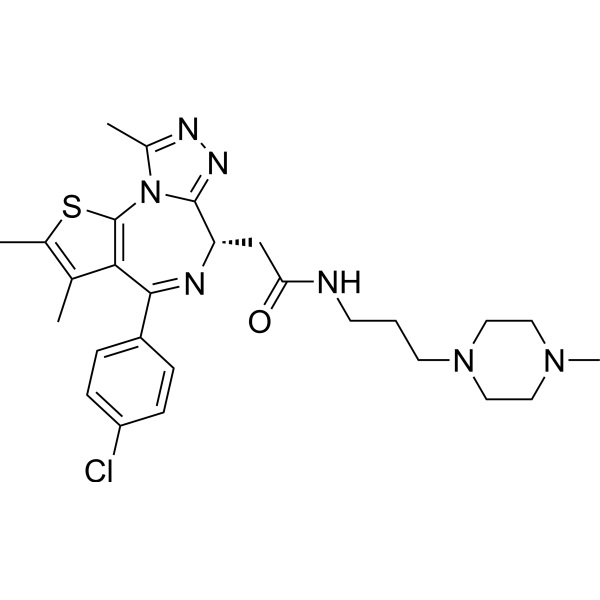
    Molibresib besylate
    20+ Cited Publications

    GSK 525762C; I-BET 762 besylate

    Epigenetic Reader Domain ERK Cancer
    Molibresib besylate (GSK 525762C; I-BET 762 besylate) is an orally active pan-BET inhibitor that targets and binds to BRD2, BRD3, BRD4 and BRDT. By competitively occupying acetylated lysine binding sites, Molibresib besylate disrupts the interaction between BET proteins and chromatin, thereby effectively inhibiting MYC expression and target gene transcription. Molibresib besylate exhibits broad antiproliferative activity, which not only inhibits cancer cell growth and induces growth arrest, but also downregulates mitosis-related genes and upregulates the level of p-ERK1/2. When combined with MEK inhibitors, Molibresib besylate shows a significant synergistic effect, reduces tumor burden in mouse models of leukemia, modulates the immune microenvironment and prolongs survival. Molibresib besylate is widely applicable to research related to acute myeloid leukemia, multiple myeloma, triple-negative breast cancer, small-cell lung cancer and various advanced refractory solid tumors .
    Molibresib besylate
  • HY-117286

    TEN-010

    Epigenetic Reader Domain Apoptosis Neurological Disease Cancer
    (S)-JQ-35 (TEN-010) is an orally active, blood-brain barrier-permeable bromodomain inhibitor that selectively targets the bromodomain and extra-terminal domain (BET) protein family (BRD4, BRD3, BRD2 and BRDT). (S)-JQ-35 blocks the activation of Myc gene expression by BRD4, thereby inhibiting cancer cell proliferation and promoting cancer cell apoptosis. (S)-JQ-35 can be used in research related to NUT midline carcinoma and neuroblastoma .
    (S)-JQ-35
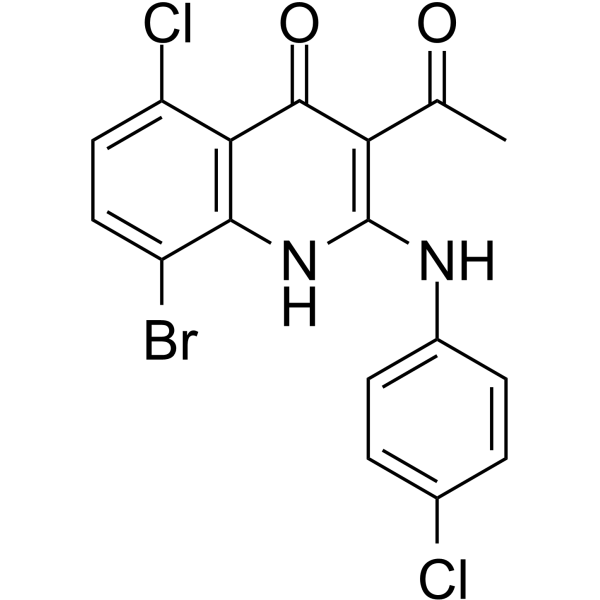
  • HY-12703
    KSI-3716
    2 Publications Verification

    c-Myc Autophagy Cancer
    KSI-3716 is a potent c-Myc inhibitor that blocks c-MYC/MAX binding to target gene promoters. KSI-3716 is an effective intravesical chemotherapy agent for bladder cancer .
    KSI-3716
  • HY-172920

    Wnt β-catenin EGFR ERK COX Akt GSK-3 c-Myc Apoptosis Interleukin Related JNK Inflammation/Immunology Cancer
    Wnt/β-catenin-IN-6 is an orally active Wnt/β-catenin pathway inhibitor. Wnt/β-catenin-IN-6 blocks the AKT/GSK-3β/β-catenin signaling pathway, leading to reduced expression of Wnt target genes (c-Myc, c-Jun). Wnt/β-catenin-IN-6 reduces COX2 expression and IL-8 levels, highlighting its dual anti-inflammatory and antitumor effects. Wnt/β-catenin-IN-6 can induce apoptosis. Wnt/β-catenin-IN-6 serves as a tool for non-small cell lung cancer (NSCLC) research .
    Wnt/β-catenin-IN-6
  • HY-149873

    WDR5 Cancer
    Anticancer agent 126 (compound 12) is a WDR5 inhibitor with anticancer effects. Anticancer agent 126 disrupts WDR5-MYC interaction in cells and reduce MYC target gene expression .
    Anticancer agent 126
  • HY-176502

    FKBP Cancer
    FKBP12 ligand-3 (compound dj) is a high-affinity ligand targeting FKBP12. FKBP12 ligand-3 can be used to selectively enhance the binding of heterobifunctional molecules to BRD4, enriching the drug intracellularly through the "CellTrap" effect to form a ternary complex of FKBP12-ligand-BRD4. This ternary complex has inhibitory activity against BRD4, thereby inhibiting the expression of BRD4 target genes (such as MYC) and inducing tumor cell death. FKBP12 ligand-3 can be used for selective cancer research based on differences in intracellular presenter protein levels .
    FKBP12 ligand-3
  • HY-178446

    METTL3 c-Myc Bcl-2 Family Cancer
    METTL3-IN-11 is an excellent, selective METTL3 inhibitor (IC50 = 45.31 nM). METTL3-IN-11 exhibits high selectivity towards METTL3 compared to DNMT1, EZH1, MLL1, and PRMT1. METTL3-IN-11 reduces the m6A level of total RNA in MOLM-13 and SKOV3 cells, induces cell apoptosis, and inhibits cell migration. METTL3-IN-11 can reduce the expression of m6A downstream target genes (c-MYC and BCL2). METTL3-IN-11 can be used for the study of ovarian cancer and acute myeloid leukemia .
    METTL3-IN-11
  • HY-174403

    Bcl-2 Family c-Myc Apoptosis Caspase Cancer
    c-MYC/BCL2 ligand 1 iodide is a dual-targeting c-MYC/Bcl-2 G4 ligand with Kd values of 0.90 μM (c-MYC G4) and 0.56 μM (Bcl-2 G4). c-MYC/BCL2 ligand 1 iodide inhibits c-MYC and Bcl-2 gene transcription by binding to G4-forming sequences and downregulates their protein expression. c-MYC/BCL2 ligand 1 iodide inhibits suppresses migration, induces caspase-dependent apoptosis, and triggers cell cycle G1 arrest in MCF-7 cells. c-MYC/BCL2 ligand 1 iodide significantly suppresses tumor growth in a 4T1 syngeneic model with no observable toxicity. c-MYC/BCL2 ligand 1 iodide can be used for the research of breast cancer.
    c-MYC/BCL2 ligand 1 iodide
  • HY-160689

    UNC10112731

    c-Myc c-Kit Discoidin Domain Receptor PDGFR Others
    GW694590A (UNC10112731) is a MYC protein stabilizer that increases endogenous MYC protein levels. GW694590A also targets receptor tyrosine kinases, inhibiting DDR2, KIT and PDGFRα by 81% at 1 μM. , 68% and 67%. GW694590A is a protein kinase inhibitor across ATP-dependent and -independent luciferases with potential effects on the Fluc reporter gene .
    GW694590A
  • HY-175265

    c-Myc Ras Apoptosis Cancer
    PQ32 is an antitumor agent that targets c-MYC Pu27 and KRAS G-quadruplexes. PQ32 inhibits tumor cell proliferation, arrests the cell cycle at the G2 phase, and induces apoptosis. PQ32 inhibits the expression of c-MYC and KRAS genes. PQ32 can inhibit tumor growth in mice and is used in the study of lymphoma, breast cancer, lung cancer, hepatocellular carcinoma, colorectal cancer, and other cancers .
    PQ32
  • HY-176501

    FKBP Cancer
    FKBP12 ligand-2 (compound d) is a high affinity ligand targeting FKBP12. FKBP12 ligand-2 can be used to selectively enhance the binding of heterobifunctional molecules to BRD4, enriching the drug intracellularly through the "CellTrap" effect to form a ternary complex of FKBP12-ligand-BRD4. This ternary complex has inhibitory activity against BRD4, thereby inhibiting the expression of BRD4 target genes (such as MYC) and inducing tumor cell death. FKBP12 ligand-2 can be used for selective cancer research based on differences in intracellular presenter protein levels .
    FKBP12 ligand-2
  • HY-178172

    Histone Methyltransferase c-Myc Epigenetic Reader Domain HOXA Cancer
    AF9/ENL-DOT1L/AF4 PPI-IN-1 is a potent AF9/ENL and histone methyltransferase DOT1L/AF4 protein-protein interactions (PPI) inhibitor. AF9/ENL-DOT1L/AF4 PPI-IN-1 can inhibit the AF9-DOT1L (IC50 = 1.5 μM), AF9-AF4 (IC50 = 1 μM), ENL-AF4 (IC50 = 1.2 μM) interactions. AF9/ENL-DOT1L/AF4 PPI-IN-1 can suppress the expression of Mixed lineage leukemia (MLL) target genes Myc and Meis1 and selectively block the proliferation of MLL-r and several other leukemia cells. AF9/ENL-DOT1L/AF4 PPI-IN-1 exhibits significant antitumor activities in a mouse model of MLL-r leukemia without overt toxicities. AF9/ENL-DOT1L/AF4 PPI-IN-1 can be used for the study of MLL-r leukemia .
    AF9/ENL-DOT1L PPI-IN-1
  • HY-115832

    Transferrin Receptor Cancer
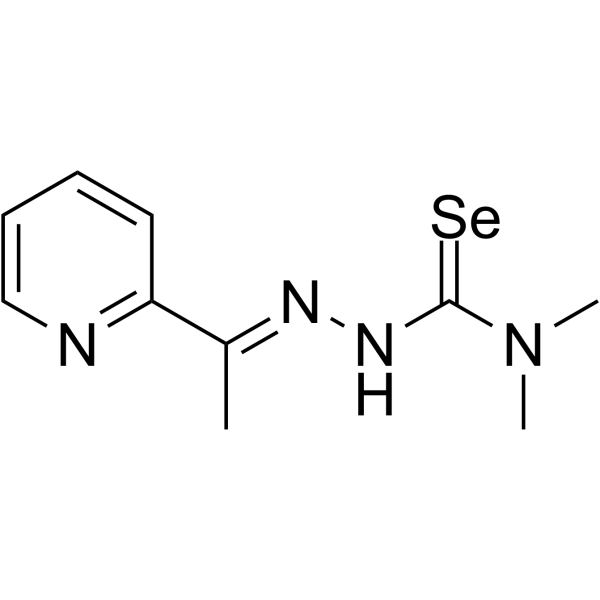
    Ap44mSe is a selenosemicarbazone that effectively depletes cellular Fe, resulting in transferrin receptor-1 up-regulation, ferritin down-regulation, and increased expression of the potent metastasis suppressor, N-myc downstream regulated gene-1. Ap44mSe forms redox active Cu complexes that target the lysosome to induce lysosomal membrane permeabilization .
    Ap44mSe
  • HY-169348

    β-catenin Wnt c-Myc Cancer
    β-catenin-IN-8 (Compound 25) is a β-catenin inhibitor. β-catenin-IN-8 inhibits β-catenin and c-Myc protein levels, and inhibits Wnt-target genes level (Fgf20 and Sall4). β-catenin-IN-8 has colorectal cancer anticancer activities, and has metabolic stability .
    β-catenin-IN-8
  • HY-185051

    mRNA Cancer
    OTX-2002 is an mRNA encoding two bifunctional fusion proteins (ZFBD-MQ1 and ZFBD-KRAB). OTX-2002 targets regulatory elements located within the MYC protection gene domain (IGD) and induces the methylation of DNA and histone, leading to the downregulation of MYC expression.
    OTX-2002
  • HY-181930

    Wnt c-Myc Apoptosis Cancer
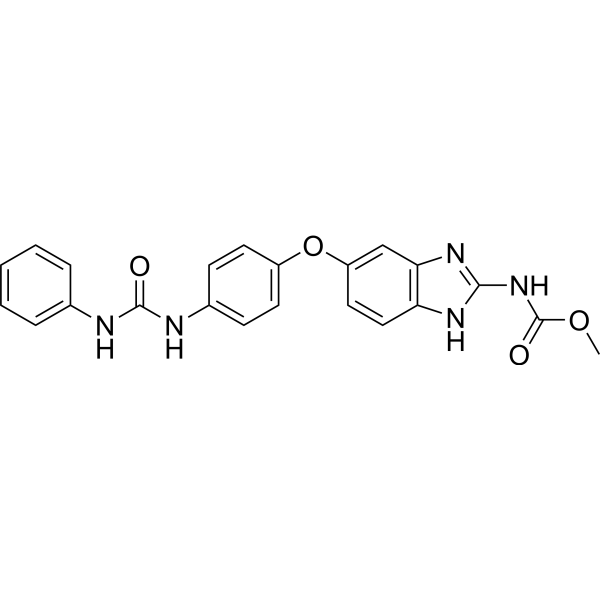
    TNIK-IN-10 (Compound N15) is a TNIK inhibitor with an IC50 of 0.49 nM against human TNIK. TNIK-IN-10 inhibits the enzymatic activity of TNIK, downregulates the expression of Wnt pathway target genes c-Myc and AXIN2, and reduces the protein expression of LRP5 and LRP6. TNIK-IN-10 induces apoptosis. TNIK-IN-10 exhibits anticancer activity against colorectal cancer. TNIK-IN-10 can be used in the research of colorectal cancer .
    TNIK-IN-10
  • HY-182241

    c-Myc Early 2 Factor (E2F) TNF Receptor MDM-2/p53 Reactive Oxygen Species (ROS) Apoptosis Cancer
    JR4-187 is an orally active, copper-dependent anticancer agent. JR4-187 downregulates genes involved in oxidative phosphorylation, MYC targets and E2F targets in cancer cells, while upregulates genes involved in the TNF-α signaling pathway, p53 pathway and KRAS signaling pathway, and downregulates CTR1 protein . JR4-187 induces ROS production, apoptosis, copper-dependent cytotoxicity, and exhibits selective cytotoxicity against KRAS-mutant cancer cells. JR4-187 is well tolerated in mouse models of pancreatic cancer. JR4-187 can be used in research related to cancers such as pancreatic ductal adenocarcinoma, colon cancer and rectal cancer .
    JR4-187
  • HY-179588

    PROTACs Epigenetic Reader Domain c-Myc Cancer
    PROTAC BET Degrader-14 is a highly efficient PROTAC targeting BET (bromodomain and extra-terminal domain). PROTAC BET Degrader-14 can degrade all BET (BRD2, BRD3, BRD4) family proteins. PROTAC BET Degrader-14 potently degrades BET proteins in U2OS osteosarcoma cell lines (BRD4 DC50 = 130 nM) and KYSE180 esophageal squamous cell carcinoma cell lines (DC50 = 40 nM). PROTAC BET Degrader-14’s dependence on the ubiquitin-proteasome system. PROTAC BET Degrader-14 decreases levels of BET-regulated gene products c-Myc, RUNX2, and KRT14. PROTAC BET Degrader-14 can be used for the study of osteosarcoma .
    PROTAC BET Degrader-14

Inquiry Online

Your information is safe with us. * Required Fields.

Salutation


Country or Region *

Applicant Name *


Organization Name *

Department *


Email Address *


Product Name *

Cat. No.


Requested quantity *

Phone Number *


Remarks

Inquiry Online

Inquiry Information

Product Name:
Cat. No.:
Quantity:
MCE Japan Authorized Agent:

