1. Search Result
Search Result
Results for "

bifunctional inhibitor

" in MedChemExpress (MCE) Product Catalog:

25

Inhibitors & Agonists

1

Click Chemistry

Cat. No. Product Name Target Research Areas Chemical Structure
  • HY-153552A

    FAP Cancer
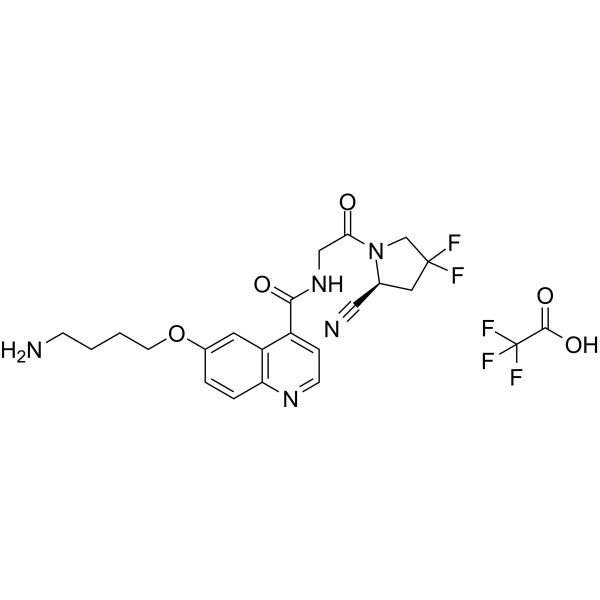
    NH2-UAMC1110 TFA is an aminobutoxy derivative of the fibroblast activation protein (FAP) inhibitor UAMC1110 (HY-100684), and is a precursor compound for the synthesis of FAP inhibitor probes, not directly used in bioactivity experiments. For example, NH2-UAMC1110 TFA is involved in the synthesis of the radiotracer FAPI-QS, which exhibits high tumor selectivity and high dose effect, and has been used in tumor diagnosis. NH2-UAMC1110 TFA structurally incorporates an active amino group, allowing it to form covalent bonds with various molecules (such as DOTA, DATA5m, radionuclide chelators, etc.) to synthesize molecular imaging probes or targeted compounds with the ability to target FAP. NH2-UAMC1110 TFA specifically binds to the FAP active site, inhibiting its proline-selective serine protease activity (including dipeptidyl peptidase and endopeptidase activity), blocking FAP-mediated tissue remodeling-related processes. Its key activity is high targeting and high affinity, and its core function is to act as a targeting module coupled with bifunctional chelators (such as DOTA, DATA5m). NH2-UAMC1110 TFA can be applied to diagnostic imaging studies of tumors expressing FAP (such as colorectal cancer, pancreatic cancer, etc.), and also provides molecular tools for targeted research of FAP-related diseases with high FAP expression, such as fibrosis and arthritis .
    NH2-UAMC1110 TFA
  • HY-153552

    FAP Cancer
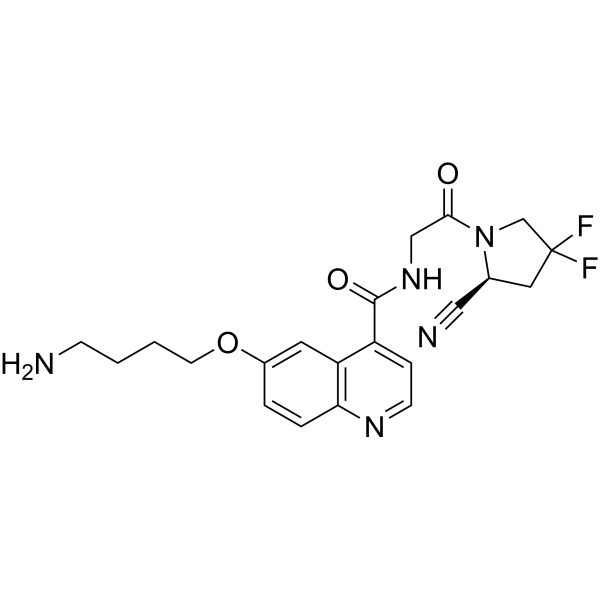
    NH2-UAMC1110 is an aminobutoxy derivative of the fibroblast activation protein (FAP) inhibitor UAMC1110 (HY-100684), and is a precursor compound for the synthesis of FAP inhibitor probes, not directly used in bioactivity experiments. For example, NH2-UAMC1110 is involved in the synthesis of the radiotracer FAPI-QS, which exhibits high tumor selectivity and high dose-response, and has been used for tumor diagnosis. NH2-UAMC1110 introduces an active amino group into its structure, enabling it to form covalent bonds with various molecules (such as DOTA, DATA5m, radionuclide chelators, etc.), thereby synthesizing molecular imaging probes or targeted compounds with the ability to target FAP. NH2-UAMC1110 specifically binds to the FAP active site, inhibiting its proline-selective serine protease activity (including dipeptidyl peptidase and endopeptidase activity), blocking FAP-mediated tissue remodeling processes. Its key activity is high targeting and high affinity, and its core function is to be coupled with bifunctional chelators (such as DOTA, DATA5m) as a targeting module. NH2-UAMC1110 can be applied to diagnostic imaging studies of tumors expressing FAP (such as colorectal cancer, pancreatic cancer, etc.), and also provides molecular tools for targeted research of FAP-related diseases with high FAP expression, such as fibrosis and arthritis .
    NH2-UAMC1110
  • HY-153821

    Ras PROTACs Cancer
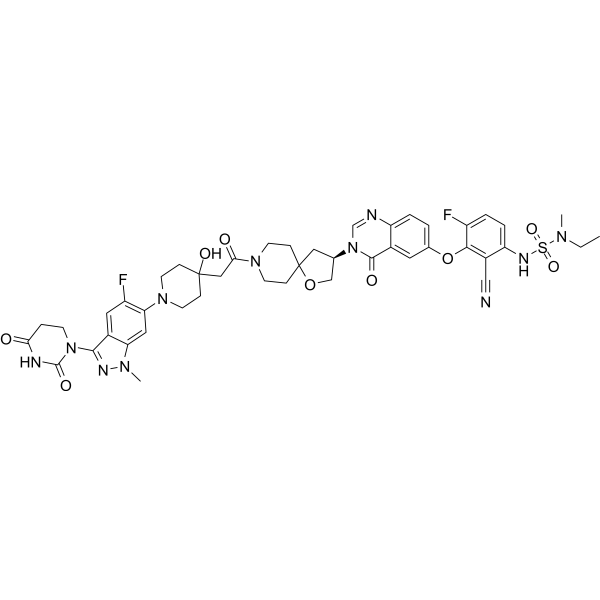
    PROTAC KRAS G12C degrader-2 (compound 432) is a modulator of K-Ras protein hydrolysis. PROTAC KRAS G12C degrader-2 is a bifunctional compound, which contain on one end a cereblon inhibitor of apoptosis proteins (IAP) and on the other end a moiety which binds KRAS .
    PROTAC KRAS G12C degrader-2
  • HY-144258

    PD-1/PD-L1 Inflammation/Immunology Cancer
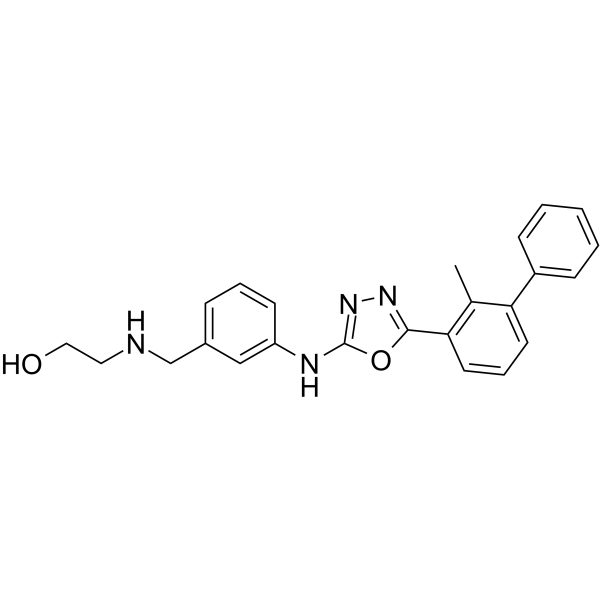
    PD-1/PD-L1-IN-14 (compound 17) is a bifunctional inhibitor of PD-1/PD-L1 interactions, with an IC50 of 27.8 nM. PD-1/PD-L1-IN-14 (compound 17) inhibits PD-1/PD-L1 interactions and promotes dimerization, internalization, and degradation of PD-L1 .
    PD-1/PD-L1-IN-14
  • HY-171860

    PROTACs HIV Infection Cancer
    FC-14369 is a PROTAC degrader targeting the HIV-1 Nef protein, with a DC50 value of 160 nM. Through its bifunctional structure, FC-14369 binds to Nef and the Cereblon E3 ubiquitin ligase, induces Nef ubiquitination and proteasomal degradation, restores the expression of cell-surface CD4 and MHC-I, and inhibits HIV-1 replication. FC-14369 can be used in research on HIV infection and AIDS. FC-14369 is applicable to studies related to HIV-1 infection .
    FC-14369
  • HY-162809

    Ras Cancer
    XMU-MP-9 is a bifunctional compound that binds to the C2 domain of Nedd4-1 and the allosteric site of K-Ras. XMU-MP-9 enhances the interaction between Nedd4-1 and K-Ras, induces conformational changes in the Nedd4-1/K-Ras complex, promotes the ubiquitination and degradation of multiple K-Ras mutants, and inhibits the proliferation of cells carrying K-Ras mutants. XMU-MP-9 can be used for the study of colon, lung and pancreatic cancer .
    XMU-MP-9
  • HY-159493

    Polo-like Kinase (PLK) Cancer
    BI2536-PEG2-Halo is a bifunctional molecule containing a ligand for Halo tag and a Polo-like kinase 1 (PLK1) inhibitor BI-2536 (HY-50698). BI2536-PEG2-Halo inhibits the proliferation of 293T cells with Halo-p53R273H(FL)-mCherry tag (IC50=23 nM), exhibits selective toxicity against p53 mutant cancer cells .
    BI2536-PEG2-Halo
  • HY-29244

    DNA/RNA Synthesis Cancer
    ATIC-IN-2 (Compound 1) is a competitive inhibitor for the bifunctional enzyme AICAR Tfase/IMPCH (ATIC), that binds to inosine monophosphate cyclohydrolase (IMPCH) with a Ki of 0.13 μM .
    ATIC-IN-2
  • HY-170405

    PROTACs mTOR Cancer
    YB-3-17 is a bifunctional molecule, that inhibits mTOR (IC50=0.22 nM) or degrades G1 to S phase transition 1 gene (GSPT1, DC50=5 nM) in a PROTAC mechanism. YB-3-17 exhibits antiproliferative activity in multi glioblastoma cell lines with IC50 of nanomolare levels. YB-3-17 exhibits antitumor efficacy in mouse models . (Pink: ligand for target protein (HY-170407); Black: linker (HY-A0102); Blue: ligand for E3 ligase Cereblon (HY-14658))
    YB-3–17
  • HY-158685

    MDM-2/p53 Cancer
    RG7112D is a potent MDM2 inhibitor with IC50s of 11 nM and >10000 nM and for MDM2-p53 and VHL-HIF1α by binding HTRF assay, respectively. RG7112D is coupled by an amide bond to VHL-Amine, resulting in a bi-functional molecule, YX-02-030. YX-02-03, a MDM2-PROTAC, potently inhibits MDM2-p53 binding (HTRF IC50=63nM). RG7112D can stabilize MDM2 protein and increase p53 protein levels .
    RG7112D
  • HY-120281

    MEK PI3K Akt Apoptosis Caspase Cancer
    ST-168 is an orally active MEK/PI3K inhibitor with an IC50 of 182 nM against MEK1 and IC50 values ​​of 69.2, 41.7, 1482 and 2293 nM against PI3Kα, PI3Kδ, PI3Kβ and PI3Kγ respectively. ST-168 completely inhibits the phosphorylation of ERK1/2 and AKT and induces cancer cell death in a 3D tumor sphere model. ST-168 demonstrates significant antitumor effects in the A375 melanoma mouse model. ST-168 improves the ocular toxicity profile of MEK inhibitors, showing lower caspase activation levels, indicating reduced apoptosis induction. ST-168 can be used in melanoma research .
    ST-168
  • HY-172396

    PD-1/PD-L1 VISTA Cancer
    PD-L1/VISTA-IN-2 (Compound S8) is an orally active bifunctional PD-L1/VISTA inhibitor with an IC50 of 1.4 μM for PD-L1 and a KD of 2.1 μM for VISTA. PD-L1/VISTA-IN-2 can activate the tumor immune microenvironment and exert anti-cancer effects .
    PD-L1/VISTA-IN-2
  • HY-173499

    Aurora Kinase Apoptosis Cancer
    HLDA-212 (Compound 43) is a bifunctional small molecule targeting HaloTag-tagged protein (Target Protein, TP) and Aurora kinase A/B (AURKA/B, Effector Protein, EP). HLDA-212 binds to TP and EP to form a stable ternary complex (TP:RIPTAC:EP), inhibiting the cell-survival function of EP and inducing apoptosis in TP-expressing cancer cells. HLDA-212 shows antiproliferative activity (GI50 of 0.011 μM) in 293_HFL cells. HLDA-212 is promising for research of cancers with high TP expression (such as prostate cancer and hematological malignancies) .
    HLDA-212
  • HY-111079

    HIV Reverse Transcriptase Others
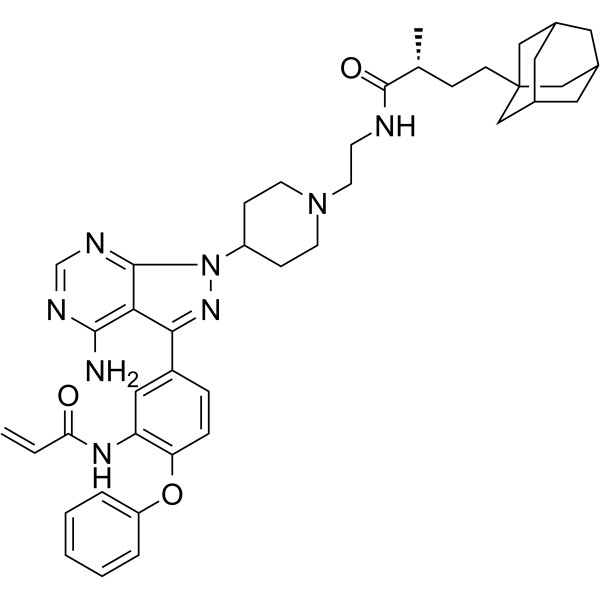
    HIV-1 inhibitor-70 (compound 20) is a bifunctional inhibitor that inhibits both wild-type (WT) and K103N mutant reverse transcriptases (RTs) of HIV-1.
    HIV-1 inhibitor-70
  • HY-163320

    Cholinesterase (ChE) Amyloid-β Neurological Disease
    AChE/Aβ-IN-5 (compound AV-2) is a bifunctional inhibitor that targets AChE and auto-induced Aβ (Amyloid-β) aggregation. AChE/Aβ-IN-5 can significantly improve scopolamine- and Aβ-induced cognitive impairment in mice .
    AChE/Aβ-IN-5
  • HY-120246

    Adrenergic Receptor Phosphodiesterase (PDE) Inflammation/Immunology
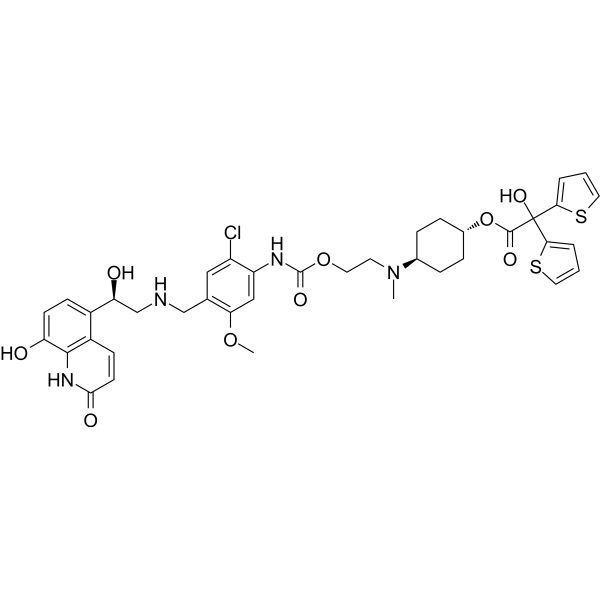
    GS-5759 is both a β₂-adrenergic receptor agonist and a PDE4 inhibitor. GS-5759 increases intracellular cAMP levels by activating the β₂ receptor, promoting bronchial dilation. GS-5759 inhibits PDE4 activity, reduces cAMP degradation, and enhances anti-inflammatory effects. GS-5759 exhibits potent bronchial dilation and anti-inflammatory capabilities in animal models. GS-5759 can be used for research on respiratory diseases such as chronic obstructive pulmonary disease (COPD) .
    GS-5759
  • HY-155819

    mAChR Phosphodiesterase (PDE) Inflammation/Immunology
    M3/PDE4 modulator-1 (compound 10f) is a bifunctional molecule that is an M3 mAChR antagonist and a PDE4 inhibitor. M3/PDE4 modulator-1 (10-1000 nM/kg; iv) reduces cysteine eosinophil influx in the OVA rat model .
    M3/PDE4 modulator-1
  • HY-149558

    Apoptosis CXCR Cancer
    CXCR4-IN-2 (compound A1) is a bifunctional fluorinated small molecule that is a potent CXCR4 inhibitor with anticancer activity. CXCR4-IN-2 has cytotoxic (IC50: 60 μg/mL; 72 h) and antiproliferative effects on mouse colorectal cancer (CRC) cells. CXCR4-IN-2 induces cell arrest in the G2/M phase and induces apoptosis .
    CXCR4-IN-2
  • HY-172768

    Bacterial Infection
    SCUT1-2 is a bifunctional antibacterial agent with good oral bioavailability in mice (F=56.8%). SCUT1-2 can kill the vegetative cells of C. difficile with a MIC of 0.06-0.50 μg/mL, and inhibit spore germination in vitro. SCUT1-2 could alleviate the symptoms of weight loss and diarrhea in mice caused by C. difficile infection (CDI) and prevent recurrent CDI .
    SCUT1-2
  • HY-164575B

    Radionuclide-Drug Conjugates (RDCs) PSMA Cancer
    NH2-NODAGA hydrochloride is a NODAGA-type metal chelator that can bind to radionuclides to prepare radionuclide conjugates (RDCs). NH2-NODAGA hydrochloride can react with diethyl squarate in 0.5M phosphate buffer to obtain NODAGA.SA. NODAGA.SA can target L-lysine urea-L-glutamate (KuE), which is a key structure of prostate-specific membrane antigen (PSMA). NODAGA.SA.KuE can bind [68]Ga and can be used for PET examination of NMRInu/nu nude mice bearing LNCaP tumors.
    NH2-NODAGA hydrochloride
  • HY-183046

    DNA/RNA Synthesis Cancer
    PAICS-IN-1 is a PAICS inhibitor. PAICS-IN-1 inhibits the bifunctional enzyme catalyzing the 6th and 7th steps of the de novo purine pathway. PAICS-IN-1 can be used for the research of cancer .
    PAICS-IN-1
  • HY-169268

    Amyloid-β Neurological Disease
    Aβ-IN-10 (Compound Alz -5) is a bifunctional copper chelator and an inhibitor for beta-amyloid (), that interacts with Aβ aggregates and reduces the neurotoxicity. Aβ-IN-10 exhibits antioxidant efficacy, reveals moderate cytotoxicity with the presence of CuCl2 in SH-SY5Y and HepG2 with IC50 of 65.5, 31.2 μM. Aβ-IN-10 reduces the increase of cell stiffness caused by Aβ .
    Aβ-IN-10
  • HY-175445

    PROTACs Estrogen Receptor/ERR IAP NF-κB TNF Receptor Apoptosis Cancer
    GNE-5472 is a potent bifunctional ERα PRRTAC degrader, with its E3 ligand being a pan-IAP antagonist. GNE-5472 antagonizes cIAP1/2, activating the non-classical NF-κB pathway, resulting in a significant upregulation of TNFα expression. GNE-5472 inhibits the proliferation of breast cancer cells and induces cell apoptosis. GNE-5472 can be used for the study of breast cancer .
    GNE-5472
  • HY-179647

    HIF/HIF Prolyl-Hydroxylase Metabolic Disease Endocrinology
    ZG-2686 is a potent and selective HIF-2α agonist with an EC50 of 0.25 µM. ZG-2686 exhibits selectivity over PHD2. ZG-2686 binds to a specific internal cavity of HIF-2α, forming hydrogen bonds via structural water molecules, which stabilizes the HIF-2α/β heterodimer and enhances transcriptional activity. ZG-2686 synergizes with Vadadustat (HY-101277) to upregulate HIF-2α-dependent EPO gene expression both in vitro and in vivo. ZG-2686 can be used for the research of renal anemia .
    ZG-2686
  • HY-180485

    PROTACs Wee1 CDK Cancer
    PROTAC D16-M1P2 is an orally active PKMYT1 PROTAC degrader with a DC50 of 0.7 nM. PROTAC D16-M1P2 also inhibits the activity of PKMYT1 with an IC50 of 7.6 nM. PROTAC D16-M1P2 inhibits pCDK1 with an IC50 of 9 nM. PROTAC D16-M1P2 has demonstrated significant anti-tumor efficacy in mouse models and can be used for research on breast cancer .
    PROTAC D16-M1P2

Inquiry Online

Your information is safe with us. * Required Fields.

Salutation


Country or Region *

Applicant Name *


Organization Name *

Department *


Email Address *


Product Name *

Cat. No.


Requested quantity *

Phone Number *


Remarks

Inquiry Online

Inquiry Information

Product Name:
Cat. No.:
Quantity:
MCE Japan Authorized Agent:

