



FAP
Fibroblast activation protein
Fibroblast activation protein (FAP) is a cell-surface serine protease that acts on various hormones and extracellular matrix components. FAP is highly upregulated in a wide variety of cancers, and is often used as a marker for pro-tumorigenic stroma.
All Product Categories
-
FAP Related Products (85)
Related Products (85)

-
Antibodies (4)
-
Sibrotuzumab
 0 ImagesSynonyms: BIBH 1; Anti-Human FAP Recombinant AntibodySibrotuzumab (BIBH 1) is a humanized IgG1 monoclonal antibody targets fibroblast activation protein (FAP). Sibrotuzumab can be used for the research of colorectal cancer and non-small cell lung cancer (NSCLC).
-
Unlabeled FXX489
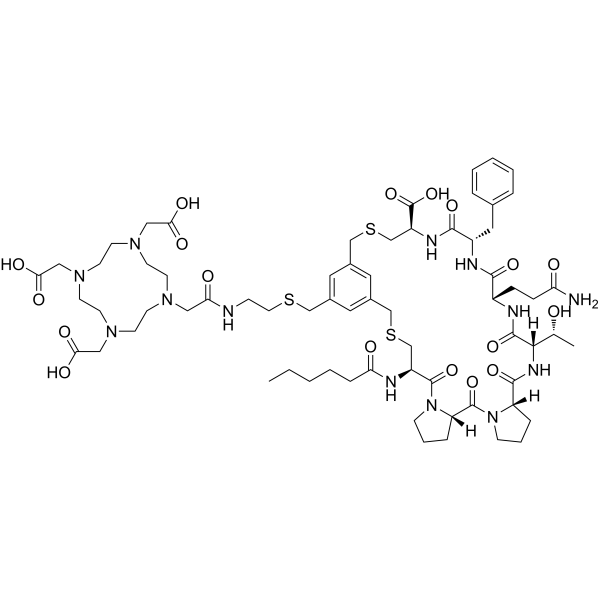
 0 ImagesSynonyms: NNS309Unlabeled FXX489 (NNS309) is a ligand targeting fibroblast activation protein (FAP); its peptide component is the FAP-targeting peptide for FXX489 (HY-P10945). Unlabeled FXX489 can be labeled with 68Ga and 177Lu and shows anticancer effects. Unlabeled FXX489 can be used for the study of pancreatic ductal adenocarcinoma (PDAC), non-small cell lung cancer (NSCLC), breast cancer (BC), and colorectal cancer (CRC).
-
Cys-FAP targeting peptide for FXX489 TFA
 0 ImagesCat. No.: HY-P10945BCys-FAP targeting peptide for FXX489 TFA is a version of the FAP-targeting peptide for FXX489 TFA that incorporates a Cys (cysteine) group. It can undergo conjugation reactions via the thiol group of the cysteine residue.
-
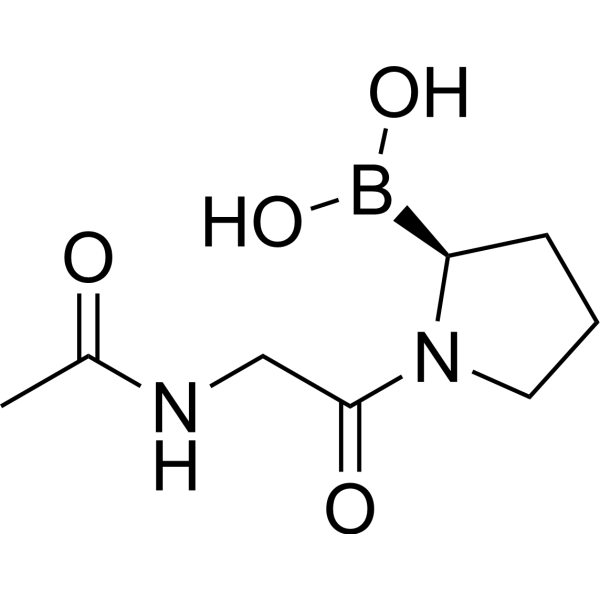
L-Ala-BPA
 0 ImagesL-Ala-BPA is a boron delivery agent. L-Ala-BPA is transported into tumor cells via PEPT1/2 and LAT-1 (SLC7A5) pathways and is rapidly cleaved systemically by endogenous proteases including FAP to yield L-BPA (HY-W087830). L-Ala-BPA shows antitumor activity and can be used for the research of Boron Neutron Capture Therapy (BNCT).
-
Suc-Gly-Pro-AMC
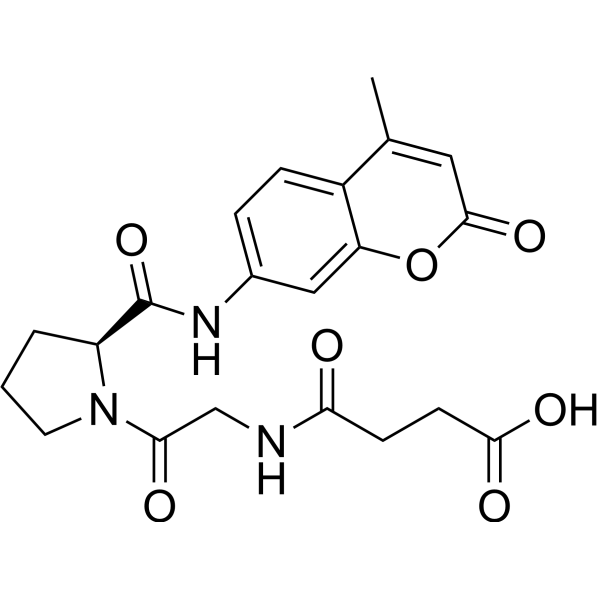 0 ImagesSuc-Gly-Pro-AMC is a fluorescent substrate. Suc-Gly-Pro-AMC is a fibroblast activation protein (FAP) specific substrate. Suc-Gly-Pro-AMC reacts with recombinant porcine prolyl oligopeptidase. Suc-Gly-Pro-AMC can be used to study the activity of FAP, prolyl endopeptidase (PREP). Suc-Gly-Pro-AMC is used in glioma research.
-
NH2-UAMC1110 TFA
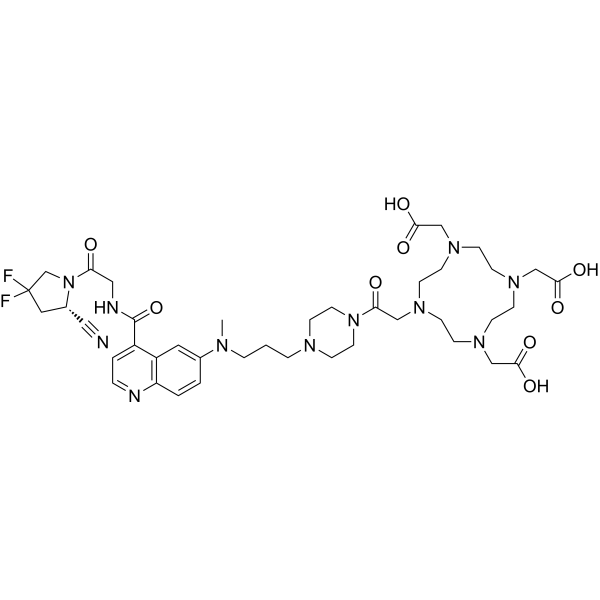
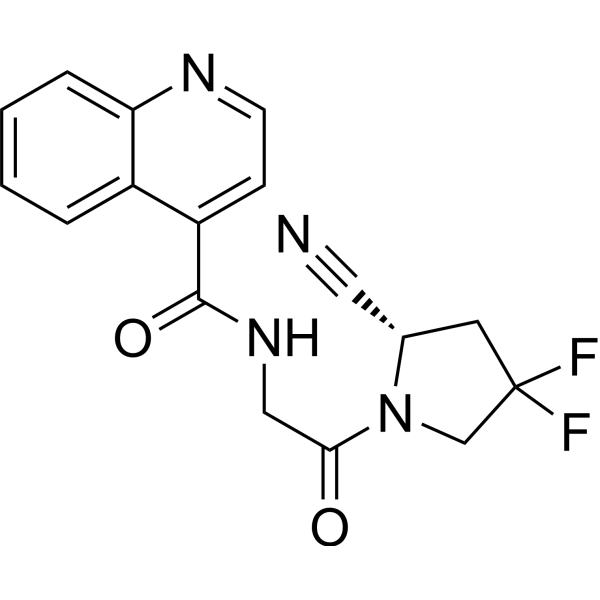
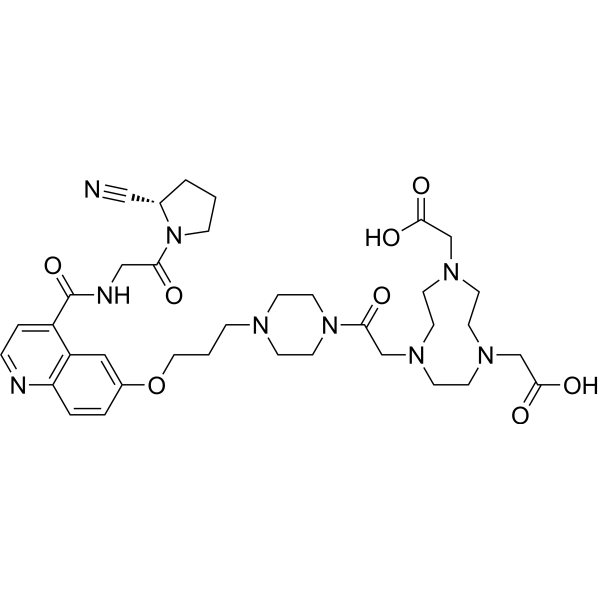
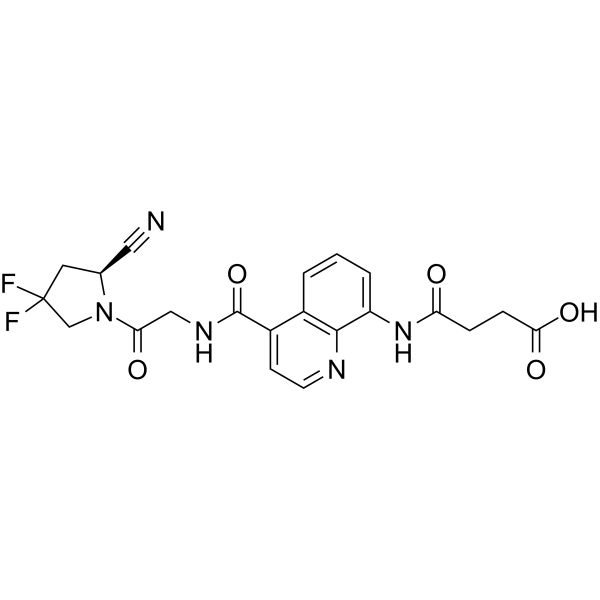
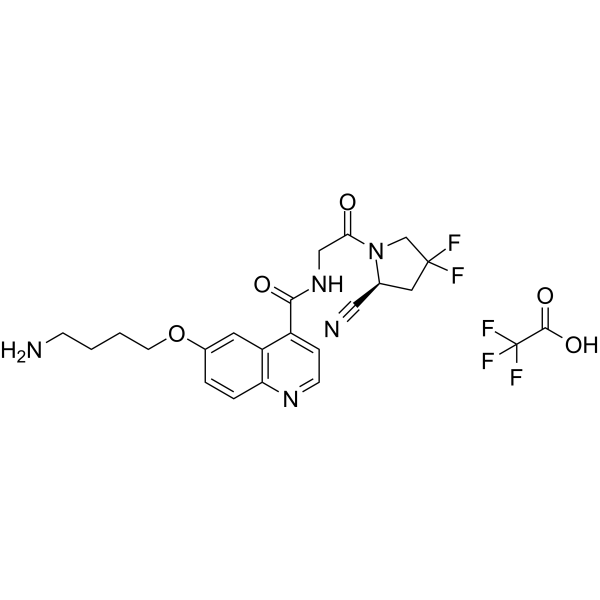 0 ImagesNH2-UAMC1110 TFA is an aminobutoxy derivative of the fibroblast activation protein (FAP) inhibitor UAMC1110 (HY-100684), and is a precursor compound for the synthesis of FAP inhibitor probes, not directly used in bioactivity experiments. For example, NH2-UAMC1110 TFA is involved in the synthesis of the radiotracer FAPI-QS, which exhibits high tumor selectivity and high dose effect, and has been used in tumor diagnosis. NH2-UAMC1110 TFA structurally incorporates an active amino group, allowing it to form covalent bonds with various molecules (such as DOTA, DATA5m, radionuclide chelators, etc.) to synthesize molecular imaging probes or targeted compounds with the ability to target FAP. NH2-UAMC1110 TFA specifically binds to the FAP active site, inhibiting its proline-selective serine protease activity (including dipeptidyl peptidase and endopeptidase activity), blocking FAP-mediated tissue remodeling-related processes. Its key activity is high targeting and high affinity, and its core function is to act as a targeting module coupled with bifunctional chelators (such as DOTA, DATA5m). NH2-UAMC1110 TFA can be applied to diagnostic imaging studies of tumors expressing FAP (such as colorectal cancer, pancreatic cancer, etc.), and also provides molecular tools for targeted research of FAP-related diseases with high FAP expression, such as fibrosis and arthritis.
-
ARI-3144
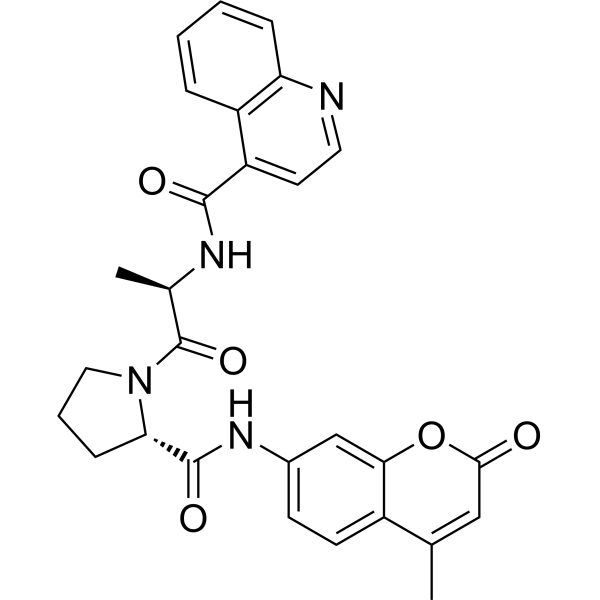 0 ImagesARI-3144 is a fluorogenic substrate for FAP with a FAP/PREP selectivity index of 15, and is processed by prolyl oligopeptidase (PREP).
-
FAPI-mFS
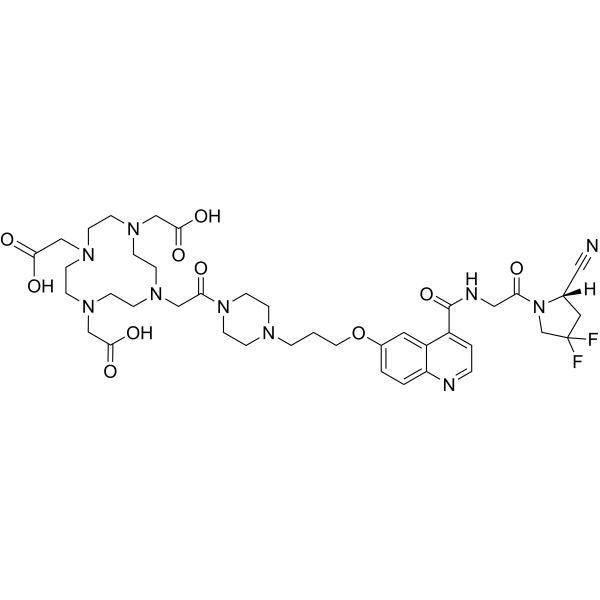
 0 ImagesFAPI-mFS is a selective fibroblast activation protein (FAP) inhibitor with an IC50 of 0.0014 μM against human FAP. Through its covalent binding property with FAP, FAPI-mFS enhances its uptake and retention time in cancer cells. When radiolabeled with 68Ga, FAPI-mFS serves as a PET/CT imaging agent with superior tumor-to-background tissue contrast and lesion detection capability. When radiolabeled with 177Lu or 225Ac, FAPI-mFS induces tumor regression and inhibition in preclinical models. FAPI-mFS can be used in studies related to cancer and radionuclide-conjugated drugs (RDC).
-
3BP-3940
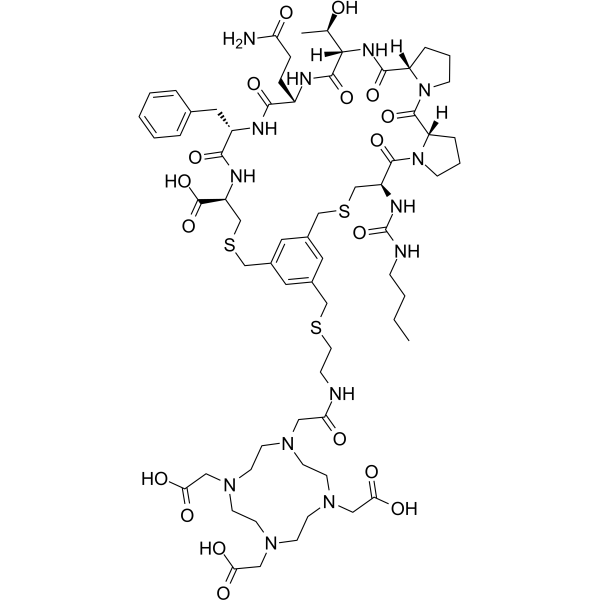 0 Images3BP-3940 is a highly potent and selective peptide inhibitor of FAP that targets cancer-associated fibroblasts (CAFs) in the tumor microenvironment. 3BP-3940 can be labeled with radionuclides (such as Ga-68) for precise tumor imaging or Lu-177 for the development of targeted anticancer technologies. 3BP-3940 accumulates in tumor lesions and can be used to diagnose and inhibit various solid cancers and CAFs-related diseases.
-
ARI-3099
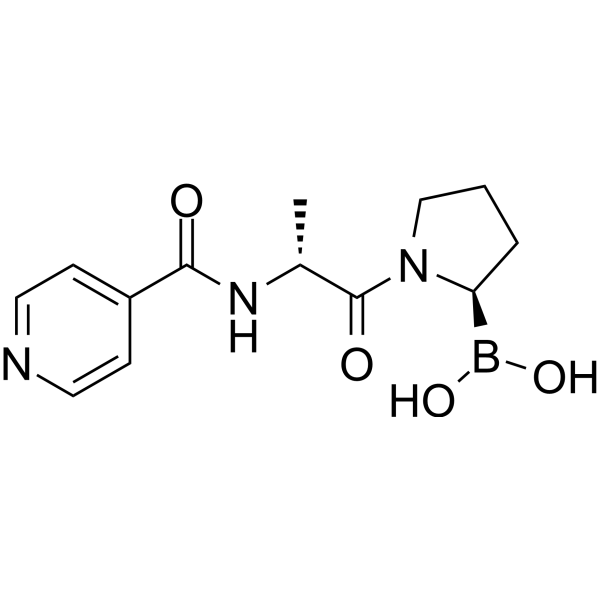 0 ImagesARI-3099 is an oral fibroblast activation protein (FAP) inhibitor. ARI-3099 specifically inhibits the proteolytic activity of FAP and blocks the cleavage of human FGF-21 between residues P171 and S172. ARI-3099 extends the half-life of circulating human FGF-21 in mice. ARI-3099 can be used in the research of type 2 diabetes and metabolic disorders.




