1. Search Result
Search Result
Results for "

cancer+therapy

" in MedChemExpress (MCE) Product Catalog:

34

Inhibitors & Agonists

5

Screening Libraries

1

Biochemical Assay Reagents

3

Peptides

4

Natural
Products

1

Click Chemistry

1

Oligonucleotides

Cat. No. Product Name Target Research Areas Chemical Structure
  • HY-18777
    KC7F2
    Maximum Cited Publications
    20 Publications Verification

    HIF/HIF Prolyl-Hydroxylase Cancer
    KC7F2 is a potent hypoxia inducible factor-1 (HIF-1) pathway inhibitor with an IC50 of 20 μM in LN229-HRE-AP cells, and with potential as a cancer therapy agent .
    KC7F2
  • HY-158420

    Autophagy Cancer
    STL001 is potent and selective FOXM1 inhibitor. STL001 induces the translocation of nuclear FOXM1 to the cytoplasm and promotes its autophagic degradation. STL001 sensitizes human cancers to a broad-spectrum of cancer therapies .
    STL001
  • HY-18954
    NMS-P118
    3 Publications Verification

    PARP Cancer
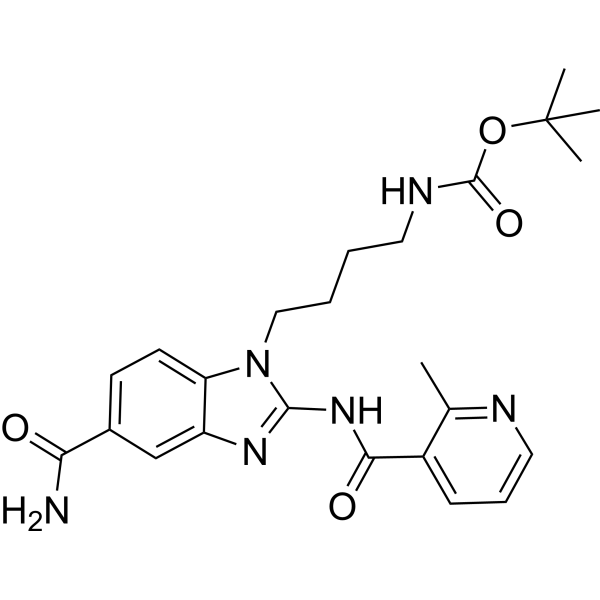
    NMS-P118 is a potent, orally available, and highly selective PARP-1 Inhibitor for cancer therapy.
    NMS-P118
  • HY-100865

    DBPR114

    FLT3 Cancer
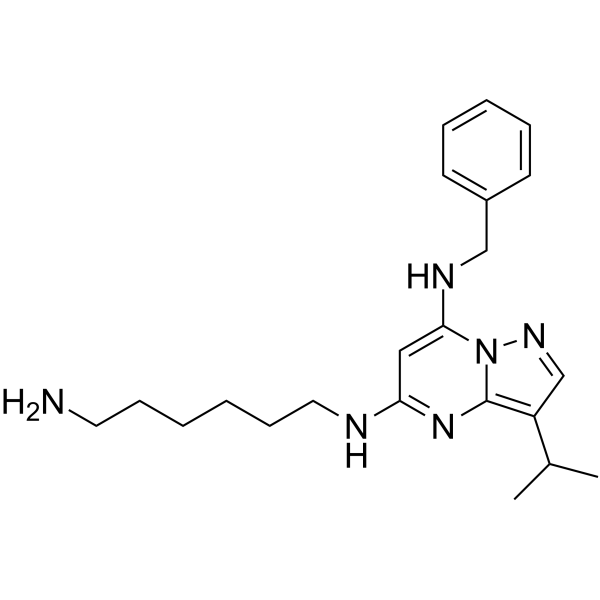
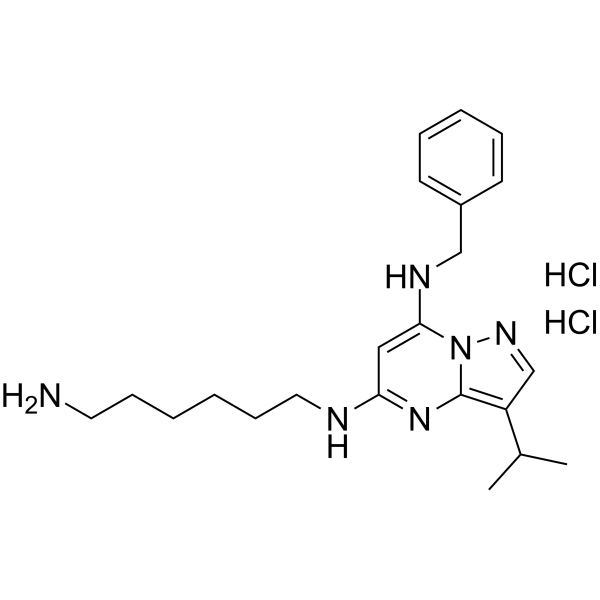
    BPR1K871 is a potent and selective dual FLT3/AURKA inhibitor with IC50s of 19 nM and 22 nM for FLT3 and AURKA, respectively, acts as a preclinical development candidate for anti-cancer therapy .
    BPR1K871
  • HY-164165

    Microtubule/Tubulin Drug Derivative Cancer
    Paclitaxel-2′-succinate NHS ester is a paclitaxel derivative with a succinic acid linker, in which the carboxyl group is activated by the NHS ester. The NHS ester group is highly reactive toward amino or hydroxyl groups and can be used to conjugate with other molecules such as peptides, proteins, antibodies, enzymes or polymers. Paclitaxel-2′-succinate NHS ester can be used in the development of nanomedicines and in the study of cancer therapy .
    Paclitaxel-2′-succinate NHS ester
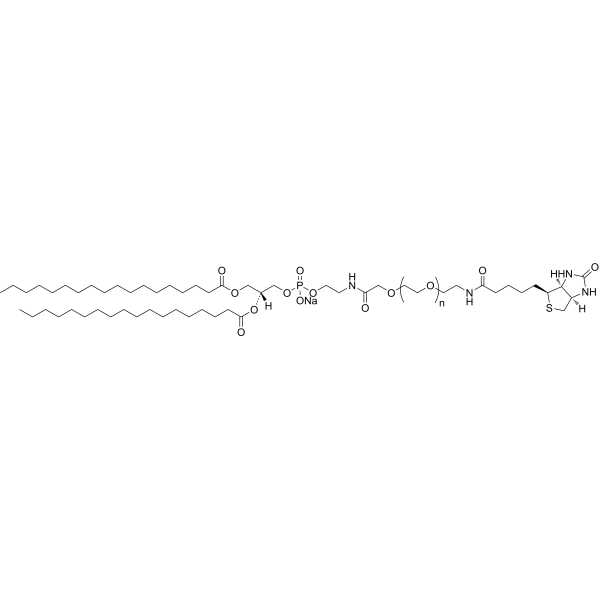
  • HY-W440886

    Liposome Others
    DSPE-PEG3400-Biotin is a phospholipid PEG for biotinylation. The amphiphilic property of the DSPE-PEG is useful for precision drug delivery and cancer therapy.
    DSPE-PEG3400-Biotin
  • HY-13266

    CDK Apoptosis Cancer
    BS-181 is a potent and selective CDK7 inhibitor (IC50=21 nM) than Seliciclib (HY-30237). BS-181 is also against CDK2, CDK5 and CDK9 with IC50 values of 880, 3000 and 4200 nM, respectively (fails to block CDK1, 4 and 6). BS-181 inhibits a panel of cancer cells growth (IC50=11.5 μM-37.3 μM) and induces cell apoptosis. BS-181 has the potential for the research of cancer therapy .
    BS-181
  • HY-161795

    Drug Metabolite Cancer
    SP3CHO is an active metabolite generated by the metabolism of SP3N in cell culture by the action of amine oxidase. SP3CHO can induce polyubiquitination of specific proteins by recruiting the SCFFBXO22 E3 ligase complex. SP3CHO can be used in cancer therapy research .
    SP3CHO
  • HY-N0291R

    Reference Standards Apoptosis Inflammation/Immunology Cancer
    (±)-Norcantharidin (Standard) is the analytical standard of (±)-Norcantharidin. This product is intended for research and analytical applications. (±)-Norcantharidin ((±)-NCTD) is a compound possessing anti-angiogenetic activity with potential use in anti-cancertherapy. (±)-Norcantharidin could prevent tumorigenesis by inhibiting cell proliferation, inducing apoptosis and the cell cycle arrest, and anti-angiogenic effects .
    (3aR,4S,7R,7aS)-Hexahydro-4,7-epoxyisobenzofuran-1,3-dione (Standard)
  • HY-156290

    STING Inflammation/Immunology Cancer
    SAP-04 is a potent and orally active STING agonist. SAP-04 exhibits potent immunomodulatory effects for cancer therapy .
    SAP-04
  • HY-N16394

    Endogenous Metabolite Cancer
    4-Hydroxyscytalone (Compound 3) is a microbial secondary metabolite. 4-Hydroxyscytalone can be isolated from the oak fungus Diplodia corticola. 4-Hydroxyscytalone has toxicity against Artemia salina with a LC50 of 90.6 μ/mL, but no significant antifungal activity. 4-Hydroxyscytalone can be used for cancer therapy research .
    4-Hydroxyscytalone
  • HY-164523

    Checkpoint Kinase (Chk) Cancer
    PV1162 is a selective Chk2 inhibitor with an IC50 of 0.29 nM. PV1162 inhibits ATP binding to Chk2 by targeting the gatekeeper-dependent hydrophobic pocket, which is specific to Chk2 and located behind the ATP-binding site (adenine-binding region), thereby inhibiting the phosphorylation activity of Chk2. PV1162 holds potential application value in the field of cancer therapy .
    PV1162
  • HY-175633

    Glutathione Peroxidase Ferroptosis Reactive Oxygen Species (ROS) Cancer
    ML210-ansaFc (Compound III-13) is a covalent GPX4 inhibitor with a -ferrocenophane group (IC50 of 3.4 μM). ML210-ansaFc potently induces ferroptosis by increasing the level of ROSand promoting lipid peroxidation (LPO) in cancers cells. ML210-ansaFc has an anticancer activity and suppresses tumor growth in tumor 3D spheroids. ML210-ansaFc can be used for cancer therapy resistance research .
    ML210-ansaFc
  • HY-175972

    Carbonic Anhydrase Neurological Disease Cancer
    CAI/II-IN-12 is a potent and hCAI (IC50 = 7.12 μM, Ki = 9.26 μM) and hCAII (IC50 = 10.62 μM, Ki = 11.72 μM) dual inhibitor. CAI/II-IN-12 has a strong affinity for the active sites of CYP17A1, hCAI, and hCAII enzymes. Compound CAI/II-IN-12 exhibits rapid conformational stabilization, particularly in the CYP17A1 complex. CAI/II-IN-12 can be used for the study of prostate cancer therapy and glaucoma .
    CAI/II-IN-12
  • HY-110368

    CDK Cancer
    BS-181 dihydrochloride is a potent and selective CDK7 inhibitor (IC50=21 nM) than Seliciclib (HY-30237). BS-181 is also against CDK2, CDK5 and CDK9 with IC50 values of 880 nM, 3000 nM and 4200 nM, respectively (fails to block CDK1, 4 and 6). BS-181 dihydrochloride inhibits a panel of cancer cells growth (IC50=11.5 μM-37.3 μM) and induces cell apoptosis. BS-181 dihydrochloride has the potential for the research of cancer therapy .
    BS-181 dihydrochloride
  • HY-173116

    Carbonic Anhydrase Cancer
    DOTA-XYIMSR-01 is a molecular probe targeting CAIX that can be labeled with 177Lu for the inhibition and localization of malignant gliomas. The uptake of [177Lu] Lu-XYIMSR-01 in U87MG tumors is 6.19 % of the injected dose per gram (% ID/g), and the tumor-to-muscle uptake ratio is 20.14. In the orthotopic glioma model, combined injection with Temozolomide (HY-17364) can significantly improve the survival rate of mice and inhibit tumor growth. DOTA-XYIMSR-01 shows promise for research in the field of anti-cancer therapy .
    DOTA-XYIMSR-01
  • HY-14919

    MN-029 free base

    Microtubule/Tubulin Cancer
    Denibulin, a novel vascular-disrupting agent, inhibits microtubule assembly reversibly, disrupting tumor vascular endothelial cell cytoskeletons. Denibulin demonstrated tolerability and potential anti-vascular effects, warranting further investigation in cancer therapy .
    Denibulin
  • HY-118974

    Calcium Channel Neurological Disease Cancer
    PD-151307 is an N-type calcium channel antagonist with significant inhibitory effects in IMR-32 human neuroblastoma cells, exhibiting an IC50 of 0.32 µM. PD-151307 can be used in research related to cancer therapy, anticonvulsants, and neuropathic pain .
    PD-151307
  • HY-169517

    TAM Receptor FAK c-Kit Cancer
    Protein kinase inhibitor 10 is a protein kinase inhibitor with IC50 values of 28.9, 13.6, and 2.41 μM for TAM receptor, FAK, and KIT, respectively. Protein kinase inhibitor 10 can inhibit abnormal and excessive cell proliferation, showing promise for research in cancer therapy .
    Protein kinase inhibitor 10
  • HY-171001

    CD73 Inflammation/Immunology Cancer
    ZM522 is a CD73 inhibitor with an IC50 value of 0.56 μM. ZM522 effectively increases the levels of interferon-γ (INF-γ) and enhances immune activity by regulating the activation status of T cells. ZM522 holds promise for research in the fields of immunology and cancer therapy .
    ZM522
  • HY-N15349

    Others Cancer
    Nocapyrone Q is a polyketide compound discovered in the karst cave mold Streptomyces sp. FD-2-6. At a dose of 100 μM, Nocapyrone Q exhibits inhibitory activity against human hepatocellular carcinoma HepG2 cells and human cervical cancer HeLa cells. Nocapyrone Q holds potential for research in the field of cancer therapy .
    Nocapyrone Q
  • HY-172922

    FGFR Cancer
    Arg-IN-1 is a selective Arginine (Arg)-targeting covalent inhibitor with IC50s of 9.7 nM and 30.4 nM for FGFR2 and FGFR3,respectively. Arg-IN-1 has the potential to avoid FGFR1/4-targeted toxicity as well as conquer acquired on-target resistance, potential for FGFR-targeting cancer therapy .
    FGFR-IN-19
  • HY-P10513

    AP1-Z1

    Bacterial Fungal Apoptosis Infection Cancer
    AcrAP1 (AP1-Z1) is an antimicrobial peptide found in the venom of the Arabian scorpion (Androctonus crassicauda). AcrAP1 has antimicrobial activity and can inhibit the growth of Gram-positive and Gram-negative bacteria as well as yeast. AcrAP1 exerts antitumor activity by promoting apoptosis of cancer cells and inhibiting angiogenesis. AcrAP1 can be used in cancer therapy research .
    AcrAP1
  • HY-172153

    CDK Reactive Oxygen Species (ROS) Apoptosis Cancer
    CDK2-IN-41 (Compound 7a) is a CDK2 inhibitor that exerts anticancer activity by binding to CDK2, thereby inhibiting the cell cycle, inducing cytotoxicity, promoting ROS production, and triggering Apoptosis. CDK2-IN-41 exhibits an IC50 of 10 µM against acute myeloid leukemia (AML) HL-60 cells. It holds potential for research in AML-related cancer therapy .
    CDK2-IN-41
  • HY-170999

    Caspase Apoptosis Ferroptosis Cancer
    Antitumor agent-196 (Compound 6a (β, β, β)) is an artemisinin-based oligomer with anticancer activity, showing an IC50 of 90 nM against MCF-7 breast cancer cells. Antitumor agent-196 promotes Apoptosis by regulating the Bax-caspase 3 signaling pathway, and induces Ferroptosis through the modulation of key signaling molecules, including GPX4. Antitumor agent-196 holds promising potential for further research in the field of cancer therapy .
    Antitumor agent-196
  • HY-P10711

    Autophagy Cancer
    ALA-A2 is an anticancer peptide discovered in alpha-lactalbumin that selectively kills cancer cells by inducing Autophagy. ALA-A2 has cell-penetrating capabilities, allowing it to effectively enter cells without relying on membranolytic effects. In A549 lung cancer cells, ALA-A2 demonstrates significant dose-dependent anticancer activity. ALA-A2 holds promise for research in cancer therapy and autophagy regulation .
    ALA-A2 peptide
  • HY-169122

    Drug Derivative Cancer
    LLC1 is an Amiloride (HY-B0285) derivative with cytotoxicity against breast cancer cells, particularly those resistant to treatment. The IC50 values of LLC1 for MCF7, MCF7 MX-100, MCF7 TS, MCF7 TR-1, and MCF7 TR-5 are 13, 12, 25, 26, and 19 mM, respectively. LLC1 shows potential for research in the field of cancer therapy .
    LLC1
  • HY-173139

    YAP Cancer
    TEAD-IN-19 (Compound 1l) is a transcriptional inhibitor of TEAD, exhibiting inhibition rates of 38.5%, 36.2%, 57.8%, and 71.3% against TEAD1, TEAD2, TEAD3, and TEAD4, respectively, at a concentration of 10 μM. TEAD-IN-19 shows potent anti-proliferative and anti-migratory activities in prostate cancer cell lines and significantly reduces the expression of TEAD-regulated downstream genes. TEAD-IN-19 holds promise for research in the field of cancer therapy .
    TEAD-IN-19
  • HY-N13294

    TMJ-105

    Apoptosis JAK STAT p38 MAPK JNK ERK Cancer
    Cernuumolide J (TMJ-105) is an JAK2/STAT3 inhibitor. Cernuumolide J induces G2/M phase arrest and apoptosis in HEL leukemia cells by downregulating the phosphorylation of JAK2, STAT3, and Erk, and activating the phosphorylation of JNK and p38 MAPK. Cernuumolide J inhibits HEL leukemia cell growth in a time- and concentration-dependent manner, with an IC50 value of 1.79 μM. Cernuumolide J can be used for research in the field of anti-cancer therapy .
    Cernuumolide J
  • HY-162885

    Proteasome JAK STAT Interleukin Related Cancer
    YSY01A is a proteasome inhibitor that can suppress cancer cell survival by inducing apoptosis (Apoptosis). Its IC50 values are 51.0 nM for HEK293T, 9.2 nM for A549, 5.2 nM for MCF-7, 8.9 nM for MGC-803, and 35.4 nM for PC-3M cells. Additionally, YSY01A eliminates constitutive STAT3 signaling by downregulating gp130 and JAK2 in human A549 lung cancer cells. YSY01A holds promise for research in the field of cancer therapy .
    YSY01A
  • HY-P5327

    Bcl-2 Family Others
    r8 Bid BH3 is a biological active peptide. (The Bid BH3 is a pro-apoptotic member of the 'BH3-only' subset of BCL-2 family proteins that constitute a critical control point in apoptosis. r8BIDBH3 is lethal to human leukemia cell lines that expresse Bcl-2. The Bcl-2 antagonists may have the potential to be efficacious in cancer therapy. Poly-D-arginine (d-isomer as denoted by rrrrrrrr) is fused to the Bid BH3 peptide to facilitate cellular uptake of the peptide.)
    r8 Bid BH3
  • HY-176019

    p38 MAPK c-Myc Cardiovascular Disease Cancer
    Methylcarbamyl PAF C-8 is resistant to the degradation function of platelet-activating factor acetylhydrolase (PAF-AH). It has a half-life of more than 100 minutes in platelet-poor plasma and possesses the activity of inducing platelet aggregation. In NRK-49 cells overexpressing the PAF receptor, Methylcarbamyl PAF C-8 can induce the expression of c-myc and c-fos, and activate mitogen-activated protein kinase (MAPK). Additionally, Methylcarbamyl PAF C-8 can induce cell cycle arrest in the G1 phase. Methylcarbamyl PAF C-8 holds promise for research in the fields of cardiovascular diseases and anti-cancer therapy .
    Methylcarbamyl PAF C-8
  • HY-172256

    PI4K Cancer
    PI4KIII beta inhibitor 5 is a PI4KIIIβ inhibitor with an IC50 of 19 nM. PI4KIII beta inhibitor 5 can induce cancer cell apoptosis (Apoptosis), cell cycle arrest at the G2/M phase, and autophagy (Autophagy) by inhibiting the PI3K/AKT pathway. PI4KIII beta inhibitor 5 has also demonstrated significant antitumor activity in the H446 xenograft model of small cell lung cancer. PI4KIII beta inhibitor 5 can be used for research in the field of cancer therapy .
    PI4KIII beta inhibitor 5
  • HY-N15348

    Others Cancer
    Aphidicolins B32 is a diterpenoid compound discovered in the marine fungus Botryotinia fuckeliana, exhibiting cytotoxic activity against human bladder cancer cells. It inhibits the proliferation of T24 cells in the G0/G1 phase, with an IC50 of 27.6 μM. Aphidicolins B32 holds potential for research in the field of cancer therapy .
    Aphidicolins B32

Inquiry Online

Your information is safe with us. * Required Fields.

Salutation


Country or Region *

Applicant Name *


Organization Name *

Department *


Email Address *


Product Name *

Cat. No.


Requested quantity *

Phone Number *


Remarks

Inquiry Online

Inquiry Information

Product Name:
Cat. No.:
Quantity:
MCE Japan Authorized Agent: