
1. Search Result
Search Result
Results for "

cysteine thiol groups

" in MedChemExpress (MCE) Product Catalog:

25

Inhibitors & Agonists

7

Fluorescent Dyes

4

Peptides

2

Natural
Products

3

Click Chemistry

Targets Recommended:
Cat. No. Product Name Target Research Areas Chemical Structure
  • HY-136386
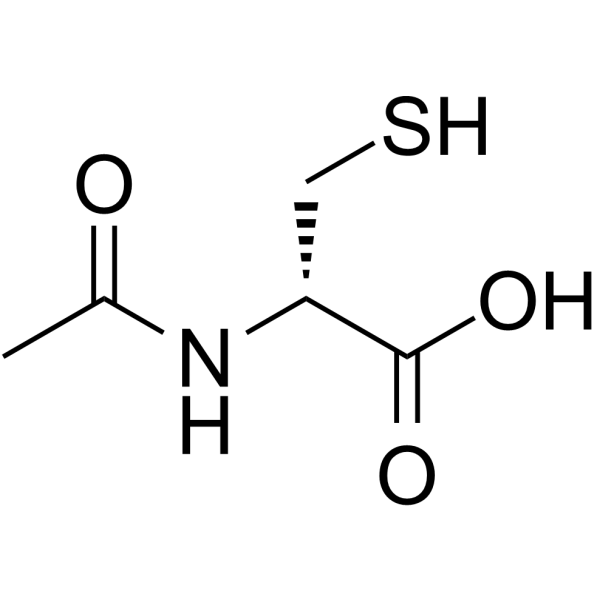
    N-Acetyl-D-cysteine
    3 Publications Verification

    Reactive Oxygen Species (ROS) Others
    N-Acetyl-D-cysteine has antioxidant activities and scavenges ROS through the reaction with its thiol group, but cannot enter the glutathione metabolic pathway .
    N-Acetyl-D-cysteine
  • HY-W087027

    Radionuclide-Drug Conjugates (RDCs) Biochemical Assay Reagents Integrin Cancer
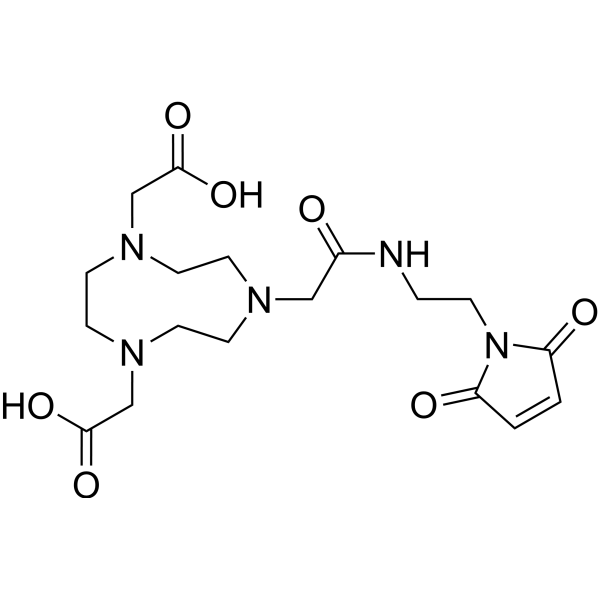
    Maleimide-NOTA is a chelate. Maleimide-NOTA can be site-specifically coupled to the hPD-L1 nanobody bearing the Cys-tag. Maleimide-NOTA can specifically conjugate to A20FMDV2 (HY-P1654). The [ 68Ga]Ac-CG6 formed by the conjugation of 68Ga radiolabeled Maleimide-NOTA with A20FMDV2 can be used for PET imaging of αvβ6 integrin-positive pancreatic ductal adenocarcinoma .
    Maleimide-NOTA
  • HY-D2906

    Fluorescent Dye Others
    Alexa fluor 647 maleimide is a bright, far-red-emitting fluorescent dye for labeling of protein SH groups (Ex/Em = 656/670 nm). Alexa fluor 647 maleimide can be used to attach AF 647 fluorophore to proteins and peptides containing cysteine residues, as well as to other thiolated molecules (such as thiol-containing oligonucleotides). Alexa Fluor 647 maleimide is promising for research of cell biology, neuroscience, and disease diagnostics .
    Alexa fluor 647 maleimide
  • HY-159057

    Biochemical Assay Reagents Others
    Biotin-BMCC is a Maliemide (HY-W007324) conjugated biotin molecule that has a high affinity for free thiol groups of cysteines .
    Biotin-BMCC
  • HY-D2381

    Fluorescent Dye Others
    AF 488 maleimide is a thiol-reactive dye used to label SH groups of proteins, which can attach the AF 488 fluorophore to cysteine residue-containing proteins and peptides as well as other thiolated molecules. AF 488 maleimide enables real-time visualization of dynamic pilus extension and retraction in live bacterial cells via epifluorescence microscopy (Ex/Em = 470/520 nm) .
    AF 488 maleimide
  • HY-P11308

    EGFR Cancer
    Cys-GE11 is an N-terminal modified GE11 (HY-P10128) with cysteine ​​(Cys) added. Cys-GE11 can be coupled through the thiol group of Cys. Cys-GE11 can be linked to PEG-P (TMC-DTC) through the N-terminus of cysteine to form a targeted polymer. Cys-GE11 can target cells with high EGFR expression (such as SMMC-7721 cells). Cys-GE11 can significantly enhance drug enrichment at the tumor site and exhibit low toxicity .
    Cys-GE11
  • HY-W106411

    Dithio-bis-maleimidoethane

    Biochemical Assay Reagents Others
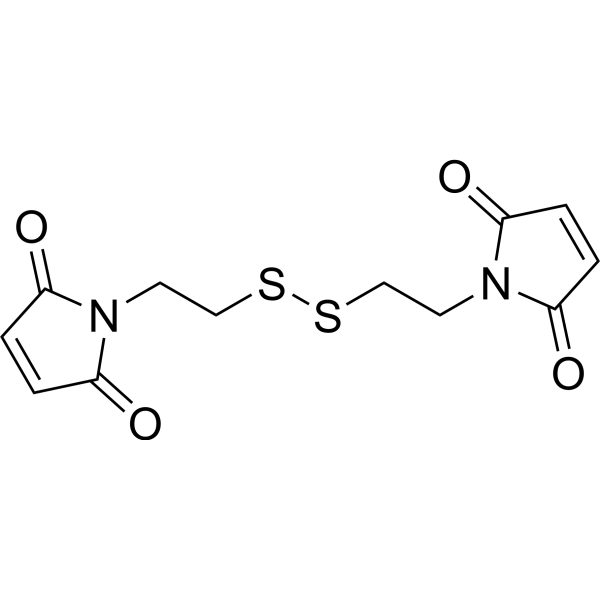
    DTME (dithio-bis-maleimidoethane) is a homobifunctional, maleimide crosslinker specifically designed for conjugation between sulfhydryl groups (-SH). DTME, whose molecular structure consists of two maleimide groups connected by an ethylene disulfide bridge, can specifically react with thiol - containing molecules (such as cysteine residues) to form stable covalent bonds. DTME allows crosslinks that can be cleaved with reducing agents such as DTT (HY-15917). DTME is commonly utilized to explore and characterize protein structure, particularly oligomerization, or protein interactions .
    DTME
  • HY-N9279

    Monocrotaline pyrrole; MCTP; 3,8-Didehydromonocrotaline

    Endogenous Metabolite Cardiovascular Disease Cancer
    Dehydromonocrotaline is a mitochondrial respiratory chain complex I NADH oxidase inhibitor, with a IC50 of 62.06 μM and a Ki of 8.1 μM in rats. Dehydromonocrotaline exerts non-competitive inhibitory effects by modifying cysteine thiol groups on complex I, and does not bind to the NADH-binding site. Dehydromonocrotaline dissipates mitochondrial membrane potential and reduces ATP levels. Dehydromonocrotaline can be used in studies related to hepatotoxicity, pulmonary hypertension and liver tumors .
    Dehydromonocrotaline
  • HY-W012166

    NHS-Bromoacetate

    Biochemical Assay Reagents Infection
    N-Succinimidyl bromoacetate (NHS-Bromoacetate) is a heterobifunctional crosslinking reagent, mainly used to modify the ɛ-amino group of lysine side chains. By covalently linking its bromoacetyl moiety to the ɛ-amino group of lysine in peptidomimetics, N-Succinimidyl bromoacetate enables their conjugation with thiol-modified nanoparticles via thioether bonds. N-Succinimidyl bromoacetate also performs bromoacetylation modification on carrier proteins, which then forms stable thioether bonds with the thiol groups of cysteine in peptides, thus efficiently preparing soluble peptide-protein conjugates with high substitution ratios. N-Succinimidyl bromoacetate can be used to prepare activated Sepharose derivatives for affinity chromatography, protein affinity labeling reagents, and peptide-protein immunogen conjugates with non-immunogenic linkages. N-Succinimidyl bromoacetate is applicable to studies related to HIV-1 infection and glioblastoma multiforme .
    N-Succinimidyl bromoacetate
  • HY-P4087

    HIV Infection Cancer
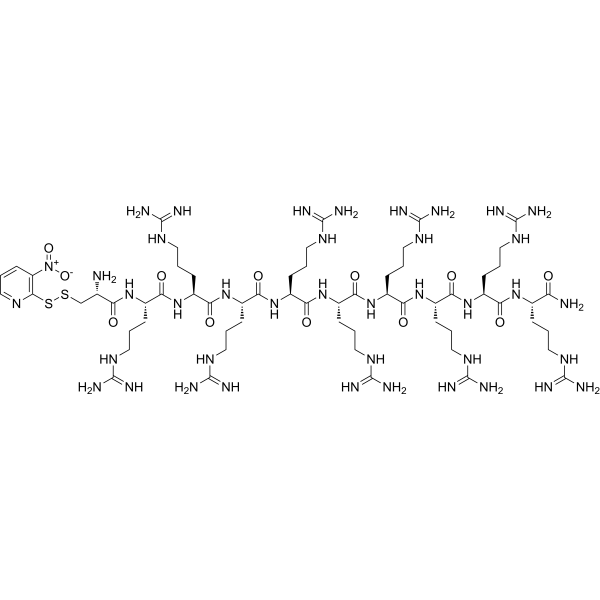
    Cys(Npys)-(Arg)9 is a synthetic cationic cell-penetrating peptide with a reversible thiol-reactive nitropyridyl (Npys) group. Cys(Npys)-(Arg)9 efficiently mediates the internalization and delivery of various "cargo" such as proteins and antibodies by forming reversible disulfide bonds with surface-exposed cysteine residues. Cys(Npys)-(Arg)9 endows TALEN proteins with cell-penetrating activity, enabling gene knockout in mammalian cells and protein transduction in wheat microspores. Cys(Npys)-(Arg)9 can be conjugated with antibodies to form cationized IgG for enhancing endosomal escape of oligonucleotides, or form siRNA delivery complexes. When the molar ratio of Cys(Npys)-(Arg)9 to loaded molecules is higher than 1:1, it exerts certain cytotoxic effects on cells. Cys(Npys)-(Arg)9 can be used in studies related to oral squamous cell carcinoma and HIV infection .
    Cys(Npys)-(Arg)9
  • HY-W736950A

    Amino Acid Derivatives Others
    H-L-Cys(MDNPE)-OH hydrochloride is a cysteine ​​derivative with a short peptide sequence attached to the thiol group of cysteine.
    H-L-Cys(MDNPE)-OH hydrochloride
  • HY-172721

    Fluorescent Dye Others
    Cy3B maleimide is a mono-reactive dye containing maleimide group, which can selectively and efficiently attach Cyanine3 fluorophore (an analog of Cy3) to proteins and peptides containing cysteine residues, as well as to other thiolated molecules (such as thiol-containing oligonucleotides). Cy3B is an improved version of Cy3 dyes with significantly increased fluorescence quantum yield and photostability.
    Cy3B maleimide
  • HY-P4087B

    HIV Others
    Cys(Npys)-(Arg)9 acetate is a synthetic cationic cell-penetrating peptide with a reversible thiol-reactive nitropyridyl (Npys) group. Cys(Npys)-(Arg)9 acetate efficiently mediates the internalization and delivery of various "cargo" such as proteins and antibodies by forming reversible disulfide bonds with surface-exposed cysteine residues. Cys(Npys)-(Arg)9 acetate endows TALEN proteins with cell-penetrating activity, enabling gene knockout in mammalian cells and protein transduction in wheat microspores. Cys(Npys)-(Arg)9 acetate can be conjugated with antibodies to form cationized IgG for enhancing endosomal escape of oligonucleotides, or form siRNA delivery complexes. When the molar ratio of Cys(Npys)-(Arg)9 acetate to loaded molecules is higher than 1:1, it exerts certain cytotoxic effects on cells. Cys(Npys)-(Arg)9 acetate can be used in studies related to oral squamous cell carcinoma and HIV infection .
    Cys(Npys)-(Arg)9 acetate
  • HY-172291

    ADC Linker Cancer
    Mal-amide-PEG8-Val-Cit-PAB-PNP is a cleavable ADC linker featuring a maleimide, a PEG spacer, a Val-Cit dipeptide, a PAB. and a PNP carbonate. Maleimide is a thiol-specific covalent linker which is used to label cysteine residues in proteins while the PNP group acts as a highly activated leaving group. Val-Cit linkers are cleaved by cytoplasmic peptidases.
    Mal-amide-PEG8-Val-Cit-PAB-PNP
  • HY-D0151

    Fluorescent Dye Others
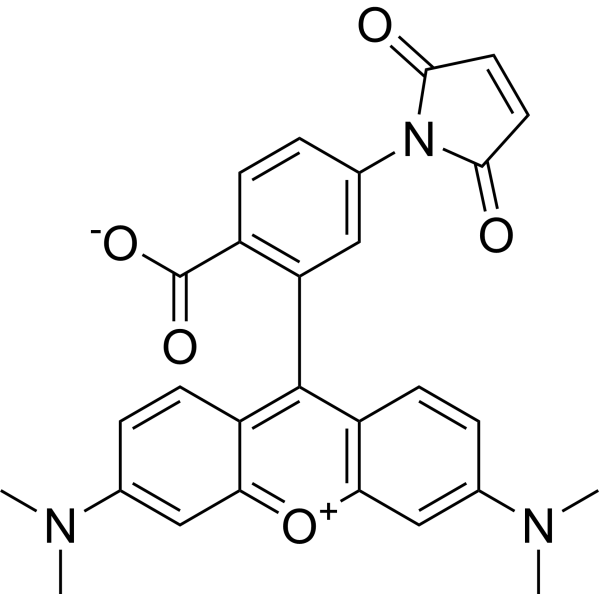
    Tetramethylrhodamine-5-maleimide is a fluorescent probe with high specificity for cysteine thiol (SH) groups. Tetramethylrhodamine-5-maleimide has high sensitivity, responds rapidly to negatively charged nanoparticles, and shows a concentration-dependent decrease in fluorescence intensity, but it is susceptible to interference from humic acids .
    Tetramethylrhodamine-5-maleimide
  • HY-136386R

    Reference Standards Reactive Oxygen Species (ROS) Others
    N-Acetyl-D-cysteine (Standard) is the analytical standard of N-Acetyl-D-cysteine. This product is intended for research and analytical applications. N-Acetyl-D-cysteine has antioxidant activities and scavenges ROS through the reaction with its thiol group, but cannot enter the glutathione metabolic pathway .
    N-Acetyl-D-cysteine (Standard)
  • HY-W394551

    Biochemical Assay Reagents Others
    Methyl 3,4-dibromo-2,5-dioxo-2,5-dihydro-1H-pyrrole-1-carboxylate is a small pyrrolidone molecule which features two bromine atoms and a methyl ester. The unsaturated dibromo motif is a covalent ligand for thiol groups, and may be used to label cysteine residues in proteins. The presence of two leaving groups on this molecule allows this linker to bind two thiols at a time. The methyl ester can be saponified to link this molecule to amines to form larger structures.
    Methyl 3,4-dibromo-2,5-dioxo-2,5-dihydro-1H-pyrrole-1-carboxylate
  • HY-D1404

    Fluorescent Dye Others
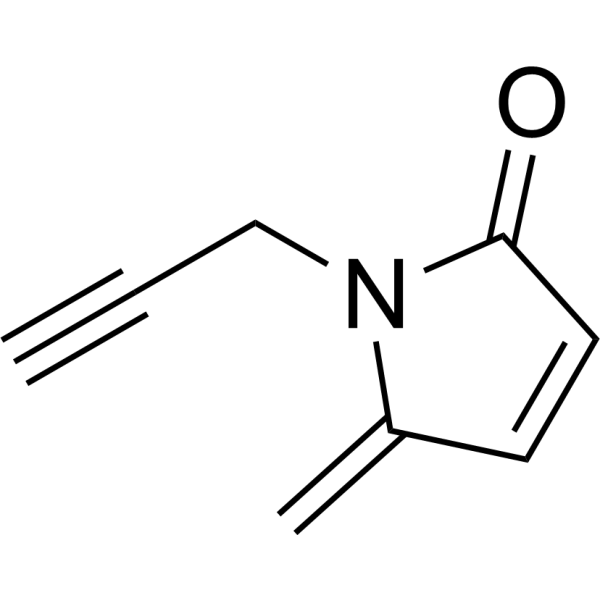
    5MP-Propargyl is the derivative of 5-Methylene pyrrolone (5MP). 5-Methylene pyrrolones (5MPs) are thiol-specific, reversible bioconjugation reagents for cysteine-specific protein modification, that are commonly used for protein bioconjugation . 5MP-Propargyl is a click chemistry reagent, it contains an Alkyne group and can undergo copper-catalyzed azide-alkyne cycloaddition (CuAAc) with molecules containing Azide groups.
    5MP-Propargyl
  • HY-D1407

    Fluorescent Dye Others
    Br-5MP-Propargyl is the derivative of 5-Methylene pyrrolone (5MP). 5-Methylene pyrrolones (5MPs) are thiol-specific, reversible bioconjugation reagents for cysteine-specific protein modification, that are commonly used for protein bioconjugation . Br-5MP-Propargyl is a click chemistry reagent, it contains an Alkyne group and can undergo copper-catalyzed azide-alkyne cycloaddition (CuAAc) with molecules containing Azide groups.
    Br-5MP-Propargyl
  • HY-152919

    ADC Linker Cancer
    Mal-amide-PEG8-Val-Cit-PAB-OH is a cleavable ADC linker featuring a maleimide, a hydrophilic PEG spacer, a Val-Cit dipeptide, and a PAB functional group. Maleimide is used to covalently bind free thiols on the cysteine residues of proteins. The Val-Cit dipeptide is cleaved by cellular proteases within the cell to allow for efficient payload delivery with the help of the PAB structure.
    Mal-amide-PEG8-Val-Cit-PAB-OH
  • HY-W591360

    Biochemical Assay Reagents Others
    Iodoacetamido-PEG6-azide is an aqueous soluble PEG linker containing an azide and a terminal Iodoacetamido group. The azide group can react with alkyne, BCN, DBCO via Click Chemistry to yield a stable triazole linkage. The Iodoacetamido moiety is commonly used to bind covalently with the thiol group of cysteine so the protein cannot form disulfide bonds.
    Iodoacetamido-PEG6-azide
  • HY-W578278

    Biochemical Assay Reagents Others
    tert-Butyl (2-(pyridin-2-yldisulfanyl)ethyl)carbamate consists of a tert-butyl group, where the protected amine can be deprotected under mild acidic conditions, and the other part of the molecule may act as a thiol-specific labeling reagent, commonly used in reversibly binding cysteine residues on proteins.
    tert-Butyl (2-(pyridin-2-yldisulfanyl)ethyl)carbamate
  • HY-D3200

    Fluorescent Dye Cuproptosis Others
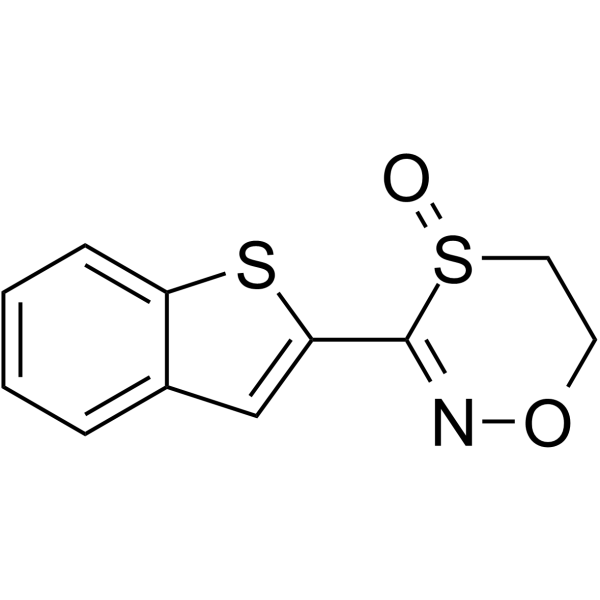
    Dns-LLC is a cell-permeable Cu +-selective fluorescent probe that forms a 1:1 complex with Cu +. The thiol group of Dns-LLC plays a key binding role, while the sulfonamide and amide groups jointly contribute to the stabilization of the complex. Upon binding to Cu + in aqueous buffer solutions, Dns-LLC generates a turn-on fluorescence response, which can be used for the detection of Cu + in the Golgi apparatus .
    Dns–LLC
  • HY-W800719

    Biochemical Assay Reagents Others
    N-Boc-N'-(PEG1-t-butyl ester)-L-Lysine-amido-Mal is the amino acid, lysine, with a maleimide at its C-terminus, a Boc-protecting group on its α-amine, and an amido-PEG1-t-butyl ester on its ε-amine. Maleimide is a thiol-reactive covalent group used to conjugate cysteine residues, while the Boc and the t-butyl ester can be later deprotected to perform further reactions.
    N-Boc-N'-(PEG1-t-butyl ester)-L-Lysine-amido-Mal
  • HY-P11781A

    Drug Derivative Cancer
    Cys-HW12 is a random peptide containing an N-terminal cysteine. Cys-HW12 can be coupled via the thiol group of Cys. Cys-HW12 can serve as a control for GE11 (HY-P10128)-conjugated mixed micelles targeting EGFR, and also functions as a cytotoxic agent, cellular uptake inhibitor, and tumor growth inhibitor. Cys-HW12 is applicable to pancreatic cancer-related research .
    Cys-HW12

Inquiry Online

Your information is safe with us. * Required Fields.

Salutation


Country or Region *

Applicant Name *


Organization Name *

Department *


Email Address *


Product Name *

Cat. No.


Requested quantity *

Phone Number *


Remarks

Inquiry Online

Inquiry Information

Product Name:
Cat. No.:
Quantity:
MCE Japan Authorized Agent:

