1. Search Result
Search Result
Results for "

dolastatin

" in MedChemExpress (MCE) Product Catalog:

31

Inhibitors & Agonists

5

Peptides

2

Natural
Products

3

Isotope-Labeled Compounds

3

Click Chemistry

Cat. No. Product Name Target Research Areas Chemical Structure
  • HY-15162
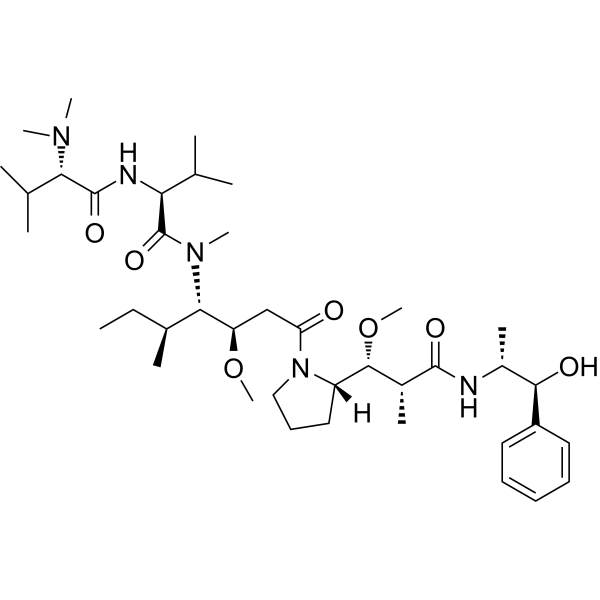
    Monomethyl auristatin E
    Maximum Cited Publications
    54 Publications Verification

    MMAE; SGD-1010

    Microtubule/Tubulin ADC Payload Apoptosis Cancer
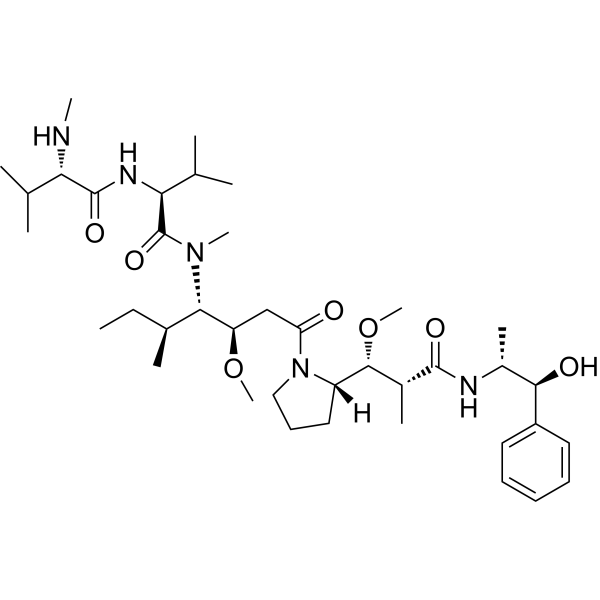
    Monomethyl auristatin E (MMAE; SGD-1010) is a synthetic derivative of dolastatin 10 and functions as a potent mitotic inhibitor by inhibiting tubulin polymerization. MMAE is widely used as a cytotoxic component of antibody-drug conjugates (ADCs) to treat several different cancer types.
    Monomethyl auristatin E
  • HY-15582

    Microtubule/Tubulin ADC Payload Cancer
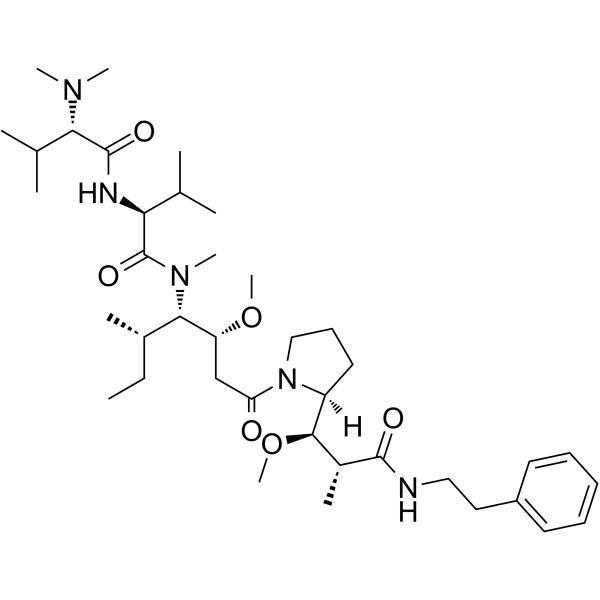
    Auristatin E is a cytotoxic microtubule polymerization inhibitor with potent and selective antitumor activity. Auristatin E is a cytotoxin in antibody-drug conjugates (ADC). Auristatin E inhibits cell division by blocking the polymerisation of tubulin, promising for research in B-cell malignancies. Auristatin E, a synthetic analogue of the Dolastatin 10 (HY-15580), is linear peptides comprised of four amino acids .
    Auristatin E
  • HY-136314

    Drug-Linker Conjugates for ADC Cancer
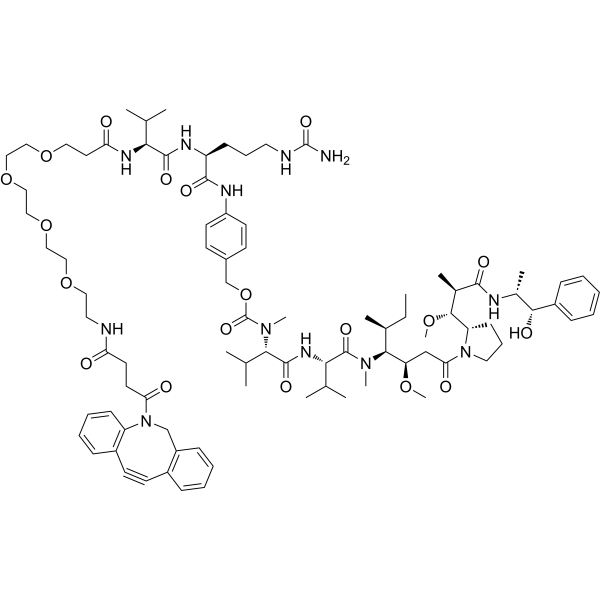
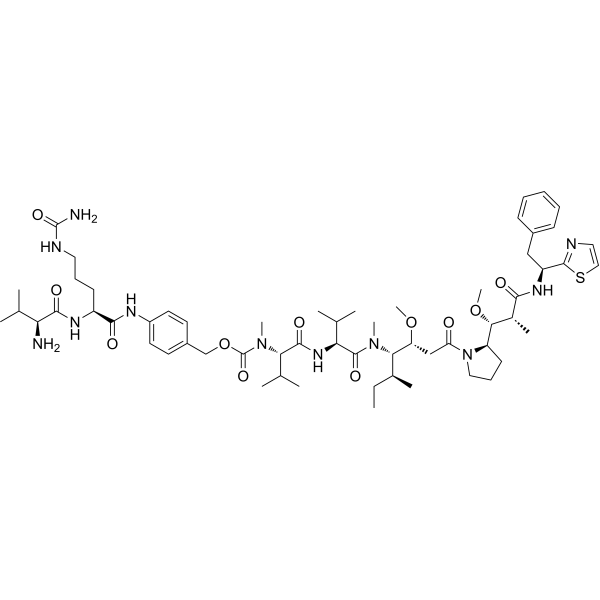
    DBCO-PEG4-VC-PAB-MMAE consists a ADC linker (DBCO-PEG4-VC-PAB) and a tubulin polymerization inhibitor MMAE (HY-15162). DBCO-PEG4-VC-PAB-MMAE can be used in the synthesis of antibody-agent conjugates (ADCs). MMAE is a synthetic derivative of dolastatin 10 and functions as a potent mitotic inhibitor by inhibiting tubulin polymerization. DBCO-PEG4-VC-PAB-MMAE is a click chemistry reagent, it contains a DBCO group that can undergo strain-promoted alkyne-azide cycloaddition (SPAAC) with molecules containing Azide groups.
    DBCO-PEG4-VC-PAB-MMAE
  • HY-12522

    Aur0101; Auristatin-0101

    Microtubule/Tubulin ADC Payload Cancer
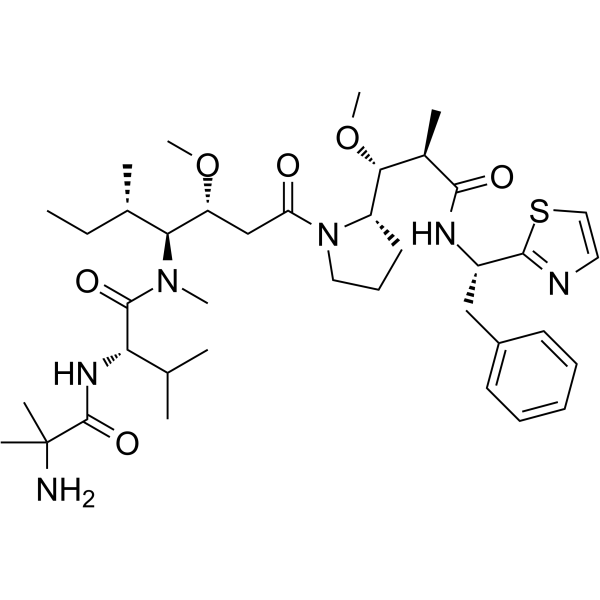
    PF-06380101 (Aur0101), an auristatin microtubule inhibitor, is a cytotoxic Dolastatin 10 analogue. PF-06380101 (Aur0101) shows excellent potencies in tumor cell proliferation assays and differential ADME properties when compared to other synthetic auristatin analogues that are used in the preparation of ADCs.
    PF-06380101
  • HY-15162R

    MMAE (Standard); SGD-1010 (Standard); Vedotin (Standard)

    Reference Standards Microtubule/Tubulin Apoptosis Cancer
    Monomethyl auristatin E (MMAE) (Standard) is the analytical standard of Monomethyl auristatin E (HY-15162). This product is intended for research and analytical applications. Monomethyl auristatin E is a synthetic derivative of dolastatin 10 and functions as a potent mitotic inhibitor by inhibiting tubulin polymerization. MMAE is widely used as a cytotoxic component of antibody-drug conjugates (ADCs) against several different cancer types .
    Monomethyl auristatin E (Standard)
  • HY-33046

    (2R,3R)-BOC-dolaproine

    Microtubule/Tubulin Mitosis Cancer
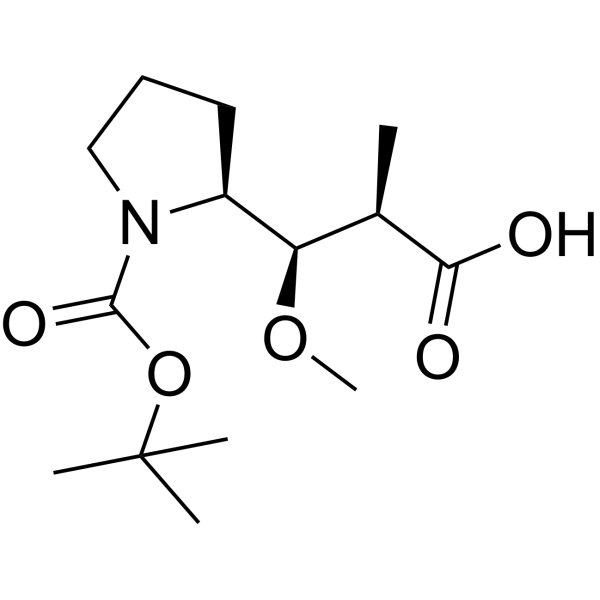
    N-Boc-dolaproine ((2R,3R)-BOC-dolaproine) is the amino acid residue of the pentapeptide Dolastatin 10 (HY-15580). Dolastatin 10 inhibits tubulin polymerization and mitosis and has anticancer activity .
    N-Boc-dolaproine
  • HY-15580

    DLS 10; NSC 376128

    Microtubule/Tubulin ADC Payload Cancer
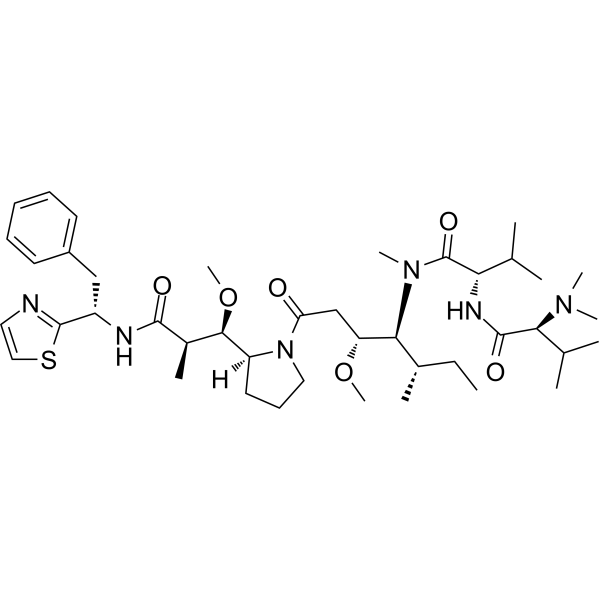
    Dolastatin 10 (DLS 10) is a potent antimitotic peptide that inhibits tubulin polymerization.
    Dolastatin 10
  • HY-145149

    ADC Payload Cancer
    Duostatin 5 is a ADC Cytotoxin designed based on MMAF (HY-15579) and can be used to synthesize ADCs. The preparation of Duostatin 5 has the advantages of fewer synthetic steps, simple operation, less difficulty in quality control, and more stable chemical synthesis process. Duostatin 5 can be linked to the antibody targeting 5T4 (ZV05) by cross-linking with interchain cysteines through a disubstituted C-Lock linker. Duostatin 5 is a click chemistry reagent. It contains an azide group and can undergo copper-catalyzed azide-alkyne cycloaddition (CuAAc) with molecules containing alkyne groups. It can also undergo ring strain-driven alkyne-azide cycloaddition (SPAAC) with molecules containing DBCO or BCN groups[1][2].
    Duostatin 5
  • HY-15581

    Demethyldolastatin 10; Monomethylauristatin D; Monomethyl dolastatin 10

    Microtubule/Tubulin ADC Payload Cancer
    MMAD is a potent tubulin inhibitor, is a toxin payload in antibody agent conjugates (ADCs).
    MMAD
  • HY-14672
    Soblidotin
    1 Publications Verification

    Auristatin PE; TZT-1027

    Microtubule/Tubulin Cancer
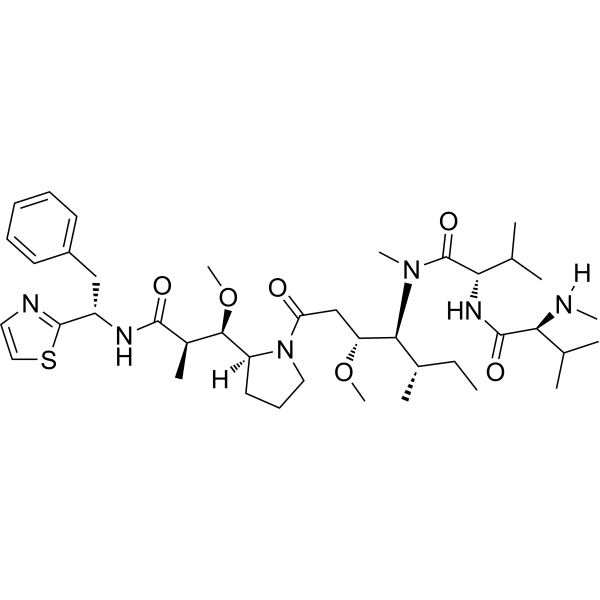
    Soblidotin (Auristatin PE) is a novel synthetic Dolastatin 10 derivative and inhibitor of tubulin polymerization.
    Soblidotin
  • HY-12522S
    PF-06380101-d8
    2 Publications Verification

    Aur0101-d8; Auristatin-0101-d8

    Microtubule/Tubulin ADC Payload Cancer
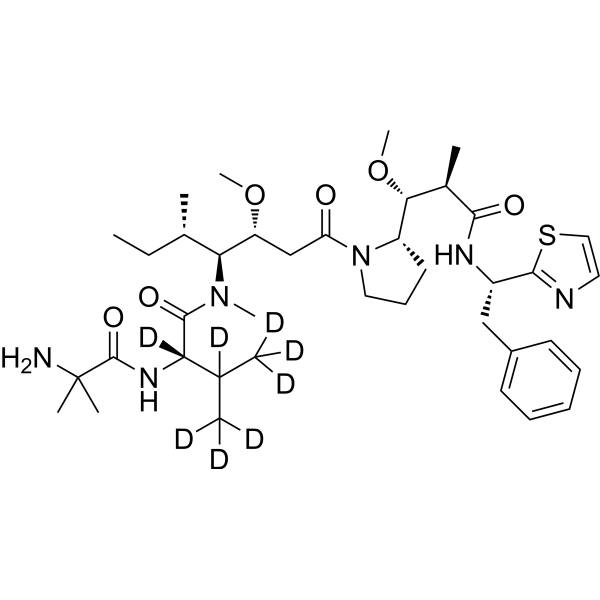
    PF-06380101-d8 (Aur0101-d8) is a deuterium labeled PF-06380101 (HY-12522). PF-06380101, an Auristatin microtubule inhibitor, is a cytotoxic Dolastatin 10 analogue .
    PF-06380101-d8
  • HY-78828A

    Microtubule/Tubulin Others Cancer
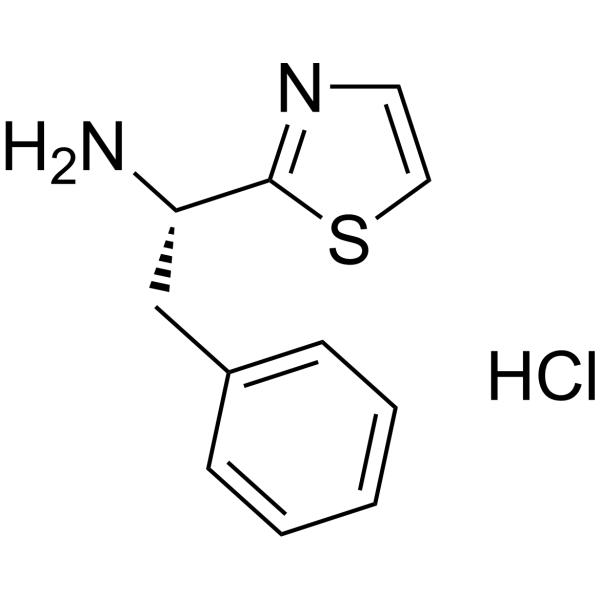
    (S)-Dolaphenine hydrochloride is a component of Dolastatin 10 (HY-15580). Dolastatin 10, an antineoplastic agent, inhibits tubulin polymerization .
    (S)-Dolaphenine hydrochloride
  • HY-15582S

    Isotope-Labeled Compounds Microtubule/Tubulin ADC Payload Cancer
    Auristatin E-d8 is the deuterium labeled Auristatin E (HY-15582). Auristatin E is a cytotoxic microtubule polymerization inhibitor with potent and selective antitumor activity. Auristatin E is a cytotoxin in antibody-drug conjugates (ADC). Auristatin E inhibits cell division by blocking the polymerisation of tubulin, promising for research in B-cell malignancies. Auristatin E, a synthetic analogue of the Dolastatin 10 (HY-15580), is linear peptides comprised of four amino acids .
    Auristatin E-d8
  • HY-P1126

    DLS 15

    Microtubule/Tubulin ADC Payload Apoptosis Cancer
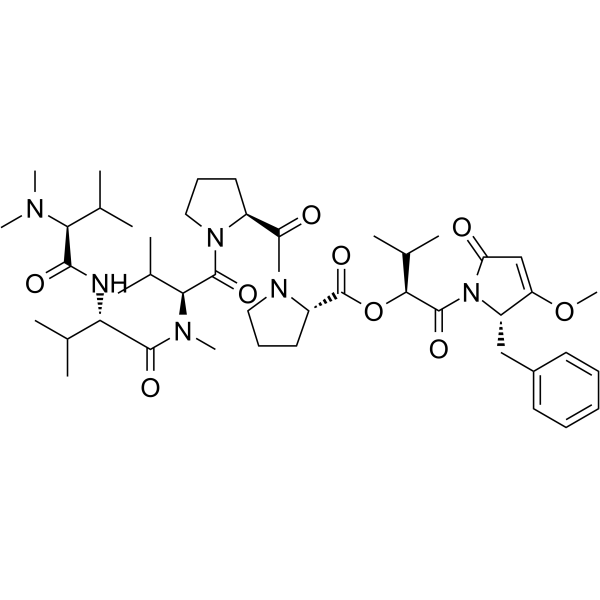
    Dolastatin 15 (DLS 15), a depsipeptide derived from Dolabella auricularia, is a potent antimitotic agent structurally related to the antitubulin agent Dolastatin 10. Dolastatin 15 induces cell cycle arrest and apoptosis in multiple myeloma cells. Dolastatin 15 can be used as an ADC cytotoxin .
    Dolastatin 15
  • HY-128894

    Drug-Linker Conjugates for ADC Cancer
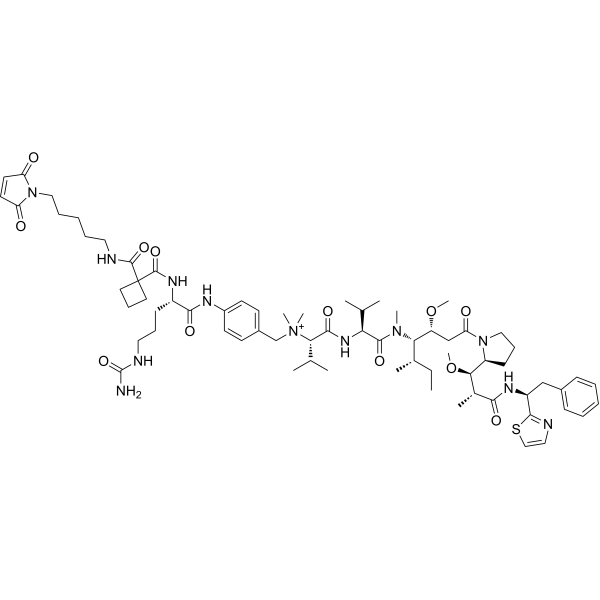
    MC-Sq-Cit-PAB-Dolastatin10 is a agent-linker conjugate for ADC with potent antitumor activity by using Dolastatin10 (a tubulin polymerization inhibitor), linked via the ADC linker MC-Sq-Cit-PAB.
    MC-Sq-Cit-PAB-Dolastatin10
  • HY-42912A

    Microtubule/Tubulin Mitosis Cancer
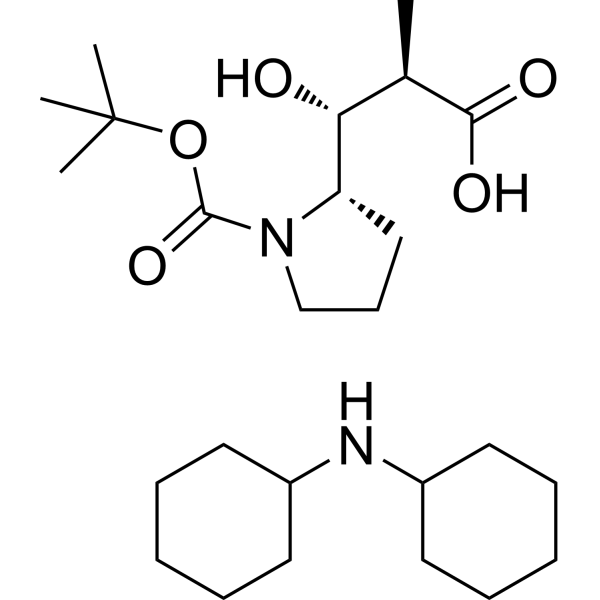
    N-Boc-dolaproine-OH dicyclohexylamine is the amino acid residue of the pentapeptide Dolastatin 10 (HY-15580). Dolastatin 10 inhibits tubulin polymerization and mitosis and has anticancer activity .
    N-Boc-dolaproine-OH dicyclohexylamine
  • HY-33046A

    (2R,3R)-BOC-dolaproine dicyclohexylamine

    Microtubule/Tubulin Mitosis Cancer
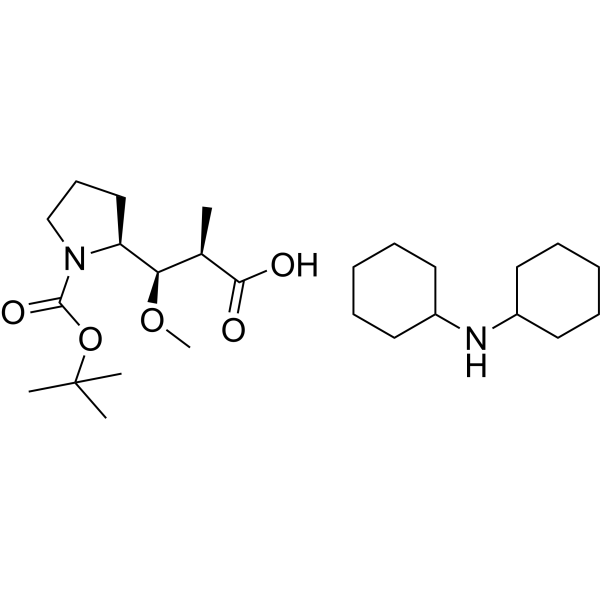
    N-Boc-dolaproine dicyclohexylamine is an amino acid residue of the pentapeptide Dolastatin 10 (HY-15580). Dolastatin 10 inhibits tubulin polymerization and mitosis and has anticancer activity. And contains dicyclohexylamine .
    N-Boc-dolaproine dicyclohexylamine
  • HY-78932C

    Microtubule/Tubulin Mitosis Cancer
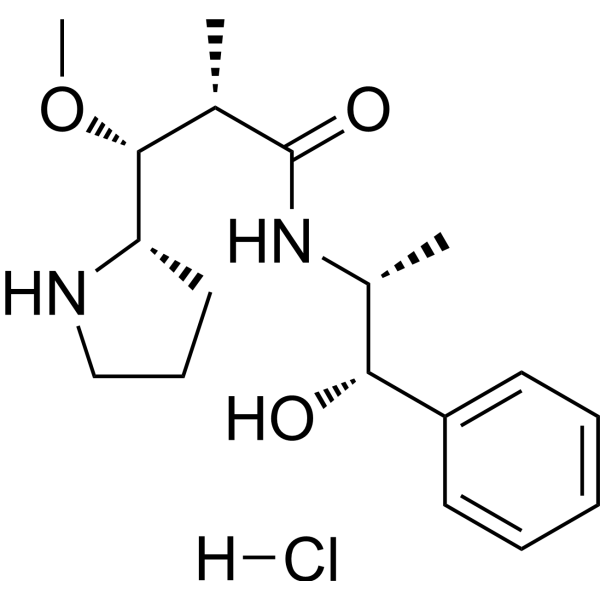
    (2S,3R)-Dap-NE hydrochloride is the amino acid residue of the pentapeptide Dolastatin 10 (HY-15580). Dolastatin 10 inhibits tubulin polymerization and mitosis and has anticancer activity .
    (2S,3R)-Dap-NE hydrochloride
  • HY-126492

    Drug-Linker Conjugates for ADC Cancer
    Vat-Cit-PAB-Monomethyl Dolastatin 10 is a agent-linker conjugate for ADC with potent antitumor activity by using Monomethyl Dolastatin 10 (a potent tubulin inhibitor), linked via the ADC linker Vat-Cit-PAB.
    Vat-Cit-PAB-Monomethyl Dolastatin 10
  • HY-13589

    LU103793 free base

    Microtubule/Tubulin Mitosis Cancer
    Cemadotin (LU103793) is a water-soluble synthetic analogue of Dolastatin 15 (HY-P1126) that inhibits cell proliferation in vitro and the growth of tumor xenografts in mice. Cemadotin blocks cells at mitosis, and exhibits Ki value of 1 μM for inhibiting tubulin. Cemadotin can be used to research anticancer .
    Cemadotin
  • HY-78927

    Amino Acid Derivatives Others
    N-Boc-L-Prolinal is a proline with a Boc protecting group, which can be used to synthesize biologically active peptide mimetics, such as the synthesis of Dolastatin 10 (HY-15580) analogs with anti-colon cancer activity .
    N-Boc-L-Prolinal
  • HY-125453

    Microtubule/Tubulin Cancer
    Symplostatin 1 is a Dolastatin 10 (HY-15580) analogue that can be isolated from the marine cyanobacterium Symploca hydnoides .
    Symplostatin 1
  • HY-144585

    Microtubule/Tubulin ADC Payload Others
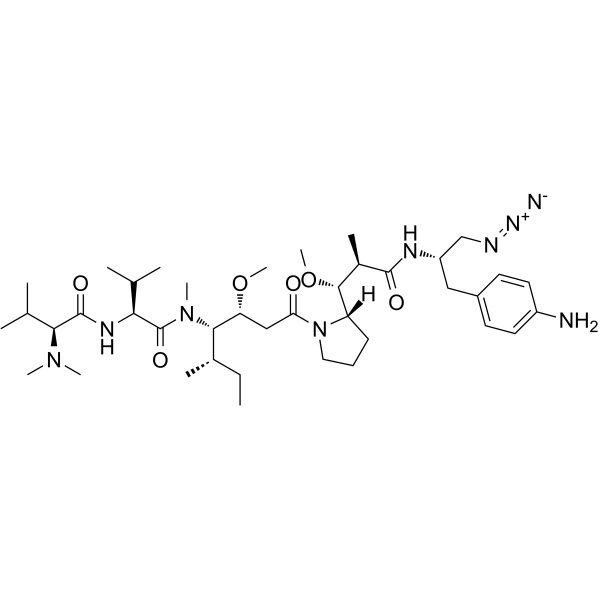
    AGD-0182 is a microtubule disrupting agent. AGD-0182 is a synthetic analogue of the naturally occurring tubulin-binding molecule Dolastatin 10 . AGD-0182 is a click chemistry reagent, it contains an Azide group and can undergo copper-catalyzed azide-alkyne cycloaddition reaction (CuAAc) with molecules containing Alkyne groups. It can also undergo strain-promoted alkyne-azide cycloaddition (SPAAC) reactions with molecules containing DBCO or BCN groups.
    AGD-0182
  • HY-13589A

    LU103793 hydrochloride

    Microtubule/Tubulin Mitosis Cancer
    Cemadotin (LU103793) hydrochloride is a water-soluble synthetic analogue of Dolastatin 15 (HY-P1126) that inhibits cell proliferation in vitro and the growth of tumor xenografts in mice. Cemadotin hydrochloride blocks cells at mitosis, and exhibits Ki value of 1 μM for inhibiting tubulin. Cemadotin hydrochloride can be used to research anticancer .
    Cemadotin hydrochloride
  • HY-43304

    Microtubule/Tubulin Mitosis Cancer
    N-Boc-dolaproine-methyl is the amino acid residue of the pentapeptide Dolastatin 10 (HY-15580). Dolastatin 10 inhibits tubulin polymerization and mitosis and has anticancer activity .
    N-Boc-dolaproine-methyl
  • HY-42912

    Microtubule/Tubulin Mitosis Cancer
    N-Boc-dolaproine-OH ((+)-phenylethylamine) is the amino acid residue of the pentapeptide Dolastatin 10 (HY-15580). Dolastatin 10 inhibits tubulin polymerization and mitosis and has anticancer activity .
    N-Boc-dolaproine-OH ((+)-phenylethylamine)
  • HY-49053

    Microtubule/Tubulin Mitosis Cancer
    N-Boc-dolaproine-amide-Me-Phe is the amino acid residue of the pentapeptide Dolastatin 10 (HY-15580). Dolastatin 10 inhibits tubulin polymerization and mitosis and has anticancer activity .
    N-Boc-dolaproine-amide-Me-Phe
  • HY-78932D

    Drug Derivative Mitosis Cancer
    (2R,3R)-Dap-NE hydrochloride is the amino acid residue of the pentapeptide Dolastatin 10 (HY-15580). Dolastatin 10 inhibits tubulin polymerization and mitosis and has anticancer activity .
    (2R,3R)-Dap-NE hydrochloride
  • HY-139625

    Microtubule/Tubulin Cancer
    Dolastatinol is a synthetic analog of dolastatin 10 and low nanomolar inhibitor of tubulin polymerization.
    Dolastatinol
  • HY-13760

    ILX651

    Microtubule/Tubulin Cancer
    Tasidotin hydrochloride is a peptide analog of the antimitotic depsipeptide dolastatin 15, as an inhibitor of microtubule assembly and microtubule dynamics.
    Tasidotin hydrochloride
  • HY-15581S

    Demethyldolastatin 10-d8; Monomethylauristatin D-d8; Monomethyl dolastatin 10-d8

    ADC Payload Microtubule/Tubulin Cancer
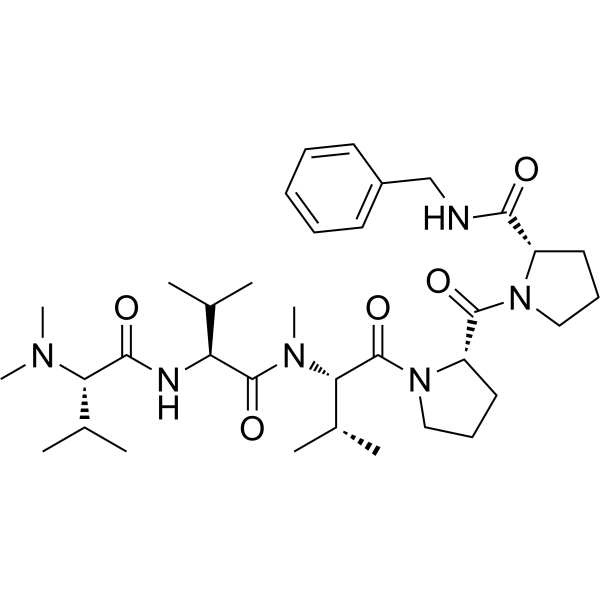
    MMAD-d8D is a deuterated form of MMAD, which is a microtubule disrupting agent.
    MMAD-d8

Inquiry Online

Your information is safe with us. * Required Fields.

Salutation


Country or Region *

Applicant Name *


Organization Name *

Department *


Email Address *


Product Name *

Cat. No.


Requested quantity *

Phone Number *


Remarks

Inquiry Online

Inquiry Information

Product Name:
Cat. No.:
Quantity:
MCE Japan Authorized Agent:

