1. Search Result
Search Result
Results for "

fibroblast migration

" in MedChemExpress (MCE) Product Catalog:

30

Inhibitors & Agonists

2

Biochemical Assay Reagents

4

Peptides

1

Natural
Products

2

Isotope-Labeled Compounds

1

Click Chemistry

4

Oligonucleotides

Cat. No. Product Name Target Research Areas Chemical Structure
  • HY-113365

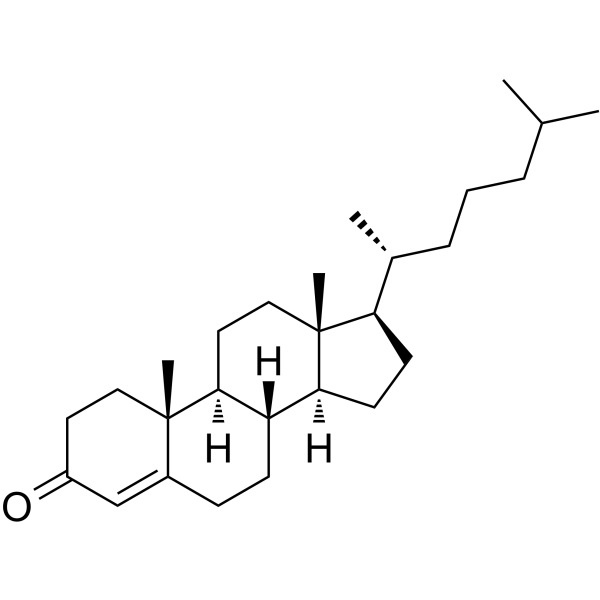
    4-Cholesten-3-one

    Endogenous Metabolite Infection Metabolic Disease
    Cholestenone (4-cholesten-3-one) is an orally available antimicrobial agent that is metabolized primarily in the liver as an intermediate oxidation product of cholesterol. Cholestenone inhibits human dermal fibroblast migration and fights Helicobacter pylori infection in vitro and in mouse models by inhibiting cholesterol-α-D-glucopyranoside (CGL). Cholestenone also alleviates metabolic disorders caused by obesity in db/db mice .
    Cholestenone
  • HY-B1392
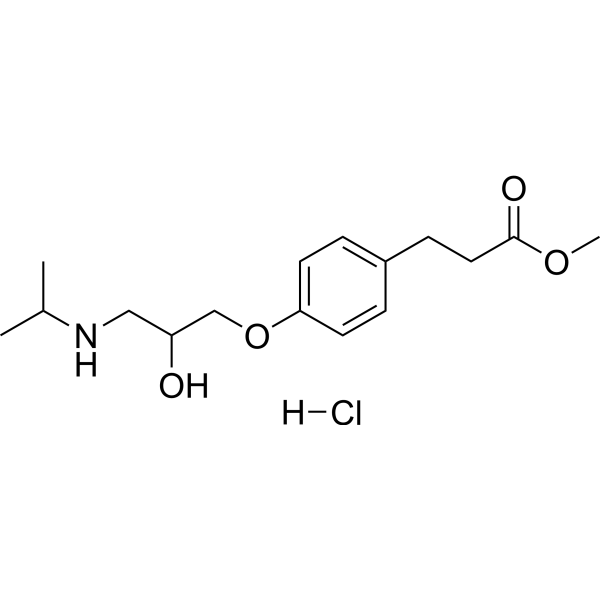
    Esmolol hydrochloride
    3 Publications Verification

    Adrenergic Receptor Caspase Apoptosis Aldose Reductase Neurokinin Receptor Cardiovascular Disease Endocrinology Cancer
    Esmolol hydrochloride is an ultra-short-acting cardioselective β1-adrenergic blocker. Esmolol hydrochloride exerts its antiarrhythmic effect by activating Neurokinin 1 Receptor. Esmolol hydrochloride attenuates post resuscitation myocardial dysfunction. Esmolol hydrochloride improves diabetic wound healing by inhibiting aldose reductase and the production of advanced glycation end products and promoting fibroblast migration. Esmolol hydrochloride can be used to study cardiac diseases such as arrhythmias and diabetic foot ulcers .
    Esmolol hydrochloride
  • HY-W127575

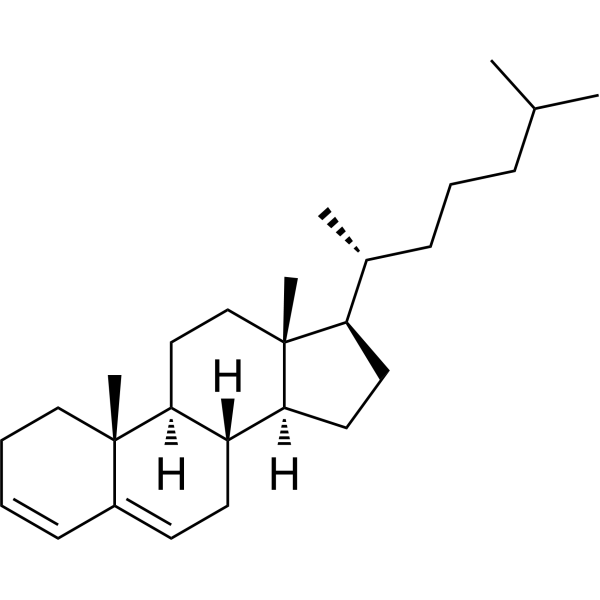
    delta-3,5-Cholestadiene

    PI3K Akt Inflammation/Immunology
    Cholesta-3,5-diene is an inflammatory modulator that targets immune cells such as neutrophils and accelerates wound healing by promoting neutrophil chemotaxis and fibroblast migration. Cholesta-3,5-diene enhances immune cell recruitment and extracellular matrix deposition by activating chemokine receptor-mediated signaling pathways such as PI3K/Akt. Cholesta-3,5-diene can be applied topically to wound repair and has potential therapeutic value in chronic ulcers or skin lesions .
    Cholesta-3,5-diene
  • HY-A0020
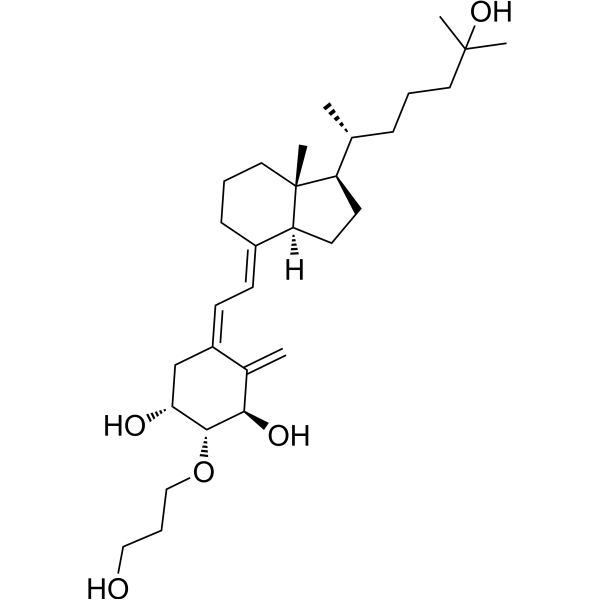
    Eldecalcitol
    4 Publications Verification

    ED-71; 2-(3-hydroxypropoxy)-1,25-dihydroxyvitamin D3

    VD/VDR Apoptosis Metabolic Disease Inflammation/Immunology Cancer
    Eldecalcitol (ED-71) is an orally active vitamin D3 analogue, inhibits bone resorption and increases bone mineral density. Eldecalcitol (ED-71) displays anti-tumor effect and inhibits cell proliferation, migration and induces apoptosis by suppressing GPx-1 .
    Eldecalcitol
  • HY-114169
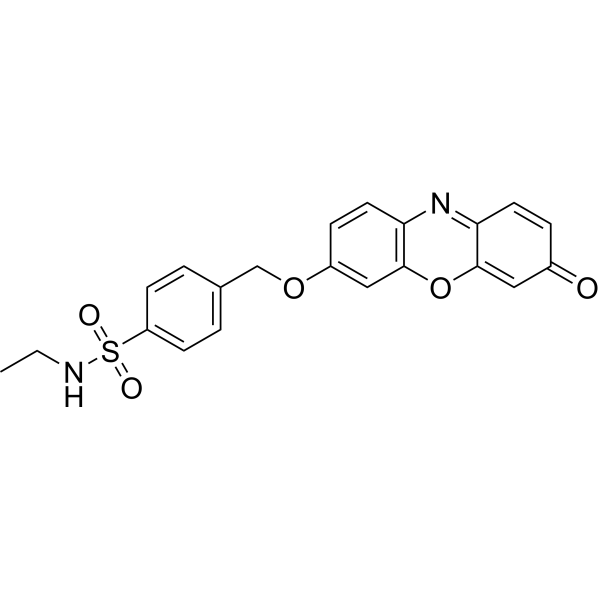
    WRG-28
    2 Publications Verification

    Discoidin Domain Receptor Inflammation/Immunology Cancer
    WRG-28 is a selective, extracellularly acting DDR2 allosteric inhibitor, with an IC50 of 230 nM. WRG-28 inhibits tumor invasion, migration and tumor-supporting effects of cancer-associated fibroblasts (CAFs). WRG-28 inhibits metastatic breast tumor cell colonization in the lungs. WRG-28 also shows good activity of relieving rheumatoid arthritis in CAIA model of mice .
    WRG-28
  • HY-NP175

    Biochemical Assay Reagents Integrin Discoidin Domain Receptor Others
    Collagen (bovine skin) is a three-dimensional cell culture matrix and morphoregulator extracted from bovine skin, which binds to integrins (such as α1β1, α2β1, α11β1) and discoidin domain receptors (DDR1 and DDR2). Collagen (bovine skin) can be reconstituted into a three-dimensional fibrous network to mimic the in vivo tissue environment. It can not only be modified through cross-linking or concentration adjustment, but also interact with fibronectin to enhance matrix-associated cellular activities. Collagen (bovine skin) mediates the proliferation, aggregation, durotactic migration and differentiation of fibroblasts, regulates the synthesis, remodeling and contraction of extracellular matrix, and modulates the expression, activation of MMP as well as cell apoptosis, etc. Collagen (bovine skin) can be used in studies related to the mechanisms of cancer occurrence and development .
    Collagen (bovine skin)
  • HY-108659

    P2Y Receptor Interleukin Related NF-κB Reactive Oxygen Species (ROS) Inflammation/Immunology
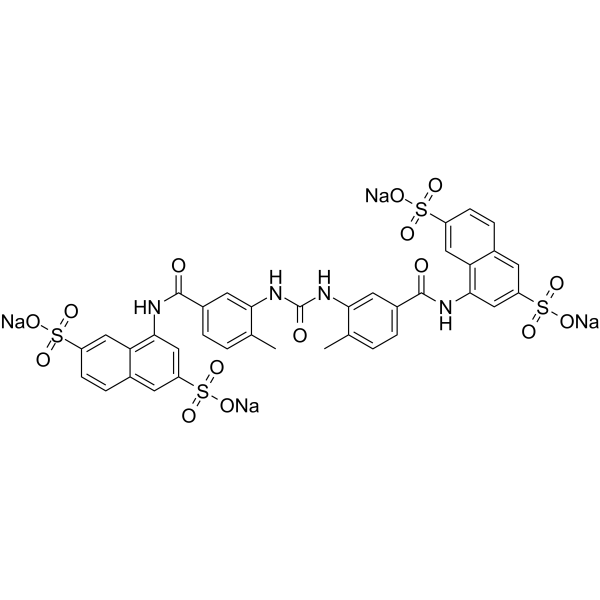
    NF340 is a P2Y11 receptor inhibitor with a pIC50 of 7.3-7.7 against human P2Y11 receptor, and it exhibits high selectivity over other P2Y family receptors. NF340 binds to the ATP-binding amino acid residues of the P2Y11 receptor to inhibit its activity, block nociceptive activity, and reduce spinal dorsal horn P2Y11 receptor upregulation induced by spinal nerve injury. NF340 attenuates the NFκB signaling pathway activated by IL-1β by decreasing IκBα phosphorylation, nuclear p65 accumulation, and NFκB promoter activity. NF340 inhibits IL-1β-induced pro-inflammatory cytokine expression, reduces intracellular ROS and 4-HNE levels, and suppresses IL-1β-induced matrix metalloproteinase expression in primary fibroblast-like synoviocytes. NF340 inhibits ATP-induced elevation of intracellular Ca 2+ concentration and cell migration in human hepatocellular carcinoma cells. NF340 can be used in the research of neuropathic pain, myocardial ischemia/reperfusion injury, inflammatory pain, rheumatoid arthritis, and hepatocellular carcinoma .
    NF340
  • HY-164102

    TNF Receptor NF-κB Inflammation/Immunology
    TNF-α-IN-18 (Compound 61) is an inhibitor for TNF-α (IC50 of 1.8 μM), that inhibits TNF signaling pathway through block of NF-kB migration from cytoplasm to nucleus. TNF-α-IN-18 exhibits slight cytotoxicity to mouse fibroblast LM cell, with a CC50 >50 μM. TNF-α-IN-18 ameliorates the TNF- or Lipopolysaccharide (HY-D1056)-induced sepsis in mouse models. TNF-α-IN-18 protects mice from rheumatoid arthritis .
    TNF-α-IN-18
  • HY-124776

    p97 Cancer
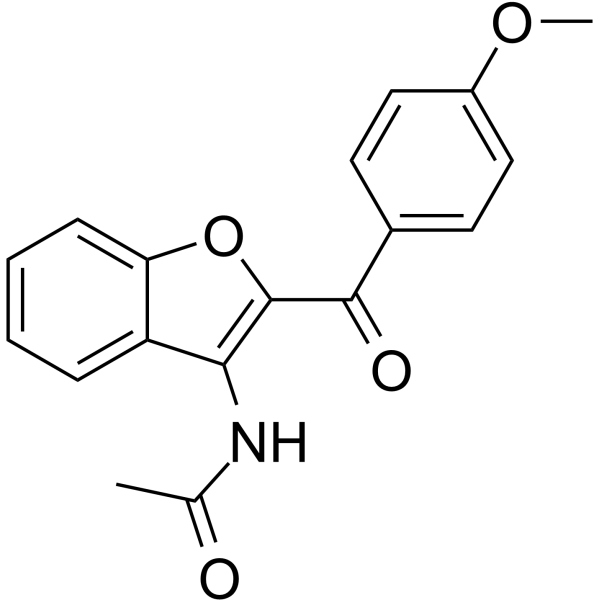
    NPD8733 is an inhibitor of cancer cell-enhanced fibroblast migration. NPD8733 specifically binds to valosin-containing protein (VCP)/p97, a member of the ATPase-associated with diverse cellular activities (AAA+) protein family. NPD8733 has the potential for the research of cancer diseases .
    NPD8733
  • HY-155191

    Galectin Inflammation/Immunology Cancer
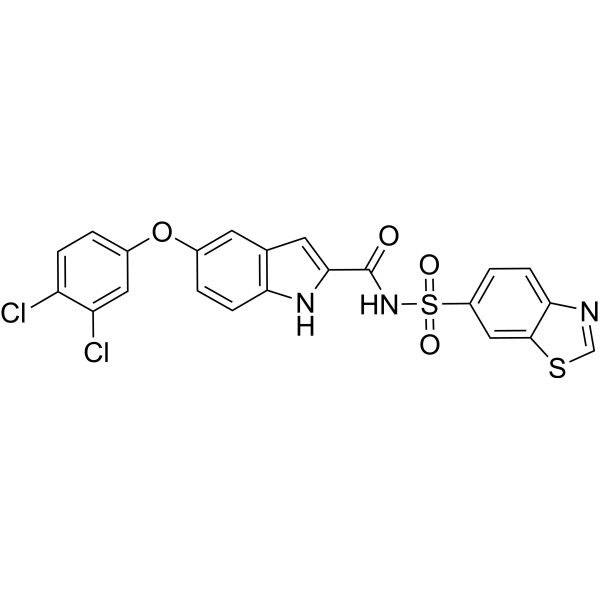
    Galectin-3/galectin-8-IN-1 (Compound 53) is a dual Galectin-3 and galectin-8 C-terminal domain inhibitor, with Kd values of 4.12 μM and 6.04 μM respectively. Galectin-3/galectin-8-IN-1 inhibits the MRC-5 lung fibroblast cells migration. Galectin-3/galectin-8-IN-1 can be used for research of cancer and tissue fibrosis .
    Galectin-3/galectin-8-IN-1
  • HY-155192

    Galectin Inflammation/Immunology Cancer
    Galectin-3/galectin-8-IN-2 (Compound 57) is a dual Galectin-3 and galectin-8 C-terminal domain inhibitor, with Kd values of 12.8 μM and 2.06 μM respectively. Galectin-3/galectin-8-IN-2 inhibits the MRC-5 lung fibroblast cells migration. Galectin-3/galectin-8-IN-2 can be used for research of cancer and tissue fibrosis .
    Galectin-3/galectin-8-IN-2
  • HY-164387

    EGFR PDGFR VEGFR Cancer
    Sutetinib is an orally active inhibitor for tyrosine kinase, that is associated with tumor growth and angiogenesis, such as VEGFR (Ki= 0.009 µM for VEGFR-1/2/3), PDGFR (Ki= 0.008 µM for PDGFR-α/β) and proto-oncogene cKIT. Sutetinib inhibits the proliferation, migration, and tubular structure formation of endothelial cells and fibroblasts, and exhibits board-spectrum antitumor efficacy in vitro and in vivo .
    Sutetinib
  • HY-P10320

    Tumstatin (69-88), human

    PI3K Akt Cardiovascular Disease
    T3 Peptide is an active fragment of tumstatin. T3 Peptide binds integrin αvβ3vβ5, activates the PI3K/Akt/p70S6K signaling pathway, and thus stimulates the proliferation and migration of rat cardiac fibroblasts .
    T3 Peptide
  • HY-164387A

    EGFR VEGFR PDGFR Cancer
    Sutetinib maleate is the maleate form of Sutetinib (HY-164387). Sutetinib maleate is an orally active inhibitor for tyrosine kinase, that is associated with tumor growth and angiogenesis, such as VEGFR (Ki= 0.009 µM for VEGFR-1/2/3), PDGFR (Ki= 0.008 µM for PDGFR-α/β) and proto-oncogene cKIT. Sutetinib maleate inhibits the proliferation, migration, and tubular structure formation of endothelial cells and fibroblasts, and exhibits board-spectrum antitumor efficacy in vitro and in vivo .
    Sutetinib maleate
  • HY-B1392A

    Adrenergic Receptor Caspase Apoptosis Aldose Reductase Neurokinin Receptor Cardiovascular Disease Endocrinology Cancer
    Esmolol is an ultra-short-acting cardioselective β1-adrenergic blocker. Esmolol exerts its antiarrhythmic effect by activating Neurokinin 1 Receptor. Esmolol attenuates post resuscitation myocardial dysfunction. Esmolol improves diabetic wound healing by inhibiting aldose reductase and the production of advanced glycation end products and promoting fibroblast migration. Esmolol can be used to study cardiac diseases such as arrhythmias and diabetic foot ulcers .
    Esmolol
  • HY-A0020R

    ED-71 (Standard); 2-(3-hydroxypropoxy)-1,25-dihydroxyvitamin D3 (Standard)

    Reference Standards VD/VDR Apoptosis Metabolic Disease Inflammation/Immunology Cancer
    Eldecalcitol (Standard) is the analytical standard of Eldecalcitol. This product is intended for research and analytical applications. Eldecalcitol (ED-71) is an orally active vitamin D3 analogue, inhibits bone resorption and increases bone mineral density. Eldecalcitol (ED-71) displays anti-tumor effect and inhibits cell proliferation, migration and induces apoptosis by suppressing GPx-1 .
    Eldecalcitol (Standard)
  • HY-174708

    mRNA Neurological Disease
    Human FGF13 mRNA encodes the human fibroblast growth factor 13 (FGF13) protein, a member of the fibroblast growth factor (FGF) family. FGF13 plays a crucial role in neuron polarization and migration in the cerebral cortex and the hippocampus.
    Human FGF13 mRNA
  • HY-174704

    mRNA Cancer
    Human FGF18 mRNA encodes the human fibroblast growth factor 18 (FGF18) protein, a member of the fibroblast growth factor (FGF) family. FGF18 probably plays an important role in the regulation of cell proliferation, cell differentiation and cell migration. It is also required for normal ossification and bone development.
    Human FGF18 mRNA
  • HY-174687

    mRNA Cancer
    Human FGFR4 mRNA encodes the human fibroblast growth factor receptor 4 (FGFR4) protein, a tyrosine kinase and cell surface receptor for fibroblast growth factors. FGFR4 is involved in the regulation of several pathways, including cell proliferation, cell differentiation, cell migration, lipid metabolism, bile acid biosynthesis, vitamin D metabolism, glucose uptake, and phosphate homeostasis.
    Human FGFR4 mRNA
  • HY-114169S

    Isotope-Labeled Compounds Cancer
    WRG-28-d5 is the deuterium labeled WRG-28(HY-114169).WRG-28 is a selective, extracellularly acting DDR2 allosteric inhibitor, with an IC50 of 230 nM. WRG-28 inhibits tumor invasion, migration and tumor-supporting effects of cancer-associated fibroblasts (CAFs). WRG-28 inhibits metastatic
    WRG-28-d5
  • HY-168957

    MMP Reactive Oxygen Species (ROS) Others
    RuDiOBn scanvages DPPH and ABTS free radicals (13.2% and 5.9% clearance at 100 μg/mL), exhibits low antioxidant activity. RuDiOBn inhibits the collagen glycation, reduces the formation of advanced glycation end products (AGEs) with an IC50 of 2.45 μg/mL. RuDiOBn enhances the proliferation and migration of fibroblasts, stimulates the synthesis of collagen, promoting the skin repair and regeneration. RuDiOBn also inhibits collagenase .
    RuDiOBn
  • HY-175277

    Pim NF-κB Interleukin Related Inflammation/Immunology
    PIM1-IN-8 is a PIM1/p65 pathway inhibitor. PIM1-IN-8 suppresses the expression of α-SMA and collagen I in activated fibroblasts and blocks TGF-β induced migration. PIM1-IN-8 alleviates pulmonary fibrosis in a Bleomycin (BLM) (HY-17565A)-induced pulmonary fibrosis mice model. PIM1-IN-8 can be used for the study of idiopathic pulmonary fibrosis (IPF) .
    PIM1-IN-8
  • HY-B1392S

    Isotope-Labeled Compounds Adrenergic Receptor Autophagy Mitophagy Cardiovascular Disease Endocrinology Cancer
    Esmolol-d7 hydrochloride is the deuterium labeled Esmolol hydrochloride (HY-B1392). Esmolol hydrochloride is an ultra-short-acting cardioselective β1-adrenergic blocker. Esmolol hydrochloride exerts its antiarrhythmic effect by activating Neurokinin 1 Receptoraldose reductase) and the production of advanced glycation end products and promoting fibroblast migration. Esmolol hydrochloride can be used to study cardiac diseases such as arrhythmias and diabetic foot ulcers .
    Esmolol-d7 hydrochloride
  • HY-B1392R

    Reference Standards Adrenergic Receptor Autophagy Mitophagy Cardiovascular Disease Endocrinology Cancer
    Esmolol hydrochloride (Standard) is the analytical standard of Esmolol hydrochloride (HY-B1392).This product is intended for research and analytical applications. Esmolol hydrochloride is an ultra-short-acting cardioselective β1-adrenergic blocker. Esmolol hydrochloride exerts its antiarrhythmic effect by activating Neurokinin 1 Receptoraldose reductase and the production of advanced glycation end products and promoting fibroblast migration. Esmolol hydrochloride can be used to study cardiac diseases such as arrhythmias and diabetic foot ulcers .
    Esmolol hydrochloride (Standard)
  • HY-P11648

    Osteopontin Inflammation/Immunology Cancer
    SVVYGLR is an osteopontin-derived peptide. SVVYGLR can promote the differentiation of fibroblasts into myofibroblast-like cells and promote the production of type III collagen by cardiac fibroblasts. SVVYGLR can activate the adhesion, migration and tubule formation of endothelial cells in vitro. SVVYGLR promotes angiogenesis and wound healing and promotes the migration of dermal fibroblasts and keratinocytes. SVVYGLR can be used for research related to angiogenesis, dermal wounds and bone regeneration .
    SVVYGLR
  • HY-174712

    mRNA Cancer
    Human FGF1 mRNA encodes the human Fibroblast growth factor 1 (FGF1) protein, a member of fibroblast growth factor (FGF) family. FGF1 functions as a modifier of endothelial cell migration and proliferation, as well as an angiogenic factor. It also acts as a mitogen for a variety of mesoderm- and neuroectoderm-derived cells in vitro, thus is thought to be involved in organogenesis.
    Human FGF1 mRNA
  • HY-P11753

    TGF-beta/Smad Neurological Disease Inflammation/Immunology
    IKVAVC is a derivative peptide of IKVAV with an artificially added cysteine (Cys) at its C-terminus. IKVAVC retains all the biological activities of the original IKVAV, mainly acting as a neural adhesion/differentiation signaling peptide, and is equipped with an engineered linker arm that enables covalent conjugation to molecular materials. IKVAV inhibits the migration and activation of fibroblasts, downregulates the TGF-β1 signaling pathway and endoplasmic reticulum stress, and promotes nerve repair. IKVAV regulates the phenotype of macrophages, shifting them from the pro-inflammatory M1 type to the pro-reparative M2 type .
    IKVAVC
  • HY-182850

    CXCR Metabolic Disease
    UCUF-965 is a CXCR4 positive allosteric modulator. UCUF-965 potentiates CXCL12-induced β-arrestin recruitment and cAMP signaling, activates lymphoblast migration, induces calcium flux, and does not bind CXCR4’s orthosteric CXCL12 site. UCUF-965 reduces miR-15b and miR-29a levels, increases miR-146a levels in fibroblasts. UCUF-965 enhances angiogenesis and reduces wound healing time in diabetic mice. UCUF-965 can be used for the research of diabetic wound healing impairment .
    UCUF-965
  • HY-184141

    VEGFR Neurological Disease
    EYE1090 is an orally active VEGFR2 inhibitor with an IC50 of 3 nM. EYE1090 inhibits angiogenesis, endothelial migration, VEGFR2-induced retinal leakage, and reduces choroidal neovascularization lesion size in mice. EYE1090 can be used for the research of age-related macular degeneration, diabetic retinopathy, choroidal neovascularization .
    EYE1090
  • HY-184149

    ROCK TGF-beta/Smad STAT Inflammation/Immunology
    ROCK2-IN-17 is an orally active and selective ROCK2 inhibitor with an IC50 of 8.1 nM. ROCK2-IN-17 achieves its antifibrotic effect by inhibiting the TGF-β/Smad and ROCK2/STAT3 signaling pathways. ROCK2-IN-17 can be used for pulmonary fibrosis research .
    ROCK2-IN-17

Inquiry Online

Your information is safe with us. * Required Fields.

Salutation


Country or Region *

Applicant Name *


Organization Name *

Department *


Email Address *


Product Name *

Cat. No.


Requested quantity *

Phone Number *


Remarks

Inquiry Online

Inquiry Information

Product Name:
Cat. No.:
Quantity:
MCE Japan Authorized Agent:

