



Esmolol hydrochloride (Standard)
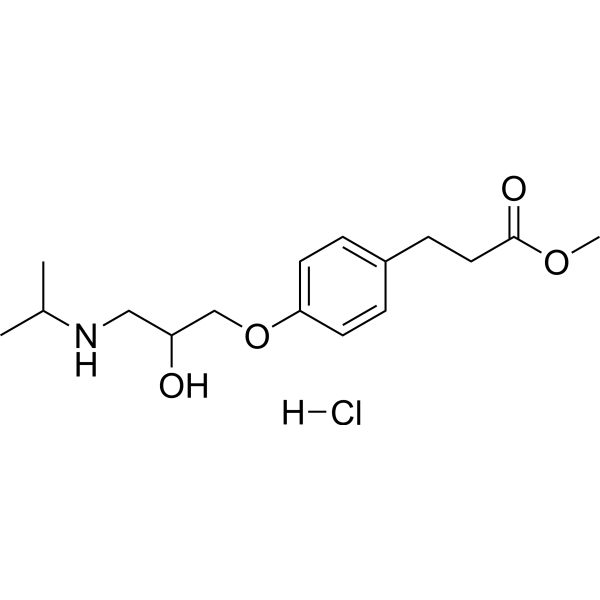
Esmolol hydrochloride (Standard) is the analytical standard of Esmolol hydrochloride (HY-B1392).This product is intended for research and analytical applications. Esmolol hydrochloride is an ultra-short-acting cardioselective β1-adrenergic blocker. Esmolol hydrochloride exerts its antiarrhythmic effect by activating Neurokinin 1 ReceptorEsmolol hydrochloride attenuates post resuscitation myocardial dysfunction. Esmolol hydrochloride improves diabetic wound healing by inhibiting aldose reductase and the production of advanced glycation end products and promoting fibroblast migration. Esmolol hydrochloride can be used to study cardiac diseases such as arrhythmias and diabetic foot ulcers.
For research use only. We do not sell to patients.
- Purity : 98%
- CAS No.: 81161-17-3
- Formula: C16H26ClNO4
- Molecular Weight:331.83
-
Storage:
Please store the product under the recommended conditions in the Certificate of Analysis.


To place orders, for customer services and technical support, please contact: MedChemExpress USA
Tel: 609-228-6898 E-mail: [email protected] [email protected]


-
 Product Information
-
Chemical Information
- Purity & Documentation
-
 Help & FAQs


-
HY-B1392
Esmolol hydrochloride -
HY-B0098A
Doxazosin mesylate -
HY-B0627
Metformin -
HY-18085
Quercetin -
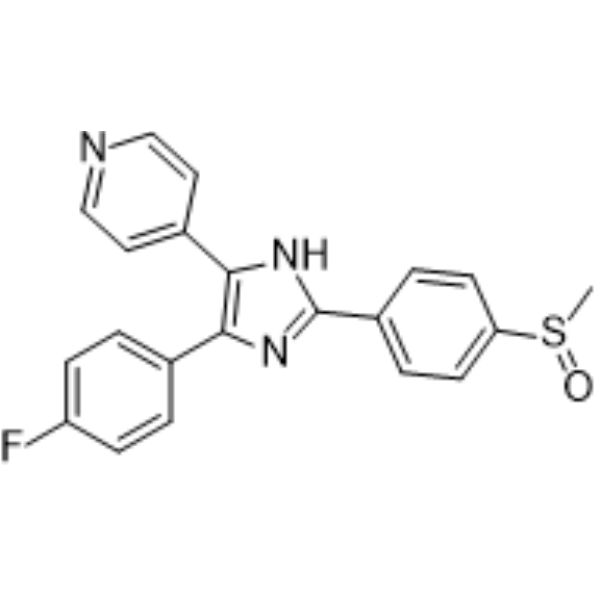
HY-10256
Adezmapimod -
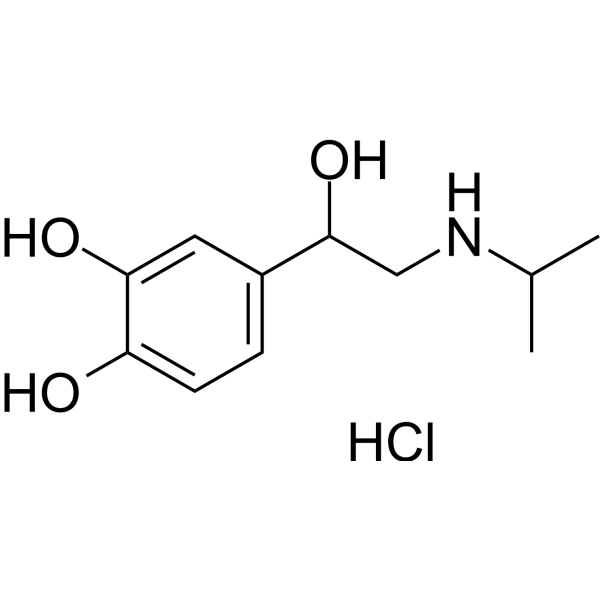
HY-B0468
Isoprenaline hydrochloride -
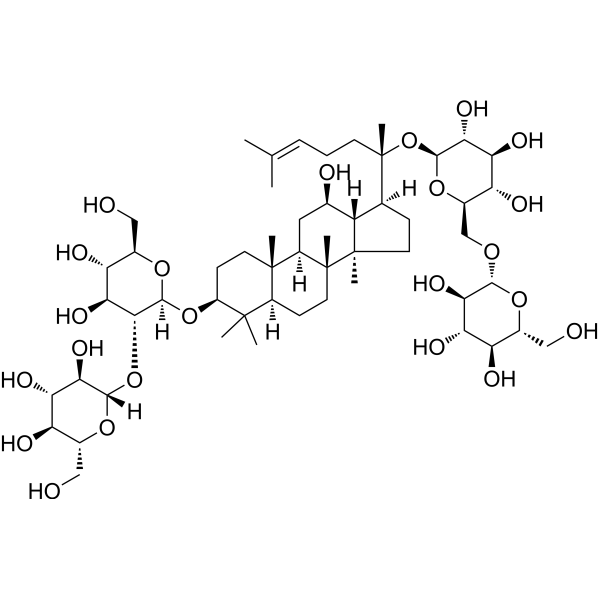
HY-N0039
Ginsenoside Rb1 -
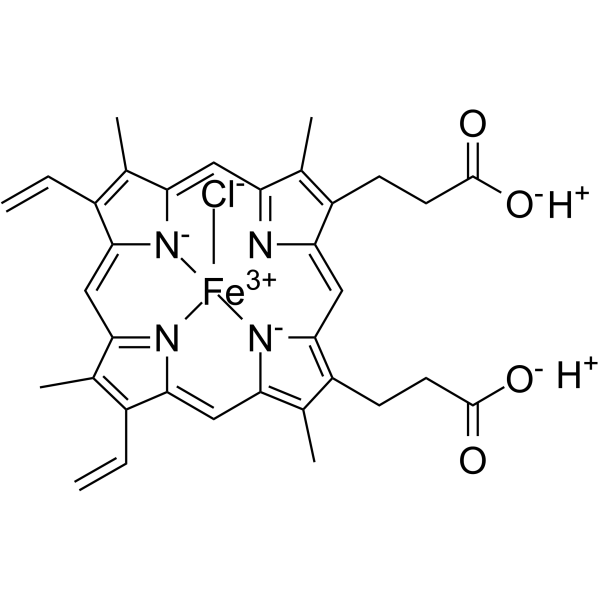
HY-19424
Hemin -
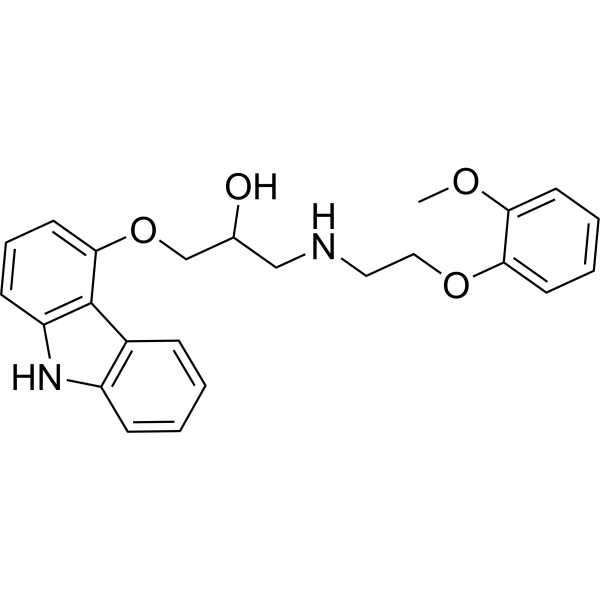
HY-B0006
Carvedilol -
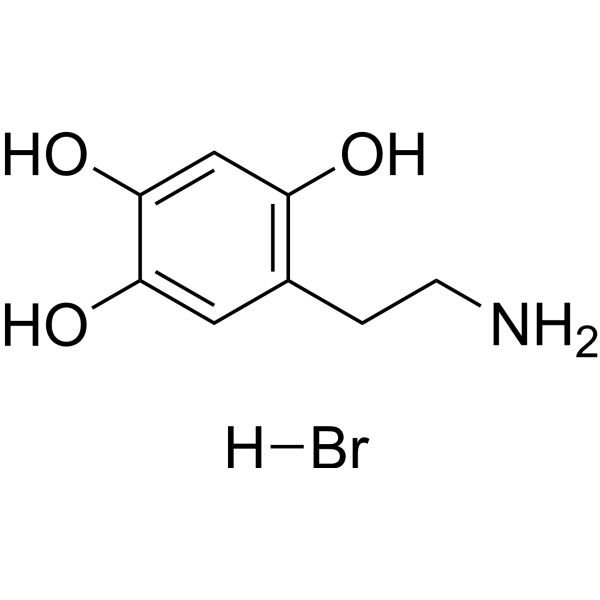
HY-B1081A
Oxidopamine hydrobromide -
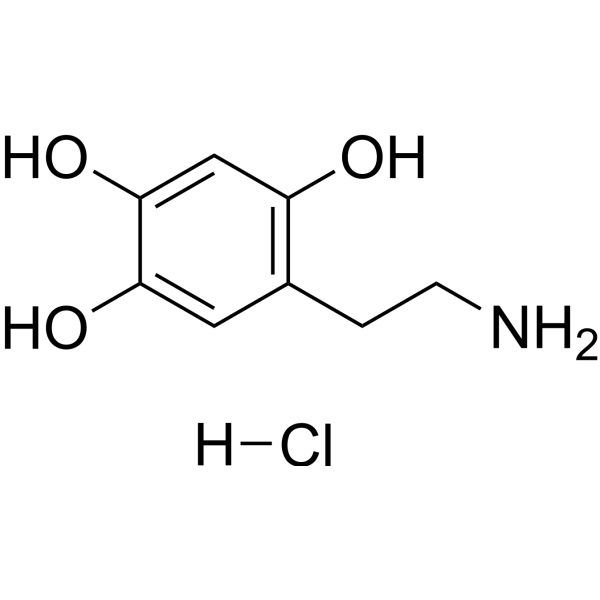
HY-B1081
Oxidopamine hydrochloride -
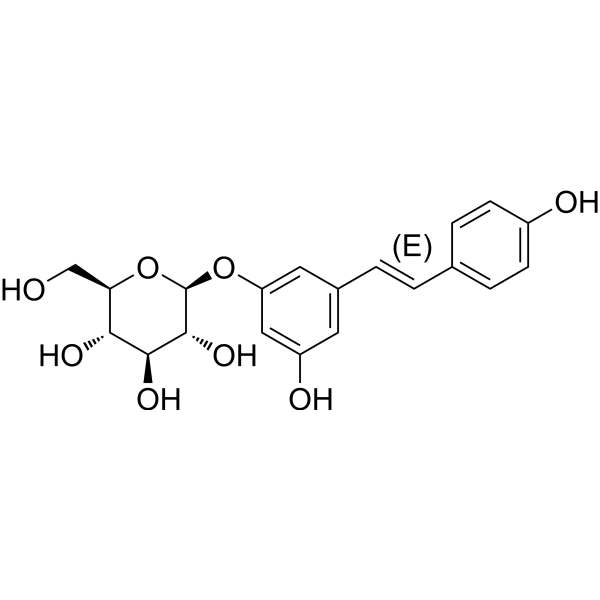
HY-N0120A
Polydatin


Product Information
Information
Application
The compound is the grade of analytical standard, which is the reference standard supplied assay. It is commonly used in qualitative, quantitative and methodological research experiments in HPLC, GC and MS.


Chemical Information
-
CAS No. 81161-17-3
-
Molecular Weight 331.83
-
Formula C16H26ClNO4
-
SMILES
O=C(OC)CCC1=CC=C(OCC(O)CNC(C)C)C=C1.[H]Cl
-
Shipping
Room temperature in continental US; may vary elsewhere.
-
Storage
Please store the product under the recommended conditions in the Certificate of Analysis.


Purity & Documentation
References
[1]. Kulkarni SA, et al. Novel topical esmolol hydrochloride improves wound healing in diabetes by inhibiting aldose reductase, generation of advanced glycation end products, and facilitating the migration of fibroblasts. Front Endocrinol (Lausanne). 2022 Aug 23;13:926129. [Content Brief]
[2]. Wang LL, et al. Esmolol activates endogenous neurokinin activity inhibiting infarction-induced arrhythmias in rats: novel mechanisms of anti-arrhythmia. Regul Pept. 2013 Sep 10;186:116-22. [Content Brief]
[3]. Zhang Q, et al. Combination of epinephrine with esmolol attenuates post-resuscitation myocardial dysfunction in a porcine model of cardiac arrest. PLoS One. 2013 Dec 18;8(12):e82677. [Content Brief]

Calculators
Concentration (start) × Volume (start) = Concentration (final) × Volume (final)


Esmolol hydrochloride (Standard) Related Classifications
HY-B1392R Related Classifications
 Powered by Bioz