1. Search Result
Search Result
Results for "

human platelet-rich plasma

" in MedChemExpress (MCE) Product Catalog:

17

Inhibitors & Agonists

1

Biochemical Assay Reagents

1

Peptides

2

Natural
Products

Cat. No. Product Name Target Research Areas Chemical Structure
  • HY-P0074
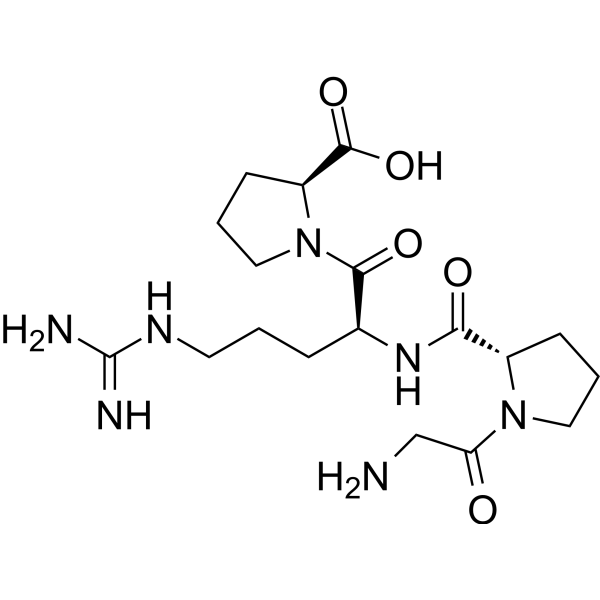
    GPRP
    3 Publications Verification

    Gly-Pro-Arg-Pro; Pefa 6003

    Thrombin Cardiovascular Disease
    GPRP (Gly-Pro-Arg-Pro; Pefa 6003) is a fibrin polymerization inhibitor that inhibits the interaction between fibrinogen and the platelet membrane glycoprotein Ⅱb/IIIa complex (glycoprotein IIb/IIIa receptor) . GPRP increases the level of free thrombin in activated platelet-rich plasma by reducing the adsorption of thrombin onto fibrin. GPRP inhibits platelet aggregation and prolongs the thrombin-initiated clotting time in plasma. GPRP is applicable for research related to thrombosis and thrombotic diseases .
    GPRP
  • HY-N1775

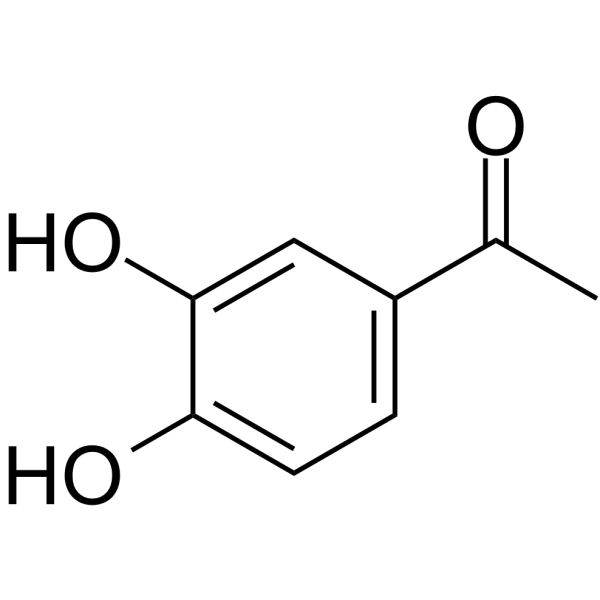
    3,4-DHAP

    Tyrosinase Reactive Oxygen Species (ROS) Keap1-Nrf2 PARP Autophagy Apoptosis Cardiovascular Disease Neurological Disease Metabolic Disease Inflammation/Immunology Cancer
    3',4'-Dihydroxyacetophenone (3,4-DHAP) is a phenolic compound with oral bioavailability, possessing potent antioxidant, anti-inflammatory, anticancer and cardiovascular protective activities. 3',4'-Dihydroxyacetophenone inhibits mushroom Tyrosinase activity with an IC50 of 10 μM, thereby suppressing melanogenesis . 3',4'-Dihydroxyacetophenone inhibits platelet aggregation in platelet-rich plasma. 3',4'-Dihydroxyacetophenone reduces ROS levels in human umbilical vein endothelial cells treated with high glucose, upregulates the expression of Nrf2, HO-1 and PARP-1 in cells, and promotes the nuclear translocation of Nrf2 . 3',4'-Dihydroxyacetophenone induces autophagy and apoptosis. 3',4'-Dihydroxyacetophenone inhibits seed germination/growth in most plants. 3',4'-Dihydroxyacetophenone can be used in the research of cancer, neurodegenerative diseases, non-alcoholic steatohepatitis, diabetes, obesity, skin pigmentation disorders, and cardiovascular and cerebrovascular diseases .
    3',4'-Dihydroxyacetophenone
  • HY-128039

    Prostaglandin Receptor Others
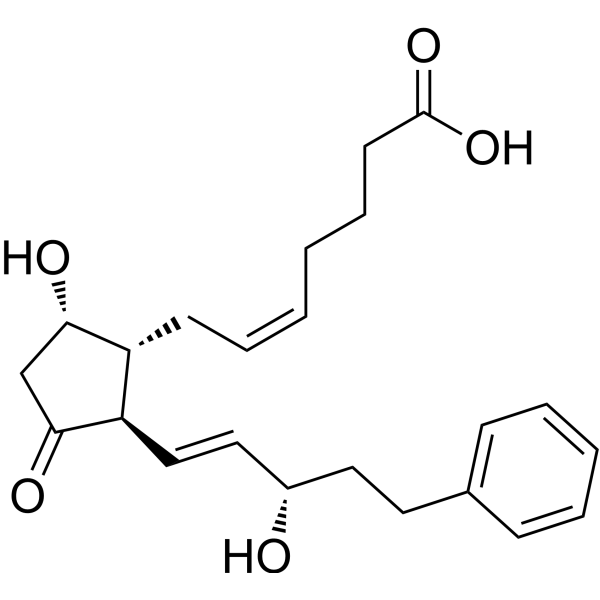
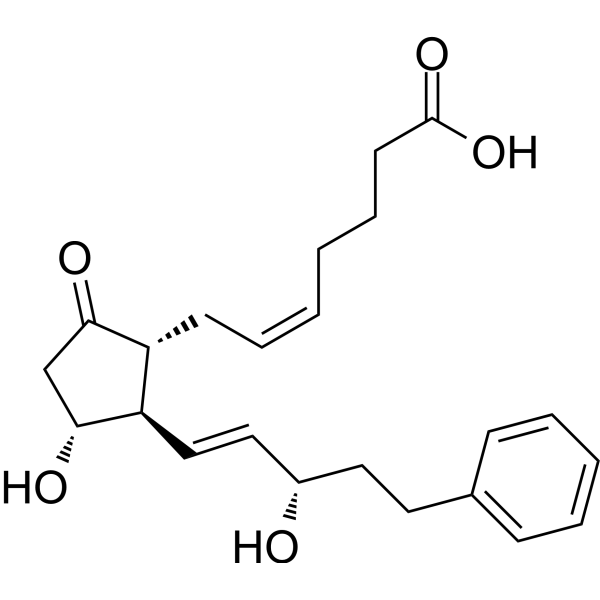
    17-Phenyl-ω-trinor-PGE2 is a PGE2 (HY-101952) analog, which is an agonist for EP1 and EP3 receptor. 17-Phenyl-ω-trinor-PGE2 inhibits the PAF-induced aggregation of human platelet-rich plasma (PRP) and Cicaprost (HY-19583) induced Cyclic AMP (HY-B1511) production .
    17-Phenyl-ω-trinor-PGE2
  • HY-123669

    P2Y Receptor Drug Metabolite Cardiovascular Disease
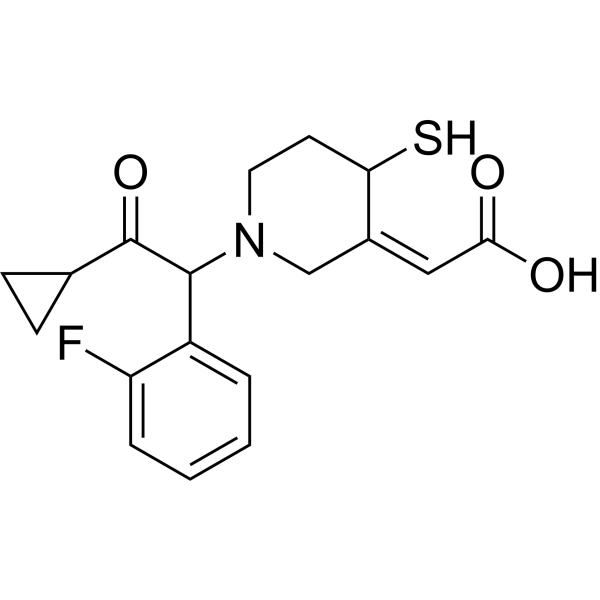
    R-138727, the major active metabolite of Prasugrel (HY-15284), is a highly potent and selective irreversible antagonist of the P2Y12 receptor, with an IC50 of 2.5 μM. R-138727 covalently binds to the P2Y12 receptor on the platelet surface, blocking adenosine diphosphate-mediated platelet activation and aggregation. R-138727 can be used to study stroke, cerebral infarction and neurological deficits.
    R-138727
  • HY-135447

    Prostaglandin Receptor Others
    BM-531 is a dual-acting agent for thromboxane receptor (TXA2) antagonism and thromboxane synthase inhibition. BM-531 exerts anti-aggregatory effects on human citrated platelet-rich plasma (PRP), inhibiting Arachidonic acid (HY-109590A)-induced aggregation with an ED100 of 0.125 μM and U-46619 (HY-108566)-induced aggregation with an ED50 of 0.482 μM. BM-531 inhibits high-K +-induced contraction of porcine uterine smooth muscle .
    BM-531
  • HY-Y1094

    Chloro(1,5-cyclooctadiene)rhodium(I) dimer

    Biochemical Assay Reagents Cardiovascular Disease
    [Rh(cod)Cl]2 (Chloro(1,5-cyclooctadiene)rhodium(I) dimer) is a rhodium (I) organometallic dimer complex. [Rh(cod)Cl]2 can inhibit platelet-activating factor-mediated platelet aggregation with IC50 values of 5.2 and 43.3 μM in washed rabbit platelets and human platelet-rich plasmas. [Rh(cod)Cl]2 also can inhibit thrombin-, ADP (HY-W010918)- and collagen-induced aggregation with IC50 values of 16.7, 162 and 69.8 μM. [Rh(cod)Cl]2 can be used for the research of cardiovascular disease, such as thrombosis .
    [Rh(cod)Cl]2
  • HY-137591

    Drug Metabolite Endocrinology
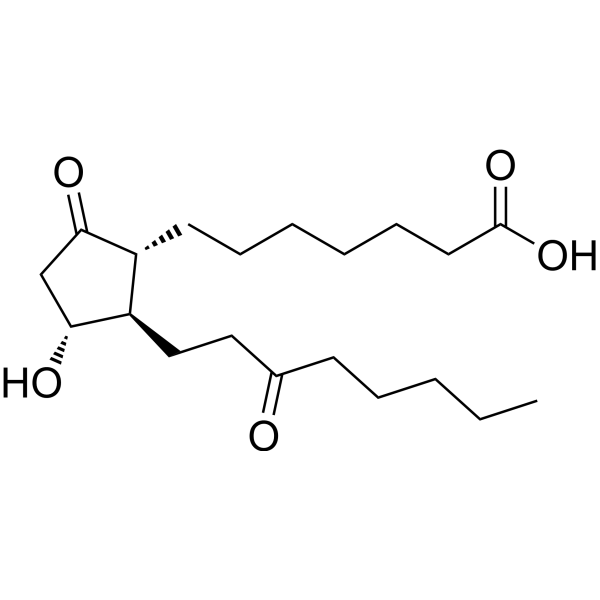
    13,14-Dihydro-15-keto-PGE1 is an inactive metabolite of PGE1. 13, 14-Dihydro-15-Keto-pGE1 inhibited platelet aggregation in ADP-induced human isolated platelet-rich plasma with IC50 14.8 μg/mL .
    13,14-Dihydro-15-keto-PGE1
  • HY-19126

    Platelet-activating Factor Receptor (PAFR) Infection Cardiovascular Disease
    CL-184005 is an antagonist for platelet-activating factor (PAF), that inhibits the PAF-induced platelet aggregation with IC50 of 600 nM and 510 nM, in human and rabbit platelet-rich plasma. CL-184005 protects the rats from endotoxin-induced gastrointestinal damage and hypotension. CL-184005 exhibits potential attenuating Gram-negative bacterial sepsis .
    CL-184005
  • HY-108561

    Prostaglandin Receptor Others
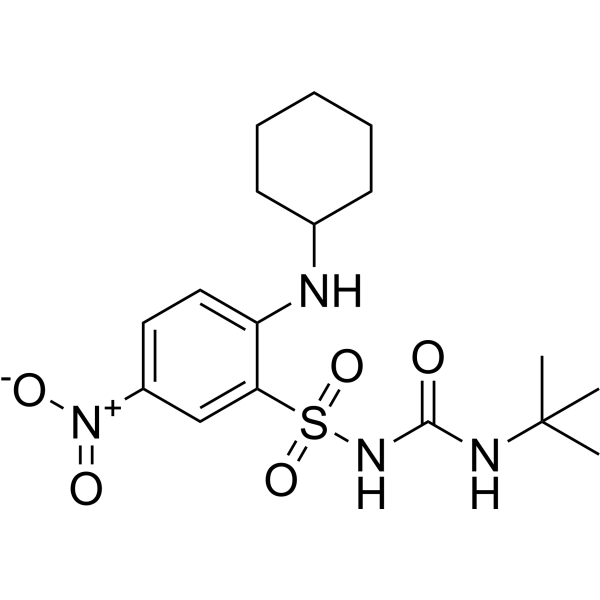
    L-670596 is an orally active and selective thrombsxane A2 receptor/prostaglandin receptor antagonist. L-670596 inhibits arachidonic acid (HY-109590) and U-44069 induced bronchoconstriction in the guinea pig. L-670596 also inhibits the aggregation of human platelet rich plasma induced by U-44069 .
    L-670596
  • HY-137288

    17-Phenyl-PGD2

    Prostaglandin Receptor Cardiovascular Disease
    17-Phenyl-18,19,20-trinor-PGD2 (17-Phenyl-PGD2) is an analogue of prostaglandin D2 (PGD2; HY-101988). 17-Phenyl-18,19,20-trinor-PGD2 is a potent inhibitor of platelet aggregation caused by aenosine diphosphate (ADP), with the IC50 of 8.4 μM (PGD2 IC50 = 18.6 nM). 17-Phenyl-18,19,20-trinor-PGD2 is a weak agonist of cyclic AMP accumulation .
    17-Phenyl-18,19,20-trinor-PGD2
  • HY-10312

    Integrin Cardiovascular Disease
    UR-12947 is a platelet glycoprotein (GP) IIb-IIIa antagonist. UR-12947 exhibits potent inhibitory activity against platelet aggregation in human platelet-rich plasma, with an IC50 value of 3.5 nM. UR-12947 can be used in the research of arterial thrombotic diseases .
    UR-12947
  • HY-149310A

    PCSK9 HMG-CoA Reductase (HMGCR) Metabolic Disease
    Dim16 hydrochloride is a dual PCSK9 inhibitor and HMG-CoAR inhibitor, with an IC50 of 0.8 nM against human PCSK9 and an IC50 of 146.8 μM against HMG-CoAR. Dim16 hydrochloride disrupts the PCSK9-LDLR protein-protein interaction, inhibits the catalytic activity of HMG-CoAR, enhances cellular uptake of extracellular LDL, and suppresses PCSK9-induced platelet aggregation. Dim16 hydrochloride can be used in research related to hypercholesterolemia .
    Dim16 hydrochloride
  • HY-N17826

    Drug Derivative Bacterial P2Y Receptor Endogenous Metabolite Cardiovascular Disease
    YM-254891 is a YM-254890 (HY-111557) analogue and Gαq/11 inhibitor. YM-254891 can be isolated from the fermentation broth of Chromobacterium sp. QS3666. YM-254891 inhibits ADP-induced platelet aggregation .
    YM-254891
  • HY-183983

    Protease Activated Receptor (PAR) Cardiovascular Disease
    PAR4 antagonist 9 is an orally active protease-activated receptor 4 (PAR4) antagonist with an IC50 of 2 nM against human targets. PAR4 antagonist 9 functionally modulates PAR4 and inhibits platelet aggregation. PAR4 antagonist 9 can be used in studies related to arterial thrombosis .
    PAR4 antagonist 9
  • HY-182533

    CXCR Cardiovascular Disease
    LN5972 is a selective ACKR3 agonist with an EC50 of 3.40 μM, showing higher selectivity for ACKR3 over CXCR4. LN5972 induces β-arrestin recruitment to ACKR3/CXCR7. LN5972 reduces the surface expression of P-selectin. LN5972 is applicable to studies related to platelet-mediated thrombosis .
    LN5972
  • HY-186042

    Prostaglandin Receptor Cardiovascular Disease
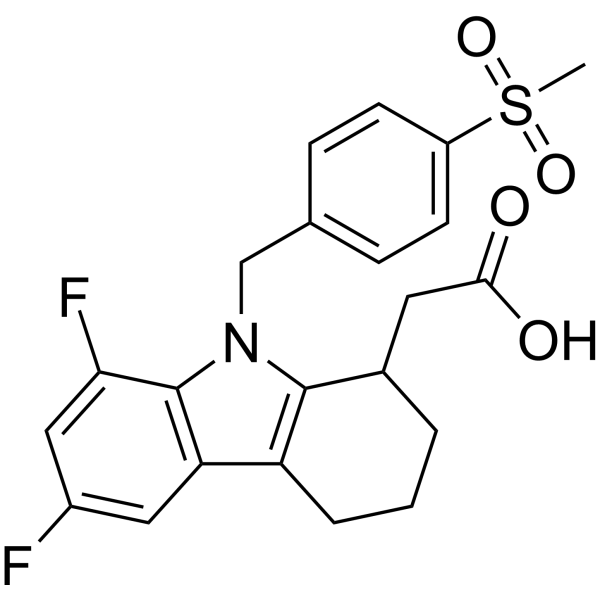
    TPα/β antagonist-1 is a TXA2 receptor α (TPα) and TPβ antagonist with IC50s of 1.52 nM and 0.79 nM, respectively. TPα/β antagonist-1 inhibits U-46619 (HY-108566)-induced intracellular calcium mobilization, and imhibits platelet aggregation. TPα/β antagonist-1 can be used for the research of cardiovascular disease .
    TPα/β antagonist-1
  • HY-106830

    Phosphodiesterase (PDE) Cardiovascular Disease
    Pelrinone is an orally active cardiotonic agent and PDE III inhibitor with an IC50 of 36 μM. Pelrinone elevates intracellular cAMP levels. The action of Pelrinone is independent of β-adrenergic receptors, and it does not inhibit Na +/K +-ATPase. Pelrinone exerts positive inotropic and vasodilatory effects. Pelrinone inhibits platelet aggregation, reduces thrombus formation, and exerts weak anticoagulant activity without altering hematocrit or circulating platelet counts. Pelrinone can be used in research related to congestive heart failure and coronary thrombosis .
    Pelrinone

Inquiry Online

Your information is safe with us. * Required Fields.

Salutation


Country or Region *

Applicant Name *


Organization Name *

Department *


Email Address *


Product Name *

Cat. No.


Requested quantity *

Phone Number *


Remarks

Inquiry Online

Inquiry Information

Product Name:
Cat. No.:
Quantity:
MCE Japan Authorized Agent: