1. Search Result
Search Result
Results for "

iron death

" in MedChemExpress (MCE) Product Catalog:

20

Inhibitors & Agonists

2

Screening Libraries

2

Peptides

2

Natural
Products

1

Click Chemistry

Cat. No. Product Name Target Research Areas Chemical Structure
  • HY-111914A
    Ferroheme
    1 Publications Verification

    NO Synthase Fatty Acid Synthase (FASN) Cardiovascular Disease
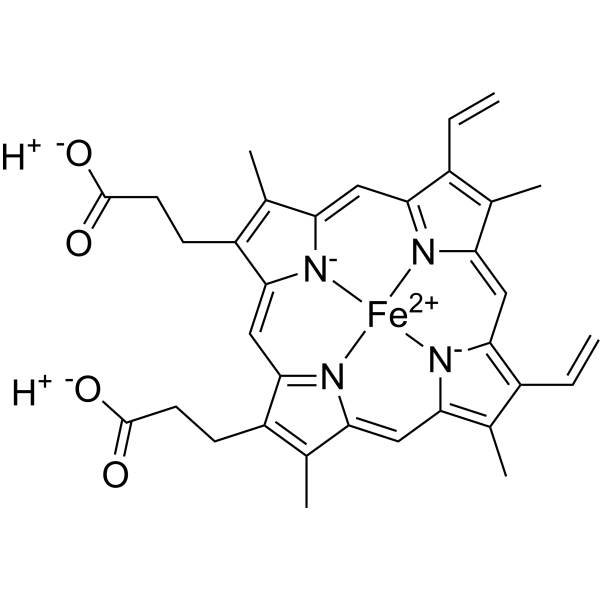
    Ferroheme is the ferrous form of heme in hemoglobin, reversibly binding oxygen as an oxygen carrier. Its free form induces oxidative stress and ferroptosis by releasing iron ions, which catalyze reactive oxygen species generation via Fenton reactions, leading to lipid peroxidation and cell death. This mechanism is critical in pathological contexts like intracerebral hemorrhage and neurodegenerative diseases, making it a target for studying iron-overload disorders and ferroptosis-related pathologies[1][2][3].
    Ferroheme
  • HY-153629
    FSEN1
    2 Publications Verification

    Ferroptosis Cancer
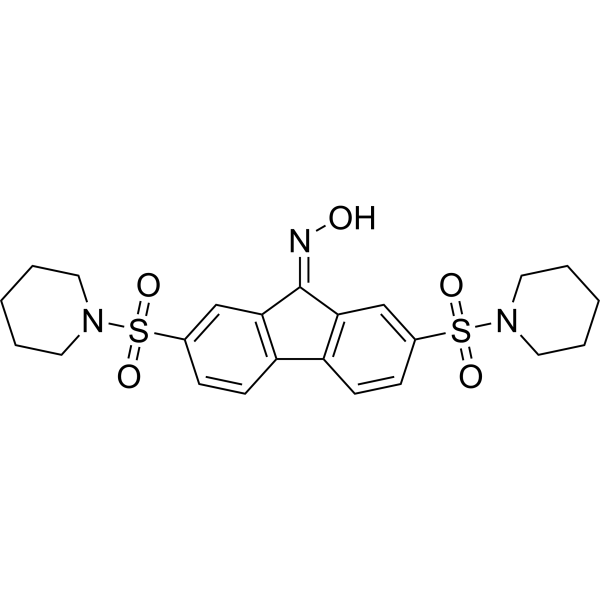
    FSEN1 is a potent and non-competitive FSP1 inhibitor with an IC50 value of 313 nM. FSEN1 triggers iron death in cancer cells by inhibiting FSP1. FSEN1 can be used in research of cancer .
    FSEN1
  • HY-175615

    ADC Payload Glutathione Peroxidase Ferroptosis Cancer
    RSL3-NH2 is a GPX4 inhibitor and ferroptosis inducer. RSL3-NH2 triggers the iron-dependent cell death pathway associated with lipid peroxidation by inhibiting GPX4 activity. RSL3-NH2 exhibits significant cytotoxicity against colorectal cancer cells and effectively induces their ferroptosis. RSL3-NH2 can serve as a ADC payload for synthesizing antibody-drug conjugates (ADC) and be used in colorectal cancer-related research .
    RSL3-NH2
  • HY-108894

    Ferroptosis Reactive Oxygen Species (ROS) Cardiovascular Disease Inflammation/Immunology Cancer
    Ferumoxytol is an FDA-approved ultrasmall superparamagnetic iron oxide preparation and iron replacement agent that exerts selective activity against leukemia cells with low ferroportin expression. Ferumoxytol increases intracellular iron levels, induces reactive oxygen species (ROS) production via the Fenton reaction, and triggers oxidative stress and cell death. Ferumoxytol reduces disease burden in mouse models and patient-derived leukemia models. As an MRI contrast agent, Ferumoxytol enables imaging of vascular lesions, tumors and lymph nodes. Ferumoxytol can be used in research related to acute myeloid leukemia and blast-phase chronic myeloid leukemia .
    Ferumoxytol
  • HY-100887
    Piperazine Erastin
    Maximum Cited Publications
    9 Publications Verification

    Ferroptosis Cancer
    Piperazine erastin is an analog of erastin which induces an iron-dependent form of non-apoptotic cell death, termed ferroptosis. Piperazine erastin can be used in cancer research .
    Piperazine Erastin
  • HY-112063
    CIL56
    4 Publications Verification

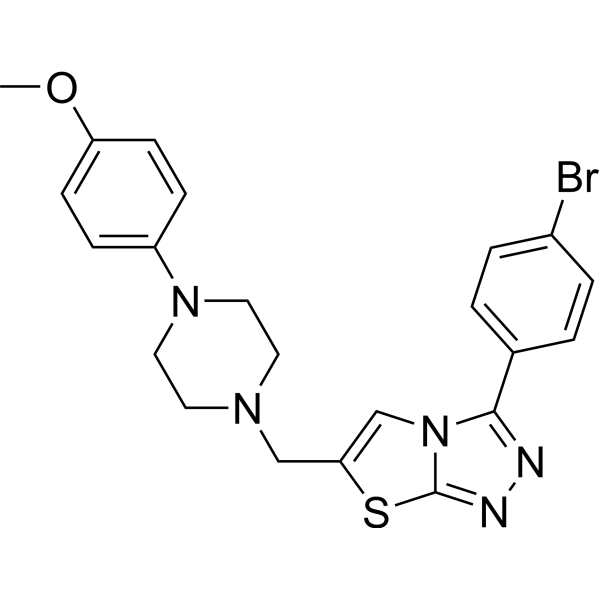
    Ferroptosis Cancer
    CIL56 is a potent and selective ferroptosis inducer. Ferroptosis is an iron-dependent form of regulated cell death (RCD).
    CIL56
  • HY-153435

    RIP kinase Necroptosis Cancer
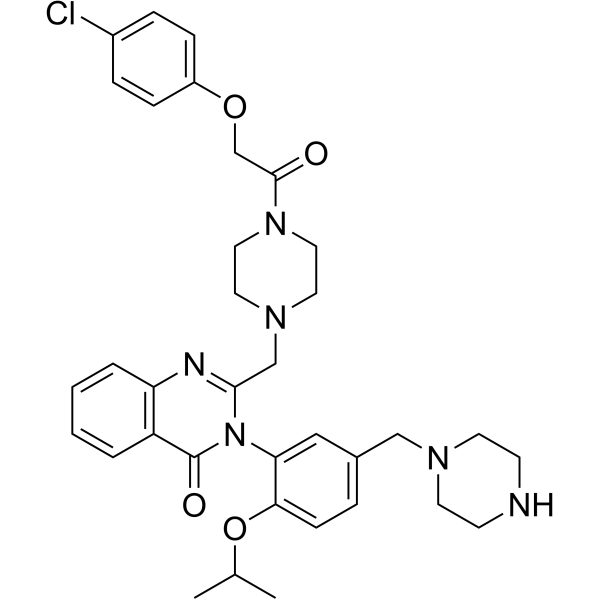
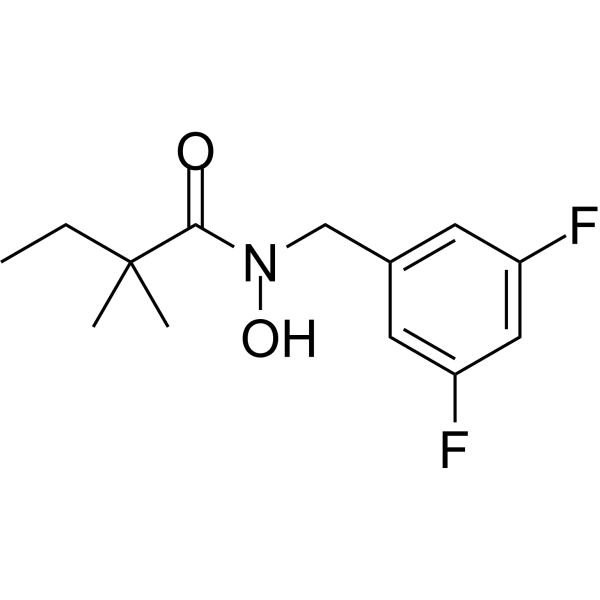
    RIP1 kinase inhibitor 5 (example 1) is a potent inhibitor of RIP1, which is used as a checkpoint kinase to control tumor immunity . RIP1 kinase inhibitor 5 is similar with SIR1-365 (compound 13), which inhibits necrosis and iron death activity .
    RIP1 kinase inhibitor 5
  • HY-149028

    Fluorescent Dye Others
    Mem-C1C18 is a polarity-sensitive fluorescent probe with excellent plasma membrane anchoring, high brightness and a sensitive response to environmental polarity by altering the fluorescence lifetime. Mem-C1C18 can be used to quantify changes in the polarity of the plasma membrane during iron death .
    Mem-C1C18
  • HY-174345

    ACSL Family Ferroptosis Glutathione Peroxidase Reactive Oxygen Species (ROS) Cancer
    Ferroptosis inducer-8 is a ferroptosis inducer with high selectivity for other cell death mechanism. Ferroptosis inducer-8 induces ferroptosis by affecting ACSL4, GPX4, and FTH1, thereby disrupting intracellular iron homeostasis and the GSH/GPX4 antioxidant defense system, ultimately leading to the accumulation of lipid peroxidation. Ferroptosis inducer-8 also induces ROS production. Ferroptosis inducer-8 inhibits tumor growth and can be used for research of triple-negative breast cancer (TNBC) .
    Ferroptosis inducer-8
  • HY-119325A

    NK433

    Apoptosis Cancer
    Lanperisone hydrochloride is a novel oral muscle relaxant with anticancer activity. Lanperisone hydrochloride produces non-apoptotic cell death by inhibiting monosynaptic and polysynaptic reflex potentials. Lanperisone hydrochloride is also believed to play an important role in the dysregulation of iron metabolism and antioxidant systems to modulate processes associated with ischemic stroke .
    Lanperisone hydrochloride
  • HY-119325

    NK433 free base

    Apoptosis Cancer
    Lanperisone is a novel oral muscle relaxant with anticancer activity. Lanperisone produces non-apoptotic cell death by inhibiting monosynaptic and polysynaptic reflex potentials. Lanperisone is also believed to play an important role in the dysregulation of iron metabolism and antioxidant systems to modulate processes associated with ischemic stroke .
    Lanperisone
  • HY-155851

    Ferroptosis MDM-2/p53 Glutathione Peroxidase ACSL Family Cancer
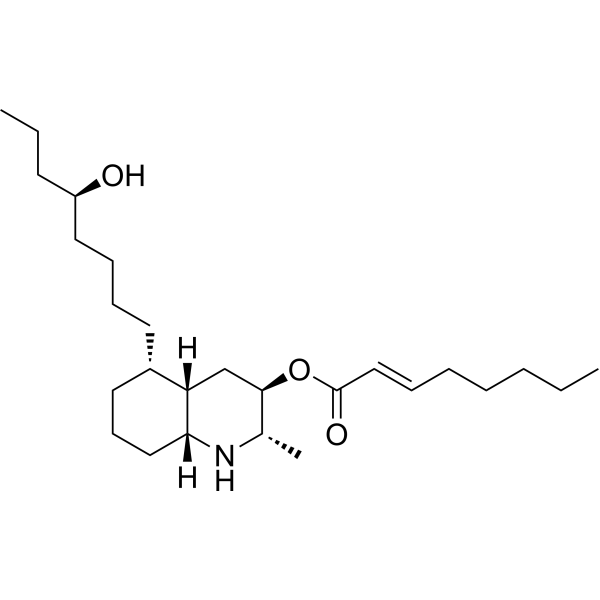
    Lepadin E is a significantly cytotoxic ferroptosis inducer that induces iron death through the classical p53-SLC7A11-GPX4 pathway. Lepadin E promoted p53 expression, decreases SLC7A11 and GPX4 levels, and leads to increased ROS and lipid peroxide production, and upregulated ACSL4 expression, thus causes cell death. Lepadin E has significant antitumor effect .
    Lepadin E
  • HY-162867

    Ferroptosis Cancer
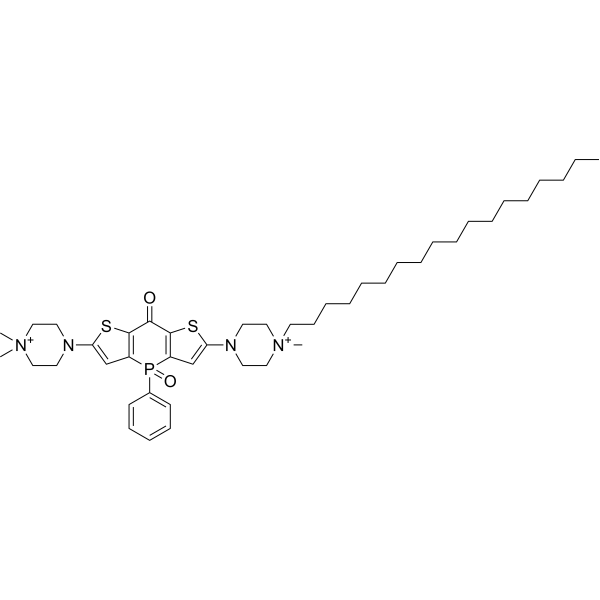
    Photosensitizer-5 is a photosensitizer. Photosensitizer-5 has cytotoxicity against HeLa and HepG2 cells, with IC50 values of 10.4 nM and 6.9 nM, respectively. Photosensitizer-5 can lead to lipid peroxidation and induces cell death through an iron-independent ferroptosis-like pathway. Photosensitizer-5 shows anti-tumor activity in HeLa tumor-bearing mice .
    Photosensitizer-5
  • HY-178475

    Carbonic Anhydrase Glutathione Peroxidase Ferroptosis Cancer
    CA IX/GPX4-IN-1 (Compound 22abcb) is a dual targeted inhibitor of CA IX and GPX4 activity. CA IX/GPX4-IN-1 can effectively kill SUM159PT cells (IC50 = 416 nM) by inducing iron death under hypoxic conditions. CA IX/GPX4-IN-1 has an IC50 of 663 nM to CA IX in SUM159PT-CAIX-FL cells. CA IX/GPX4-IN-1 can significantly inhibit tumor growth and can be reversed by ferroptosis inhibitors. CA IX/GPX4-IN-1 can be used for research on breast cancer and other cancers .
    CA IX/GPX4-IN-1
  • HY-138185

    SF 2738A

    Bacterial Apoptosis Cancer
    Collismycin A is a bacterial metabolite originally isolated from Streptomyces that has diverse biological activities, including antibacterial, antiproliferative, and neuroprotective properties. It is active against a variety of bacteria (MICs=6.25 and 100 μg/mL) and fungi (MICs=12.5-100 μg/mL). It inhibits proliferation of A549 lung, HCT116 colon, and HeLa cervical cancer cells (IC50s=0.3, 0.6, and 0.3 μM, respectively) and NIH373 fibroblasts (IC50=56.6 μM) but not MDA-MD-231 breast cancer cells (IC50=>100 μM). Collismycin A forms a complex with Fe(II) and Fe(III) at a 2:1 ratio, and the addition of iron ions inhibits the antiproliferative effect of collismycin A on HeLa cells, an effect that does not occur with the addition of zinc, manganese, copper, or magnesium ions.3 Collismycin A (1 μM) prevents apoptosis in the brain region of zebrafish larvae in a model of neuronal cell death induced by all-trans retinoic acid.
    Collismycin A
  • HY-183232

    Necroptosis Cancer
    SRS6-11 is an iron death-independent necrotic cell death (Necrosis) inducer. SRS6-11 retains significant lethality in the presence of α-tocopherol (HY-W020044). SRS6-11 can be used in fibrosarcoma research .
    SRS6-11
  • HY-100887R

    Ferroptosis Reference Standards Cancer
    Piperazine Erastin (Standard) is the analytical standard of Piperazine Erastin (HY-100887). This product is intended for research and analytical applications. Piperazine erastin is an analog of erastin which induces an iron-dependent form of non-apoptotic cell death, termed ferroptosis. Piperazine erastin can be used in cancer research .
    Piperazine Erastin (Standard)
  • HY-181688

    Reactive Oxygen Species (ROS) Cancer
    2α-Ferrocenylmethyl-DHT is a dihydrotestosterone-derived ferrocene-steroid conjugate. 2α-Ferrocenylmethyl-DHT inhibits the growth of various cancer cells. 2α-Ferrocenylmethyl-DHT induces S-phase cell cycle arrest in ovarian cancer cells, elevates intracellular iron levels, triggers ROS-dependent cell death, and disrupts the integrity of multicellular tumor spheroids of ovarian cancer cells. 2α-Ferrocenylmethyl-DHT can be used in the research of prostate cancer and ovarian cancer .
    2α-Ferrocenylmethyl-DHT
  • HY-P11638

    Mitochondrial Metabolism Neurological Disease Inflammation/Immunology
    Mitochondrial-targeted peptide BP29 is a mitochondria-targeted iron chelator linked to a mitochondria-homing SS-peptide. Mitochondrial-targeted peptide BP29 protects human primary skin fibroblasts against ultraviolet A-induced oxidative damage to mitochondrial membranes, ATP depletion, and necrotic cell death. Mitochondrial-targeted peptide BP29 prevents hydrogen peroxide-induced oxidative stress and cytotoxicity in both healthy and Friedreich's ataxia skin fibroblasts. Mitochondrial-targeted peptide BP29 can be used for the research of Friedreich's ataxia .
    Mitochondrial-targeted peptide BP29
  • HY-P11638A

    Mitochondrial Metabolism Neurological Disease Inflammation/Immunology
    Mitochondrial-targeted peptide BP29 acetate is a mitochondria-targeted iron chelator linked to a mitochondria-homing SS-peptide. Mitochondrial-targeted peptide BP29 acetate protects human primary skin fibroblasts against ultraviolet A-induced oxidative damage to mitochondrial membranes, ATP depletion, and necrotic cell death. Mitochondrial-targeted peptide BP29 acetate prevents hydrogen peroxide-induced oxidative stress and cytotoxicity in both healthy and Friedreich's ataxia skin fibroblasts. Mitochondrial-targeted peptide BP29 acetate can be used for the research of Friedreich's ataxia .
    Mitochondrial-targeted peptide BP29 acetate

Inquiry Online

Your information is safe with us. * Required Fields.

Salutation


Country or Region *

Applicant Name *


Organization Name *

Department *


Email Address *


Product Name *

Cat. No.


Requested quantity *

Phone Number *


Remarks

Inquiry Online

Inquiry Information

Product Name:
Cat. No.:
Quantity:
MCE Japan Authorized Agent:

