Search Result
Results for "
macrophage delivery
" in MedChemExpress (MCE) Product Catalog:
11
Biochemical Assay Reagents
| Cat. No. |
Product Name |
Target |
Research Areas |
Chemical Structure |
-
- HY-W020780
-
|
mPEG5000-Maleimide
|
Biochemical Assay Reagents
|
Cancer
|
|
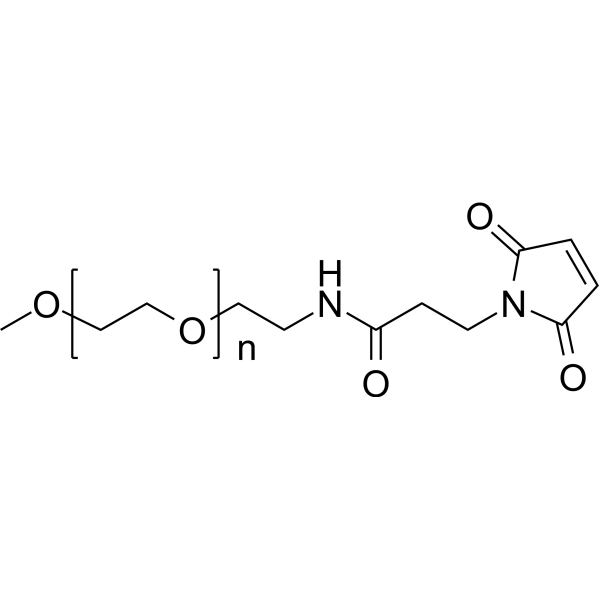
mPEG5000-Mal (mPEG5000-Maleimide) is a PEG-derived selective covalent binding agent for sulfhydryl groups (RSGs), which can form irreversible thioether bonds with sulfhydryl groups under near-neutral conditions via the maleimide group. The mechanism of action of mPEG5000-Mal can be divided into two categories: firstly, as an enzyme modifier, it binds to target proteins through hydrophobic interactions, hydrogen bonds, and van der Waals forces, altering the protein's secondary structure; secondly, as a nanoparticle surface modifier, it covalently binds to sulfhydryl groups on the surface of red blood cells, changing the surface properties and morphology of the red blood cells, leading to their phagocytosis by macrophages of the reticuloendothelial system. mPEG5000-Mal can react with free cysteine in proteins, increasing the apparent molecular weight of the modified protein by 10-15 kDa for detection purposes. mPEG5000-Mal can enhance the thermal stability and catalytic activity of enzymes, and improve the macrophage targeting of nanoparticles, enabling targeted drug delivery. mPEG5000-Mal can be applied in enzyme engineering research in the food industry and in oncology, assisting radiotherapy by inhibiting tumor-associated macrophage infiltration and enhancing anti-tumor immune responses .
|
-
-
- HY-139413
-
|
|
Toll-like Receptor (TLR)
|
Cancer
|
|
β-D-glucan is a natural non-digestible polysaccharide and high biocompatibility that can be selectively recognized by recognition receptors such as Dectin-1 and Toll-like receptors as well as being easily internalized by murine or human macrophages, which is likely to attribute to a target delivery . β-d-glucan is an enteric delivery vehicle for probiotics .
|
-

-
- HY-152229
-
G0-C14
2 Publications Verification
|
Liposome
|
Cancer
|
|
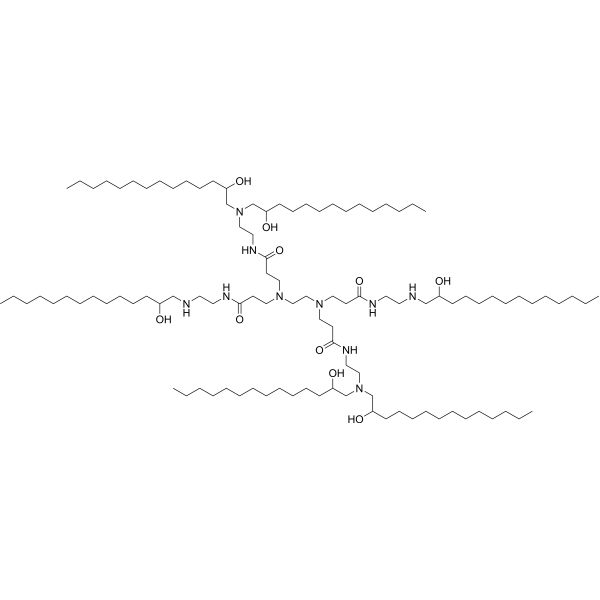
G0-C14 is a cationic lipid-like compound alkyl-modified polyamidoamine (PAMAM) dendrimer. G0-C14 involves in the preparation of a series of macrophage-targeted nanoparticles (NPs). NPs can be used for agent and vaccine delivery .
|
-
-
- HY-155882
-
|
mPEG750-NH2
|
Biochemical Assay Reagents
|
Cancer
|
|
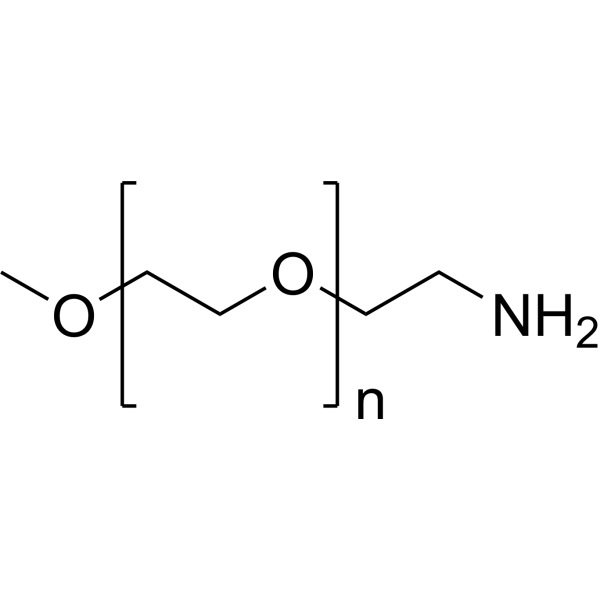
mPEG750-amine (mPEG750-NH2) is a chemical modification reagent for nanoparticles, capable of covalently binding to Ad-PVA to form Ad-PVA-PEG polymers. mPEG750-amine stabilizes gene delivery complexes by providing steric hindrance, reducing particle aggregation, while enhancing the water solubility and serum stability of the complex, reducing carrier cytotoxicity, and assisting in the efficient condensation of pDNA by cationic components to form nanoparticles that can be endocytosed by cells. mPEG750-amine can also be used to synthesize folate-conjugated polymer micelles for encapsulating the anticancer agent Camptothecin (HY-16560). Folate-conjugated polymer micelles are effective carriers for poorly soluble anticancer drugs, capable of avoiding macrophages and acting through folate receptor (FR)-mediated endocytosis to target tumor cells. mPEG750-amine can be applied to research in the field of non-viral gene delivery, as a component of gene delivery vectors, facilitating the safe and efficient delivery of nucleic acid drugs to target cells .
|
-
-
- HY-P2752
-
|
LPL
|
Endogenous Metabolite
|
Metabolic Disease
Cancer
|
|
Lipoprotein lipase, Pseudomonas sp (LPL) is a multifunctional enzyme from adipose tissue, heart and skeletal muscle, islets and macrophages. Lipoprotein lipase promotes normal lipoprotein metabolism, delivery and utilization of tissue-specific substrates. Lipoprotein lipase catalyzes the rate-limiting step of lipids in blood circulation .
|
-

-
- HY-172279A
-
|
|
Liposome
|
Cancer
|
|
DSPE-PEG2000-TAT is a cell-penetrating peptide-modified PEGylated phospholipid conjugate and cellular uptake enhancer. DSPE-PEG2000-TAT forms via conjugation of Cys-TAT to DSPE-PEG2000-Mal. DSPE-PEG2000-TAT enhances liposomal cellular uptake and siRNA transfection efficiency in glomerular mesangial and macrophage cells. DSPE-PEG2000-TAT can be used for drug delivery .
|
-

-
- HY-150229
-
|
|
Liposome
|
Cancer
|
|
306-N16B is a selective lung-targeted lipid nanoparticle that reversibly targets lung endothelial cells and specific immune cells through selective adsorption of a protein corona mediated by differences in tail structure (such as fibrinogen β/γ chain). 306-N16B binds to specific plasma proteins in the blood to form a protein corona, which guides the particles to be enriched in the lungs, releases mRNA and promotes target cell gene expression, exerts efficient lung cell transfection activity, and can precisely regulate gene delivery of different cell types in the lungs (such as endothelial cells and macrophages). 306-N16B can be used in gene therapy technologies for hereditary lung diseases including pulmonary lymphangioleiomyomatosis (LAM), restoring tumor suppressor function by delivering Tsc2 mRNA, and can also be used for lung-specific mRNA vaccines and gene editing therapies .
|
-

-
- HY-142980
-
|
Dioleoylphosphatidylglycerol
|
Liposome
|
Inflammation/Immunology
|
|
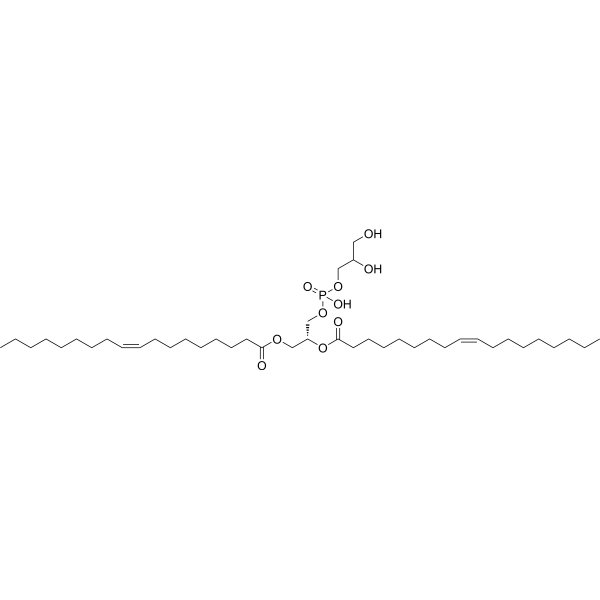
DOPG (Dioleoylphosphatidylglycerol) is a negatively charged phosphatidylglycerol phospholipid. DOPG is abundant in prokaryotic cell membranes and mitochondria, and has a low phase transition temperature and a tendency to form stable vesicles. DOPG inhibits the production of inflammatory mediators in macrophages in response to heat shock protein B4 (HSPB4)-activated toll-like receptor 2 (TLR2). DOPG is applicable to studies of membrane biology, drug-membrane interactions (especially in systems targeting negatively charged membranes), construction of drug delivery carriers, as well as research on sterile corneal inflammation and wound healing promotion .
|
-
-
- HY-172273A
-
|
|
Liposome
|
Cancer
|
|
DSPE-PEG2000-Mal-Cys-YEQDPWGVKWWY is a PEG compound which composed of DSPE and a M2-polarized macrophages targeting peptide (M2pep, YEQDPWGVKWWY). M2pep is conjugated to a proapoptotic peptide as monovalent or multivalent ligands to concentrate the toxic effect of the peptide to M2 macrophages. DSPE-PEG2000-Mal-Cys-YEQDPWGVKWWY can be used for drug delivery .
|
-

-
- HY-172273
-
|
|
Liposome
|
Cancer
|
|
DSPE-PEG1000-Mal-Cys-YEQDPWGVKWWY is a PEG compound which composed of DSPE and a M2-polarized macrophages targeting peptide (M2pep, YEQDPWGVKWWY). M2pep is conjugated to a proapoptotic peptide as monovalent or multivalent ligands to concentrate the toxic effect of the peptide to M2 macrophages. DSPE-PEG1000-Mal-Cys-YEQDPWGVKWWY can be used for drug delivery .
|
-

-
- HY-172273C
-
|
|
Liposome
|
Cancer
|
|
DSPE-PEG3400-Mal-Cys-YEQDPWGVKWWY is a PEG compound which composed of DSPE and a M2-polarized macrophages targeting peptide (M2pep, YEQDPWGVKWWY). M2pep is conjugated to a proapoptotic peptide as monovalent or multivalent ligands to concentrate the toxic effect of the peptide to M2 macrophages. DSPE-PEG3400-Mal-Cys-YEQDPWGVKWWY can be used for drug delivery .
|
-

-
- HY-171905
-
|
|
Liposome
|
Others
|
|
N-Sterol is a sterol lipid that has been used to generate lipid nanoparticles (LNPs) for delivery of mRNA in vitro and in vivo. N-Sterol LNPs are taken up in J774A.1 macrophages in a lipid composition-dependent manner via clathrin caveolae, caveolin-mediated endocytosis, micropinocytosis, or phagocytosis at different frequencies .
|
-

-
- HY-105825
-
|
SH-G 318AB
|
Endogenous Metabolite
|
Inflammation/Immunology
|
|
Sermetacin (SH-G 318AB) is an anti-inflammatory agent with biocompatibility and anti-inflammatory activity. Sermetacin is stable in saline and suitable for compound delivery. Sermetacin exhibits good biocompatibility in the RAW 264.7 mouse macrophage cell line. The anti-inflammatory response of sermetacin is comparable to that of its parent compound, indomethacin. Sermetacin may show potential in future applications of self-delivery of compound delivery .
|
-

-
- HY-172273B
-
|
|
Liposome
|
Cancer
|
|
DSPE-PEG5000-Mal-Cys-YEQDPWGVKWWY is a PEG compound which composed of DSPE and a M2-polarized macrophages targeting peptide (M2pep, YEQDPWGVKWWY). M2pep is conjugated to a proapoptotic peptide as monovalent or multivalent ligands to concentrate the toxic effect of the peptide to M2 macrophages. DSPE-PEG5000-Mal-Cys-YEQDPWGVKWWY can be used for drug delivery .
|
-

-
- HY-164014
-
|
|
Autophagy
|
Cardiovascular Disease
|
|
9-CCN is a lipid compound that specifically targets macrophages. 9-CCN can be used in the study of cardiovascular and cerebrovascular diseases .
|
-

-
- HY-180462
-
|
|
Biochemical Assay Reagents
|
Others
|
|
TCCNeu5Ac (compound H-56) is a high-affinity and selective trisaccharide glycan ligand for Siglec-1 (CD169) . TCCNeu5Ac azide can be conjugated to lipids to selectively target cells expressing either murine or human CD169 in vitro, exhibiting in vivo targeting to CD169-positive macrophages. TCCNeu5Ac can be used for in vivo macrophage delivery .
|
-

-
- HY-W1130452
-
|
|
Liposome
|
Cancer
|
|
Lipid C16-C is an ionizable cationic lipid that can be used to prepare lipid nanoparticles (LNPs) for mRNA delivery. Lipid C16-C mediates ApoE-independent macropinocytosis-based mRNA delivery to macrophages, with endosomal acidification enabling endosomal escape and release of mRNA cargo into the cytosol .
|
-

| Cat. No. |
Product Name |
Type |
-
- HY-W020780
-
|
mPEG5000-Maleimide
|
Biochemical Assay Reagents
|
|
mPEG5000-Mal (mPEG5000-Maleimide) is a PEG-derived selective covalent binding agent for sulfhydryl groups (RSGs), which can form irreversible thioether bonds with sulfhydryl groups under near-neutral conditions via the maleimide group. The mechanism of action of mPEG5000-Mal can be divided into two categories: firstly, as an enzyme modifier, it binds to target proteins through hydrophobic interactions, hydrogen bonds, and van der Waals forces, altering the protein's secondary structure; secondly, as a nanoparticle surface modifier, it covalently binds to sulfhydryl groups on the surface of red blood cells, changing the surface properties and morphology of the red blood cells, leading to their phagocytosis by macrophages of the reticuloendothelial system. mPEG5000-Mal can react with free cysteine in proteins, increasing the apparent molecular weight of the modified protein by 10-15 kDa for detection purposes. mPEG5000-Mal can enhance the thermal stability and catalytic activity of enzymes, and improve the macrophage targeting of nanoparticles, enabling targeted drug delivery. mPEG5000-Mal can be applied in enzyme engineering research in the food industry and in oncology, assisting radiotherapy by inhibiting tumor-associated macrophage infiltration and enhancing anti-tumor immune responses .
|
-
- HY-139413
-
|
|
Biochemical Assay Reagents
|
|
β-D-glucan is a natural non-digestible polysaccharide and high biocompatibility that can be selectively recognized by recognition receptors such as Dectin-1 and Toll-like receptors as well as being easily internalized by murine or human macrophages, which is likely to attribute to a target delivery . β-d-glucan is an enteric delivery vehicle for probiotics .
|
-
- HY-152229
-
G0-C14
2 Publications Verification
|
Biochemical Assay Reagents
|
|
G0-C14 is a cationic lipid-like compound alkyl-modified polyamidoamine (PAMAM) dendrimer. G0-C14 involves in the preparation of a series of macrophage-targeted nanoparticles (NPs). NPs can be used for agent and vaccine delivery .
|
-
- HY-155882
-
|
mPEG750-NH2
|
Biochemical Assay Reagents
|
|
mPEG750-amine (mPEG750-NH2) is a chemical modification reagent for nanoparticles, capable of covalently binding to Ad-PVA to form Ad-PVA-PEG polymers. mPEG750-amine stabilizes gene delivery complexes by providing steric hindrance, reducing particle aggregation, while enhancing the water solubility and serum stability of the complex, reducing carrier cytotoxicity, and assisting in the efficient condensation of pDNA by cationic components to form nanoparticles that can be endocytosed by cells. mPEG750-amine can also be used to synthesize folate-conjugated polymer micelles for encapsulating the anticancer agent Camptothecin (HY-16560). Folate-conjugated polymer micelles are effective carriers for poorly soluble anticancer drugs, capable of avoiding macrophages and acting through folate receptor (FR)-mediated endocytosis to target tumor cells. mPEG750-amine can be applied to research in the field of non-viral gene delivery, as a component of gene delivery vectors, facilitating the safe and efficient delivery of nucleic acid drugs to target cells .
|
-
- HY-172279A
-
|
|
Biochemical Assay Reagents
|
|
DSPE-PEG2000-TAT is a cell-penetrating peptide-modified PEGylated phospholipid conjugate and cellular uptake enhancer. DSPE-PEG2000-TAT forms via conjugation of Cys-TAT to DSPE-PEG2000-Mal. DSPE-PEG2000-TAT enhances liposomal cellular uptake and siRNA transfection efficiency in glomerular mesangial and macrophage cells. DSPE-PEG2000-TAT can be used for drug delivery .
|
-
- HY-150229
-
|
|
Biochemical Assay Reagents
|
|
306-N16B is a selective lung-targeted lipid nanoparticle that reversibly targets lung endothelial cells and specific immune cells through selective adsorption of a protein corona mediated by differences in tail structure (such as fibrinogen β/γ chain). 306-N16B binds to specific plasma proteins in the blood to form a protein corona, which guides the particles to be enriched in the lungs, releases mRNA and promotes target cell gene expression, exerts efficient lung cell transfection activity, and can precisely regulate gene delivery of different cell types in the lungs (such as endothelial cells and macrophages). 306-N16B can be used in gene therapy technologies for hereditary lung diseases including pulmonary lymphangioleiomyomatosis (LAM), restoring tumor suppressor function by delivering Tsc2 mRNA, and can also be used for lung-specific mRNA vaccines and gene editing therapies .
|
-
- HY-142980
-
|
Dioleoylphosphatidylglycerol
|
Biochemical Assay Reagents
|
|
DOPG (Dioleoylphosphatidylglycerol) is a negatively charged phosphatidylglycerol phospholipid. DOPG is abundant in prokaryotic cell membranes and mitochondria, and has a low phase transition temperature and a tendency to form stable vesicles. DOPG inhibits the production of inflammatory mediators in macrophages in response to heat shock protein B4 (HSPB4)-activated toll-like receptor 2 (TLR2). DOPG is applicable to studies of membrane biology, drug-membrane interactions (especially in systems targeting negatively charged membranes), construction of drug delivery carriers, as well as research on sterile corneal inflammation and wound healing promotion .
|
-
- HY-172273A
-
|
|
Biochemical Assay Reagents
|
|
DSPE-PEG2000-Mal-Cys-YEQDPWGVKWWY is a PEG compound which composed of DSPE and a M2-polarized macrophages targeting peptide (M2pep, YEQDPWGVKWWY). M2pep is conjugated to a proapoptotic peptide as monovalent or multivalent ligands to concentrate the toxic effect of the peptide to M2 macrophages. DSPE-PEG2000-Mal-Cys-YEQDPWGVKWWY can be used for drug delivery .
|
-
- HY-172273
-
|
|
Biochemical Assay Reagents
|
|
DSPE-PEG1000-Mal-Cys-YEQDPWGVKWWY is a PEG compound which composed of DSPE and a M2-polarized macrophages targeting peptide (M2pep, YEQDPWGVKWWY). M2pep is conjugated to a proapoptotic peptide as monovalent or multivalent ligands to concentrate the toxic effect of the peptide to M2 macrophages. DSPE-PEG1000-Mal-Cys-YEQDPWGVKWWY can be used for drug delivery .
|
-
- HY-172273C
-
|
|
Biochemical Assay Reagents
|
|
DSPE-PEG3400-Mal-Cys-YEQDPWGVKWWY is a PEG compound which composed of DSPE and a M2-polarized macrophages targeting peptide (M2pep, YEQDPWGVKWWY). M2pep is conjugated to a proapoptotic peptide as monovalent or multivalent ligands to concentrate the toxic effect of the peptide to M2 macrophages. DSPE-PEG3400-Mal-Cys-YEQDPWGVKWWY can be used for drug delivery .
|
-
- HY-172273B
-
|
|
Biochemical Assay Reagents
|
|
DSPE-PEG5000-Mal-Cys-YEQDPWGVKWWY is a PEG compound which composed of DSPE and a M2-polarized macrophages targeting peptide (M2pep, YEQDPWGVKWWY). M2pep is conjugated to a proapoptotic peptide as monovalent or multivalent ligands to concentrate the toxic effect of the peptide to M2 macrophages. DSPE-PEG5000-Mal-Cys-YEQDPWGVKWWY can be used for drug delivery .
|
| Cat. No. |
Product Name |
|
Classification |
-
- HY-180462
-
|
|
|
Azide
|
|
TCCNeu5Ac (compound H-56) is a high-affinity and selective trisaccharide glycan ligand for Siglec-1 (CD169) . TCCNeu5Ac azide can be conjugated to lipids to selectively target cells expressing either murine or human CD169 in vitro, exhibiting in vivo targeting to CD169-positive macrophages. TCCNeu5Ac can be used for in vivo macrophage delivery .
|
| Cat. No. |
Product Name |
|
Classification |
-
- HY-152229
-
G0-C14
2 Publications Verification
|
|
Cationic Lipids
|
|
G0-C14 is a cationic lipid-like compound alkyl-modified polyamidoamine (PAMAM) dendrimer. G0-C14 involves in the preparation of a series of macrophage-targeted nanoparticles (NPs). NPs can be used for agent and vaccine delivery .
|
-
- HY-155882
-
|
mPEG750-NH2
|
|
Polymers
|
|
mPEG750-amine (mPEG750-NH2) is a chemical modification reagent for nanoparticles, capable of covalently binding to Ad-PVA to form Ad-PVA-PEG polymers. mPEG750-amine stabilizes gene delivery complexes by providing steric hindrance, reducing particle aggregation, while enhancing the water solubility and serum stability of the complex, reducing carrier cytotoxicity, and assisting in the efficient condensation of pDNA by cationic components to form nanoparticles that can be endocytosed by cells. mPEG750-amine can also be used to synthesize folate-conjugated polymer micelles for encapsulating the anticancer agent Camptothecin (HY-16560). Folate-conjugated polymer micelles are effective carriers for poorly soluble anticancer drugs, capable of avoiding macrophages and acting through folate receptor (FR)-mediated endocytosis to target tumor cells. mPEG750-amine can be applied to research in the field of non-viral gene delivery, as a component of gene delivery vectors, facilitating the safe and efficient delivery of nucleic acid drugs to target cells .
|
-
- HY-172279A
-
|
|
|
Pegylated Lipids
|
|
DSPE-PEG2000-TAT is a cell-penetrating peptide-modified PEGylated phospholipid conjugate and cellular uptake enhancer. DSPE-PEG2000-TAT forms via conjugation of Cys-TAT to DSPE-PEG2000-Mal. DSPE-PEG2000-TAT enhances liposomal cellular uptake and siRNA transfection efficiency in glomerular mesangial and macrophage cells. DSPE-PEG2000-TAT can be used for drug delivery .
|
-
- HY-150229
-
|
|
|
Cationic Lipids
|
|
306-N16B is a selective lung-targeted lipid nanoparticle that reversibly targets lung endothelial cells and specific immune cells through selective adsorption of a protein corona mediated by differences in tail structure (such as fibrinogen β/γ chain). 306-N16B binds to specific plasma proteins in the blood to form a protein corona, which guides the particles to be enriched in the lungs, releases mRNA and promotes target cell gene expression, exerts efficient lung cell transfection activity, and can precisely regulate gene delivery of different cell types in the lungs (such as endothelial cells and macrophages). 306-N16B can be used in gene therapy technologies for hereditary lung diseases including pulmonary lymphangioleiomyomatosis (LAM), restoring tumor suppressor function by delivering Tsc2 mRNA, and can also be used for lung-specific mRNA vaccines and gene editing therapies .
|
-
- HY-142980
-
|
Dioleoylphosphatidylglycerol
|
|
Phospholipids
|
|
DOPG (Dioleoylphosphatidylglycerol) is a negatively charged phosphatidylglycerol phospholipid. DOPG is abundant in prokaryotic cell membranes and mitochondria, and has a low phase transition temperature and a tendency to form stable vesicles. DOPG inhibits the production of inflammatory mediators in macrophages in response to heat shock protein B4 (HSPB4)-activated toll-like receptor 2 (TLR2). DOPG is applicable to studies of membrane biology, drug-membrane interactions (especially in systems targeting negatively charged membranes), construction of drug delivery carriers, as well as research on sterile corneal inflammation and wound healing promotion .
|
-
- HY-172273A
-
|
|
|
Pegylated Lipids
|
|
DSPE-PEG2000-Mal-Cys-YEQDPWGVKWWY is a PEG compound which composed of DSPE and a M2-polarized macrophages targeting peptide (M2pep, YEQDPWGVKWWY). M2pep is conjugated to a proapoptotic peptide as monovalent or multivalent ligands to concentrate the toxic effect of the peptide to M2 macrophages. DSPE-PEG2000-Mal-Cys-YEQDPWGVKWWY can be used for drug delivery .
|
-
- HY-172273
-
|
|
|
Pegylated Lipids
|
|
DSPE-PEG1000-Mal-Cys-YEQDPWGVKWWY is a PEG compound which composed of DSPE and a M2-polarized macrophages targeting peptide (M2pep, YEQDPWGVKWWY). M2pep is conjugated to a proapoptotic peptide as monovalent or multivalent ligands to concentrate the toxic effect of the peptide to M2 macrophages. DSPE-PEG1000-Mal-Cys-YEQDPWGVKWWY can be used for drug delivery .
|
-
- HY-172273C
-
|
|
|
Pegylated Lipids
|
|
DSPE-PEG3400-Mal-Cys-YEQDPWGVKWWY is a PEG compound which composed of DSPE and a M2-polarized macrophages targeting peptide (M2pep, YEQDPWGVKWWY). M2pep is conjugated to a proapoptotic peptide as monovalent or multivalent ligands to concentrate the toxic effect of the peptide to M2 macrophages. DSPE-PEG3400-Mal-Cys-YEQDPWGVKWWY can be used for drug delivery .
|
-
- HY-171905
-
|
|
|
Cholesterol
|
|
N-Sterol is a sterol lipid that has been used to generate lipid nanoparticles (LNPs) for delivery of mRNA in vitro and in vivo. N-Sterol LNPs are taken up in J774A.1 macrophages in a lipid composition-dependent manner via clathrin caveolae, caveolin-mediated endocytosis, micropinocytosis, or phagocytosis at different frequencies .
|
-
- HY-172273B
-
|
|
|
Pegylated Lipids
|
|
DSPE-PEG5000-Mal-Cys-YEQDPWGVKWWY is a PEG compound which composed of DSPE and a M2-polarized macrophages targeting peptide (M2pep, YEQDPWGVKWWY). M2pep is conjugated to a proapoptotic peptide as monovalent or multivalent ligands to concentrate the toxic effect of the peptide to M2 macrophages. DSPE-PEG5000-Mal-Cys-YEQDPWGVKWWY can be used for drug delivery .
|
-
- HY-164014
-
|
|
|
Cholesterol
|
|
9-CCN is a lipid compound that specifically targets macrophages. 9-CCN can be used in the study of cardiovascular and cerebrovascular diseases .
|
Your information is safe with us. * Required Fields.
Inquiry Information
- Product Name:
- Cat. No.:
- Quantity:
- MCE Japan Authorized Agent:








