1. Search Result
Search Result
Results for "

neuron transmission

" in MedChemExpress (MCE) Product Catalog:

17

Inhibitors & Agonists

1

Biochemical Assay Reagents

2

Peptides

1

Natural
Products

Cat. No. 상품명 Target 연구분야 Chemical Structure
  • HY-B0815
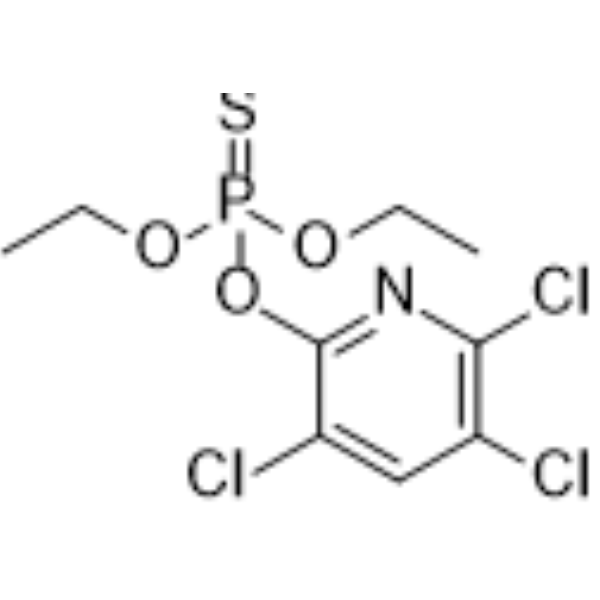
    Chlorpyrifos
    2 Publications Verification

    Environmental Pollutants Cholinesterase (ChE) Neurological Disease
    Chlorpyrifos is a neurotoxic insecticide that belongs to the class of thionite esters. Chlorpyrifos is also a AChE inhibitor that affects neurological function in insects, humans and other animals. Chlorpyrifos interferes with cell replication and differentiation, ultimately altering synaptic transmission in neurons .
    Chlorpyrifos
  • HY-100834
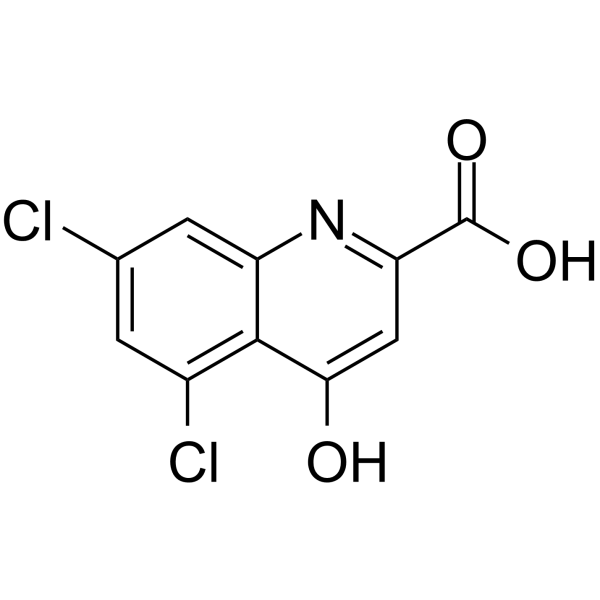
    5,7-Dichlorokynurenic acid
    1 Publications Verification

    5,7-DCKA

    iGluR Neurological Disease
    5,7-Dichlorokynurenic acid (5,7-DCKA) is a selective and competitive antagonist of the glycine site on NMDA receptor with a KB of 65 nM. 5,7-Dichlorokynurenic acid reduces NMDA-induced neuron injury. 5,7-Dichlorokynurenic acid increases social interaction time, increases open arm exploration time, disinhibits suppressed conflict responding in rodent models. 5,7-Dichlorokynurenic acid exhibits anxiolytic-like activity in rodent models and supports exploration of glycine’s role in NMDA receptor-mediated synaptic transmission .
    5,7-Dichlorokynurenic acid
  • HY-164795

    Neurotensin Receptor Arrestin iGluR ERK Sodium Channel Neurological Disease
    SBI-810 is a blood-brain barrier-permeable NTSR1 modulator. SBI-810 promotes the recruitment of β-arrestin-2 to NTSR1 and antagonizes NTSR1-mediated Gq activation. SBI-810 inhibits excitatory synaptic transmission, NMDA receptor and extracellular signal-regulated kinase (ERK) signaling in spinal nociceptive neurons, reduces surface expression of Nav1.7 and action potential firing in primary sensory neurons, and attenuates C-fiber responses. SBI-810 effectively alleviates acute and chronic pain in various rodent models through peripheral and central modulation. SBI-810 is applicable to research related to multiple pain disorders .
    SBI-810
  • HY-164795A

    Neurotensin Receptor Arrestin iGluR ERK Sodium Channel Neurological Disease
    SBI-810 hydrochloride is a blood-brain barrier-permeable NTSR1 modulator. SBI-810 hydrochloride promotes the recruitment of β-arrestin-2 to NTSR1 and antagonizes NTSR1-mediated Gq activation. SBI-810 hydrochloride inhibits excitatory synaptic transmission, NMDA receptor and extracellular signal-regulated kinase (ERK) signaling in spinal nociceptive neurons, reduces surface expression of Nav1.7 and action potential firing in primary sensory neurons, and attenuates C-fiber responses. SBI-810 hydrochloride effectively alleviates acute and chronic pain in various rodent models through peripheral and central modulation. SBI-810 hydrochloride is applicable to research related to multiple pain disorders .
    SBI-810 hydrochloride
  • HY-U00050

    E-10-OH-NT

    Drug Metabolite Adrenergic Receptor mAChR Neurological Disease
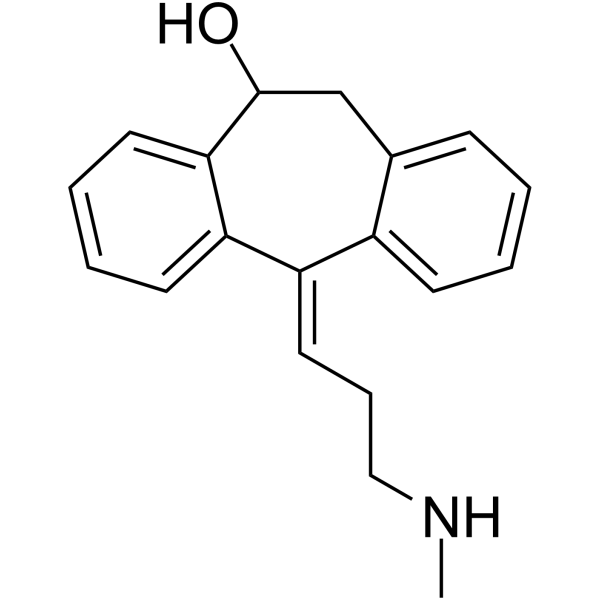
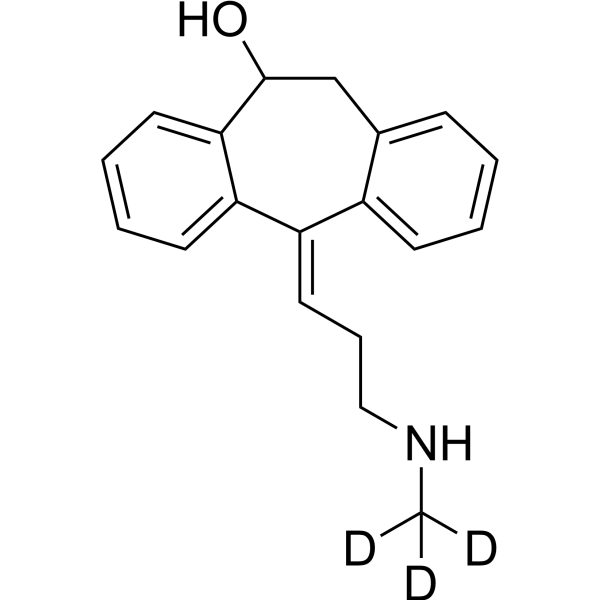
    (E)-10-Hydroxynortriptyline (E-10-OH-NT) is a blood-brain barrier-permeable norepinephrine uptake inhibitor. (E)-10-Hydroxynortriptyline effectively promotes central norepinephrine neuronal transmission, with little interindividual variation in in vivo potency. (E)-10-Hydroxynortriptyline has low affinity for muscarinic receptors, exhibits only extremely weak anticholinergic activity, and does not inhibit salivary secretion. (E)-10-Hydroxynortriptyline can be used in studies related to depression .
    (E)-10-Hydroxynortriptyline
  • HY-126112

    Drug Derivative Neurological Disease
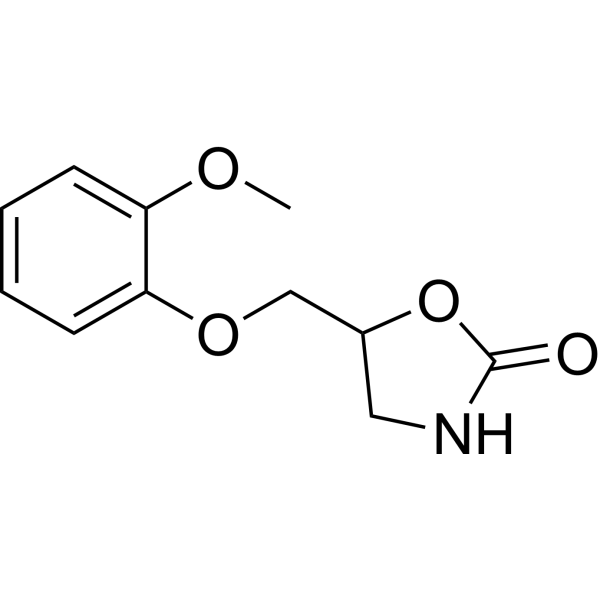
    Mephenoxalone is a muscle relaxant with anti-anxiety activity. Mephenoxalone has neuropharmacologic activity in vivo. Mephenoxalone inhibits neuron transmission and can relax skeletal muscles by inhibiting the reflex arc .
    Mephenoxalone
  • HY-W110888

    GLUT Neurological Disease
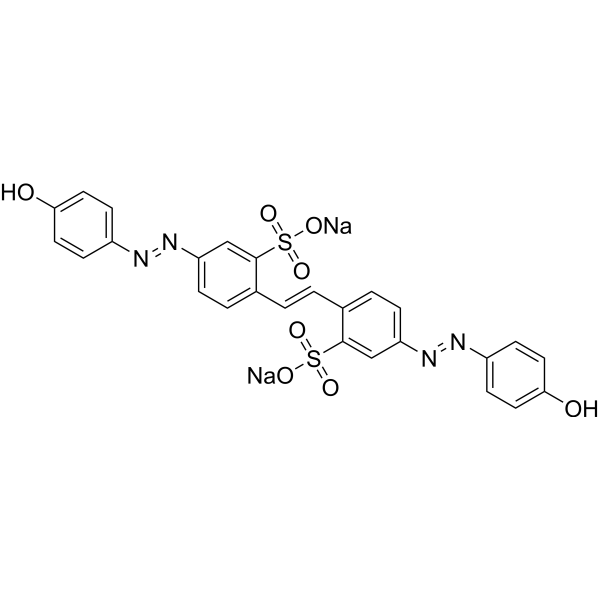
    Brilliant Yellow, a diazo-containing sulfonic aci, is also a potent VGLUT-specific inhibitor. Brilliant Yellow is membrane-impermeable. However, there are some Brilliant Yellow analogs with low cytotoxicity and cell penetration. Brilliant Yellow analogs work on glutamatergic transmission in hippocampal neurons .
    Brilliant Yellow
  • HY-113316A

    Endogenous Metabolite Opioid Receptor Neurological Disease
    (±)-Salsolinol hydrochloride is the hydrochloride form of (±)-Salsolinol (HY-113316). (±)-Salsolinol hydrochloride is a Dopamine (HY-B0451)-derived endogenous metabolite. (±)-Salsolinol hydrochloride activates μ-opioid receptors (MORs), reduces GABAergic transmission, increases the excitability of dopamine (DA) neurons, and thus accelerates the sustained firing of neurons in the posterior ventral tegmental area (pVTA) .
    (±)-Salsolinol hydrochloride
  • HY-B0815R

    Reference Standards Cholinesterase (ChE) Neurological Disease
    Chlorpyrifos (Standard) is the analytical standard of Chlorpyrifos. This product is intended for research and analytical applications. Chlorpyrifos is a neurotoxic insecticide that belongs to the class of thionite esters. Chlorpyrifos is also a AChE inhibitor that affects neurological function in insects, humans and other animals. Chlorpyrifos interferes with cell replication and differentiation, ultimately altering synaptic transmission in neurons .
    Chlorpyrifos (Standard)
  • HY-P10234A
    Poneratoxin acetate
    3 Publications Verification

    Sodium Channel Neurological Disease
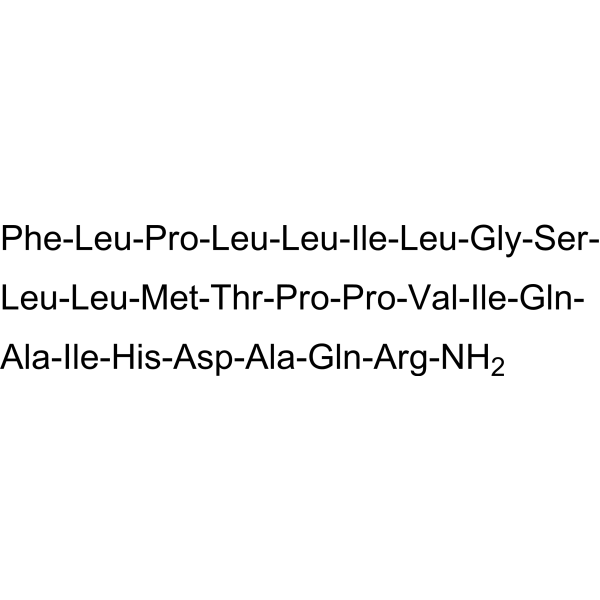
    Poneratoxin acetate is the acetate salt form of Poneratoxin (HY-P10234). Poneratoxin acetate is the modulator for voltage-gated sodium channel (NaV, EC50 for NaV1.6 and NaV1.7 is 97 nM and 2.3 µM), that lowers the voltage threshold for activation and inhibits the inactivation of channels, enhances the excitability of neurons, and leads to the transmission of pain signals .
    Poneratoxin acetate
  • HY-P10234

    Sodium Channel Neurological Disease
    Poneratoxin is the modulator for voltage-gated sodium channel (NaV, EC50 for NaV1.6 and NaV1.7 is 97 nM and 2.3 µM), that lowers the voltage threshold for activation and inhibits the inactivation of channels, enhances the excitability of neurons, and leads to the transmission of pain signals .
    Poneratoxin
  • HY-126112R

    Biochemical Assay Reagents Reference Standards Neurological Disease
    Mephenoxalone (Standard) is the analytical standard of Mephenoxalone. This product is intended for research and analytical applications. Mephenoxalone is a muscle relaxant with anti-anxiety activity. Mephenoxalone has neuropharmacologic activity in vivo. Mephenoxalone inhibits neuron transmission and can relax skeletal muscles by inhibiting the reflex arc .
    Mephenoxalone (Standard)
  • HY-W013353

    Endogenous Metabolite Opioid Receptor Neurological Disease
    (RS)-Salsolinol hydrobromide is the hydrobromide form of (±)-Salsolinol (HY-113316). (RS)-Salsolinol hydrobromide is a Dopamine (HY-B0451)-derived endogenous metabolite. (RS)-Salsolinol hydrobromide activates μ-opioid receptors (MORs), reduces GABAergic transmission, increases the excitability of dopamine (DA) neurons, and thus accelerates the sustained firing of neurons in the posterior ventral tegmental area (pVTA) .
    (RS)-Salsolinol hydrobromide
  • HY-169871

    iGluR Neurological Disease
    Argiotoxin 636 is a toxin and the non-specific, non-competitive, and potent ionotropic glutamate receptor (iGluR) antagonist. Argiotoxin 636 blocks excitatory synaptic transmission in neurons and has paralysis and muscle relaxation effects. Argiotoxin 636 can be used in the study of nervous system diseases .
    Argiotoxin 636
  • HY-100834A

    5,7-DCKA sodium

    iGluR Neurological Disease
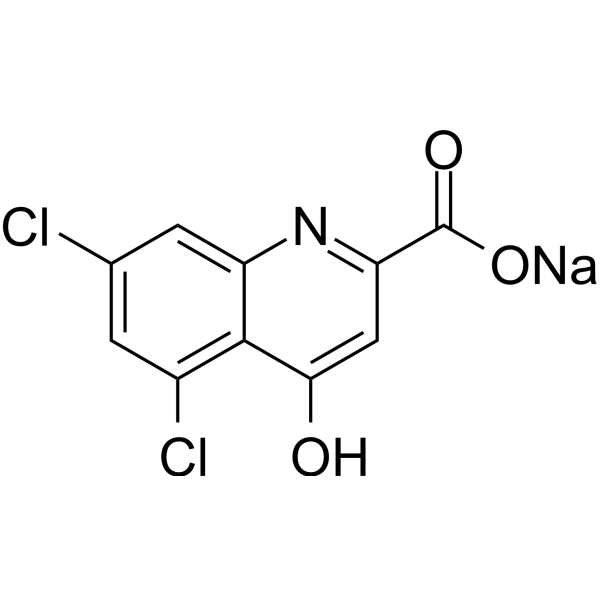
    5,7-Dichlorokynurenic acid (5,7-DCKA) sodium is a selective and competitive antagonist of the glycine site on NMDA receptor with a KB of 65 nM. 5,7-Dichlorokynurenic acid sodium reduces NMDA-induced neuron injury. 5,7-Dichlorokynurenic acid sodium increases social interaction time, increases open arm exploration time, disinhibits suppressed conflict responding in rodent models. 5,7-Dichlorokynurenic acid sodium exhibits anxiolytic-like activity in rodent models and supports exploration of glycine’s role in NMDA receptor-mediated synaptic transmission .
    5,7-Dichlorokynurenic acid sodium
  • HY-100834R

    5,7-DCKA (Standard)

    Reference Standards iGluR Neurological Disease
    5,7-Dichlorokynurenic acid (Standard) is the analytical standard of 5,7-Dichlorokynurenic acid (HY-100834). This product is intended for research and analytical applications. 5,7-Dichlorokynurenic acid (5,7-DCKA) is a selective and competitive antagonist of the glycine site on NMDA receptor with a KB of 65 nM. 5,7-Dichlorokynurenic acid reduces NMDA-induced neuron injury. 5,7-Dichlorokynurenic acid increases social interaction time, increases open arm exploration time, disinhibits suppressed conflict responding in rodent models. 5,7-Dichlorokynurenic acid exhibits anxiolytic-like activity in rodent models and supports exploration of glycine’s role in NMDA receptor-mediated synaptic transmission .
    5,7-Dichlorokynurenic acid (Standard)
  • HY-174899

    iGluR Neurological Disease
    AMPA-IN-2 is an orally active AMPA inhibitor that can cross the blood-brain barrier. AMPA-IN-2 improves epileptic seizures by inhibiting the intrinsic excitability of neurons and inhibiting the excitability of glutamatergic transmission. AMPA-IN-2 exerts anti-epileptic effects in the pentylenetetrazol (PTZ) model and can be used as a promising candidates with high broad-spectrum anti-epileptic potential .
    AMPA-IN-2

온라인 문의

Your information is safe with us. * Required Fields.

호칭


Country or Region *

고객명 *


회사명 *

Department *


메일주소 *


상품명 *

Cat. No.


Requested quantity *

전화번호 *


비고

온라인 문의

Inquiry Information

상품명:
Cat. No.:
수량:
MCE Japan Authorized Agent:

