1. Search Result
Search Result
Results for "

opioid analgesia

" in MedChemExpress (MCE) Product Catalog:

36

Inhibitors & Agonists

16

Peptides

Targets Recommended:
Cat. No. Product Name Target Research Areas Chemical Structure
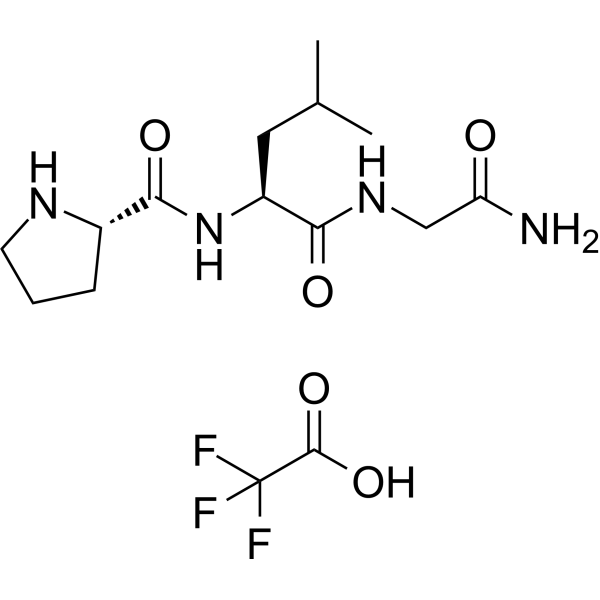
  • HY-107663A

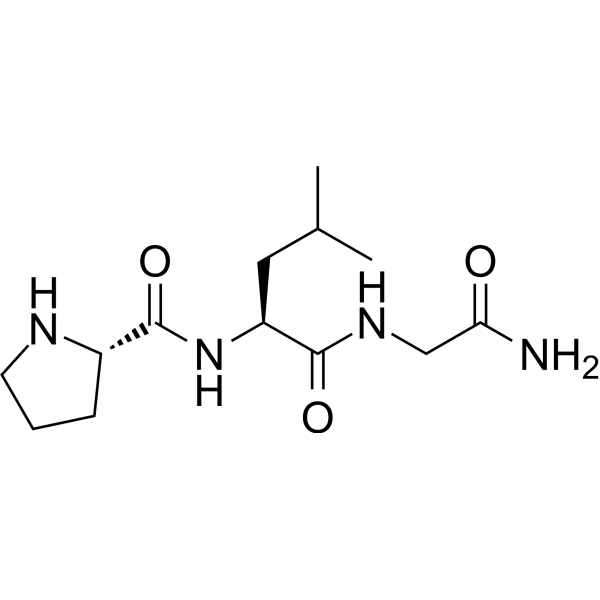
    Pro-Leu-Gly-NH2 TFA; Melanostatin TFA

    Dopamine Receptor Neurological Disease
    MIF-1 TFA (Melanostatin), an endogenous brain peptide, is a potent dopamine receptor allosteric modulator. MIF-1 TFA inhibits melanin formation. MIF-1 TFA blocks the effects of opioid receptor activation to modulate the analgesic effects. MIF-1 TFA accesses from the blood to the CNS by directly crossing the blood-brain barrier (BBB) .
    MIF-1 TFA
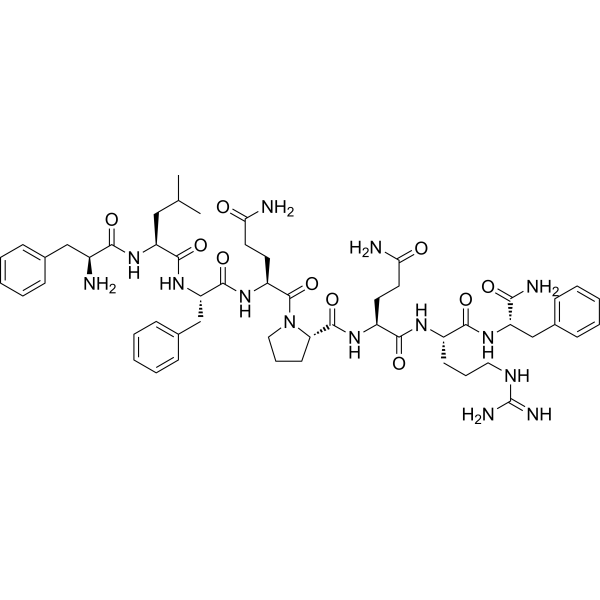
  • HY-P1248

    NPFF

    Neuropeptide FF Receptor Cardiovascular Disease Neurological Disease
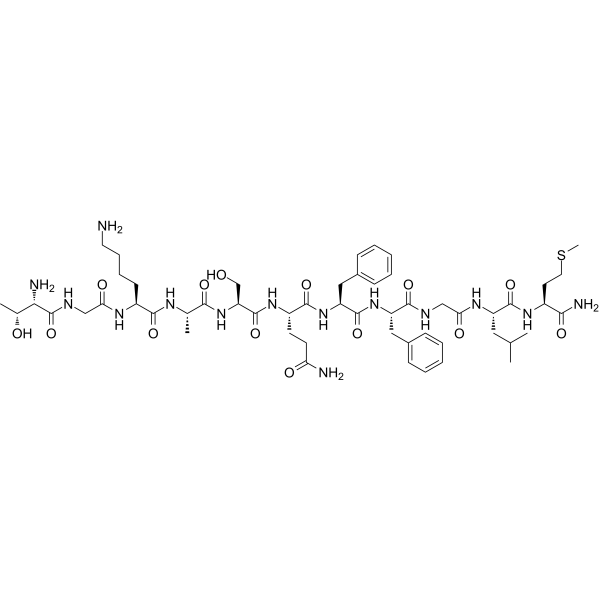
    Neuropeptide FF (NPFF), an octapeptide belonging to the RF-amide family of peptides, is a NPFF1 and NPFF2 receptors agonist with Ki values of 2.82 nM and 0.21 nM, respectively. Neuropeptide FF induces abstinence syndrome, exerts antiopioid and analgesic effects, releases via calcium-dependent mechanisms from rat spinal cord, regulates memory, autonomic function, and neuroendocrine function, modulates pain and opioid antinociception, reduces food intake, stimulates water intake, alters cardiovascular parameters, and shows differential activity in hypothalamic paraventricular nucleus neurons. Neuropeptide FF is present in mammalian central nervous system and periphery, with NPFF-immunoreactivity increases in rat cerebrospinal fluid during opiate tolerance, and its NPFF gene and NPFF-R2 gene are up-regulated in rat spinal cord and dorsal root ganglia during peripheral inflammation. Neuropeptide FF can be used for the research of opioid tolerance, morphine-induced analgesia, abstinence syndrome, pain, hypertension, nociception, inflammatory pain, and neuropathic pain .
    Neuropeptide FF
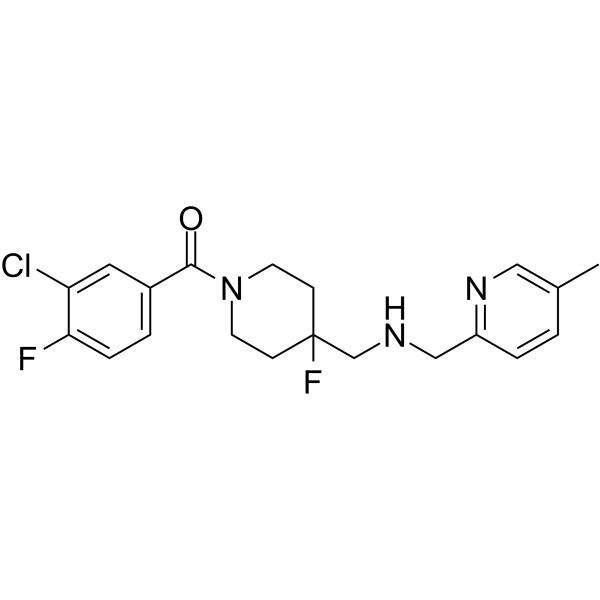
  • HY-14785

    NLX-112; F13640

    5-HT Receptor Neurological Disease
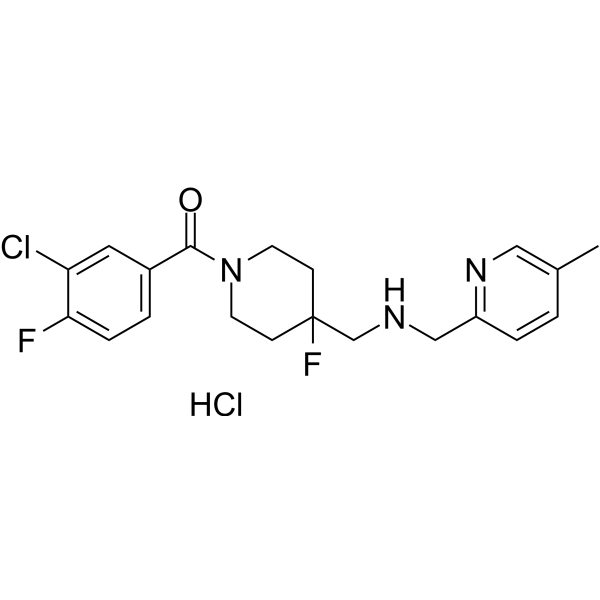
    Befiradol (NLX-112) is a highly selective 5-HT1A receptor agonist that acts on both presynaptic and postsynaptic sites. Befiradol attenuates fentanyl-induced respiratory depression in neonatal and adult rats. Befiradol reduces the duration of fentanyl-induced analgesia and sedation in adult rats. Befiradol can be used in studies related to opioid-induced respiratory depression .
    Befiradol
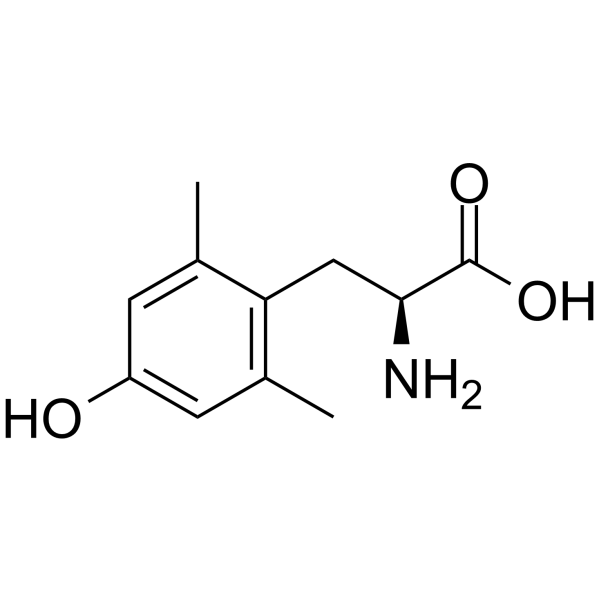
  • HY-W000665

    Dmt

    Opioid Receptor Neurological Disease
    2,6-Dimethyl-L-tyrosine (Dmt) is a tyrosine derivative that enhances receptor affinity, functional bioactivity and in vivo analgesia of opioid peptides .
    2,6-Dimethyl-L-tyrosine
  • HY-107663

    Pro-Leu-Gly-NH2; Melanostatin

    Dopamine Receptor Neurological Disease
    MIF-1 (Melanostatin), an endogenous brain peptide, is a potent dopamine receptor allosteric modulator. MIF-1 inhibits melanin formation. MIF-1 blocks the effects of opioid receptor activation to modulate the analgesic effects. MIF-1 accesses from the blood to the CNS by directly crossing the blood-brain barrier (BBB) .
    MIF-1
  • HY-107743

    NalBzoH

    Opioid Receptor Neurological Disease
    Naloxone benzoylhydrazone (NalBzoH) is a mixed agonist/antagonist. Naloxone benzoylhydrazone is a prototypic κ3-opioid receptor agonist, and a partial agonist at the cloned μ and δ opioid receptors, and an antagonist at opioid-like NOP receptors. Naloxone benzoylhydrazone has potently analgesia effect .
    Naloxone benzoylhydrazone
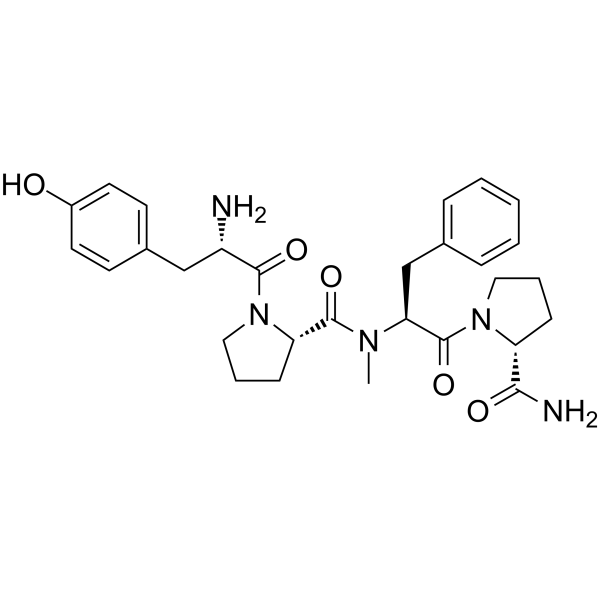
  • HY-P3087

    Opioid Receptor Neurological Disease
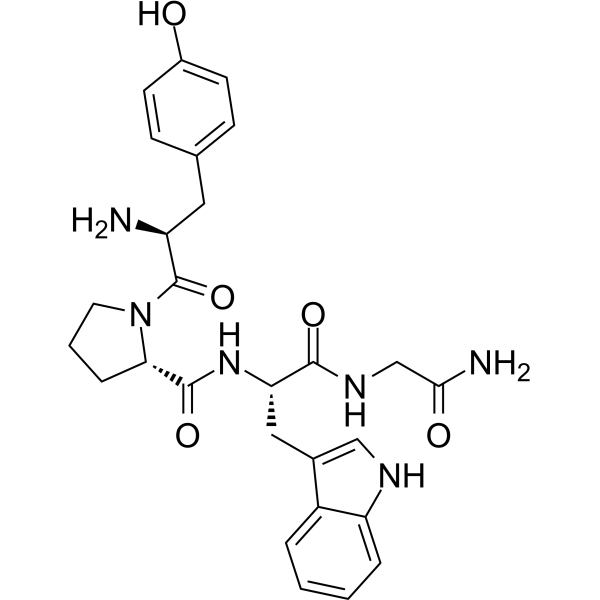
    Tyr-W-MIF-1 is an opioid tetrapeptide with opiate and antiopiate activity. Tyr-W-MIF-1 can induce analgesia .
    Tyr-W-MIF-1
  • HY-169469

    Opioid Receptor Neurological Disease
    N-Phenethylnoroxymorphone is an opioid compound. N-Phenethylnoroxymorphone enhances morphine-induced analgesia in rats. N-Phenethylnoroxymorphone can be used for research on neurological diseases .
    N-Phenethylnoroxymorphone
  • HY-P10395

    Opioid Receptor Neuropeptide FF Receptor Neurological Disease
    DP50 is a bifunctional compound that contains an opioid receptor (MOP) agonist and a neuropeptide FF receptor (NPFFR) antagonist. DP50 can be used in analgesia-related research .
    DP50
  • HY-P10394

    Opioid Receptor Neuropeptide FF Receptor Neurological Disease
    DP32 is a bifunctional compound that contains an opioid receptor (MOP) agonist and a neuropeptide FF receptor (NPFFR) antagonist. DP32 can be used in analgesia-related research .
    DP32
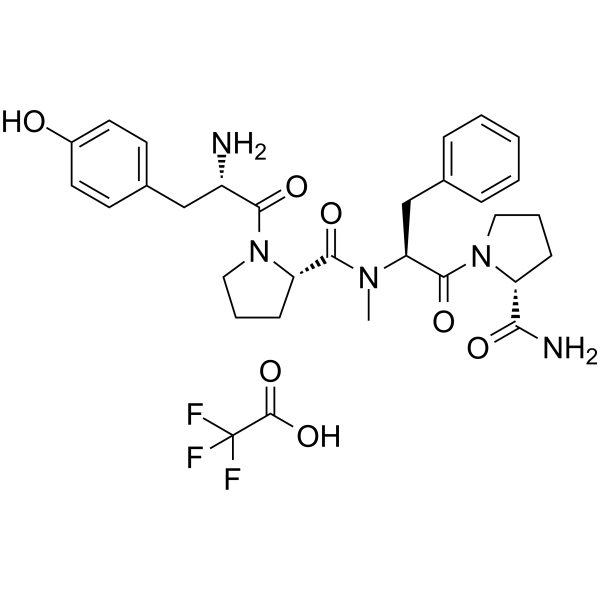
  • HY-P1198

    Neurokinin Receptor Neurological Disease
    Hemokinin 1, human is a selective tachykinin neurokinin 1 (NK1) receptor full agonist. Hemokinin 1, human is a full agonist at NK2 and NK3 receptor. Hemokinin 1, human can produces an opioid-independent analgesia .
    Hemokinin 1, human
  • HY-P2046

    Opioid Receptor Neurological Disease
    β-Endorphin (rat) is an endogenous opioid neuropeptide and peptide hormone. β-Endorphin (rat) has analgesic activity and also contributes to food intake in satiated rats. β-Endorphin (rat) can be used in the research of neurological diseases such as analgesia and drug addiction .
    β-Endorphin (rat)
  • HY-163667

    Opioid Receptor Neurological Disease
    Atoxifent is a potent μ-opioid receptor agonist (EC50=0.39 nM). These receptors are found in brain regions that control pain, emotions, habitual learning, and cognition. Atoxifent exhibits strong analgesic effects and a lower risk of respiratory depression. Atoxifent can be used for research in opioid pharmacology and signal transduction .
    Atoxifent
  • HY-B0718

    DA-759

    Potassium Channel Neurological Disease
    Methoxyflurane disrupts neuronal transmission by interfering with the release and re-uptake of neurotransmitters at post-synaptic terminals, or altering ionic conductance following receptor activation . Methoxyflurane is an analgesic agent that provides rapid short-term analgesia. Methoxyflurane may shows a effective non-opioid treatment option for trauma pain .
    Methoxyflurane
  • HY-168997

    Cannabinoid Receptor Neurological Disease Inflammation/Immunology
    CB1R agonist 1 is a potent, CNS-penetrant, and selective Cannabinoid-1 receptor (CB1R) agonist with a Ki of 0.95 nM, modulating Gi/o signaling. CB1R agonist 1 exhibits high selectivity over CB2R and other off-target GPCRs, including GPR55, GPR18, and GPR119. CB1R agonist 1 induces analgesia and hypothermia, and potentiates opioid analgesia in mice. CB1R agonist 1 can be used for the research of pain .
    CB1R agonist 1
  • HY-14785A

    NLX-112 hydrochloride; F 13640 hydrochloride

    5-HT Receptor Neurological Disease Metabolic Disease
    Befiradol (NLX-112) hydrochloride is a highly selective 5-HT1A receptor agonist that acts on both presynaptic and postsynaptic sites. Befiradol hydrochloride attenuates fentanyl-induced respiratory depression in neonatal and adult rats. Befiradol reduces the duration of fentanyl-induced analgesia and sedation in adult rats. Befiradol hydrochloride can be used in studies related to opioid-induced respiratory depression .
    Befiradol hydrochloride
  • HY-178945

    Opioid Receptor Interleukin Related TNF Receptor Sigma Receptor Neurological Disease Inflammation/Immunology
    KOR agonist 7 (Compound 29) is a highly selective κ-opioid receptor (KOR) agonist with a Ki of 138 nM. KOR agonist 7 shows no activity at μ- and δ-opioid receptors or σ1 receptor, and exhibits extremely low affinity for σ2 receptor (Ki = 2.8 μM). KOR agonist 7 significantly reduces the secretion of pro-inflammatory cytokines such as IL-6, TNF-α, and IFN-γ, while increasing the production of the anti-inflammatory cytokine IL-10. KOR agonist 7 downregulates the expression of the pro-inflammatory M1 macrophage marker CD80 and upregulates the anti-inflammatory M2 macrophage marker CD163. KOR agonist 7 holds potential for applications in analgesia and immune modulation .
    KOR agonist 7
  • HY-P2199

    Opioid Receptor Neurological Disease
    SNF 9007 is a cholecystokinin analog. SNF 9007 induces analgesia by acting on δ-1, δ-2, and μ opioid receptors in the mouse brain .
    SNF 9007
  • HY-P1338

    Opioid Receptor Neurological Disease
    PL-017 is a potent and selective μ opioid receptor agonist with an IC50 of 5.5 nM for 125I-FK 33,824 binding to μ site. PL-017 produces long-lasting, reversible analgesia in rats .
    PL-017
  • HY-P1338A

    Opioid Receptor Neurological Disease
    PL-017 TFA is a potent and selective μ opioid receptor agonist with an IC50 of 5.5 nM for 125I-FK 33,824 binding to μ site. PL-017 TFA produces long-lasting, reversible analgesia in rats .
    PL-017 TFA
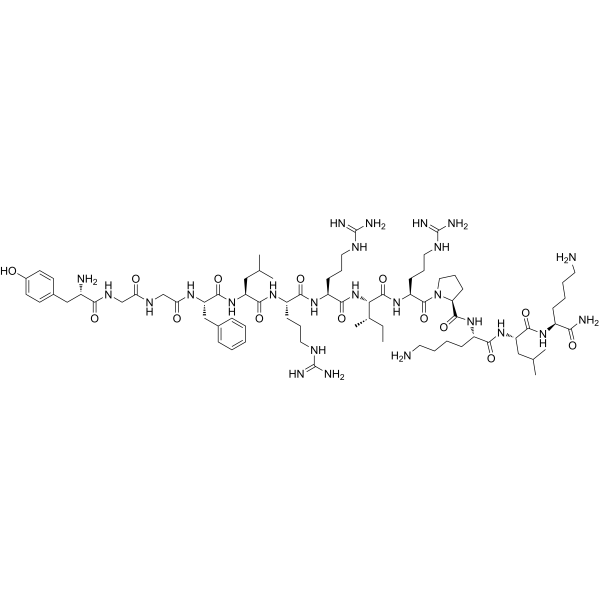
  • HY-P5061

    Opioid Receptor Neurological Disease
    Dynorphin A (1-13) amide is an endogenous opioid peptide that antagonizes morphine-induced analgesia .
    Dynorphin A (1-13) amide
  • HY-163917

    Opioid Receptor Neurological Disease
    SalA-VS-08 is a full agonist of kappa-opioid receptor (KOR) with selectivity and G-protein bias. SalA-VS-08 can be used in the research of analgesia .
    SalA-VS-08
  • HY-129237

    Opioid Receptor Neurological Disease
    Azo-enkephalin is an endorphin analog with significant analgesic activity. Azo-enkephalin can be used in the development of opioid analgesics .
    Azo-enkephalin
  • HY-172979

    Opioid Receptor Neurological Disease
    DH-1-106 is a MOR partial agonist. DH-1-106 can be used in the study of analgesia .
    DH-1-106
  • HY-129668

    Adrenergic Receptor Neurological Disease
    Bremazocine is a potent opioid kappa receptor agonist with analgesic activity. Bremazocine induces peripheral analgesia by releasing endogenous norepinephrine. The analgesic effect of bremazocine is associated with interaction with adenosine receptors. Bremazocine produces a dose-dependent peripheral analgesia after topical application. The effect of bremazocine is affected by nonselective α(2) adrenaline receptor antagonists, suggesting that it acts through a norepinephrine pathway .
    Bremazocine
  • HY-P1625

    Dynorphin A ethylamide (1-9)

    Opioid Receptor Neurological Disease
    Daeatal (Dynorphin A ethylamide (1-9)) is an ethylamine-modified dynorphin fragment that can be used in the study of analgesia, addiction, depression, etc. Dynorphin A is an endogenous opioid peptide involved in inhibitory neurotransmission in the central nervous system (CNS). Dynorphin A is a highy potent kappa opioid receptor (KOR) agonist, and is also an agonist for other opioid receptors, such as mu (MOR) and delta (DOR). Dynorphin A can induce neuronal death, and can be used in the research of neurological disease .
    Daeatal
  • HY-P5892

    Opioid Receptor Neurological Disease
    β-Endorphin (1-27) (human) is an opioid antagonist that binds μ-, δ-, and κ-opioid receptors with Kis of 5.31, 6.17, and 39.82 nM, respectively. β-Endorphin (1-27) (human) inhibits β-Endorphin (HY-P1502)-induced and etorphine-induced analgesia .
    β-Endorphin (1-27) (human)
  • HY-121974

    Opioid Receptor Neurological Disease
    SR14150 is a partial agonist of the NOP receptor with high affinity. The biological activity of SR14150 makes it potentially useful for the development of a new generation of multi-target opioids designed to simultaneously improve analgesia and reduce side effects. The activity of SR14150 and its interaction with other opioid receptors may provide new inhibitory options for the management of chronic pain .
    SR14150
  • HY-W714505

    Opioid Receptor Neurological Disease
    AH 7563 structurally belongs to the opioid compounds and exhibits analgesic activity. In the phenylquinone test and hot plate test, the ED50 of AH 7563 for analgesia in mice were 15.3 mg/kg (orally) and 15.5 mg/kg (subcutaneous injection), respectively .
    AH 7563
  • HY-P1198A

    Neurokinin Receptor Neurological Disease
    Hemokinin 1, human TFA is a selective tachykinin neurokinin 1 (NK1) receptor full agonist. Hemokinin 1, human TFA is a full agonist at NK2 and NK3 receptor. Hemokinin 1, human TFA can produces an opioid-independent analgesia .
    Hemokinin 1, human TFA
  • HY-161812

    Opioid Receptor Others
    MOR agonist-4 (2d) is a G protein signaling-biased Kappa opioid receptor (KOR) agonist with an EC50 value of 11 nM. MOR agonist-4 contains an electron withdrawing CF3 group and a bias factor of 38 based on triazole. MOR agonist-4 is used in the research of pruritis and analgesia .
    MOR agonist-4
  • HY-138232

    LTNAM

    Aminopeptidase Neurological Disease
    Lys-psi(CH2NH)-Trp(Nps)-OMe is a lysine-tryptophan (Nps) pseudodipeptide analog. It is obtained by replacing the peptide bond in the Lys-Trp(Nps) molecule with an aminomethylene bond and has analgesic activity. Lys-psi(CH2NH)-Trp(Nps)-OMe induces a dose-dependent and naloxone-reversible analgesia after intracerebroventricular administration in mice, and its analgesic effect lasts longer than that of the original compound. It protects methionine enkephalin from degradation in rat striatal slices and binds to low-dose opioid peptides to produce analgesia. Lys-psi(CH2NH)-Trp(Nps)-OMe effectively inhibits brain aminopeptidase activity both in vitro and in vivo. The enhanced resistance of this pseudodipeptide to proteolysis may explain its prolonged analgesic activity.
    Lys-psi(CH2NH)-Trp(Nps)-OMe
  • HY-159923

    Opioid Receptor Neurological Disease
    BPRMU191 is a μ-opioid receptor (MOR) modulator that converts small-molecule morphinan antagonists into G protein-biased MOR agonists, thereby inducing MOR-dependent activation and analgesic effects. Co-administration of BPRMU191 with morphinan antagonists provides analgesia while reducing side effects such as gastrointestinal dysfunction, antinociceptive tolerance, and dependency-related adverse effects. BPRMU191, in combination with morphinan antagonists, offers a potential strategy for studying severe pain management and G protein-coupled receptor modulation .
    BPRMU191
  • HY-177218

    NSC 119910

    Phospholipase Opioid Receptor Neurological Disease
    M119 (NSC 119910) is a selective Gβγ-subunit inhibitor. M119 selectively potentiates μ-opioid-dependent antinociception. M119 inhibits μ-receptor-dependent phospholipase (PLC) activation. M119 can enhance opioid analgesia and attenuate its acute tolerance and dependence in mice. M119 can be used for pain research .
    M119
  • HY-W414109

    Opioid Receptor Arrestin Neurological Disease
    ID110460002 possesses both full agonist activity at the μ-opioid receptor (OPRM) and agonist activity at the δ-opioid receptor (OPRD). ID110460002 acts as a potent agonist for the G protein pathways of both receptors, but exhibits only very weak partial agonist activity towards the β-arrestin-2 pathway. The agonistic potency of ID110460002 at OPRM has extremely high intrinsic activity and is unaffected by reduced receptor expression levels, while its potency at OPRD depends on receptor expression levels. ID110460002 displays tissue- or organ-dependent properties, and serves as a critical compound for investigating pain mechanisms and analgesia .
    ID110460002
  • HY-181956

    Opioid Receptor Neurological Disease
    MPAM-15 is a blood-brain barrier-penetrant pan-orthosteric allosteric modulator (PAM) of opioid receptors, with ≥16-fold selectivity for μOR over δOR and κOR. MPAM-15 acts as an anti-nociceptive potentiator and analgesic, and its activity is observed in mouse models via both intracerebroventricular and intraperitoneal administration. MPAM-15 is applicable for pain-related research .
    MPAM-15

Inquiry Online

Your information is safe with us. * Required Fields.

Salutation


Country or Region *

Applicant Name *


Organization Name *

Department *


Email Address *


Product Name *

Cat. No.


Requested quantity *

Phone Number *


Remarks

Inquiry Online

Inquiry Information

Product Name:
Cat. No.:
Quantity:
MCE Japan Authorized Agent: