

1. Search Result
Search Result
Results for "

oxaloacetate

" in MedChemExpress (MCE) Product Catalog:

33

Inhibitors & Agonists

1

Peptides

3

Natural
Products

1

Recombinant Proteins

3

Antibodies

Art. -Nr. Produktname Target Forschungsgebiete Chemical Structure
  • HY-122723
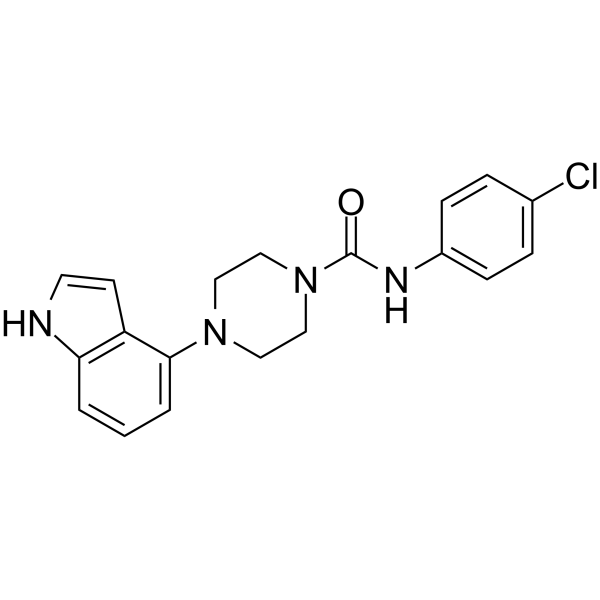
    GOT1 inhibitor-1
    2 Publications Verification

    Reactive Oxygen Species (ROS) Cancer
    GOT1 inhibitor-1 (compound 2c), a tryptamine-based derivative, acts as a novel, potent and non-covalent inhibitor of glutamate oxaloacetate transaminase 1 (GOT1) with an IC50 of 8.2 uM. GOT1 plays an important role in energy metabolism and Reactive Oxygen Species (ROS) balance. GOT1 inhibitor-1 can be used for the research of pancreatic ductal adenocarcinoma (PDAC) .
    GOT1 inhibitor-1
  • HY-P3469A

    GCGR Metabolic Disease
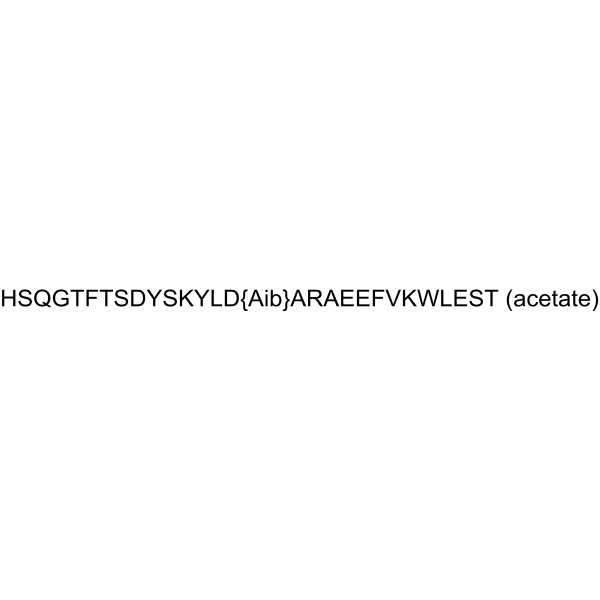
    Dasiglucagon acetate is a human glucagon analog, and can increase plasma glucose. Dasiglucagon can be used in hypoglycemia research .
    Dasiglucagon acetate
  • HY-P2739

    Endogenous Metabolite Others
    Citrate synthase is responsible for catalyzing the first reaction of the citric acid cycle: the condensation of acetyl-CoA and oxaloacetate to form citrate. Citrate synthase is localized within eukaryotic cells in the mitochondrial matrix .
    Citrate synthase
  • HY-163771

    Pyruvate Carboxylase (PC) Metabolic Disease
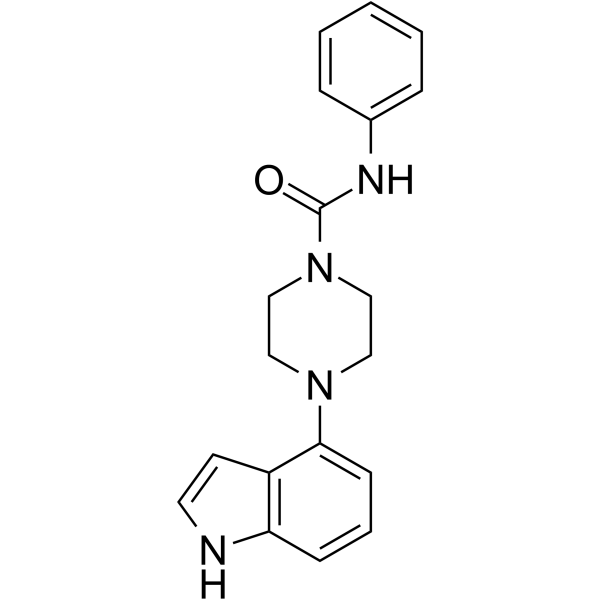
    Pyruvate Carboxylase-IN-5 (compound 6m) is a pyruvate carboxylase inhibitor with high selectivity and permeability. Pyruvate carboxylase is a mitochondrial enzyme that catalyzes the carboxylation of pyruvate to oxaloacetate, a process that plays an important role in maintaining steady-state levels of Krebs cycle intermediates, which are precursors for the synthesis of biomacromolecules such as amino acids, fatty acids, and glucose .
    Pyruvate Carboxylase-IN-5
  • HY-P3016A

    EC 2.6.1.1, porcine heart; GOT, porcine heart; AST, porcine heart

    Aminotransferases (Transaminases) Cardiovascular Disease
    Aspartate aminotransferase (EC 2.6.1.1), porcine heart is a metabolic regulator with the highest activity in the heart, liver and skeletal muscle. Aspartate aminotransferase, porcine heart comprises two isozymes: the cytoplasmic form (AST1) and the mitochondrial form (AST2). By catalyzing reversible transamination reactions between oxaloacetate, L-glutamate and other substances, it is deeply involved in key physiological processes such as amino acid metabolism, the tricarboxylic acid cycle and neurotransmitter synthesis. Aspartate aminotransferase, porcine heart also provides substrate support for the synthesis of urea and purines/pyrimidines. Aspartate aminotransferase, porcine heart is a serum marker reflecting cardiac and hepatic injury, and its abnormal levels are also closely associated with myocardial infarction, cardiovascular diseases and various cancers .
    Aspartate aminotransferase, porcine heart
  • HY-P3016

    EC 2.6.1.1; GOT; AST

    Aminotransferases (Transaminases) Cardiovascular Disease
    Aspartate aminotransferase (EC 2.6.1.1), Genetically engineered bacteria is a metabolic regulator with the highest activity in the heart, liver and skeletal muscle. Aspartate aminotransferase, Genetically engineered bacteria comprises two isozymes: the cytoplasmic form (AST1) and the mitochondrial form (AST2). By catalyzing reversible transamination reactions between oxaloacetate, L-glutamate and other substances, it is deeply involved in key physiological processes such as amino acid metabolism, the tricarboxylic acid cycle and neurotransmitter synthesis. Aspartate aminotransferase, Genetically engineered bacteria also provides substrate support for the synthesis of urea and purines/pyrimidines. Aspartate aminotransferase, Genetically engineered bacteria is a serum marker reflecting cardiac and hepatic injury, and its abnormal levels are also closely associated with myocardial infarction, cardiovascular diseases and various cancers .
    Aspartate aminotransferase, Genetically engineered bacteria
  • HY-N7347

    Garcinia lactone

    ATP Citrate Lyase Metabolic Disease
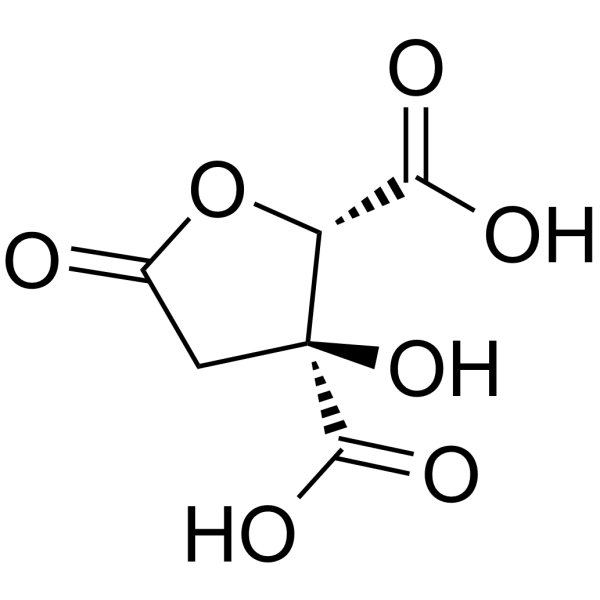
    (-)-Hydroxycitric acid lactone (Garcinia lactone) is an anti-obesity agent and a popular weight loss food supplement. (-)-Hydroxycitric acid lactone is a potent inhibitor of ATP-citrate lyase. (-)-Hydroxycitric acid lactone catalyzes the extramitochondrial cleavage of citrate to oxaloacetate and acetyl-CoA, limits the availability of acetyl-CoA units required for fatty acid synthesis .
    (-)-Hydroxycitric acid lactone
  • HY-P2989

    Endogenous Metabolite Metabolic Disease Cancer
    Pyruvate carboxylase is a key mitochondrial anaplerotic enzyme that catalyzes the conversion of pyruvate to oxaloacetate. Pyruvate carboxylase not only maintains tricarboxylic acid cycle activity and redox homeostasis, but also drives hepatic gluconeogenesis and fatty acid synthesis. The activity of Pyruvate carboxylase is upregulated in insulin-resistant states, exacerbating hepatic glucose production. Pyruvate carboxylase also shows significantly enhanced expression in early-stage non-small cell lung cancer (NSCLC). Pyruvate carboxylase promotes tumor proliferation by supporting nucleotide and lipid synthesis, and its functional deficiency cannot be compensated by glutaminolysis. Pyruvate carboxylase can be used in the research of prediabetes type 2 and NSCLC .
    Pyruvate carboxylase
  • HY-E70015

    PEPC

    Others Others
    Phosphoenolpyruvate carboxylase, Microorganism (PEPC) is a carbon dioxide fixing enzyme that in an irreversible manner and in the presence of Mg 2+, converts phosphoenolpyruvate and bicarbonate into oxaloacetate and inorganic phosphorus. Phosphoenolpyruvate carboxylase catalyses the primary assimilation of CO(2) in Crassulacean acid metabolism plants. Phosphoenolpyruvate carboxylase plays a major role in setting the day-night pattern of metabolism in plants .
    Phosphoenolpyruvate carboxylase, Microorganism
  • HY-124825

    Aminotransferases (Transaminases) Cancer
    iGOT1-01 is a potent aspartate aminotransferase 1 (glutamate oxaloacetate transaminase 1; GOT1) inhibitor. iGOT1-01 has IC50s of 85 μM and 11.3 μM in MDH coupled GOT1 enzymatic assay and GOT1/GLOX/HRP assay, respectively. iGOT1-01 has anti-cancer activity .
    iGOT1-01
  • HY-P2809
    Malic dehydrogenase, microorganism
    1 Publications Verification

    MDH; EC 1.1.1.37

    Endogenous Metabolite Metabolic Disease
    Malate dehydrogenase (EC 1.1.1.37) (MDH) catalyzes the mutual conversion of oxaloacetate and malate, and is associated with the oxidation/reduction of dinucleotide coenzymes .
    Malic dehydrogenase, microorganism
  • HY-P3001

    Endogenous Metabolite Metabolic Disease
    Malate dehydrogenase (oxaloacetate-decarboxylating, NADP+) is a redox agent targeting metabolic pathways. Malate dehydrogenase (oxaloacetate-decarboxylating, NADP+) catalyzes the reduction of oxaloacetate to malate in leaves of higher plants. Malate dehydrogenase (oxaloacetate-decarboxylating, NADP+) is promising for research of metabolic diseases, such as diabetes, obesity .
    Malate dehydrogenase oxaloacetate-decarboxylating, NADP+
  • HY-E70394

    Acetonyl-coenzyme A

    Biochemical Assay Reagents N-myristoyltransferase Metabolic Disease
    S-Acetonyl-CoA (Acetonyl-coenzyme A) is a non-reactive structural analog of acetyl-CoA that acts as a competitive inhibitor against multiple target enzymes. S-Acetonyl-CoA lacks the characteristic thioester group of acetyl-CoA, retaining only a thioether structure. S-Acetonyl-CoA competes with acetyl-CoA for binding to citrate synthase, phosphate transacetylase, carnitine acetyltransferase, and N-myristoyltransferase 1. S-Acetonyl-CoA serves as a reagent for investigating acetyl-CoA-dependent physiological processes .
    S-Acetonyl-CoA
  • HY-N6237

    Aminotransferases (Transaminases) Apoptosis Cancer
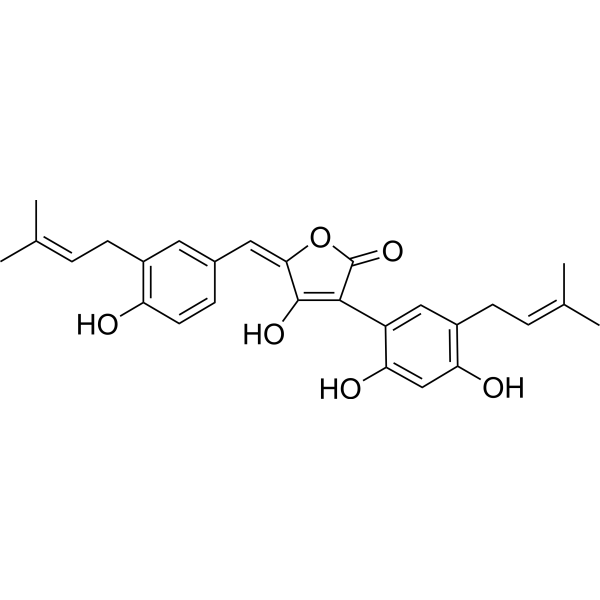
    Aspulvinone O is a selective inhibitor of glutamate oxaloacetate aminotransferase GOT1. Aspulvinone O inhibits glutamine metabolism and reduces NADPH production, thereby inducing oxidative stress and apoptosis in pancreatic ductal adenocarcinoma (PDAC) cells. Aspulvinone O inhibits PDAC cell proliferation in vitro and tumor growth in xenograft models .
    Aspulvinone O
  • HY-P2837

    Endogenous Metabolite Metabolic Disease
    Oxaloacetate decarboxylase catalyzes the irreversible decarboxylation of oxaloacetate to pyruvate and COIC2. Oxaloacetate decarboxylase is a member of the sodium ion transport decarboxylase (NaT-DC) enzyme family. Oxaloacetate decarboxylase converts the chemical energy of the decarboxylation reaction into an electrochemical gradient of Na + ions across the membrane .
    Oxaloacetate decarboxylase
  • HY-P3016B

    EC 2.6.1.1, Human liver; GOT, Human liver; AST, Human liver

    Aminotransferases (Transaminases) Cardiovascular Disease
    Aspartate aminotransferase (EC 2.6.1.1), Human liver is a metabolic regulator with the highest activity in the heart, liver and skeletal muscle. Aspartate aminotransferase, Human liver comprises two isozymes: the cytoplasmic form (AST1) and the mitochondrial form (AST2). By catalyzing reversible transamination reactions between oxaloacetate, L-glutamate and other substances, it is deeply involved in key physiological processes such as amino acid metabolism, the tricarboxylic acid cycle and neurotransmitter synthesis. Aspartate aminotransferase, Human liver also provides substrate support for the synthesis of urea and purines/pyrimidines. Aspartate aminotransferase, Human liver is a serum marker reflecting cardiac and hepatic injury, and its abnormal levels are also closely associated with myocardial infarction, cardiovascular diseases and various cancers .
    Aspartate aminotransferase, Human liver
  • HY-CE01638

    oxaloacetate ion-coenzyme A

    Biochemical Assay Reagents Metabolic Disease
    Oxaloacetate-ion-CoA (Oxaloacetate ion-coenzyme A) is a coenzyme A derivative .
    Oxaloacetate-ion-CoA
  • HY-P2843

    Endogenous Metabolite Metabolic Disease
    Citrate lyase is an enzyme that converts citrate to oxaloacetate .
    Citrate lyase
  • HY-CE01692

    Malonyl-coenzyme A-oxaloacetate-glyoxylate

    Biochemical Assay Reagents Metabolic Disease
    Malonyl-CoA-oxaloacetate-glyoxylate (Malonyl-coenzyme A-oxaloacetate-glyoxylate) is a coenzyme A derivative .
    Malonyl-CoA-oxaloacetate-glyoxylate
  • HY-N7347R

    Garcinia lactone (Standard)

    Reference Standards ATP Citrate Lyase Metabolic Disease
    (-)-Hydroxycitric acid lactone (Standard) is the analytical standard of (-)-Hydroxycitric acid lactone. This product is intended for research and analytical applications. (-)-Hydroxycitric acid lactone (Garcinia lactone) is an anti-obesity agent and a popular weight loss food supplement. (-)-Hydroxycitric acid lactone is a potent inhibitor of ATP-citrate lyase. (-)-Hydroxycitric acid lactone catalyzes the extramitochondrial cleavage of citrate to oxaloacetate and acetyl-CoA, limits the availability of acetyl-CoA units required for fatty acid synthesis .
    (-)-Hydroxycitric acid lactone (Standard)
  • HY-P2837A

    Endogenous Metabolite Metabolic Disease
    Oxaloacetate Decarboxylase, Pseudomonas sp. (EC 4.1.1.3) is a Na pump in anaerobic bacteria. Oxaloacetate Decarboxylase is a membrane protein consisting of three subunits, α, β and γ with the α subunit containing the carboxylase activity.
    Oxaloacetate Decarboxylase, Pseudomonas sp.
  • HY-P2809C

    Biochemical Assay Reagents Metabolic Disease
    Malic Dehydrogenase (oxaloacetate-decarboxylating), Chicken (EC 1.1.1.40) exists as two isoforms within eukaryotic cells, one that is expressed in the mitochondria and functions in the TCA cycle and one in the cytoplasm that converts malate from the mitochondria back into oxaloacetate.
    Malic Dehydrogenase oxaloacetate-decarboxylating, Chicken
  • HY-P3016C

    EC 2.6.1.1, Human (HEK293); GOT, Human (HEK293); AST, Human (HEK293)

    Aminotransferases (Transaminases) Cardiovascular Disease
    Aspartate aminotransferase (EC 2.6.1.1), Human (HEK293) is a metabolic regulator with the highest activity in the heart, liver and skeletal muscle. Aspartate aminotransferase, Human (HEK293) comprises two isozymes: the cytoplasmic form (AST1) and the mitochondrial form (AST2). By catalyzing reversible transamination reactions between oxaloacetate, L-glutamate and other substances, it is deeply involved in key physiological processes such as amino acid metabolism, the tricarboxylic acid cycle and neurotransmitter synthesis. Aspartate aminotransferase, Human (HEK293) also provides substrate support for the synthesis of urea and purines/pyrimidines. Aspartate aminotransferase, Human (HEK293) is a serum marker reflecting cardiac and hepatic injury, and its abnormal levels are also closely associated with myocardial infarction, cardiovascular diseases and various cancers .
    Aspartate aminotransferase, Human (HEK293)
  • HY-P3001B

    Malate Dehydrogenase (MDH) Metabolic Disease
    Malate dehydrogenase, Porcine, is a dehydrogenase that catalyzes the conversion of malate to oxaloacetate.
    Malate Dehydrogenase, Porcine
  • HY-P3001A

    Malate Dehydrogenase (MDH) Metabolic Disease
    Malate dehydrogenase, Yeast (EC 1.1.1.37) is an enzyme in the citric acid cycle that catalyzes the conversion of malate to oxaloacetate (requiring NAD+). Malate dehydrogenase participates in gluconeogenesis, the process of synthesizing glucose from small molecules.
    Malate Dehydrogenase,Yeast
  • HY-P2739A

    Endogenous Metabolite Metabolic Disease
    Citrate Synthase, Porcine (EC 4.1.3.7), catalyzes the conversion of citrate to acetyl-CoA in the presence of coenzyme A, releasing water and oxaloacetate. Citrate Synthase can be inhibited by fluoroacetyl-CoA, palmitoyl-CoA, and citrate-CoA.
    Citrate Synthase, Porcine
  • HY-P2809B

    Malate Dehydrogenase (MDH) Metabolic Disease
    Malic Dehydrogenase, Porcine (EC 1.1.1.37) exists as two isoforms within eukaryotic cells, one that is expressed in the mitochondria and functions in the TCA cycle and one in the cytoplasm that converts malate from the mitochondria back into oxaloacetate.
    Malic Dehydrogenase, Porcine
  • HY-P2809D

    Biochemical Assay Reagents Metabolic Disease
    Malic Dehydrogenase, Bovine (EC 1.1.1.37) exists as two isoforms within eukaryotic cells, one that is expressed in the mitochondria and functions in the TCA cycle and one in the cytoplasm that converts malate from the mitochondria back into oxaloacetate.
    Malic Dehydrogenase, Bovine
  • HY-P3001C

    Biochemical Assay Reagents Metabolic Disease
    Malate dehydrogenase, Bacteria (EC 1.1.1.37), is an enzyme in the citric acid cycle that catalyzes the conversion of malate to oxaloacetate (requiring NAD+). Malate dehydrogenase also participates in gluconeogenesis, the process of synthesizing glucose from small molecules.
    Malate dehydrogenase, Bacteria
  • HY-P2809A

    Malate Dehydrogenase (MDH) Metabolic Disease
    Malic Dehydrogenase, Thermus flavus (EC 1.1.1.37) exists as two isoforms within eukaryotic cells, one that is expressed in the mitochondria and functions in the TCA cycle and one in the cytoplasm that converts malate from the mitochondria back into oxaloacetate.
    Malic Dehydrogenase, Thermus flavus
  • HY-P2739B

    Biochemical Assay Reagents Metabolic Disease
    Citrate Synthase, Pigeon (EC 4.1.3.7) catalyses the conversion of Citrate to acetyl-CoA in the presence of coenzyme-A with the release of H2O and oxaloacetate. Citrate Synthase, Pigeon (EC 4.1.3.7) is inhibited by fluoroacetyl-CoA, palmitoyl-CoA, and citroyl-CoA.
    Citrate Synthase, Pigeon
  • HY-P2843A

    Biochemical Assay Reagents Metabolic Disease
    Citrate Lyase, Klebsiella pneumoniae (EC 4.1.3.6) catalyzes the first step of Citrate degradation, forming acetate and oxaloacetate. Citrate Lyase, Klebsiella pneumoniae (EC 4.1.3.6) contains 3 polypeptide subunits, α-subunit (a transferase), β-subunit (acyl lyase) and γ-subunit (acyl-carrier protein).
    Citrate Lyase, Klebsiella pneumoniae
  • HY-E71071

    Biochemical Assay Reagents Fructose-1,6-bisphosphate aldolase Others
    (4S)-4-Hydroxy-2-oxoglutarate aldolase (EC 4.1.3.42) is specific for the (S) enantiomer.(4S)-4-Hydroxy-2-oxoglutarate aldolase (EC 4.1.3.42) catalyses the reactions of EC 4.1.1.3, oxaloacetate decarboxylase and EC 4.1.2.14, 2-dehydro-3-deoxy-phosphogluconate aldolase.
    (4S)-4-Hydroxy-2-oxoglutarate aldolase

Online-Anfrage

Your information is safe with us. * Required Fields.

Anrede


Country or Region *

Name des Antragstellers *


Name der Organisation *

Department *


E-Mail-Addresse *


Produktname *

Art. -Nr.


Requested quantity *

Telefonnummer *


Bemerkungen

Online-Anfrage

Inquiry Information

Produktname:
Art. -Nr.:
Menge:
MCE Japan Authorized Agent:

