
1. Search Result
Search Result
Pathways Recommended: Membrane Transporter/Ion Channel
Results for "

sodium ion homeostasis

" in MedChemExpress (MCE) Product Catalog:

16

Inhibitors & Agonists

3

Screening Libraries

1

Fluorescent Dyes

2

Biochemical Assay Reagents

1

Peptides

2

Natural
Products

1

Isotope-Labeled Compounds

Cat. No. 상품명 Target 연구분야 Chemical Structure
  • HY-B1770

    Environmental Pollutants Biochemical Assay Reagents Cardiovascular Disease Endocrinology
    Sodium Iodide is a compound composed of sodium ions and iodine ions. Sodium Iodide scavenges hydrogen peroxide. Sodium Iodide maintains the level of thyroid hormone T3 through its iodine component. Sodium Iodide protects tissues from oxidative damage and regulates thyroid homeostasis. Sodium Iodide relieves acute myocardial infarction .
    Sodium Iodide,99%
  • HY-D0155
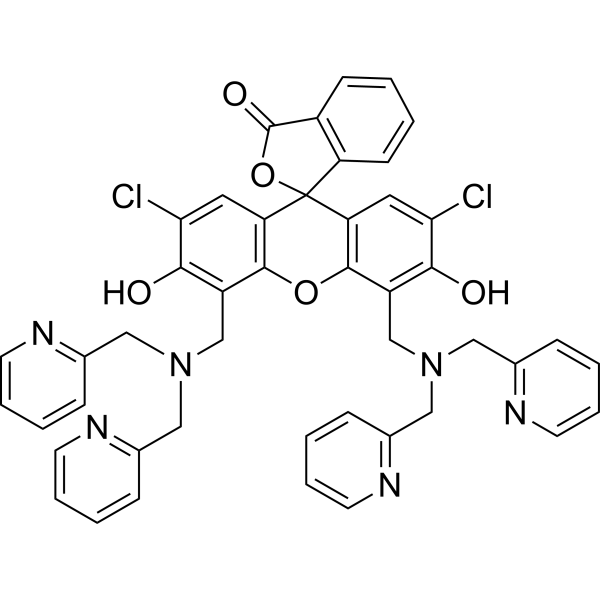
    Zinpyr-1
    4 Publications Verification

    Fluorescent Dye Others
    Zinpyr-1 is a zinc-responsive fluorescent indicator and a membrane-permeable metal-binding probe. Zinpyr-1 forms a complex with Mn 2+ ions and generates a fluorescence turn-on signal. Zinpyr-1 binds to free zinc ions in serum, enabling quantitative detection of free zinc concentration. Zinpyr-1 produces fluorescence signals reflecting the relative zinc concentration in plant root cells, localizes to specific layers of plant root cells, and can be used to support analyses related to plant zinc transporter mutations and homeostasis .
    Zinpyr-1
  • HY-153468

    TEQ103; Sera2

    Sodium Channel TRP Channel Cancer
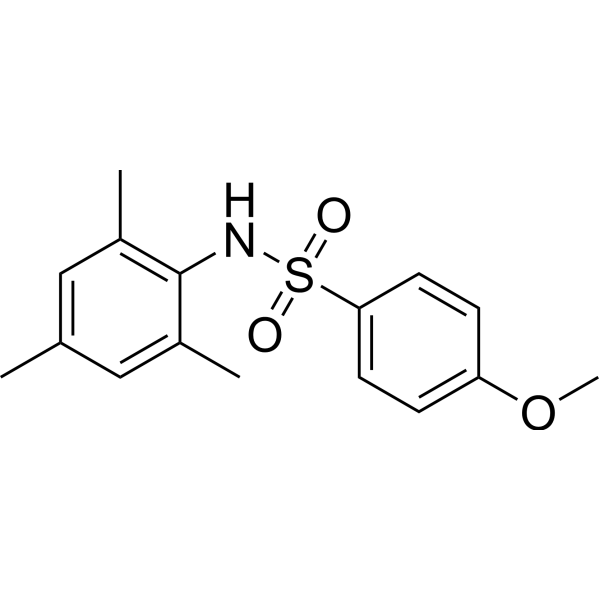
    ErSO-TFPy (TEQ103) is an ERα+ tumor cell inhibitor with low nanomolar cytotoxic activity against ERα+ breast cancer cells. ErSO-TFPy activates the sodium channel TRPM4, causes an imbalance of intracellular calcium and sodium ions. ErSO-TFPy dysregulates calcium homeostasis in ERα+ tumor cells, triggers the anticipatory unfolded protein response, and induces rapid immune cell-independent necrotic cell death. ErSO-TFPy can be used for the research of estrogen receptor alpha positive breast cancer .
    ErSO-TFPy
  • HY-13568

    LRCL 3794

    Cytochrome P450 COX Lipoxygenase PGE synthase Inflammation/Immunology
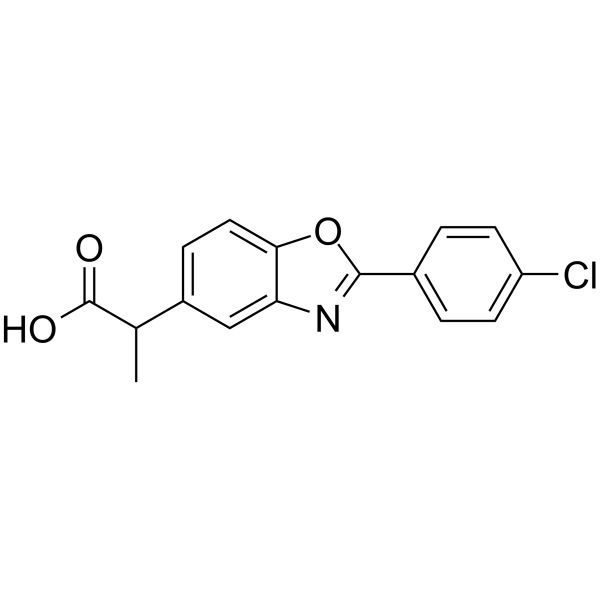
    Benoxaprofen (LRCL 3794) is a nonsteroidal anti-inflammatory agent that blocks the biosynthesis of inflammatory mediators such as leukotrienes and prostaglandins by inhibiting 5-LOX, PGH2 synthase and cytochrome P-450. Benoxaprofen exhibits significant toxicity: it not only alters cellular redox status, uncouples oxidative phosphorylation and disrupts calcium ion homeostasis, but also causes liver injury through the formation of covalent adducts between its active metabolites and hepatic proteins. Benoxaprofen shows strong phototoxicity under ultraviolet irradiation, and induces erythrocyte lysis, mast cell degranulation and histamine release. Benoxaprofen is widely used in studies of urticaria and related phototoxic mechanisms .
    Benoxaprofen
  • HY-19995
    GSK137647A
    1 Publications Verification

    GSK 137647

    Free Fatty Acid Receptor Metabolic Disease
    GSK137647A (GSK 137647) is a potent, selective free fatty acid receptor 4 (FFA4) agonist with pEC50 values of 6.3, 6.2, and 6.1 for human, mouse and rat FFA4, and pEC50 values < 4.5 for all three species for FFA1, FFA2, and FFA3, respectively. GSK137647A has anti-inflammatory activity. GSK137647A induces insulin secretion and inhibits epithelial ion transport, GSK137647A is related to regulation of glucose homeostasis and anti-inflammatory response .
    GSK137647A
  • HY-B1090

    Calcium Channel Histamine Receptor Cardiovascular Disease Endocrinology
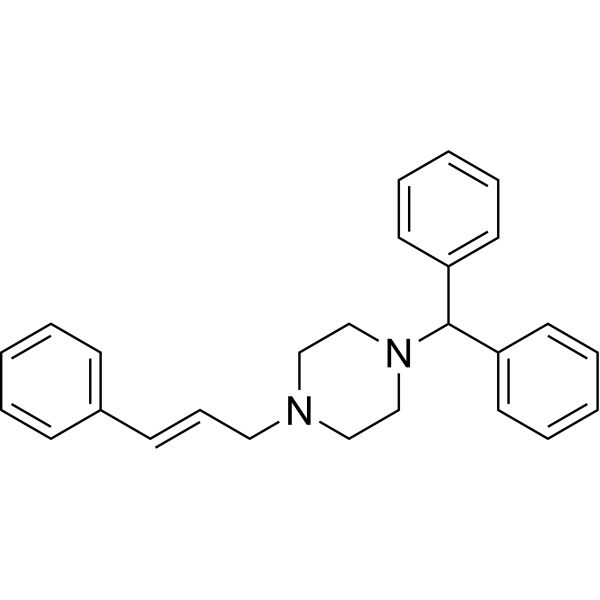
    Cinnarizine is an orally active, effective and selective inhibitor of L-type calcium channel Cav1.3 with an IC50 of 1.5 μM (in vestibular hair cells). Cinnarizine can cross the blood-brain barrier and regulate calcium homeostasis and dopamine neurotransmission. Cinnarizine inhibits the influx of calcium ions into smooth muscle cells by blocking L-type calcium channels, thereby relaxing vascular smooth muscle, improving cerebral circulation and reducing blood viscosity, while antagonizing dopamine receptors. Cinnarizine can be used in the study of vestibular vertigo, Meniere's disease and cerebrovascular diseases .
    Cinnarizine
  • HY-N14780

    (+)-Pochonin D

    HSP Interleukin Related TNF Receptor Enterovirus Cuproptosis Infection Inflammation/Immunology Cancer
    Pochonin D ((+)-Pochonin D) is an inhibitor of heat shock protein 90 (Hsp90) with antiviral and anti-inflammatory activities. Pochonin D inhibits Hsp90, affects the homeostasis, folding and assembly processes of viral proteins, and reduces the replication capacity of viruses. Pochonin D is a copper ion carrier that can induce cuproptosis in triple-negative breast cancer cells by targeting PRDX1. Pochonin D reduces the infiltration of inflammatory cells, decreases the secretion of inflammatory cytokines such as TNF-α and IL-1β, and alleviates inflammatory responses. Pochonin D is a promising candidate for research on human rhinovirus (HRV) infection and cancer .
    Pochonin D
  • HY-174867

    PROTACs Ferroptosis Cancer
    AY-4 (Compound AY-4) is an efficient PROTAC degrader targeting FTH1 (Kd = 3.17 nM). AY-4 effectively upregulates the levels of ferrous (Fe 2+) and ferric (Fe 3+) ions in cells. AY-4 is a potential anticancer candidate compound that regulates iron homeostasis through ferritin degradation and enhances the efficacy of existing drugs. AY-4 can effectively reduce the level of FTH1 in breast cancer cells (Pink: FTH1 ligand AY-2 (HY-174871); Blue: E3 ligand Pomalidomide (HY-10984); Black: Linker, Pomalidomide-PEG3-acid (HY-174872)) .
    AY-4
  • HY-P11226

    Amyloid-β CaMK Apoptosis Neurological Disease
    TI-16 is a peptide that targets β-amyloid (Aβ) protein. TI-16 can cross the blood-brain barrier. TI-16 can increase the concentration of intracellular free CaM, thereby restoring calcium ion homeostasis and reducing Aβ toxicity. TI-16 can reduce the deposition of Aβ in the brain, improve neuronal pathology, inhibit cell apoptosis, and improve cognitive function in mice. TI-16 is commonly used in the study of Alzheimer's disease .
    TI-16
  • HY-106159

    Reactive Oxygen Species (ROS) p38 MAPK JNK PERK Ferroptosis Cancer
    SB-T-101141 is a novel taxane. SB-T-101141 effectively induces a noncanonical ferroptosis to overcome Paclitaxel (HY-B0015) resistance of breast cancer. SB-T-101141 facilitates the production of iron and ferrous ions and ROS. SB-T-101141 stably binds to KHSRP to inhibit the iron-dependent expression of CISD1 related to iron homeostasis. SB-T-101141 synergistically enhances the iron-dependent activation of JNK and PERK pathways via KHSRP. SB-T-101141 suppresses breast tumor growth in MCF-7(PR)/MDA-MB-231(PR) or KHSRP knock-down MCF-7 xenograft mice model .
    SB-T-101141
  • HY-173331

    Chloride Channel Apoptosis Autophagy Cancer
    Antitumor agent-201 (Compound 10) is a chloride transport activator that targets the Golgi apparatus. Its EC50 for promoting the transmembrane transport of chloride ions is 1.53 mol%, and its IC50 against HepG2 cells is 7.13 μM. Antitumor agent-201 exerts its anti-cancer activity by selectively acting on the Golgi apparatus, disrupting the chloride ion homeostasis within it, reducing the expression of key proteins such as GM130 and GRASP55, altering the structure and function of the Golgi apparatus, triggering Autophagy of the Golgi apparatus, and further inducing Apoptosis of cancer cells and arresting cancer cells in the G2/M phase. Antitumor agent-201 can be used in the research field of cancer diseases .
    Antitumor agent-201
  • HY-W778179

    LRCL 3794-13C,d3

    Isotope-Labeled Compounds COX Cytochrome P450 Lipoxygenase PGE synthase Inflammation/Immunology
    Benoxaprofen- 13C, d3 is the 13C-labeled Benoxaprofen (HY-13568). Benoxaprofen (LRCL 3794) is a nonsteroidal anti-inflammatory agent that blocks the biosynthesis of inflammatory mediators such as leukotrienes and prostaglandins by inhibiting 5-LOX, PGH2 synthase and cytochrome P-450. Benoxaprofen exhibits significant toxicity: it not only alters cellular redox status, uncouples oxidative phosphorylation and disrupts calcium ion homeostasis, but also causes liver injury through the formation of covalent adducts between its active metabolites and hepatic proteins. Benoxaprofen shows strong phototoxicity under ultraviolet irradiation, and induces erythrocyte lysis, mast cell degranulation and histamine release. Benoxaprofen is widely used in studies of urticaria and related phototoxic mechanisms .
    Benoxaprofen-13C,d3
  • HY-13568R

    LRCL 3794 (Standard)

    Reference Standards COX Cytochrome P450 Lipoxygenase PGE synthase Inflammation/Immunology
    Benoxaprofen (Standard) is the analytical standard of Benoxaprofen. This product is intended for research and analytical applications. Benoxaprofen (LRCL 3794) is a nonsteroidal anti-inflammatory agent that blocks the biosynthesis of inflammatory mediators such as leukotrienes and prostaglandins by inhibiting 5-LOX, PGH2 synthase and cytochrome P-450. Benoxaprofen exhibits significant toxicity: it not only alters cellular redox status, uncouples oxidative phosphorylation and disrupts calcium ion homeostasis, but also causes liver injury through the formation of covalent adducts between its active metabolites and hepatic proteins. Benoxaprofen shows strong phototoxicity under ultraviolet irradiation, and induces erythrocyte lysis, mast cell degranulation and histamine release. Benoxaprofen is widely used in studies of urticaria and related phototoxic mechanisms .
    Benoxaprofen (Standard)
  • HY-181821

    Parasite Na+/K+ ATPase Infection
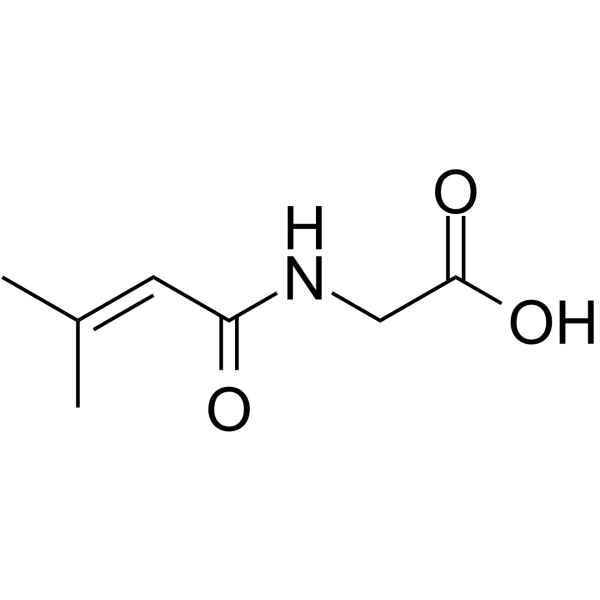
    MMV1581361 is a PfATP4 inhibitor and an orally active, transmission-blocking agent with nanomolar activity against Plasmodium falciparum blood-stage isolates. MMV1581361 disrupts sodium ion (Na +) homeostasis in Plasmodium falciparum. MMV1581361 inhibits male gamete exflagellation, reduces oocyst intensity, and blocks transmission of Plasmodium falciparum. MMV1581361 demonstrates efficacy in the humanized Plasmodium falciparum NOD scid IL2Rγ null mouse model. MMV1581361 can be used for the research of malaria .
    MMV1581361
  • HY-W722245

    Endogenous Metabolite Bacterial Infection
    Pyochelin is a salicylate-based nonribosomal peptide siderophore produced by Pseudomonas aeruginosa. Pyochelin chelates Fe 3+ and transports it back into bacterial cells, providing the iron essential for bacterial survival. Pyochelin can also chelate other metals such as Zn 2+, Co 2+, and Ni 2+, which helps bacteria maintain intracellular metal ion homeostasis by chelating and excreting excess metals in response to toxic metal stress. Pyochelin can be used in studies related to Pseudomonas aeruginosa infection .
    Pyochelin
  • HY-183538

    Necroptosis Reactive Oxygen Species (ROS) Mitochondrial Metabolism Mixed Lineage Kinase RIP kinase Cancer
    Necroptosis inducer 2 is a necroptosis inducer and copper chelator. Necroptosis inducer 2 chelates intracellular free copper ions, disrupts redox homeostasis, elevates ROS levels, disrupts mitochondrial membrane potential, and induces cancer cell necroptosis. Necroptosis inducer 2 upregulates the necroptosis markers p-MLKL and p-RIP3 expression. Necroptosis inducer 2 exhibits anti-tumor activity in mice. Necroptosis inducer 2 can be used for the research of cancer, such as triple-negative breast cancer .
    Necroptosis inducer 2

온라인 문의

Your information is safe with us. * Required Fields.

호칭


Country or Region *

고객명 *


회사명 *

Department *


메일주소 *


상품명 *

Cat. No.


Requested quantity *

전화번호 *


비고

온라인 문의

Inquiry Information

상품명:
Cat. No.:
수량:
MCE Japan Authorized Agent:

