



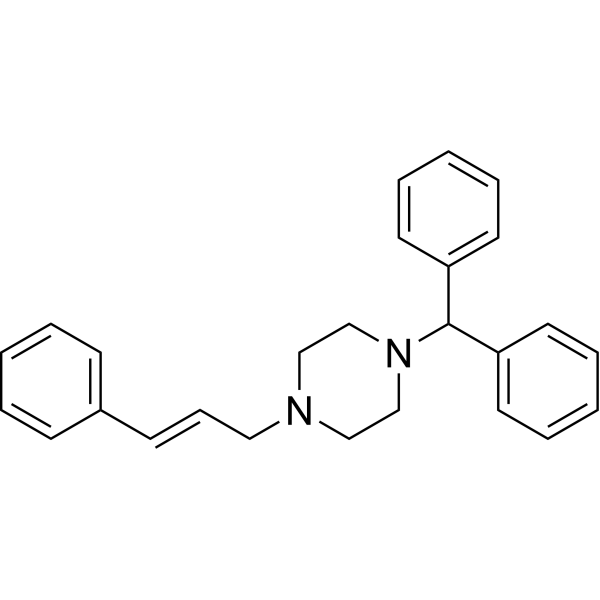
Cinnarizine

Based on 1 Customer Validation
Cinnarizine is an orally active, effective and selective inhibitor of L-type calcium channel Cav1.3 with an IC50 of 1.5 μM (in vestibular hair cells). Cinnarizine can cross the blood-brain barrier and regulate calcium homeostasis and dopamine neurotransmission. Cinnarizine inhibits the influx of calcium ions into smooth muscle cells by blocking L-type calcium channels, thereby relaxing vascular smooth muscle, improving cerebral circulation and reducing blood viscosity, while antagonizing dopamine receptors. Cinnarizine can be used in the study of vestibular vertigo, Meniere's disease and cerebrovascular diseases.
Nos produits utilisent uniquement pour la recherche. Nous ne vendons pas aux patients.
- Pureté : 99.56%
- CAS No.: 298-57-7
- Formule: C26H28N2
- Masse moléculaire:368.51
-
Stockage:Powder -20°C, 3 years , 4°C, 2 years ; In solvent -80°C, 2 years , -20°C, 1 year

To place orders, for customer services and technical support, please contact: MedChemExpress USA
Tel: 609-228-6898 E-mail: [email protected] [email protected]


-
 Activité biologique
-
Chemical Information
-
Solvant et solubilité
- Pureté et documentation
- Références
-
 Help & FAQs


-
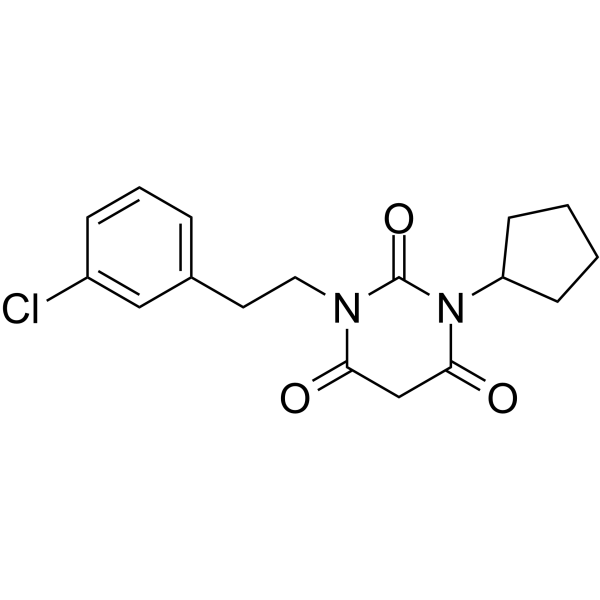
HY-134542
CaV1.3 antagonist-1CaV1.3 Antagonist -

HY-B1090R
Cinnarizine (Standard)Calcium Channel Inhibitor -
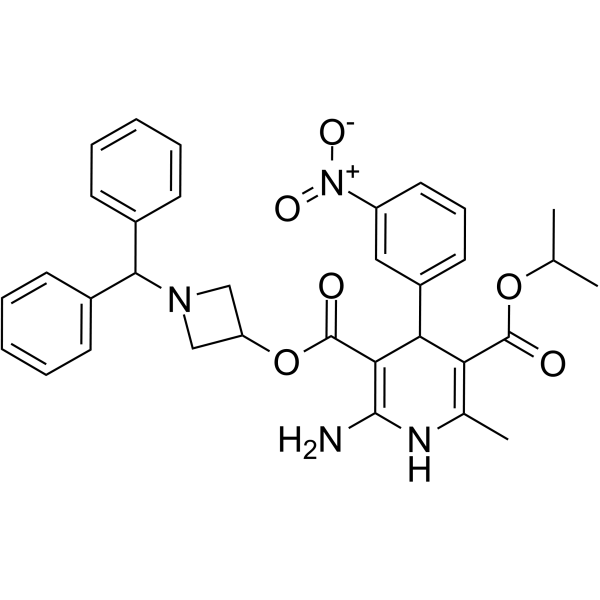
HY-B0023
AzelnidipineCalcium Channel Blocker -
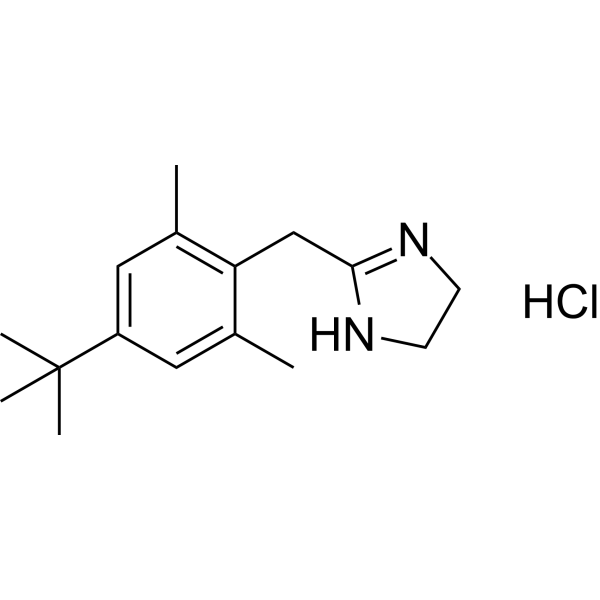
HY-B0475
Xylometazoline hydrochlorideα-adrenergic Receptor Agonist -
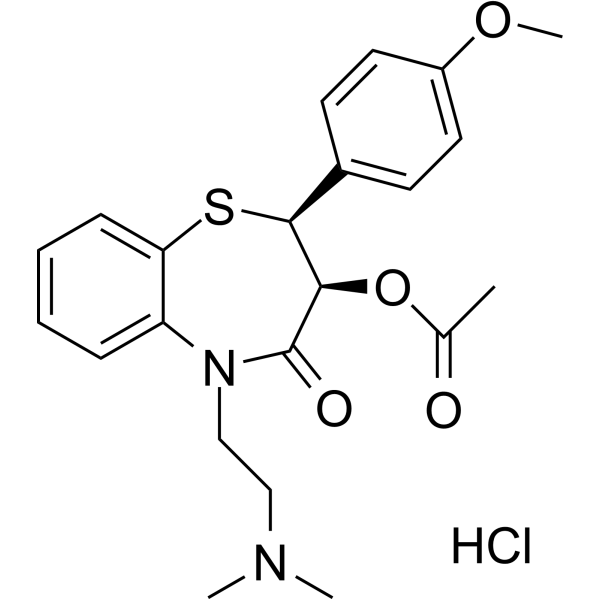
HY-14656
Diltiazem hydrochloride -
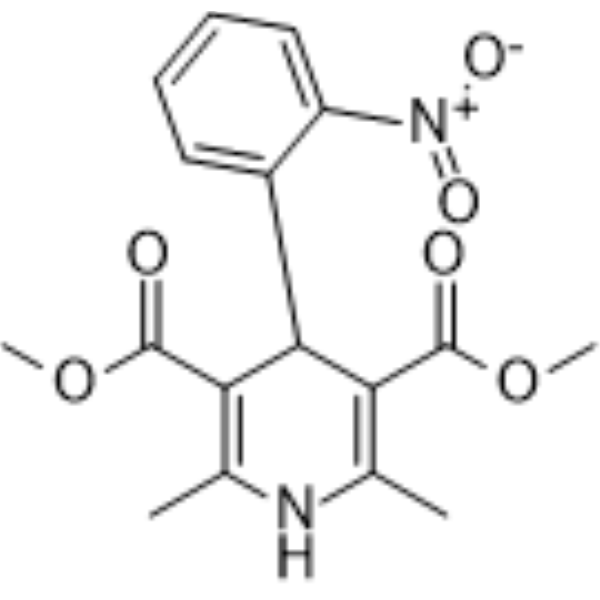
HY-B0284
NifedipineCalcium Channel Antagonist -
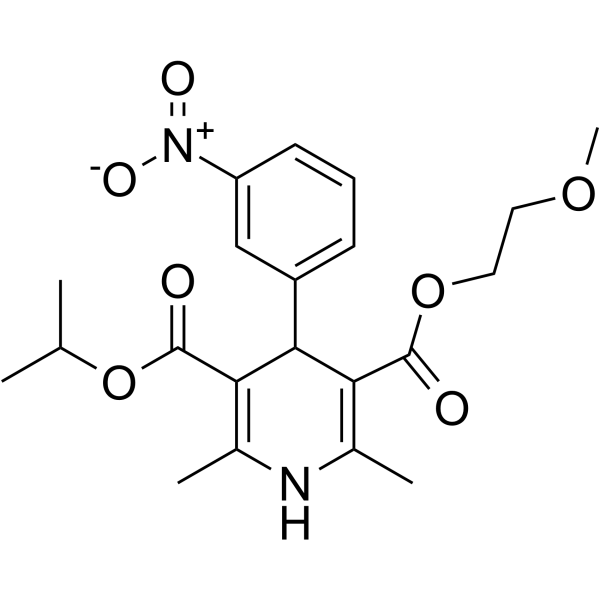
HY-B0265
NimodipineDihydropyridine Calcium Antagonist -
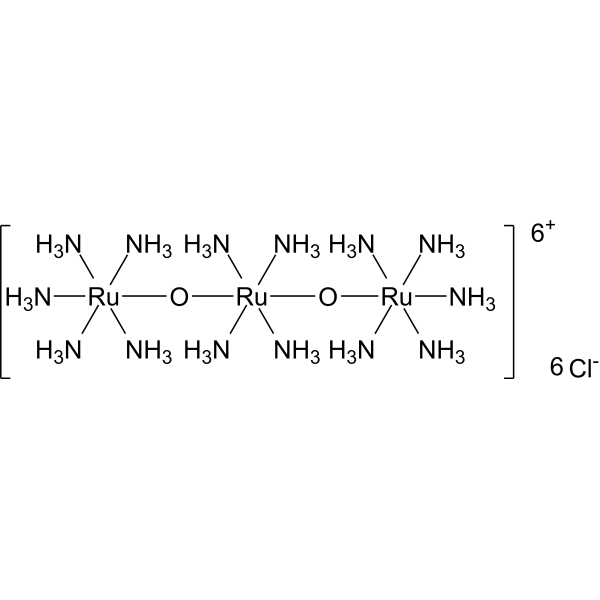
HY-103311
Ruthenium redDye -
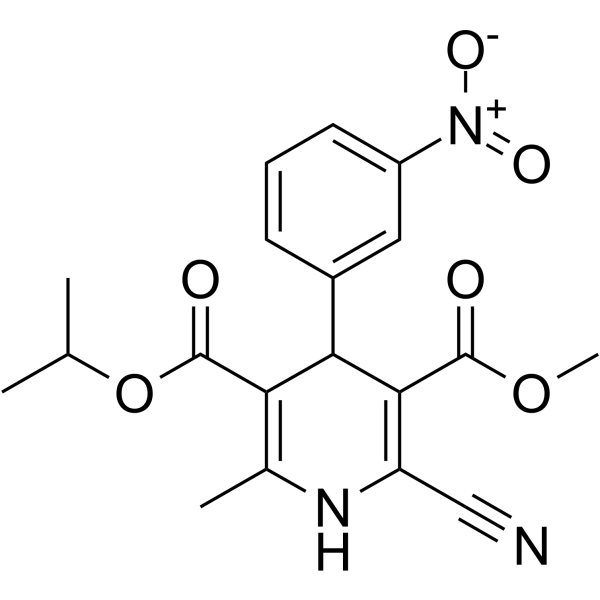
HY-14284
NilvadipineCalcium Channel Antagonist -
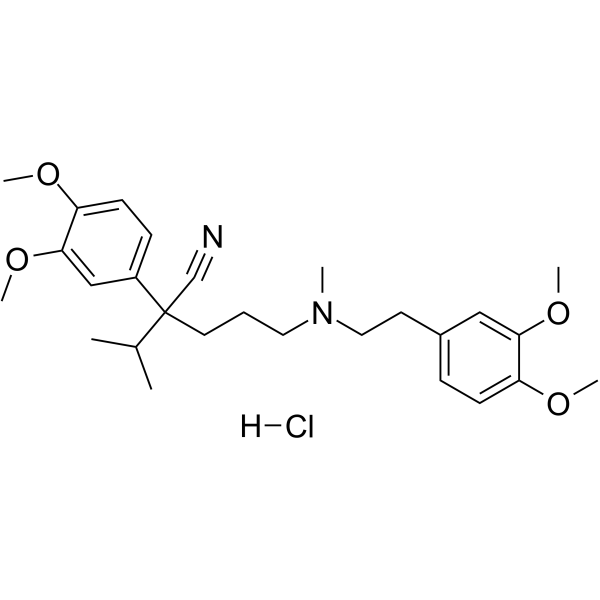
HY-A0064
Verapamil hydrochlorideCalcium Channel Blocker -
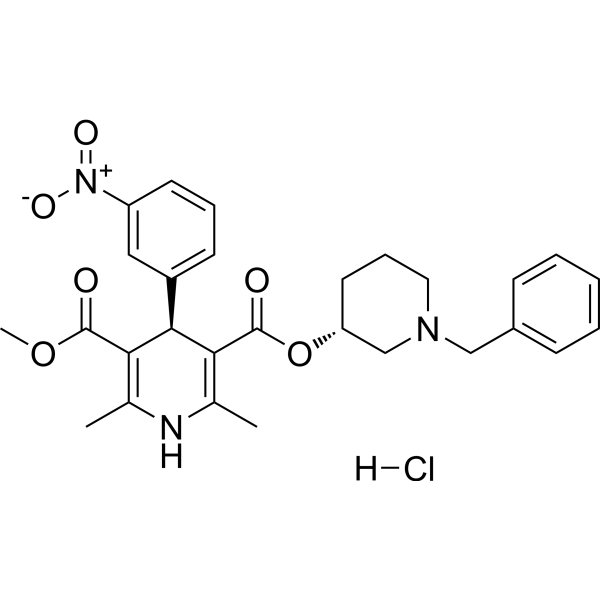
HY-B1448
Benidipine hydrochlorideCalcium Channel Inhibitor -
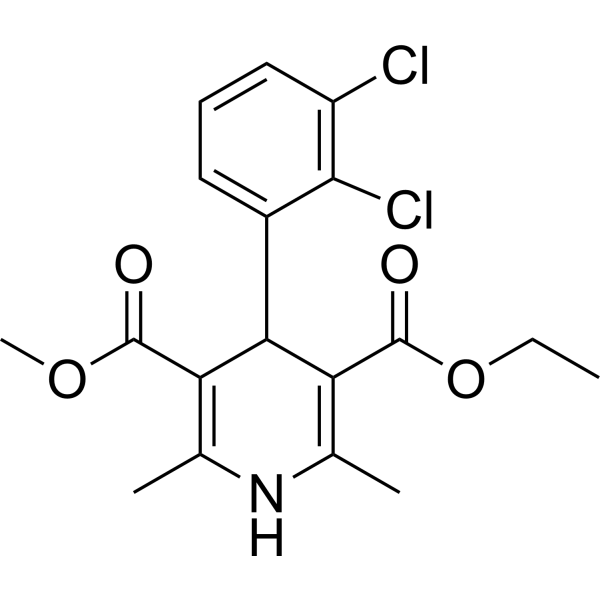
HY-B0309
FelodipineCalcium Channel Antagonist
Voir tous les produits spécifiques à Isoform Calcium Channel
MoreVoir tous les produits spécifiques à Isoform Histamine Receptor
More

Activité biologique
Description
Cellular Effect
|
Cell Line

|
Type | Value | Description | References |
|---|---|---|---|---|
| A549 | IC50 |
9.8 μM
Compound: 28
|
Antiproliferative activity against human A549 cells after 120 hrs by MTT assay
Antiproliferative activity against human A549 cells after 120 hrs by MTT assay
|
[PMID: 16680159] |
| LoVo | IC50 |
10.5 μM
Compound: 28
|
Antiproliferative activity against human LoVo cells after 120 hrs by MTT assay
Antiproliferative activity against human LoVo cells after 120 hrs by MTT assay
|
[PMID: 16680159] |
| MIA PaCa-2 | IC50 |
11.1 μM
Compound: 28
|
Antiproliferative activity against human MIAPaCa2cells after 120 hrs by MTT assay
Antiproliferative activity against human MIAPaCa2cells after 120 hrs by MTT assay
|
[PMID: 16680159] |
| PC-3 | IC50 |
16.1 μM
Compound: 28
|
Antiproliferative activity against human PC3 cells after 120 hrs by MTT assay
Antiproliferative activity against human PC3 cells after 120 hrs by MTT assay
|
[PMID: 16680159] |
| U-87MG ATCC | IC50 |
13.5 μM
Compound: 28
|
Antiproliferative activity against human U87MG cells after 120 hrs by MTT assay
Antiproliferative activity against human U87MG cells after 120 hrs by MTT assay
|
[PMID: 16680159] |
In Vitro
Cinnarizine (1.5 μM; transient treatment) inhibits L-type calcium current (ICa) in a concentration-dependent manner in the voltage-gated calcium current assay of guinea pig vestibular type II hair cells, and the reversibility decreases with increasing concentration[1].
Cinnarizine (0.5 μM, 1 μM; transient treatment) significantly inhibits pressure-induced potassium current in the pressure-sensitive potassium current assay of guinea pig vestibular type II hair cells, and the inhibitory effect can be completely blocked by Charybdotoxin (HY-P0191)[2].
Cinnarizine (1-30 μM; 24 h) stimulates HAC15 cells with angiotensin II, reduces aldosterone concentration and CYP11B2 expression[3].
MedChemExpress (MCE) has not independently confirmed the accuracy of these methods. They are for reference only. .
-
Cell Line:HAC15 cells
-
Concentration:1, 3, 10, and 30 μM
-
Incubation Time:24 h
-
Result:Resulted dose-related reduction in CYP11B2 expression.
In Vivo
Cinnarizine (2-10 mg/kg; intravenous injection; once daily; 30 days) has a dose-dependent pharmacokinetic profile in beagle dogs, causing reversible renal injury at 10 mg/kg, with a significant cumulative effect[5].
MedChemExpress (MCE) has not independently confirmed the accuracy of these methods. They are for reference only.
-
Animal Model:Female C57BL6/129SV parkin knock-out (PK-KO) mice and wild-type (WT) littermates (20-25 g, 14 months old) behavioral and neurochemical model[4]
-
Dosage:10 mg/kg dissolved in drinking water
-
Administration:Oral administration via drinking water, once daily for 6 weeks.
-
Result:Behavioral Changes: Developed PK-KO mice focal alopecia and bucolingual dyskinesia, with motor activity reduced by 30-40% compared to baseline, while WT mice showed no significant behavioral alterations.
Neurochemical Alterations: Increased striatal dopamine (DA) levels by 26% in PK-KO mice, with DA metabolites DOPAC and HVA elevated by 49% and 19%, respectively. Increased glutathione (GSH/GSSG ratio) by 25% in the striatum, indicating compensatory anti-oxidative stress response.
Protein Expression: Decreased tyrosine hydroxylase (TH) protein levels by 15% in PK-KO striatum, while β-tubulin increased by 20%. Pro-apoptotic proteins Bax and Bclx ratio indicated enhanced neuronal apoptosis in PK-KO mice treated with cinnarizine.
Essai clinique
| NCT Number | Sponsor | Condition | Start Date |
Phase
|
|---|---|---|---|---|
| NCT01329991 | Plexxikon| | 2011-05 | PHASE1 |


Chemical Information
-
CAS No. 298-57-7
-
Appearance Solid
-
Masse moléculaire 368.51
-
Formule C26H28N2
-
Color White to off-white
-
SMILES
N1(C(C2=CC=CC=C2)C3=CC=CC=C3)CCN(C/C=C/C4=CC=CC=C4)CC1
-
Livraison
Room temperature in continental US; may vary elsewhere.
-
Stockage
Powder -20°C 3 years 4°C 2 years In solvent -80°C 2 years -20°C 1 year


Solvant et solubilité
In Vitro:
DMSO : 7.14 mg/mL (19.38 mM; Need ultrasonic; Hygroscopic DMSO has a significant impact on the solubility of product, please use newly opened DMSO)
Please refer to the solubility information to select the appropriate solvent. Once prepared, please aliquot and store the solution to prevent product inactivation from repeated freeze-thaw cycles.
Storage method and period of stock solution: -80°C, 2 years; -20°C, 1 year. When stored at -80°C, please use it within 2 years. When stored at -20°C, please use it within 1 year.
Please refer to the solubility information to select the appropriate solvent. Once prepared, please aliquot and store the solution to prevent product inactivation from repeated freeze-thaw cycles.
Storage method and period of stock solution: -80°C, 2 years; -20°C, 1 year. When stored at -80°C, please use it within 2 years. When stored at -20°C, please use it within 1 year.
Concentration (start) × Volume (start) = Concentration (final) × Volume (final)
In Vivo:
Select the appropriate dissolution method based on your experimental animal and administration route.
- For the following dissolution methods, please ensure to first prepare a clear stock solution using an In Vitro approach and then sequentially add co-solvents:
- To ensure reliable experimental results, the clarified stock solution can be appropriately stored based on storage conditions. As for the working solution for In Vivo experiments, it is recommended to prepare freshly and use it on the same day.
- The percentages shown for the solvents indicate their volumetric ratio in the final prepared solution. If precipitation or phase separation occurs during preparation, heat and/or sonication can be used to aid dissolution.
Add each solvent one by one: 10% DMSO 40% PEG300 5% Tween-80 45% Saline
Solubility: ≥ 0.71 mg/mL (1.93 mM); Clear solution
This protocol yields a clear solution of ≥ 0.71 mg/mL (saturation unknown).
Taking 1 mL working solution as an example, add 100 μL DMSO stock solution (7.1 mg/mL) to 400 μL PEG300, and mix evenly; then add 50 μL Tween-80 and mix evenly; then add 450 μL Saline to adjust the volume to 1 mL.
Preparation of Saline: Dissolve 0.9 g sodium chloride in ddH₂O and dilute to 100 mL to obtain a clear Saline solution.
Add each solvent one by one: 10% DMSO 90% (20% SBE-β-CD in Saline)
Solubility: ≥ 0.71 mg/mL (1.93 mM); Clear solution
This protocol yields a clear solution of ≥ 0.71 mg/mL (saturation unknown).
Taking 1 mL working solution as an example, add 100 μL DMSO stock solution (7.1 mg/mL) to 900 μL 20% SBE-β-CD in Saline, and mix evenly.
Preparation of 20% SBE-β-CD in Saline (4°C, storage for one week): 2 g SBE-β-CD powder is dissolved in 10 mL Saline, completely dissolve until clear.
For the following dissolution methods, please prepare the working solution directly:
It is recommended to prepare fresh solutions and use them promptly within a short period of time.
The percentages shown for the solvents indicate their volumetric ratio in the final prepared solution. If precipitation or phase separation occurs during preparation, heat and/or sonication can be used to aid dissolution.
Add each solvent one by one: 50% PEG300 50% Saline
Solubility: 12 mg/mL (32.56 mM); Suspended solution; Need ultrasonic
In Vivo Dissolution Calculator
Please enter the basic information of animal experiments:
-
-
-
-
Recommended: Prepare an additional quantity of animals to account for potential losses during experiments.
Please enter your animal formula composition:
-
%DMSO +
Recommended: Keep the proportion of DMSO in working solution below 2% if your animal is weak.
-
%+
-
+%Tween-80 + +
-
%Saline +
The co-solvents required include: DMSO, . All of co-solvents are available by MedChemExpress (MCE). , Tween 80. All of co-solvents are available by MedChemExpress (MCE).
Working solution concentration: 0.22 mg/mL
Method for preparing stock solution: mg drug dissolved in μL DMSO. Stock solution concentration: mg/mL.
1. Take μL DMSO stock solution;
2. Add μL .
μL , mix evenly;
3. Then add μL Tween 80, mix evenly;
4. Then add μL
Please ensure that the stock solution in the first step is dissolved to a clear state, and add co-solvents in sequence. You can use ultrasonic heating (ultrasonic cleaner, recommended frequency 20-40 kHz), vortexing, etc. to assist dissolution.


Pureté et documentation
-
Fiche technique (277 KB)
-
SDS (540 KB)
- English - EN (540 KB)
- Français - FR (540 KB)
- Deutsch - DE (540 KB)
- Norwegian - NO (540 KB)
- Español - ES (540 KB)
- Swedish - SV (540 KB)
- Italian - IT (540 KB)
- Korean - KR (540 KB)
- Portuguese - PT (540 KB)
-
Instruction de manipulation (2659 KB)
Références
[1]. Arab SF, et al. Inhibition of voltage-gated calcium currents in type II vestibular hair cells by cinnarizine. Naunyn Schmiedebergs Arch Pharmacol. 2004 Jun;369(6):570-5. [Content Brief]
[2]. Düwel P, et al. Effects of cinnarizine on calcium and pressure-dependent potassium currents in guinea pig vestibular hair cells. Naunyn Schmiedebergs Arch Pharmacol. 2005 Jun;371(6):441-8. [Content Brief]
[3]. Ng E, et al. Evaluation of Aldosterone Suppression by Cinnarizine, a Putative Cav1.3 Inhibitor. J Clin Endocrinol Metab. 2025 Feb 10:dgaf081. [Content Brief]
[4]. Serrano A, et al. Effects of cinnarizine, a calcium antagonist that produces human parkinsonism, in parkin knock out mice. Neuropharmacology. 2005 Aug;49(2):208-19. [Content Brief]
[5]. Li BQ, et al. Effect of route of administration on the pharmacokinetics and toxicokinetics of cinnarizine in dogs. Eur J Pharm Sci. 2010 Jun 14;40(3):197-201. [Content Brief]


Complete Stock Solution Preparation Table
Please refer to the solubility information to select the appropriate solvent. Once prepared, please aliquot and store the solution to prevent product inactivation from repeated freeze-thaw cycles.
Storage method and period of stock solution: -80°C, 2 years; -20°C, 1 year. When stored at -80°C, please use it within 2 years. When stored at -20°C, please use it within 1 year.
| Optional Solvent | Concentration Solvent Mass | 1 mg | 5 mg | 10 mg | 25 mg |
|---|---|---|---|---|---|
| DMSO | 1 mM | 2.7136 mL | 13.5682 mL | 27.1363 mL | 67.8408 mL |
| 5 mM | 0.5427 mL | 2.7136 mL | 5.4273 mL | 13.5682 mL | |
| 10 mM | 0.2714 mL | 1.3568 mL | 2.7136 mL | 6.7841 mL | |
| 15 mM | 0.1809 mL | 0.9045 mL | 1.8091 mL | 4.5227 mL |


Cinnarizine Related Classifications
HY-B1090 Related Classifications
 Powered by Bioz