1. Search Result
Search Result
Results for "

trek1

" in MedChemExpress (MCE) Product Catalog:

39

Inhibitors & Agonists

3

Peptides

2

Natural
Products

2

Isotope-Labeled Compounds

3

Oligonucleotides

Cat. No. Product Name Target Research Areas Chemical Structure
  • HY-103371
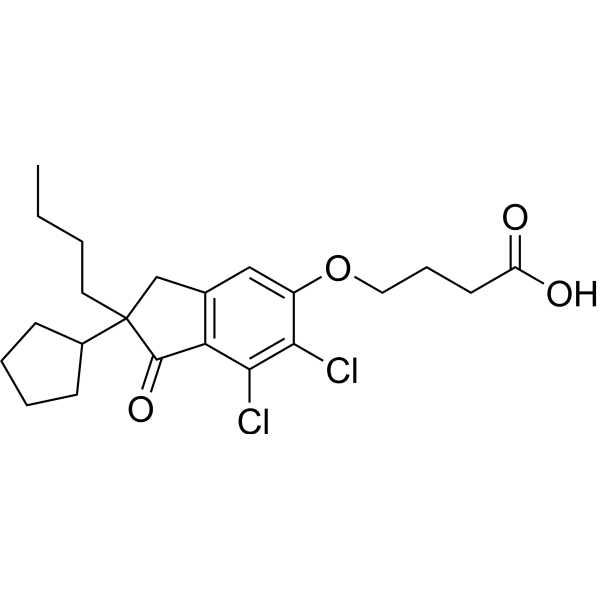
    DCPIB
    Maximum Cited Publications
    11 Publications Verification

    Chloride Channel Potassium Channel Neurological Disease
    DCPIB is a selective, reversible and potent inhibitor of volume-regulated anion channels (VRAC). DCPIB voltage-dependently activates potassium channels TREK1 and TRAAK, and inhibits TRESK, TASK1 and TASK3 (IC50s: 0.14, 0.95, 50.72 μM, respectively). DCPIB is also a selective blocker of swelling-induced chloride current (ICl,swell), with an IC50 of 4.1 μM. DCPIB is a useful tool for investigating structure-function studies of K2P channels [1] .
    DCPIB
  • HY-B0563
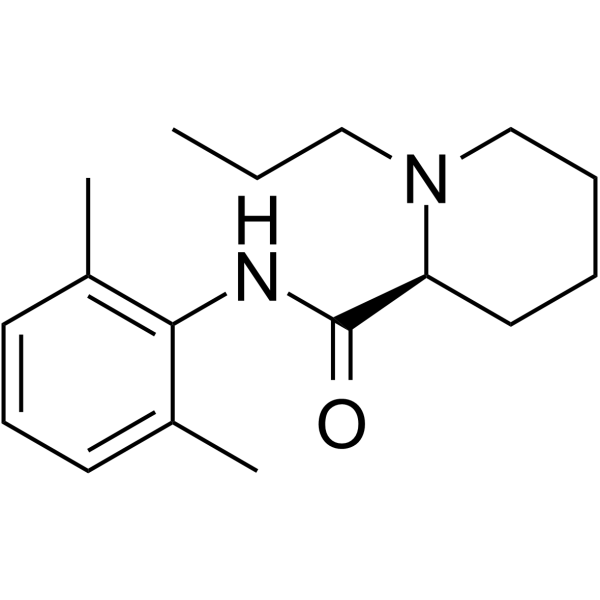
    Ropivacaine
    5+ Cited Publications

    Sodium Channel Potassium Channel Cardiovascular Disease Neurological Disease Cancer
    Ropivacain is a potent sodium channel blocker. Ropivacain blocks impulse conduction via reversible inhibition of sodium ion influx in nerve fibrese [1] . Ropivacaine is also an inhibitor of K2P (two-pore domain potassium channel) TREK-1 with an IC50 of 402.7 μM in COS-7 cell's membrane . Ropivacaine is used for the research of neuropathic pain management [1].
    Ropivacaine
  • HY-B0563B
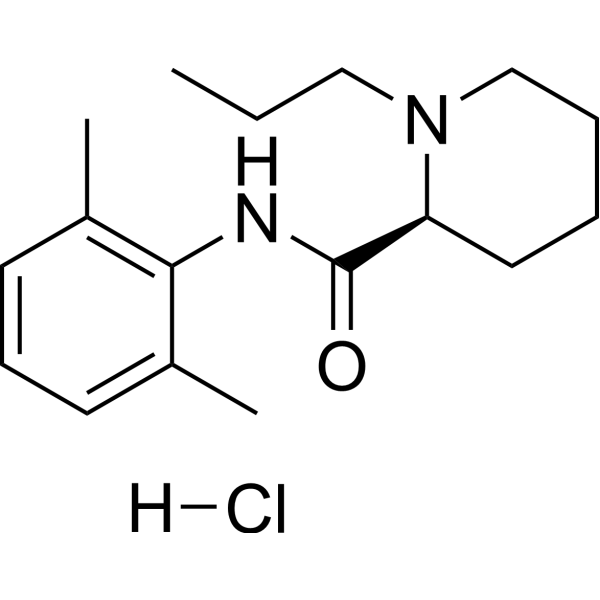
    Ropivacaine hydrochloride
    5+ Cited Publications

    Sodium Channel Potassium Channel Cardiovascular Disease Neurological Disease Cancer
    Ropivacaine hydrochloride is a potent sodium channel blocker and blocks impulse conduction via reversible inhibition of sodium ion influx in nerve fibrese [1] . Ropivacaine is also an inhibitor of K2P (two-pore domain potassium channel) TREK-1 with an IC50 of 402.7 μM in COS-7 cell's membrane . Ropivacaine is widely used for neuropathic pain management in vivo [1].
    Ropivacaine hydrochloride
  • HY-104005
    ML335
    2 Publications Verification

    Potassium Channel Neurological Disease
    ML335 is a selective activator of both TREK-1 and TREK-2.
    ML335
  • HY-B1500
    2,2,2-Trichloroethanol
    2 Publications Verification

    Potassium Channel Endogenous Metabolite Neurological Disease
    2,2,2-Trichloroethanol, the active form of Chloral hydrate, is an agonist for the nonclassical K2P channels TREK-1 (KCNK2) and TRAAK (KCNK4) [1].
    2,2,2-Trichloroethanol
  • HY-P3581

    Potassium Channel Neurological Disease
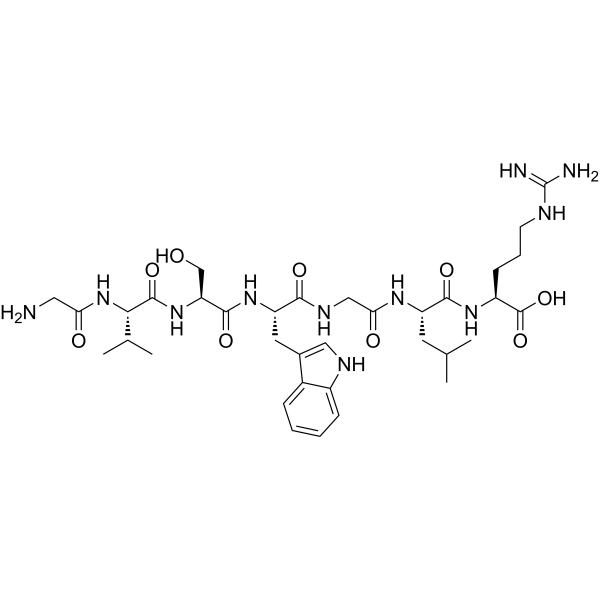
    PE 22-28 is a TREK-1 inhibitor with IC50 value of 0.12 nM. PE 22-28 also is a 7 amino-acid peptide that is used as a core sequence for preparing analogs by chemical modifications and also by substitution of amino-acids. PE 22-28 can be used for the research of depression [1].
    PE 22-28
  • HY-P1422
    Spadin
    1 Publications Verification

    Potassium Channel 5-HT Receptor Neurological Disease
    Spadin, a natural peptide derived from a propeptide released in blood, is a potent TREK-1 channel blocker with IC50 value of 10 nM. Spadin enhances dorsal raphe nucleus 5-HT neurotransmission in mice and induces hippocampal CREB activation and neurogenesis. Spadin can be used for antidepressant research [1] .
    Spadin
  • HY-B0563A

    Sodium Channel Potassium Channel Cardiovascular Disease Neurological Disease Cancer
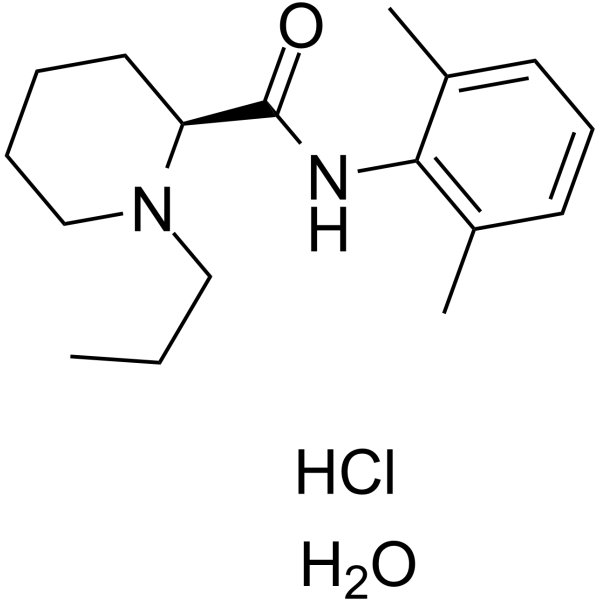
    Ropivacaine hydrochloride monohydrate is a potent sodium channel blocker and blocks impulse conduction via reversible inhibition of sodium ion influx in nerve fibrese [1] . Ropivacaine is also an inhibitor of K2P (two-pore domain potassium channel) TREK-1 with an IC50 of 402.7 μM in COS-7 cell's membrane . Ropivacaine is widely used for regional anesthesia and neuropathic pain management in vivo [1].
    Ropivacaine hydrochloride monohydrate
  • HY-104027
    ML402
    1 Publications Verification

    Potassium Channel Neurological Disease
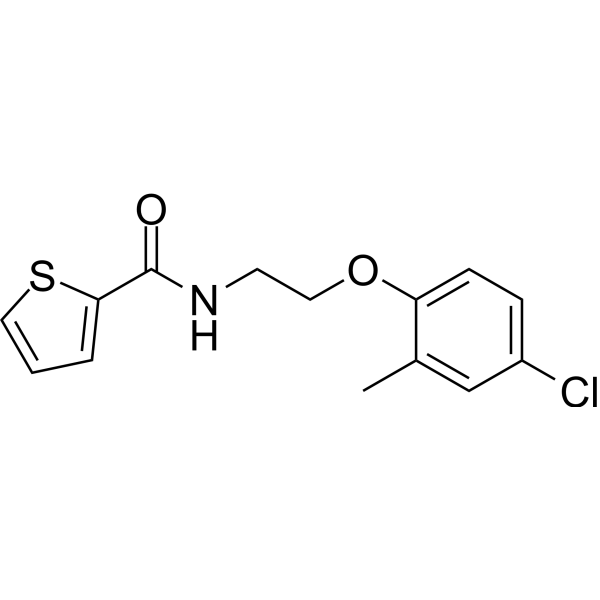
    ML402, a thiophene-carboxamide, is a selective K2P2.1(TREK-1) and K2P10.1(TREK-2) activator. ML402 is inactive against K2P4.1(TRAAK) [1].
    ML402
  • HY-B0563S1

    Isotope-Labeled Compounds Sodium Channel Potassium Channel Cardiovascular Disease Neurological Disease
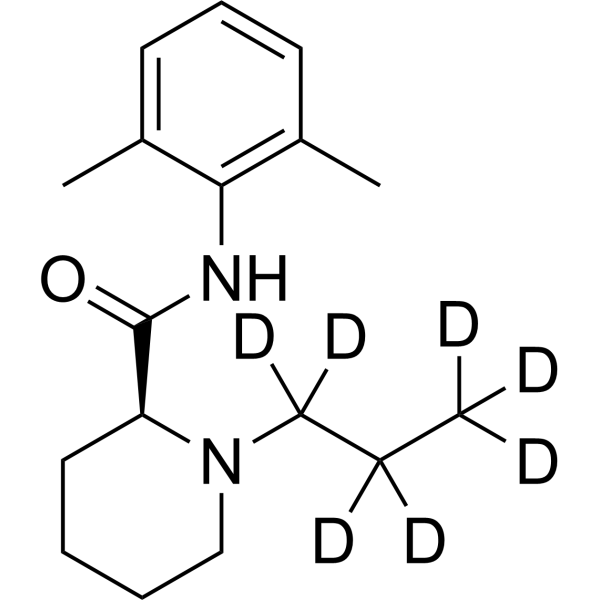
    Ropivacaine-d7 is deuterium labeled Ropivacaine. Ropivacain is a potent?sodium channel?blocker. Ropivacain blocks impulse conduction via reversible inhibition of?sodium ion influx?in nerve fibrese [1] . Ropivacaine is also an inhibitor of K2P (two-pore domain potassium channel) TREK-1 with an IC50 of 402.7 μM in COS-7 cell's membrane . Ropivacaine is used for the research of neuropathic pain?management [1].
    Ropivacaine-d7
  • HY-108596

    Potassium Channel Inflammation/Immunology
    BL-1249 is a nonsteroidal anti-inflammatory agent (NSAID) and a potassium channel activator. BL-1249 potently activates K2P2.1 (TREK-1) and K2P10.1 (TREK-2) with EC50 values of 5.5 μM and 8.0 μM, respectively. BL-1249 extracellular application activates all TREK subfamily members but has no effect on other K2P subfamilies. BL-1249 exhibits more selective for the bladder (EC50 of 1.26 μM) than vascular tissue (EC50 of 21.0 μM) [1] .
    BL-1249
  • HY-W013712

    Potassium Channel Neurological Disease
    GI-530159 is a selective opener of TREK1 and TREK2 potassium channels. GI-530159 displays selectivity for TREK1/2 over TRAAK, TASK3 and other potassium channels, with an EC50 of 0.76 μM for TREK1. GI-530159 reduces rat dorsal root ganglion neuron excitability and shows potential analgesic effect [1].
    GI-530159
  • HY-137563

    Potassium Channel Neurological Disease
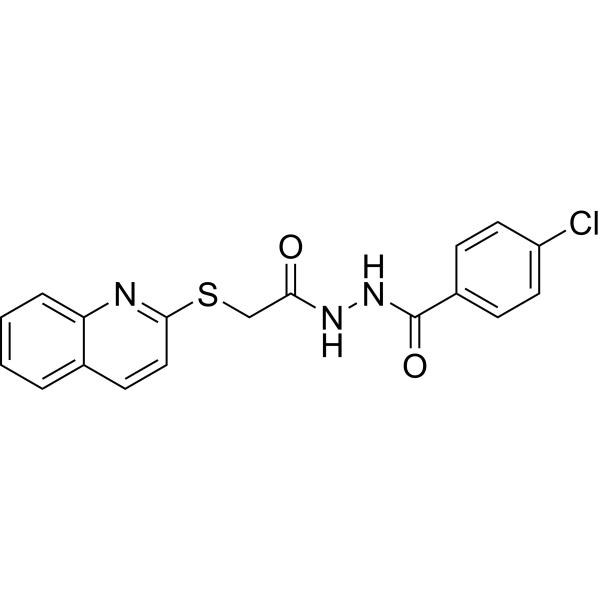
    A2793 is an efficient dual TWIK-related acid-sensitive K + channel (TASK)-1/TRESK inhibitor, with an IC50 of 6.8 μM for mTRESK. A2764 is more selective for TRESK, and it only moderately influences TREK-1 and TALK-1 [1].
    A2793
  • HY-172182

    VU6011887

    Potassium Channel Neurological Disease
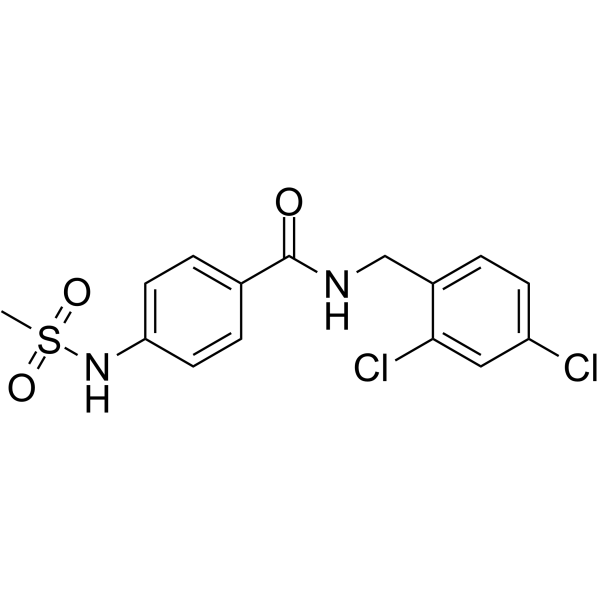
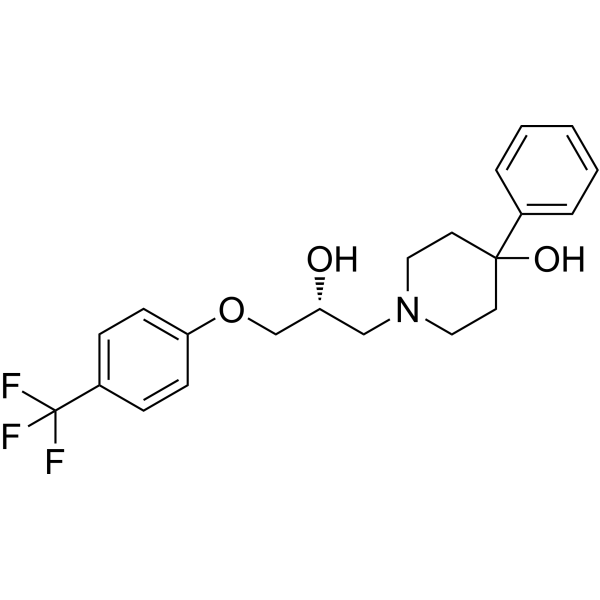
    ONO-2920632 is an orally active and central nervous system (CNS)-penetrant TREK activator, with EC50 values of 0.3 µM and 2.8 μM for TREK-1 and TREK-2, respectively. ONO-2920632 exhibits selectivity for other K2P channels (>91-fold selective versus TASK1, TASK2, TASK3, TRAAK, and TWIK2; 31-fold selective versus TRESK). ONO-2920632 possesses analgesic effects and can be used in research on pain, migraine, and neurological disorders.
    ONO-2920632
  • HY-P1422A
    Spadin TFA
    1 Publications Verification

    Potassium Channel 5-HT Receptor Neurological Disease
    Spadin TFA, a natural peptide derived from a propeptide released in blood, is a potent TREK-1 channel blocker with an IC50 value of 10 nM. Spadin TFA enhances dorsal raphe nucleus 5-HT neurotransmission in mice and induces hippocampal CREB activation and neurogenesis. Spadin TFA can be used for antidepressant research [1] .
    Spadin TFA
  • HY-135809

    Potassium Channel Neurological Disease
    A2764 dihydrochloride is a highly selective inhibitor of TRESK (TWIK-related spinal cord K + channel, K2P18.1), which has moderate inhibitory effects on TREK-1 and TALK-1. A2764 dihydrochloride is more sensitive to the activated mTRESK channels (IC50=6.8 μM) than the basal current. A2764 dihydrochloride can lead to cell depolarization and increased excitability in native cells, it has the potential for probing the role of TRESK channel in migraine and nociception [1].
    A2764 dihydrochloride
  • HY-179004

    VU6022856

    Potassium Channel Neurological Disease
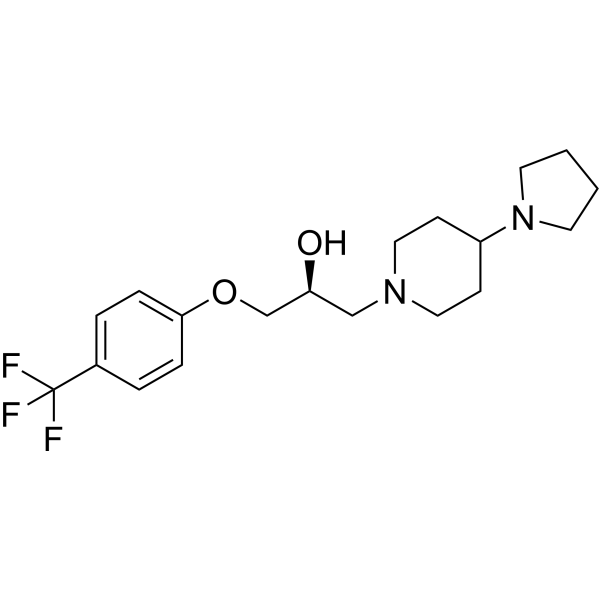
    ONO-9517601 is a potent, orally active, selective and CNS penetrant dual TREK-1/TREK-2 inhibitor (TREK-1 IC50= 0.067 μM, TREK-2 IC50= 0.23 μM). ONO-9517601 displays robust efficacy in an MK-801 (HY-15084B) challenge rat novel object recognition (NOR) paradigm. ONO-9517601 can be used for research on neurological and cognitive disorders [1].
    ONO-9517601
  • HY-134559

    Potassium Channel Neurological Disease
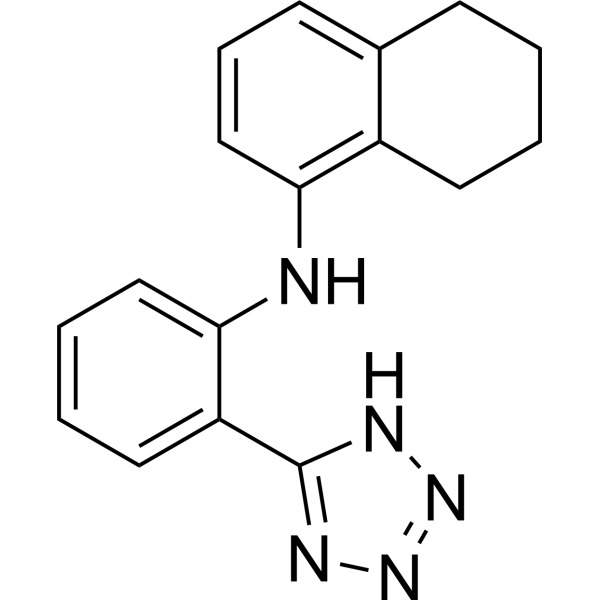
    TKIM is a TREK-1 channel inhibitor with an IC50 of 2.96 μM. TKIM binds to the pocket of the intermediate (IM) state of TREK-1 [1].
    TKIM
  • HY-149536

    Potassium Channel Neurological Disease
    TWIK-1/TREK-1-IN-1 (compound 2a) is an inhibitor of the TWIK-related potassium channel (Potassium Channel) TREK-1. TREK-1 contains a two-pore domain potassium (K2p) channel that dimerizes into TREK-1 homodimer and TWIK-1/TREK-1 heterodimer, and is an important antidepressant target. TWIK-1/TREK-1-IN-3 targets TREK-1 homodimer and TWIK-1/TREK-1 heterodimer with IC50s of 9.36 μM and 14.6 μM, respectively, and has antidepressant-like effects [1].
    TWIK-1/TREK-1-IN-1
  • HY-149538

    Potassium Channel Neurological Disease
    TWIK-1/TREK-1-IN-3 (compound 2h) is an inhibitor of TWIK-related potassium channel (Potassium Channel) TREK-1. TREK-1 contains a two-pore domain potassium (K2p) channel that dimerizes into TREK-1 homodimer and TWIK-1/TREK-1 heterodimer, and is an important antidepressant target. TWIK-1/TREK-1-IN-3 targets TREK-1 homodimer and TWIK-1/TREK-1 heterodimer with IC50s of 9.74 μM and 16.5 μM, respectively, and has antidepressant-like effects [1].
    TWIK-1/TREK-1-IN-3
  • HY-179005

    VU6024391

    Potassium Channel Neurological Disease
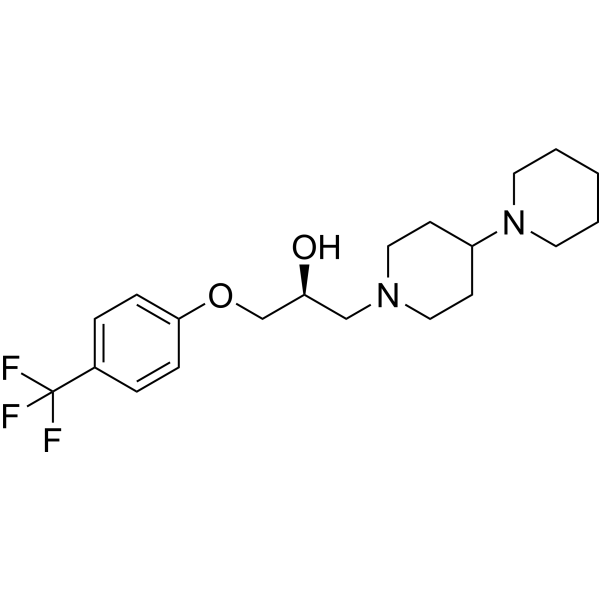
    ONO-7927846 is a potent, orally active, selective and CNS penetrant dual TREK-1/TREK-2 inhibitor (TREK-1 IC50= 0.11 μM, TREK-2 IC50= 0.29 μM). ONO-7927846 displays robust efficacy in an MK-801 (HY-15084B) challenge rat novel object recognition (NOR) paradigm. ONO-7927846 can be used for research on neurological and cognitive disorders [1].
    ONO-7927846
  • HY-149537

    Potassium Channel Neurological Disease
    TWIK-1/TREK-1-IN-2 (Compound 2g) is a TWIK-1/TREK-1 inhibitor. TWIK-1/TREK-1-IN-2 inhibits TREK-1 homodimer and TWIK-1/TREK-1 heterodimer with IC50s of 10.13 μM and 15.5 μM. TWIK-1/TREK-1-IN-2 is an antidepressant [1].
    TWIK-1/TREK-1-IN-2
  • HY-160789

    Potassium Channel Neurological Disease Inflammation/Immunology
    C3001a is a selective TREK-1 and TREK-2 channel activator with EC50 values of 12.81 μM and 11.31 μM, respectively. C3001a does not affect other two-pore domain K + (K2P) channels. C3001a binds to the cryptic binding site formed by P1 and TM4 in TREK-1. C3001a can be used for the study of pain and pancreatitis [1].
    C3001a
  • HY-118628A

    (E)-N-(p-Amylcinnamoyl) anthranilic acid

    Potassium Channel Cardiovascular Disease
    BML264 ((E)-N-(p-amylcinnamoyl) anthranilic acid) is an agonist for TREK-1. BML264 can be used to study diseases associated with TASK1 dysfunction [1].
    BML264
  • HY-178233

    Potassium Channel Neurological Disease
    CAT335 is a TREK activator. CAT335 selectively and irreversibly activates TREK-1 CG∗. CAT335 can be used in the research of pain sensation, sleep, and intraocular pressure [1].
    CAT335
  • HY-116704

    Potassium Channel Neurological Disease
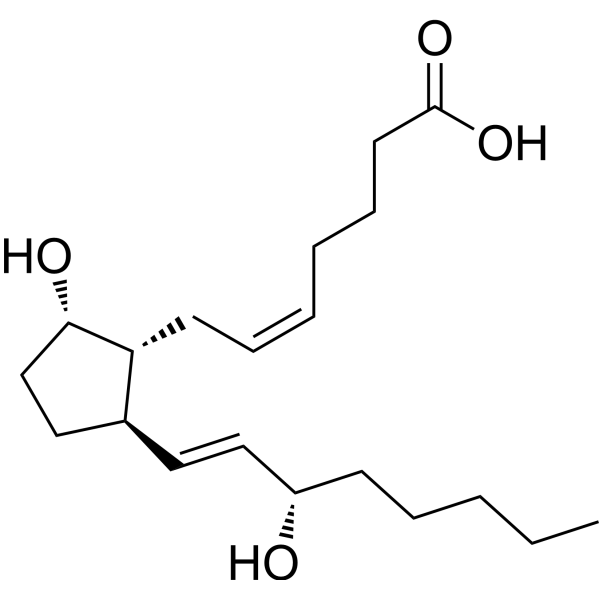
    11-Deoxyprostaglandin F2α is an activator for TREK-2 channels with EC50 of 0.294 μM. 11-Deoxyprostaglandin F2α inhibits the K2P channel TREK-1 [1].
    11-Deoxyprostaglandin F2α
  • HY-B1500R

    Reference Standards Potassium Channel Endogenous Metabolite Neurological Disease
    2,2,2-Trichloroethanol (Standard) is the analytical standard of 2,2,2-Trichloroethanol. This product is intended for research and analytical applications. 2,2,2-Trichloroethanol, the active form of Chloral hydrate, is an agonist for the nonclassical K2P channels TREK-1 (KCNK2) and TRAAK (KCNK4) [1].
    2,2,2-Trichloroethanol (Standard)
  • HY-B0563R

    Reference Standards Sodium Channel Potassium Channel Cardiovascular Disease Neurological Disease Cancer
    Ropivacaine (Standard) is the analytical standard of Ropivacaine. This product is intended for research and analytical applications. Ropivacain is a potent sodium channel blocker. Ropivacain blocks impulse conduction via reversible inhibition of sodium ion influx in nerve fibrese [1] . Ropivacaine is also an inhibitor of K2P (two-pore domain potassium channel) TREK-1 with an IC50 of 402.7 μM in COS-7 cell's membrane . Ropivacaine is used for the research of neuropathic pain management [1].
    Ropivacaine (Standard)
  • HY-B0563AR

    Reference Standards Sodium Channel Potassium Channel Cardiovascular Disease Neurological Disease Cancer
    Ropivacaine (hydrochloride monohydrate) (Standard) is the analytical standard of Ropivacaine (hydrochloride monohydrate). This product is intended for research and analytical applications. Ropivacaine hydrochloride monohydrate is a potent sodium channel blocker and blocks impulse conduction via reversible inhibition of sodium ion influx in nerve fibrese [1] . Ropivacaine is also an inhibitor of K2P (two-pore domain potassium channel) TREK-1 with an IC50 of 402.7 μM in COS-7 cell's membrane . Ropivacaine is widely used for regional anesthesia and neuropathic pain management in vivo [1].
    Ropivacaine hydrochloride monohydrate (Standard)
  • HY-B0563BS

    Isotope-Labeled Compounds Potassium Channel Sodium Channel Neurological Disease
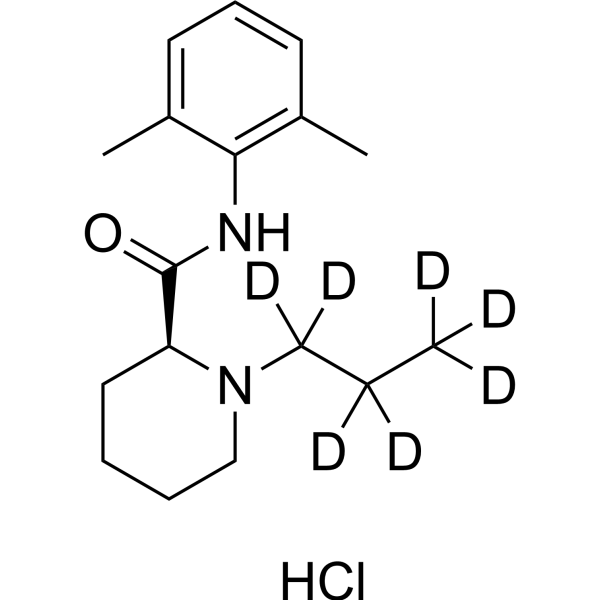
    Ropivacaine-d7 hydrochloride is a deuterium labeled Ropivacaine (hydrochloride) (HY-B0563B) [1]. Ropivacaine hydrochloride is a potent sodium channel blocker and blocks impulse conduction via reversible inhibition of sodium ion influx in nerve fibrese . Ropivacaine is also an inhibitor of K2P (two-pore domain potassium channel) TREK-1 with an IC50 of 402.7 μM in COS-7 cell's membrane . Ropivacaine is widely used for neuropathic pain management in vivo .
    Ropivacaine-d7 hydrochloride
  • HY-172455

    Potassium Channel Neurological Disease
    TREK inhibitor-3 (Cpd8l) is a selective and BBB-permeable TREK-1 inhibitor with an IC50 of 0.81 μM. TREK inhibitor-3 has neuroprotective effects, which can significantly reduce the death of cortical neurons induced by oxygen-glucose deprivation/reoxygenation (OGD/R) and improve brain injury in mice models of middle cerebral artery occlusion/reperfusion (MCAO/R). TREK inhibitor-3 can be used in the research of ischemic stroke [1].
    TREK inhibitor-3
  • HY-104005R

    Reference Standards Potassium Channel Neurological Disease
    ML335 (Standard) is the analytical standard of ML335 (HY-104005). This product is intended for research and analytical applications. ML335 is a selective activator of both TREK-1 and TREK-2.
    ML335 (Standard)
  • HY-RS07158

    Small Interfering RNA (siRNA) Others

    KCNK2 Human Pre-designed siRNA Set A contains three designed siRNAs for KCNK2 gene (Human), as well as a negative control, a positive control, and a FAM-labeled negative control.

    KCNK2 Human Pre-designed siRNA Set A
    KCNK2 Human Pre-designed siRNA Set A
  • HY-RS24544

    Small Interfering RNA (siRNA) Others

    Kcnk2 Rat Pre-designed siRNA Set A contains three designed siRNAs for Kcnk2 gene (Rat), as well as a negative control, a positive control, and a FAM-labeled negative control.

    Kcnk2 Rat Pre-designed siRNA Set A
    Kcnk2 Rat Pre-designed siRNA Set A
  • HY-B0563C
    Ropivacaine mesylate
    5+ Cited Publications

    Sodium Channel Potassium Channel Cardiovascular Disease Neurological Disease Cancer
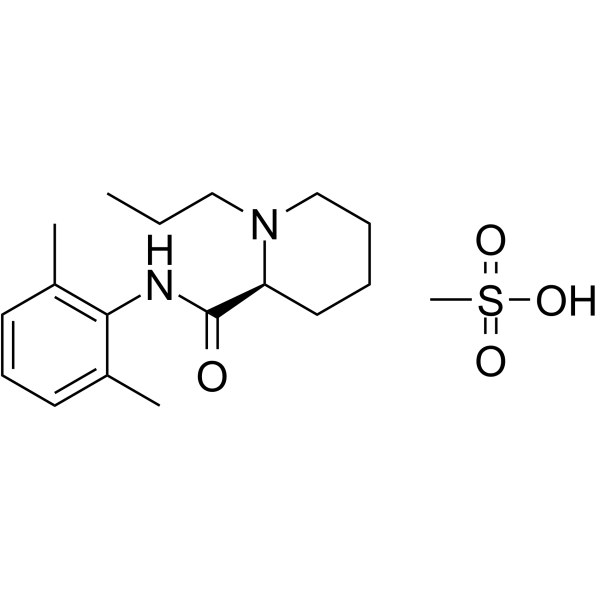
    Ropivacaine mesylate is a long-acting amide local anaesthetic agent for a spinal block and effectively blocks neuropathic pain. Ropivacaine blocks impulse conduction via reversible inhibition of?sodium ion influx?in nerve fibressup>[1] . Ropivacaine is also an inhibitor of K2P (two-pore domain potassium channel)?TREK-1?with an IC50?of 402.7 μM in COS-7 cell's membrane .
    Ropivacaine mesylate
  • HY-103371R

    Reference Standards Chloride Channel Potassium Channel Neurological Disease
    DCPIB (Standard) is the analytical standard of DCPIB (HY-103371). This product is intended for research and analytical applications. DCPIB is a selective, reversible and potent inhibitor of volume-regulated anion channels (VRAC). DCPIB voltage-dependently activates potassium channels TREK1 and TRAAK, and inhibits TRESK, TASK1 and TASK3 (IC50s: 0.14, 0.95, 50.72 μM, respectively). DCPIB is also a selective blocker of swelling-induced chloride current (ICl,swell), with an IC50 of 4.1 μM. DCPIB is a useful tool for investigating structure-function studies of K2P channels [1] .
    DCPIB (Standard)
  • HY-108596R

    Reference Standards Potassium Channel Inflammation/Immunology
    BL-1249 (Standard) is the analytical standard of BL-1249 (HY-108596). This product is intended for research and analytical applications. BL-1249 is a nonsteroidal anti-inflammatory agent (NSAID) and a potassium channel activator. BL-1249 potently activates K2P2.1 (TREK-1) and K2P10.1 (TREK-2) with EC50 values of 5.5 μM and 8.0 μM, respectively. BL-1249 extracellular application activates all TREK subfamily members but has no effect on other K2P subfamilies. BL-1249 exhibits more selective for the bladder (EC50 of 1.26 μM) than vascular tissue (EC50 of 21.0 μM) [1] .
    BL-1249 (Standard)
  • HY-RS18069

    Small Interfering RNA (siRNA) Others

    Kcnk2 Mouse Pre-designed siRNA Set A contains three designed siRNAs for Kcnk2 gene (Mouse), as well as a negative control, a positive control, and a FAM-labeled negative control.

    Kcnk2 Mouse Pre-designed siRNA Set A
    Kcnk2 Mouse Pre-designed siRNA Set A
  • HY-104027R

    Reference Standards Potassium Channel Neurological Disease
    ML402 (Standard) is the analytical standard of ML402 (HY-104027). This product is intended for research and analytical applications. ML402, a thiophene-carboxamide, is a selective K2P2.1(TREK-1) and K2P10.1(TREK-2) activator. ML402 is inactive against K2P4.1(TRAAK) [1].
    ML402 (Standard)

Inquiry Online

Your information is safe with us. * Required Fields.

Salutation


Country or Region *

Applicant Name *


Organization Name *

Department *


Email Address *


Product Name *

Cat. No.


Requested quantity *

Phone Number *


Remarks

Inquiry Online

Inquiry Information

Product Name:
Cat. No.:
Quantity:
MCE Japan Authorized Agent: