1. Search Result
Search Result
Results for "

variation

" in MedChemExpress (MCE) Product Catalog:

24

Inhibitors & Agonists

2

Screening Libraries

5

Fluorescent Dyes

1

Biochemical Assay Reagents

1

Peptides

4

Natural
Products

1

Isotope-Labeled Compounds

2

Oligonucleotides

Cat. No. Product Name Target Research Areas Chemical Structure
  • HY-B0710
    Betaine
    5 Publications Verification

    Trimethylglycine; carboxy-N,N,N-trimethylmethanaminium

    Environmental Pollutants Endogenous Metabolite Metabolic Disease
    Betaine (Trimethylglycine) is a natural compound found in many foods and also an active methyl-donor which can maintain normal DNA methylation patterns [1,2]. Betaine is found ubiquitously in plants, animals, microorganisms, and rich dietary sources including seafood, spinach, and wheat bran. Betaine also acts as an osmolyte, to maintain the avian’s cellular water and ion balance to improve the avian’s capacity against heat stress via preventing dehydration and osmotic inactivation. It helps in maintaining the protective osmolytic activity, especially in heat-stressed birds. Betaine may promote various intestinal microbes against osmotic variations and thus improve microbial fermentation activity .
    Betaine
  • HY-W440896

    Liposome Others
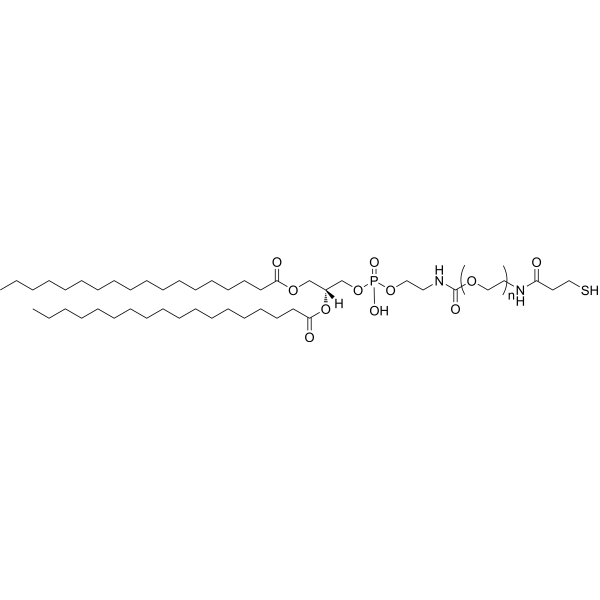
    DSPE-PEG2000-SH is an amphiphilic thiol-functionalized DSPE-PEG molecule. DSPE-PEG2000-SH inserts into extracellular vesicle (EV) bilayer membranes via hydrophobic interactions, displaying surface thiol groups to form EV-SH crosslinkers.DSPE-PEG2000-SH enables crosslinking of EV-SH with 8-arm PEG-norbornene via thiol-ene photochemistry to construct hydrogels, with hydrogel mechanical properties tunable via PEG segment molecular weight variation.DSPE-PEG2000-SH can be used to encapsulate agents for drug delivery system, such as mRNA vaccine .
    DSPE-PEG2000-SH
  • HY-W042214

    Ritalinate

    Drug Metabolite Environmental Pollutants Neurological Disease
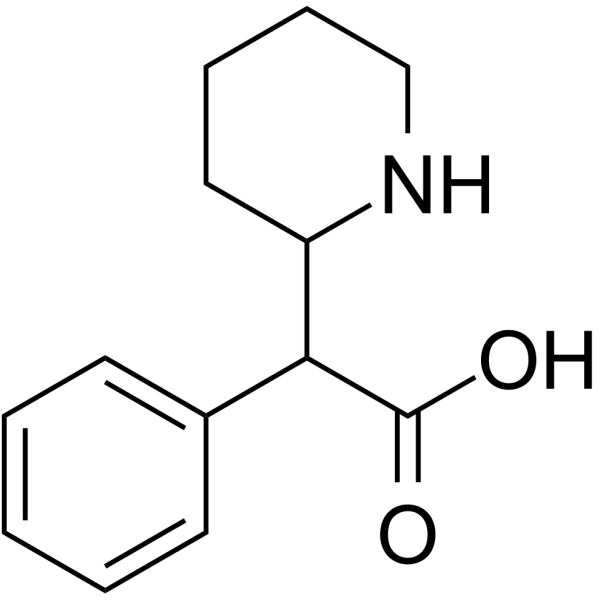
    Ritalinic acid (Ritalinate) is a metabolite of Methylphenidate. Ritalinic acid has no biological activity or only extremely low biological activity. The concentration of Ritalinic acid detected in university campus sewage shows a gradual upward trend in the first semester, while no obvious periodic variation pattern related to academic stress is observed in the second semester. Ritalinic acid can be used in studies related to attention deficit disorder, narcolepsy, depression and attention deficit hyperactivity disorder .
    Ritalinic acid
  • HY-U00050

    E-10-OH-NT

    Drug Metabolite Adrenergic Receptor mAChR Neurological Disease
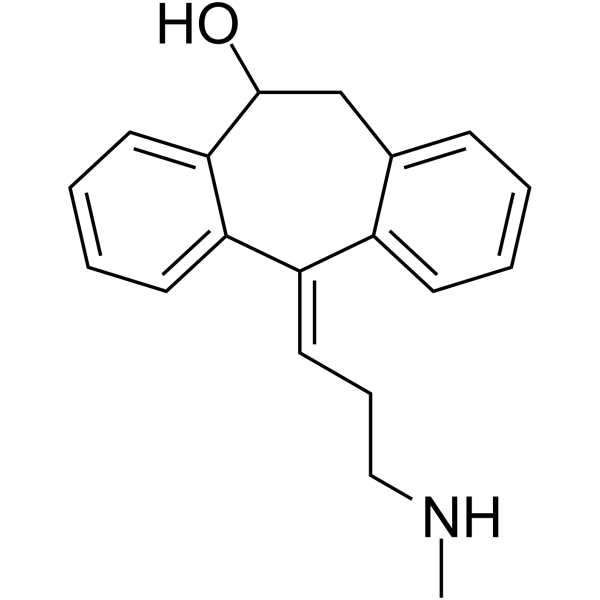
    (E)-10-Hydroxynortriptyline (E-10-OH-NT) is a blood-brain barrier-permeable norepinephrine uptake inhibitor. (E)-10-Hydroxynortriptyline effectively promotes central norepinephrine neuronal transmission, with little interindividual variation in in vivo potency. (E)-10-Hydroxynortriptyline has low affinity for muscarinic receptors, exhibits only extremely weak anticholinergic activity, and does not inhibit salivary secretion. (E)-10-Hydroxynortriptyline can be used in studies related to depression .
    (E)-10-Hydroxynortriptyline
  • HY-P3221

    Oxytocin Receptor Endocrinology
    [Leu3]-Oxytocin, an oxytocin analogue, is derived by structural variation in sequence position 3 replaced by leucine (Leu) .
    [Leu3]-Oxytocin
  • HY-137303

    FAGLA

    Bacterial Others
    FA-Gly-Leu-NH2 (FAGLA) is a dipeptide substrate for proteases that can be hydrolyzed by thermophilic proteases and neutral proteases, showing pH-dependent variations in kcat/Km .
    FA-Gly-Leu-NH2
  • HY-D0812

    Fluorescent Dye Biochemical Assay Reagents Others
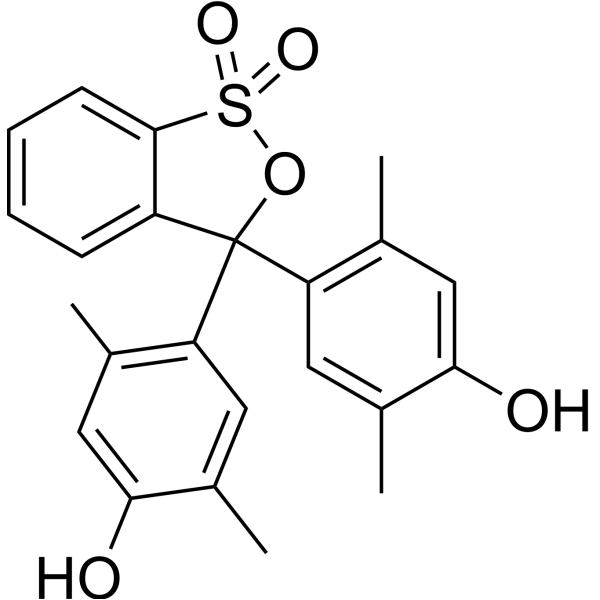
    Xylenol Blue is a sulfonephthalein dye. It exhibits observable color changes in response to variations in pH. Xylenol Blue undergoes two distinct color transitions across two specific pH ranges: an acidic range and an alkaline range. In a neutral solution, Xylenol Blue appears yellow (at pH 8); in a strongly acidic medium, its color shifts to red (at pH 2.8); and in an alkaline medium, the yellow hue transitions to blue (at pH 9.6) .
    Xylenol blue
  • HY-B0710R

    Trimethylglycine (Standard); carboxy-N,N,N-trimethylmethanaminium (Standard)

    Endogenous Metabolite Reference Standards Metabolic Disease
    Betaine (Standard) is the analytical standard of Betaine. This product is intended for research and analytical applications. Betaine (Trimethylglycine) is a natural compound found in many foods and also an active methyl-donor which can maintain normal DNA methylation patterns [1,2]. Betaine is found ubiquitously in plants, animals, microorganisms, and rich dietary sources including seafood, spinach, and wheat bran. Betaine also acts as an osmolyte, to maintain the avian’s cellular water and ion balance to improve the avian’s capacity against heat stress via preventing dehydration and osmotic inactivation. It helps in maintaining the protective osmolytic activity, especially in heat-stressed birds. Betaine may promote various intestinal microbes against osmotic variations and thus improve microbial fermentation activity .
    Betaine (Standard)
  • HY-D1556

    1,2-dioleoyl-sn-glycero-3-phosphoethanolamine-N-(carboxyfluorescein) ammonium

    Fluorescent Dye Cancer
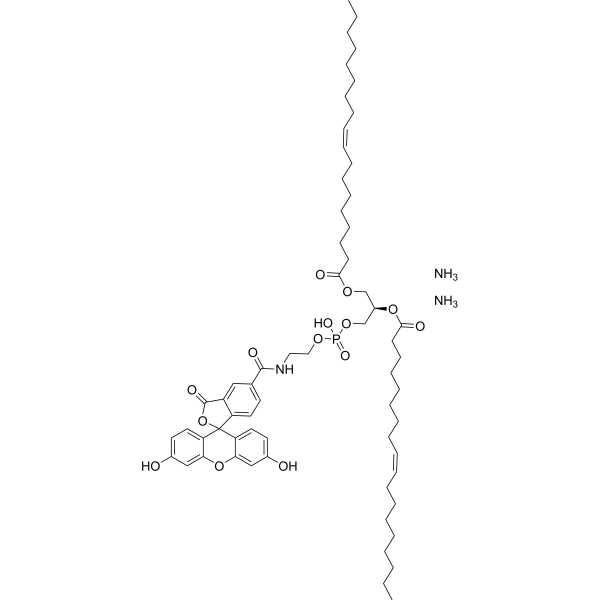
    18:1 PE CF (1,2-dioleoyl-sn-glycero-3-phosphoethanolamine-N-(carboxyfluorescein) (ammonium)) is a pH-sensitive fluorescent indicator. 18:1 PE CF exhibits changes in fluorescence intensity in response to pH variations and reflects the electrostatic states of cationic liposomes and lipoplexes. 18:1 PE CF supports real-time visualization of pH distribution and membrane deformation in giant unilamellar vesicles and is suitable for steady-state fluorescence testing in large unilamellar vesicle membranes. 18:1 PE CF is capable of monitoring the surface electrical potential of cationic liposomes and lipoplexes and can effectively label lipid bilayers and nanomicelles. 18:1 PE CF can be used for the research of the investigation of lung cancer (Ex = 495 nm; Em = 520 nm) .
    18:1 PE CF
  • HY-N17260

    Bacterial Infection
    Phellandral is an aldehyde compound that can be found in Eucalyptus camaldulensis and Thymus seravschanicus. The phellandral-containing eucalyptus essential oil exhibits significant inhibitory effects on various plant pathogenic fungi, especially on Aspergillus flavus. Phellandral, together with other oxygenated monoterpenoids, constitutes an important basis for the antibacterial activity of the essential oil .
    Phellandral
  • HY-B0710S

    Trimethylglycine-13C3; Carboxy-N,N,N-trimethylmethanaminium-13C3

    Isotope-Labeled Compounds Metabolic Disease
    Betaine- 13C3 (Trimethylglycine- 13C3) is the 13C labeled isotope of Betaine (HY-B0710). Betaine (Trimethylglycine) is a natural compound found in many foods and also an active methyl-donor which can maintain normal DNA methylation patterns [1,2]. Betaine is found ubiquitously in plants, animals, microorganisms, and rich dietary sources including seafood, spinach, and wheat bran. Betaine also acts as an osmolyte, to maintain the avian’s cellular water and ion balance to improve the avian’s capacity against heat stress via preventing dehydration and osmotic inactivation. It helps in maintaining the protective osmolytic activity, especially in heat-stressed birds. Betaine may promote various intestinal microbes against osmotic variations and thus improve microbial fermentation activity .
    Betaine-13C3
  • HY-124058

    Insecticide Others
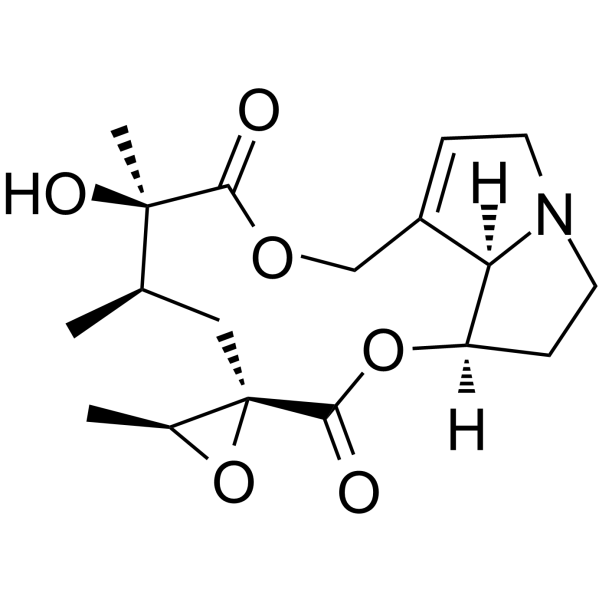
    Jacobine?is a pyrrolizidine alkaloid (PA) from Senecio jacobaea . Jacobine is active against second instar larvae of thrips .
    Jacobine
  • HY-W781921

    Fluorescent Dye Others
    BP Fluor 488 Alkyne is a popular labeling dye used in Click Chemistry reactions. It will react with the azide group in antibody, proteins, peptides, amino-modified oligos, and other target molecules. The dye has an excitation peak at 499 nm and an emission peak at 520 nm. The conjugates are widely used in microscopy, flow cytometry, and other applications. BP Fluor 488 is a pure 5-sulfonated rhodamine molecule and it eliminates the lot-to-lot variation caused by two isomers ratio differences.
    BP Fluor 488 Alkyne
  • HY-W800680

    Fluorescent Dye Others
    BP Fluor 488 DBCO is a popular labeling dye used in copper-free Click Chemistry reactions. It will react with the azide group in antibody, proteins, peptides, amino-modified oligos, and other target molecules. The dye has an excitation peak at 499 nm and an emission peak at 520 nm. The conjugates are widely used in microscopy, flow cytometry, and other applications. BP Fluor 488 is a pure 5-sulfonated rhodamine molecule and it eliminates the lot-to-lot variation caused by two isomers ratio differences.
    BP Fluor 488 DBCO
  • HY-W713313

    3,5-Dimethoxyamphetamine hydrochloride

    Histone Acetyltransferase Metabolic Disease Cancer
    3,5-DMA (3,5-Dimethoxyamphetamine) hydrochloride is an alkylphenylamine compound primarily catalyzed by NAT2. The metabolic rate of 3,5-DMA hydrochloride is closely related to the NAT2 acetylator genotype variation. 3,5-DMA is useful for studying the role of NAT2 acetylator genotype variation in the metabolism of alkylphenylamine carcinogens .
    3,5-DMA hydrochloride
  • HY-153995A

    Drug Metabolite Mitochondrial Metabolism Metabolic Disease
    D-Ribonic acid is a metabolite of D-Ribose (HY-113375). Ribonic acid is associated with genetic variations in ENOSF1 and NUBPL. Ribonic acid may participate in the mitochondrial energy production process .
    D-Ribonic acid
  • HY-130280

    Bacterial Infection
    Ianthelliformisamine A TFA is an antibiotic enhancer with activity against resistant Gram-negative bacteria. Ianthelliformisamine A TFA exhibits bactericidal activity against Staphylococcus aureus with an IC50 value of 3.8 μM (minimum inhibitory concentration = 25 μM). The biological activity of Ianthelliformisamine A TFA is derived from the structural variation of its synthetic derivatives and its coupling reaction with different amino ester derivatives .
    Ianthelliformisamine A TFA
  • HY-121856

    Others Inflammation/Immunology
    Flumizole, a derivative of substituted 5,6-diaryl-2,3-dihydroimidazo[2,1-b]thiazoles, was synthesized and evaluated for its immunoregulatory and anti-inflammatory properties in animal models such as rat adjuvant-induced arthritis and mouse oxazolone-induced contact sensitivity assays. This compound class combines structural elements from flumizole and levamisole, aiming to enhance therapeutic efficacy. Symmetrically substituted 5,6-diaryl compounds with specific alkyl heteroatom or halogen substitutions showed optimal potency in the arthritis model. However, variations in activity were less consistent in the contact sensitivity assay. Flumizole and related compounds demonstrate potential as dual-action agents, targeting inflammation and immune modulation, offering promise for therapeutic development in immune-related disorders .
    Flumizole
  • HY-168384

    STING TNF Receptor Interleukin Related CD28 Inflammation/Immunology
    M04 is an agonist of STING. It induces the expression of the IFN reporter gene in HEK293T cells expressing wild-type human STING, but does not induce this expression in HEK293T cells expressing the R71H-G230A-R293Q (HAQ) STING variant or in mouse RAW 264.7 cells, indicating that its activity is dependent on allelic and species variations. M04 induces the production of TNF-α, IL-10, IL-1β, and IL-12p70 in human peripheral blood mononuclear cells (PBMCs). At a concentration of 50 µM, M04 stimulates dendritic cells isolated from PBMCs to express the MHC class II cell surface receptor HLA-DR and co-stimulatory molecules CD40, CD80, and CD86, and also enhances their ability to activate T cells in an ex vivo assay. M04 can be used in research on inflammatory immune diseases .
    M04
  • HY-153995B

    Mitochondrial Metabolism Drug Metabolite Metabolic Disease
    D-Ribonic acid ammonium is a metabolite of D-Ribose (HY-113375). Ribonic acid ammonium is associated with genetic variations in ENOSF1 and NUBPL. Ribonic acid ammonium may participate in the mitochondrial energy production process .
    D-Ribonic acid ammonium
  • HY-D3283

    Fluorescent Dye Others
    Ctrl-CCF1 is a control probe for CCF1. Ctrl-CCF1 can be used to distinguish copper-dependent responses from potential dye-dependent variations, such as cellular uptake, retention, subcellular accumulation, and changes in pH, redox or hydrophobic/hydrophilic environments .
    Ctrl-CCF1
  • HY-174731

    mRNA Inflammation/Immunology
    Human CX3CR1 mRNA encodes the human C-X3-C motif chemokine receptor 1 (CX3CR1) protein, a receptor for fractalkine. CX3CR1 is also a coreceptor for HIV-1, and some variations in this gene lead to increased susceptibility to HIV-1 infection and rapid progression to AIDS.
    Human CX3CR1 mRNA
  • HY-D3166

    Fluorescent Dye Others
    CEMT is a carboxylesterase (CE) substrate and a ratiometric two-photon fluorescent reporter probe. CEMT can be hydrolyzed by CE to generate HMT, which is used for mitochondrial pH sensing. After activation by CE, CEMT exhibits ratiometric fluorescence changes in response to pH variations. CEMT targets and covalently binds to mitochondria, and can avoid leakage during acidification, thus enabling in situ imaging .
    CEMT
  • HY-117908

    Dihydroorotate Dehydrogenase Parasite Infection
    DSM267 is a triazolopyrimidine inhibitor of Plasmodium falciparum dihydroorotate dehydrogenase (PfDHODH), with an IC50 of 38 nM, while its IC50 against human DHODH exceeds 100000 nM. DSM267 is used for the in vitro systematic screening and characterization of the resistance evolution pathways of Plasmodium falciparum to DHODH inhibitors .
    DSM267

Inquiry Online

Your information is safe with us. * Required Fields.

Salutation


Country or Region *

Applicant Name *


Organization Name *

Department *


Email Address *


Product Name *

Cat. No.


Requested quantity *

Phone Number *


Remarks

Inquiry Online

Inquiry Information

Product Name:
Cat. No.:
Quantity:
MCE Japan Authorized Agent: