



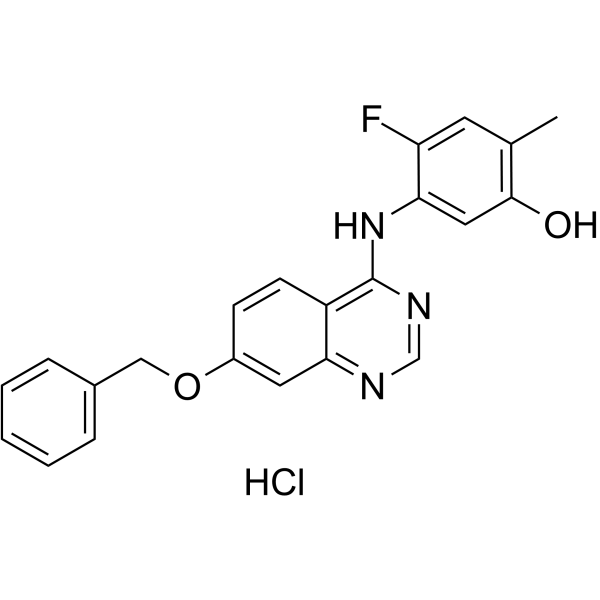
ZM323881 hydrochloride
Based on 2 publication(s) in Google Scholar
ZM323881 hydrochloride is a potent and selective VEGFR2 inhibitor with an IC50 of less than 2 nM.
For research use only. We do not sell to patients.
- Purity : 99.63%
- CAS No.: 193000-39-4
- Formula: C22H19ClFN3O2
- Molecular Weight:411.86
-
Storage:
4°C, sealed storage, away from moisture
* In solvent : -80°C, 6 months; -20°C, 1 month (sealed storage, away from moisture)

To place orders, for customer services and technical support, please contact: MedChemExpress USA
Tel: 609-228-6898 E-mail: [email protected] [email protected]


-
 Biological Activity
-
Chemical Information
-
Solvent & Solubility
- Protocol
- Purity & Documentation
- References
-
 Help & FAQs


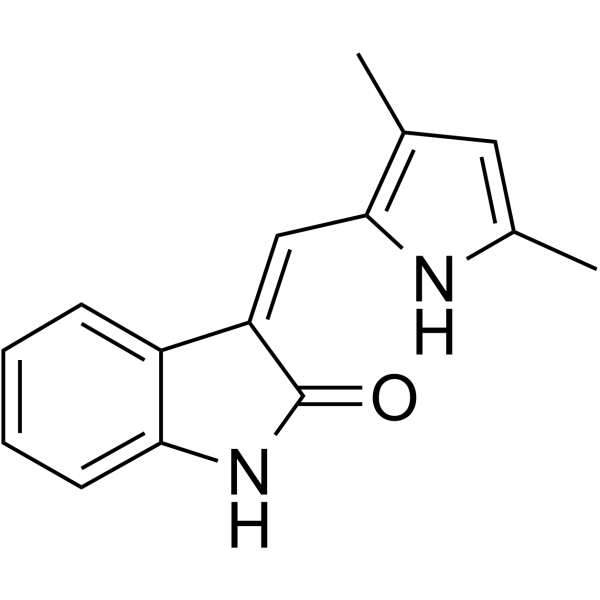
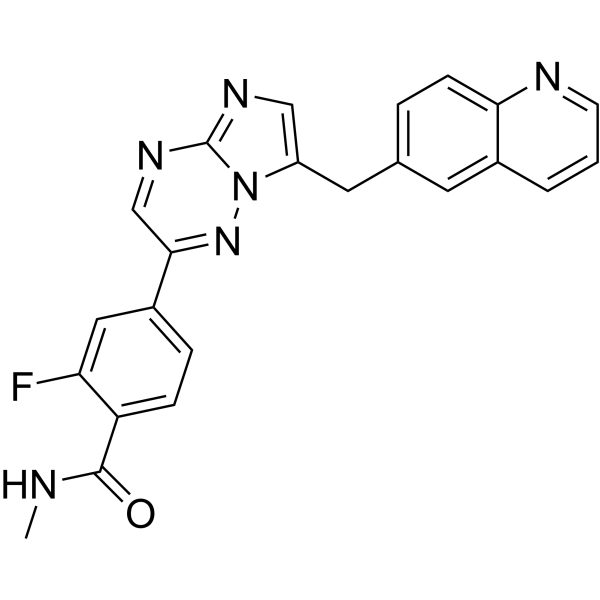
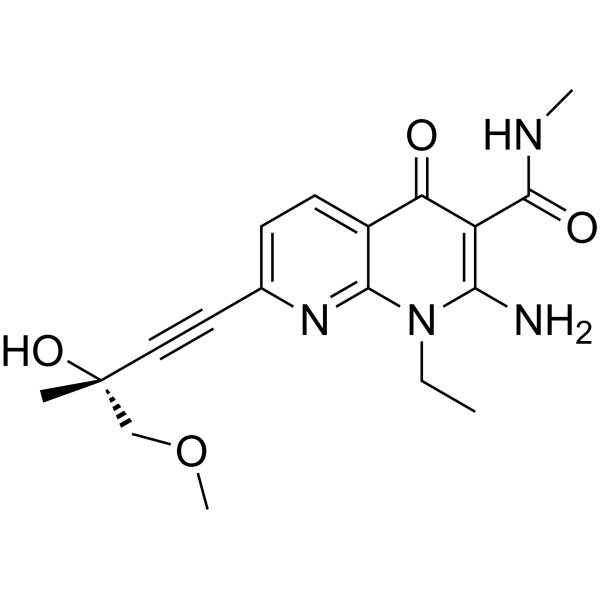
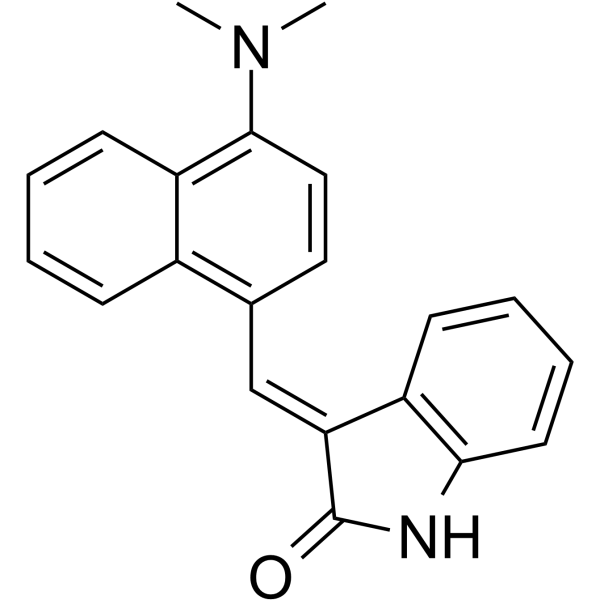
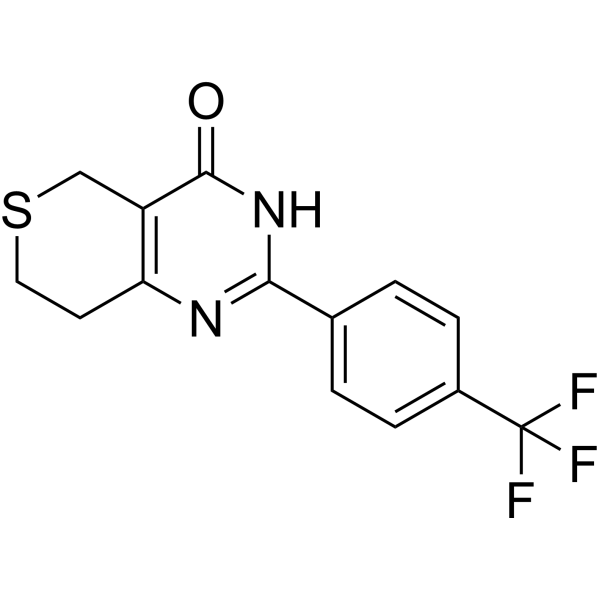
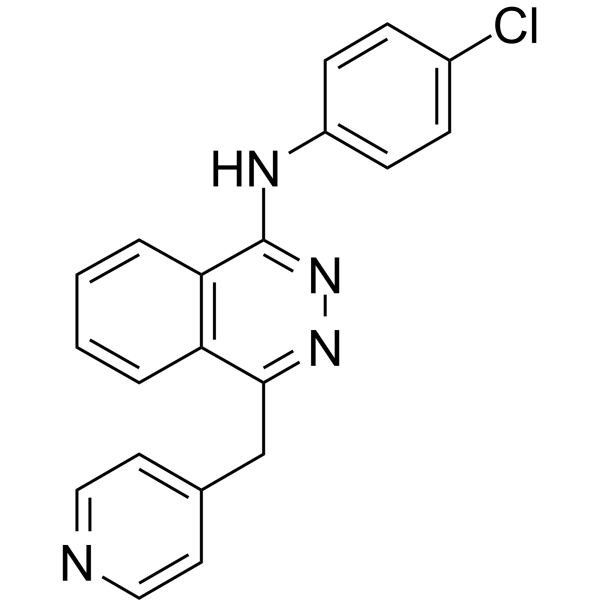
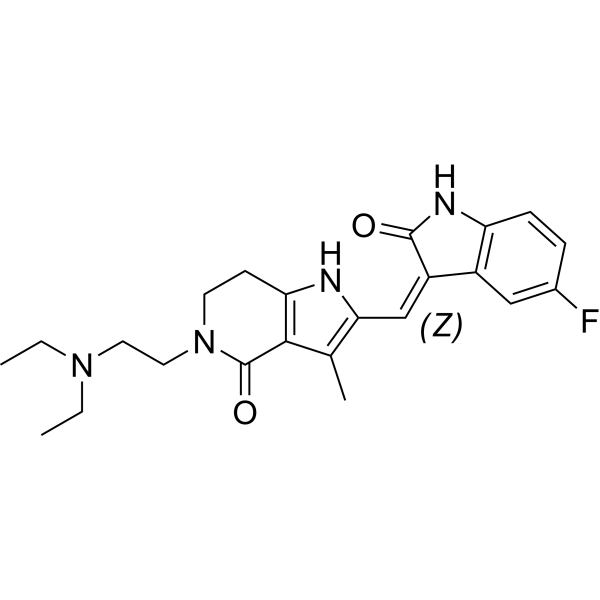
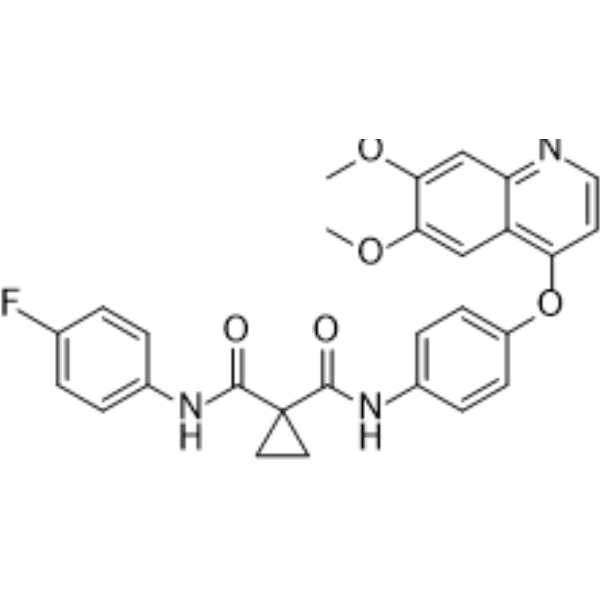
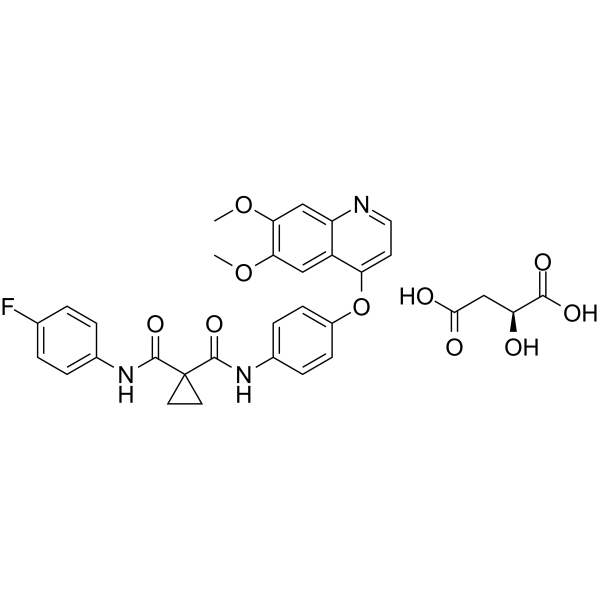
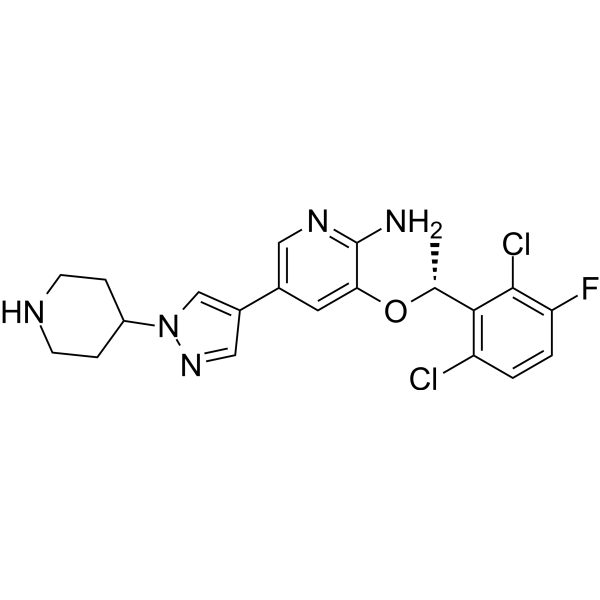
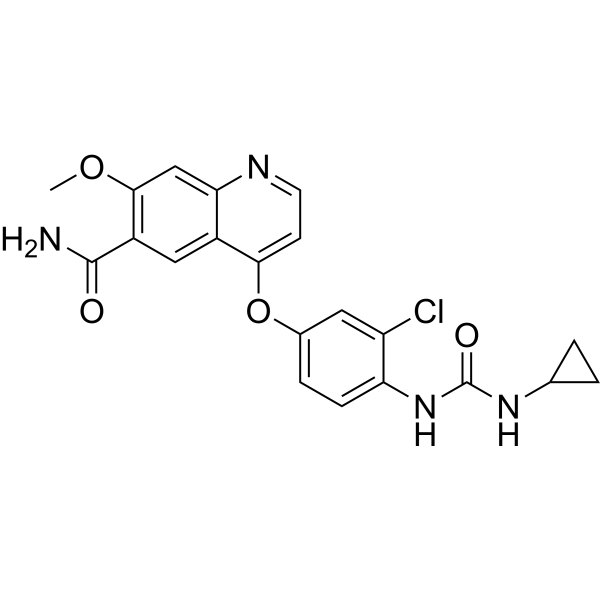

Publications Citing Use of MedChemExpress (MCE) ZM323881 hydrochloride
MoreAll VEGFR Isoforms
More

Biological Activity
Description
IC50 & Target
[1]|
VEGFR2 2 nM (IC50) |
In Vitro
ZM323881 is an anilinoquinazoline that potently inhibits VEGFR2 (KDR) tyrosine kinase activity anddemonstrates excellent selectivity versus other receptor tyrosine kinases, including PDGFRβ, FGFR1, EGFR and erbB2 (IC50>50 μM). ZM323881 inhibits VEGF-A-induced endothelial cell proliferation(IC50=8 nM) and VEGFR2 tyrosine phosphorylation[1]. ZM323881 inhibits activation of VEGFR-2, but not of VEGFR-1, epidermal growth factor receptor (EGFR), platelet-derived growth factor receptor (PDGFR), or hepatocyte growth factor (HGF) receptor. In HAECs, ZM323881 completely inhibits VEGF-induced ERK phosphorylation at 1 μM[2]
MedChemExpress (MCE) has not independently confirmed the accuracy of these methods. They are for reference only.


Chemical Information
-
CAS No. 193000-39-4
-
Appearance Solid
-
Molecular Weight 411.86
-
Formula C22H19ClFN3O2
-
Color Light yellow to yellow
-
SMILES
CC1=C(O)C=C(NC2=C3C=CC(OCC4=CC=CC=C4)=CC3=NC=N2)C(F)=C1.Cl
-
Shipping
Room temperature in continental US; may vary elsewhere.
-
Storage
4°C, sealed storage, away from moisture
* In solvent : -80°C, 6 months; -20°C, 1 month (sealed storage, away from moisture)


Publications (2)
-
Journal Impact Factor
-
Most Recent
-
Front Physiol
Semaphorin 7A Promotes VEGFA/VEGFR2-Mediated Angiogenesis and Intraplaque Neovascularization in ApoE-/- Mice. [Abstract]2018 Nov 30:9:1718. PMID: 30555351 -
Oncotarget
Induction of VEGFA and Snail-1 by meningitic Escherichia coli mediates disruption of the blood-brain barrier. [Abstract]2016 Sep 27;7(39):63839-63855. PMID: 27588479


Solvent & Solubility
In Vitro:
DMSO : ≥ 50 mg/mL (121.40 mM; Hygroscopic DMSO has a significant impact on the solubility of product, please use newly opened DMSO)
H2O : < 0.1 mg/mL (insoluble)
* "≥" means soluble, but saturation unknown.
Please refer to the solubility information to select the appropriate solvent. Once prepared, please aliquot and store the solution to prevent product inactivation from repeated freeze-thaw cycles.
Storage method and period of stock solution: -80°C, 6 months; -20°C, 1 month (sealed storage, away from moisture). When stored at -80°C, please use it within 6 months. When stored at -20°C, please use it within 1 month.
Please refer to the solubility information to select the appropriate solvent. Once prepared, please aliquot and store the solution to prevent product inactivation from repeated freeze-thaw cycles.
Storage method and period of stock solution: -80°C, 6 months; -20°C, 1 month (sealed storage, away from moisture). When stored at -80°C, please use it within 6 months. When stored at -20°C, please use it within 1 month.
Concentration (start) × Volume (start) = Concentration (final) × Volume (final)
In Vivo:
Select the appropriate dissolution method based on your experimental animal and administration route.
- For the following dissolution methods, please ensure to first prepare a clear stock solution using an In Vitro approach and then sequentially add co-solvents:
- To ensure reliable experimental results, the clarified stock solution can be appropriately stored based on storage conditions. As for the working solution for In Vivo experiments, it is recommended to prepare freshly and use it on the same day.
- The percentages shown for the solvents indicate their volumetric ratio in the final prepared solution. If precipitation or phase separation occurs during preparation, heat and/or sonication can be used to aid dissolution.
Add each solvent one by one: 10% DMSO 40% PEG300 5% Tween-80 45% Saline
Solubility: ≥ 2.5 mg/mL (6.07 mM); Clear solution
This protocol yields a clear solution of ≥ 2.5 mg/mL (saturation unknown).
Taking 1 mL working solution as an example, add 100 μL DMSO stock solution (25.0 mg/mL) to 400 μL PEG300, and mix evenly; then add 50 μL Tween-80 and mix evenly; then add 450 μL Saline to adjust the volume to 1 mL.
Preparation of Saline: Dissolve 0.9 g sodium chloride in ddH₂O and dilute to 100 mL to obtain a clear Saline solution.
Add each solvent one by one: 10% DMSO 90% (20% SBE-β-CD in Saline)
Solubility: ≥ 2.5 mg/mL (6.07 mM); Clear solution
This protocol yields a clear solution of ≥ 2.5 mg/mL (saturation unknown).
Taking 1 mL working solution as an example, add 100 μL DMSO stock solution (25.0 mg/mL) to 900 μL 20% SBE-β-CD in Saline, and mix evenly.
Preparation of 20% SBE-β-CD in Saline (4°C, storage for one week): 2 g SBE-β-CD powder is dissolved in 10 mL Saline, completely dissolve until clear.
In Vivo Dissolution Calculator
Please enter the basic information of animal experiments:
-
-
-
-
Recommended: Prepare an additional quantity of animals to account for potential losses during experiments.
Please enter your animal formula composition:
-
%DMSO +
Recommended: Keep the proportion of DMSO in working solution below 2% if your animal is weak.
-
%+
-
+%Tween-80 + +
-
%Saline +
The co-solvents required include: DMSO, . All of co-solvents are available by MedChemExpress (MCE). , Tween 80. All of co-solvents are available by MedChemExpress (MCE).
Working solution concentration: 0.22 mg/mL
Method for preparing stock solution: mg drug dissolved in μL DMSO. Stock solution concentration: mg/mL. * In solvent : -80°C, 6 months; -20°C, 1 month (sealed storage, away from moisture)
1. Take μL DMSO stock solution;
2. Add μL .
μL , mix evenly;
3. Then add μL Tween 80, mix evenly;
4. Then add μL
Please ensure that the stock solution in the first step is dissolved to a clear state, and add co-solvents in sequence. You can use ultrasonic heating (ultrasonic cleaner, recommended frequency 20-40 kHz), vortexing, etc. to assist dissolution.

Protocol
Kinase Assay[1]
Compounds (ZM323881) are incubated (20 minutes, room temperature) with enzyme in an N-2-hydroxyethylpiperazine-N'-2-ethanesulphonate (HEPES) (pH 7.5) buffered solution containing 10 mM MnCl2 and 2 μM ATP, in96-well plates coated with a poly(Glu, Ala, Tyr) 6:3:1 random copolymer substrate. Phosphorylated tyrosine is then detected bysequential incubation with mouse IgG anti-phosphotyrosine antibody a horseradish peroxidase(HRP)-linked sheep anti-mouse Ig antibody and 2,2'-azino-bis(3-ethylbenzthiazoline-6-sulphonic acid). IC50 data are interpolated by nonlin-ear regression[1].
MedChemExpress (MCE) has not independently confirmed the accuracy of these methods. They are for reference only.
Cell Assay[1]
HUVEC cells isolated from umbilical cords are plated (at passage 2–8) in 96-wellplates (1000 cells/well) and dosed with ZM323881±VEGF-A (3 ng/mL), EGF (3 ng/mL), or basicfibroblast growth factor (bFGF, 0.3 ng/mL). The cultures are then incubated for 4 days. On day 4, the cultures are pulsed with 1 μCi/well of 3H-thymidine and reincubated for 4 hours. The cells are then harvested and assayed for the incorporation of tritium by using a beta-counter. IC50 data are interpolated[1].
MedChemExpress (MCE) has not independently confirmed the accuracy of these methods. They are for reference only.


Purity & Documentation
-
Data Sheet (277 KB)
-
SDS (393 KB)
- English - EN (393 KB)
- Français - FR (393 KB)
- Deutsch - DE (393 KB)
- Norwegian - NO (393 KB)
- Español - ES (393 KB)
- Swedish - SV (393 KB)
- Italian - IT (393 KB)
- Korean - KR (393 KB)
- Portuguese - PT (393 KB)
-
Handling Instructions (2659 KB)
References
[1]. Whittles CE, et al. ZM323881, a novel inhibitor of vascular endothelial growth factor-receptor-2 tyrosine kinase activity. Microcirculation. 2002 Dec;9(6):513-22. [Content Brief]
[2]. Endo A, et al. Selective inhibition of vascular endothelial growth factor receptor-2 (VEGFR-2) identifies a central role for VEGFR-2 in human aortic endothelial cell responses to VEGF. J Recept Signal Transduct Res. 2003;23(2-3):239-54. [Content Brief]


Complete Stock Solution Preparation Table
Please refer to the solubility information to select the appropriate solvent. Once prepared, please aliquot and store the solution to prevent product inactivation from repeated freeze-thaw cycles.
Storage method and period of stock solution: -80°C, 6 months; -20°C, 1 month (sealed storage, away from moisture). When stored at -80°C, please use it within 6 months. When stored at -20°C, please use it within 1 month.
| Optional Solvent | Concentration Solvent Mass | 1 mg | 5 mg | 10 mg | 25 mg |
|---|---|---|---|---|---|
| DMSO | 1 mM | 2.4280 mL | 12.1400 mL | 24.2801 mL | 60.7002 mL |
| 5 mM | 0.4856 mL | 2.4280 mL | 4.8560 mL | 12.1400 mL | |
| 10 mM | 0.2428 mL | 1.2140 mL | 2.4280 mL | 6.0700 mL | |
| 15 mM | 0.1619 mL | 0.8093 mL | 1.6187 mL | 4.0467 mL | |
| 20 mM | 0.1214 mL | 0.6070 mL | 1.2140 mL | 3.0350 mL | |
| 25 mM | 0.0971 mL | 0.4856 mL | 0.9712 mL | 2.4280 mL | |
| 30 mM | 0.0809 mL | 0.4047 mL | 0.8093 mL | 2.0233 mL | |
| 40 mM | 0.0607 mL | 0.3035 mL | 0.6070 mL | 1.5175 mL | |
| 50 mM | 0.0486 mL | 0.2428 mL | 0.4856 mL | 1.2140 mL | |
| 60 mM | 0.0405 mL | 0.2023 mL | 0.4047 mL | 1.0117 mL | |
| 80 mM | 0.0304 mL | 0.1518 mL | 0.3035 mL | 0.7588 mL | |
| 100 mM | 0.0243 mL | 0.1214 mL | 0.2428 mL | 0.6070 mL |


ZM323881 hydrochloride Related Classifications
HY-15467A Related Classifications
 Powered by Bioz