



Omipalisib
Based on 21 publication(s) in Google Scholar
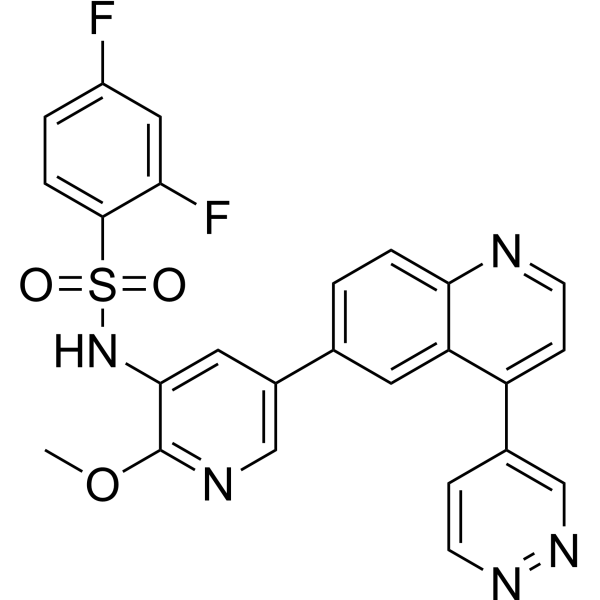
Omipalisib (GSK2126458) is an orally active and highly selective inhibitor of PI3K with Kis of 0.019 nM/0.13 nM/0.024 nM/0.06 nM and 0.18 nM/0.3 nM for p110α/β/δ/γ, mTORC1/2, respectively. Omipalisib has anti-cancer activity.
For research use only. We do not sell to patients.
- Purity : 99.94%
- CAS No.: 1086062-66-9
- Formula: C25H17F2N5O3S
- Molecular Weight:505.50
-
Storage:Powder -20°C, 3 years , 4°C, 2 years ; In solvent -80°C, 2 years , -20°C, 1 year

To place orders, for customer services and technical support, please contact: MedChemExpress USA
Tel: 609-228-6898 E-mail: [email protected] [email protected]


-
 Biological Activity
-
Chemical Information
-
Solvent & Solubility
- Purity & Documentation
- References
-
 Help & FAQs


-
HY-10219
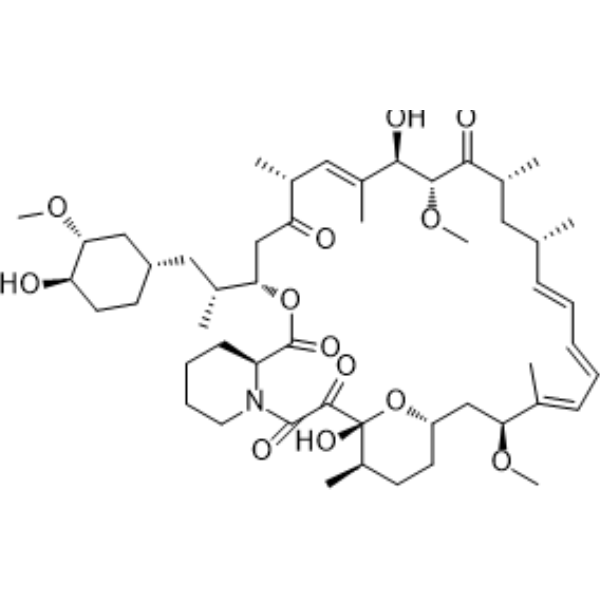
RapamycinmTOR Inhibitor -
HY-10681
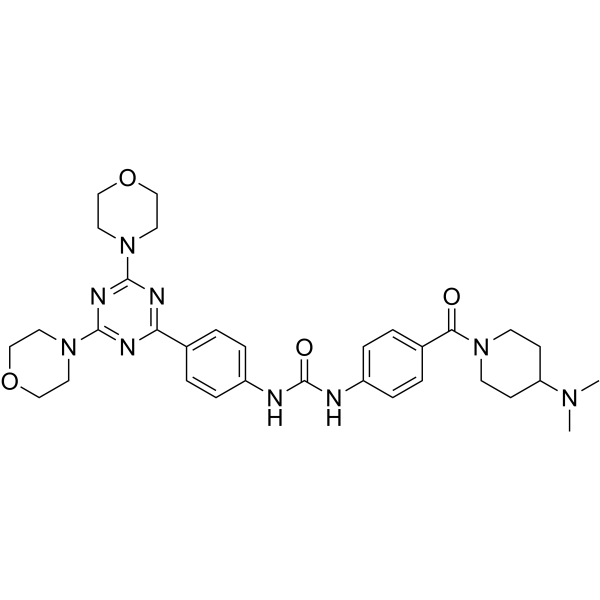
GedatolisibPI3K/mTOR Inhibitor -
HY-10422
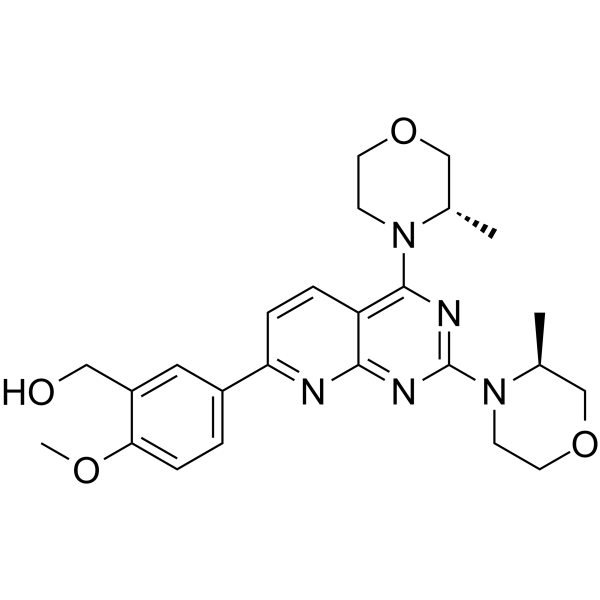
AZD-8055mTOR Inhibitor -
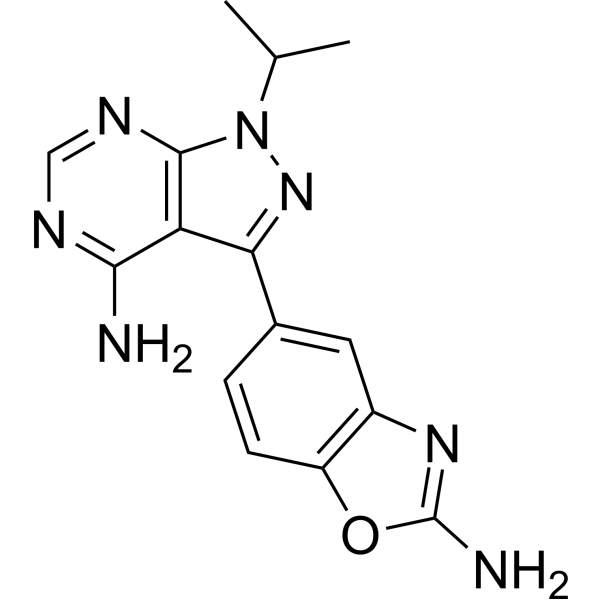
HY-13328
SapanisertibmTORC1/mTORC2 Inhibitor -
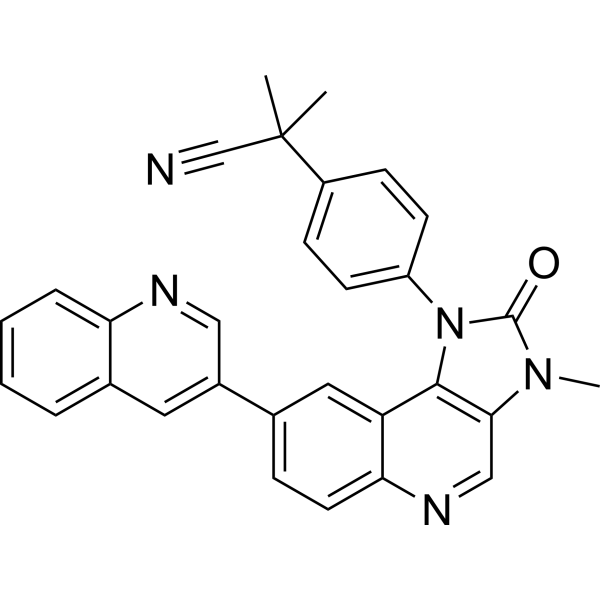
HY-50673
DactolisibPI3K/mTOR Inhibitor -
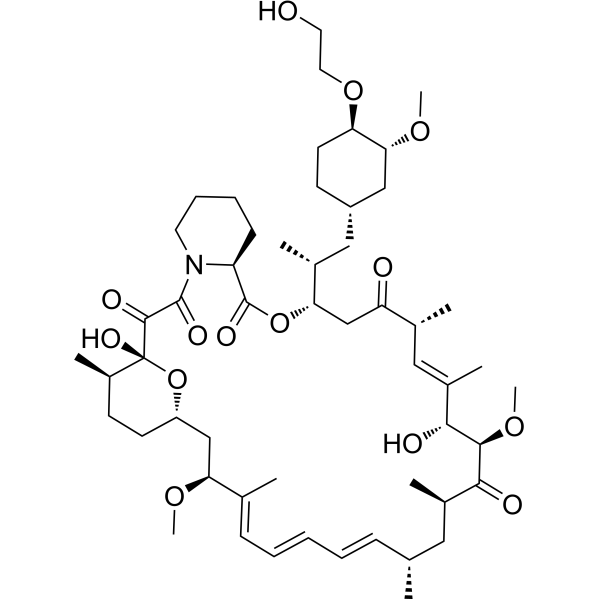
HY-10218
EverolimusmTORC Inhibitor -
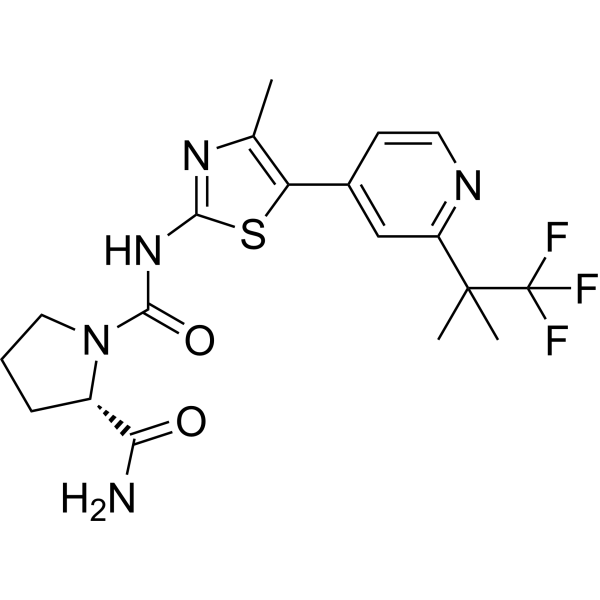
HY-15244
AlpelisibPI3Kα Inhibitor -
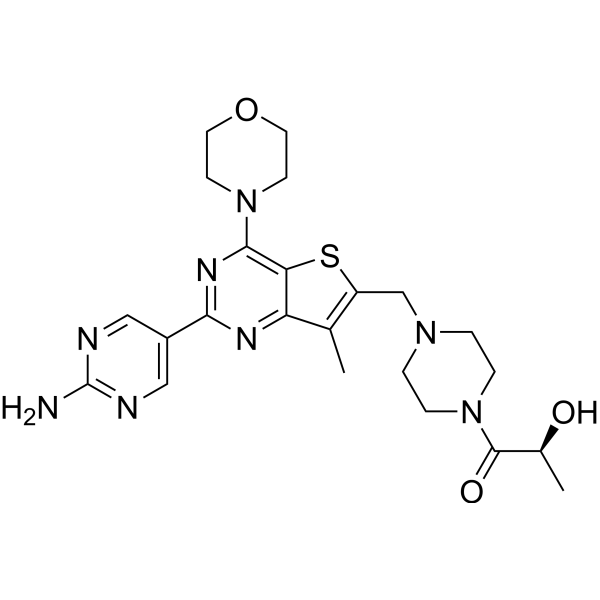
HY-13246
ApitolisibApoptosis Inducer -
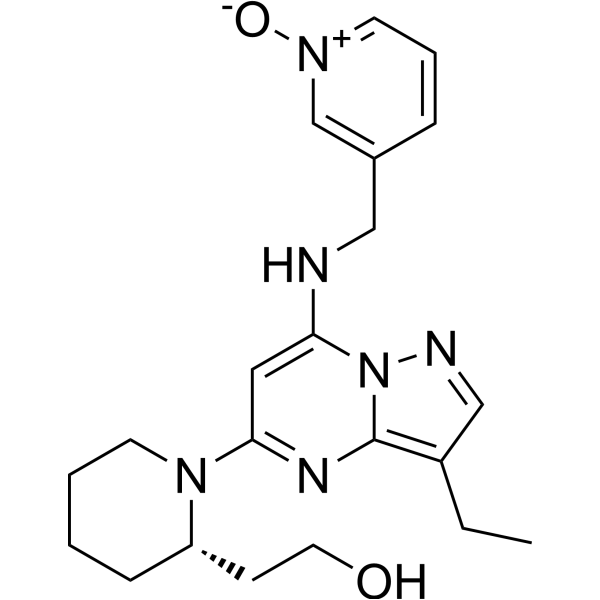
HY-10492
DinaciclibCDK2/5/9 Inhibitor -
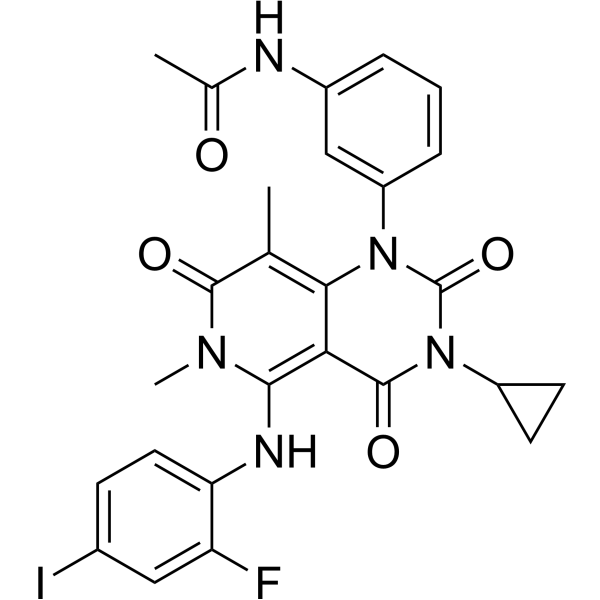
HY-10999
TrametinibMEK Inhibitor -
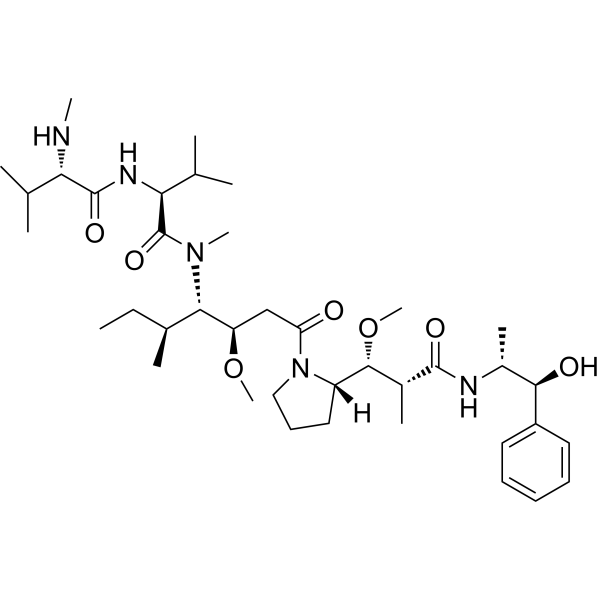
HY-15162
Monomethyl auristatin EAntimitotic Agent -
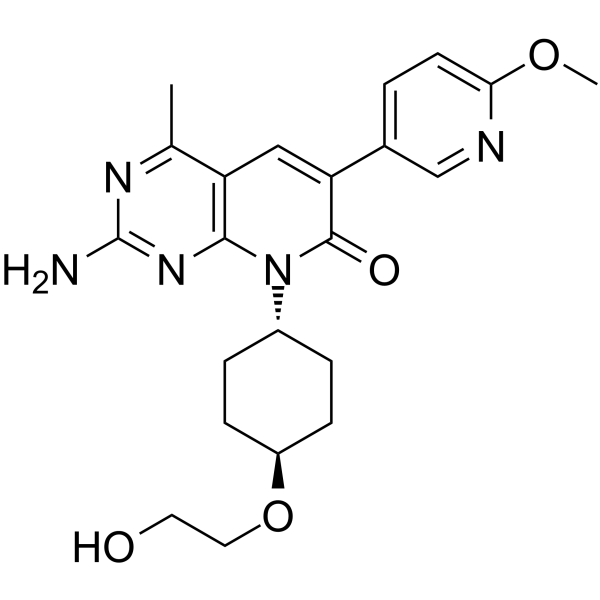
HY-15177
PF-04691502PI3K/mTOR Inhibitor
Publications Citing Use of MedChemExpress (MCE) Omipalisib
More- Mol Cancer. 2023 May 20;22(1):86. [Abstract]
- J Hepatol. 2021 Aug;75(2):363-376. [Abstract]
- Exp Hematol Oncol. 2016 Jul 29:5:22. [Abstract]
- Sci Transl Med. 2018 Jul 18;10(450):eaaq1093. [Abstract]
- Clin Cancer Res. 2014 Nov 1;20(21):5483-95. [Abstract]
- Cell Syst. 2020 Jan 22;10(1):66-81.e11. [Abstract]
- J Invest Dermatol. 2025 Jan;145(1):65-76.e13. [Abstract]
- Mol Cancer Ther. 2025 Apr 28:OF1-OF13. [Abstract]
- Ecotoxicol Environ Saf. 2024 Nov 15:287:117345. [Abstract]
- Mol Cancer Res. 2019 Jun;17(6):1378-1390. [Abstract]
- Front Pharmacol. 2020 Nov 11:11:580407. [Abstract]
- Molecules. 2020 Apr 23;25(8):1980. [Abstract]
- Cancer Res Commun. 2023 Jul 12;3(7):1224-1236. [Abstract]
- Anal Methods. 2026 Feb 5;18(5):1101-1115. [Abstract]
- PLoS One. 2026 Jun 23;21(6):e0352120. [Abstract]
- University of Central Florida. 2026.
- Blood Neoplasia. 2026 Apr 9;3(3):100230. [Abstract]
- bioRxiv. 2024 Feb 6:2024.02.06.579103. [Abstract]
- Am J Dig Dis (Madison). 2015;2(2):95-99.
- J Clin Toxicol. 2014 October 4, 4:5.
- J Clin Toxicol 2014, 4:5
 Customer Validation & Images

-
WB
-
Cell Imaging/Staining
-
Bio/Physico-chemical Assay
-
Bio/Physico-chemical Assay
-
Bio/Physico-chemical Assay


Biological Activity
Description
IC50 & Target
[1]|
p110α 0.019 nM (Ki) |
p110α-E545K 0.008 nM (Ki) |
p110α-E542K 0.008 nM (Ki) |
p110α-H1047R 0.009 nM (Ki) |
p110β 0.13 nM (Ki) |
p110δ 0.024 nM (Ki) |
p110γ 0.06 nM (Ki) |
mTORC1 0.18 nM (Ki) |
mTORC2 0.3 nM (Ki) |
Cellular Effect
|
Cell Line

|
Type | Value | Description | References |
|---|---|---|---|---|
| A549 | GI50 |
26.6 nM
Compound: GSK; GSK-2126458
|
Growth inhibition of human A549 cells harboring wild type p110alpha and PTEN measured after 72 hrs by Cell titre Glo-luminiscence cell viability assay
Growth inhibition of human A549 cells harboring wild type p110alpha and PTEN measured after 72 hrs by Cell titre Glo-luminiscence cell viability assay
|
[PMID: 33360802] |
| A549 | IC50 |
0.6 μM
Compound: GSK2126458
|
Cytotoxicity against human A549 cells after 72 hrs by MTT assay
Cytotoxicity against human A549 cells after 72 hrs by MTT assay
|
[PMID: 26819001] |
| A549 | IC50 |
0.86 μM
Compound: Omipalisib
|
Antiproliferative activity against human A549 cells assessed as reduction in cell viability incubated for 72 hrs by SRB assay
Antiproliferative activity against human A549 cells assessed as reduction in cell viability incubated for 72 hrs by SRB assay
|
[PMID: 31097403] |
| A549 | IC50 |
140 nM
Compound: GSK-2126458
|
Cytotoxicity against human A549 cells after 72 hrs by MTT assay
Cytotoxicity against human A549 cells after 72 hrs by MTT assay
|
[PMID: 27448924] |
| BEL-7404 tumor cell line | IC50 |
0.01 μM
Compound: GSK2126458
|
Cytotoxicity against human Bel7404 cells after 72 hrs by MTT assay
Cytotoxicity against human Bel7404 cells after 72 hrs by MTT assay
|
[PMID: 26819001] |
| BT-474 | IC50 |
2.4 nM
Compound: 1; GSk2126458
|
Antiproliferative activity against human BT-474 cells assessed as inhibition of cell growth measured after 72 hrs by CellTiter-Glo assay
Antiproliferative activity against human BT-474 cells assessed as inhibition of cell growth measured after 72 hrs by CellTiter-Glo assay
|
[PMID: 24900173] |
| DU-145 | GI50 |
16.3 nM
Compound: GSK; GSK-2126458
|
Growth inhibition of human DU-145 cells harboring wild type p110alpha and PTEN measured after 72 hrs by Cell titre Glo-luminiscence cell viability assay
Growth inhibition of human DU-145 cells harboring wild type p110alpha and PTEN measured after 72 hrs by Cell titre Glo-luminiscence cell viability assay
|
[PMID: 33360802] |
| HCT-116 | IC50 |
0.01 μM
Compound: GSK2126458
|
Cytotoxicity against human HCT116 cells after 72 hrs by MTT assay
Cytotoxicity against human HCT116 cells after 72 hrs by MTT assay
|
[PMID: 26819001] |
| HCT-116 | IC50 |
0.14 μM
Compound: Omipalisib
|
Antiproliferative activity against human HCT-116 cells assessed as reduction in cell viability incubated for 72 hrs by SRB assay
Antiproliferative activity against human HCT-116 cells assessed as reduction in cell viability incubated for 72 hrs by SRB assay
|
[PMID: 31097403] |
| HCT-116 | IC50 |
154 nM
Compound: GSK-2126458
|
Cytotoxicity against human HCT116 cells after 72 hrs by MTT assay
Cytotoxicity against human HCT116 cells after 72 hrs by MTT assay
|
[PMID: 27448924] |
| HT-29 | GI50 |
19.9 nM
Compound: GSK; GSK-2126458
|
Growth inhibition of human HT-29 cells harboring mutated p110alpha measured after 72 hrs by Cell titre Glo-luminiscence cell viability assay
Growth inhibition of human HT-29 cells harboring mutated p110alpha measured after 72 hrs by Cell titre Glo-luminiscence cell viability assay
|
[PMID: 33360802] |
| MCF7 | IC50 |
0.03 μM
Compound: Omipalisib
|
Antiproliferative activity against human MCF7 cells assessed as reduction in cell viability incubated for 72 hrs by SRB assay
Antiproliferative activity against human MCF7 cells assessed as reduction in cell viability incubated for 72 hrs by SRB assay
|
[PMID: 31097403] |
| MDA-MB-231 | IC50 |
0.13 μM
Compound: GSK2126458
|
Cytotoxicity against human MDA-MB-231 cells after 72 hrs by MTT assay
Cytotoxicity against human MDA-MB-231 cells after 72 hrs by MTT assay
|
[PMID: 26819001] |
| NCI-H1975 | GI50 |
14.4 nM
Compound: GSK; GSK-2126458
|
Growth inhibition of human NCI-H1975 cells harboring mutated p110alpha measured after 72 hrs by Cell titre Glo-luminiscence cell viability assay
Growth inhibition of human NCI-H1975 cells harboring mutated p110alpha measured after 72 hrs by Cell titre Glo-luminiscence cell viability assay
|
[PMID: 33360802] |
| PC-3 | GI50 |
0.25 μM
Compound: 3; GSK2126458
|
Growth inhibition of human PC3 cells after 72 hrs by sulforhodamine B assay
Growth inhibition of human PC3 cells after 72 hrs by sulforhodamine B assay
|
[PMID: 33561608] |
| PC-3 | GI50 |
197 nM
Compound: GSK; GSK-2126458
|
Growth inhibition of human PC-3 cells harboring PTEN inactivation measured after 72 hrs by Cell titre Glo-luminiscence cell viability assay
Growth inhibition of human PC-3 cells harboring PTEN inactivation measured after 72 hrs by Cell titre Glo-luminiscence cell viability assay
|
[PMID: 33360802] |
| T47D | IC50 |
3 nM
Compound: 1; GSk2126458
|
Antiproliferative activity against human T47D cells assessed as inhibition of cell growth measured after 72 hrs by CellTiter-Glo assay
Antiproliferative activity against human T47D cells assessed as inhibition of cell growth measured after 72 hrs by CellTiter-Glo assay
|
[PMID: 24900173] |
| U-87MG ATCC | GI50 |
0.22 μM
Compound: 3; GSK2126458
|
Growth inhibition of human U87MG cells after 72 hrs by sulforhodamine B assay
Growth inhibition of human U87MG cells after 72 hrs by sulforhodamine B assay
|
[PMID: 33561608] |
| U-87MG ATCC | IC50 |
537 nM
Compound: GSK-2126458
|
Cytotoxicity against human U87MG cells after 72 hrs by MTT assay
Cytotoxicity against human U87MG cells after 72 hrs by MTT assay
|
[PMID: 27448924] |
In Vitro
Omipalisib (GSK2126458) potently inhibits the activity of common activating mutants of p110α (E542K, E545K, and H1047R) found in human cancer with Ki of 8 pM, 8 pM and 9 pM, respectively. Omipalisib causes a significant reduction in the levels of pAkt-S473 with remarkable potency in T47D and BT474 cells with IC50 of 0.41 nM and 0.18 nM, respectively. Furthermore, Omipalisib (GSK2126458) leads to a G1 cell cycle arrest and produces the inhibitory effect on cell proliferation in a large panel of cell lines, including T47D and BT474 breast cancer lines with IC50 of 3 nM and 2.4 nM, respectively[1]. The combination of Omipalisib or GSK1120212 with Omipalisib enhances cell growth inhibition and decreases S6 ribosomal protein phosphorylation in drug-resistant clones from the A375 BRAF(V600E) and the YUSIT1 BRAF(V600K) melanoma cell lines[2]. Omipalisib (GSK2126458) potentiates the antiproliferative activity of DDR1-IN-1 in colorectal cancer cell lines[3].
MedChemExpress (MCE) has not independently confirmed the accuracy of these methods. They are for reference only.
In Vivo
MedChemExpress (MCE) has not independently confirmed the accuracy of these methods. They are for reference only.
Clinical Trial
| NCT Number | Sponsor | Condition | Start Date |
Phase
|
|---|---|---|---|---|
| NCT01329991 | 2011-05 | PHASE1 |


Chemical Information
-
CAS No. 1086062-66-9
-
Appearance Solid
-
Molecular Weight 505.50
-
Formula C25H17F2N5O3S
-
Color White to yellow
-
SMILES
COC1=NC=C(C=C1NS(C2=CC=C(C=C2F)F)(=O)=O)C3=CC=C(C4=C3)N=CC=C4C5=CN=NC=C5
-
Synonyms
GSK2126458; GSK458
-
Shipping
Room temperature in continental US; may vary elsewhere.
-
Storage
Powder -20°C 3 years 4°C 2 years In solvent -80°C 2 years -20°C 1 year


Publications (21)
-
Journal Impact Factor
-
Most Recent
-
Mol Cancer
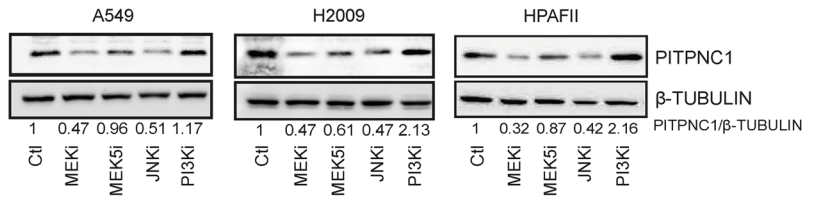
The phospholipid transporter PITPNC1 links KRAS to MYC to prevent autophagy in lung and pancreatic cancer. [Abstract]2023 May 20;22(1):86. PMID: 37210549
Omipalisib purchased from MedChemExpress. Usage Cited in: Mol Cancer. 2023 May 20;22(1):86. [Abstract]
Western blot of PITPNC1 expression in A549, H2009 and HPAFII cells treated for 24 h with pharmacologic inhibitors: Trametinib (MEKi, 0.5 μmol/L), BIX02189 (MEK5i, 10 μmol/L), SP600125 (JNKi, 10 μmol/L) or GSK2126458 (Omipalisib, PI3Ki, 0.1 μmol/L). Twenty μg of protein were loaded per sample. β-TUBULIN was used as loading marker.
-
J Hepatol
FOSL1 promotes cholangiocarcinoma via transcriptional effectors that could be therapeutically targeted. [Abstract]2021 Aug;75(2):363-376. PMID: 33887357 -
Exp Hematol Oncol
Effects of molecularly targeted therapies on murine thymus: highly selective mTOR inhibitors induce reversible thymic involution. [Abstract]2016 Jul 29:5:22. PMID: 27478685 -
Sci Transl Med
PP2A inhibition is a druggable MEK inhibitor resistance mechanism in KRAS-mutant lung cancer cells. [Abstract]2018 Jul 18;10(450):eaaq1093. PMID: 30021885 -
Clin Cancer Res
Upregulation of IGF1R by mutant RAS in leukemia and potentiation of RAS signaling inhibitors by small-molecule inhibition of IGF1R. [Abstract]2014 Nov 1;20(21):5483-95. PMID: 25186968 -
Cell Syst
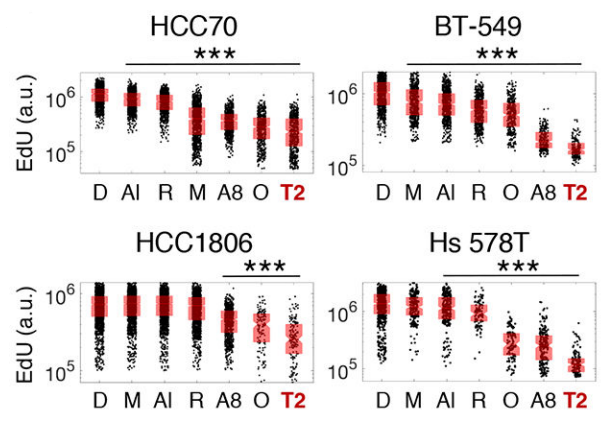
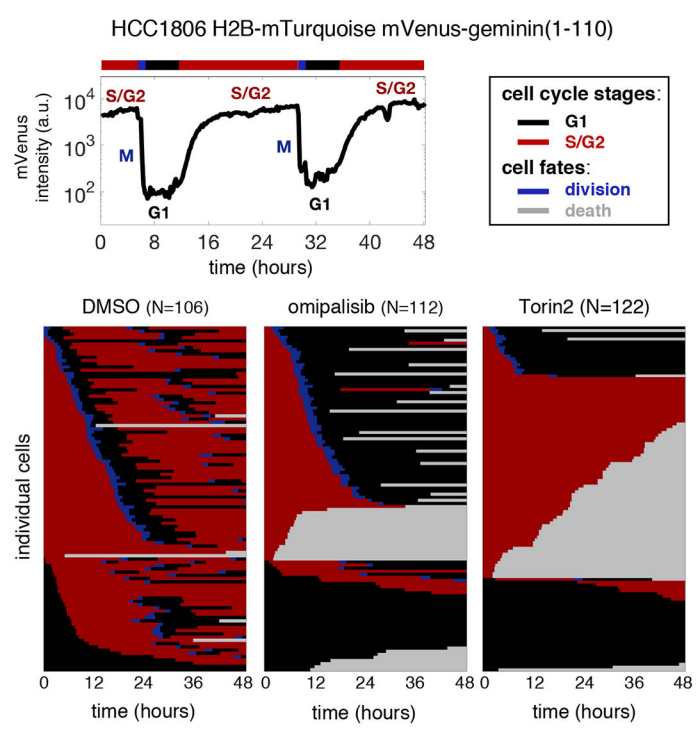
Torin2 Exploits Replication and Checkpoint Vulnerabilities to Cause Death of PI3K-Activated Triple-Negative Breast Cancer Cells. [Abstract]2020 Jan 22;10(1):66-81.e11. PMID: 31812693
Omipalisib purchased from MedChemExpress. Usage Cited in: Cell Syst. 2020 Jan 22;10(1):66-81.e11. [Abstract]
Quantification of total nuclear EdU content in gated S-phase cells (red cells, top row, panel D; SNR cells excluded). Al:alpelisib, A8:AZD8055, D:DMSO, M:MK-2206, O:Omipalisib, R:Rapamycin, T2:Torin2. P<0.001 for each drug vs DMSO (Mann-Whitney U test).
Omipalisib purchased from MedChemExpress. Usage Cited in: Cell Syst. 2020 Jan 22;10(1):66-81.e11. [Abstract]
Time-lapse imaging of asynchronous HCC1806 cells expressing H2B:mTurquoise and mVenus:hGeminin(1-110). mTurquoise was used to score cell division and death; mVenus intensity levels were used to identify cell cycle stage, as illustrated for a representative DMSO-exposed cell. Heatmaps show the progression of 340 cells through the cell cycle after exposure to DMSO or a 0.3xGRmax dose (1 μM) of Omipalisib or Torin2 for 48h. Colors denote cell cycle stages and cell fates (see legend).
Omipalisib purchased from MedChemExpress. Usage Cited in: Cell Syst. 2020 Jan 22;10(1):66-81.e11. [Abstract]
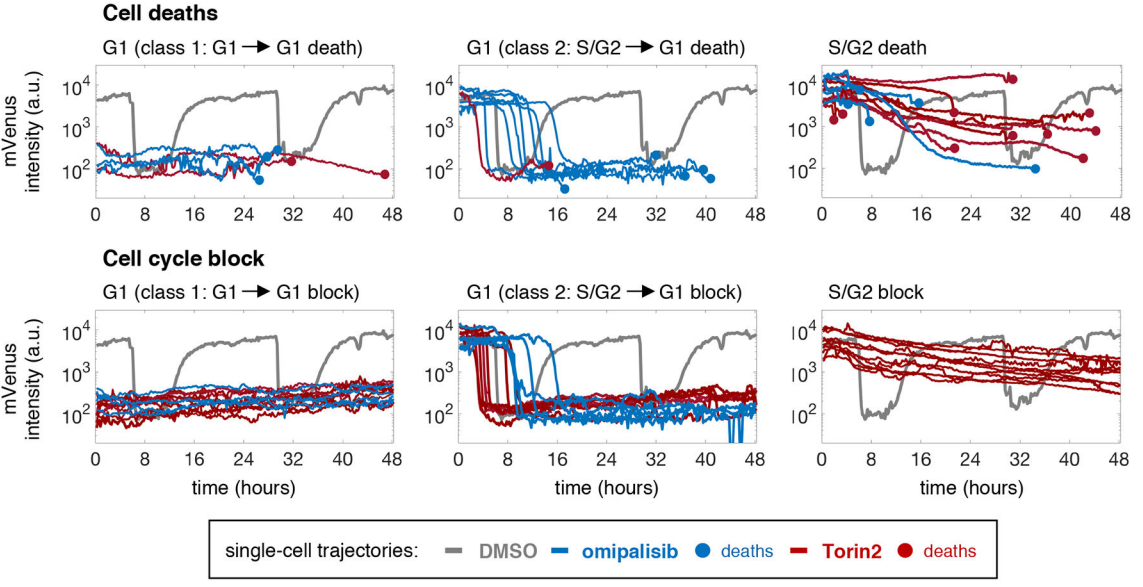
Phenotypic responses caused by drug exposure. Shown are representative traces of mVenus fluorescence intensity vs time for single cells treated with Omipalisib (blue) or Torin2 (red). The trace for a DMSO-exposed cell is shown in the background (grey) for comparison.
Omipalisib purchased from MedChemExpress. Usage Cited in: Cell Syst. 2020 Jan 22;10(1):66-81.e11. [Abstract]
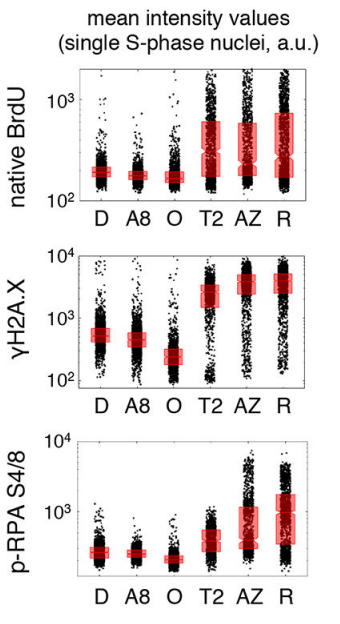
Quantification of nuclear intensity values in gated S-phase cells. Boxplots show median and 25th/75th percentiles. D:DMSO, A8:AZD8055, O:Omipalisib, T2:Torin2, AZ:AZ20, R:Rabusertib.
-
J Invest Dermatol
Identification of Small-Molecule Inhibitors Targeting Different Signaling Pathways in Cancer-Associated Fibroblast Reprogramming Under Tumor-Stroma Interaction. [Abstract]2025 Jan;145(1):65-76.e13. PMID: 38848988 -
Mol Cancer Ther
Navitoclax, a Bcl-2/xL Inhibitor, and YM155, a Survivin Inhibitor, in Combination with Carboplatin, Effectively Inhibit Ovarian Cancer Tumor Growth. [Abstract]2025 Apr 28:OF1-OF13. PMID: 40293279 -
Ecotoxicol Environ Saf
The ROS/AKT/S6K axis induces corneal epithelial dysfunctions under LED blue light exposure. [Abstract]2024 Nov 15:287:117345. PMID: 39541698 -
Mol Cancer Res
2019 Jun;17(6):1378-1390. PMID: 30858172 -
Front Pharmacol
CC-223, NSC781406, and BGT226 Exerts a Cytotoxic Effect Against Pancreatic Cancer Cells via mTOR Signaling. [Abstract]2020 Nov 11:11:580407. PMID: 33343350 -
Molecules
In Vitro and in Vivo Activity of mTOR Kinase and PI3K Inhibitors Against Leishmania donovani and Trypanosoma brucei. [Abstract]2020 Apr 23;25(8):1980. PMID: 32340370 -
Cancer Res Commun
Remodeling of Stromal Immune Microenvironment by Urolithin A Improves Survival with Immune Checkpoint Blockade in Pancreatic Cancer. [Abstract]2023 Jul 12;3(7):1224-1236. PMID: 37448553 -
Anal Methods
Estimation of the metabolic stability of omipalisib in human liver microsomes employing an ultra-fast UPLC-MS/MS approach: in silico screening for structural alarms and metabolic lability. [Abstract]2026 Feb 5;18(5):1101-1115. PMID: 41586454 -
PLoS One
2026 Jun 23;21(6):e0352120. PMID: 42335126 -
-
Blood Neoplasia
From cell lines to PDXs: in vivo confirmation of synergistic drug responses identified in leukemia cell line models. [Abstract]2026 Apr 9;3(3):100230. PMID: 42294111 -
bioRxiv
A pharmacological toolkit for human microglia identifies Topoisomerase I inhibitors as immunomodulators for Alzheimer's disease. [Abstract]2024 Feb 6:2024.02.06.579103. PMID: 38370689 -
-
-
J Clin Toxicol 2014, 4:5


Solvent & Solubility
In Vitro:
DMSO : 50 mg/mL (98.91 mM; Need ultrasonic; Hygroscopic DMSO has a significant impact on the solubility of product, please use newly opened DMSO)
Please refer to the solubility information to select the appropriate solvent. Once prepared, please aliquot and store the solution to prevent product inactivation from repeated freeze-thaw cycles.
Storage method and period of stock solution: -80°C, 2 years; -20°C, 1 year. When stored at -80°C, please use it within 2 years. When stored at -20°C, please use it within 1 year.
Please refer to the solubility information to select the appropriate solvent. Once prepared, please aliquot and store the solution to prevent product inactivation from repeated freeze-thaw cycles.
Storage method and period of stock solution: -80°C, 2 years; -20°C, 1 year. When stored at -80°C, please use it within 2 years. When stored at -20°C, please use it within 1 year.
Concentration (start) × Volume (start) = Concentration (final) × Volume (final)
In Vivo:
Select the appropriate dissolution method based on your experimental animal and administration route.
- For the following dissolution methods, please ensure to first prepare a clear stock solution using an In Vitro approach and then sequentially add co-solvents:
- To ensure reliable experimental results, the clarified stock solution can be appropriately stored based on storage conditions. As for the working solution for In Vivo experiments, it is recommended to prepare freshly and use it on the same day.
- The percentages shown for the solvents indicate their volumetric ratio in the final prepared solution. If precipitation or phase separation occurs during preparation, heat and/or sonication can be used to aid dissolution.
Add each solvent one by one: 10% DMSO 40% PEG300 5% Tween-80 45% Saline
Solubility: ≥ 2.5 mg/mL (4.95 mM); Clear solution
This protocol yields a clear solution of ≥ 2.5 mg/mL (saturation unknown).
Taking 1 mL working solution as an example, add 100 μL DMSO stock solution (25.0 mg/mL) to 400 μL PEG300, and mix evenly; then add 50 μL Tween-80 and mix evenly; then add 450 μL Saline to adjust the volume to 1 mL.
Preparation of Saline: Dissolve 0.9 g sodium chloride in ddH₂O and dilute to 100 mL to obtain a clear Saline solution.
In Vivo Dissolution Calculator
Please enter the basic information of animal experiments:
-
-
-
-
Recommended: Prepare an additional quantity of animals to account for potential losses during experiments.
Please enter your animal formula composition:
-
%DMSO +
Recommended: Keep the proportion of DMSO in working solution below 2% if your animal is weak.
-
%+
-
+%Tween-80 + +
-
%Saline +
The co-solvents required include: DMSO, . All of co-solvents are available by MedChemExpress (MCE). , Tween 80. All of co-solvents are available by MedChemExpress (MCE).
Working solution concentration: 0.22 mg/mL
Method for preparing stock solution: mg drug dissolved in μL DMSO. Stock solution concentration: mg/mL.
1. Take μL DMSO stock solution;
2. Add μL .
μL , mix evenly;
3. Then add μL Tween 80, mix evenly;
4. Then add μL
Please ensure that the stock solution in the first step is dissolved to a clear state, and add co-solvents in sequence. You can use ultrasonic heating (ultrasonic cleaner, recommended frequency 20-40 kHz), vortexing, etc. to assist dissolution.


Purity & Documentation
-
Data Sheet (285 KB)
-
SDS (393 KB)
- English - EN (393 KB)
- Français - FR (393 KB)
- Deutsch - DE (393 KB)
- Norwegian - NO (393 KB)
- Español - ES (393 KB)
- Swedish - SV (393 KB)
- Italian - IT (393 KB)
- Korean - KR (393 KB)
- Portuguese - PT (393 KB)
-
Handling Instructions (2659 KB)
References
[1]. Knight SD, et al. Discovery of GSK2126458, a Highly Potent Inhibitor of PI3K and the Mammalian Target of Rapamycin. ACS Med. Chem. Lett. 2010, 1 (1), 39-43. [Content Brief]
[2]. Greger JG, et al. Combinations of BRAF, MEK, and PI3K/mTOR inhibitors overcome acquired resistance to the BRAF inhibitor GSK2118436 dabrafenib, mediated by NRAS or MEK mutations. Mol Cancer Ther. 2012 Apr;11(4):909-20. [Content Brief]
[3]. Kim HG, et al. Discovery of a potent and selective DDR1 receptor tyrosine kinase inhibitor. ACS Chem Biol. 2013 Oct 18;8(10):2145-50. [Content Brief]


Complete Stock Solution Preparation Table
Please refer to the solubility information to select the appropriate solvent. Once prepared, please aliquot and store the solution to prevent product inactivation from repeated freeze-thaw cycles.
Storage method and period of stock solution: -80°C, 2 years; -20°C, 1 year. When stored at -80°C, please use it within 2 years. When stored at -20°C, please use it within 1 year.
| Optional Solvent | Concentration Solvent Mass | 1 mg | 5 mg | 10 mg | 25 mg |
|---|---|---|---|---|---|
| DMSO | 1 mM | 1.9782 mL | 9.8912 mL | 19.7824 mL | 49.4560 mL |
| 5 mM | 0.3956 mL | 1.9782 mL | 3.9565 mL | 9.8912 mL | |
| 10 mM | 0.1978 mL | 0.9891 mL | 1.9782 mL | 4.9456 mL | |
| 15 mM | 0.1319 mL | 0.6594 mL | 1.3188 mL | 3.2971 mL | |
| 20 mM | 0.0989 mL | 0.4946 mL | 0.9891 mL | 2.4728 mL | |
| 25 mM | 0.0791 mL | 0.3956 mL | 0.7913 mL | 1.9782 mL | |
| 30 mM | 0.0659 mL | 0.3297 mL | 0.6594 mL | 1.6485 mL | |
| 40 mM | 0.0495 mL | 0.2473 mL | 0.4946 mL | 1.2364 mL | |
| 50 mM | 0.0396 mL | 0.1978 mL | 0.3956 mL | 0.9891 mL | |
| 60 mM | 0.0330 mL | 0.1649 mL | 0.3297 mL | 0.8243 mL | |
| 80 mM | 0.0247 mL | 0.1236 mL | 0.2473 mL | 0.6182 mL |


Omipalisib Related Classifications
HY-10297 Related Classifications
 Powered by Bioz