



(S,R,S)-AHPC monohydrochloride
Based on 3 publication(s) in Google Scholar
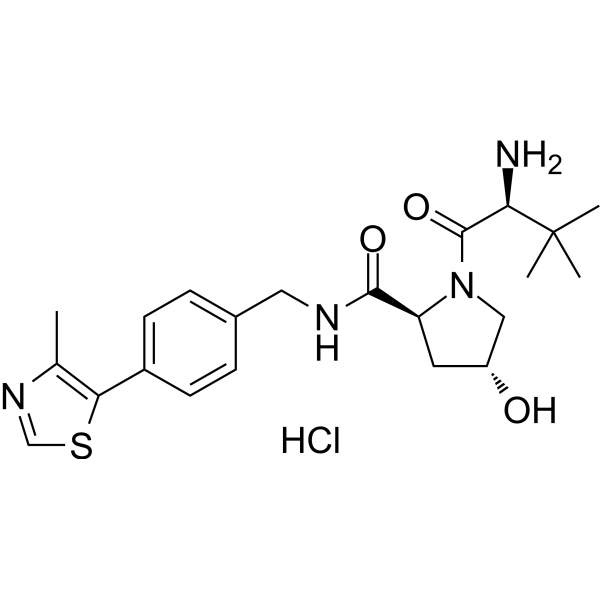
(S,R,S)-AHPC (VH032-NH2; VHL ligand 1) hydrochloride is the VH032-based VHL ligand used in the recruitment of the von Hippel-Lindau (VHL) protein.
For research use only. We do not sell to patients.
- Purity : 99.83%
- CAS No.: 1448189-80-7
- Formula: C22H31ClN4O3S
- Molecular Weight:467.02
-
Storage:
-20°C, stored under nitrogen
* In solvent : -80°C, 6 months; -20°C, 1 month (stored under nitrogen)

To place orders, for customer services and technical support, please contact: MedChemExpress USA
Tel: 609-228-6898 E-mail: [email protected] [email protected]


-
 Biological Activity
-
Chemical Information
-
Solvent & Solubility
- Purity & Documentation
- References
-
 Help & FAQs


-
HY-10984
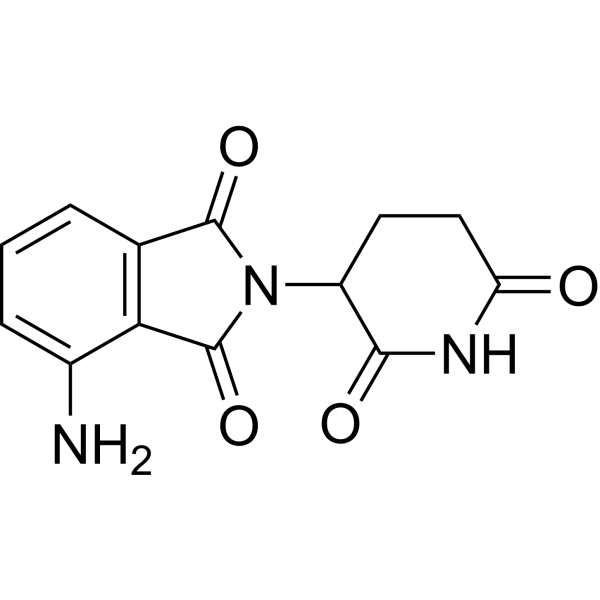
PomalidomideImmunomodulatory Agent -
HY-14658
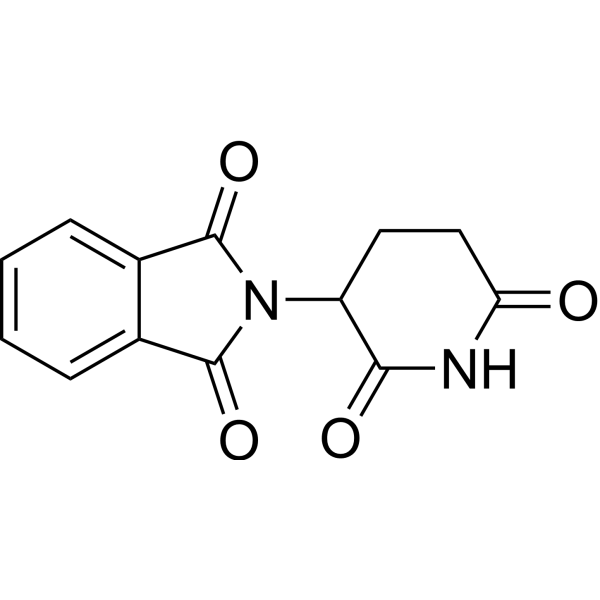
ThalidomideCereblon Inhibitor -
HY-13030
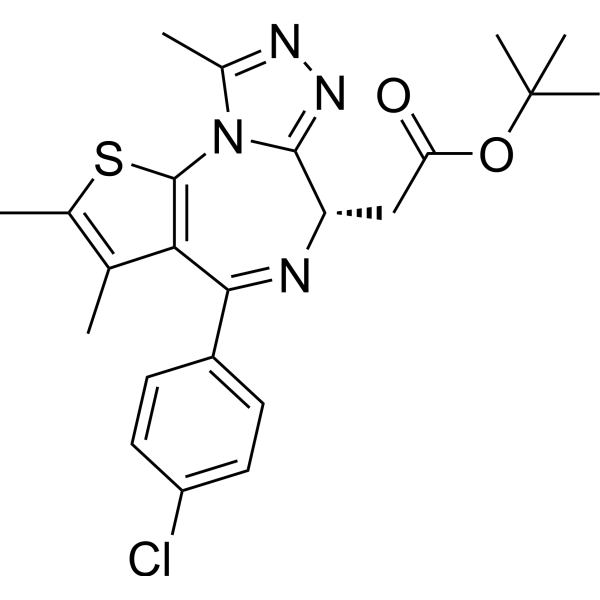
(+)-JQ-1BET Inhibitor -
HY-107425
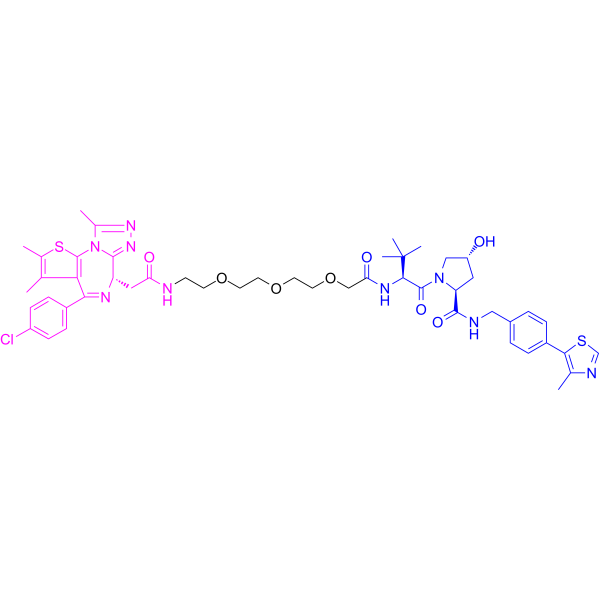
MZ 1PROTAC BRD4 Degrader -
HY-B0879A
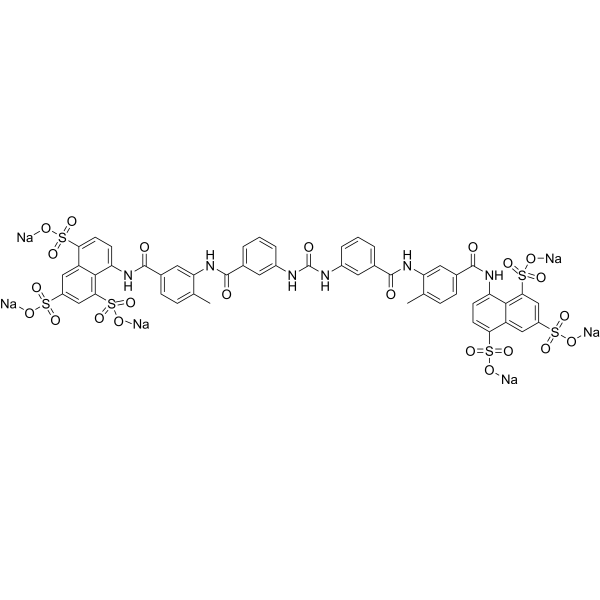
Suramin sodium saltPTPases Inhibitor -
HY-103602
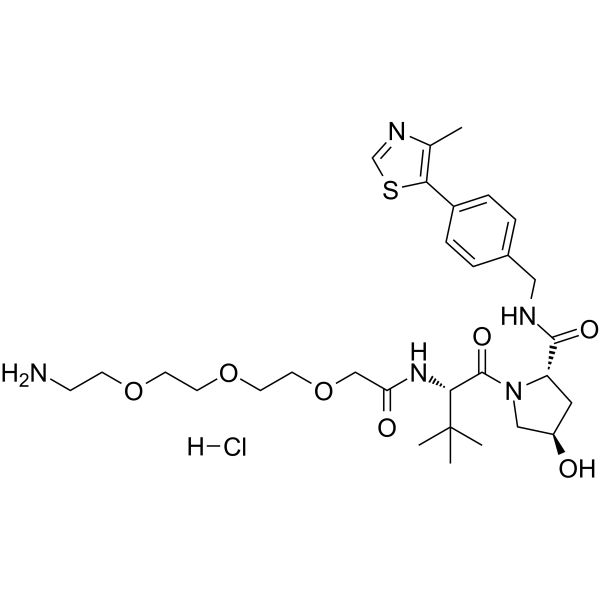
(S,R,S)-AHPC-PEG3-NH2 hydrochlorideE3 Ligase Ligand-Linker Conjugate -
HY-16954
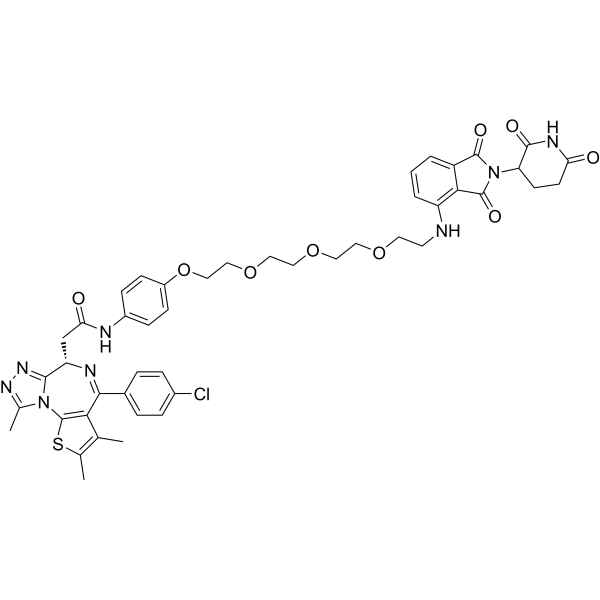
ARV-825PROTAC BRD2/BRD3/BRD4 Degrader -
HY-42110
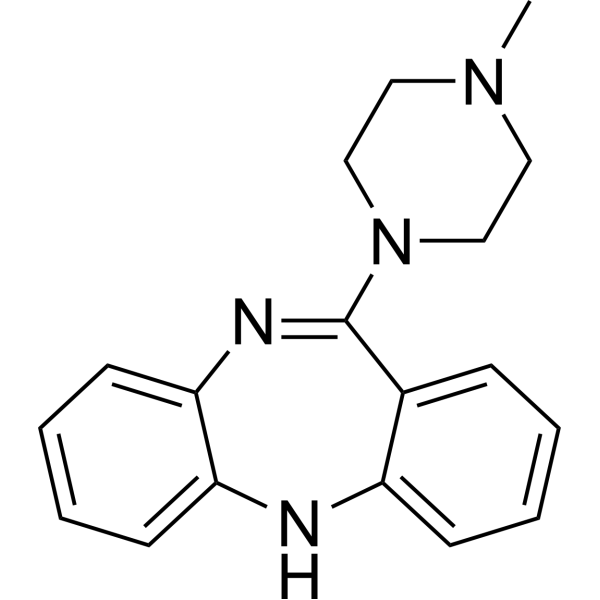
DeschloroclozapineMuscarinic-based DREADDs Agonist -
HY-150095
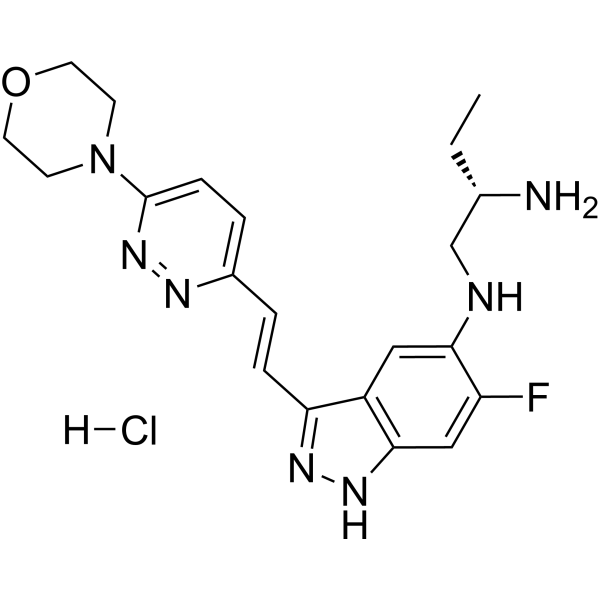
YE6144IRF5 Inhibitor -
HY-16111
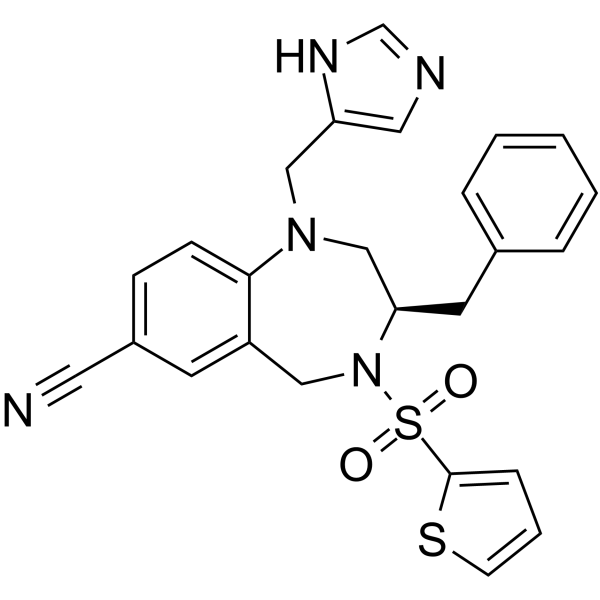
BMS-214662Farnesyl Transferase Inhibitor -
HY-122826
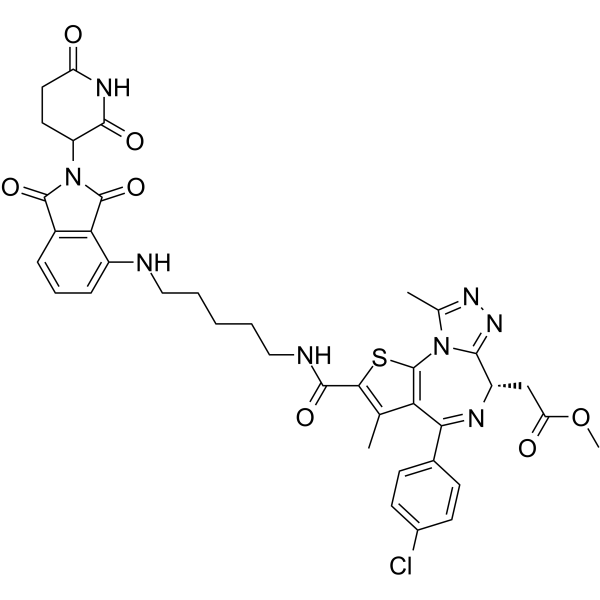
ZXH-3-26BRD4 PROTAC Degrader -
HY-111433
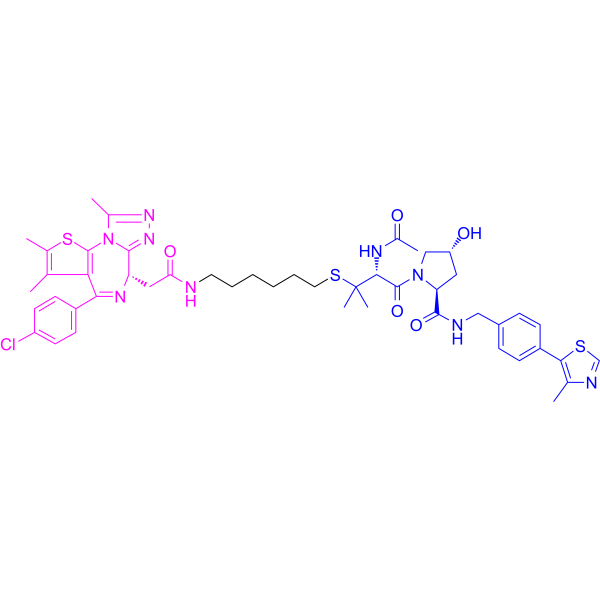
BRD4 degrader AT1BRD4 PROTAC Degrader
Publications Citing Use of MedChemExpress (MCE) (S,R,S)-AHPC monohydrochloride
More

Biological Activity
Description
IC50 & Target
|
VHL |
In Vitro
The VHL protein is a substrate recognition subunit of two ubiquitously expressed and biologically important Cullin RING E3 ubiquitin ligase complexes. VHL is one of the most popular E3 ligases being recruited by bifunctional Proteolysis-targeting chimeras (PROTACs) to induce ubiquitination and subsequent proteasomal degradation of a target protein[1].
MedChemExpress (MCE) has not independently confirmed the accuracy of these methods. They are for reference only. .


Chemical Information
-
CAS No. 1448189-80-7
-
Appearance Solid
-
Molecular Weight 467.02
-
Formula C22H31ClN4O3S
-
Color White to yellow
-
SMILES
O=C([C@H](C[C@@H](O)C1)N1C([C@@H](N)C(C)(C)C)=O)NCC2=CC=C(C(SC=N3)=C3C)C=C2.Cl
-
Synonyms
VH032-NH2 monohydrochloride; VHL ligand 1 monohydrochloride
-
Shipping
Room temperature in continental US; may vary elsewhere.
-
Storage
-20°C, stored under nitrogen
* In solvent : -80°C, 6 months; -20°C, 1 month (stored under nitrogen)


Publications (3)
-
Journal Impact Factor
-
Most Recent
-
Cell Rep Med
Intracellular sclerostin promotes tumor progression and metastasis as a potential therapeutic target in triple-negative breast cancer. [Abstract]2026 May 19;7(5):102763. PMID: 42030934 -
-


Solvent & Solubility
In Vitro:
DMSO : 116.67 mg/mL (249.82 mM; Need ultrasonic; Hygroscopic DMSO has a significant impact on the solubility of product, please use newly opened DMSO)
H2O : 100 mg/mL (214.12 mM; Need ultrasonic)
Please refer to the solubility information to select the appropriate solvent. Once prepared, please aliquot and store the solution to prevent product inactivation from repeated freeze-thaw cycles.
Storage method and period of stock solution: -80°C, 6 months; -20°C, 1 month (stored under nitrogen). When stored at -80°C, please use it within 6 months. When stored at -20°C, please use it within 1 month.
* Note: If you choose water as the stock solution, please dilute it to the working solution, then filter and sterilize it with a 0.22 μm filter before use.
Please refer to the solubility information to select the appropriate solvent. Once prepared, please aliquot and store the solution to prevent product inactivation from repeated freeze-thaw cycles.
Storage method and period of stock solution: -80°C, 6 months; -20°C, 1 month (stored under nitrogen). When stored at -80°C, please use it within 6 months. When stored at -20°C, please use it within 1 month.
* Note: If you choose water as the stock solution, please dilute it to the working solution, then filter and sterilize it with a 0.22 μm filter before use.
Concentration (start) × Volume (start) = Concentration (final) × Volume (final)
In Vivo:
Select the appropriate dissolution method based on your experimental animal and administration route.
- For the following dissolution methods, please ensure to first prepare a clear stock solution using an In Vitro approach and then sequentially add co-solvents:
- To ensure reliable experimental results, the clarified stock solution can be appropriately stored based on storage conditions. As for the working solution for In Vivo experiments, it is recommended to prepare freshly and use it on the same day.
- The percentages shown for the solvents indicate their volumetric ratio in the final prepared solution. If precipitation or phase separation occurs during preparation, heat and/or sonication can be used to aid dissolution.
Add each solvent one by one: 10% DMSO 40% PEG300 5% Tween-80 45% Saline
Solubility: ≥ 2.08 mg/mL (4.45 mM); Clear solution
This protocol yields a clear solution of ≥ 2.08 mg/mL (saturation unknown).
Taking 1 mL working solution as an example, add 100 μL DMSO stock solution (20.8 mg/mL) to 400 μL PEG300, and mix evenly; then add 50 μL Tween-80 and mix evenly; then add 450 μL Saline to adjust the volume to 1 mL.
Preparation of Saline: Dissolve 0.9 g sodium chloride in ddH₂O and dilute to 100 mL to obtain a clear Saline solution.
Add each solvent one by one: 10% DMSO 90% (20% SBE-β-CD in Saline)
Solubility: ≥ 2.08 mg/mL (4.45 mM); Clear solution
This protocol yields a clear solution of ≥ 2.08 mg/mL (saturation unknown).
Taking 1 mL working solution as an example, add 100 μL DMSO stock solution (20.8 mg/mL) to 900 μL 20% SBE-β-CD in Saline, and mix evenly.
Preparation of 20% SBE-β-CD in Saline (4°C, storage for one week): 2 g SBE-β-CD powder is dissolved in 10 mL Saline, completely dissolve until clear.
For the following dissolution methods, please prepare the working solution directly:
It is recommended to prepare fresh solutions and use them promptly within a short period of time.
The percentages shown for the solvents indicate their volumetric ratio in the final prepared solution. If precipitation or phase separation occurs during preparation, heat and/or sonication can be used to aid dissolution.
Add each solvent one by one: PBS
Solubility: 100 mg/mL (214.12 mM); Clear solution; Need ultrasonic
In Vivo Dissolution Calculator
Please enter the basic information of animal experiments:
-
-
-
-
Recommended: Prepare an additional quantity of animals to account for potential losses during experiments.
Working solution concentration: 0.22 mg/mL
This product has good water solubility, please refer to the measured solubility data in water/PBS/Saline for details.


Purity & Documentation
-
Data Sheet (276 KB)
-
SDS (394 KB)
- English - EN (394 KB)
- Français - FR (394 KB)
- Deutsch - DE (394 KB)
- Norwegian - NO (394 KB)
- Español - ES (394 KB)
- Swedish - SV (394 KB)
- Italian - IT (394 KB)
- Korean - KR (394 KB)
- Portuguese - PT (394 KB)
-
Handling Instructions (2659 KB)
References
[1]. Buckley DL, et al. HaloPROTACS: Use of Small Molecule PROTACs to Induce Degradation of HaloTag Fusion Proteins.ACS Chem Biol. 2015 Aug 21;10(8):1831-7. [Content Brief]
[2]. Krieger J, et al. Systematic Potency and Property Assessment of VHL Ligands and Implications on PROTAC Design. ChemMedChem. 2023 Apr 17;18(8):e202200615. [Content Brief]
[3]. Vu LP, et al. Expanding the Structural Diversity at the Phenylene Core of Ligands for the von Hippel-Lindau E3 Ubiquitin Ligase: Development of Highly Potent Hypoxia-Inducible Factor-1α Stabilizers[J]. J Med Chem. 2023 Sep 28;66(18):12776-12811. [Content Brief]


Complete Stock Solution Preparation Table
Please refer to the solubility information to select the appropriate solvent. Once prepared, please aliquot and store the solution to prevent product inactivation from repeated freeze-thaw cycles.
Storage method and period of stock solution: -80°C, 6 months; -20°C, 1 month (stored under nitrogen). When stored at -80°C, please use it within 6 months. When stored at -20°C, please use it within 1 month.
| Optional Solvent | Concentration Solvent Mass | 1 mg | 5 mg | 10 mg | 25 mg |
|---|---|---|---|---|---|
| H2O / DMSO | 1 mM | 2.1412 mL | 10.7062 mL | 21.4124 mL | 53.5309 mL |
| 5 mM | 0.4282 mL | 2.1412 mL | 4.2825 mL | 10.7062 mL | |
| 10 mM | 0.2141 mL | 1.0706 mL | 2.1412 mL | 5.3531 mL | |
| 15 mM | 0.1427 mL | 0.7137 mL | 1.4275 mL | 3.5687 mL | |
| 20 mM | 0.1071 mL | 0.5353 mL | 1.0706 mL | 2.6765 mL | |
| 25 mM | 0.0856 mL | 0.4282 mL | 0.8565 mL | 2.1412 mL | |
| 30 mM | 0.0714 mL | 0.3569 mL | 0.7137 mL | 1.7844 mL | |
| 40 mM | 0.0535 mL | 0.2677 mL | 0.5353 mL | 1.3383 mL | |
| 50 mM | 0.0428 mL | 0.2141 mL | 0.4282 mL | 1.0706 mL | |
| 60 mM | 0.0357 mL | 0.1784 mL | 0.3569 mL | 0.8922 mL | |
| 80 mM | 0.0268 mL | 0.1338 mL | 0.2677 mL | 0.6691 mL | |
| 100 mM | 0.0214 mL | 0.1071 mL | 0.2141 mL | 0.5353 mL |
* Note: If you choose water as the stock solution, please dilute it to the working solution, then filter and sterilize it with a 0.22 μm filter before use.


(S,R,S)-AHPC monohydrochloride Related Classifications
HY-101763A Related Classifications
 Powered by Bioz