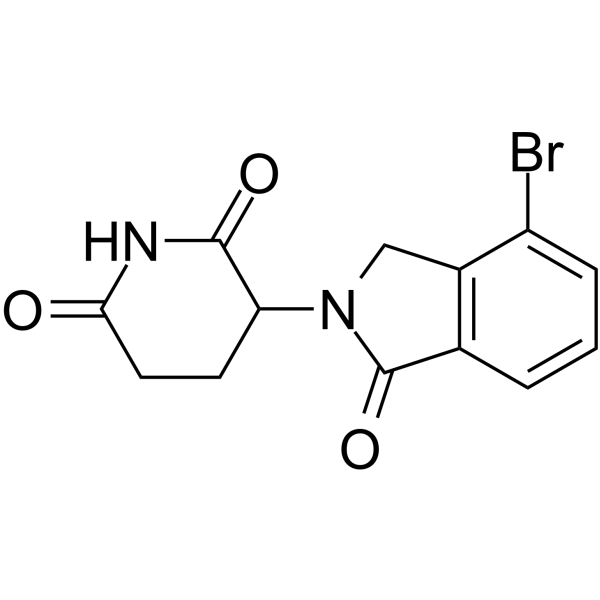
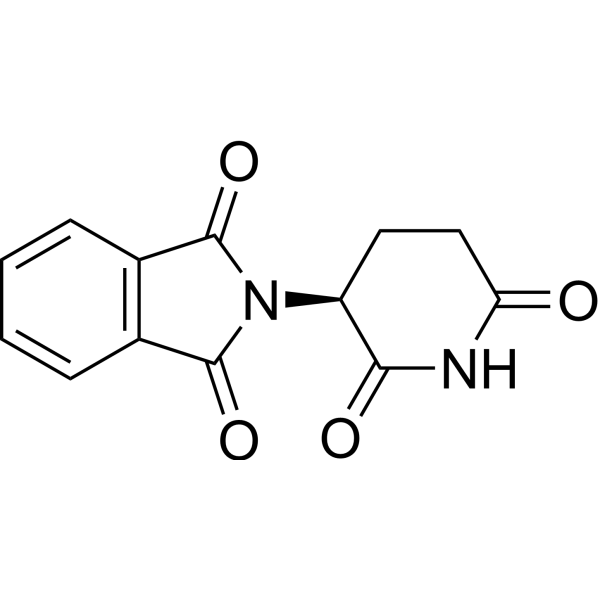
Cereblon
Cereblon (CRBN) functions as the substrate receptor of the CRL4 E3 ubiquitin ligase, mediating protein ubiquitination and degradation[1]. Mechanistically, CRBN regulates the Wnt signaling pathway by targeting Casein kinase 1α (CK1α), a negative regulator of β-Catenin, for degradation[1]. This Wnt-dependent modulation of CRBN influences developmental and disease-relevant phenotypes in zebrafish and Drosophila models[1]. Clinically, CRBN mutations have been identified in multiple myeloma patients with extramedullary disease, conferring resistance to immunomodulatory drugs (IMiDs) and highlighting its role in drug responsiveness[2]. Notably, these mutations include a Q99 truncating mutation and an R283K point mutation, impairing CRBN-mediated anti-myeloma activity[2]. Compared with related ubiquitin ligase substrate receptors, CRBN exhibits unique specificity for neo-substrates under both IMiD-bound and unbound conditions, distinguishing its functional isoform-dependent effects[1][2]. CRBN-targeted agonists, including IMiDs, exploit this substrate specificity to induce selective protein degradation, providing a basis for experimental modulation of Wnt and cancer-related pathways[1][2]. Therefore, CRBN serves as a central regulator of ubiquitin-mediated proteostasis, bridging signal transduction, disease pathophysiology, and therapeutic interventions[1][2].
References:
- [1]. Shen C, et al. The E3 ubiquitin ligase component, Cereblon, is an evolutionarily conserved regulator of Wnt signaling. Nat Commun. 2021 Sep 6;12(1):5263. [Content Brief]
- [2]. Egan JB, et al. Extramedullary myeloma whole genome sequencing reveals novel mutations in Cereblon, proteasome subunit G2 and the glucocorticoid receptor in multi drug resistant disease. Br J Haematol. 2013 Jun;161(5):748-751. [Content Brief]
-
Cereblon Related Products (929)
Related Products (929)

-
Pomalidomide
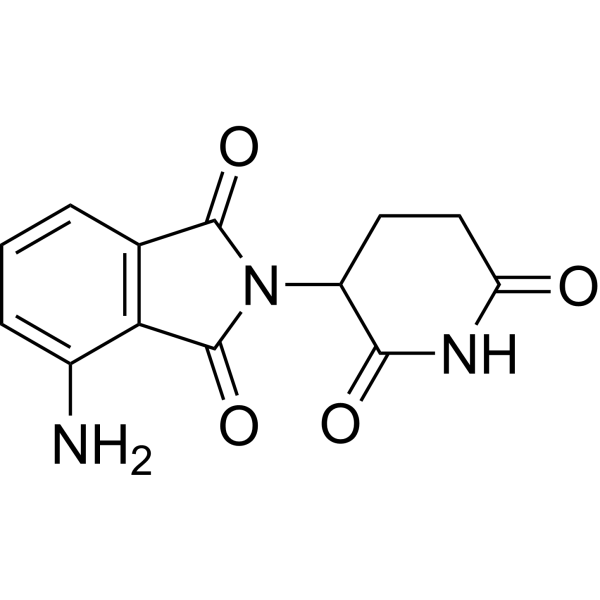 0 ImagesSynonyms: CC-4047Pomalidomide, the third-generation immunomodulatory agent, acts as molecular glue. Pomalidomide interacts with the E3 ligase cereblon and induces degradation of essential Ikaros transcription factors.
-
Lenalidomide
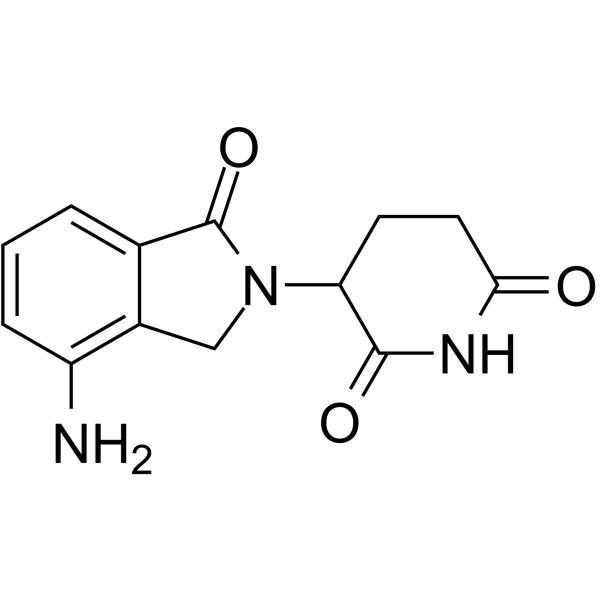 0 ImagesSynonyms: CC-5013Lenalidomide (CC-5013) is an orally active immunomodulatory agent that binds CRBN as a molecular glue to alter substrate specificity, inducing ubiquitination and proteasome-dependent degradation of IKZF1, IKZF3 and CK1α. Lenalidomide induces apoptosis by degrading IKZF1/3, and activates p53 by degrading CK1α. Lenalidomide promotes IL-2 release and effector functions of CD8+ T/NK cells, while inhibiting TNF-α secretion and M1-type pyroptosis. Lenalidomide can be used in research related to hematological malignancies, acute liver failure and acute kidney injury.
-
CC-885
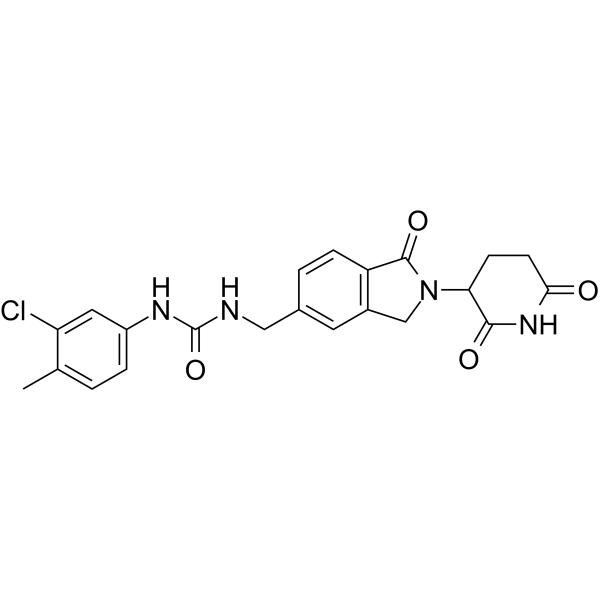 0 ImagesCC-885, a cereblon (CRBN) modulator, acts as a molecular glue degrader targeting GSPT1 with a Kd of 350 nM. CC-885 binds to CRBN to alter the substrate specificity of the CRL4 E3 ligase, promoting the ubiquitination and proteasomal degradation of GSPT1, BNIP3L, PLK1, CDK4, IKZF1/3, GSPT2, WIZ, CHD7, GOLM1, CK1α and ETS1. CC-885 induces apoptosis, cell cycle arrest, transcriptional downregulation and antiproliferation in cancer cells. CC-885 is applicable to research related to relapsed/refractory acute myeloid leukemia, MYC-driven tumors, metastatic castration-resistant prostate cancer, multiple myeloma, hepatocellular carcinoma, glioblastoma, VHL-deficient clear cell renal cell carcinoma and non-small cell lung cancer.
-
Iberdomide
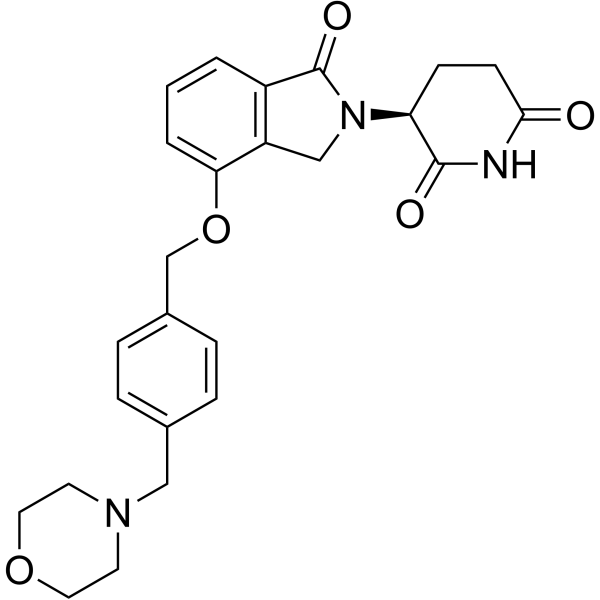 0 ImagesSynonyms: CC-220Iberdomide (CC-220) is an orally active and potent cereblon (CRBN) E3 ligase modulator (CELMoD) with an IC50 of ~150 nM for cereblon-binding affinity. Iberdomide, a derivative of Thalidomide (HY-14658), has antitumor and immunostimulatory activities.
-
PT-179
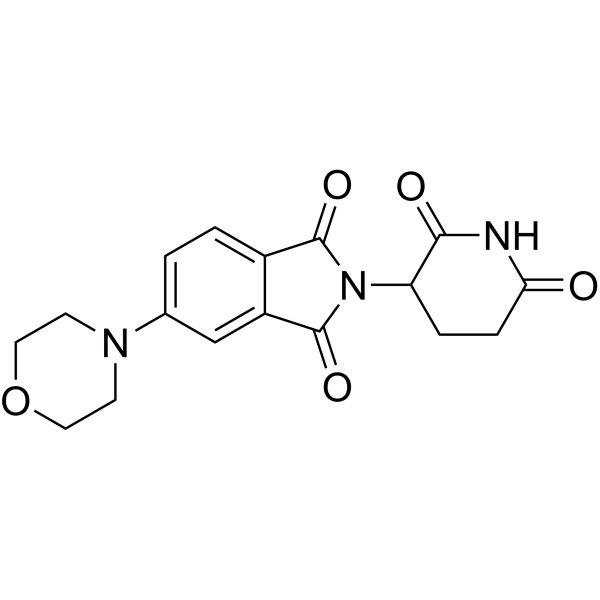 0 ImagesPT-179 is an orthogonal Thalidomide (HY-14658) derivative that targets cereblon without causing off-target degradation effects. PT-179 is able to specifically bind CRBN, form a ternary complex with a target protein fused to a zinc finger (ZF) degron, and mediate the degradation of the tagged protein. For example, PT-179 binds to the ubiquitin ligase substrate receptor cereblon by forming a complex with SD40 and efficiently degrades proteins N- or C-terminally fused to SD40 or SD36 (DC50 for eGFP: 4.5 nM and 14.3 nM). PT-179 can be used to develop compact protein degradation tagging platforms.
-
Golcadomide
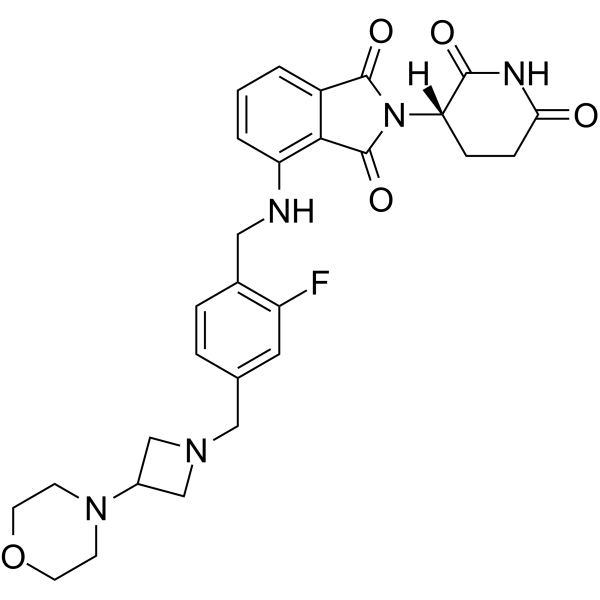 0 ImagesSynonyms: CC-99282Golcadomide (CC-99282) is a blood-brain barrier-permeable, orally active Cereblon (CRBN) E3 ligase modulator. Golcadomide induces Cereblon to form a closed active conformation, thereby recruiting and triggering the ubiquitin-mediated proteasomal degradation of transcription factors IKZF1, IKZF3, Ikaros and Aiolos. Golcadomide is applicable to research related to relapsed or refractory non-Hodgkin lymphoma, chronic lymphocytic leukemia/small lymphocytic lymphoma, and diffuse large B-cell lymphoma.
-
BMS-986397
 0 ImagesBMS-986397 is a potent, selective, and orally active cereblon-based molecular glue degrader of casein kinase 1α (CK1α). BMS-986397 induces apoptosis and cell cycle arrest in acute myeloid leukemia (AML) cells. BMS-986397 is a promising agent for the investigation of AML and high-risk myelodysplastic syndromes (HR-MDS).
-
Lenalidomide hemihydrate
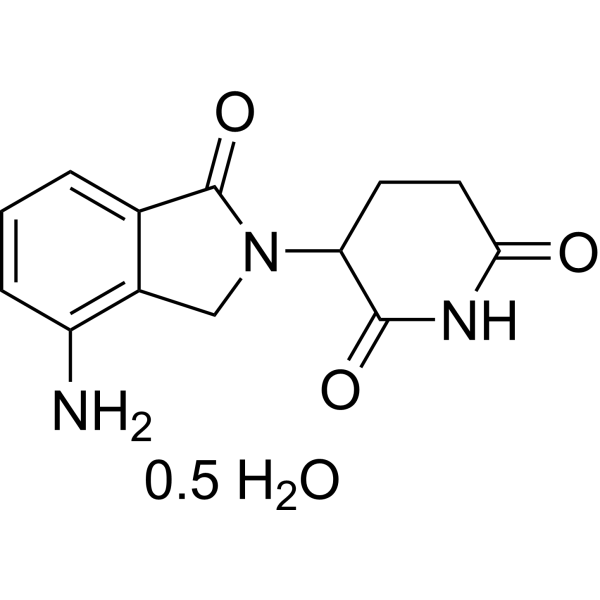 0 ImagesSynonyms: CC-5013 hemihydrateLenalidomide hemihydrate (CC-5013 hemihydrate) is an orally active immunomodulatory agent that binds CRBN as a molecular glue to alter substrate specificity, inducing ubiquitination and proteasome-dependent degradation of IKZF1, IKZF3 and CK1α. Lenalidomide hemihydrate induces apoptosis by degrading IKZF1/3, and activates p53 by degrading CK1α. Lenalidomide hemihydrate promotes IL-2 release and effector functions of CD8+ T/NK cells, while inhibiting TNF-α secretion and M1-type pyroptosis. Lenalidomide hemihydrate can be used in research related to hematological malignancies, acute liver failure and acute kidney injury.
-
E3 ligase Ligand 63
 0 ImagesE3 ligase Ligand 63 is an E3 ligase ligand that can be used to synthesize CDK2 degrader 2 (HY-163815).

-
CC-3060
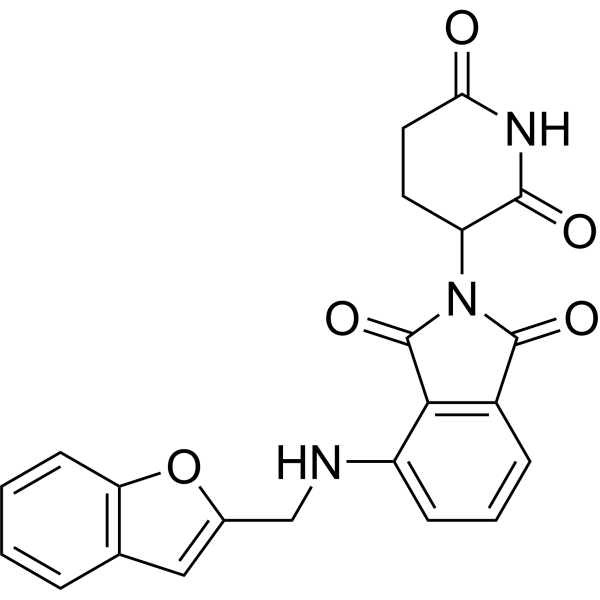 0 ImagesCC-3060 is a molecular glue modulator targeting Cereblon (CRBN) E3 ubiquitin ligase and ZBTB16 degrader with a DC50 of 0.47 nM in HT-1080 cells. CC-3060 engages structural degrons on ZBTB16’s ZnF1 or ZnF3 domains for fusion protein substrates. CC-3060 can be used for the research of acute promyelocytic leukemia.
-
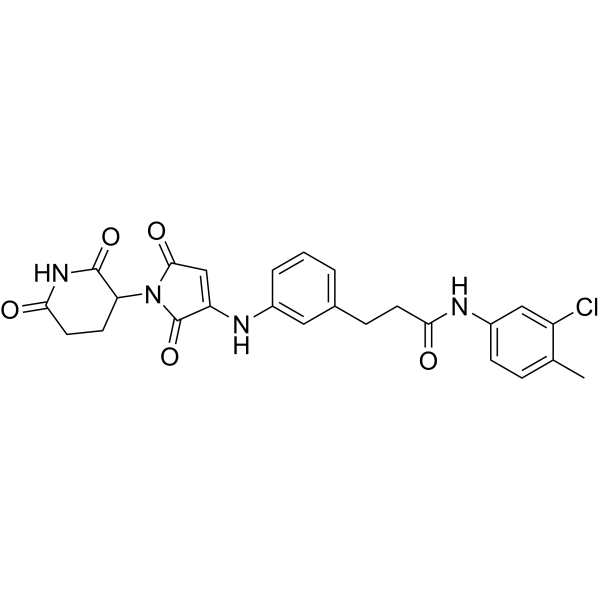
ALV2
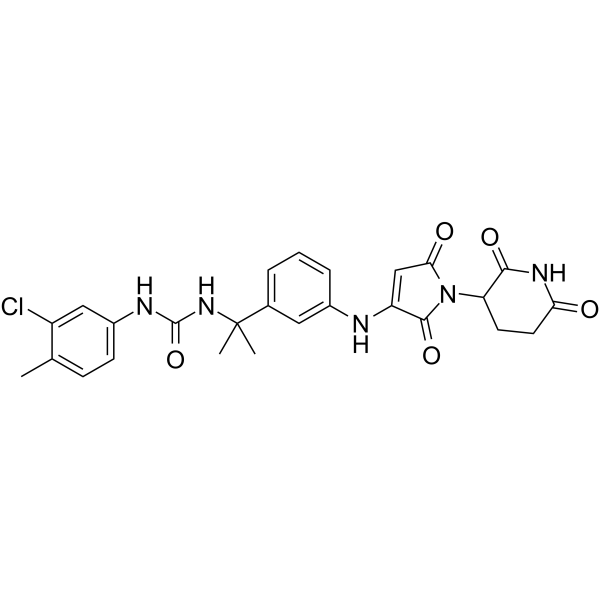 0 ImagesALV2 is a potent and selective Helios molecular glue degrader. ALV2 binds CRBN, with an IC50 of 0.57 μM. Helios is the zinc-finger transcription factor that can maintain a stable Treg cell phenotype in the inflammatory tumor microenvironment.

-
BODIPY FL thalidomide
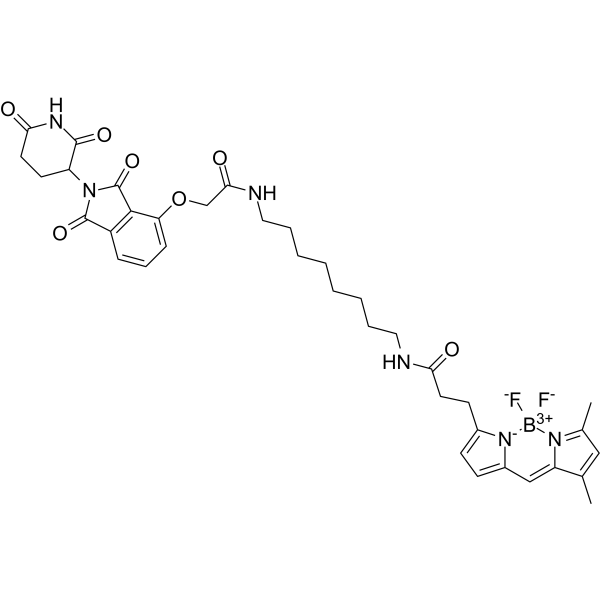 0 ImagesBODIPY FL thalidomide is a high-affinity and selective human cereblon (CRBN)-targeting fluorescent probe with a Kd of 3.6 nM. BODIPY FL thalidomide enables use as a probe in time-resolved fluorescence resonance energy transfer (TR-FRET) binding assays for cereblon ligands. BODIPY FL thalidomide supports development of highly sensitive, selective, stable cereblon TR-FRET binding assays (Ex/Em = 502/510 nm).

-
Glutarimide
 0 ImagesGlutarimide is a CRBN binder. Glutarimide exerts its function by binding to the thalidomide-binding domain of the CRBN protein. Glutarimide serves as an important structural component of many biologically active compounds. Glutarimide can be used in studies related to anemia, multiple myeloma and cycloheximide.