



Eragidomide
Based on 7 publication(s) in Google Scholar
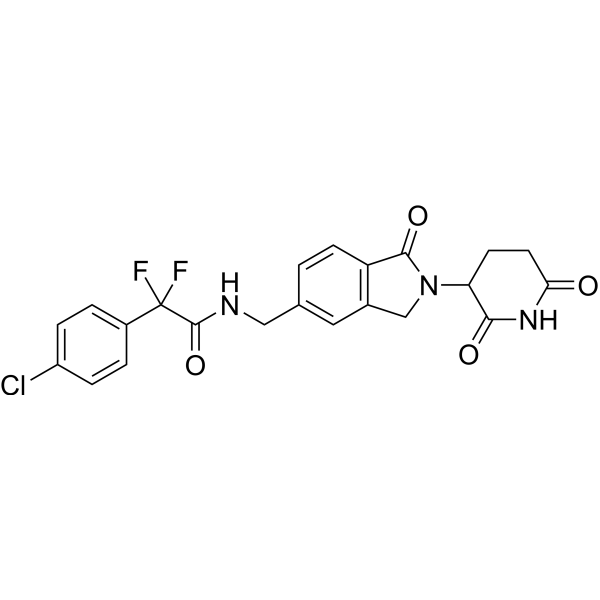
Eragidomide (CC-90009) is a GSPT1 Molecular Glue degrader. Eragidomide exhibits antiproliferative and pro-apoptotic (apoptosis) activities against acute myeloid leukemia cells. Eragidomide recruits the CRL4CRBN E3 ubiquitin ligase complex to selectively target GSPT1 for ubiquitination and proteasomal degradation. Eragidomide reduces leukemia cell engraftment and eliminates leukemia stem cells. Eragidomide promotes the activation of the GCN1/GCN2/ATF4 pathway and the integrated stress response pathway, inhibits global protein translation, promotes preferential translation of ATF4, and induces the accumulation of ATF4, CHOP and ATF3. The response to Eragidomide is regulated by the ILF2/ILF3 heterodimer complex, the mTOR signaling pathway and the integrated stress response. Eragidomide can be used in research related to acute myeloid leukemia and relapsed/refractory acute myeloid leukemia.
Nur für Forschungszwecke. Wir verkaufen nicht an Patienten.
- Reinheit : 99.93%
- CAS. Nr.: 1860875-51-9
- Formel: C22H18ClF2N3O4
- Molecular Weight:461.85
-
Speicherung:Powder -20°C, 3 years , 4°C, 2 years ; In solvent -80°C, 2 years , -20°C, 1 year

To place orders, for customer services and technical support, please contact: MedChemExpress USA
Tel: 609-228-6898 E-mail: [email protected] [email protected]


-
 Biologische Aktivität
-
Chemical Information
-
Lösungsmittel & Löslichkeit
- Protokoll
- Reinheit & Dokumentation
- Verweise
-
 Help & FAQs


-
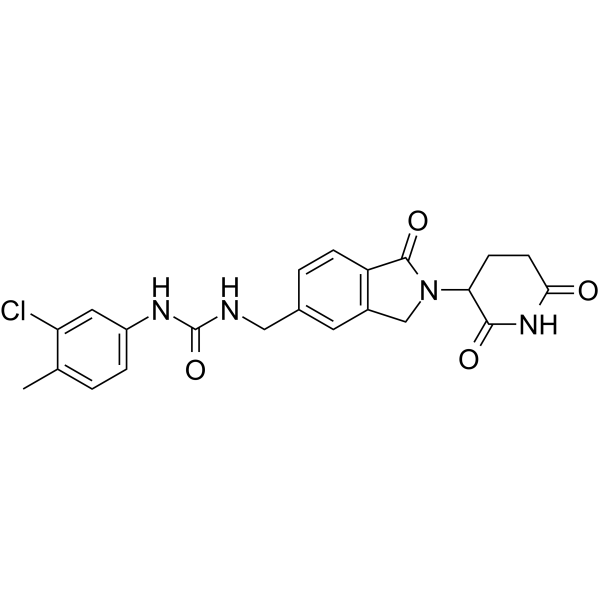
HY-101488
CC-885CRBN Modulator/GSPT1 Molecular Glue Degrader -
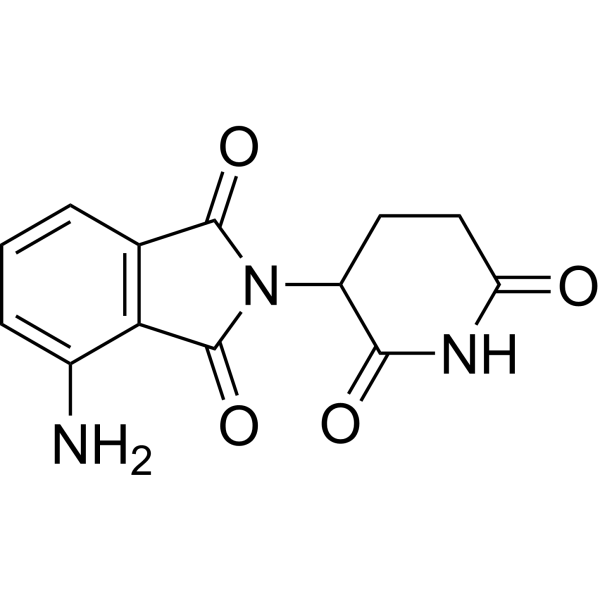
HY-10984
PomalidomideImmunomodulatory Agent -
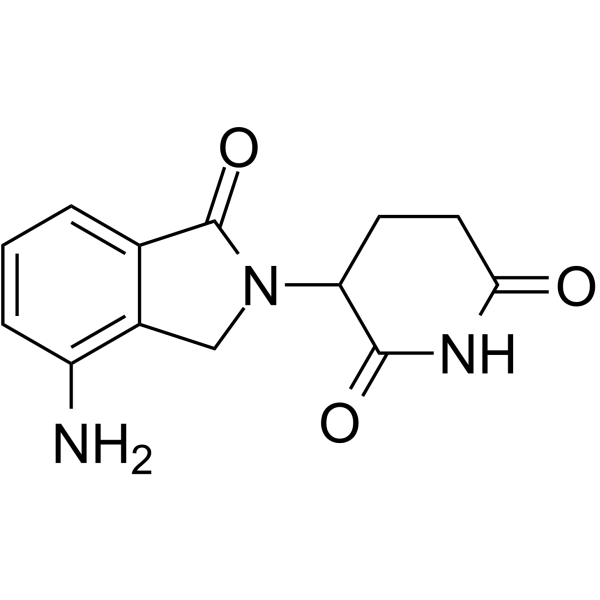
HY-A0003
LenalidomideImmunomodulator -
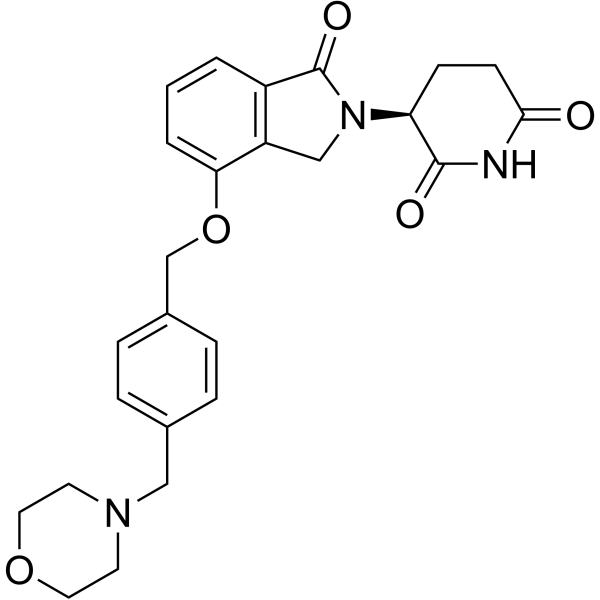
HY-101291
IberdomideCELMoD -
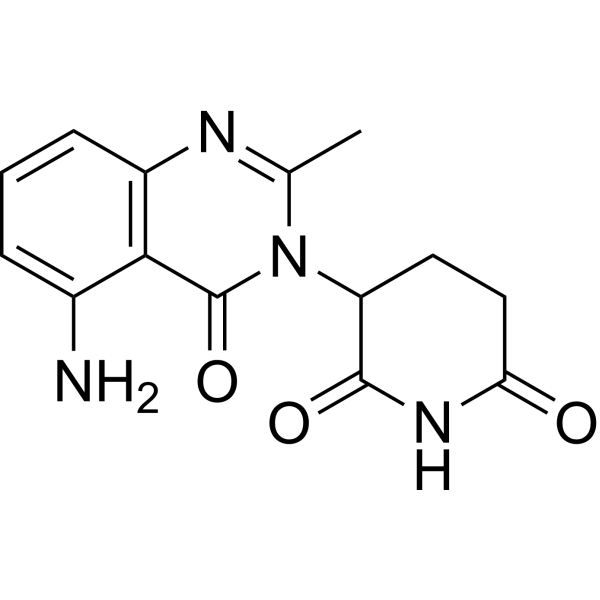
HY-100507
AvadomideCereblon Modulator -
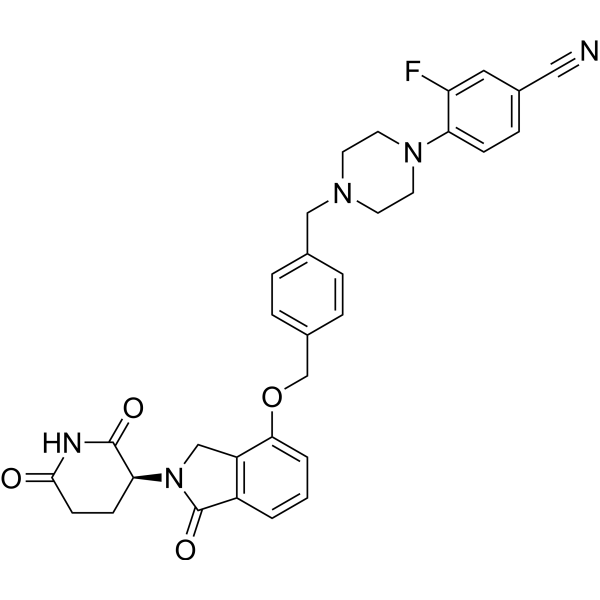
HY-129395
MezigdomideCereblon E3 Ubiquitin Ligase Modulating Agent -
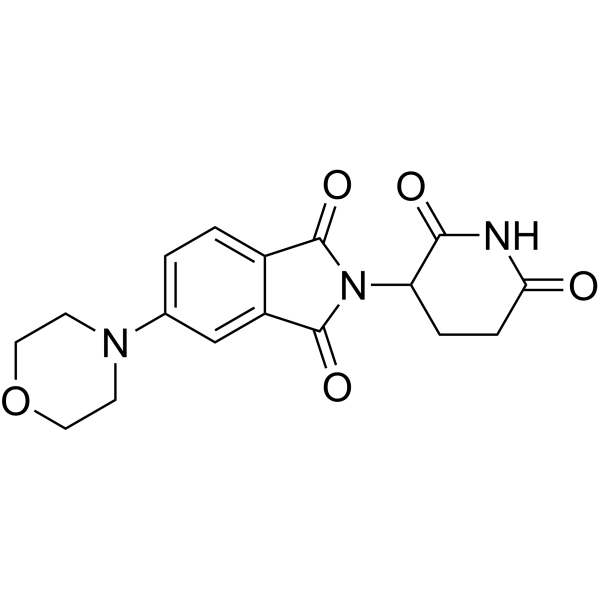
HY-160695
PT-179Cereblon Ligand -
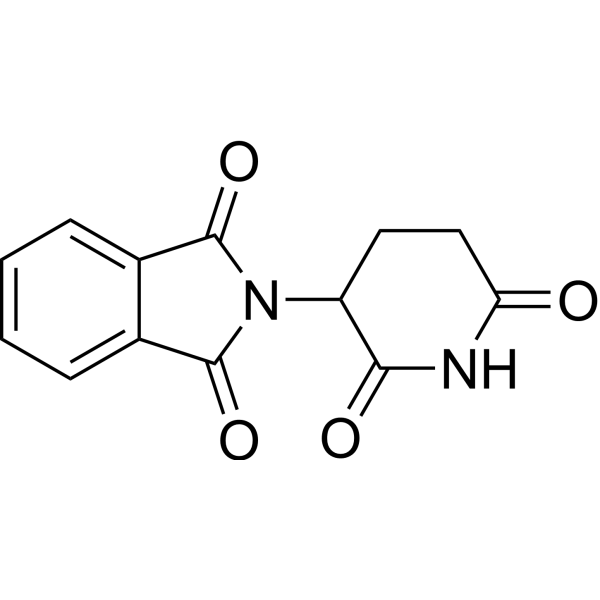
HY-14658
ThalidomideCereblon Inhibitor -
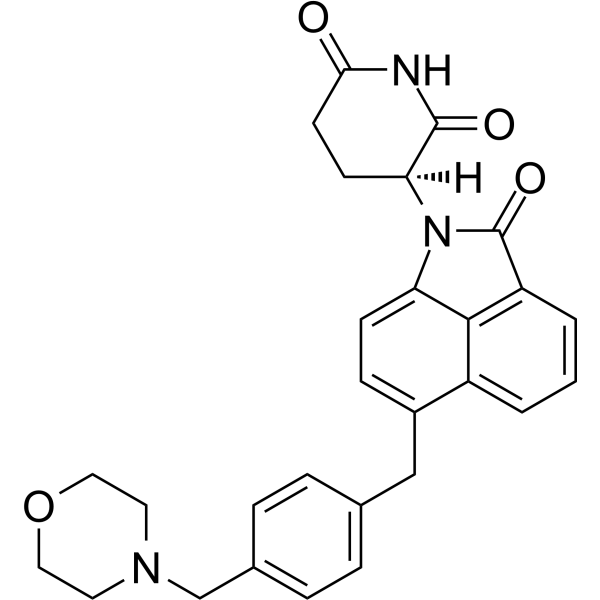
HY-144841
CemsidomidePROTAC IKZF1/3 Degrader -
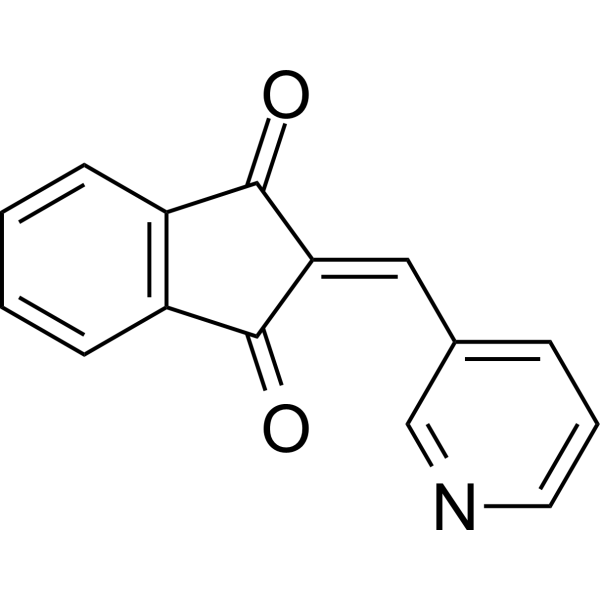
HY-19817
PRT4165E1/E2/E3 Enzyme Inhibitor -
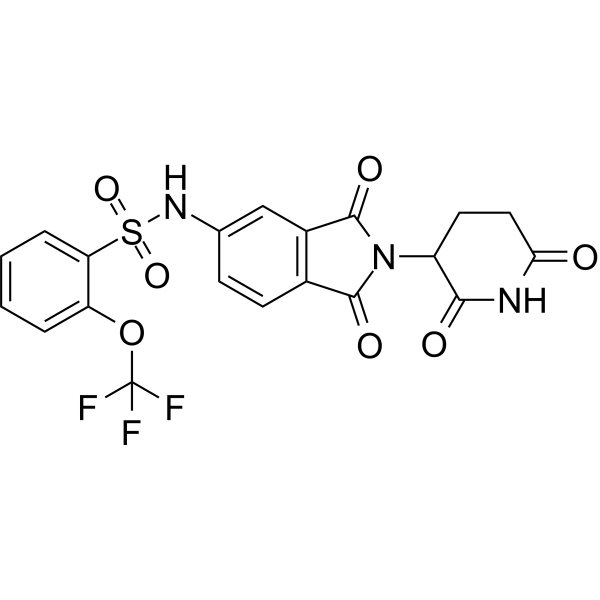
HY-132199
SJ6986GSPT1/2 Molecular Glue Degrader -
HY-100487
TAK-243UAE/E1 Inhibitor
Publications Citing Use of MedChemExpress (MCE) Eragidomide
More Customer Validation & Images

-
WB
-
Cell Proliferation/Viability Assay
-
Cell Proliferation/Viability Assay
-
WB
-
Cell Proliferation/Viability Assay
Alle Eukaryotic Release Factor (eRF) Isoform-spezifische Produkte anzeigen
More

Biologische Aktivität
Beschreibung
IC50 & Target
[1]|
eRF3a/GSPT1 |
Cellular Effect
|
Cell Line

|
Type | Value | Description | References |
|---|---|---|---|---|
| DF15 myeloma cell | EC50 |
9 nM
|
Induction of GSPT1 degradation in DF15 multiple myeloma cells stably expressing ePL-tagged GSPT1 incubated for 4 h measured by luminescence using InCELL Hunter Detection Reagent Working Solution.
Induction of GSPT1 degradation in DF15 multiple myeloma cells stably expressing ePL-tagged GSPT1 incubated for 4 h measured by luminescence using InCELL Hunter Detection Reagent Working Solution.
|
33591756 |
In Vitro
Eragidomide (72 h) potently inhibits the proliferation and induces apoptosis of AML cell lines (NB4, U937, KG‑1, MOLM‑13, OCI‑AML2, HL60, MV4‑11, KG‑1, KASUMI‑1, HNT‑34), while exhibits extremely low activity against healthy PBMCs and THLE-2 hepatic epithelial cells[1].
Eragidomide (1 μM, 200 nM; 2-12 h) induces proteasome-dependent GSPT1 degradation, integrated stress response activation, and apoptosis in KG-1 acute myeloid leukemia cells[2].
Eragidomide (100 nM; 4 h) selectively induces proteasomal degradation of GSPT1 in KG-1 and U937 acute myeloid leukemia (AML) cells in a CRL4CRBN-dependent manner[1].
The antiproliferative activity of Eragidomide in U937, OCI-AML2 and MOLM-13 acute myeloid leukemia (AML) cells is completely dependent on CRL4CRBN-mediated degradation of GSPT1[1].
A genome-wide CRISPR-Cas9 screening performed in U937 acute myeloid leukemia (AML) cells treated with eragidomide (10 μM, initiated on day 3 post-transduction and sustained for 9 days) identifies ILF2/ILF3, mTOR pathway inhibitors, and integrated stress response components as novel regulators of cellular response to eragidomide[1].
Eragidomide (24 h) reduces GSPT1 expression levels, viability, and colony-forming capacity of primary acute myeloid leukemia cells in a concentration-dependent manner[1].
Eragidomide (0.0005-10 μM; 4-20 h) potently and selectively degrades GSPT1 in DF15 multiple myeloma cells, with an EC50 of 9 nM, and the longer the incubation time, the more significant the degradation degree[2].
MedChemExpress (MCE) has not independently confirmed the accuracy of these methods. They are for reference only. Further protocols information, click here.
-
Cell Line:KG-1 acute myeloid leukemia cells
-
Concentration:1 μM (4 h incubation with/without pretreatment); 200 nM (2-12 h incubations)
-
Incubation Time:4 h (with/without 30 min pretreatment); 2, 4, 6, 8, 10, 12 h
-
Result:Induced GSPT1 degradation after 4 h incubation at 1 μM, which was rescued by cotreatment with proteasome inhibitor (bortezomib) or NEDD8-activating enzyme inhibitor (MLN4924).
Led to time-dependent loss of GSPT1, increased levels of p-eIF2α, ATF4, ATF3, and CHOP, and induction of cleaved caspase-3 after 2-12 h incubations at 200 nM.
Parmacokinetics
Clinical Trial
| NCT Number | Sponsor | Condition | Start Date |
Phase
|
|---|---|---|---|---|
| NCT01329991 | Plexxikon| | 2011-05 | PHASE1 |


Chemical Information
-
CAS. Nr. 1860875-51-9
-
Appearance Solid
-
Molecular Weight 461.85
-
Formel C22H18ClF2N3O4
-
Color Off-white to light yellow
-
SMILES
O=C(NCC1=CC2=C(C(N(C(CC3)C(NC3=O)=O)C2)=O)C=C1)C(F)(F)C4=CC=C(Cl)C=C4
-
Synonyms
CC-90009
-
Versand
Room temperature in continental US; may vary elsewhere.
-
Speicherung
Powder -20°C 3 years 4°C 2 years In solvent -80°C 2 years -20°C 1 year


Publications (7)
-
Journal Impact Factor
-
Most Recent
-
Cancer Res
Single-Cell Lineage Tracing Uncovers Resistance Signatures and Sensitizing Strategies to FLT3 Inhibitors in Acute Myeloid Leukemia. [Abstract]2025 Nov 21:10.1158/0008-5472.CAN-24-3753. PMID: 41270153
Eragidomide purchased from MedChemExpress. Usage Cited in: Cancer Res. 2025 Nov 21:10.1158/0008-5472.CAN-24-3753. [Abstract]
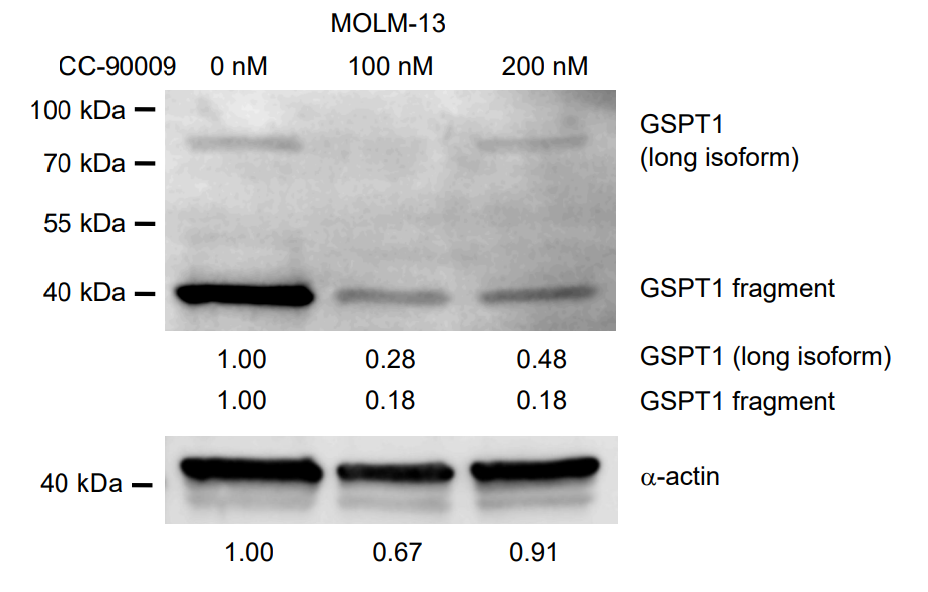
After treating MOLM-13 cells with DMSO or a specified concentration of CC-90009 for 24 hours, Western blot analysis was performed on the GSPT1 protein level in the cells.
-
Nat Chem Biol
2023 Mar;19(3):323-333. PMID: 36329119
Eragidomide purchased from MedChemExpress. Usage Cited in: Nat Chem Biol. 2023 Mar;19(3):323-333. [Abstract]
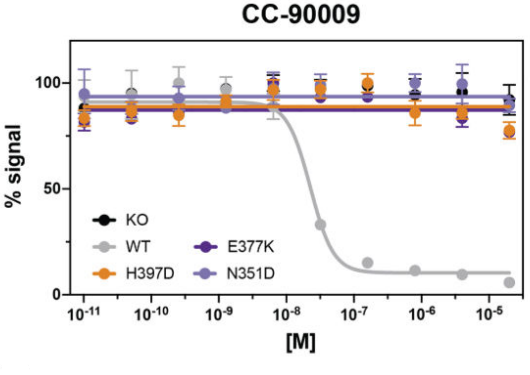
Dose-resolved, normalized viability after 3 d treatment with CC-90009 in RKO CRBN-/- cells with over-expression of CRBNWT, CRBNE377K, CRBNN351D and CRBNH397D.
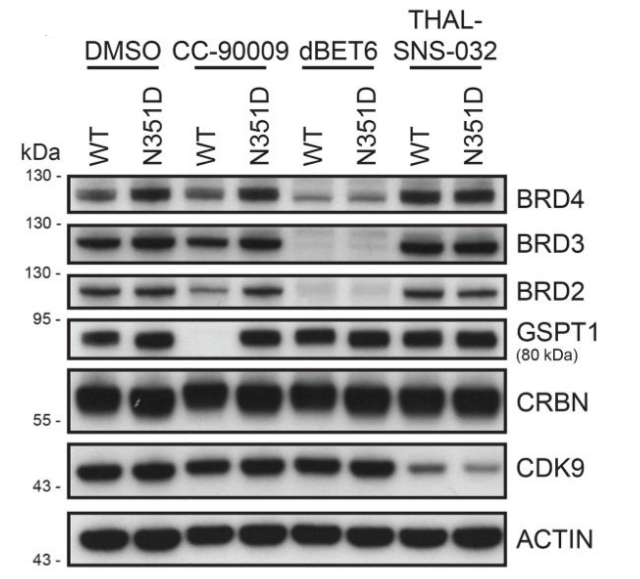
Eragidomide purchased from MedChemExpress. Usage Cited in: Nat Chem Biol. 2023 Mar;19(3):323-333. [Abstract]
Protein levels in RKO CRBN-/- cells with over-expression of CRBNWT, CRBNN351D, CRBNH397D or CRBNH57D treated with DMSO, CC-90009 (50 nM, 6 h), dBET6 (15 nM, 2 h), dBET57 (240 nM, 2 h) or THAL-SNS-032 (200 nM, 2 h).
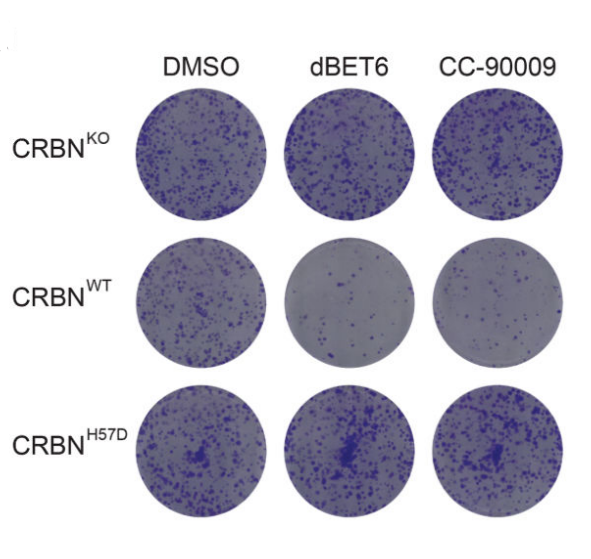
Eragidomide purchased from MedChemExpress. Usage Cited in: Nat Chem Biol. 2023 Mar;19(3):323-333. [Abstract]
Depiction of clonogenic assays via crystal violet staining. Cells were treated for 10 days at EC90 of the degrader (30 nM dBET6, 60 nM CC-90009).
-
Leukemia
Targeting of IRAK4 and GSPT1 enhances therapeutic efficacy in AML via c-Myc destabilization. [Abstract]2025 Sep;39(9):2163-2173. PMID: 40670672
Eragidomide purchased from MedChemExpress. Usage Cited in: Leukemia. 2025 Sep;39(9):2163-2173. [Abstract]
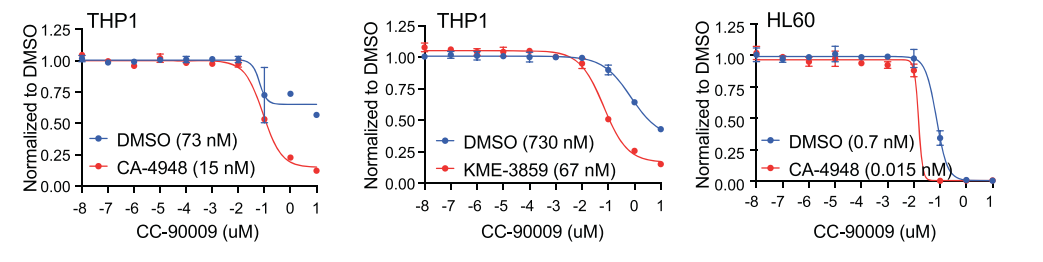
Cell viability was determined in the indicated cell lines cultured with CA-4948 (10 µM) or vehicle for 2 weeks and then treated with CC-90009 or vehicle (n = 4).
-
Pharmaceutics
CC-90009, a Cereblon E3 Ligase Modulator, Exhibits Antiviral Efficacy Against JEV In Vitro and In Vivo via Targeted Degradation of GSPT1 and Viral NS5 Protein. [Abstract]2025 Nov 27;17(12):1524. PMID: 41471039 -
-
-


Lösungsmittel & Löslichkeit
In Vitro:
DMSO : 100 mg/mL (216.52 mM; Need ultrasonic; Hygroscopic DMSO has a significant impact on the solubility of product, please use newly opened DMSO)
Please refer to the solubility information to select the appropriate solvent. Once prepared, please aliquot and store the solution to prevent product inactivation from repeated freeze-thaw cycles.
Storage method and period of stock solution: -80°C, 2 years; -20°C, 1 year. When stored at -80°C, please use it within 2 years. When stored at -20°C, please use it within 1 year.
Please refer to the solubility information to select the appropriate solvent. Once prepared, please aliquot and store the solution to prevent product inactivation from repeated freeze-thaw cycles.
Storage method and period of stock solution: -80°C, 2 years; -20°C, 1 year. When stored at -80°C, please use it within 2 years. When stored at -20°C, please use it within 1 year.
Konzentration (Stammlösung) × Volumen (Stammlösung) = Konzentration (Ziellösung) × Volumen (Ziellösung)
In Vivo:
Select the appropriate dissolution method based on your experimental animal and administration route.
- For the following dissolution methods, please ensure to first prepare a clear stock solution using an In Vitro approach and then sequentially add co-solvents:
- To ensure reliable experimental results, the clarified stock solution can be appropriately stored based on storage conditions. As for the working solution for In Vivo experiments, it is recommended to prepare freshly and use it on the same day.
- The percentages shown for the solvents indicate their volumetric ratio in the final prepared solution. If precipitation or phase separation occurs during preparation, heat and/or sonication can be used to aid dissolution.
Add each solvent one by one: 10% DMSO 40% PEG300 5% Tween-80 45% Saline
Solubility: ≥ 2.08 mg/mL (4.50 mM); Clear solution
This protocol yields a clear solution of ≥ 2.08 mg/mL (saturation unknown).
Taking 1 mL working solution as an example, add 100 μL DMSO stock solution (20.8 mg/mL) to 400 μL PEG300, and mix evenly; then add 50 μL Tween-80 and mix evenly; then add 450 μL Saline to adjust the volume to 1 mL.
Preparation of Saline: Dissolve 0.9 g sodium chloride in ddH₂O and dilute to 100 mL to obtain a clear Saline solution.
Add each solvent one by one: 10% DMSO 90% (20% SBE-β-CD in Saline)
Solubility: ≥ 2.08 mg/mL (4.50 mM); Clear solution
This protocol yields a clear solution of ≥ 2.08 mg/mL (saturation unknown).
Taking 1 mL working solution as an example, add 100 μL DMSO stock solution (20.8 mg/mL) to 900 μL 20% SBE-β-CD in Saline, and mix evenly.
Preparation of 20% SBE-β-CD in Saline (4°C, storage for one week): 2 g SBE-β-CD powder is dissolved in 10 mL Saline, completely dissolve until clear.
In Vivo Dissolution Calculator
Please enter the basic information of animal experiments:
-
-
-
-
Recommended: Prepare an additional quantity of animals to account for potential losses during experiments.
Please enter your animal formula composition:
-
%DMSO +
Recommended: Keep the proportion of DMSO in working solution below 2% if your animal is weak.
-
%+
-
+%Tween-80 + +
-
%Saline +
The co-solvents required include: DMSO, . All of co-solvents are available by MedChemExpress (MCE). , Tween 80. All of co-solvents are available by MedChemExpress (MCE).
Working solution concentration: 0.22 mg/mL
Method for preparing stock solution: mg drug dissolved in μL DMSO. Stock solution concentration: mg/mL.
1. Take μL DMSO stock solution;
2. Add μL .
μL , mix evenly;
3. Then add μL Tween 80, mix evenly;
4. Then add μL
Please ensure that the stock solution in the first step is dissolved to a clear state, and add co-solvents in sequence. You can use ultrasonic heating (ultrasonic cleaner, recommended frequency 20-40 kHz), vortexing, etc. to assist dissolution.

Protokoll
-
Apoptosis
Apoptosis, also called programmed cell death, is generally characterized by distinct morphological characteristics.
-
TUNEL staining for apoptotic DNA fragmentation
TUNEL staining detects DNA strand breaks by using terminal deoxynucleotidyl transferase to add labeled nucleotides to exposed 3′-OH DNA termini, generating either microscopic staining in fixed cells or tissue sections, or fluorescence/cytometric signal in cell suspensions. TUNEL positivity reflects DNA fragmentation but should not be interpreted alone as definitive apoptosis, because TUNEL can also label necrotic, autolytic, mechanically damaged, or DNA-repair-associated DNA breaks.
-
Annexin V plus membrane-impermeant dye apoptosis staining
Annexin V-based apoptosis assays rely on the detection of phosphatidylserine (PS) externalization from the inner leaflet of the plasma membrane to the outer leaflet, an early biochemical hallmark of apoptosis. Fluorescently labeled Annexin V binds PS in a calcium-dependent manner, enabling identification of early apoptotic cells by flow cytometry or fluorescence microscopy. When combined with a membrane-impermeant DNA-binding dye (e. g. , propidium iodide), this approach allows discrimination between viable (Annexin V−/dye−), early apoptotic (Annexin V+/dye−), and late apoptotic or necrotic (Annexin V+/dye+) cell populations by assessing membrane integrity and PS exposure.
-
Apoptosis Solutions
Apoptosis is a regulated, generally non-lytic cell-death pathway that removes unwanted, damaged, infected, or abnormal cells through coordinated morphological changes, caspase activation, DNA fragmentation, and membrane remodeling. The intrinsic apoptosis pathway is controlled mainly by mitochondrial outer membrane permeabilization, BCL-2 family proteins, cytochrome c release, apoptosome formation, caspase-9 activation, and downstream executioner caspase-3/7 activation. The extrinsic apoptosis pathway is initiated by death receptors such as Fas, TNFR, and TRAIL receptors, which recruit adaptor proteins and activate caspase-8 before engaging executioner caspases or mitochondrial amplification through BID cleavage. Apoptosis is linked to many phenotypes, including cancer cell killing, tissue homeostasis, immune regulation, neurodegeneration, infection response, and treatment-induced cytotoxicity; unresolved questions include how apoptosis interacts with necroptosis, pyroptosis, ferroptos
-
Cell Viability Determination by MTT Colorimetric Assay
The following protocol uses the MTT colorimetric assay as a classic literature-established method for assessing cell viability/metabolic activity in cultured mammalian cells. MTT[3-(4,5-dimethylthiazol-2-yl)-2,5-diphenyltetrazolium bromide] is reduced by metabolically active cells to a colored formazan product; the amount of formazan is quantified spectrophotometrically and provides an indirect measure of metabolically active viable cells. Importantly, MTT reduction reflects cellular oxidoreductase/metabolic activity rather than an absolute direct count of living cells, so changes in cellular metabolism can alter the signal independently of cell number.


Reinheit & Dokumentation
-
Data Sheet (284 KB)
-
SDS (393 KB)
- English - EN (393 KB)
- Français - FR (393 KB)
- Deutsch - DE (393 KB)
- Norwegian - NO (393 KB)
- Español - ES (393 KB)
- Swedish - SV (393 KB)
- Italian - IT (393 KB)
- Korean - KR (393 KB)
- Portuguese - PT (393 KB)
-
Handling Instructions (2659 KB)
Verweise
[1]. Surka C, et al. CC-90009, a novel cereblon E3 ligase modulator, targets acute myeloid leukemia blasts and leukemia stem cells. Blood. 2021 Feb 04;137(5):661-677. [Content Brief]
[2]. Hansen JD, et al. CC-90009: A Cereblon E3 Ligase Modulating Drug That Promotes Selective Degradation of GSPT1 for the Treatment of Acute Myeloid Leukemia. J Med Chem. 2021 Feb 25;64(4):1835-1843. [Content Brief]


Complete Stock Solution Preparation Table
Please refer to the solubility information to select the appropriate solvent. Once prepared, please aliquot and store the solution to prevent product inactivation from repeated freeze-thaw cycles.
Storage method and period of stock solution: -80°C, 2 years; -20°C, 1 year. When stored at -80°C, please use it within 2 years. When stored at -20°C, please use it within 1 year.
| Optional Solvent | Concentration Solvent Mass | 1 mg | 5 mg | 10 mg | 25 mg |
|---|---|---|---|---|---|
| DMSO | 1 mM | 2.1652 mL | 10.8260 mL | 21.6521 mL | 54.1301 mL |
| 5 mM | 0.4330 mL | 2.1652 mL | 4.3304 mL | 10.8260 mL | |
| 10 mM | 0.2165 mL | 1.0826 mL | 2.1652 mL | 5.4130 mL | |
| 15 mM | 0.1443 mL | 0.7217 mL | 1.4435 mL | 3.6087 mL | |
| 20 mM | 0.1083 mL | 0.5413 mL | 1.0826 mL | 2.7065 mL | |
| 25 mM | 0.0866 mL | 0.4330 mL | 0.8661 mL | 2.1652 mL | |
| 30 mM | 0.0722 mL | 0.3609 mL | 0.7217 mL | 1.8043 mL | |
| 40 mM | 0.0541 mL | 0.2707 mL | 0.5413 mL | 1.3533 mL | |
| 50 mM | 0.0433 mL | 0.2165 mL | 0.4330 mL | 1.0826 mL | |
| 60 mM | 0.0361 mL | 0.1804 mL | 0.3609 mL | 0.9022 mL | |
| 80 mM | 0.0271 mL | 0.1353 mL | 0.2707 mL | 0.6766 mL | |
| 100 mM | 0.0217 mL | 0.1083 mL | 0.2165 mL | 0.5413 mL |


Eragidomide Related Classifications
HY-130800 Related Classifications
 Powered by Bioz
Keywords
- Eragidomide
- 1860875-51-9
- CC-90009
- CC90009
- CC 90009
- Molecular Glues
- Eukaryotic Release Factor (eRF)
- Apoptosis
- mTOR
- leukemia stem cells
- integrated stress response
- acute myeloid leukemia
- GSPT1
- cereblon
- human AML cell lines
- GCN1/GCN2/ATF4
- mTOR signaling
- ILF2/ILF3 heterodimeric complex
- CRL4CRBN E3 ubiquitin ligase complex
- Inhibitor
- inhibitor
- inhibit