



CC-3060

Based on 1 Customer Validation
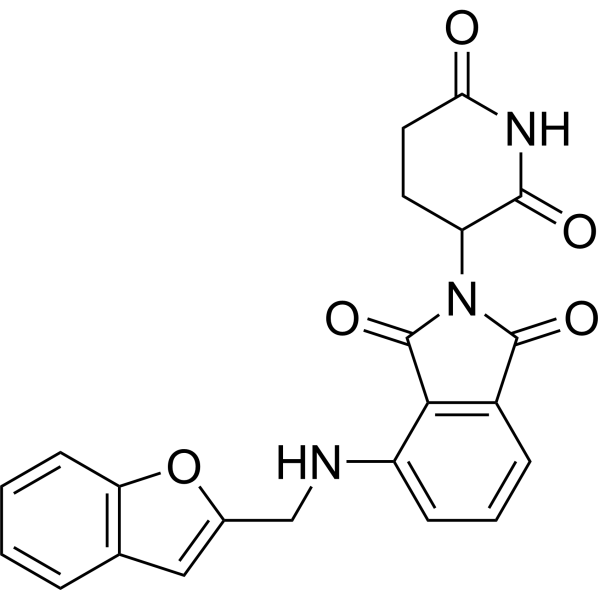
CC-3060 is a molecular glue modulator targeting Cereblon (CRBN) E3 ubiquitin ligase and ZBTB16 degrader with a DC50 of 0.47 nM in HT-1080 cells. CC-3060 engages structural degrons on ZBTB16’s ZnF1 or ZnF3 domains for fusion protein substrates. CC-3060 can be used for the research of acute promyelocytic leukemia.
For research use only. We do not sell to patients.
- Purity : 99.7%
- CAS No.: 444288-86-2
- Formula: C22H17N3O5
- Molecular Weight:403.39
-
Storage:
4°C, sealed storage, away from moisture
* In solvent : -80°C, 6 months; -20°C, 1 month (sealed storage, away from moisture)

To place orders, for customer services and technical support, please contact: MedChemExpress USA
Tel: 609-228-6898 E-mail: [email protected] [email protected]


-
 Biological Activity
-
Chemical Information
-
Solvent & Solubility
- Purity & Documentation
- References
-
 Help & FAQs


-
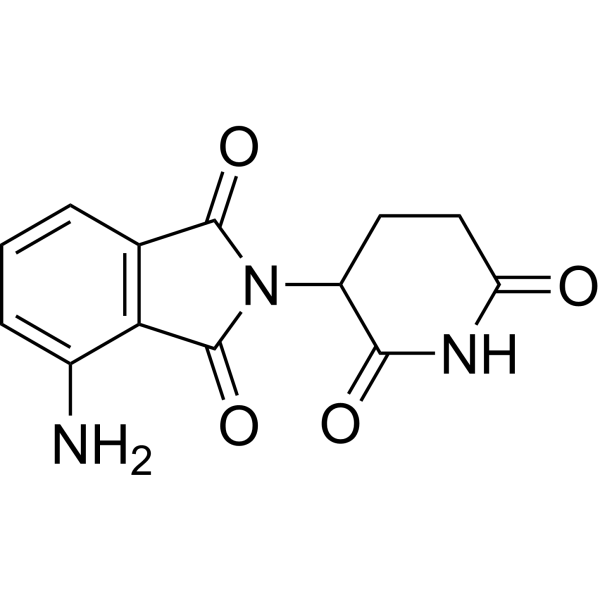
HY-10984
PomalidomideImmunomodulatory Agent -
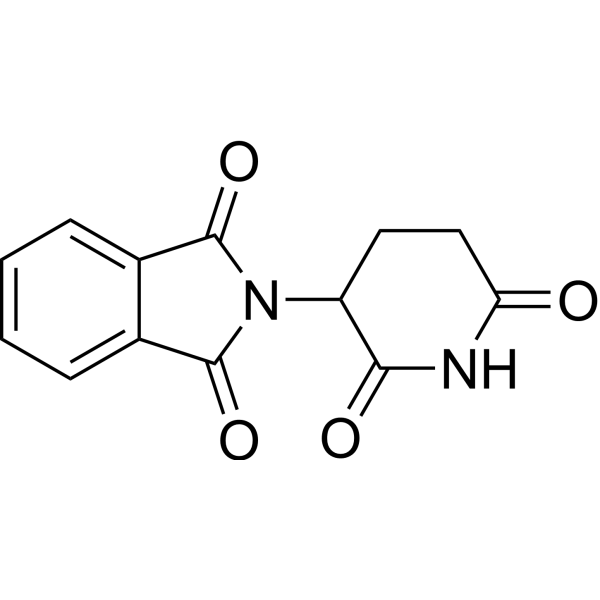
HY-14658
ThalidomideCereblon Inhibitor -
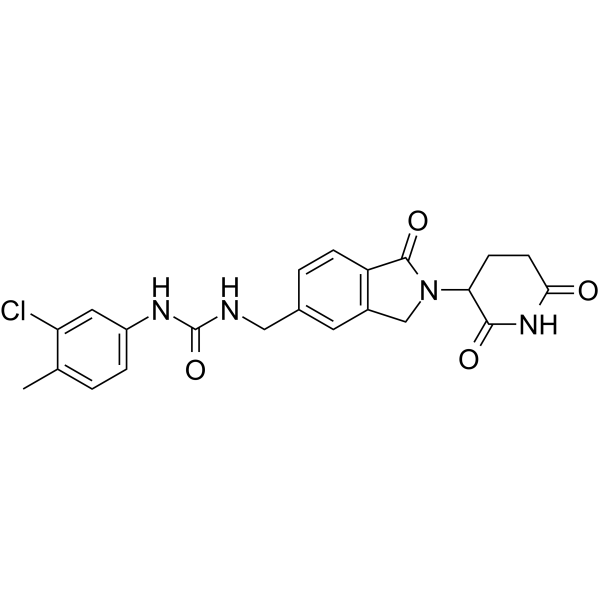
HY-101488
CC-885CRBN Modulator/GSPT1 Molecular Glue Degrader -
HY-100947
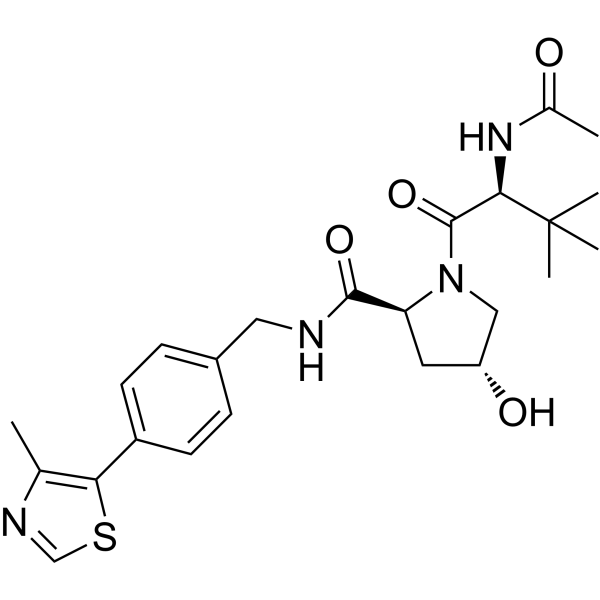
VH-298VHL:HIF-α Interaction Inhibitor -
HY-120217
VH032VHL Ligand -
HY-144841
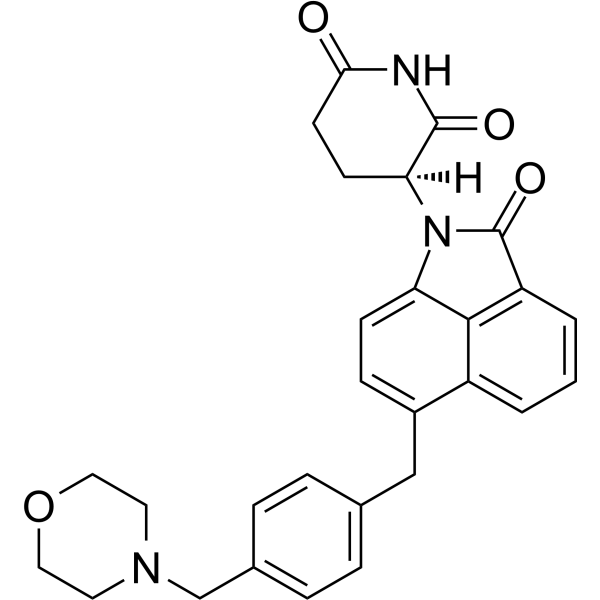
CemsidomidePROTAC IKZF1/3 Degrader -
HY-125845
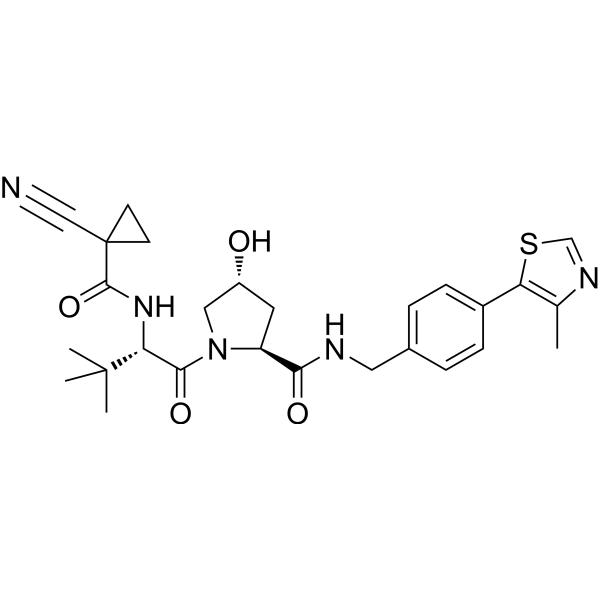
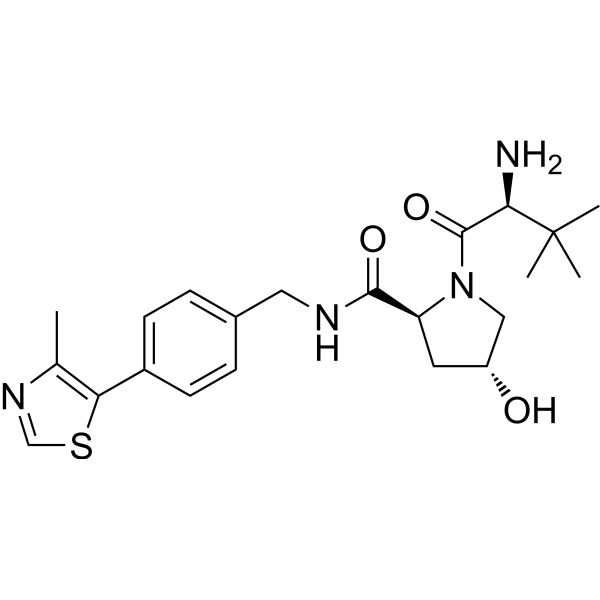
(S,R,S)-AHPCVHL Ligand -
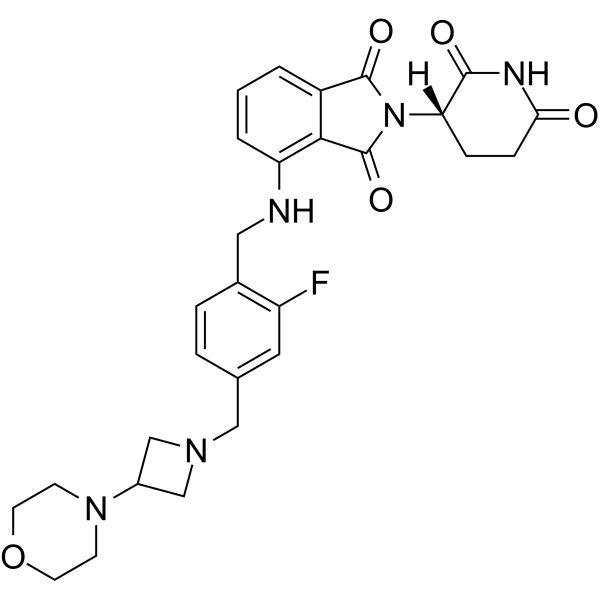
HY-146237
GolcadomideCereblon Modulator -
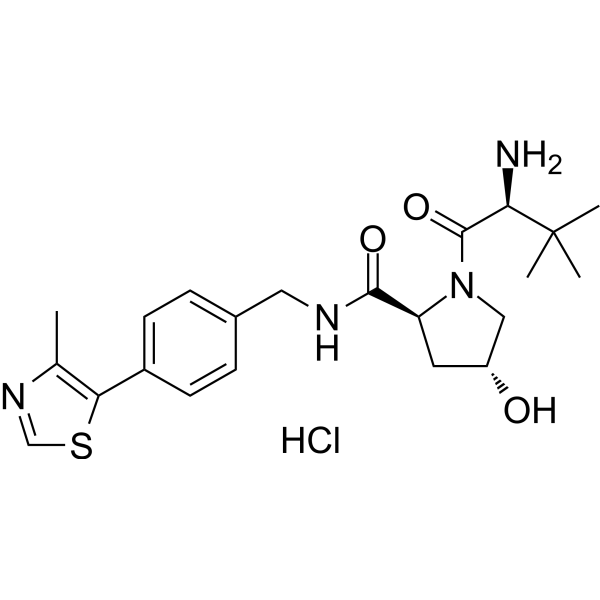
HY-101763A
(S,R,S)-AHPC monohydrochlorideVHL Ligand -
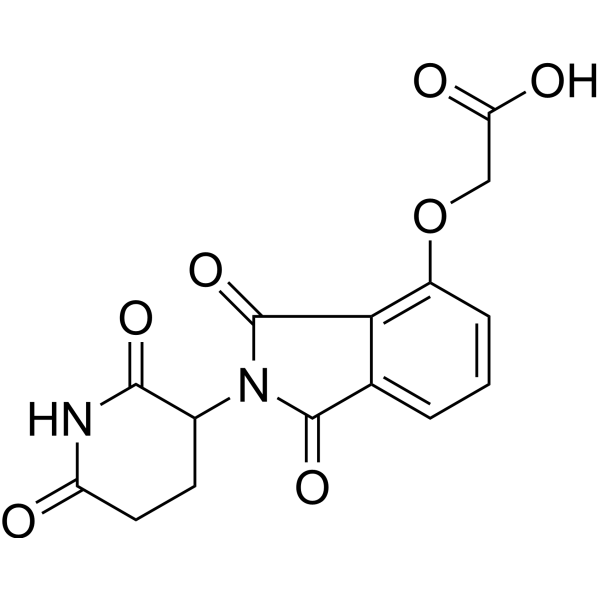
HY-103597
Thalidomide-O-COOHCereblon Ligand -
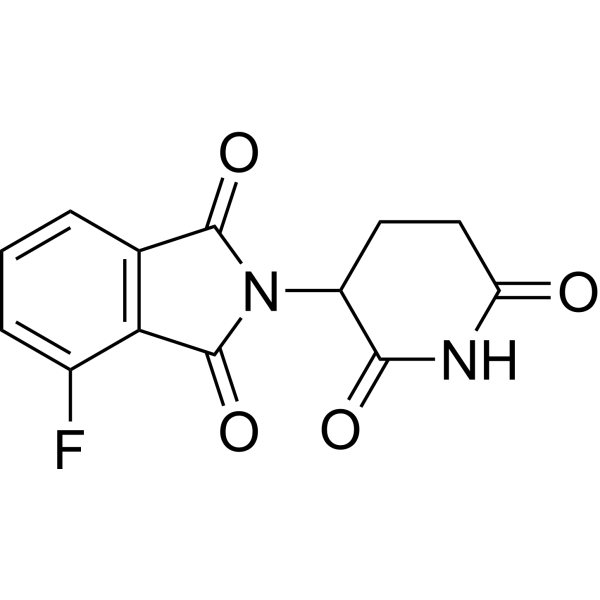
HY-41547
Thalidomide 4-fluorideLigands for E3 Ligase -
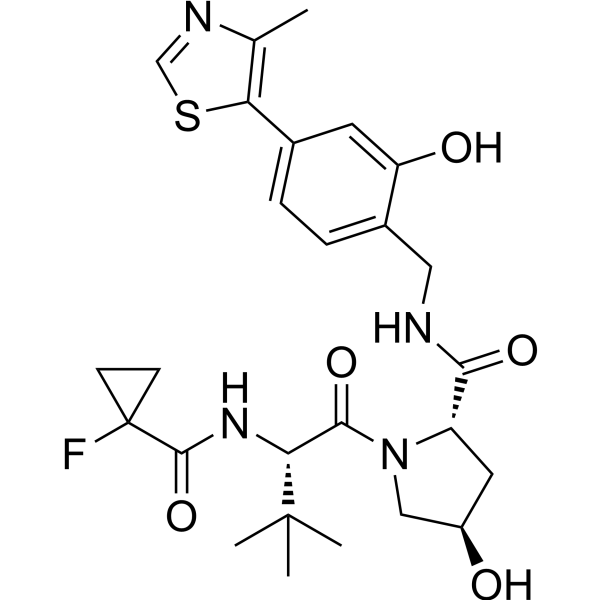
HY-125905
VH032-cyclopropane-FLigand for E3 Ligase


Biological Activity
Description
IC50 & Target
[1]|
Cereblon |
In Vitro
CC-3060 (0.0001-10 μM; 6-16 h) potently and efficaciously induces CRBN- and proteasome-dependent degradation of wild-type ZBTB16 in HT-1080 ZBTB16-ePL cells, with a DC50 of 0.47 nM and a minimum remaining protein level of 28%[1].
CC-3060 (100 pM-10 μM; 6 h) drives CRBN- and proteasome-dependent degradation of endogenous ZBTB16 in HEL 92.1.7 cells, with complete degradation observed at 10 μM after 6 h[1].
CC-3060 (10 μM; 6 h) induces selective degradation of ZBTB16, IKZF1, ZFP91, and ZNF276 (but not GSPT1 or CSNK1A1) in KG-1a cells, with a significant log2 fold change of −1.73 for ZBTB16[1].
CC-3060 promotes CRL4CRBN-dependent ubiquitination of ZBTB16 ZnF1 and ZnF3 domains in vitro, with activity dependent on the critical glycine residues in each domain[1].
CC-3060 (0.0001-10 μM; 16 h) primarily utilizes the ZnF1 structural degron to promote ZBTB16 degradation in HT-1080 cells, with ZnF3 acting as a secondary, less efficient degron[1].
CC-3060 (0.0001-10 μM; 6-16 h) potently induces CRBN- and proteasome-dependent degradation of ZBTB16-RARα in HT-1080 cells via the ZnF1 structural degron, with a minimum remaining protein level of 20%[1].
CC-3060 stimulates CRL4CRBN-dependent ubiquitination of ZBTB16-RARα in vitro, with activity dependent on the critical glycine residue in the ZBTB16 ZnF1 domain[1].
CC-3060 (0.0001-10 μM; 6-16 h) induces CRBN- and proteasome-dependent degradation of RARα-ZBTB16 in HT-1080 cells via the ZnF3 structural degron, with a minimum remaining protein level of 77%[1].
CC-3060 stimulates CRL4CRBN-dependent ubiquitination of RARα-ZBTB16 in vitro, with activity dependent on the critical glycine residue in the ZBTB16 ZnF3 domain[1].
MedChemExpress (MCE) has not independently confirmed the accuracy of these methods. They are for reference only.
-
Cell Line:human erythroleukemia HEL 92.1.7 cells (endogenous ZBTB16); CRBN knockout HEL 92.1.7 cells
-
Concentration:100 pM; 1 nM; 10 nM; 100 nM; 1 μM; 10 μM
-
Incubation Time:6 h
-
Result:Induced a dose-dependent decrease in endogenous ZBTB16 levels, with the highest tested concentration (10 μM) reducing ZBTB16 to 0% of DMSO control levels.
Exhibits blocked ZBTB16 degradation when cotreated with MLN4924 or MG132.
Shows completely suppressed downregulation of endogenous ZBTB16 in CRBN knockout cells.


Chemical Information
-
CAS No. 444288-86-2
-
Appearance Solid
-
Molecular Weight 403.39
-
Formula C22H17N3O5
-
Color Light yellow to yellow
-
SMILES
O=C1NC(C(CC1)N2C(C3=C(C2=O)C(NCC4=CC5=C(C=CC=C5)O4)=CC=C3)=O)=O
-
Shipping
Room temperature in continental US; may vary elsewhere.
-
Storage
4°C, sealed storage, away from moisture
* In solvent : -80°C, 6 months; -20°C, 1 month (sealed storage, away from moisture)


Solvent & Solubility
In Vitro:
DMSO : 100 mg/mL (247.90 mM; Need ultrasonic; Hygroscopic DMSO has a significant impact on the solubility of product, please use newly opened DMSO)
Please refer to the solubility information to select the appropriate solvent. Once prepared, please aliquot and store the solution to prevent product inactivation from repeated freeze-thaw cycles.
Storage method and period of stock solution: -80°C, 6 months; -20°C, 1 month (sealed storage, away from moisture). When stored at -80°C, please use it within 6 months. When stored at -20°C, please use it within 1 month.
Please refer to the solubility information to select the appropriate solvent. Once prepared, please aliquot and store the solution to prevent product inactivation from repeated freeze-thaw cycles.
Storage method and period of stock solution: -80°C, 6 months; -20°C, 1 month (sealed storage, away from moisture). When stored at -80°C, please use it within 6 months. When stored at -20°C, please use it within 1 month.
Concentration (start) × Volume (start) = Concentration (final) × Volume (final)


Purity & Documentation
-
Data Sheet (280 KB)
-
SDS (252 KB)
- English - EN (252 KB)
- Français - FR (252 KB)
- Deutsch - DE (252 KB)
- Norwegian - NO (252 KB)
- Español - ES (252 KB)
- Swedish - SV (252 KB)
- Italian - IT (252 KB)
- Korean - KR (252 KB)
- Portuguese - PT (252 KB)
-
Handling Instructions (2659 KB)
References


Complete Stock Solution Preparation Table
Please refer to the solubility information to select the appropriate solvent. Once prepared, please aliquot and store the solution to prevent product inactivation from repeated freeze-thaw cycles.
Storage method and period of stock solution: -80°C, 6 months; -20°C, 1 month (sealed storage, away from moisture). When stored at -80°C, please use it within 6 months. When stored at -20°C, please use it within 1 month.
| Optional Solvent | Concentration Solvent Mass | 1 mg | 5 mg | 10 mg | 25 mg |
|---|---|---|---|---|---|
| DMSO | 1 mM | 2.4790 mL | 12.3950 mL | 24.7899 mL | 61.9748 mL |
| 5 mM | 0.4958 mL | 2.4790 mL | 4.9580 mL | 12.3950 mL | |
| 10 mM | 0.2479 mL | 1.2395 mL | 2.4790 mL | 6.1975 mL | |
| 15 mM | 0.1653 mL | 0.8263 mL | 1.6527 mL | 4.1317 mL | |
| 20 mM | 0.1239 mL | 0.6197 mL | 1.2395 mL | 3.0987 mL | |
| 25 mM | 0.0992 mL | 0.4958 mL | 0.9916 mL | 2.4790 mL | |
| 30 mM | 0.0826 mL | 0.4132 mL | 0.8263 mL | 2.0658 mL | |
| 40 mM | 0.0620 mL | 0.3099 mL | 0.6197 mL | 1.5494 mL | |
| 50 mM | 0.0496 mL | 0.2479 mL | 0.4958 mL | 1.2395 mL | |
| 60 mM | 0.0413 mL | 0.2066 mL | 0.4132 mL | 1.0329 mL | |
| 80 mM | 0.0310 mL | 0.1549 mL | 0.3099 mL | 0.7747 mL | |
| 100 mM | 0.0248 mL | 0.1239 mL | 0.2479 mL | 0.6197 mL |


CC-3060 Related Classifications
HY-153698 Related Classifications
 Powered by Bioz