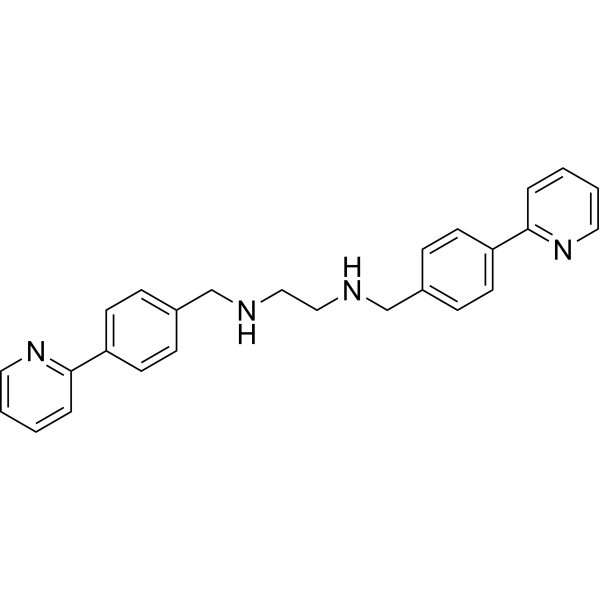
Fbxo3
FBXO3 (F-box protein 3) is a substrate-recognition component of the SCF (SKP1-CUL1-F-box) ubiquitin E3 ligase complex that regulates protein ubiquitination and proteasomal degradation pathways[1][2]. Mechanistically, FBXO3 promotes degradation of FBXL2, a negative regulator of tumor necrosis factor receptor-associated factor (TRAF) signaling, thereby enhancing TRAF-dependent cytokine production and inflammatory responses[1][2][3]. Through this ubiquitin-mediated regulatory axis, FBXO3 functions as an important controller of cytokine secretion in human inflammatory cells and contributes to the fine-tuning of innate immune signaling networks[1][3]. In disease-related studies, elevated FBXO3 activity has been linked to pathological inflammation, including experimental models of atherosclerosis and cerebral ischemia/reperfusion injury, where FBXO3-driven ubiquitination events amplify inflammatory signaling and tissue damage[4][5]. Additional evidence indicates that FBXO3 can regulate the stability of other signaling proteins, including Smurf1 and HIPK2, further supporting its broader role in cellular protein quality control and stress-response pathways[5][6]. Compared with related F-box proteins, FBXO3 is distinguished by its prominent regulation of the FBXL2-TRAF inflammatory signaling module, a mechanism repeatedly identified across inflammatory disease models[1][2][3]. For experimental applications, pharmacological inhibition or genetic suppression of FBXO3 has been used to attenuate inflammatory responses, making FBXO3 a valuable target for mechanistic studies of ubiquitin signaling, cytokine regulation, and inflammation-associated disease processes[1][5].
References:
- [1]. Mallampalli RK, et al. Targeting F box protein Fbxo3 to control cytokine-driven inflammation. J Immunol. 2013 Nov 15;191(10):5247-55. [Content Brief]
- [2]. Uniprotkb.
- [3]. Bordon Y. Signalling: fine-tuning of inflammation by F-box proteins. Nat Rev Immunol. 2013 May;13(5):304. doi: 10.1038/nri3455. PMID: 23618824. et al. Signalling: fine-tuning of inflammation by F-box proteins. Nat Rev Immunol. 2013 May;13(5):304. [Content Brief]
- [4]. Jiang Y, et al. Electrostatic Steering Enables Flow-Activated Von Willebrand Factor to Bind Platelet Glycoprotein, Revealed by Single-Molecule Stretching and Imaging. J Mol Biol. 2019 Mar 29;431(7):1380-1396. [Content Brief]
- [5]. Gao Y, et al. E3 Ubiquitin Ligase FBXO3 Drives Neuroinflammation to Aggravate Cerebral Ischemia/Reperfusion Injury. Int J Mol Sci. 2022 Nov 7;23(21):13648. [Content Brief]
- [6]. Fbxo3 gene information from NCBI.
All Product Categories
-
Fbxo3 Related Products (1)
Related Products (1)