Infection
-
Infection Related Products (18904)
Related Products (18904)

-
Antibodies (22)
-
Anti-Mouse CD11a/LFA-1α Antibody (M17/4)
 0 ImagesCat. No.: HY-P990801
Anti-Mouse CD11a/LFA-1α Antibody (M17/4) is an anti-mouse CD11a/LFA-1α IgG2a monoclonal antibody. Anti-Mouse CD11a/LFA-1α Antibody (M17/4) can reduce the recruitment of effector memory CD8 T cells. Anti-Mouse CD11a/LFA-1α Antibody (M17/4) promotes the formation of xenograft tumors by reducing immune rejection reactions. Anti-Mouse CD11a/LFA-1α Antibody (M17/4) can be used for researches on cancer, infection conditions and immunology such as glioblastoma, parasitic and bacterial infections. The recommend isotype control of Anti-Mouse CD11a/LFA-1α Antibody (M17/4): Rat IgG2a kappa, Isotype Control (HY-P990679).
-
Famotidine (Standard)
 0 ImagesSynonyms: MK-208 (Standard)
Famotidine (Standard) (MK-208 (Standard)) is the analytical standard of Famotidine (HY-B0377). This product is intended for research and analytical applications. Famotidine (MK-208) is an orally active and highly selective histamine H2 receptor antagonist. It inhibits gastric acid secretion by blocking the Gs signaling pathway, and regulates intracellular cAMP and ERK pathways. Famotidine inhibits TLR3-mediated inflammatory pathways, and reduces the expression of various inflammatory mediators and interferon-related genes. Famotidine scavenges DPPH and nitric oxide free radicals, alleviates oxidative stress damage in gastric tissue, inhibits proMMP-9, improves vascular endothelial permeability, and restores the normal physiological functions of neutrophils and eosinophils. Famotidine crosses intestinal epithelial cells via facilitated diffusion and passive diffusion, blocks paracellular cation transport, and increases intestinal transepithelial electrical resistance. Famotidine reduces serum levels of transaminases and alkaline phosphatase, exerts analgesic effects and gastric protective effects simultaneously. Famotidine can be used in studies related to COVID-19, liver injury and acute gastric ulcer.
-
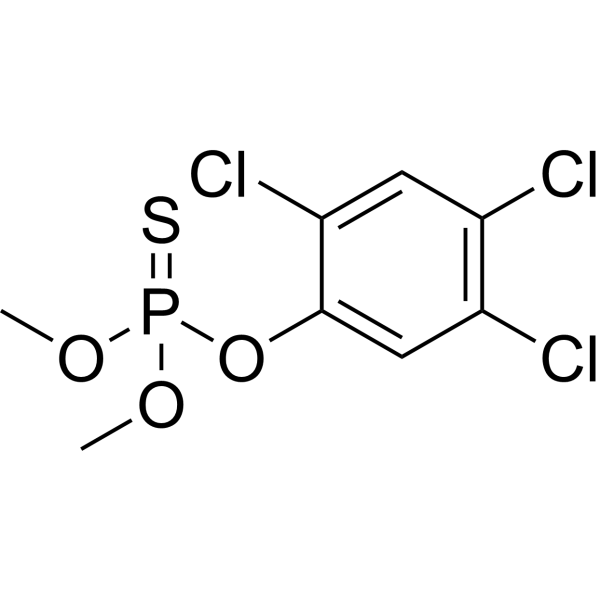
Fenchlorphos
 0 Images
Fenchlorphos, an organophosphate, is an insecticide. Fenchlorphos is an inhibitor of the enzyme acetylcholinesterase (AChE). Fenchlorphos is able to cause mitochondrial dysfunction.
-
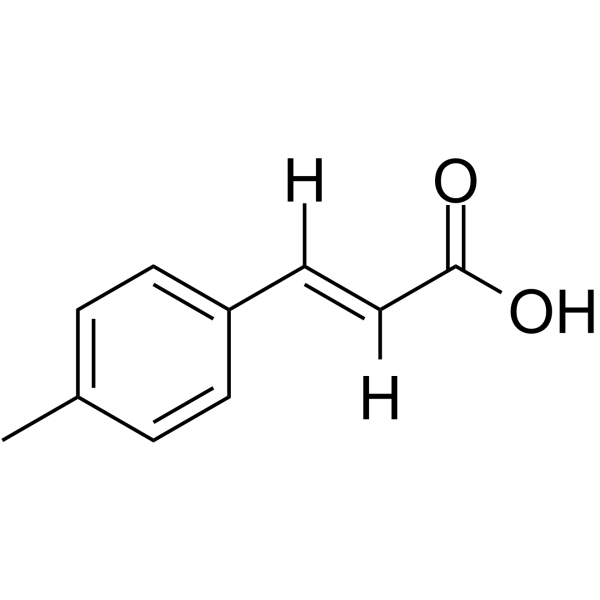
4-Methylcinnamic acid
 0 Images
4-Methylcinnamic acid is a cinnamic acid derivative with antifungal activity. 4-Methylcinnamic acid can overcome the tolerance of glutathione reductase mutants to 4-Methoxycinnamic acid (HY-N1387). When 4-Methylcinnamic acid is used in combination with traditional antifungal agents, it can reduce their minimum inhibitory concentrations. 4-Methylcinnamic acid can act as an intervention catalyst to enhance the efficacy of traditional antifungal agents and has application potential in targeting fungal cell wall disruption and controlling drug-resistant fungi.
-
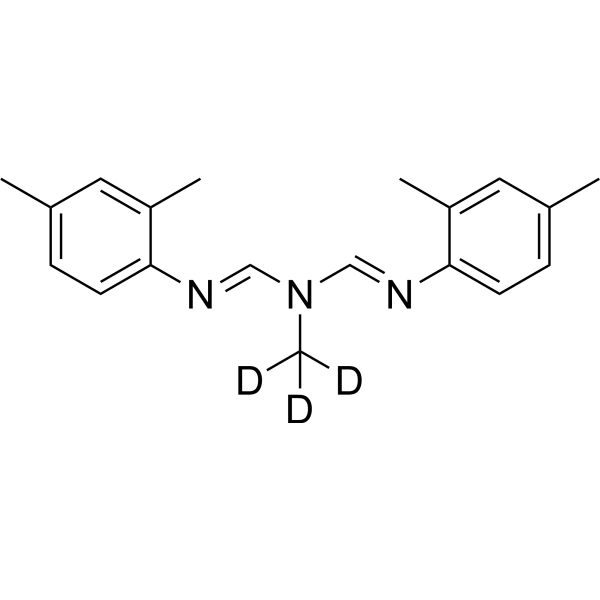
Amitraz-d3
 0 ImagesCat. No.: HY-B1111S1Purity: 99.5%Synonyms: BTS-27419-d3
Amitraz-d3 is the deuterium labeled Amitraz. Amitraz is a non-systemic acaricide and insecticide, with alpha-adrenergic agonist activity, interaction with octopamine receptors of the central nervous system and inhibition of monoamine oxidases and prostaglandin synthesis.
-
Gepotidacin mesylate hydrate
 0 Images
Gepotidacin mesylate hydrate is an orally active triazaacenaphthylene antibiotic and bacterial type II topoisomerase inhibitor. Gepotidacin mesylate hydrate inhibits bacterial DNA replication by blocking topoisomerase enzymes. Gepotidacin mesylate hydrate selectively inhibits topoisomerase IV and the B subunit of DNA gyrase.
-
1,2-Dimethylbenzimidazole
 0 Images
1,2-Dimethylbenzimidazole is a benzimidazole derivative. 1,2-Dimethylbenzimidazole exhibits antiparasitic activity with an IC50 of 0.089 μM against G. duodenalis. 1,2-Dimethylbenzimidazole can also be used in the synthesis of other bioactive compounds, such as antitumor agents.
-
VIS-410
 0 Images
VIS-410 is an antibody inhibitor targeting the stem region of hemagglutinin (HA). VIS-410 inhibits influenza virus replication by blocking HA-mediated membrane fusion. VIS-410 exhibits broad-spectrum neutralization against influenza A viruses with group 1 and group 2 hemagglutinins, including subtypes such as H1N1, H3N2, H5N1, and H7N9 (H5N1 IC50 = 1.5 μg/mL). VIS-410 is applicable to research related to influenza A virus infection.
-
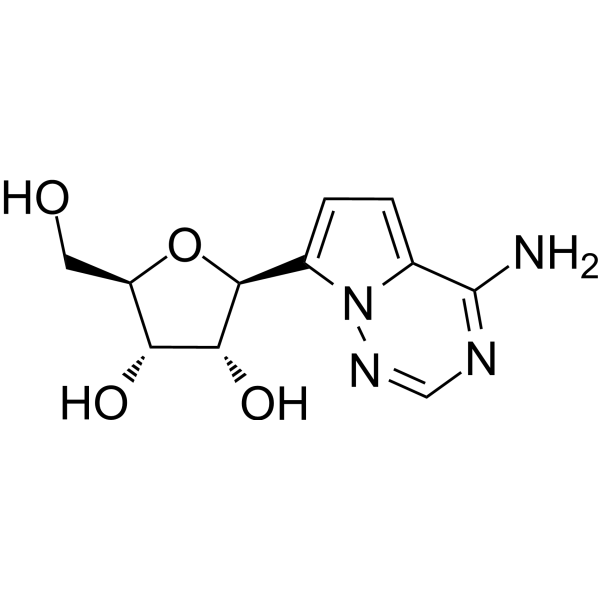
Antiviral agent 17
 0 Images
Antiviral agent 17 is an anti-infection agent. Antiviral agent 17 retains its antiviral effect in a human replicon assay (EC50 = 0.015 μM). Antiviral agent 17 results in good antiviral activity against murine norovirus with an EC50 of 7 nM. . Antiviral agent 17 has the potential for the research of infectious and malignant diseases.

-
Moxifloxacin (Standard)
 0 ImagesSynonyms: BAY 12-8039 free base (Standard)
Moxifloxacin (Standard) is the analytical standard of Moxifloxacin. This product is intended for research and analytical applications. Moxifloxacin is an orally active 8-methoxyquinolone antimicrobial for use in the treatment of acute bacterial sinusitis, acute bacterial exacerbations of chronic bronchitis, and community-acquired pneumonia.
-
N-Octanoyl-L-homoserine lactone (Standard)
 0 ImagesSynonyms: C8-HSL (Standard)
N-Octanoyl-L-homoserine lactone (Standard) (C8-HSL (Standard)) is the analytical standard of N-Octanoyl-L-homoserine lactone (HY-124237A). This product is intended for research and analytical applications. N-Octanoyl-L-homoserine lactone (C8-HSL) is an autoinducer. It mainly serves as a key inter- and intra-species communication medium or "signal molecule" in Gram-negative bacteria. N-Octanoyl-L-homoserine lactone microparticles exhibit adjuvant potential when used in combination with various particulate vaccines.
-
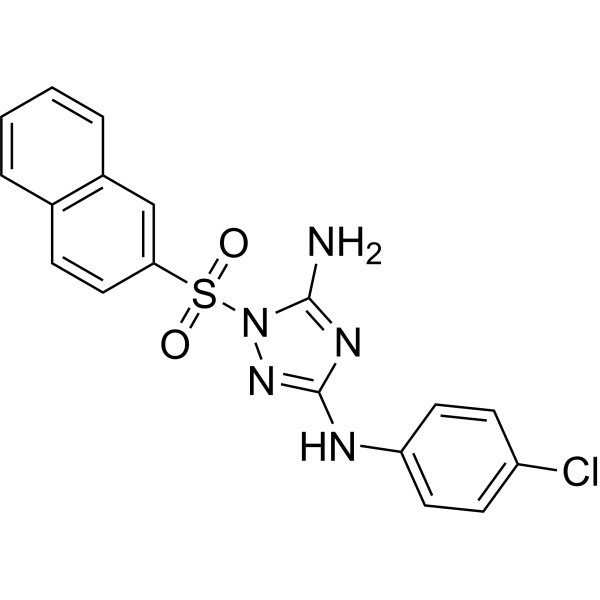
RCB16007
 0 Images
RCB16007 is a Yellow Fever Virus (YFV) Inhibitor. RCB16007 inhibits the West Nile virus (EC50: 7.9 μM, CC50: 17 μM).
-
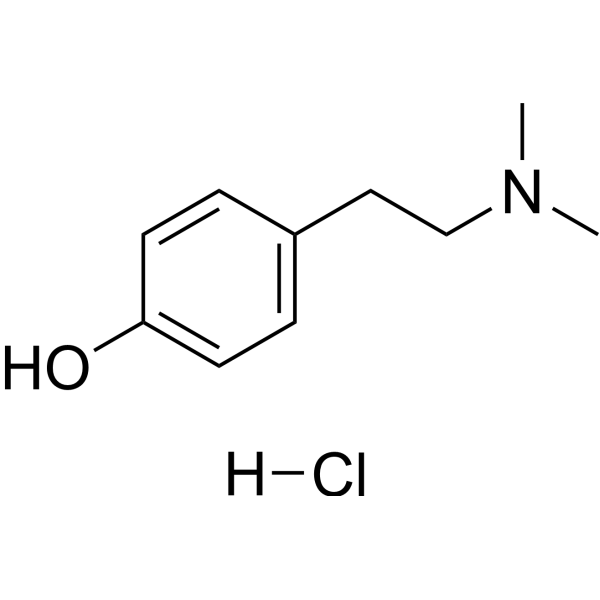
Hordenine hydrochloride
 0 ImagesSynonyms: Ordenina hydrochloride; Peyocactine hydrochloride
Hordenine hydrochloride (Ordenina hydrochloride; Peyocactine hydrochloride) is a multifunctional alkaloid with oral activity and blood-brain barrier penetration. Hordenine hydrochloride inhibits LPS-induced phosphorylation of p38, JNK, ERK1/2, p65, IκB, and AKT, prevents p65 nuclear translocation, and suppresses inflammatory cytokines and mediators. Hordenine hydrochloride promotes M2 macrophage polarization, restores blood-milk barrier integrity, alleviates oxidative stress by reducing ROS and MDA, and attenuates LPS-induced lung injury and pulmonary edema. Hordenine hydrochloride inhibits cAMP production, CREB phosphorylation, and MITF expression, thereby suppressing melanin synthesis in melanocytes and reconstructed epidermis. Hordenine hydrochloride activates the Wnt/β-catenin signaling pathway, promotes dermal papilla cell proliferation and hair shaft elongation, and accelerates hair regeneration. Hordenine hydrochloride activates DRD2, acts as a D3R partial agonist, α2A-AR full agonist, and 5-HT2A-R antagonist, and inhibits SERT and DAT. Hordenine hydrochloride inhibits α-synuclein accumulation and ameliorates motor deficits in Parkinson's disease models. Hordenine hydrochloride limits alcohol intake, reduces relapse drinking behavior, and modulates alcohol-induced conditioned place preference. Hordenine hydrochloride can be used for research on mastitis, skin pigmentation, acute lung injury, foodborne diseases, hair loss, Parkinson's disease, bacterial infections, and alcohol use disorder.
-
Methyl paraben (Standard)
 0 Images
Methyl paraben (Standard) is the analytical standard of Methyl paraben. This product is intended for research and analytical applications. Methyl Paraben is a standardized methyl paraben allergen isolated from Yunnan hemlock (Tsuga dumosa). Methyl Paraben is commonly used as a stable, non-volatile preservative. Methyl Paraben increases histamine release and cellular regulation of immunity, blocks sodium channels, and prevents ischemia-reperfusion injury.
![[5-(2-Thienyl)-3-isoxazolyl]methanol](https://file.medchemexpress.com/product_pic/hy-w029719.gif "Click to View [5-(2-Thienyl)-3-isoxazolyl]methanol Product Detail")
-
Chloroneb
 0 Images
Chloroneb (Demosan) is a pesticide with fungicidal and plant-protective activities. Chloroneb can be used to detect organochlorine pesticide residues, showing good selectivity, stability and reproducibility. Chloroneb has been applied to the detection of licorice, cucumber, river water and soil samples with satisfactory results.
-
N-Hexanoyl-L-homoserine lactone (Standard)
 0 ImagesSynonyms: C6-HSL (Standard)
N-Hexanoyl-L-homoserine lactone (Standard) is the analytical standard of N-Hexanoyl-L-homoserine lactone (HY-133685). This product is intended for research and analytical applications. N-Hexanoyl-L-homoserine lactone is a short-chained N-acyl homoserine lactone (AHL). N-hexanoyl-L-homoserine lactone is also a mediator of bacterial quorum-sensing regulation. N-hexanoyl-L-homoserine lactone promotes lipid accumulation in algae. AHL is an intercellular communication signal molecule in the quorum sensing system of Gram-negative bacteria and a medium for mediating information exchange between eukaryotic plants and prokaryotic bacteria. AHL can affect bacteria activities, such as biofilm formation, pigment synthesis, and antibiotic synthesis.