



Pellitorine

Based on 1 Customer Validation
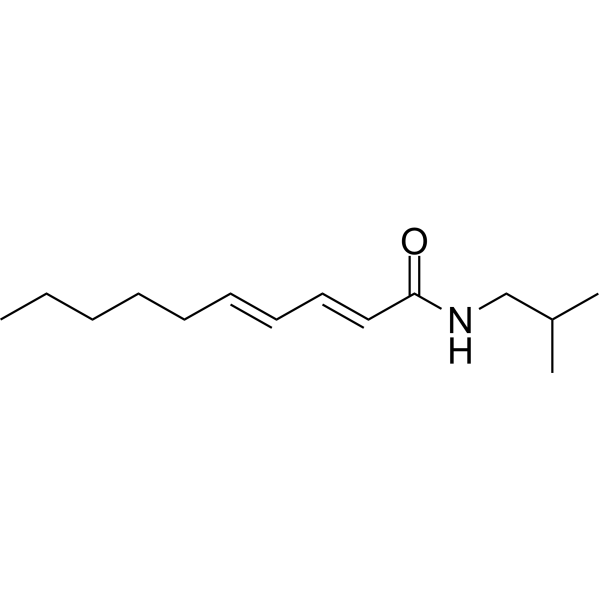
Pellitorine is a bioactive natural amide compound. Pellitorine can competitively antagonize the activation of TRPV1 by Capsaicin (HY-10448), thereby reducing pain signal transmission. Pellitorine improves cognitive dysfunction by upregulating the BDNF-ERK1/2-CREB and Nrf2-HO-1 pathways. Pellitorine exerts anti-inflammatory and anti-sepsis effects by inhibiting the release of high mobility group protein B1 (HMGB1) and the expression of RAGE/TLR4. Pellitorine exerts its antithrombotic effect by prolonging the clotting time, inhibiting the activity of clotting factors and thrombin. Pellitorine inhibits lipid peroxidation and resists ferroptosis by upregulating GPX4 and DHODH. Pellitorine kills Aedes aegypti mosquito larvae by inhibiting V-type H⁺-ATPase and aquaporin 4 (AaAQP4). Pellitorine exhibits anti-cancer activity (e.g., leukemia and breast cancer) and has inhibitory effects on certain bacteria.
Nur für Forschungszwecke. Wir verkaufen nicht an Patienten.
- Reinheit : 98.30%
- CAS. Nr.: 18836-52-7
- Formel: C14H25NO
- Molecular Weight:223.35
-
Speicherung:
4°C, protect from light
* In solvent : -80°C, 6 months; -20°C, 1 month (protect from light)

To place orders, for customer services and technical support, please contact: MedChemExpress USA
Tel: 609-228-6898 E-mail: [email protected] [email protected]


-
 Biologische Aktivität
-
Chemical Information
-
Lösungsmittel & Löslichkeit
- Protokoll
- Reinheit & Dokumentation
- Verweise
-
 Help & FAQs


-

HY-N3097R
Pellitorine (Standard)Standard of Pellitorine -
HY-I0400
N-Acetylneuraminic acidSialic Acid Monosaccharide; Tyrosinase Inhibitior -

HY-I0400R
N-Acetylneuraminic acid (Standard)Sialic Acid Monosaccharide; Tyrosinase Inhibitior -
HY-P1540
Angiotensin III, human, mouseAT2R Agonist -

HY-105088A
Pexiganan acetateAntimicrobial Peptide -
HY-W505771
SeselinAnti-inflammatory Agent -
HY-119265
LDL-IN-4LDL Oxidation Inhibitor -

HY-N10653
AltemicidinMonoterpene Alkaloid


Biologische Aktivität
Beschreibung
|
GPX4 |
ERK1 |
ERK2 |
TLR4 |
NF-κB |
HO-1 |
Cellular Effect
|
Cell Line

|
Type | Value | Description | References |
|---|---|---|---|---|
| BV-2 | IC50 |
45 μM
Compound: 23
|
Antineuroinflammatory activity against mouse BV2 cells assessed as inhibition of LPS-induced NO production incubated for 20 hrs by Griess assay
Antineuroinflammatory activity against mouse BV2 cells assessed as inhibition of LPS-induced NO production incubated for 20 hrs by Griess assay
|
[PMID: 33822610] |
| Hepatocyte | IC50 |
9.3 μM
Compound: 30
|
Hepatoprotective activity in ddY mouse hepatocytes assessed as inhibition of D-galactosamine-induced cytotoxicity after 44 hrs by MTT assay
Hepatoprotective activity in ddY mouse hepatocytes assessed as inhibition of D-galactosamine-induced cytotoxicity after 44 hrs by MTT assay
|
[PMID: 19775895] |
| THP-1 | IC50 |
13.5 μg/mL
Compound: 7
|
Inhibition of sICAM1/LFA1 interaction-mediated human THP1 cell adhesion after 1 hr by ELISA
Inhibition of sICAM1/LFA1 interaction-mediated human THP1 cell adhesion after 1 hr by ELISA
|
[PMID: 18672369] |
| WI-38 | IC50 |
0.67 μM
Compound: 6
|
Induction of senescence in human WI-38 cells
Induction of senescence in human WI-38 cells
|
[PMID: 38436272] |
In Vitro
Pellitorine exhibits cytotoxic against HL60 and MCF-7 with IC50 values of 13.0 µg/mL and 1.8 µg/mL[1].
Pellitorine (0.01-1 mg/mL) blocks Capsaicin-evoked Ca2+ uptake with an IC50 of 154 µg/mL (0.69 mM/L) in HaCaT cells[2].
Pellitorine (0.1 nM-100 µM) significantly prolongs partial thromboplastin time (aPTT) and prothrombin time (PT) and inhibits the activities of cell-based thrombin and activated factor X (FXa) in normal human plasma[5].
Pellitorine (0-20 µM) Inhibits the production of thrombin and FXa induced by TNF-α and down-regulates the secretion of PAI-1, reduces the PAI-1/t-PA ratio to improve the fibrinolytic balance in HUVECs[5].
Pellitorine (0-20 μM, 6-30 h) inhibits LPS (HY-D1056)-induced barrier disruption, expression of cell adhesion molecules (CAMs) and adhesion/transendothelial migration of monocytes to human endothelial cells[6].
Pellitorine (0-20 μM, 7-22 h) suppresses the production of TNF-α or IL-6 and activation of NF-κB or extracellular regulated kinases (ERK) 1/2 by LPS in HUVECs[6].
Pellitorine is active against Bacillus subtilis, Bacillus sphaericus, Staphylococcus aureus, Klebsiella aerogenes and Chromobacterium violaceum with MIC values of 28, 56, 56, 56 and 56 μM[7].
MedChemExpress (MCE) has not independently confirmed the accuracy of these methods. They are for reference only.
-
Cell Line:Monocytes through HUVEC monolayers
-
Concentration:0, 3, 5, 10, 20 μM
-
Incubation Time:6 h
-
Result:Inhibited the migration of monocytes across the endothelium.
-
Cell Line:HUVECs
-
Concentration:0, 3, 5, 10, 20 μM
-
Incubation Time:Incubated for 6 h followed by LPS for 3 h (TLR4 and p-p38), 16 h (VCAM-1, ICAM-1, TNF-α and IL-6) or 24 h (E-Selectin)
-
Result:Inhibited expression of TLR4 and p-p38 level.
Decreased VCAM-1, ICAM-1 and E-selectin.
Decreased TNF-α and IL-6.
Inhibited phosphorylation of ERK1/2 and NF-κB expression.
-
Cell Line:Monocytes through HUVEC monolayers
-
Concentration:0, 3, 5, 10, 20 μM
-
Incubation Time:6 h
-
Result:Significantly inhibited the upregulation of TLR4 induced by LPS.
Decreased VCAM-1, ICAM-1 and E-selectin mRNA.
-
Cell Line:HUVECs
-
Concentration:0, 3, 5, 10, 20 μM
-
Incubation Time:Incubated for 6 h followed by LPS for 1 h
-
Result:Reduced the nuclear translocation of NF-κB p65.
In Vivo
Pellitorine (2.21-5 mg/L, suspended in distilled water with Triton X-100, put Ae. Aegypti into paper cups containing the test solution) led to the collapse of the larva's osmotic pressure and its subsequent death by attacking mainly on midgut epithelium and anal gills of Aedes aegypt[3].
Pellitorine (0.1-0.6 mg/kg, i.p., once daily for 21 days) protects chronic restraint stress (CRS)-induced cognitive deficits via inhibiting neural inflammation and ferroptosis in mice[4].
Pellitorine (4.5-9 μg/mouse, i.v., single dose) significantly prolongs mice tail bleeding times[5].
Pellitorine (9 μg/mouse, i.v., single or doule doses) prevents mice or results in reduction of mice mortality in the LPS-induced lethal endotoxemia model[6].
MedChemExpress (MCE) has not independently confirmed the accuracy of these methods. They are for reference only.
-
Animal Model:Eye wipe test established in BALB/c mice[2]
-
Dosage:3.75 mM applied together with 100 µM Capsaicin
-
Administration:Eye drops, single dose
-
Result:Significantly decreased the frequency of vanilloid-evoked defending movements.
Did not change significantly following either a 1 h or 15 min pretreatment with 3.75mM or 4.5 mM alone.
-
Animal Model:Insecticide test established in insecticide-susceptible Ae. Aegypti[3]
-
Dosage:2.21 and 5 mg/L, suspended in distilled water with Triton X-100 (20 ml/L)
-
Administration:Put Ae. Aegypti into paper cups containing the test solution
-
Result:Caused the epithelial cells of the gastric caeca to swell, disintegrate, and the cell nuclei to fragment.
Dissolved the electron-dense substances in the epithelial cells and leaves the residual peritubular membrane.
Damaged the anal-gill structure, resulting in neuronal damage.
Inhibited AaAQP4 expression levels and disturbed the Na+, Cl-, and K+ co-transport system mainly.
Caused the histopathological alterations and inhibition of gene expression of V-type H+-ATPase and aquaporin protein in the anal gills.
-
Animal Model:CRS model established in seven-week-old male C57BL/6 J mice[4]
-
Dosage:0.1 and 0.6 mg/kg
-
Administration:Intraperitoneally injection (i.p.), once daily for 21 days
-
Result:Significantly reduced the resting time of CRS mice in tails suspension test (TST).
Improved spatial memory of mice in novel object recognition test (NOR) and morris water maze (MWM).
Suppressed ferroptosis-associated signaling pathways and neuroinflammation.
Upregulated the expressions of GPX4, DHODH and FSP1.
Prevented neuronal loss, preserved the expression of neuroprotective molecules such as BDNF, Nrf2, HO-1, phosphorylated-CREB, and phosphorylated-ERK1/2.
Reduced the protein levels of inflammation-related markers including NLRP3, HMGB1, and NF-κB.
Reduced the number of activated microglia, as indicated by decreased Iba-1+, TREM2+, CD86+, and CX3CR1+ cell populations in the hippocampus.
Did not exhibit neurotoxicity in healthy mice.
-
Animal Model:Bleeding time test established in ICR mice[5]
-
Dosage:4.5 and 9 μg/mouse
-
Administration:Intravenous administration (i.v.), single dose
-
Result:Prolonged tail bleeding times from 41.6 s to 57.6 s and 71.8 s, respectively.
-
Animal Model:LPS-induced lethal endotoxemia model established in male C57BL/6 mice[6]
-
Dosage:9 μg/mouse
-
Administration:Intravenous administration (i.v.), two times at 12 h and 50 h after LPS injection or single dose at 12 h before LPS injection
-
Result:Prevented LPS-induced lethal endotoxemia.
Resulted in an increase in the survival rate from 0 to 30% by Kaplan-Meier survival analysis.
Suppressed LPS-induced hyperpermeability and leukocyte migration.


Chemical Information
-
CAS. Nr. 18836-52-7
-
Appearance Solid
-
Molecular Weight 223.35
-
Formel C14H25NO
-
Color White to off-white
-
SMILES
CC(C)CNC(/C=C/C=C/CCCCC)=O
-
Structure Classification
-
Initial Source
-
Versand
Room temperature in continental US; may vary elsewhere.
-
Speicherung
4°C, protect from light
* In solvent : -80°C, 6 months; -20°C, 1 month (protect from light)


Lösungsmittel & Löslichkeit
In Vitro:
DMSO : 50 mg/mL (223.86 mM; Need ultrasonic; Hygroscopic DMSO has a significant impact on the solubility of product, please use newly opened DMSO)
Please refer to the solubility information to select the appropriate solvent. Once prepared, please aliquot and store the solution to prevent product inactivation from repeated freeze-thaw cycles.
Storage method and period of stock solution: -80°C, 6 months; -20°C, 1 month (protect from light). When stored at -80°C, please use it within 6 months. When stored at -20°C, please use it within 1 month.
Please refer to the solubility information to select the appropriate solvent. Once prepared, please aliquot and store the solution to prevent product inactivation from repeated freeze-thaw cycles.
Storage method and period of stock solution: -80°C, 6 months; -20°C, 1 month (protect from light). When stored at -80°C, please use it within 6 months. When stored at -20°C, please use it within 1 month.
Konzentration (Stammlösung) × Volumen (Stammlösung) = Konzentration (Ziellösung) × Volumen (Ziellösung)
In Vivo:
Select the appropriate dissolution method based on your experimental animal and administration route.
- For the following dissolution methods, please ensure to first prepare a clear stock solution using an In Vitro approach and then sequentially add co-solvents:
- To ensure reliable experimental results, the clarified stock solution can be appropriately stored based on storage conditions. As for the working solution for In Vivo experiments, it is recommended to prepare freshly and use it on the same day.
- The percentages shown for the solvents indicate their volumetric ratio in the final prepared solution. If precipitation or phase separation occurs during preparation, heat and/or sonication can be used to aid dissolution.
Add each solvent one by one: 10% DMSO 40% PEG300 5% Tween-80 45% Saline
Solubility: 2.5 mg/mL (11.19 mM); Suspended solution; Need ultrasonic
This protocol yields a suspended solution of 2.5 mg/mL. Suspended solution can be used for oral and intraperitoneal injection.
Taking 1 mL working solution as an example, add 100 μL DMSO stock solution (25.0 mg/mL) to 400 μL PEG300, and mix evenly; then add 50 μL Tween-80 and mix evenly; then add 450 μL Saline to adjust the volume to 1 mL.
Preparation of Saline: Dissolve 0.9 g sodium chloride in ddH₂O and dilute to 100 mL to obtain a clear Saline solution.
Add each solvent one by one: 10% DMSO 90% (20% SBE-β-CD in Saline)
Solubility: 2.5 mg/mL (11.19 mM); Suspended solution; Need ultrasonic
This protocol yields a suspended solution of 2.5 mg/mL. Suspended solution can be used for oral and intraperitoneal injection.
Taking 1 mL working solution as an example, add 100 μL DMSO stock solution (25.0 mg/mL) to 900 μL 20% SBE-β-CD in Saline, and mix evenly.
Preparation of 20% SBE-β-CD in Saline (4°C, storage for one week): 2 g SBE-β-CD powder is dissolved in 10 mL Saline, completely dissolve until clear.
In Vivo Dissolution Calculator
Please enter the basic information of animal experiments:
-
-
-
-
Recommended: Prepare an additional quantity of animals to account for potential losses during experiments.
Please enter your animal formula composition:
-
%DMSO +
Recommended: Keep the proportion of DMSO in working solution below 2% if your animal is weak.
-
%+
-
+%Tween-80 + +
-
%Saline +
The co-solvents required include: DMSO, . All of co-solvents are available by MedChemExpress (MCE). , Tween 80. All of co-solvents are available by MedChemExpress (MCE).
Working solution concentration: 0.22 mg/mL
Method for preparing stock solution: mg drug dissolved in μL DMSO. Stock solution concentration: mg/mL. * In solvent : -80°C, 6 months; -20°C, 1 month (protect from light)
1. Take μL DMSO stock solution;
2. Add μL .
μL , mix evenly;
3. Then add μL Tween 80, mix evenly;
4. Then add μL
Please ensure that the stock solution in the first step is dissolved to a clear state, and add co-solvents in sequence. You can use ultrasonic heating (ultrasonic cleaner, recommended frequency 20-40 kHz), vortexing, etc. to assist dissolution.


Reinheit & Dokumentation
-
Data Sheet (285 KB)
-
SDS (420 KB)
- English - EN (420 KB)
- Français - FR (420 KB)
- Deutsch - DE (420 KB)
- Norwegian - NO (420 KB)
- Español - ES (420 KB)
- Swedish - SV (420 KB)
- Italian - IT (420 KB)
- Korean - KR (420 KB)
- Portuguese - PT (420 KB)
-
Handling Instructions (2659 KB)
Verweise
[1]. Ee GC, et al. Pellitorine, a potential anti-cancer lead compound against HL6 and MCT-7 cell lines and microbial transformation of piperine from Piper Nigrum. Molecules. 2010;15(4):2398-2404. [Content Brief]
[2]. Oláh Z, et al. Pellitorine, an extract of Tetradium daniellii, is an antagonist of the ion channel TRPV1. Phytomedicine. 2017 Oct 15;34:44-49. [Content Brief]
[3]. Perumalsamy H, et al. Novel histopathological and molecular effects of natural compound pellitorine on larval midgut epithelium and anal gills of Aedes aegypti. PLoS One. 2013 Nov 18;8(11):e80226. [Content Brief]
[4]. Zhang JB, et al. Pellitorine protects chronic restraint stress-induced cognitive deficits via inhibiting neural inflammation and ferroptosis. Int Immunopharmacol. 2025 Sep 23;162:115166. [Content Brief]
[5]. Ku SK, et al. Antithrombotic activities of pellitorine in vitro and in vivo. Fitoterapia. 2013 Dec;91:1-8. doi: 10.1016/j.fitote.2013.08.004. Epub 2013 Aug 22. [Content Brief]
[6]. Lee W, et al. Vascular barrier protective effects of pellitorine in LPS-induced inflammation in vitro and in vivo. Fitoterapia. 2014 Jan;92:177-87. [Content Brief]
[7]. Reddy SV, et al. Antibacterial constituents from the berries of Piper nigrum. Phytomedicine. 2004 Nov;11(7-8):697-700. [Content Brief]


Complete Stock Solution Preparation Table
Please refer to the solubility information to select the appropriate solvent. Once prepared, please aliquot and store the solution to prevent product inactivation from repeated freeze-thaw cycles.
Storage method and period of stock solution: -80°C, 6 months; -20°C, 1 month (protect from light). When stored at -80°C, please use it within 6 months. When stored at -20°C, please use it within 1 month.
| Optional Solvent | Concentration Solvent Mass | 1 mg | 5 mg | 10 mg | 25 mg |
|---|---|---|---|---|---|
| DMSO | 1 mM | 4.4773 mL | 22.3864 mL | 44.7728 mL | 111.9319 mL |
| 5 mM | 0.8955 mL | 4.4773 mL | 8.9546 mL | 22.3864 mL | |
| 10 mM | 0.4477 mL | 2.2386 mL | 4.4773 mL | 11.1932 mL | |
| 15 mM | 0.2985 mL | 1.4924 mL | 2.9849 mL | 7.4621 mL | |
| 20 mM | 0.2239 mL | 1.1193 mL | 2.2386 mL | 5.5966 mL | |
| 25 mM | 0.1791 mL | 0.8955 mL | 1.7909 mL | 4.4773 mL | |
| 30 mM | 0.1492 mL | 0.7462 mL | 1.4924 mL | 3.7311 mL | |
| 40 mM | 0.1119 mL | 0.5597 mL | 1.1193 mL | 2.7983 mL | |
| 50 mM | 0.0895 mL | 0.4477 mL | 0.8955 mL | 2.2386 mL | |
| 60 mM | 0.0746 mL | 0.3731 mL | 0.7462 mL | 1.8655 mL | |
| 80 mM | 0.0560 mL | 0.2798 mL | 0.5597 mL | 1.3991 mL | |
| 100 mM | 0.0448 mL | 0.2239 mL | 0.4477 mL | 1.1193 mL |


Pellitorine Related Classifications
HY-N3097 Related Classifications
 Powered by Bioz
Keywords
- Pellitorine
- 18836-52-7
- TRP Channel
- Amyloid-β
- Toll-like Receptor (TLR)
- Keap1-Nrf2
- Heme Oxygenase (HO)
- Dihydroorotate Dehydrogenase
- Ferroptosis
- PAI-1
- NF-κB
- ERK
- Proton Pump
- Glutathione Peroxidase
- Thrombin
- Insecticide
- Bacterial
- Piper nigrum
- Alkaloids
- cytotoxicity
- Microbial transformation
- Aspergillus niger
- Inhibitor
- inhibitor
- inhibit