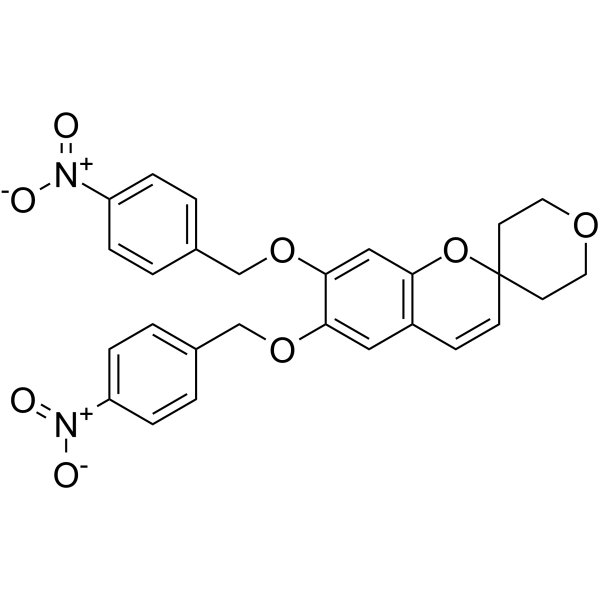
TLR8
TLR8 is an endosomal pattern-recognition receptor that detects RNA degradation products and activates innate immune signaling in human myeloid cells[1][2]. Mechanistically, RNase T2 processes single-stranded RNA into uridine and purine-2′,3′-cyclophosphate-terminated oligoribonucleotides, which engage two TLR8 ligand-binding pockets[1][2]. In monocytes, TLR8 and TLR7 activate distinct pathways during RNA virus infection, making isoform-specific analysis essential for antiviral and inflammatory research[3]. Disease studies show that TLR8 gain-of-function variants cause neutropenia, antibody deficiency, lymphoproliferation, and bone marrow failure, linking excessive TLR8 signaling to human immunopathology[4]. For experimental applications, selective synthetic agonists help distinguish TLR8 biology from TLR7 biology by separating target-cell selectivity and cytokine-induction profiles[5].- TLR8 links RNA degradation sensing to innate immune activation in human myeloid cells.- Isoform-specific assays distinguish TLR8 signaling from related TLR7 pathways.- Agonist tools support controlled studies of cytokine induction and immune-cell activation.
References:
- [1]. Greulich W, et al. TLR8 Is a Sensor of RNase T2 Degradation Products. Cell. 2019 Nov 27;179(6):1264-1275.e13. [Content Brief]
- [2]. Tanji H, et al. Toll-like receptor 8 senses degradation products of single-stranded RNA. Nat Struct Mol Biol. 2015 Feb;22(2):109-15. [Content Brief]
- [3]. de Marcken M, et al. TLR7 and TLR8 activate distinct pathways in monocytes during RNA virus infection. Sci Signal. 2019 Oct 29;12(605):eaaw1347. [Content Brief]
- [4]. Aluri J, et al. Immunodeficiency and bone marrow failure with mosaic and germline TLR8 gain of function. Blood. 2021 May 6;137(18):2450-2462. [Content Brief]
- [5]. Gorden KB, et al. Synthetic TLR agonists reveal functional differences between human TLR7 and TLR8. J Immunol. 2005 Feb 1;174(3):1259-68. [Content Brief]
-
TLR8 Related Products (66)
Related Products (66)

-
Resiquimod
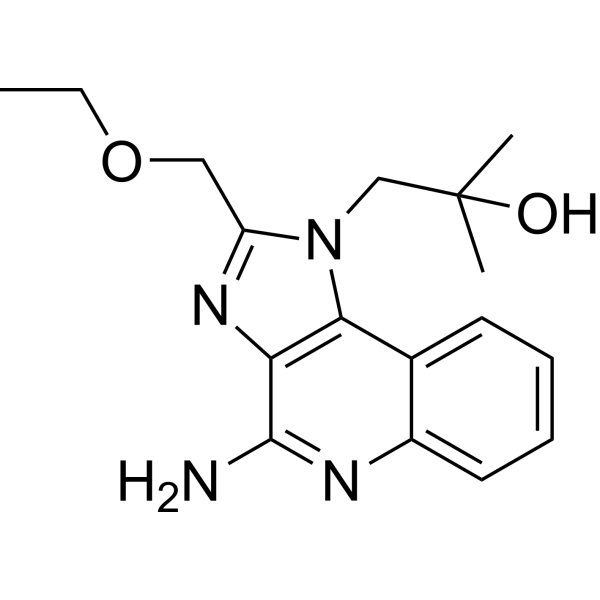 0 ImagesSynonyms: R848; S28463Resiquimod is a Toll-like receptor 7 and 8 (TLR7/TLR8) agonist that induces the upregulation of cytokines such as TNF-α, IL-6 and IFN-α.
-
Enpatoran
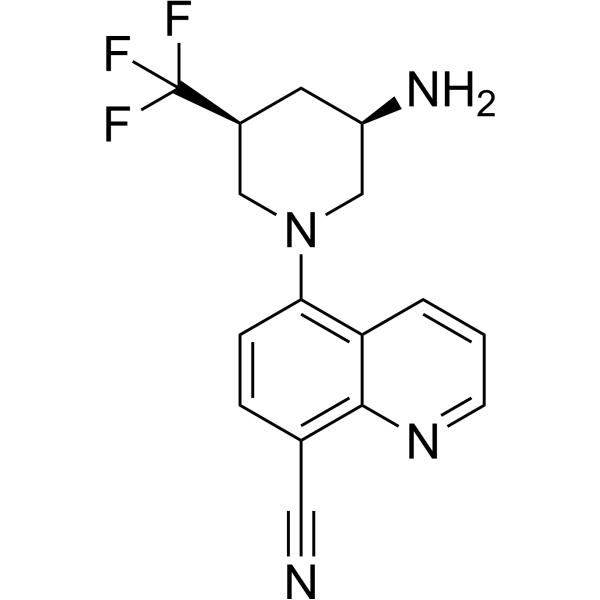 0 ImagesSynonyms: M5049Enpatoran (M5049) is an orally active and selective TLR7/8 antagonist. Enpatoran inhibits the activation of the downstream type I interferon pathway. Enpatoran is used in studies of cutaneous lupus erythematosus, systemic lupus erythematosus with cutaneous manifestations, and psoriasis.
-
Motolimod
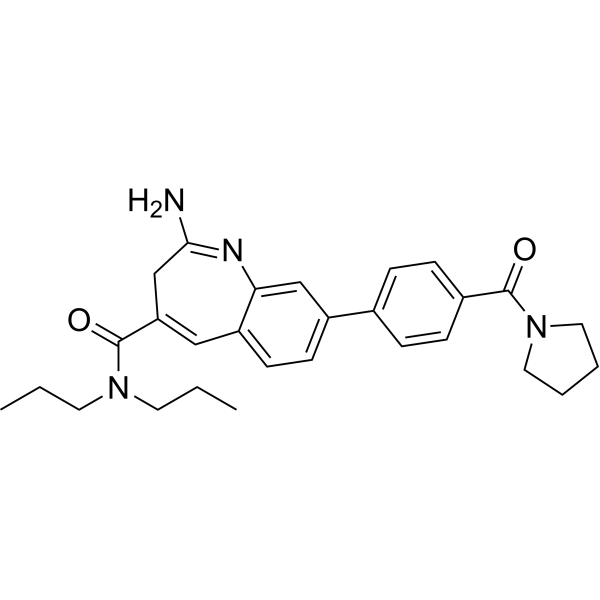 0 ImagesSynonyms: VTX-2337; VTX-378Motolimod (VTX-2337;VTX-378) is a selective Toll-like receptor 8 (TLR8) agonist, with an EC50 of approximately 100 nM.
-
Telratolimod
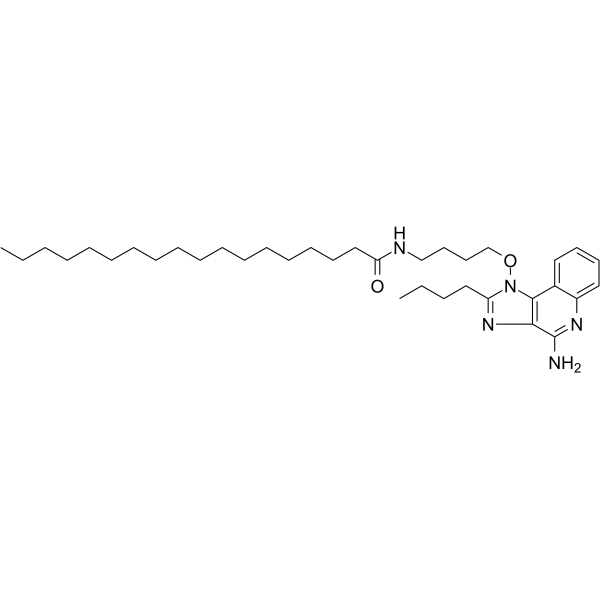 0 ImagesSynonyms: MEDI9197; 3M-052Telratolimod (MEDI9197) is a potent toll like receptors 7/8 (TLR7/8) agonist, with antitumor activity.
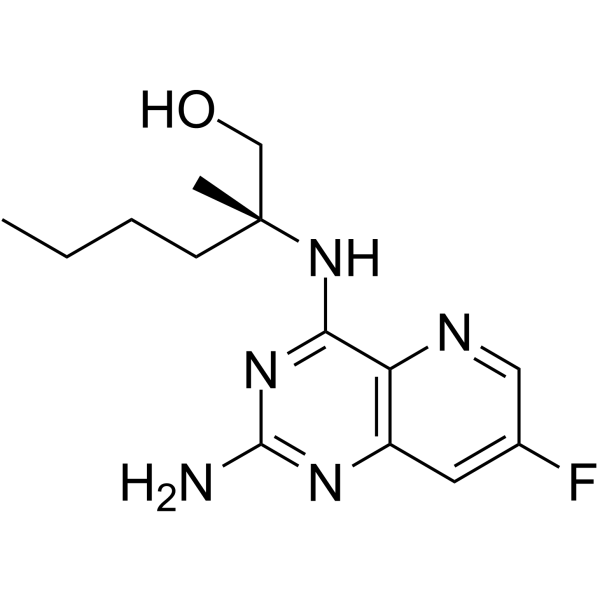
-
Enpatoran hydrochloride
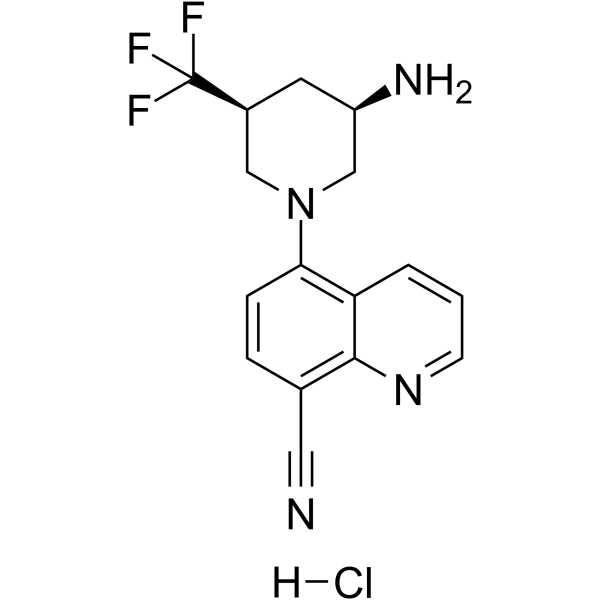 0 ImagesSynonyms: M5049 hydrochlorideEnpatoran hydrochloride (M5049 hydrochloride) is an orally active and selective TLR7/8 antagonist. Enpatoran hydrochloride inhibits the activation of the downstream type I interferon pathway. Enpatoran hydrochloride is used in studies of cutaneous lupus erythematosus, systemic lupus erythematosus with cutaneous manifestations, and psoriasis.
-
TLR7/8/9 antagonist-3
 0 ImagesCat. No.: HY-187531CAS No.: 2403782-38-5TLR7/8/9 antagonist-3 is an orally active antagonist of TLR7, TLR8 and TLR9, with human IC50 values of 0.008 μM, 0.006 μM and 0.072 μM, respectively. TLR7/8/9 antagonist-3 blocks agonist-induced activation of hTLR7, hTLR8, hTLR9, mTLR7 and mTLR9, and reduces serum IFNα and TNFα levels. TLR7/8/9 antagonist-3 can be used in the research of autoimmune diseases.
-
CL097
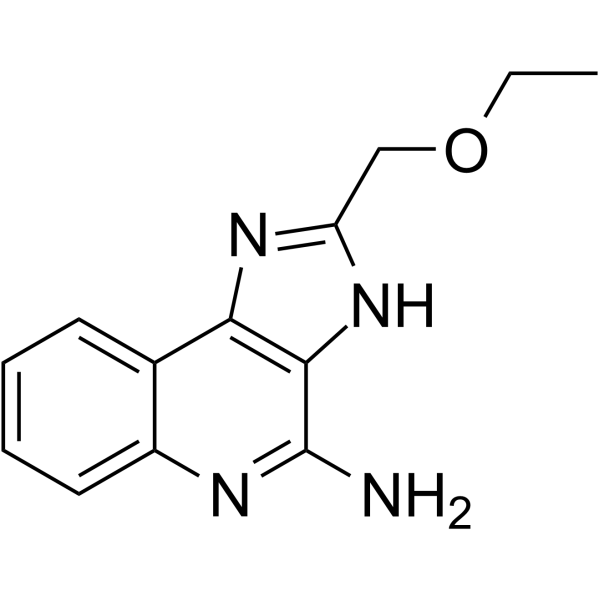 0 ImagesCL097, a potent TLR7 and TLR8 agonist, induces pro-inflammatory cytokines in macrophages. CL097 induces NADPH oxidase priming, resulting in an increase of the fMLF-stimulated ROS production.
-
ssRNA40 sodium
 0 ImagesCat. No.: HY-160229Purity: 98.34%Synonyms: R-1075 sodiumssRNA40 sodium (R-1075 sodium) is a single-stranded RNA40 derived from HIV-1. ssRNA40 sodium activates the TLR7, TLR8, TLR2, RIG-I, MDA5, MyD88, Caspase-3, IRE1α, NLRP3 inflammasome and IRF7 signaling pathways. ssRNA40 sodium alters mRNA expression in neutrophils, induces pro-inflammatory cytokines, ROS, autophagy (autophagy), pyroptosis (pyroptosis), neuronal death, neurodegeneration, aggregate formation and NK cell activation. ssRNA40 sodium activates the expression of CD62L, CD11b, CD69, MX1, OAS1, ATG7, LC3B and XBP1 in immune cell and neuronal populations. ssRNA40 sodium causes cortical neuron loss and axonal damage in mice in a TLR7-dependent manner. ssRNA40 sodium can be used in research on HIV-1 infection, neurodegeneration, COVID-19 and HIV-associated neurological disorders.
-
TL8-506
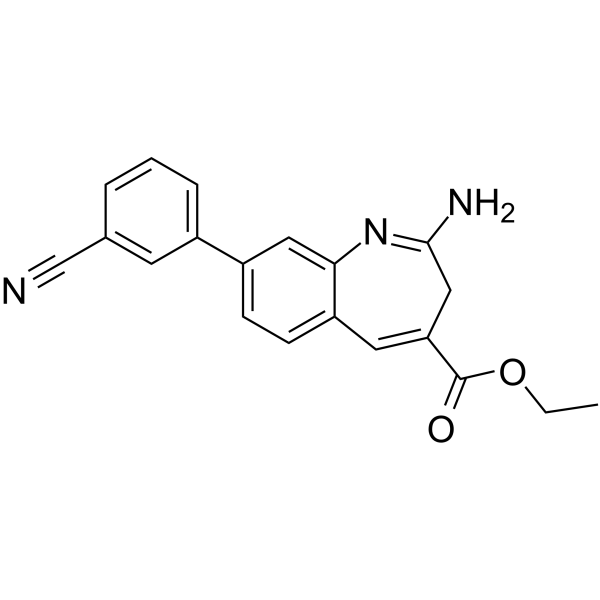 0 ImagesCat. No.: HY-20457CAS No.: 1268163-15-0TL8-506 is a specific TLR8 agonist with an EC50 of 30?nM. TL8-506 has immunomodulatory effects and can be used in the study of tuberculosis and cancer immunotherapy.
-
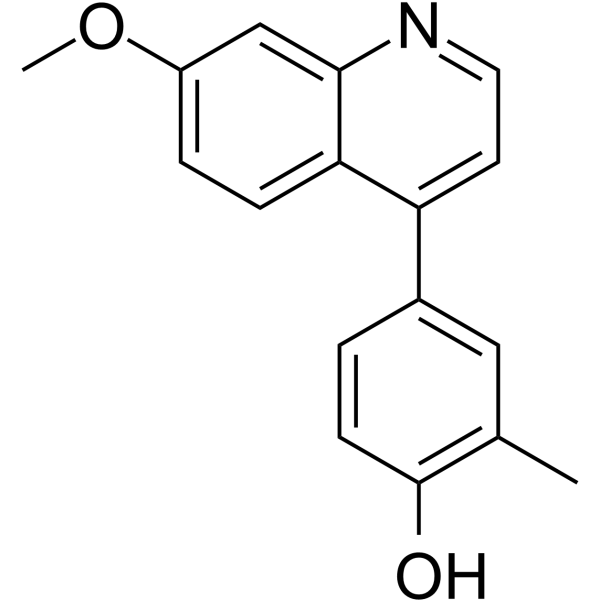
Gardiquimod
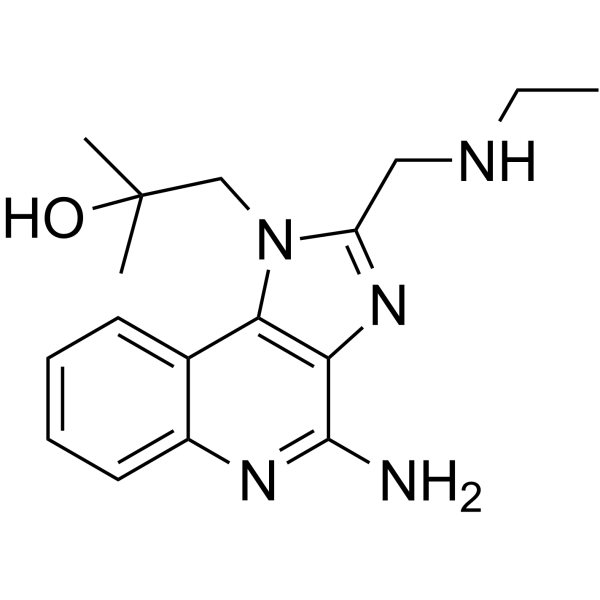 0 ImagesGardiquimod is an imidazoline TLR7/8 agonist. Gardiquimod inhibits HIV-1 infection of macrophages and activated peripheral blood mononuclear cells (PBMCs). Gardiquimod specifically activates TLR7 at concentrations below 10 μM.
-
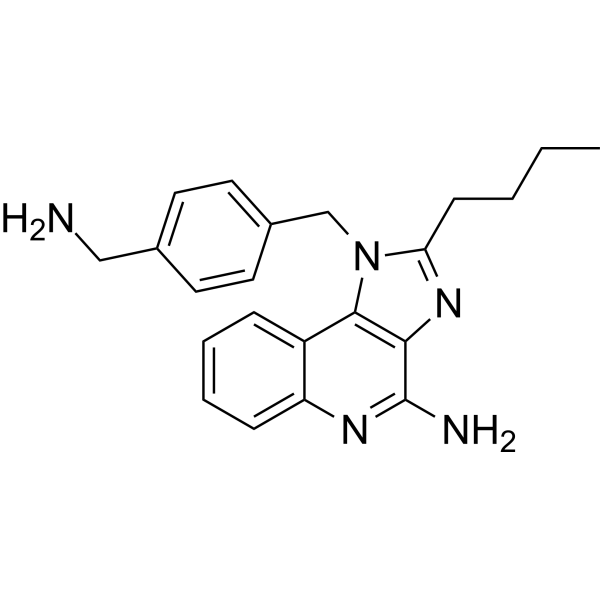
TLR7/8-IN-1
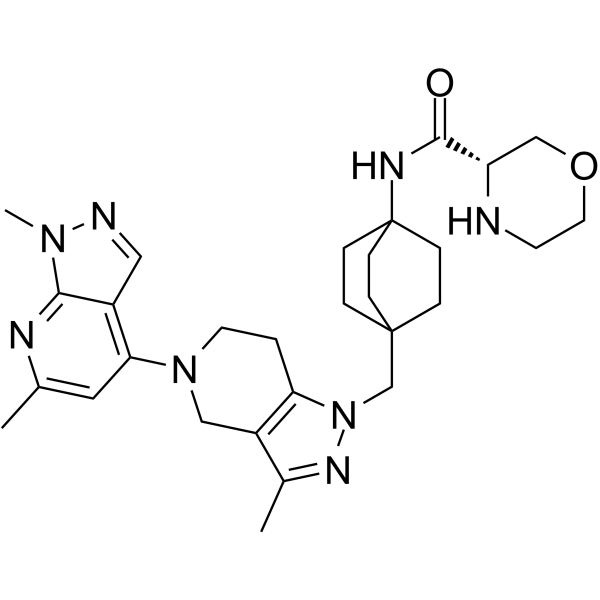 0 ImagesTLR7/8-IN-1 is a crystalline from of a TLR7/TLR8 inhibitor extracted from patent WO2019220390, compound 2b. TLR7/8-IN-1 can be used for the research of autoimmune disease.
-
TLR7/8 agonist 1 dihydrochloride
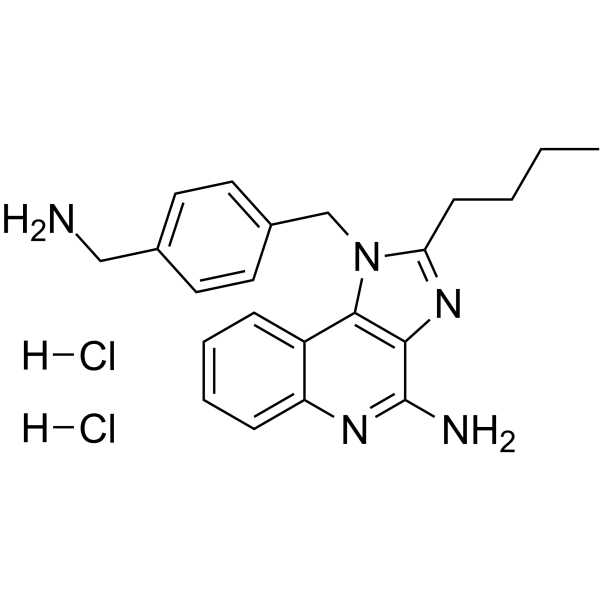 0 ImagesTLR7/8 agonist 1 dihydrochloride is a toll-like receptor TLR7/TLR8 dual-agonistic imidazoquinoline.
-
Resiquimod (GMP)
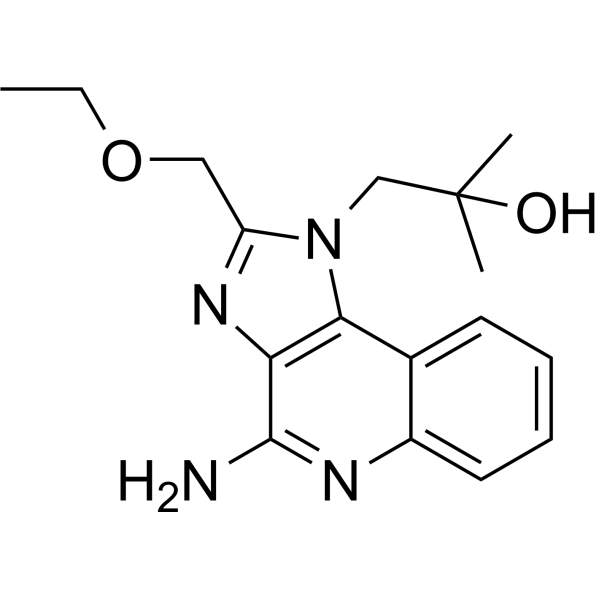 0 ImagesCat. No.: HY-13740GCAS No.: 144875-48-9Synonyms: R848 (GMP); S28463 (GMP)Resiquimod (R848) (GMP) is Resiquimod (HY-13740) produced by using GMP guidelines. GMP small molecules work appropriately as an auxiliary reagent for cell therapy manufacture. Resiquimod is a Toll-like receptor 7 and 8 (TLR7/TLR8) agonist. Resiquimod (GMP) can induce human mMDSC to mature into inflammatory macrophages.
-
CL097 hydrochloride
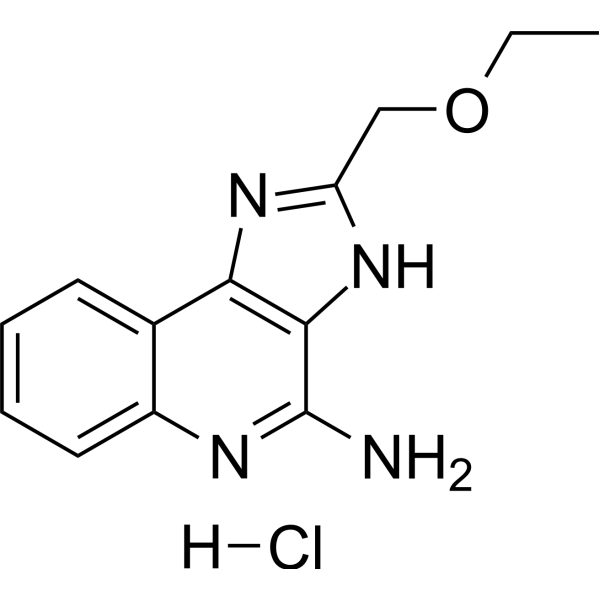 0 ImagesCL097, a potent TLR7 and TLR8 agonist, induces pro-inflammatory cytokines in macrophages. CL097 induces NADPH oxidase priming, resulting in an increase of the fMLF-stimulated ROS production.