



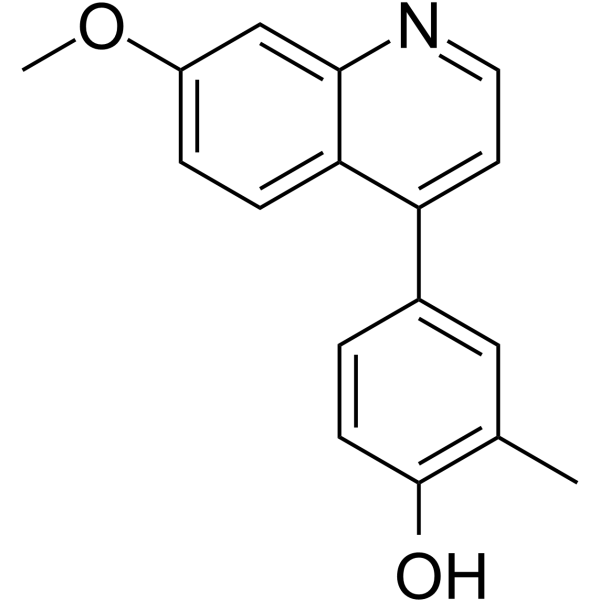
CU-CPT-9a
Based on 5 publication(s) in Google Scholar
CU-CPT-9a is a specific TLR8 antagonist, with an IC50 of 0.5 nM.
For research use only. We do not sell to patients.
- Purity : 99.74%
- CAS No.: 2165340-32-7
- Formula: C17H15NO2
- Molecular Weight:265.31
-
Storage:Powder -20°C, 3 years , 4°C, 2 years ; In solvent -80°C, 2 years , -20°C, 1 year

To place orders, for customer services and technical support, please contact: MedChemExpress USA
Tel: 609-228-6898 E-mail: [email protected] [email protected]


-
 Biological Activity
-
Chemical Information
-
Solvent & Solubility
- Purity & Documentation
- References
-
 Help & FAQs


-
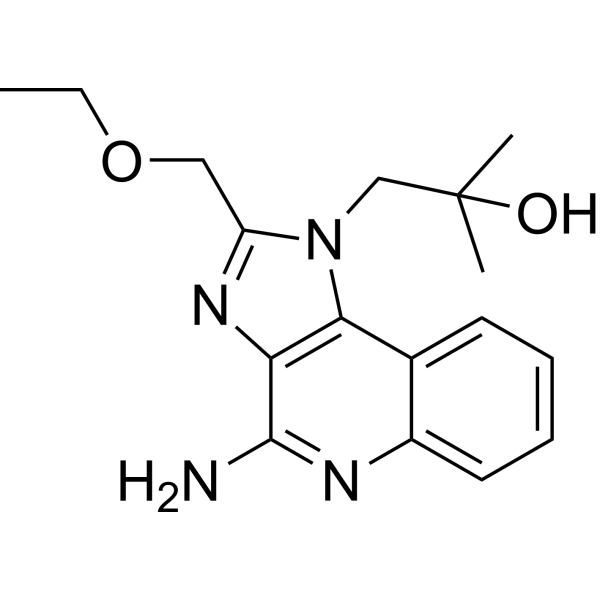
HY-13740
ResiquimodTLR7/8 Agonist -
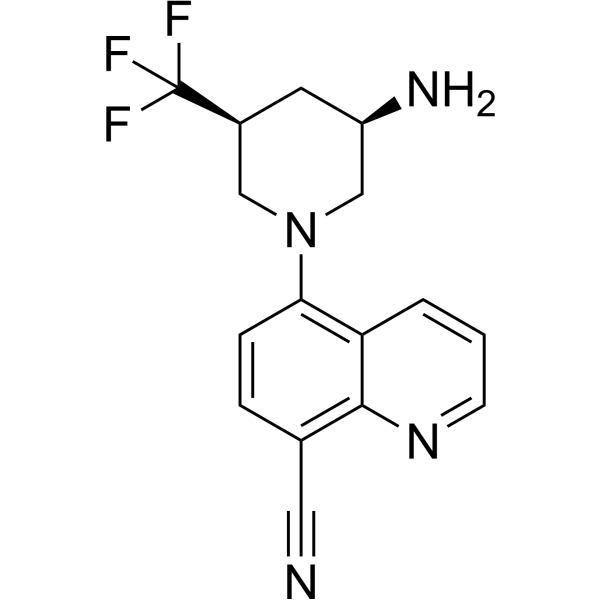
HY-134581
EnpatoranTLR7/8 Antagonist -
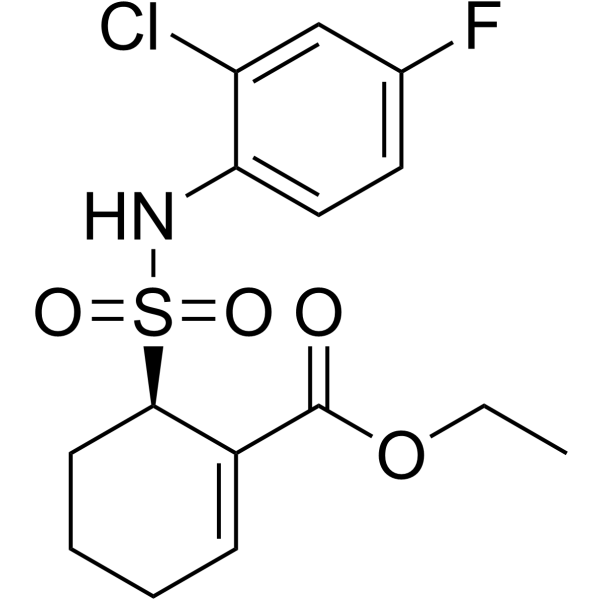
HY-11109
ResatorvidTLR4 Inhibitor -
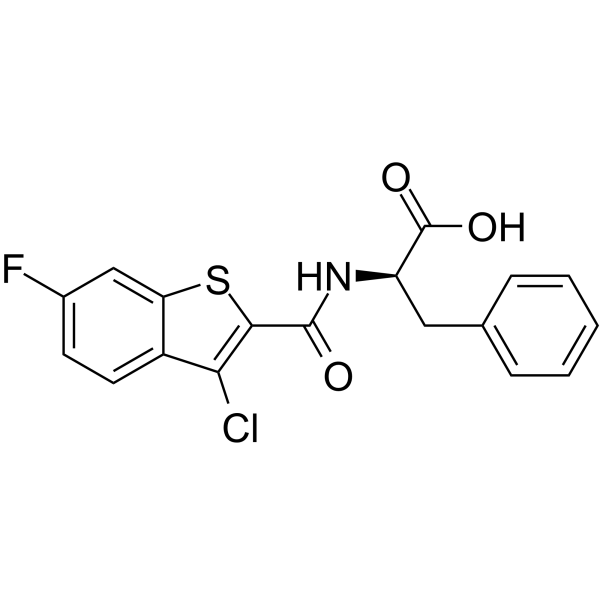
HY-108473
CU-CPT 4aTLR3 Inhibitor -
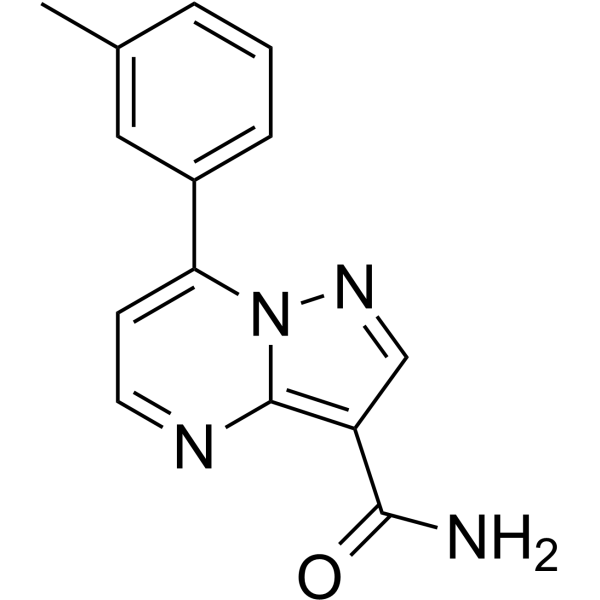
HY-112050
CU-CPT-8mTLR8 Antagonist -
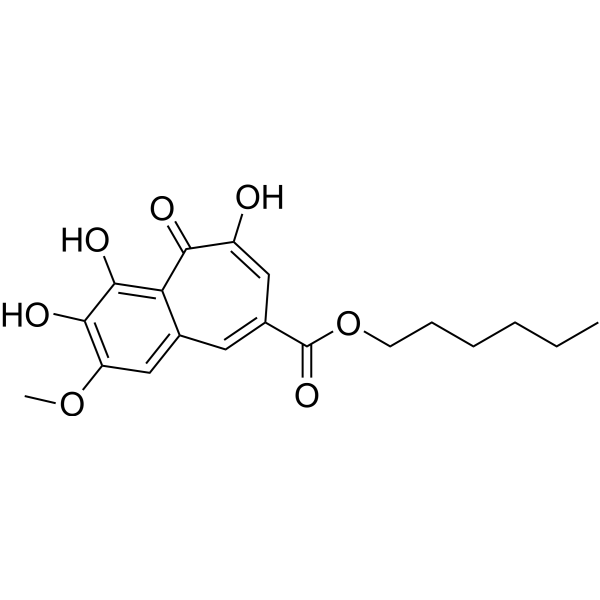
HY-108471
CU-CPT22TLR1/TLR2 Antagonist -
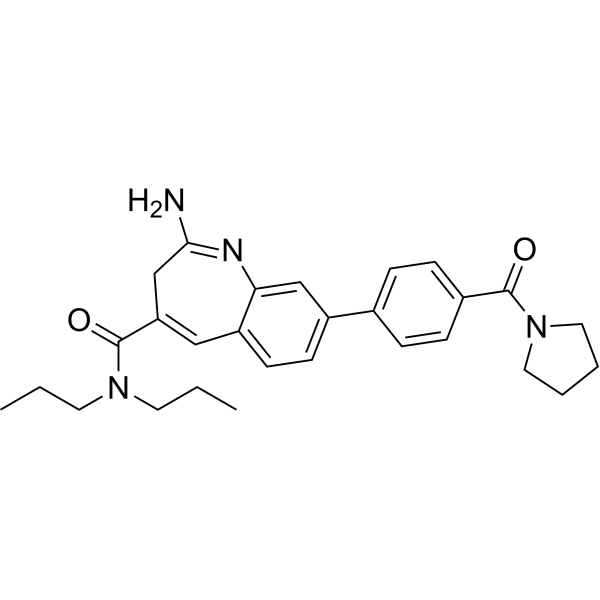
HY-13773
MotolimodTLR8 Agonist -
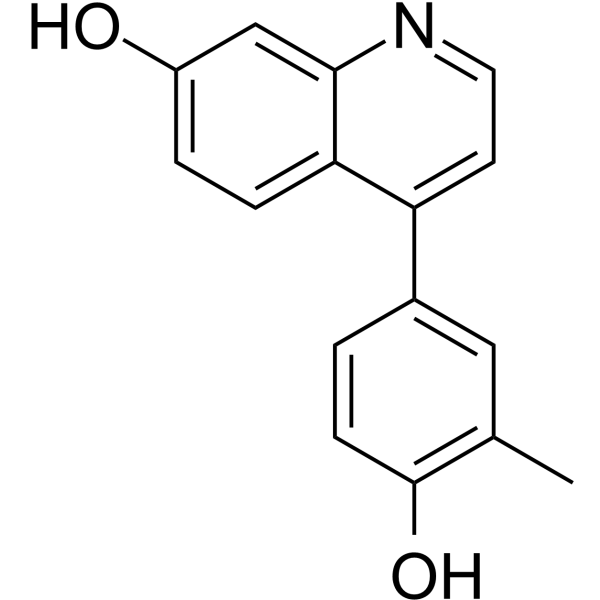
HY-112051
CU-CPT9bTLR8 Antagonist -
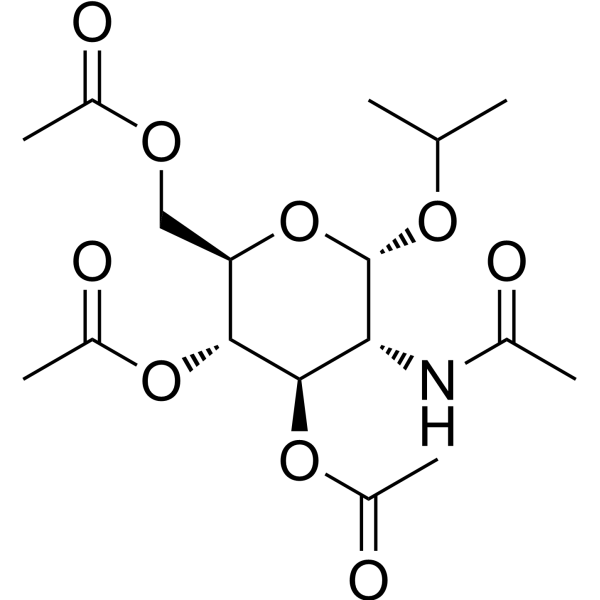
HY-107575
TLR4-IN-C34TLR4 Inhibitor -
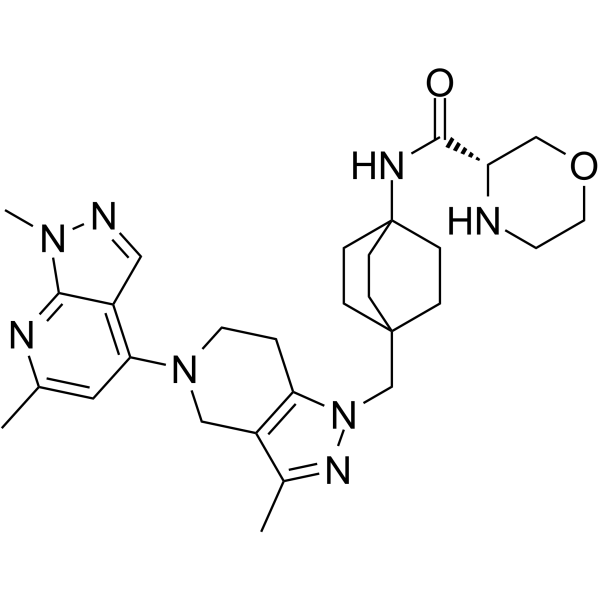
HY-139323
TLR7/8-IN-1TLR7/TLR8 Inhibitor -
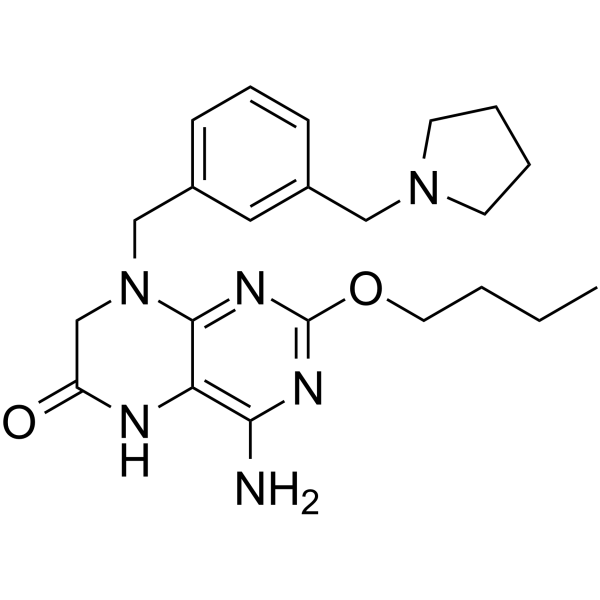
HY-15601
VesatolimodTLR7 Agonist -
HY-116961
TH1020TLR5/Flagellin Complex Antagonist
Publications Citing Use of MedChemExpress (MCE) CU-CPT-9a
More Customer Validation & Images

-
WB
-
ELISA
-
RT-PCR
-
RT-PCR
-
WB


Biological Activity
Description
IC50 & Target
[1]|
TLR8 0.5 nM (IC50) |
In Vitro
CU-CPT-9a is a specific TLR8 antagonist, with an IC50 of 0.5±0.1 nM. The elevation of the downstream protein levels induced by R848 can be reversed by CU-CPT-9a in a dose-dependent manner. By contrast, the expression of TRIF and IRF3 (cytoplasmic and nuclear) are only responsive to TLR4 and TLR3, independent of TLR837. The expression levels of TRIF and IRF3 do not show significant change in THP-1 cells upon treatment of R848, nor do they change with the treatment of CU-CPT-9a. CU-CPT8m and CU-CPT-9a both significantly suppress the TNF-α level in a dose-dependent manner, which is in agreement with previous reports of TLR8 involvement in these autoimmune diseases[1].
MedChemExpress (MCE) has not independently confirmed the accuracy of these methods. They are for reference only.


Chemical Information
-
CAS No. 2165340-32-7
-
Appearance Solid
-
Molecular Weight 265.31
-
Formula C17H15NO2
-
Color Light yellow to yellow
-
SMILES
OC1=C(C)C=C(C=C1)C2=CC=NC3=CC(OC)=CC=C32
-
Shipping
Room temperature in continental US; may vary elsewhere.
-
Storage
Powder -20°C 3 years 4°C 2 years In solvent -80°C 2 years -20°C 1 year


Publications (5)
-
Journal Impact Factor
-
Most Recent
-
J Extracell Vesicles
Cancer-Specific RNA Modifications in Tumour-Derived Extracellular Vesicles Promote Tumour Growth. [Abstract]2025 May;14(5):e70083. PMID: 40326665
CU-CPT-9a purchased from MedChemExpress. Usage Cited in: J Extracell Vesicles. 2025 May;14(5):e70083. [Abstract]
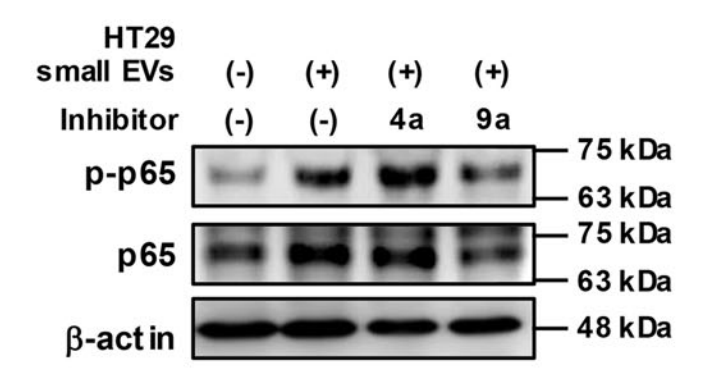
m6A levels in EVs regulate inflammatory responses via TLR8 in macrophages. Differentiated THP‐1 cells (dTHP‐1) were pretreated with or without CU‐CPT‐9a (HY-112667; 48 h) and CU‐CPT‐4a (HY-108473; 48 h). Whole‐cell lysates obtained from dTHP‐1 cells were subjected to Western blot analysis using an anti‐phospho p65 antibody, anti‐p65 antibody and anti‐β‐actin antibody. Representative images from three independent experiments are shown.
CU-CPT-9a purchased from MedChemExpress. Usage Cited in: J Extracell Vesicles. 2025 May;14(5):e70083. [Abstract]
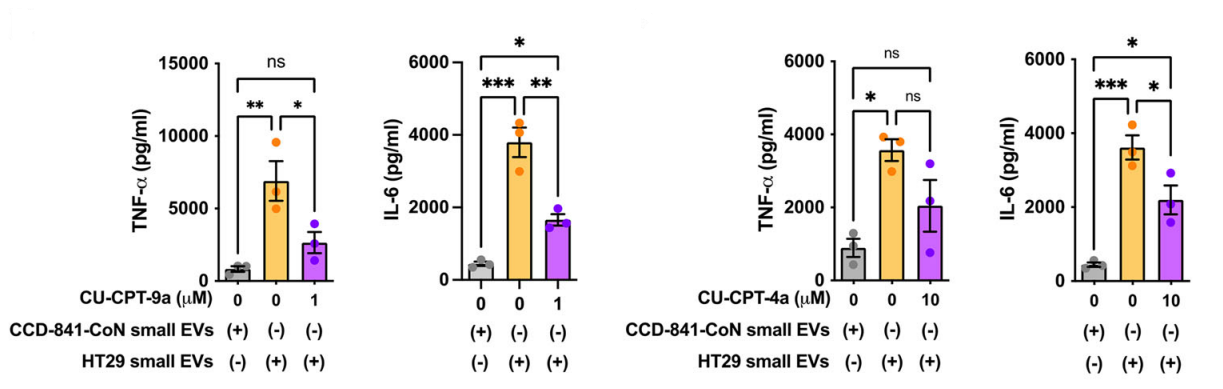
m6A levels in EVs regulate inflammatory responses via TLR8 in macrophages. Differentiated THP‐1 cells (dTHP‐1) were pretreated with or without CU‐CPT‐9a (HY-112667; 48 h) and CU‐CPT‐4a (HY-108473; 48 h). Conditioned medium from dTHP‐1 cells treated with CCD‐841‐CoN or HT29 small EVs was used for ELISA. dTHP‐1 cells were pre‐transfected with or without TLR8 siRNA.
-
Cell Commun Signal
2025 Apr 11;23(1):181. PMID: 40217343
CU-CPT-9a purchased from MedChemExpress. Usage Cited in: Cell Commun Signal. 2025 Apr 11;23(1):181. [Abstract]
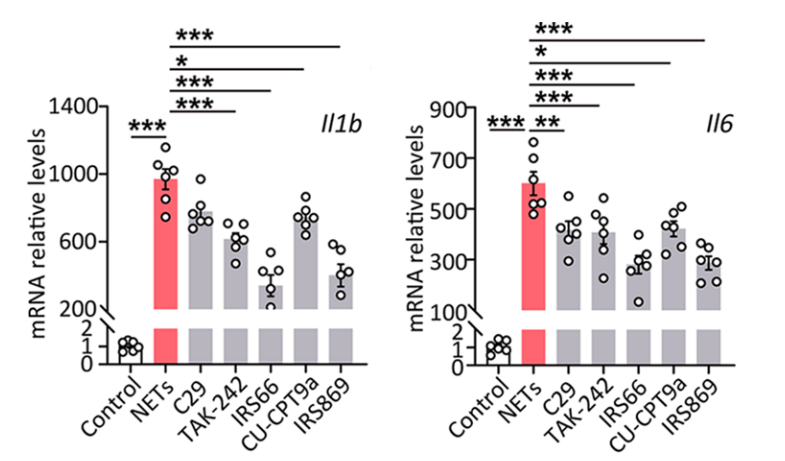
BMDMs were pretreated with a TLR2 inhibitor (C29; HY-100461; 10 µM), TLR4 inhibitor (TAK242; HY-11109; 10 µM), TLR7 inhibitor (IRS661, 1 µM), TLR8 inhibitor (CU-CPT9a; HY-112667; 10 µM), or TLR9 inhibitor (IRS869, 1 µM) for 1 h, and then treated with NETs (500 ng/mL) for 3 h. The levels of Il1b, Il6 were measured by qPCR (n = 6).
CU-CPT-9a purchased from MedChemExpress. Usage Cited in: Cell Commun Signal. 2025 Apr 11;23(1):181. [Abstract]
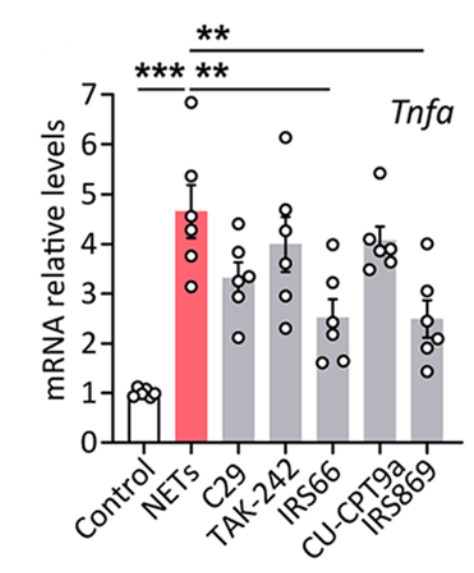
BMDMs were pretreated with a TLR2 inhibitor (C29; HY-100461; 10 µM), TLR4 inhibitor (TAK242; HY-11109; 10 µM), TLR7 inhibitor (IRS661, 1 µM), TLR8 inhibitor (CU-CPT9a; HY-112667; 10 µM), or TLR9 inhibitor (IRS869, 1 µM) for 1 h, and then treated with NETs (500 ng/mL) for 3 h. The level of Tnfa mRNA was measured by qPCR (n = 6).
-
Cancer Immunol Res
NET-Triggered NLRP3 Activation and IL18 Release Drive Oxaliplatin-Induced Peripheral Neuropathy. [Abstract]2022 Dec 2;10(12):1542-1558. PMID: 36255412 -
Eur J Pharmacol
Icariside II induces cell cycle arrest and differentiation via TLR8/MyD88/p38 pathway in acute myeloid leukemia cells. [Abstract]2019 Mar 5:846:12-22. PMID: 30579933
CU-CPT-9a purchased from MedChemExpress. Usage Cited in: Eur J Pharmacol. 2019 Mar 5:846:12-22. [Abstract]
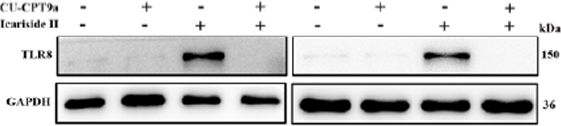
The effect of CU-CPT-9a on the protein levels of MyD88 and p38.
-
Int J Mol Sci
CXCL4-RNA Complexes Circulate in Systemic Sclerosis and Amplify Inflammatory/Pro-Fibrotic Responses by Myeloid Dendritic Cells. [Abstract]2022 Dec 30;24(1):653. PMID: 36614095


Solvent & Solubility
In Vitro:
DMSO : 125 mg/mL (471.15 mM; Need ultrasonic; Hygroscopic DMSO has a significant impact on the solubility of product, please use newly opened DMSO)
Please refer to the solubility information to select the appropriate solvent. Once prepared, please aliquot and store the solution to prevent product inactivation from repeated freeze-thaw cycles.
Storage method and period of stock solution: -80°C, 2 years; -20°C, 1 year. When stored at -80°C, please use it within 2 years. When stored at -20°C, please use it within 1 year.
Please refer to the solubility information to select the appropriate solvent. Once prepared, please aliquot and store the solution to prevent product inactivation from repeated freeze-thaw cycles.
Storage method and period of stock solution: -80°C, 2 years; -20°C, 1 year. When stored at -80°C, please use it within 2 years. When stored at -20°C, please use it within 1 year.
Concentration (start) × Volume (start) = Concentration (final) × Volume (final)
In Vivo:
Select the appropriate dissolution method based on your experimental animal and administration route.
- For the following dissolution methods, please ensure to first prepare a clear stock solution using an In Vitro approach and then sequentially add co-solvents:
- To ensure reliable experimental results, the clarified stock solution can be appropriately stored based on storage conditions. As for the working solution for In Vivo experiments, it is recommended to prepare freshly and use it on the same day.
- The percentages shown for the solvents indicate their volumetric ratio in the final prepared solution. If precipitation or phase separation occurs during preparation, heat and/or sonication can be used to aid dissolution.
Add each solvent one by one: 10% DMSO 40% PEG300 5% Tween-80 45% Saline
Solubility: ≥ 2.5 mg/mL (9.42 mM); Clear solution
This protocol yields a clear solution of ≥ 2.5 mg/mL (saturation unknown).
Taking 1 mL working solution as an example, add 100 μL DMSO stock solution (25.0 mg/mL) to 400 μL PEG300, and mix evenly; then add 50 μL Tween-80 and mix evenly; then add 450 μL Saline to adjust the volume to 1 mL.
Preparation of Saline: Dissolve 0.9 g sodium chloride in ddH₂O and dilute to 100 mL to obtain a clear Saline solution.
Add each solvent one by one: 10% DMSO 90% (20% SBE-β-CD in Saline)
Solubility: ≥ 2.5 mg/mL (9.42 mM); Clear solution
This protocol yields a clear solution of ≥ 2.5 mg/mL (saturation unknown).
Taking 1 mL working solution as an example, add 100 μL DMSO stock solution (25.0 mg/mL) to 900 μL 20% SBE-β-CD in Saline, and mix evenly.
Preparation of 20% SBE-β-CD in Saline (4°C, storage for one week): 2 g SBE-β-CD powder is dissolved in 10 mL Saline, completely dissolve until clear.
In Vivo Dissolution Calculator
Please enter the basic information of animal experiments:
-
-
-
-
Recommended: Prepare an additional quantity of animals to account for potential losses during experiments.
Please enter your animal formula composition:
-
%DMSO +
Recommended: Keep the proportion of DMSO in working solution below 2% if your animal is weak.
-
%+
-
+%Tween-80 + +
-
%Saline +
The co-solvents required include: DMSO, . All of co-solvents are available by MedChemExpress (MCE). , Tween 80. All of co-solvents are available by MedChemExpress (MCE).
Working solution concentration: 0.22 mg/mL
Method for preparing stock solution: mg drug dissolved in μL DMSO. Stock solution concentration: mg/mL.
1. Take μL DMSO stock solution;
2. Add μL .
μL , mix evenly;
3. Then add μL Tween 80, mix evenly;
4. Then add μL
Please ensure that the stock solution in the first step is dissolved to a clear state, and add co-solvents in sequence. You can use ultrasonic heating (ultrasonic cleaner, recommended frequency 20-40 kHz), vortexing, etc. to assist dissolution.


Purity & Documentation
-
Data Sheet (277 KB)
-
SDS (393 KB)
- English - EN (393 KB)
- Français - FR (393 KB)
- Deutsch - DE (393 KB)
- Norwegian - NO (393 KB)
- Español - ES (393 KB)
- Swedish - SV (393 KB)
- Italian - IT (393 KB)
- Korean - KR (393 KB)
- Portuguese - PT (393 KB)
-
Handling Instructions (2659 KB)
References


Complete Stock Solution Preparation Table
Please refer to the solubility information to select the appropriate solvent. Once prepared, please aliquot and store the solution to prevent product inactivation from repeated freeze-thaw cycles.
Storage method and period of stock solution: -80°C, 2 years; -20°C, 1 year. When stored at -80°C, please use it within 2 years. When stored at -20°C, please use it within 1 year.
| Optional Solvent | Concentration Solvent Mass | 1 mg | 5 mg | 10 mg | 25 mg |
|---|---|---|---|---|---|
| DMSO | 1 mM | 3.7692 mL | 18.8459 mL | 37.6918 mL | 94.2294 mL |
| 5 mM | 0.7538 mL | 3.7692 mL | 7.5384 mL | 18.8459 mL | |
| 10 mM | 0.3769 mL | 1.8846 mL | 3.7692 mL | 9.4229 mL | |
| 15 mM | 0.2513 mL | 1.2564 mL | 2.5128 mL | 6.2820 mL | |
| 20 mM | 0.1885 mL | 0.9423 mL | 1.8846 mL | 4.7115 mL | |
| 25 mM | 0.1508 mL | 0.7538 mL | 1.5077 mL | 3.7692 mL | |
| 30 mM | 0.1256 mL | 0.6282 mL | 1.2564 mL | 3.1410 mL | |
| 40 mM | 0.0942 mL | 0.4711 mL | 0.9423 mL | 2.3557 mL | |
| 50 mM | 0.0754 mL | 0.3769 mL | 0.7538 mL | 1.8846 mL | |
| 60 mM | 0.0628 mL | 0.3141 mL | 0.6282 mL | 1.5705 mL | |
| 80 mM | 0.0471 mL | 0.2356 mL | 0.4711 mL | 1.1779 mL | |
| 100 mM | 0.0377 mL | 0.1885 mL | 0.3769 mL | 0.9423 mL |


CU-CPT-9a Related Classifications
HY-112667 Related Classifications
 Powered by Bioz