



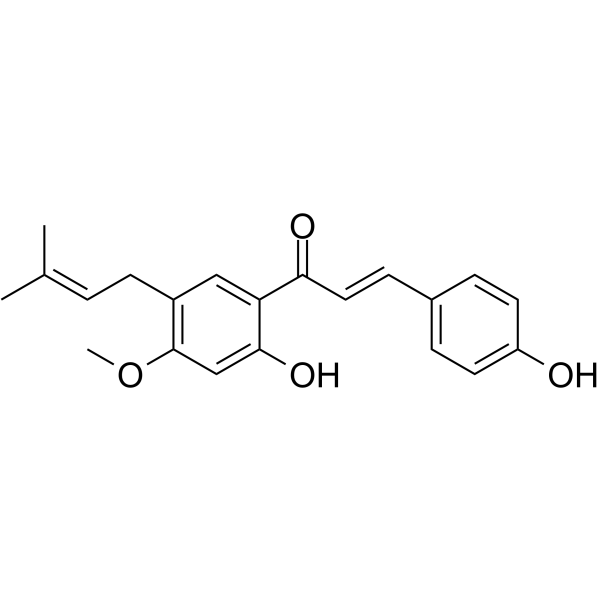
4'-O-Methylbavachalcone
Based on 4 publication(s) in Google Scholar
4'-O-Methylbavachalcone is an orally active prenylated flavonoid that inhibits the activity of SARS-CoV papain-like protease (PLpro), with an IC50 of 10.1 μM and a Ki of 4.6 μM. 4'-O-Methylbavachalcone inhibits poly (ADP-ribose) polymerase-mediated cell death (parthanatos), reduces cerebral infarct volume, binds to the orthosteric site of SUCNR1, blocks the interaction between succinate and SUCNR1, inhibits SUCNR1 activity, blocks the nuclear translocation of NFATc4, suppresses the activation of the ERK1/2 signaling pathway, inhibits cardiomyocyte hypertrophy and restores the expression of α-actinin. 4'-O-Methylbavachalcone can be used in studies related to ischemic stroke, SARS-CoV and cardiomyocyte hypertrophy.
연구목적의 판매만을 진행합니다. 환자를 대상으로 한 판매는 하지 않습니다.
- Purity : 99.64%
- CAS No.: 20784-60-5
- 화학식: C21H22O4
- 분자량:338.40
-
보관:
4°C, protect from light
* In solvent : -80°C, 6 months; -20°C, 1 month (protect from light)

To place orders, for customer services and technical support, please contact: MedChemExpress USA
Tel: 609-228-6898 E-mail: [email protected] [email protected]


-
 Biological Activity
-
Chemical Information
-
용액&용해도
- Protocol
- 순도&문서
- References
-
 Help & FAQs


-
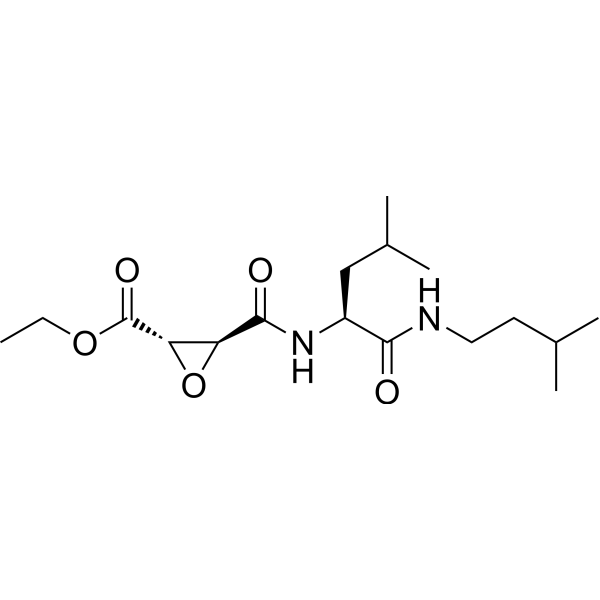
HY-100229
AloxistatinCysteine Protease Inhibitor -
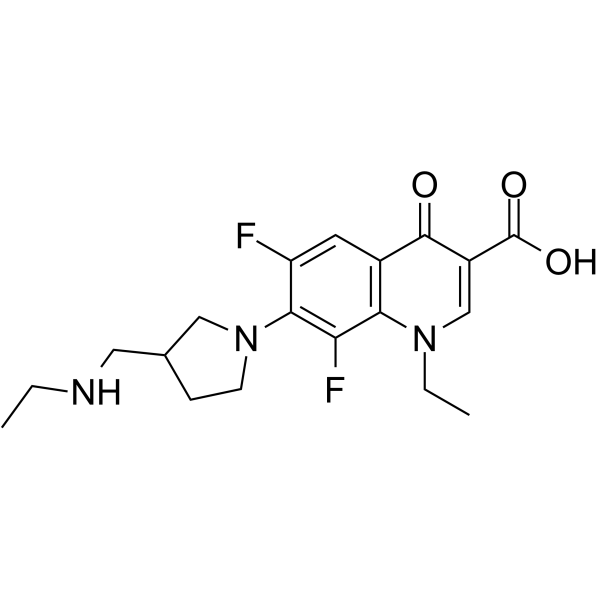
HY-139010
MerafloxacinAntibacterial Agent -
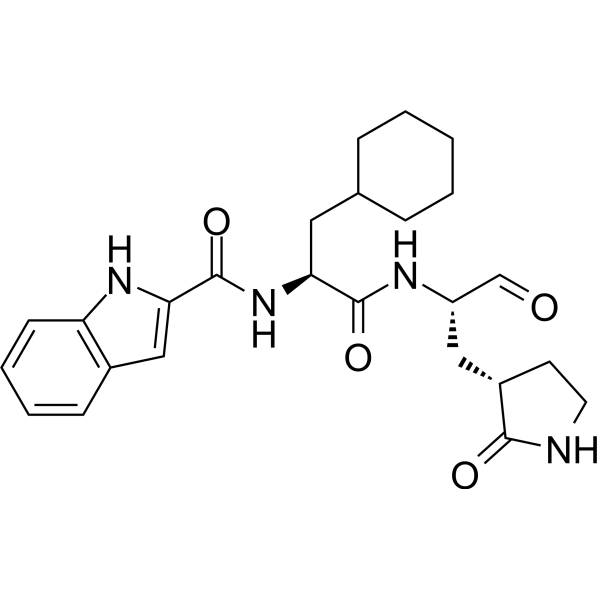
HY-133894
BofutrelvirMpro Inhibitor -
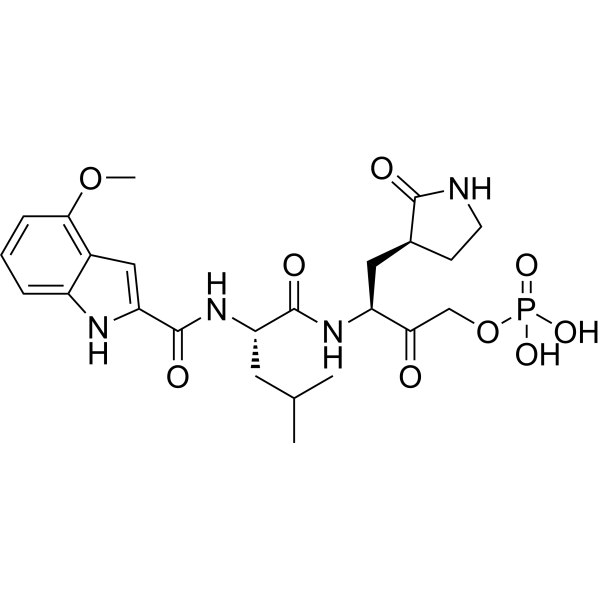
HY-138078
Lufotrelvir3CLpro Protease Inhibitor -
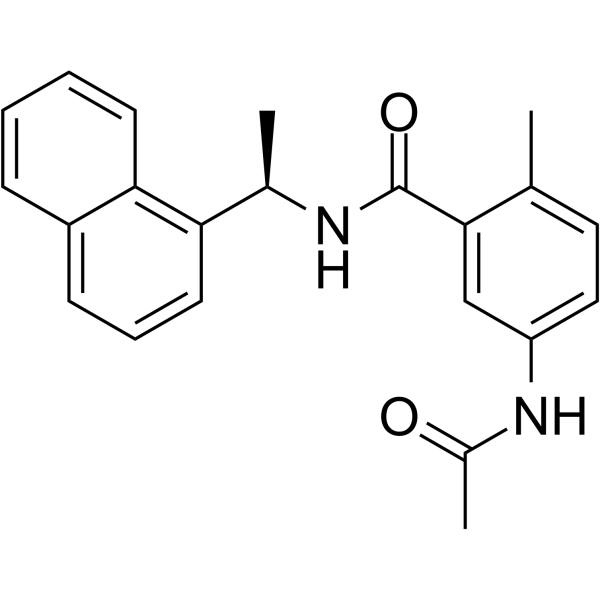
HY-17542
PLpro inhibitorSARS-CoV-2 PLpro Inhibitor -
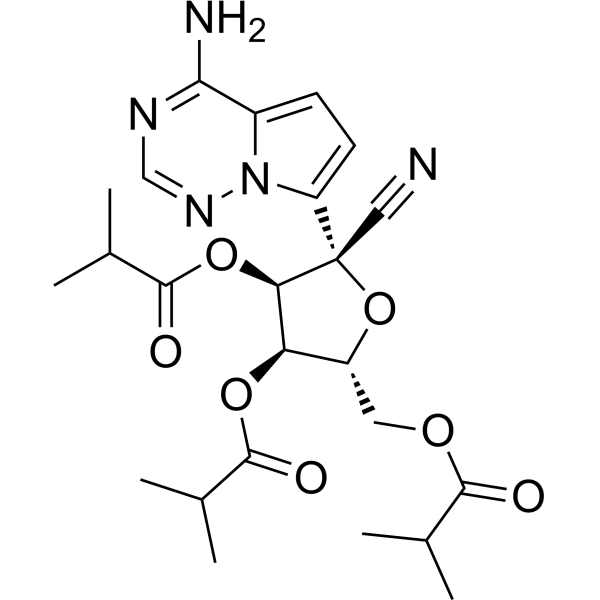
HY-145119
GS-621763SARS-CoV Inhibitor -
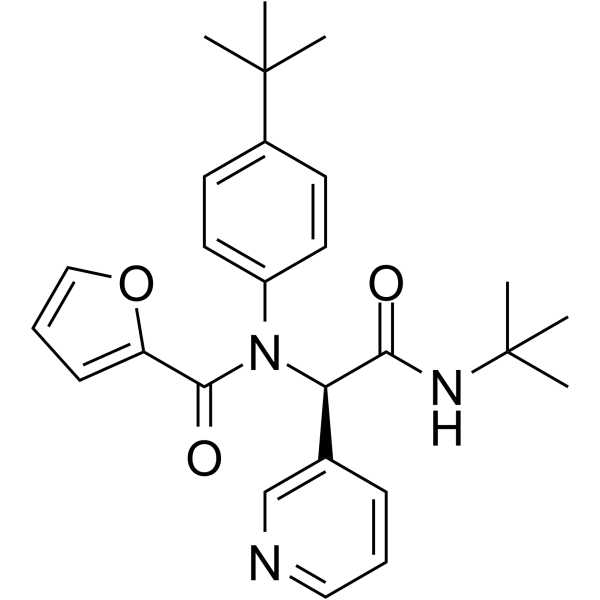
HY-136259
ML1883CLpro Inhibitor -
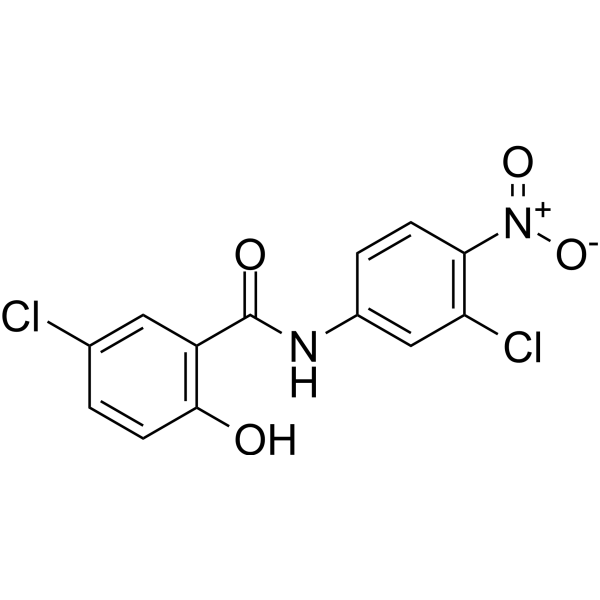
HY-144770
SARS-CoV-2-IN-13SARS-CoV-2 Inhibitor -
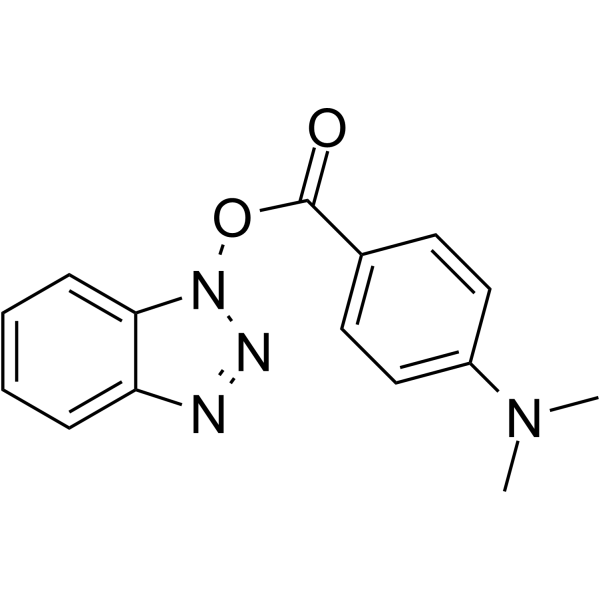
HY-136284
XP-59SARS-CoV Inhibitor -
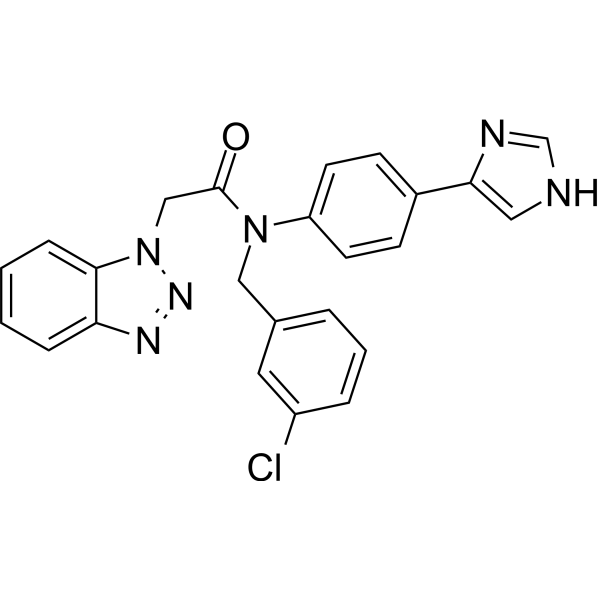
HY-132306
CCF0058981SARS-CoV-2 3CLpro Inhibitor -
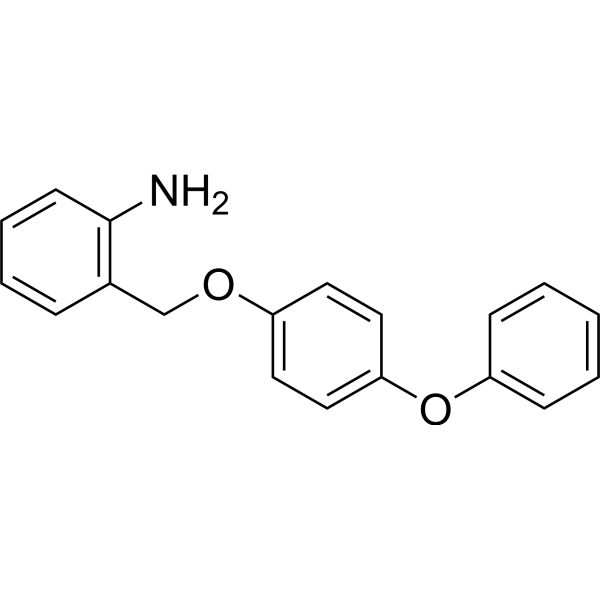
HY-139908
MERS-CoV-IN-1Anti-coronavirus Reagent -
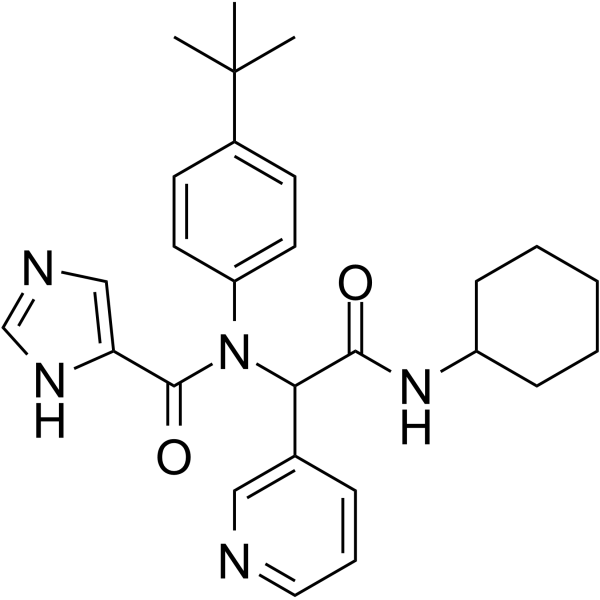
HY-136298
(Rac)-X77SARS-CoV-2 Main Protease Inhibitor
Publications Citing Use of MedChemExpress (MCE) 4'-O-Methylbavachalcone
More

Biological Activity
제품 설명
IC50 & Target
IC50: 10.1 μM (PLpro)[1]
In Vitro
4'-O-Methylbavachalcone (0-200 μM) acts as a mixed inhibitor of purified recombinant SARS-CoV PLpro with an IC50 of 10.1 μM and a Ki value of 4.6 μM[2].
4'-O-Methylbavachalcone (1.25-40 μM; 48 h) exhibits no cytotoxicity toward H9c2 cardiomyocytes at concentrations up to 40 μM after 48 h of treatment[3].
4'-O-Methylbavachalcone (1.25-5 μM; 30 min pre-incubation prior to 1 mM sodium succinate stimulation for 60 min) concentration-dependently inhibits NFATc4 nuclear translocation in succinate-stimulated H9c2 cardiomyocytes, with 5 μM nearly restoring translocation to baseline levels, and reduces succinate-induced upregulation of the hypertrophic marker α-actinin in H9c2 cardiomyocytes[3].
4'-O-Methylbavachalcone (1.25-5 μM; 30 min pre-incubation prior to 1 mM sodium succinate stimulation for 15 min) inhibits succinate-induced activation of ERK1/2 and JNK MAPK signaling in H9c2 cardiomyocytes, with maximum inhibition of ~15% for ERK1/2 and ~40% for JNK[3].
MedChemExpress (MCE) has not independently confirmed the accuracy of these methods. They are for reference only.
-
Cell Line:Succinate-stimulated H9c2 cardiomyocytes
-
Concentration:1.25 μM, 2.5 μM, 5 μM
-
Incubation Time:30 min pre-incubation prior to 1 mM sodium succinate stimulation for 60 min
-
Result:Inhibited NFATc4 nuclear translocation in a concentration-dependent manner, with 5 μM treatment reducing NFATc4 nuclear translocation nearly to prestimulation levels.
-
Cell Line:Succinate-stimulated H9c2 cardiomyocytes
-
Concentration:1.25 μM, 2.5 μM, 5 μM
-
Incubation Time:30 min pre-incubation prior to 1 mM sodium succinate stimulation for 6 h
-
Result:Restored succinate-induced upregulation of α-actinin mRNA expression in H9c2 cells.
-
Cell Line:Succinate-stimulated H9c2 cardiomyocytes
-
Concentration:1.25 μM, 2.5 μM, 5 μM
-
Incubation Time:30 min pre-incubation prior to 1 mM sodium succinate stimulation for 15 min
-
Result:Significantly inhibited succinate-induced phosphorylation of ERK1/2 and JNK, with maximum inhibition of ~15% and ~40%, respectively.
In Vivo
MedChemExpress (MCE) has not independently confirmed the accuracy of these methods. They are for reference only.
-
Animal Model:Sprague-Dawley (SD) (male, 240 g ± 10 g, middle cerebral artery occlusion-reperfusion induced)[1]
-
Dosage:5 mg/kg; 10 mg/kg
-
Administration:oral gavage; at 15 min post-occlusion, then daily until euthanasia at 48 h
-
Result:Reduced cerebral infarct volume to 24.63%.
Improved neurological deficit scores.
Reduced cerebral infarct volume to 20.20%.
Increased the ratio of NeuN-positive neurons in the ischemic penumbra from 47.23% to 79.76%.
Significantly suppressed MCAO/R-induced increases in cytoplasmic PAR, cytoplasmic AIF, nuclear PAR, nuclear PARP-1, and nuclear AIF protein levels.
Reduced nuclear translocation of AIF and PAR accumulation in the ischemic penumbra.


Chemical Information
-
CAS No. 20784-60-5
-
Appearance Solid
-
분자량 338.40
-
화학식 C21H22O4
-
Color Yellow to orange
-
SMILES
O=C(C1=CC(C/C=C(C)\C)=C(OC)C=C1O)/C=C/C2=CC=C(O)C=C2
-
Structure Classification
-
Initial Source
-
선적
Room temperature in continental US; may vary elsewhere.
-
보관
4°C, protect from light
* In solvent : -80°C, 6 months; -20°C, 1 month (protect from light)


Publications (4)
-
Journal Impact Factor
-
Most Recent
-
Nucleic Acids Res
COVID19 Drug Repository: text-mining the literature in search of putative COVID19 therapeutics. [Abstract]2021 Jan 8;49(D1):D1113-D1121. PMID: 33166390 -
Food Chem
Effects of sun drying combined with baking processes on the flavor quality of Chongqing Tuocha raw tea. [Abstract]2025 Dec 30:497:146992. PMID: 41285060 -
Food Chem
Flavonoid-mediated metabolic underpinning quality variation in red bud-sport pear mutants. [Abstract]2025 Oct 15:489:144992. PMID: 40466530 -
Vet Microbiol
The Chinese medicine monomer Schisandrin C inhibits PRRSV infection by regulating the OGT-PI3K/AKT/mTOR signaling pathway. [Abstract]2026 May:316:110992. PMID: 41865607


용액&용해도
In Vitro:
DMSO : 50 mg/mL (147.75 mM; Need ultrasonic; Hygroscopic DMSO has a significant impact on the solubility of product, please use newly opened DMSO)
Please refer to the solubility information to select the appropriate solvent. Once prepared, please aliquot and store the solution to prevent product inactivation from repeated freeze-thaw cycles.
Storage method and period of stock solution: -80°C, 6 months; -20°C, 1 month (protect from light). When stored at -80°C, please use it within 6 months. When stored at -20°C, please use it within 1 month.
Please refer to the solubility information to select the appropriate solvent. Once prepared, please aliquot and store the solution to prevent product inactivation from repeated freeze-thaw cycles.
Storage method and period of stock solution: -80°C, 6 months; -20°C, 1 month (protect from light). When stored at -80°C, please use it within 6 months. When stored at -20°C, please use it within 1 month.
Concentration (start) × Volume (start) = Concentration (final) × Volume (final)
In Vivo:
Select the appropriate dissolution method based on your experimental animal and administration route.
- For the following dissolution methods, please ensure to first prepare a clear stock solution using an In Vitro approach and then sequentially add co-solvents:
- To ensure reliable experimental results, the clarified stock solution can be appropriately stored based on storage conditions. As for the working solution for In Vivo experiments, it is recommended to prepare freshly and use it on the same day.
- The percentages shown for the solvents indicate their volumetric ratio in the final prepared solution. If precipitation or phase separation occurs during preparation, heat and/or sonication can be used to aid dissolution.
Add each solvent one by one: 10% DMSO 40% PEG300 5% Tween-80 45% Saline
Solubility: ≥ 2.08 mg/mL (6.15 mM); Clear solution
This protocol yields a clear solution of ≥ 2.08 mg/mL (saturation unknown).
Taking 1 mL working solution as an example, add 100 μL DMSO stock solution (20.8 mg/mL) to 400 μL PEG300, and mix evenly; then add 50 μL Tween-80 and mix evenly; then add 450 μL Saline to adjust the volume to 1 mL.
Preparation of Saline: Dissolve 0.9 g sodium chloride in ddH₂O and dilute to 100 mL to obtain a clear Saline solution.
Add each solvent one by one: 10% DMSO 90% (20% SBE-β-CD in Saline)
Solubility: 2.08 mg/mL (6.15 mM); Suspended solution; Need ultrasonic
This protocol yields a suspended solution of 2.08 mg/mL. Suspended solution can be used for oral and intraperitoneal injection.
Taking 1 mL working solution as an example, add 100 μL DMSO stock solution (20.8 mg/mL) to 900 μL 20% SBE-β-CD in Saline, and mix evenly.
Preparation of 20% SBE-β-CD in Saline (4°C, storage for one week): 2 g SBE-β-CD powder is dissolved in 10 mL Saline, completely dissolve until clear.
In Vivo Dissolution Calculator
Please enter the basic information of animal experiments:
-
-
-
-
Recommended: Prepare an additional quantity of animals to account for potential losses during experiments.
Please enter your animal formula composition:
-
%DMSO +
Recommended: Keep the proportion of DMSO in working solution below 2% if your animal is weak.
-
%+
-
+%Tween-80 + +
-
%Saline +
The co-solvents required include: DMSO, . All of co-solvents are available by MedChemExpress (MCE). , Tween 80. All of co-solvents are available by MedChemExpress (MCE).
Working solution concentration: 0.22 mg/mL
Method for preparing stock solution: mg drug dissolved in μL DMSO. Stock solution concentration: mg/mL. * In solvent : -80°C, 6 months; -20°C, 1 month (protect from light)
1. Take μL DMSO stock solution;
2. Add μL .
μL , mix evenly;
3. Then add μL Tween 80, mix evenly;
4. Then add μL
Please ensure that the stock solution in the first step is dissolved to a clear state, and add co-solvents in sequence. You can use ultrasonic heating (ultrasonic cleaner, recommended frequency 20-40 kHz), vortexing, etc. to assist dissolution.


순도&문서
-
Data Sheet (279 KB)
-
SDS (393 KB)
- English - EN (393 KB)
- Français - FR (393 KB)
- Deutsch - DE (393 KB)
- Norwegian - NO (393 KB)
- Español - ES (393 KB)
- Swedish - SV (393 KB)
- Italian - IT (393 KB)
- Korean - KR (393 KB)
- Portuguese - PT (393 KB)
-
Handling Instructions (2659 KB)
References
[1]. Chen HQ, et al. 4'-O-methylbavachalcone alleviates ischemic stroke injury by inhibiting parthanatos and promoting SIRT3. Eur J Pharmacol. 2024;972:176557. [Content Brief]
[2]. Kim DW, et al. Phenolic phytochemical displaying SARS-CoV papain-like protease inhibition from the seeds of Psoralea corylifolia. J Enzyme Inhib Med Chem. 2014;29(1):59-63. [Content Brief]
[3]. Sun H, et al. 4'‑O‑methylbavachalcone inhibits succinate induced cardiomyocyte hypertrophy via the NFATc4 pathway. Exp Ther Med. 2023;25(4):172. Published 2023 Mar 6. [Content Brief]


Complete Stock Solution Preparation Table
Please refer to the solubility information to select the appropriate solvent. Once prepared, please aliquot and store the solution to prevent product inactivation from repeated freeze-thaw cycles.
Storage method and period of stock solution: -80°C, 6 months; -20°C, 1 month (protect from light). When stored at -80°C, please use it within 6 months. When stored at -20°C, please use it within 1 month.
| Optional Solvent | Concentration Solvent Mass | 1 mg | 5 mg | 10 mg | 25 mg |
|---|---|---|---|---|---|
| DMSO | 1 mM | 2.9551 mL | 14.7754 mL | 29.5508 mL | 73.8771 mL |
| 5 mM | 0.5910 mL | 2.9551 mL | 5.9102 mL | 14.7754 mL | |
| 10 mM | 0.2955 mL | 1.4775 mL | 2.9551 mL | 7.3877 mL | |
| 15 mM | 0.1970 mL | 0.9850 mL | 1.9701 mL | 4.9251 mL | |
| 20 mM | 0.1478 mL | 0.7388 mL | 1.4775 mL | 3.6939 mL | |
| 25 mM | 0.1182 mL | 0.5910 mL | 1.1820 mL | 2.9551 mL | |
| 30 mM | 0.0985 mL | 0.4925 mL | 0.9850 mL | 2.4626 mL | |
| 40 mM | 0.0739 mL | 0.3694 mL | 0.7388 mL | 1.8469 mL | |
| 50 mM | 0.0591 mL | 0.2955 mL | 0.5910 mL | 1.4775 mL | |
| 60 mM | 0.0493 mL | 0.2463 mL | 0.4925 mL | 1.2313 mL | |
| 80 mM | 0.0369 mL | 0.1847 mL | 0.3694 mL | 0.9235 mL | |
| 100 mM | 0.0296 mL | 0.1478 mL | 0.2955 mL | 0.7388 mL |


4'-O-Methylbavachalcone Related Classifications
HY-N1910 Related Classifications
 Powered by Bioz