Inflammation/Immunology
-
Inflammation/Immunology Related Products (20898)
Related Products (20898)

-
Antibodies (115)
-
Related Compound Screening Libraries (4)
-
ALK5-IN-7
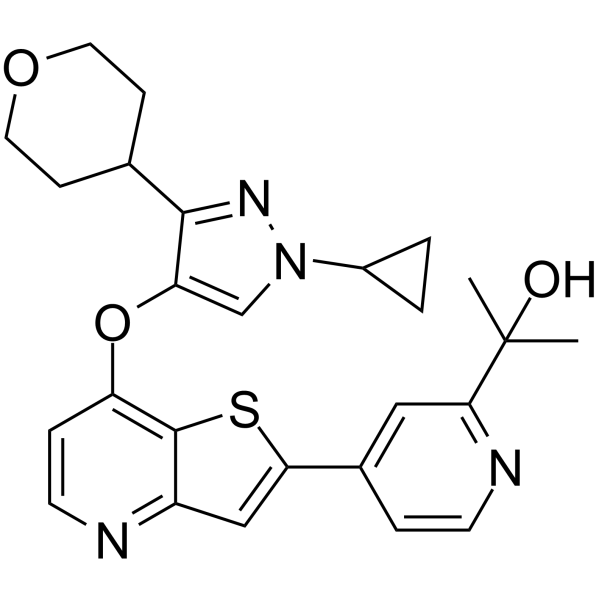 0 ImagesCat. No.: HY-142949CAS No.: 2657720-07-3
ALK5-IN-7 is a potent inhibitor of ALK5. Transforming growth factor beta (TGF-β) is a multifunctional cytokine that is involved in regulating cell proliferation, differentiation and apoptosis through complex receptor signaling pathways on the cell surface in an autocrine, paracrine and endocrine manner. ALK5-IN-7 has the potential for the research of TGF-β-related diseases and conditions, including but not limited to tumors, fibrotic diseases, inflammatory diseases, autoimmune diseases, etc (extracted from patent WO2021129621A1, compound 4).
-
DOPE-PEG5000-WYRGRL
 0 ImagesCat. No.: HY-184571C
DOPE-PEG5000-WYRGRL is a functionalized PEGylated lipid conjugate composed of three modular components: dioleoylphosphatidylethanolamine (DOPE) as the lipid anchoring group, a polyethylene glycol (PEG) spacer arm with a molecular weight of 5000 Da, and WYRGRL peptide (HY-P10739)as the terminal targeting/functional ligand. DOPE-PEG5000-WYRGRL can be incorporated into liposomes, lipid nanoparticles (LNPs), or other nanocarriers to confer ligand-directed targeting capability against specific cell surface receptors in tumor and inflammatory microenvironments.

-
Scrophularia ningpoensis extract
 0 ImagesCat. No.: HY-N20390
Scrophularia ningpoensis extract is an orally effective hypoglycemic and antioxidant agent. Scrophularia ningpoensis extract reduces fasting blood glucose levels, increases plasma insulin levels, ameliorates impaired antioxidant status, scavenges free radicals, inhibits lipid peroxidation, and decreases elevated serum creatinine and serum urea levels. Scrophularia ningpoensis extract reduces the risk of developing diabetic complications. Scrophularia ningpoensis extract is applicable to diabetes-related research.
-
(22E,24R)-23-Methylergosta-7,22-diene-3β,5α,6β-triol
 0 ImagesCat. No.: HY-N17400CAS No.: 243449-54-9
(22E,24R)-23-Methylergosta-7,22-diene-3β,5α,6β-triol (Compound 7) is an Ergosteroid. (22E,24R)-23-Methylergosta-7,22-diene-3β,5α,6β-triol can be isolated from Penicillium herquei. (22E,24R)-23-Methylergosta-7,22-diene-3β,5α,6β-triol exhibits no obvious inhibitory activities against NO production induced by LPS.

-
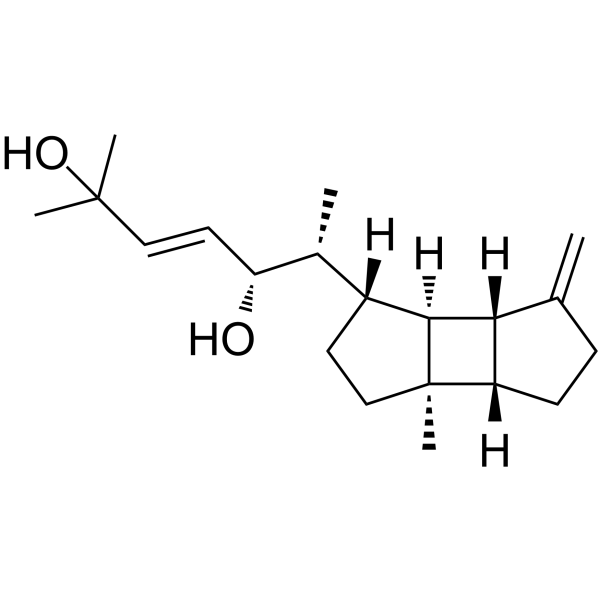
RIPK2-IN-6
 0 ImagesCat. No.: HY-168567CAS No.: 2242432-02-4
-
Flavidin
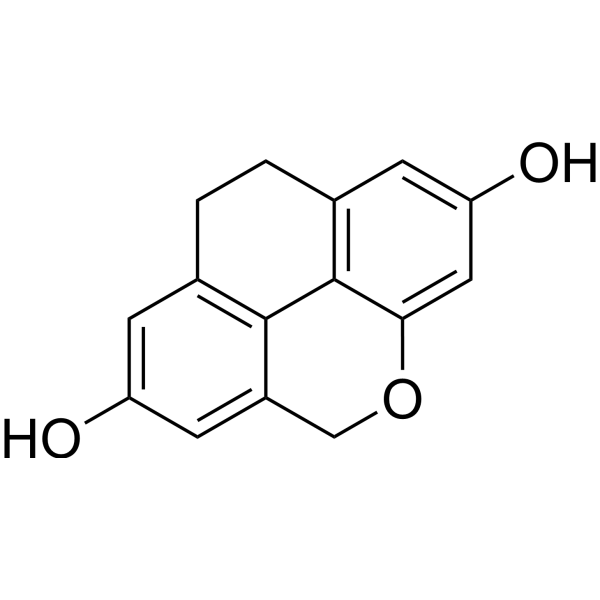 0 ImagesCat. No.: HY-N8274CAS No.: 83924-98-5
Flavidin, an aromatic compound, can be isolated from Coelogyne longipe. Flavidin is an antioxidant, and has radical scavenging activity.
-
BTK-IN-6
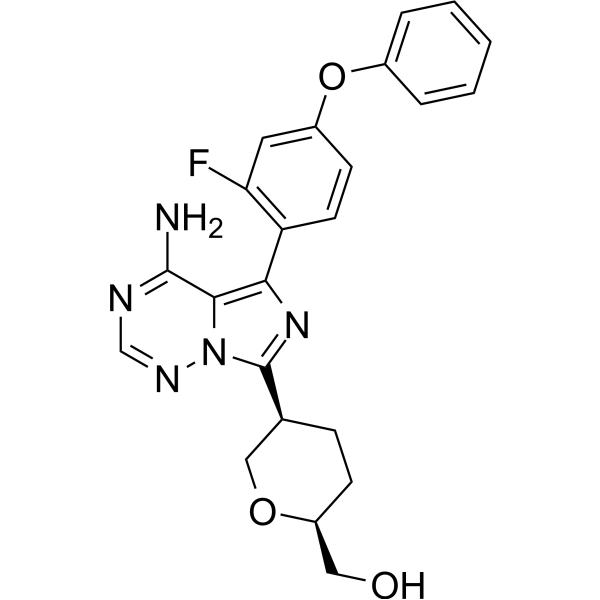 0 ImagesCat. No.: HY-142932
BTK-IN-6 is a potent inhibitor of Bruton's Tyrosine Kinase (BTK). BTK is a member of the Tec family of tyrosine kinases and plays an important role in the regulation of early B-cell development and mature B-cell activation and survival. BTK-IN-6 has the potential for the research of immune disorders, cancer, cardiovascular diseases, viral infections, inflammation, metabolism/endocrine function disorders, and neurological disorders (extracted from patent WO2021136219A1, compound 8).
-
β-Aminoarteether maleate
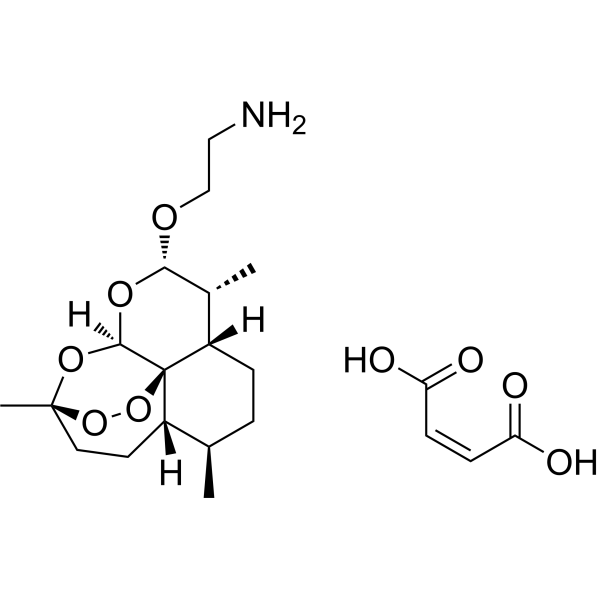 0 ImagesCat. No.: HY-137553ACAS No.: 133162-25-1Synonyms: SM934
β-Aminoarteether maleate (SM934) is an Artemisinin derivative with orally active. β-Aminoarteether maleate can be used for inflammation and autoimmune disease research, such as lupus diseases.
-
(R,R)-Secoisolariciresinol diglucoside-d6
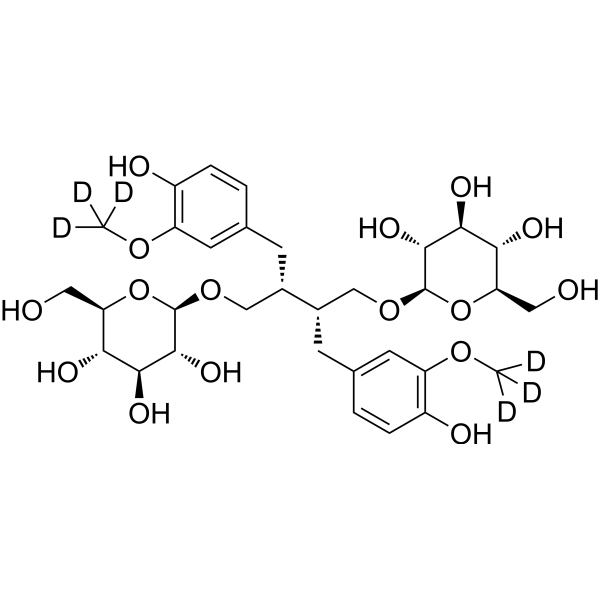 0 ImagesCat. No.: HY-N6937S1Synonyms: (R,R)-SDG-d6; (R,R)-LGM2605-d6
(R,R)-Secoisolariciresinol diglucoside-d6 is deuterated labeled (R,R)-Secoisolariciresinol diglucoside (HY-N6937). (R,R)-Secoisolariciresinol diglucoside ((R,R)-SDG) is the minor isomer of Secoisolariciresinol diglucoside in flaxseed. (R,R)-Secoisolariciresinol diglucoside ((R,R)-SDG) possesses antioxidant and free radical scavenging activities and DNA-radioprotective properties. (R,R)-Secoisolariciresinol diglucoside ((R,R)-SDG) inhibits myeloperoxidase (MPO) activity by suppressing both the peroxidase and chlorination cyclesin inflammatory cells.
-
Anti-CD300C Antibody
 0 ImagesCat. No.: HY-P992208
-
IRAK4-IN-28
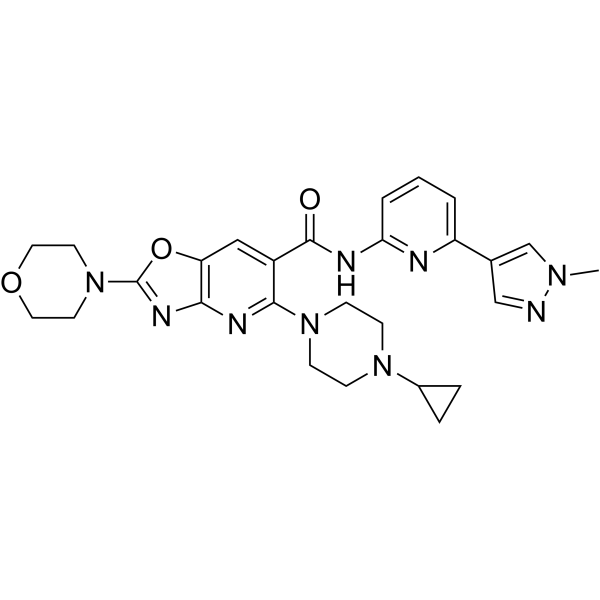 0 ImagesCat. No.: HY-155132CAS No.: 2952532-92-0
-
Anti-CD99 Antibody
 0 ImagesCat. No.: HY-P992216
-
Monophosphoryl lipid A Triethylamine
 0 ImagesCat. No.: HY-130320BSynonyms: Glucopyranosyl lipid A Triethylamine
Monophosphoryl lipid A (Triethylamine) is a toll-like receptor 4 agonist. Monophosphoryl lipid A (Triethylamine) is derived from the cell wall of nonpathogenic Salmonella. Monophosphoryl lipid A (Triethylamine) can be used for the research of immunization and vaccine.
-
CDK8-IN-15
 0 ImagesCat. No.: HY-162600CAS No.: 2988020-03-5
CDK8-IN-15 (Compound 46) is a potent CDK8 inhibitors with an IC50 value of 57 nM. It can enhance the thermal stability of CDK8 along with inhibition against NF-κB and have favourable selectivity across the CDK family and tyrosine kinase. Additionally, it also demostrates a positive effect in vitro psoriasis model induced by TNF-α and alleviats the inflammatory response enhancing the expression of Foxp3 and IL-10, which is promising for research of psoriasis diseases.
-
GW-3333
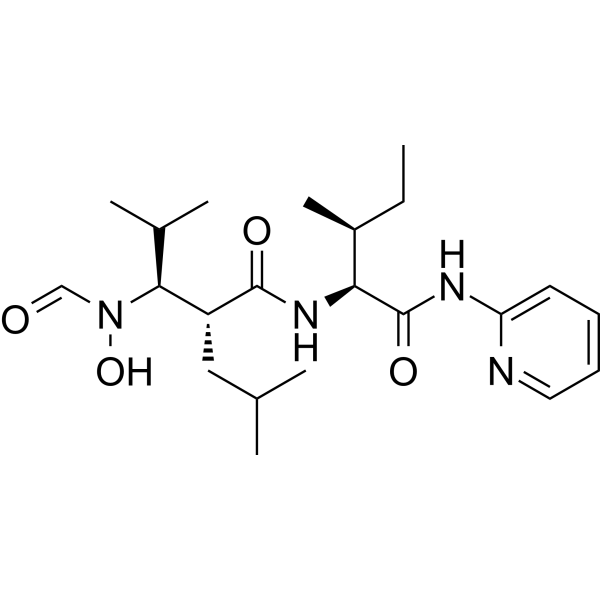 0 ImagesCat. No.: HY-115351CAS No.: 212609-68-2
GW-3333 is a potent and orally active TNF-alpha-converting enzyme (TACE) and matrix metalloproteinases (MMP) inhibitor. GW-3333 inhibits tumor necrosis factor-alpha (TNF-alpha) production. GW-3333 can be used in research of arthritis.
-
TAS266
 0 ImagesCat. No.: HY-P992473
TAS266 is a tetrameric nanobody agonist targeting DR5. TAS266 selectively induces cancer cell death. TAS266 triggers sustained tumor regression in xenograft models and also elicits immunogenic responses including antibody binding. TAS266 exhibits superior anti-tumor efficacy compared with traditional DR5-targeting strategies. TAS266 can be used in research related to pancreatic cancer and advanced solid tumors.