



Aminopeptidase
Aminopeptidases catalyze the cleavage of amino acids from the amino terminus of protein or peptide substrates. Regarding catalytic mechanism, most of the aminopeptidases are metallo-enzymes but cysteine and serine peptidases are also included in this group. Aminopeptidases are widely distributed throughout the animal and plant kingdoms and are found in many subcellular organelles, in cytoplasm, and as membrane components. Several aminopeptidases perform essential cellular functions. Many, but not all, of these peptidases are zinc metalloenzymes and are inhibited by the transition-state analog bestatin. Some are monomeric, and others are assemblies of relatively high mass (50 kDa) subunits.
Functional roles of the angiotensin peptides of the renin-angiotensin system (RAS) cascade can be analyzed through their corresponding proteolytic regulatory enzymes aspartyl aminopeptidase (ASAP), aminopeptidase A (APA), aminopeptidase B (APB), aminopeptidase N (APN) and insulin-regulated aminopeptidase (IRAP). These enzyme activities generate active or inactive angiotensin peptides that alter the ratios between their bioactive forms, regulating several important processes such as the regulation of cardiovascular functions, body water regulation, normal memory consolidation and retrieval, but also cell growth, differentiation and apoptosis or the inflammatory response.
Aminopeptidase Isoform Specific Products
All Product Categories
-
Aminopeptidase Related Products (145)
Related Products (145)

-
Antibodies (1)
-
Aminopeptidase Isoform Comparison
-
JNJ-40929837
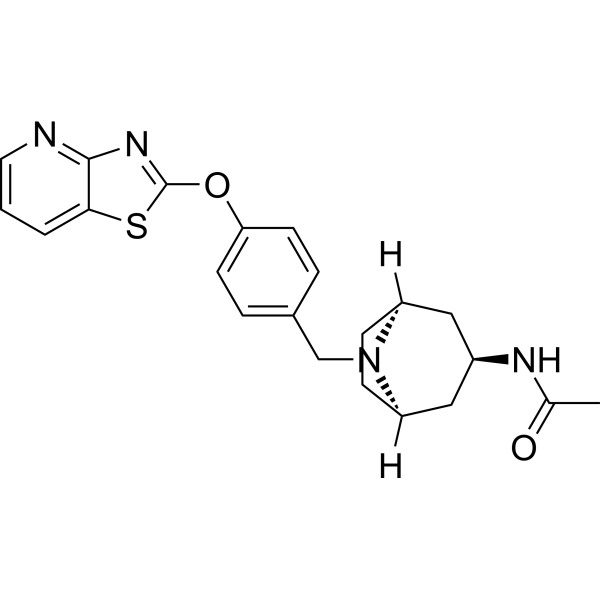 0 ImagesCat. No.: HY-156960CAS No.: 1191044-42-4JNJ-40929837 is a selective and orally active LTA4H (leukotriene A4 hydrolase) inhibitor. JNJ-40929837 effectively inhibits aminopeptidase activity and causes serum accumulation of Pro-Gly-Pro. JNJ-40929837 can be used in asthma research.
-
L-Alanine-2-naphthylamide
 0 ImagesL-Alanine-2-naphthylamide (Alanine β-naphthylamide) is an Aminopeptidase (E.C. 3.4.11.) substrate and detection reagent. L-Alanine-2-naphthylamide detects the functional activity of aminopeptidase in the intestine of larval whitefish (Coregonus lavaretus). L-Alanine-2-naphthylamide serves as an initiator in the N-carboxyanhydride (NCA) method for synthesizing poly (β-benzyl-L-aspartate) polymers with a terminal 2-naphthyl energy donor group.
-
L-Pyroglutamic acid 7-amido-4-methylcoumarin
 0 ImagesCat. No.: HY-W286423CAS No.: 66642-36-2L-Pyroglutamic acid 7-amido-4-methylcoumarin is a fluorogenic substrate for pyroglutamate aminopeptidase 1 (PGP-1).
-
ERAP1 modulator-1
 0 ImagesCat. No.: HY-169913CAS No.: 2766036-51-3ERAP1 modulator-1 (Compound 1) is the modulator for endoplasmic reticulum aminopeptidase 1 (ERAP1) with IC50 < 250 nM.
-
Aminopeptidase N inhibitor 2
 0 ImagesCat. No.: HY-172879Aminopeptidase N inhibitor 2 (Compound 2k) is an APN inhibitor (IC50: 4.3 μM) and has antitumor activity.
-
Bombinin
 0 ImagesCat. No.: HY-P5607Bombinin is an antimicrobial peptide derived from frog Bombina variegata. Bombinin has a protective effect on aminopeptidase.
-
Aeromonas proteolytica aminopeptidase
 0 ImagesCat. No.: HY-P2928CAS No.: 37288-67-8Aeromonas proteolytica aminopeptidase is an aminopeptidase from Aeromonas proteolytica. Aeromonas proteolytica aminopeptidase can function as an esterase. Aeromonas proteolytica aminopeptidase can catalyze the hydrolysis of L-leucine ethyl ester (L-Leu-OEt) with a Km of 700 µM.

-
Pyroglutamate Aminopeptidase, Pyrococcus furiosus
 0 ImagesCat. No.: HY-E70930APyroglutamate Aminopeptidase, Pyrococcus furiosus (EC 3.4.19.3), is an enzyme capable of digesting proteins. Pyroglutamate Aminopeptidase specifically acts on the N-terminal pyroglutamic acid, cleaving it from proteins and peptide chains, thereby promoting Edman degradation.
-
DTS-201 sodium
 0 ImagesCat. No.: HY-P10759CAS No.: 372491-73-1DTS-201 sodium (CPI-0004Na) is a peptidic prodrug of Doxorubicin (HY-15142A). DTS-201, comprising the tetrapeptide portion, is cleaved by endopeptidases in the tumor environment to produce metabolites that subsequently enter the cell and are converted to active Doxorubicin. DTS-201 shows antitumoral efficacy in tumor xenograft models of prostate, breast, and lung cancer.
-
NI929
 0 ImagesCat. No.: HY-184062CAS No.: 851220-34-3NI929 is a blood-brain barrier-permeable recombinant mouse aminopeptidase A (APA) inhibitor with a Ki value of 30 nM. NI929 is applicable to research on hypertension and Alzheimer's disease.
-
LTA4H-IN-4
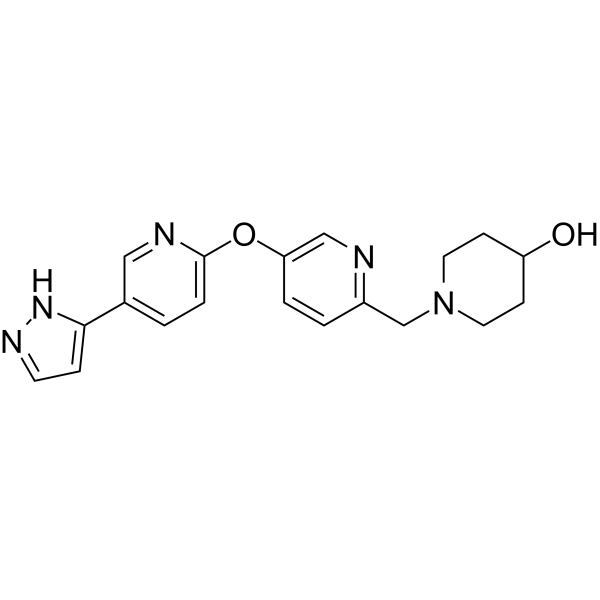 0 ImagesCat. No.: HY-161349CAS No.: 3034839-03-4LTA4H-IN-4 (compound 3) is an orally active LTA4H inhibitor. The IC50 value of LTA4H-IN-4 for hERG is 156 μM. LTA4H-IN-4 can be used in inflammation related studies.
-
H-Leu-Trp-Met-Arg-OH
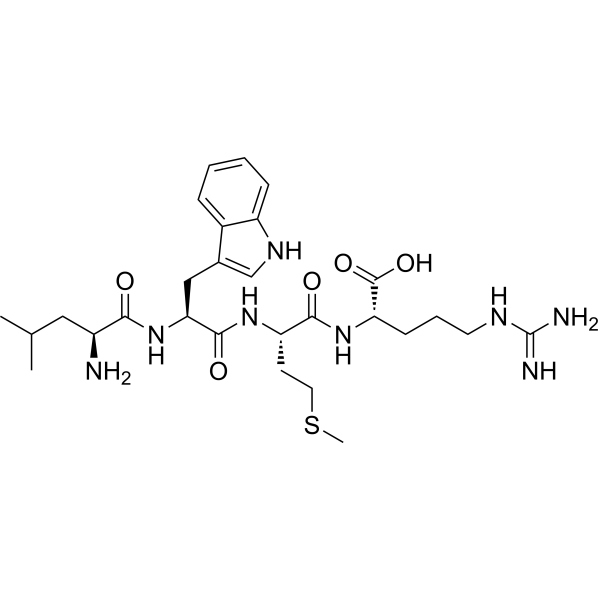 0 ImagesCat. No.: HY-P4393CAS No.: 67368-23-4H-Leu-Trp-Met-Arg-OH is a tetrapeptide. H-Leu-Trp-Met-Arg-OH can be used as a substrate for aminopeptidase-mediated hydrolysis studies.
-
ERAP1-IN-3
 0 ImagesCat. No.: HY-169936ERAP1-IN-3 (compound 13) is a potent endoplasmic reticulum aminopeptidase 1 (ERAP1) inhibitor, with a pIC50 of 8.6. ERAP1-IN-3 has potential for the research of cancer immunotherapy and autoimmune disease.
-
Isotocin acetate
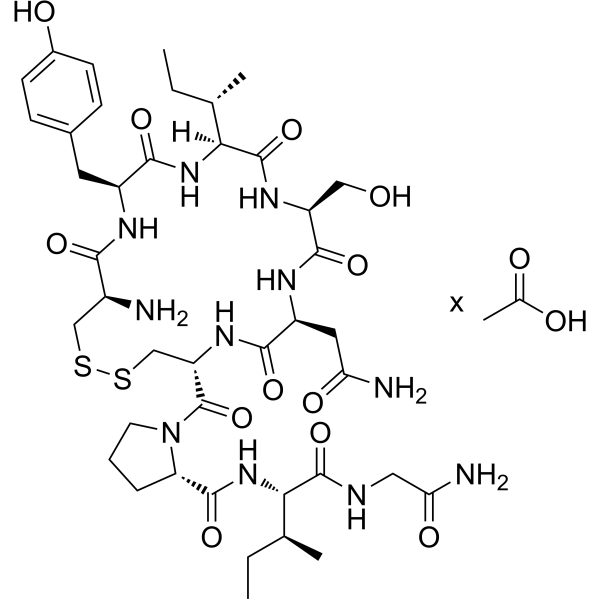 0 ImagesCat. No.: HY-P4184ASynonyms: (Ser4,Ile8)-Oxytocin acetateIsotocin acetate is the homologue of mammalian oxytocin in teleost fish, belonging to the category of neurotransmitters/neuromodulators and peripheral hormones. Isotocin acetate exerts biological effects by binding to its homologous Isotocin acetate receptor (with EC50 = 1.58e-10 mol/L in gilthead seabream) and specific G-protein-coupled receptor subtypes. Isotocin acetate promotes paternal behavior in cichlids, regulates the expression of Foxi3a and P63, thereby controlling the differentiation of ionocyte progenitor cells and the proliferation of epidermal stem cells, and modulates whole-body ion content in zebrafish embryos. Isotocin acetate regulates social and reproductive behaviors, synchronizes the reproductive cycles of teleost fish, and its neuronal phenotypes can be used to classify the types of reproductive systems in cichlids.
-
JNJ-40929837 succinate
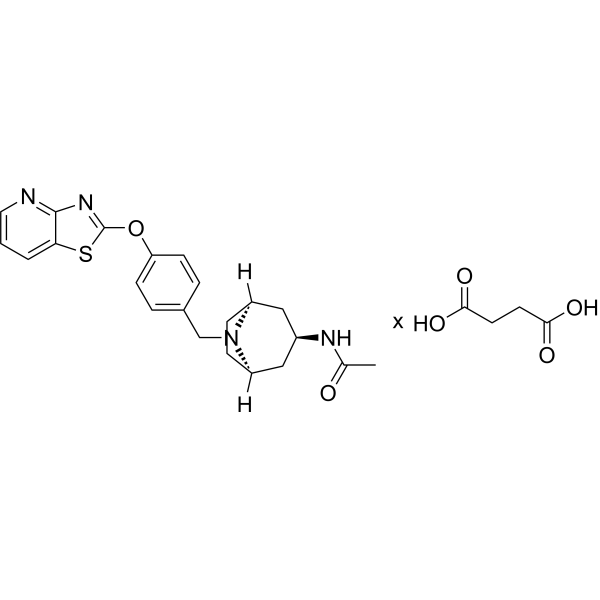 0 ImagesCat. No.: HY-156960ACAS No.: 1191044-47-9JNJ-40929837 succinate is a selective and orally active LTA4H (leukotriene A4 hydrolase) inhibitor. JNJ-40929837 succinate effectively inhibits aminopeptidase activity and causes serum accumulation of Pro-Gly-Pro. JNJ-40929837 succinate can be used in asthma research.
-
Lanopepden camsylate
 0 ImagesCat. No.: HY-182256CAS No.: 1441390-28-8Synonyms: GSK1322322 camsylate
-
GSK235
 0 ImagesCat. No.: HY-179625GSK235 is an orally active, selective and allosteric endoplasmic reticulum aminopeptidase 1 (ERAP1) inhibitor with pIC50 values of 8.45 and 7.59 for human and mouse ERAP1, respectively. GSK235 exhibits over 1000-fold selectivity for the two most homologous enzymes, ERAP2 and IRAP. GSK235 can regulate the immunopeptidome of cancer cells and enhance cancer cell antigenicity. GSK235 can be used for the study of colorectal cancer and arthritis.
-
Cyanostatin B
 0 ImagesCat. No.: HY-P11334CAS No.: 850131-23-6Cyanostatin B, a cyanobacterial lipopeptide, is a leucine aminopeptidase M (LAP) inhibitor (IC50 = 12 ng/mL). Cyanostatin B is a weak inhibitor of protein phosphatase (PP2A) and also exhibits weak inhibitory activity against angiotensin-converting enzyme (ACE), with an IC50 value of 130 μg/mL. Cyanostatin B demonstrates both cytotoxic and genotoxic effects on human hepatocytes, although non-toxic to Artemia salina. Cyanostatin B inhibits the proliferation of HepG2 cells, induces DNA single-strand breaks, and causes genomic instability..
-
Pyroglutamate Aminopeptidase, Thermococcus thioreducens
 0 ImagesCat. No.: HY-E70930Pyroglutamate Aminopeptidase, Thermococcus thioreducens, is an enzyme capable of digesting proteins. Pyroglutamate Aminopeptidase specifically acts on the N-terminal pyroglutamic acid, cleaving it from proteins and peptide chains, thereby promoting Edman degradation.




