



LTA4H
LTA4H (leukotriene A4 hydrolase) is a bifunctional zinc-dependent enzyme that catalyzes the conversion of leukotriene A4 (LTA4) into the potent pro-inflammatory lipid mediator leukotriene B4 (LTB4) while also exhibiting aminopeptidase activity[1]. Within the arachidonic acid-lipoxygenase pathway, LTA4H functions as the terminal and rate-limiting enzyme for LTB4 biosynthesis, thereby regulating leukocyte recruitment, inflammatory signaling, and immune responses[1][2]. Mechanistically, LTB4 generated by LTA4H acts as a strong chemoattractant and activator of leukocytes, linking LTA4H activity to acute and chronic inflammatory processes[1][3]. In disease settings, genetic and biochemical evidence associates the LTA4H-LTB4 axis with asthma, inflammatory bowel disease, atherosclerosis, allergic rhinitis, and age-related neuroinflammatory disorders[2][3][4]. Compared with related enzymes in the leukotriene pathway, such as leukotriene C4 synthase, LTA4H uniquely combines epoxide hydrolase and aminopeptidase activities within a single catalytic protein, creating distinct regulatory effects on inflammatory mediator production[1]. For experimental applications, selective inhibition of the epoxide hydrolase activity has emerged as a major drug discovery strategy because it reduces LTB4 generation while preserving aminopeptidase function[5]. Recent studies have therefore focused on highly potent and selective LTA4H inhibitors as pharmacological tools and potential therapeutic agents for inflammation-associated diseases[5][6][7][8].
References:
- [1]. Wikipedia. Leukotriene-A4_hydrolase.
- [2]. Wikipedia. Epoxide_hydrolase.
- [3]. Penning TD. Inhibitors of Leukotriene A4 (LTA4) Hydrolase as Potential Anti-Inflammatory Agents. Curr Pharm Des. 2001;7(3):163-179.
- [4]. Wikipedia. Leukotriene_A4.
- [5]. Röhn TA, et al. Drug discovery strategies for novel leukotriene A4 hydrolase inhibitors. Expert Opin Drug Discov. 2021 Dec;16(12):1483-1495. [Content Brief]
- [6]. Teixeira CSS, et al. Current Status of the Use of Multifunctional Enzymes as Anti-Cancer Drug Targets. Pharmaceutics. 2022;14(1):10.
- [7]. Thoma G, et al. Discovery of Amino Alcohols as Highly Potent, Selective, and Orally Efficacious Inhibitors of Leukotriene A4 Hydrolase. J Med Chem. 2023 Dec 14;66(23):16410-16425. [Content Brief]
- [8]. Ma TT, et al. Leukotriene A4 Hydrolase Is a Candidate Predictive Biomarker for Successful Allergen Immunotherapy. Front Immunol. 2020 Nov 24;11:559746. [Content Brief]
All Product Categories
-
LTA4H Related Products (6)
Related Products (6)

-
SC-57461A
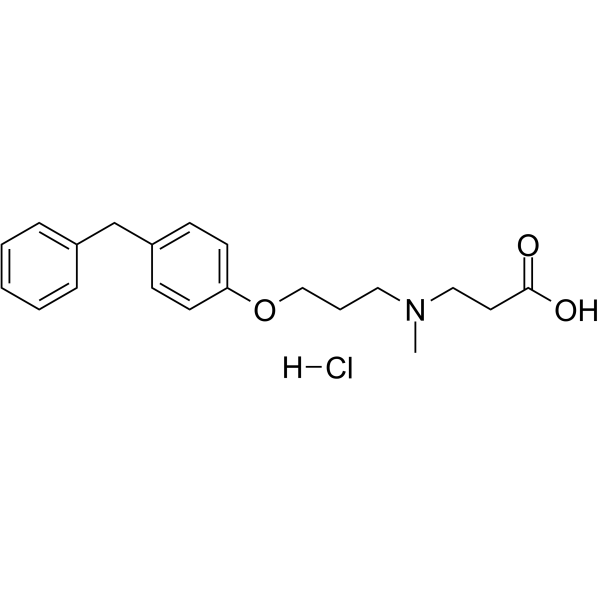 0 ImagesSC-57461A is a potent, orally active, nonpeptide, and selective inhibitor of Leukotriene A4 (LTA4) hydrolase with IC50s of 2.5 nM, 3 nM, and 23 nM for recombinant human, mouse, and rat LTA4 hydrolase, respectively.
-
DG051
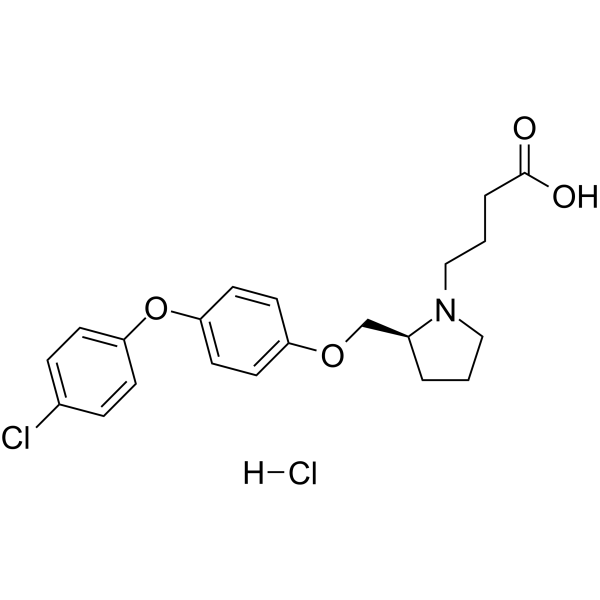 0 ImagesDG051 is a potent leukotriene A4 hydrolase inhibitor of leukotriene B4 biosynthesis in the enzyme assay with an IC50=47 nM.
-
SC-57461
 0 ImagesCat. No.: HY-10828CAS No.: 179022-08-3SC-57461 is a potent, orally active, nonpeptide, and selective inhibitor of Leukotriene A4 (LTA4) hydrolase with IC50s of 2.5 nM, 3 nM, and 23 nM for recombinant human, mouse, and rat LTA4 hydrolase, respectively.
-
LTA4H-IN-5
 0 ImagesCat. No.: HY-162710LTA4H-IN-5 (Compound H122) is an orally active inhibitor for leukotriene A4 hydrolase (LTA4H), that inhibits the LTA4H aminopeptidase and LTA4H hydrolase with IC50 of 0.38 nM and 16.93 nM. LTA4H-IN-5 exhibits good pharmacokinetic characteristics in C57 mice and ameliorates the DNBS-induced ulcerative enteritis in rat models.
-
LYS006 hydrochloride
 0 ImagesCat. No.: HY-137298ACAS No.: 2619563-79-8LYS006 hydrochloride is a potent inhibitor of leukotriene A4 hydrolase (LTA4H) extracted from patent WO2015092740A1, example 29, has an IC50 of 2 nM. LYS006 hydrochloride can be used for the research of inflammatory and autoimmune disorders.



