



CD13
CD13/aminopeptidase N (APN) is a widely expressed transmembrane ectoenzyme in endothelial, epithelial, fibroblast, and leukocyte populations[1]. Mechanistically, CD13 regulates cytokine activity by N-terminal cleavage, participates in MHC class II peptide trimming, and also mediates signal transduction, receptor recycling, FcγR-mediated phagocytosis, and cytokine-receptor functions independent of enzymatic activity[2]. In inflammatory models, IFN-γ regulated CD13/APN mRNA, membrane CD13, and enzyme activity in HL-60 myelo-monocytic cells, supporting cytokine-dependent control during inflammation[3]. In cancer research, CD13 is a Zn2+-dependent membrane ectopeptidase associated with growth of different human cancers and evaluated as a target for inhibitors and APN-targeted carrier constructs[4]. Compared with related aminopeptidase isoforms, CD13/APN is specifically framed as a \"moonlighting\" enzyme because its receptor and signaling roles do not always depend on catalytic activity[5]. This distinction is experimentally important because lung cancer cell migration increased even with catalytically inactive CD13, whereas anti-CD13 antibodies reduced migration and invasion[6]. For applications, natural and synthetic APN inhibitors help analyze peptide-response modulation, immune functions, proliferation, secretion, invasion, and angiogenesis[1].
References:
- [1]. Bauvois B, et al. Aminopeptidase-N/CD13 (EC 3.4.11.2) inhibitors: chemistry, biological evaluations, and therapeutic prospects. Med Res Rev. 2006 Jan;26(1):88-130. [Content Brief]
- [2]. Lu C, et al. CD13/Aminopeptidase N Is a Potential Therapeutic Target for Inflammatory Disorders. J Immunol. 2020 Jan 1;204(1):3-11. [Content Brief]
- [3]. Gabrilovac J, et al. Regulation of aminopeptidase N (EC 3.4.11.2; APN; CD13) by interferon-gamma on the HL-60 cell line. Life Sci. 2005 Apr 22;76(23):2681-97. [Content Brief]
- [4]. Wickström M, et al. Aminopeptidase N (CD13) as a target for cancer chemotherapy. Cancer Sci. 2011 Mar;102(3):501-8. [Content Brief]
- [5]. Mina-Osorio P. The moonlighting enzyme CD13: old and new functions to target. Trends Mol Med. 2008 Aug;14(8):361-71. doi: 10.1016/j.molmed.2008.06.003. Epub 2008 Jul 5. PMID: 18603472; PMCID: PMC7106361. et al. The moonlighting enzyme CD13: old and new functions to target. Trends Mol Med. 2008 Aug;14(8):361-71. [Content Brief]
- [6]. Chang YW, et al. CD13 (aminopeptidase N) can associate with tumor-associated antigen L6 and enhance the motility of human lung cancer cells. Int J Cancer. 2005 Aug 20;116(2):243-52. [Content Brief]
All Product Categories
-
CD13 Related Products (8)
Related Products (8)

-
Bestatin
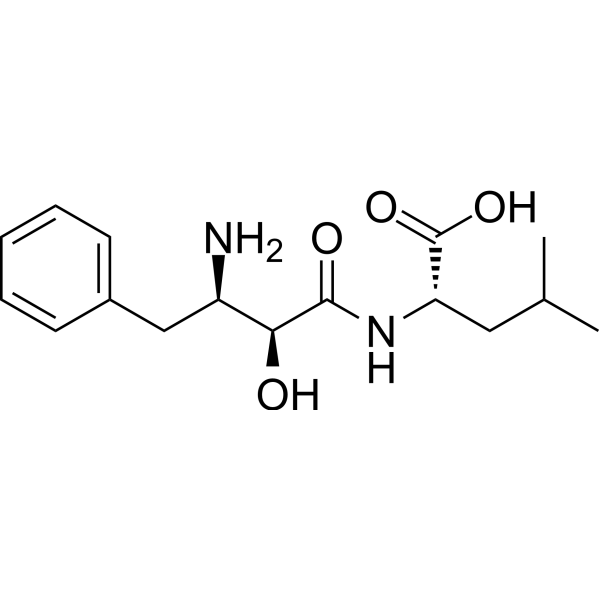 0 ImagesSynonyms: UbenimexBestatin is a natural, broad-spectrum, and competitive CD13 (Aminopeptidase N)/APN and leukotriene A4 hydrolase inhibitor. Bestatin has anticancer effects.
-
Bestatin hydrochloride
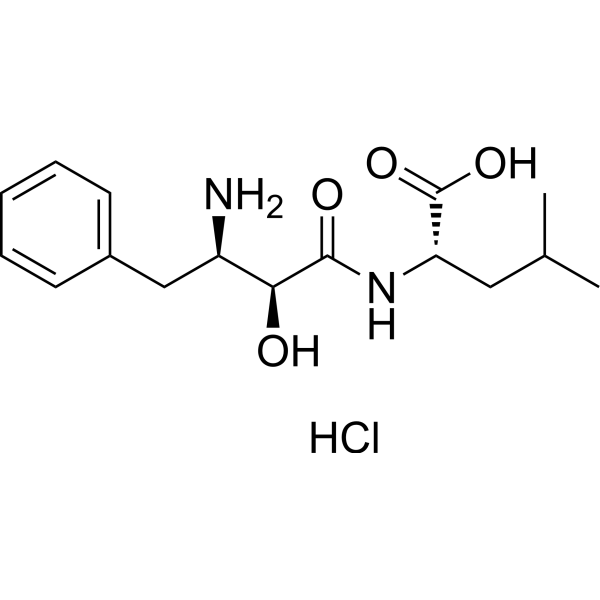 0 ImagesSynonyms: Ubenimex hydrochlorideBestatin hydrochloride is an inhibitor of CD13 (Aminopeptidase N)/APN and leukotriene A4 hydrolase, used for cancer research.
-
Bestatin-d7 hydrochloride
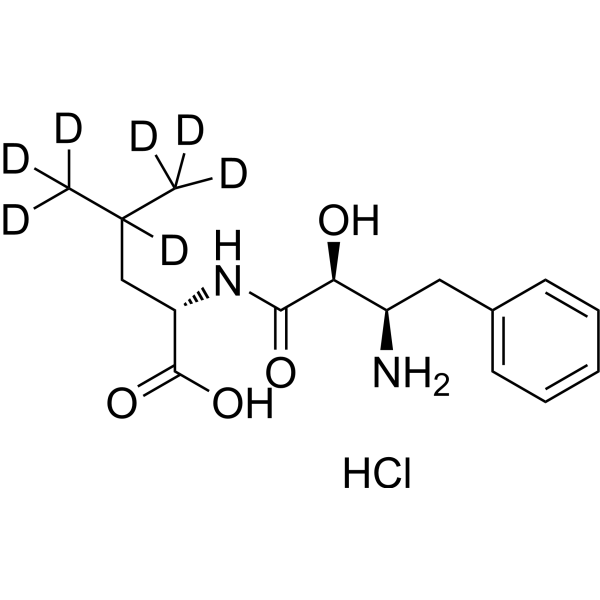 0 ImagesCat. No.: HY-B0134ASPurity: 99.76%Synonyms: Ubenimex-d7 hydrochlorideBestatin-d7 (hydrochloride) is deuterium labeled Bestatin (hydrochloride). Bestatin hydrochloride is an inhibitor of CD13 (Aminopeptidase N)/APN and leukotriene A4 hydrolase, used for cancer research.
-
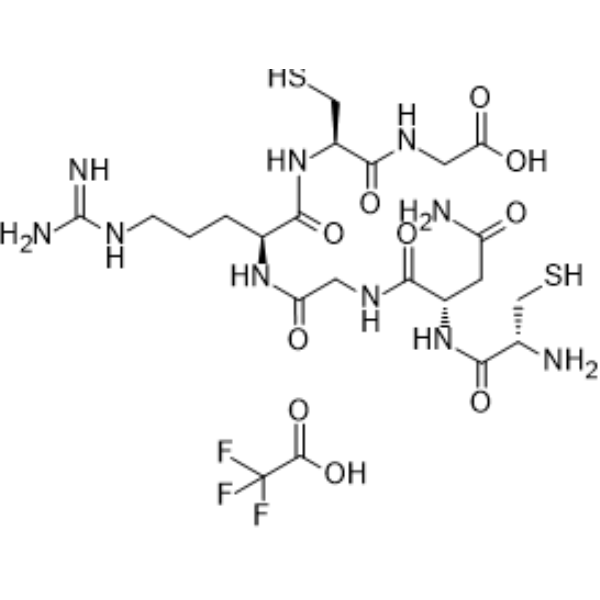
Aminopeptidase N Ligand (CD13) NGR peptide
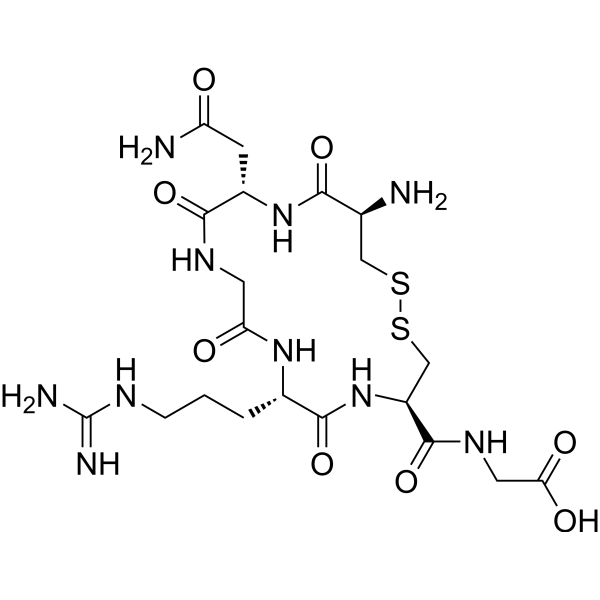 0 ImagesAminopeptidase N Ligand (CD13) NGR peptide is a polypeptide targeting CD13 and can be used as a carrier to mediate intracellular transmission. Aminopeptidase N Ligand (CD13) NGR peptide is often used in cancer research.
-
NGR peptide
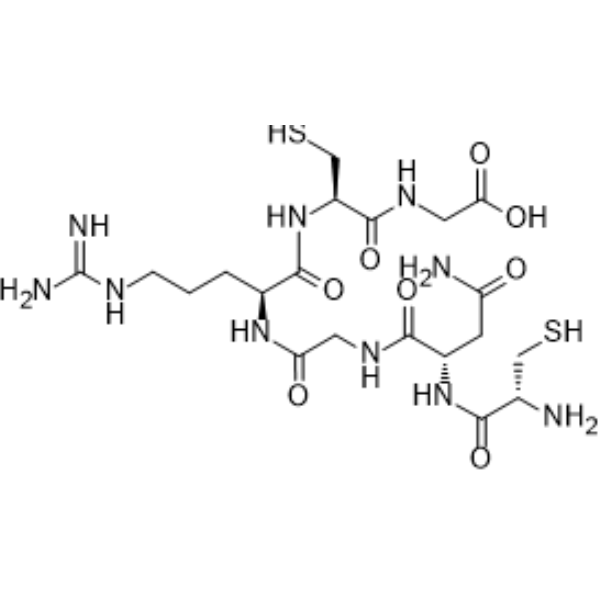 0 ImagesNGR peptide containing the Asn-Gly-Arg (NGR) motif. NGR peptide binds to APN/CD13. NGR peptide is directly conjugated to imaging agents that can be used for tumor imaging.

-
Bestatin trifluoroacetate
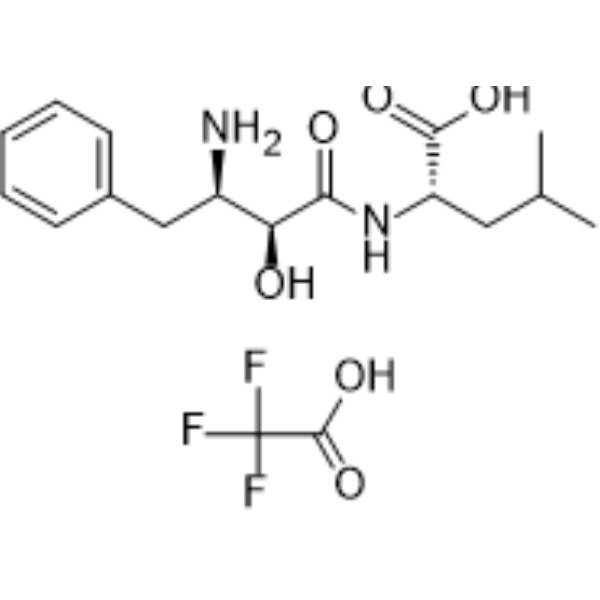 0 ImagesCat. No.: HY-B0134BCAS No.: 223763-80-2Synonyms: Ubenimex trifluoroacetateBestatin trifluoroacetate is an inhibitor of CD13 (Aminopeptidase N)/APN and leukotriene A4 hydrolase, used for cancer research.



