



Autophagy
Autophagy is a conserved cellular degradation and recycling process in the lysosome. In mammalian cells, there are three primary types of autophagy: microautophagy, macroautophagy, and chaperone-mediated autophagy (CMA). Microphagy captures cargoes by means of invaginations or protrusions of the lysosomal membrane directly, CMA uses chaperones to identify cargo proteins and then unfolds and transfers them into the lysosomal, while macroautophagy sequesters cargo by autophagosomes-de novo synthesized of double-membrane vesicles-and subsequently transport it to the lysosome.
Macroautophagy is the best studied and it occurs at a low level constitutively and can also be further induced under stress conditions, such as nutrient or energy starvation with a salient feature of autophagy protein degradation. Stress-induced macrophagy plays an important role in protein catabolism with another key protein degradation pathway, the ubiquitin–proteasome system (UPS).
As the study progressed, autophagy gains its importance under basal, nutrient-rich conditions, and is now recognized as a critical housekeeping pathway in catabolism of diverse cellular constituents, such as protein aggregates (aggrephagy), lipid droplets (lipophagy), iron complex (Ferritinophagy) and carbohydrate. Except for macromolecules, autophagy can also target several organelles and structures, such as mitochondria (mitophagy), peroxisome (pexophagy), endoplasmic reticulum (reticulophagy or ER-phagy), ribosome (ribophagy), spermatozoon-inherited organelles following fertilization (allophagy), secretory granules within pancreatic cells (zymophagy) and intracellular pathogens (xenophagy).
Autophagy and its dysfunction are associated with a variety of human pathologies, including ageing, cancer, neurodegenerative disease, heart disease and metabolic diseases, such as diabetes. Plenty of drugs and natural products are involved in autophagy modulation through multiple signaling pathways. Small molecules that can regulate autophagy seem to have great potential to intervene such diseases in animal models or clinical courses.
All Product Categories
-
Autophagy Inhibitors
(470)
View all products
-
Autophagy Agonists
(6)
View all products
-
Autophagy Activators
(119)
View all products
-
Autophagy Modulators
(59)
View all products
-
Autophagy Chemicals
(2)
View all products
-
Autophagy Inducers
(2165)
View all products
-
Autophagy Controls
(5)
View all products
-
Autophagy Ligand
(1)
View all products
-
Autophagy Related Products (3358)
Related Products (3358)

-
Antibodies (31)
-
Autophagy Signaling Pathway
-
Dinoprost-d9
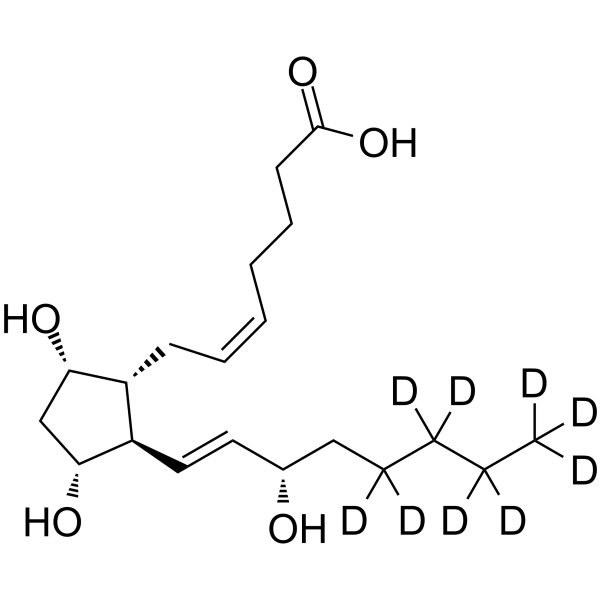 0 ImagesCat. No.: HY-12956S1Synonyms: Prostaglandin F2a-d9; PGF2α-d9Dinoprost-d9 is the deuterium labeled Dinoprost. Dinoprost (Prostaglandin F2α) is an orally active, potent prostaglandin F (PGF) receptor (FP receptor) agonist. Dinoprost is a luteolytic hormone produced locally in the endometrial luminal epithelium and corpus luteum (CL). Dinoprost plays a key role in the onset and progression of labour.
-
Crizotinib-d9 hydrochloride
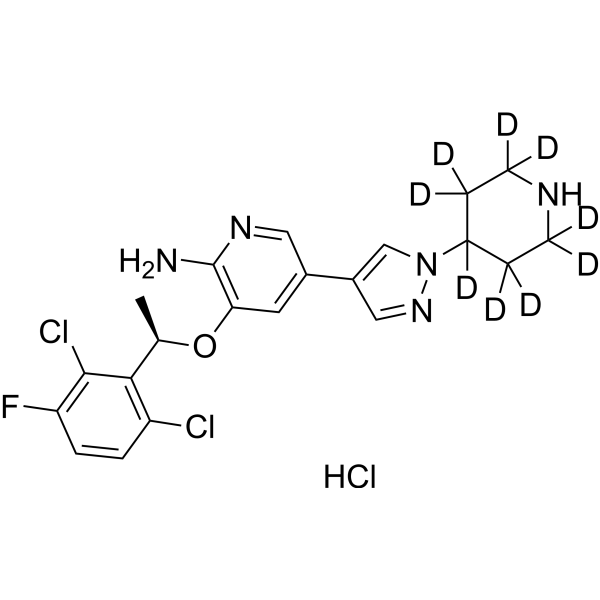 0 ImagesCat. No.: HY-50878ASSynonyms: PF-02341066-d9 hydrochlorideCrizotinib-d9 hydrochloride is deuterated labeled Crizotinib hydrochloride (HY-50878A). Crizotinib hydrochloride (PF-02341066 hydrochloride) is an orally bioavailable, selective, and ATP-competitive dual ALK and c-Met inhibitor with IC50s of 20 and 8 nM, respectively. Crizotinib hydrochloride (PF-02341066 hydrochloride) inhibits tyrosine phosphorylation of NPM-ALK and tyrosine phosphorylation of c-Met with IC50s of 24 and 11 nM in cell-based assays, respectively. It is also a ROS proto-oncogene 1 (ROS1) inhibitor. Crizotinib hydrochloride (PF-02341066 hydrochloride) has effective tumor growth inhibition.
-
NCIC-VIS
 0 ImagesCat. No.: HY-D2971CAS No.: 2781892-92-8NCIC-VIS is a lysosome-targeted, viscosity-sensitive two-photon near-infrared fluorescent probe. NCIC-VIS has a rigid structure that can restrict molecular torsion, thereby increasing the fluorescence quantum yield and two-photon absorption cross-section. NCIC-VIS enables real-time imaging of the autophagy process in cells.
-
Oxoglaucine
 0 ImagesOxoglaucine (O-Methylatheroline) is a natural product with multiple activities including autophagy activation, anti-inflammation, antibacterial activity, and immunoregulation. Oxoglaucine inhibits the TRPV5/calmodulin/CAMK-II pathway, suppresses TGFβ-induced Smad2 phosphorylation by upregulating Smad7, blocks Ca2+ influx, activates autophagy, alleviates apoptosis and inflammation, inhibits ROS production and the expression of fibrosis markers in hepatocytes, and regulates immune cell populations and responses. Oxoglaucine protects against infections caused by Candida albicans and Klebsiella pneumoniae, and exerts effects on adjuvant-induced arthritis. Oxoglaucine can be used in studies related to arthritis, liver fibrosis, bacterial infections, and fungal infections.
-
HJTA
 0 ImagesCat. No.: HY-D3211CAS No.: 2442502-32-9HJTA is a selective, pH/GSH dual-responsive Fluorescent probe and anticancer agent. HJTA selectively undergoes an enzymatic reaction with GSTπ. HJTA induces Apoptosis and Autophagy by regulating the expression of apoptotic and autophagic proteins. HJTA exhibits pH- and GSH-dual-responsive fluorescence in tumor cells. HJTA selectively illuminates tumor tissues, enabling precise in situ visualization of colon tumors. HJTA exerts anticancer effects against colon cancer. HJTA can be used for colon cancer research.

-
Thalidomide-piperidine-O-azetidine-acetic acid
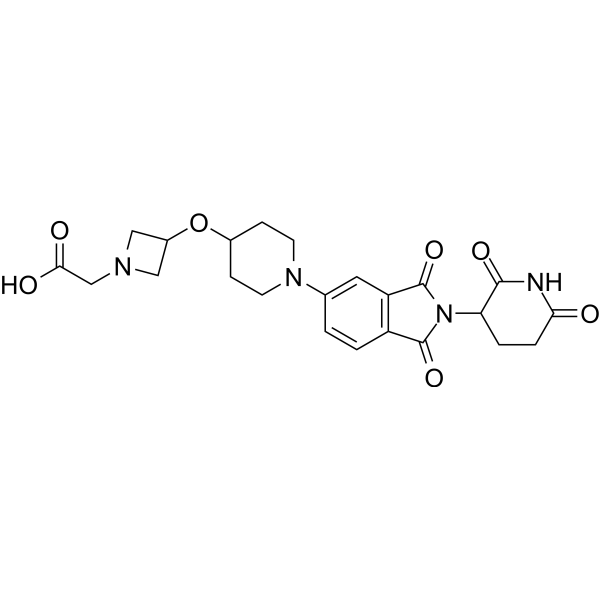 0 ImagesCat. No.: HY-163236Thalidomide-piperidine-O-azetidine-acetic acid is a conjugate of E3 ligase ligand and linker, consisting of Thalidomide (HY-14658) and the corresponding Linker. Thalidomide-piperidine-O-azetidine-acetic acid can serve as a Cereblon ligand to recruit CRBN protein and serve as a key intermediate for the synthesis of complete PROTAC molecules.
-
VWK147
 0 ImagesCat. No.: HY-181062VWK147 is a second-generation HSP90 C-terminal domain (CTD) inhibitor. VWK147 targets the CTD dimerization interface, prevents HSP90 CTD dimerization, disrupts co-chaperone PPID binding to HSP90 CTD, and inhibits HSP90 chaperone function dependent on dimerization. VWK147 reduces protein levels of HSP90 client proteins ULK1, RIPK1, and CDK4 without inducing a heat shock response. VWK147 induces cell death, including apoptosis, in Cisplatin (HY-17394)-sensitive and -resistant urothelial carcinoma cells. VWK147 induces LC3-II accumulation, inhibits autophagosome-lysosome fusion to block canonical autophagy, and induces non-canonical LC3 lipidation independent of ULK1 and PIK3C3 complexes. VWK147 can be used for the research of urothelial carcinoma.
-
HDAC10-IN-2
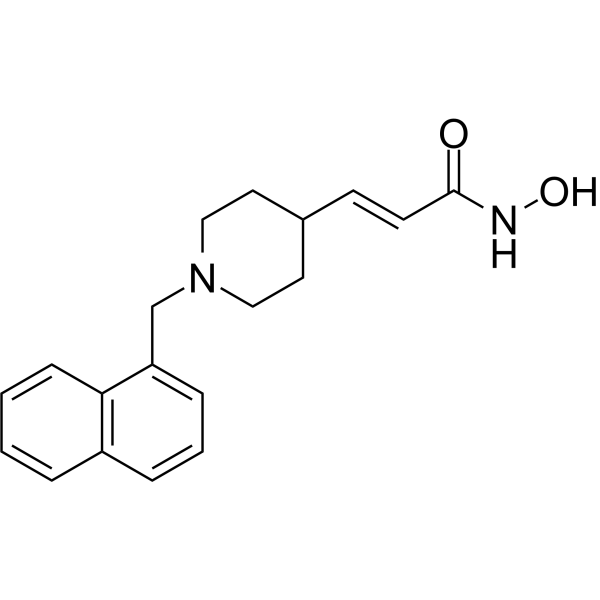 0 ImagesCat. No.: HY-144782CAS No.: 3033417-22-7
-
Trifluoperazine-d3 dihydrochloride
 0 ImagesCat. No.: HY-B0532ASCAS No.: 1432064-02-2Trifluoperazine-d3 (dihydrochloride) is deuterium labeled Trifluoperazine (dihydrochloride). Trifluoperazine dihydrochloride, an antipsychotic agent, acts by blocking central dopamine receptors. Trifluoperazine dihydrochloride is a potent α1-adrenergic receptor antagonist. Trifluoperazine dihydrochloride is a potent NUPR1 inhibitor exerting anticancer activity. Trifluoperazine dihydrochloride is a calmodulin inhibitor, and also inhibits P-glycoprotein. Trifluoperazine dihydrochloride can be used for the research of schizophrenia. Trifluoperazine dihydrochloride acts as a reversible inhibitor of influenza virus morphogenesis.
-
BD-AcAc2
 0 ImagesSynonyms: R,S-1,3-Butanediol acetoacetate diesterBD-AcAc2 (R,S-1,3-Butanediol acetoacetate diester) is an orally active, CNS-penetrant antiepileptic agent. BD-AcAc2 inhibits NF-κB, NLRP3 inflammasome, caspase-1/3, pyroptosis, apoptosis, and enhances autophagy. BD-AcAc2 exhibits antioxidant activity by modulating ROS, MDA, SOD, and GSH levels, and alleviates oxidative stress. BD-AcAc2 mitigates chronic colitis, counteracts Dextran Sodium Sulfate (DSS)-induced pathology, protects against central nervous system oxygen toxicity and acute lung injury, and exhibits anti-seizure efficacy. BD-AcAc2 can be used for the research of colitis, sarcopenia, acute lung injury, seizure, and obesity.
-
Viriditoxin
 0 ImagesCat. No.: HY-126051CAS No.: 1381782-08-6Synonyms: (-)-ViriditoxinViriditoxin ((-)-Viriditoxin) is a mycotoxin. Viriditoxin promotes tubulin polymerization, and inhibits FtsZ polymerization and GTPase activity. Viriditoxin exhibits cytotoxicity against cancer cells, induces apoptosis, inhibits cell migration and colony formation, induces G2/M phase arrest, and triggers autophagic cell death. Viriditoxin activates caspase-3, cleaves PARP, promotes cytochrome c release, and induces ROS production. Viriditoxin possesses broad-spectrum antibacterial activity against Gram-positive pathogenic bacteria, fish pathogenic bacteria, and permeabilized Gram-negative bacteria. Viriditoxin can be used in research related to ovarian cancer, lung cancer, nasopharyngeal carcinoma, colon cancer, neuroblastoma, prostate cancer, leukemia, lymphoma, bacterial infections, and streptococcosis.
-
6-Mercaptopurine-13C,15N2
 0 ImagesCat. No.: HY-13677S3Synonyms: Mercaptopurine-13C,15N2; 6-MP-13C,15N26-Mercaptopurine-13C,15N2 (Mercaptopurine-13C,15N2) is the 13C- and 15N-labeled 6-Mercaptopurine (HY-13677). 6-Mercaptopurine is a purine analogue which acts as an antagonist of the endogenous purines and has been widely used as antileukemic agent and immunosuppressive drug.
-
Ancitabine hydrochloride (Standard)
 0 ImagesSynonyms: Cyclocytidine hydrochloride (Standard); Cyclo-CMP hydrochloride (Standard); Cyclo-C (Standard)Ancitabine hydrochloride (Standard) is the analytical standard of Ancitabine hydrochloride. This product is intended for research and analytical applications. Ancitabine (Cyclocytidine) hydrochloride is a cytarabine derivative that inhibits viral replication. Ancitabine hydrochloride blocks vaccinia virus DNA replication, the progression of viral protein synthesis from early to late stages, and one-step growth of vaccinia virus. Ancitabine hydrochloride is applicable to research related to vaccinia virus infection, leukemia, human cytomegalovirus infection and colorectal cancer.
-
Nordeoxycholic acid (Standard)
 0 ImagesCat. No.: HY-N8268RCAS No.: 53608-86-9Synonyms: 3α,12α-Dihydroxynorcholanic acid (Standard)Nordeoxycholic acid (3α,12α-Dihydroxynorcholanic acid) (Standard) is the analytical standard of Nordeoxycholic acid (HY-N8268). This product is intended for research and analytical applications. Nordeoxycholic acid is an orally active hydrophobic bile acid metabolite. Nordeoxycholic acid inhibits autophagic flux, induces endoplasmic reticulum stress and causes hepatocyte injury. Nordeoxycholic acid impairs intestinal barrier integrity in mice. Nordeoxycholic acid can be used in the research of alcohol-associated liver disease.
-
Hexestrol-d4
 0 ImagesCat. No.: HY-B1662S3CAS No.: 91889-42-8Hexestrol-d4 is the deuterium labeled Hexestrol (HY-B1662). Hexestrol is a nonsteroidal synthetic estrogen, with a Ki of 0.06 and 0.06 nM for estrogen receptor alpha (ERα) and ERβ. Hexestrol can be used for the research of the diseases caused by estrogen deficiencym, and it also can increase the weight of cattle.
-
Thalidomide-5-NH-PEG5-NH2 hydrochloride
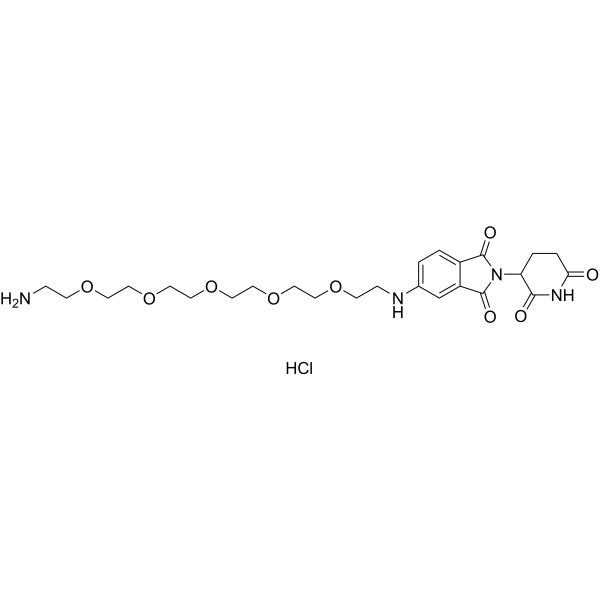 0 ImagesCat. No.: HY-156170Thalidomide-5-NH-PEG5-NH2 hydrochloride is the Thalidomide (HY-10984)-based cereblon ligand used in the recruitment of CRBN protein. Thalidomide-5-NH-PEG5-NH2 hydrochloride can be connected to the ligand for protein by a linker to form PROTACs.




