



Autophagy
Autophagy is a conserved cellular degradation and recycling process in the lysosome. In mammalian cells, there are three primary types of autophagy: microautophagy, macroautophagy, and chaperone-mediated autophagy (CMA). Microphagy captures cargoes by means of invaginations or protrusions of the lysosomal membrane directly, CMA uses chaperones to identify cargo proteins and then unfolds and transfers them into the lysosomal, while macroautophagy sequesters cargo by autophagosomes-de novo synthesized of double-membrane vesicles-and subsequently transport it to the lysosome.
Macroautophagy is the best studied and it occurs at a low level constitutively and can also be further induced under stress conditions, such as nutrient or energy starvation with a salient feature of autophagy protein degradation. Stress-induced macrophagy plays an important role in protein catabolism with another key protein degradation pathway, the ubiquitin–proteasome system (UPS).
As the study progressed, autophagy gains its importance under basal, nutrient-rich conditions, and is now recognized as a critical housekeeping pathway in catabolism of diverse cellular constituents, such as protein aggregates (aggrephagy), lipid droplets (lipophagy), iron complex (Ferritinophagy) and carbohydrate. Except for macromolecules, autophagy can also target several organelles and structures, such as mitochondria (mitophagy), peroxisome (pexophagy), endoplasmic reticulum (reticulophagy or ER-phagy), ribosome (ribophagy), spermatozoon-inherited organelles following fertilization (allophagy), secretory granules within pancreatic cells (zymophagy) and intracellular pathogens (xenophagy).
Autophagy and its dysfunction are associated with a variety of human pathologies, including ageing, cancer, neurodegenerative disease, heart disease and metabolic diseases, such as diabetes. Plenty of drugs and natural products are involved in autophagy modulation through multiple signaling pathways. Small molecules that can regulate autophagy seem to have great potential to intervene such diseases in animal models or clinical courses.
All Product Categories
-
Autophagy Inhibitors
(488)
View all products
-
Autophagy Agonists
(6)
View all products
-
Autophagy Activators
(124)
View all products
-
Autophagy Modulators
(59)
View all products
-
Autophagy Chemicals
(2)
View all products
-
Autophagy Inducers
(2220)
View all products
-
Autophagy Controls
(5)
View all products
-
Autophagy Ligand
(1)
View all products
-
Autophagy Related Products (3441)
Related Products (3441)

-
Antibodies (31)
-
Autophagy Signaling Pathway
-
Ambroxol acefylline
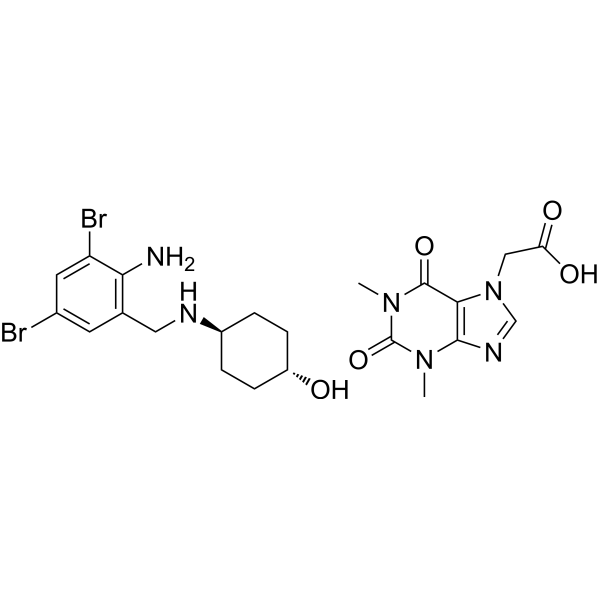 0 ImagesCat. No.: HY-B1039CCAS No.: 96989-76-3Synonyms: NA-872 acefylline; AcebrophyllineAmbroxol (NA-872) acefylline, an active metabolite of the proagent Bromhexine, has potent expectorant effects. Ambroxol acefylline is a glucocerebrosidase (GCase) chaperone and increases glucocerebrosidase activity. Ambroxol acefylline induces lung autophagy and has the potential for Parkinson disease and neuronopathic Gaucher disease research.
-
NP7r
 0 ImagesCat. No.: HY-184558CAS No.: 2641092-28-4NP7r is an antioxidant and neuroprotective agent. NP7r regulates oxidative stress, upregulates downstream antioxidant genes, reduces mitochondrial ROS, initiates Autophagy and clears α-synuclein aggregates. NP7r alleviates dopaminergic neuron degeneration, restores fat content, reduces lipid peroxidation, and improves motor impairment and abnormal food perception. NP7r is applicable to the research of Parkinson's disease.
-
10-Hydroxydecanoic acid (Standard)
 0 ImagesSynonyms: NSC 15139 (Standard); 10-HDAA (Standard)10-Hydroxydecanoic acid (Standard) is the analytical standard of 10-Hydroxydecanoic acid. This product is intended for research and analytical applications. 10-Hydroxydecanoic acid (10-HDAA) is a saturated fatty acid derived from 10-hydroxy-trans-2-decenoic acid, which can be isolated from royal jelly. 10-Hydroxydecanoic acid exhibits various biological activities, including anti-inflammatory, insecticidal, anti-malarial, and anti-Leishmania properties, as well as enhancing antigen-specific immune responses. The anti-inflammatory effects of 10-Hydroxydecanoic acid are primarily mediated by inhibiting the activation of NF-κB and the translation of interferon regulatory factor 1 (IRF-1), which reduces the production of interleukin 6 (IL-6) and nitric oxide (NO) in inflammatory cells. Additionally, 10-Hydroxydecanoic acid alleviates neuroinflammatory responses through the p53-autophagy pathway and the p53-NLRP3 pathway. Finally, 10-Hydroxydecanoic acid enhances antigen-specific immune responses by promoting the effective uptake of antigens by microfold cells[1][2][3][4][5].
-
Thalidomide-NH-amido-C3-NH2 hydrochloride
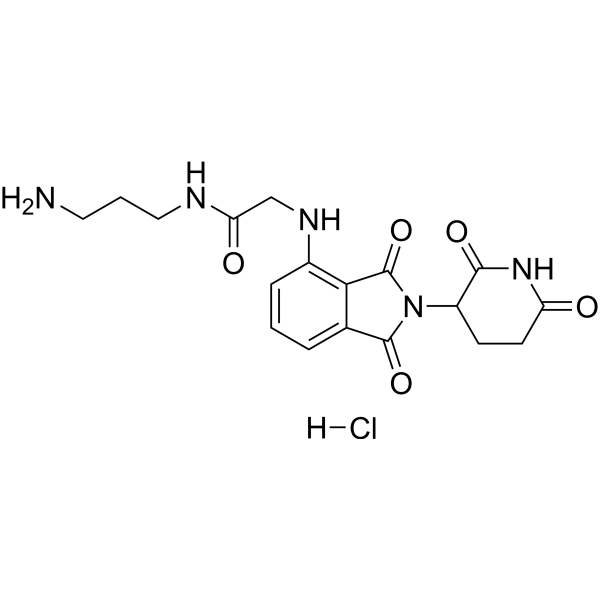 0 ImagesCat. No.: HY-138850AThalidomide-NH-amido-C3-NH2 hydrochloride is a synthesized E3 ligase ligand-linker conjugate that incorporates the Thalidomide based cereblon ligand and a linker used in PROTAC technology.
-
Sildenafil-d3 citrate
 0 ImagesCat. No.: HY-W751650Synonyms: UK-92480-d3 citrateSildenafil-d3 citrate (UK-92480-d3 citrate) is the deuterium labeled Sildenafil citrate (HY-15025A). Sildenafil citrate is a potent phosphodiesterase type 5 (PDE5) inhibitor with IC50 of 5.22 nM.
-
SHP2-IN-35
 0 ImagesCat. No.: HY-170877SHP2-IN-35 (Compound 3f) is the inhibitor for SHP2. SHP2-IN-35 exhibits antiproliferative activity in cancer cells RKO, SW480 and CT26 with IC50 of 5.72 μM, 3.71 μM and 1.42 μM, respectively. SHP2-IN-35 inhibits the PI3K-Akt signaling pathway, regulates the cell cycle associated gene expressions, and induces mitochondrial-related autophagy. SHP2-IN-35 inhibits the expression of certain cytokines and chemokines in the tumor microenvironment (TME), thereby regulating the tumor progression.

-
DQ661
 0 ImagesCat. No.: HY-170670CAS No.: 2027551-01-3DQ661 is a potent PPT1 inhibitor. DQ661 is a dimeric quinacrine autophagy inhibitor. DQ661 inhibits mTORC1 activity. DQ661 decreases the protein expression of pS6K T389, pS6 S240-244. DQ661 shows anticancer activity.
-
Licochalcone A (Standard)
 0 ImagesLicochalcone A (Standard) is the analytical standard of Licochalcone A (HY-N0372). This product is intended for research and analytical applications. Licochalcone A (LCA), a chalconoid, presents obvious anti-cancer effects, displays broad-spectrum inhibition against UDP-glucuronosyltransferases (UGTs). Licochalcone A (LCA) exhibits strong inhibitory effects against UGT1A1, 1A3, 1A4, 1A6, 1A7, 1A9, and 2B7 (both IC50 and Ki values lower than 5 μM) .
-
Rupatadine-d4 fumarate
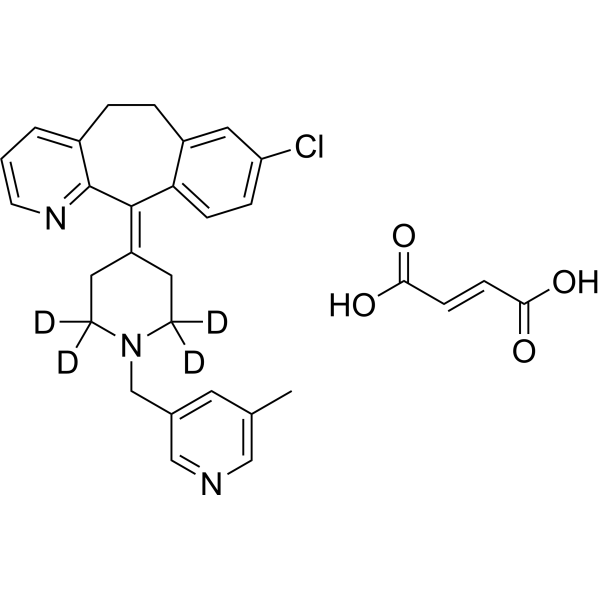 0 ImagesCat. No.: HY-13511ASCAS No.: 1795153-63-7Synonyms: UR-12592 D4 fumarateRupatadine-d4 fumarate is a deuterium labeled Rupatadine fumarate. Rupatadine Fumarate (UR-12592 Fumarate) is a potent dual PAF/H1 antagonist with Ki values of 0.55/0.1 μM (rabbit platelet membranes/guinea pig cerebellum membranes).
-
Embelin (Standard)
 0 ImagesSynonyms: Embelic acid (Standard); Emberine (Standard); NSC 91874 (Standard)Embelin (Standard) is the analytical standard of Embelin. This product is intended for research and analytical applications. Embelin (Embelic acid), a potent, nonpeptidic XIAP inhibitor (IC50=4.1 μM), inhibits cell growth, induces apoptosis, and activates caspase-9 in prostate cancer cells with high levels of XIAP. Embelin blocks NF-kappaB signaling pathway leading to suppression of NF-kappaB-regulated antiapoptotic and metastatic gene products. Embelin also induces autophagic and apoptotic cell death in human oral squamous cell carcinoma cells.
-
Brevilin A (Standard)
 0 ImagesBrevilin A (Standard) is the analytical standard of Brevilin A. This product is intended for research and analytical applications. Brevilin A is an orally active STAT3/JAK inhibitor (STAT3 IC50= 10.6 μM). Brevilin A shows anti-tumor activity, anti-proliferative activity to cancer cells, and can induce apoptosis and autophagy.
-
Cucurbitacin IIa (Standard)
 0 ImagesCat. No.: HY-N1988RCAS No.: 58546-34-2Synonyms: Hemslecin A (Standard)Cucurbitacin IIa (Hemslecin A) (Standard) is the analytical standard for Cucurbitacin IIa (HY-N1988). This product is used for research and analytical applications. Cucurbitacin IIa is an orally active, blood-brain barrier-penetrating EGFR inhibitor with an IC50 of 1.455 nM for human EGFR. Cucurbitacin IIa induces caspase-3 dependent cell apoptosis, downregulates survivin expression, enhances autophagy levels, disrupts the actin cytoskeleton through actin aggregation, blocks the cell cycle at the G2/M phase, and inhibits the EGFR-MAPK signaling pathway to exert anti-inflammatory activity. Cucurbitacin IIa can be used in research on inflammatory-related diseases, depression, and non-small cell lung cancer and other cancers.
-
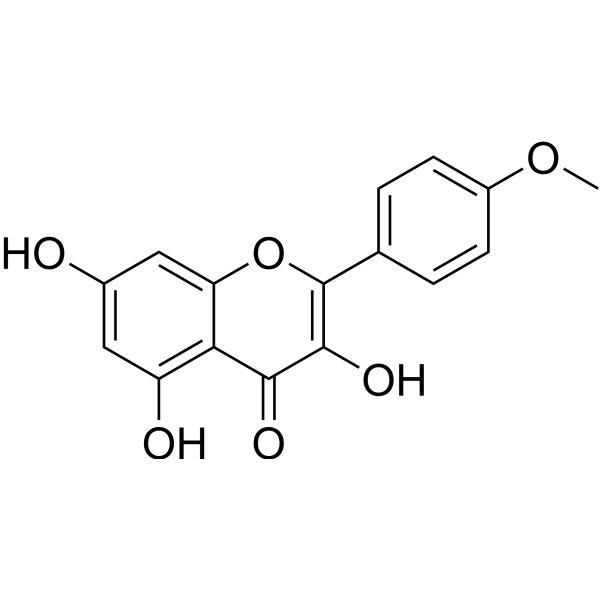
Sophocarpine (Standard)
 0 ImagesSophocarpine (Standard) is the analytical standard of Sophocarpine (HY-N0103). This product is intended for research and analytical applications. Sophocarpine is a PTEN activator and an inhibitor of PI3K/Akt, MEK/ERK, and NF-κB signaling pathways. Sophocarpine upregulates PTEN expression and inhibits PI3K/Akt phosphorylation, arrests tumor cell cycle and induces apoptosis. Sophocarpine inhibits MEK/ERK phosphorylation and VEGF secretion, reducing tumor cell migration. Sophocarpine can also inhibit NF-κB activation and p38 and JNK phosphorylation, reduce the expression of inflammatory factors such as iNOS and COX-2, and activate the Nrf2/HO-1 pathway to reduce oxidative stress. Sophocarpine has anti-tumor, anti-inflammatory, antioxidant and anti-apoptotic effects, and can be used in the research of cancers such as glioblastoma and colorectal cancer, inflammation-related diseases, and Doxorubicin (HY-15142A)-induced cardiac damage.
-
Isradipine-d6
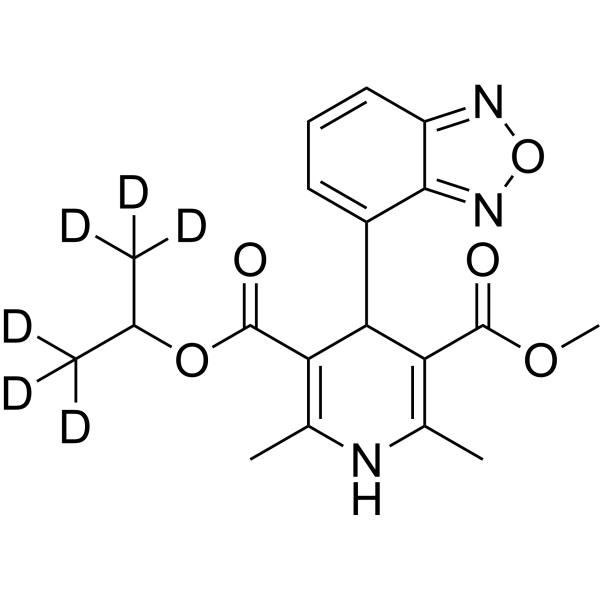 0 ImagesCat. No.: HY-B0233S1CAS No.: 1261398-97-3Synonyms: PN 200-110-d6Isradipine-d6 is the deuterium labeled Isradipine. Isradipine (PN 200-110) is an orally active L-type calcium channel blocker. Isradipine, as a powerful peripheral vasodilator, is a dihydropyridine calcium antagonist with selective actions on the heart as well as the peripheral circulation. Isradipine is a potentially viable neuroprotective agent for Parkinson's disease.
-
Prazosin hydrochloride (Standard)
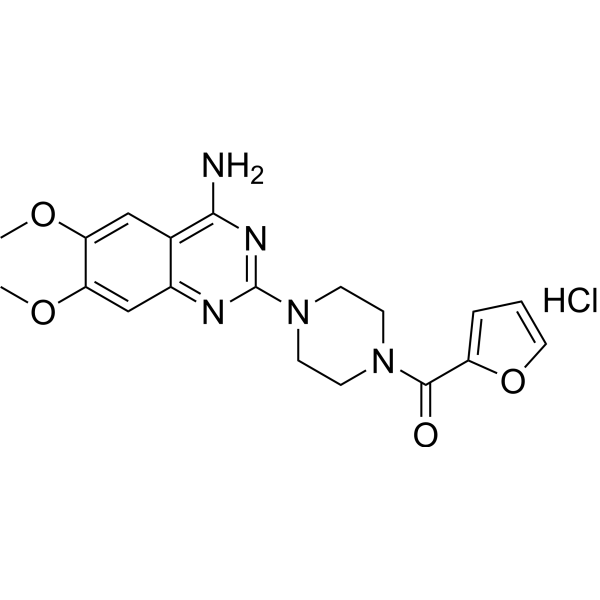 0 ImagesPrazosin (hydrochloride) (Standard) is the analytical standard of Prazosin (hydrochloride). This product is intended for research and analytical applications. Prazosin hydrochloride is a well-tolerated, CNS-active α1-adrenergic receptor antagonist for the research of high blood pressure and alcohol use disorders. Prazosin hydrochloride potently inhibits Norepinephrine (NE)-stimulated 45Ca efflux with an IC50 of 0.15 nM.Prazosin hydrochloride inhibits organic cation transporters OCT-1 and OCT-3 with IC50s of 1.8, and 13 μM, respectively.
-
Soyasapogenol B (Standard)
 0 ImagesSoyasapogenol B (Standard) is the analytical standard of Soyasapogenol B. This product is intended for research and analytical applications. Soyasapogenol B is a component of soy that has oral activity. Soyasapogenol B promotes autophagy and apoptosis. Soyasapogenol B has anti-inflammatory, antioxidant and antitumor activities.
-
Homovanillic Acid-13C6
 0 ImagesCat. No.: HY-W777477CAS No.: 1185016-45-8Synonyms: Vanilacetic acid-13C6Homovanillic Acid-13C6 (Vanilacetic acid-13C6) is the 13C-labeled Homovanillic acid (HY-N0384). Homovanillic acid is a dopamine metabolite found to be associated with aromatic L-amino acid decarboxylase deficiency, celiac disease, growth hormone deficiency, and sepiapterin reductase deficiency.




