



FGFR
Fibroblast growth factor receptor
FGFR (Fibroblast growth factor receptors) are the receptors that bind to members of the fibroblast growth factor family of proteins. Some of these receptors are involved in pathological conditions. A point mutation in FGFR3 can lead to achondroplasia. Five distinct membrane FGFR have been identified in vertebrates and all of them belong to the tyrosine kinase superfamily (FGFR1, FGFR2, FGFR3, FGFR4, FGFR6). The fibroblast growth factor family constitutes one of the most important groups of paracrine factors that act during development. They are responsible for determining certain cells to become mesoderm, for the production of blood vessels, for limb outgrowth, and for the growth and differentiation of numerous cell types.
All Product Categories
-
FGFR Inhibitors
(322)
View all products
-
FGFR Agonists
(4)
View all products
-
FGFR Antagonist
(1)
View all products
-
FGFR Activators
(6)
View all products
-
FGFR Modulators
(3)
View all products
-
FGFR Degraders
(11)
View all products
-
FGFR Control
(1)
View all products
-
FGFR Ligands
(2)
View all products
-
FGFR Proteins
(97)
View all products
-
FGFR-1 Proteins
(20)
View all products
-
FGFR-2 Proteins
(31)
View all products
-
FGFR-3 Proteins
(26)
View all products
-
FGFR-4 Proteins
(18)
View all products
-
FGFR Related Products (391)
Related Products (391)

-
Recombinant Proteins (97)
-
Antibodies (11)
-
FGFR2 V564I Recombinant Human Active Protein Kinase
 0 ImagesCat. No.: HY-E70826FGFR2 is a receptor tyrosine kinase that is involved in many human cancers such as intrahepatic cholangiocarcinomas and hepatocellular carcinomas. FGFR2 V564I is a mutant of FGFR3. FGFR2 V564I Recombinant Human Active Protein Kinase is a recombinant FGFR2 V564I protein that can be used to study FGFR2 V564I-related functions.
-
ZINC13407541
 0 ImagesCat. No.: HY-183371CAS No.: 864868-22-4ZINC13407541 is a fibroblast growth factor 23 (FGF23) antagonist with an IC50 of 0.45 μM. ZINC13407541 preferentially binds to the FGF23:FGFR interface to disrupt their protein-protein interactions. ZINC13407541 can be used for the research of hypophosphatemia.
-
Fgfr4 Rat Pre-designed siRNA Set A
 0 ImagesCat. No.: HY-RS04923
Fgfr4 Rat Pre-designed siRNA Set A contains three designed siRNAs for Fgfr4 gene (Rat), as well as a negative control, a positive control, and a FAM-labeled negative control.

-
FGFR4-IN-16
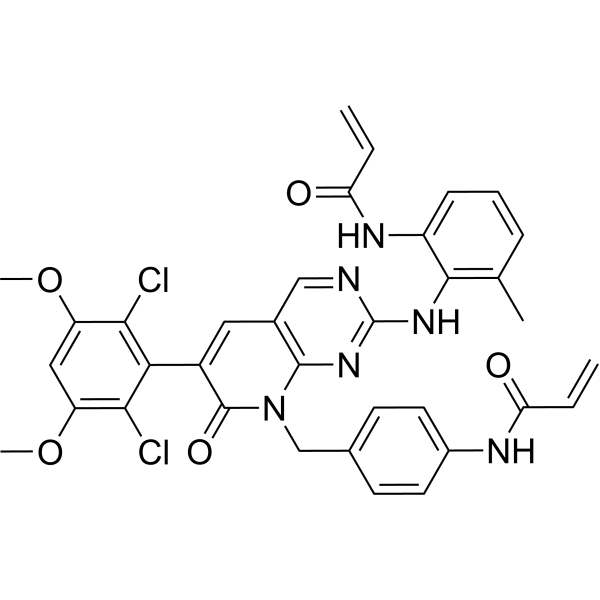 0 ImagesCat. No.: HY-156704CAS No.: 1970120-44-5
-
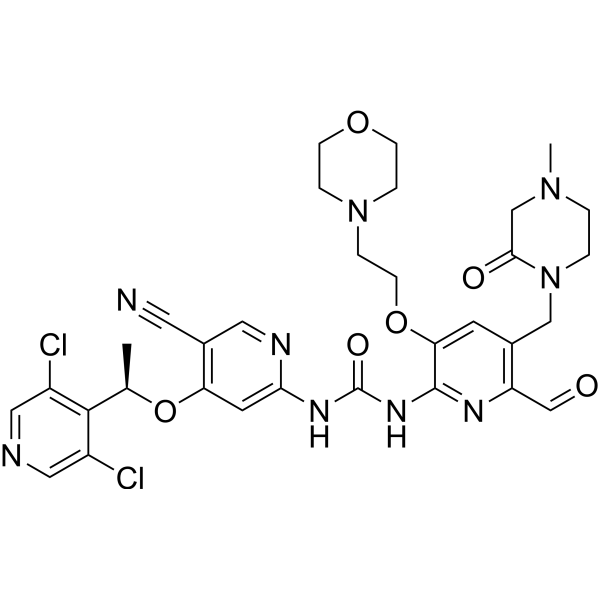
FGFR2 C491S Recombinant Human Active Protein Kinase
 0 ImagesCat. No.: HY-E70814FGFR2 is a receptor tyrosine kinase that is involved in many human cancers such as intrahepatic cholangiocarcinomas and hepatocellular carcinomas. FGFR2 C491S is a mutant of FGFR3. FGFR2 C491S Recombinant Human Active Protein Kinase is a recombinant FGFR2 C491S protein that can be used to study FGFR2 C491S-related functions.
-
FGFR2 K641R Recombinant Human Active Protein Kinase
 0 ImagesCat. No.: HY-E70817FGFR2 is a receptor tyrosine kinase that is involved in many human cancers such as intrahepatic cholangiocarcinomas and hepatocellular carcinomas. FGFR2 K641R is a mutant of FGFR3. FGFR2 K641R Recombinant Human Active Protein Kinase is a recombinant FGFR2 K641R protein that can be used to study FGFR2 K641R-related functions.
-
Antitumor agent-177
 0 ImagesCat. No.: HY-161841Antitumor agent-177 (compound 57), a non-steroidal NSC12 derivative, shows potent FGF2 binding affinity with a Kd of 24 μM by SPR. Antitumor agent-177 significantly inhibits the formation of HSPG/FGF2/FGFR1 ternary complexes. Antitumor agent-177 inhibits FGFR activation and exerts a potent anti-tumor activity on multiple myeloma (MM) cell lines in vitro and in vivo.
-
FGFR-IN-5
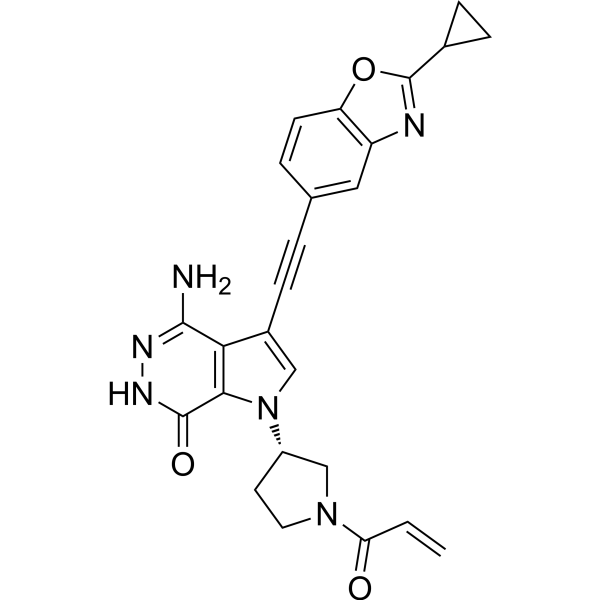 0 ImagesCat. No.: HY-147620CAS No.: 2762750-70-7FGFR-IN-5 is a potent inhibitor of FGFR. Fibroblast growth factor receptor (FGFR) is a tyrosine kinase receptor that binds to fibroblast growth factor ligands. FGFR-IN-5 has the potential for the research of cancer diseases (extracted from patent WO2022042612A1, compound 3). FGFR-IN-5 is a click chemistry reagent, it contains an Alkyne group and can undergo copper-catalyzed azide-alkyne cycloaddition (CuAAc) with molecules containing Azide groups.
-
PAIR2
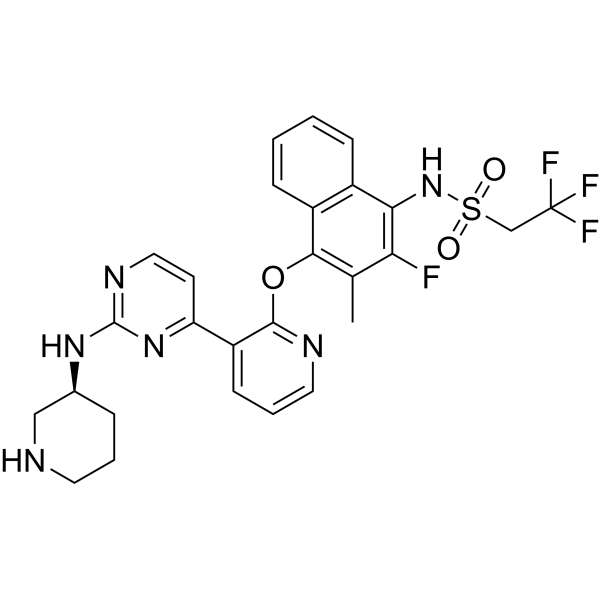 0 ImagesCat. No.: HY-145425CAS No.: 2771006-54-1PAIR2 is a highly selective inhibitor targeting the kinase domain of human IRE1α, with a Ki value of 8.8 nM against human IRE1α. PAIR2 fully occupies the ATP-binding site of the IRE1α kinase domain, partially antagonizes the ribonuclease activity of IRE1α, specifically inhibits regulated IRE1α-dependent decay (RIDD) and its mediated substrate cleavage, while preserving the splicing function of Xbp1 mRNA. PAIR2 also promotes the differentiation of B cells into plasma cells, blocks IRE1α-induced cell apoptosis, and restores the expression of Fgfr2 mRNA in AT2 cells. PAIR2 effectively reaches a steady-state concentration in the lung tissues of Mus musculus, and serves as an important tool for investigating the function of the IRE1α signaling pathway in diseases such as pulmonary fibrosis.
-
FGFR-IN-11
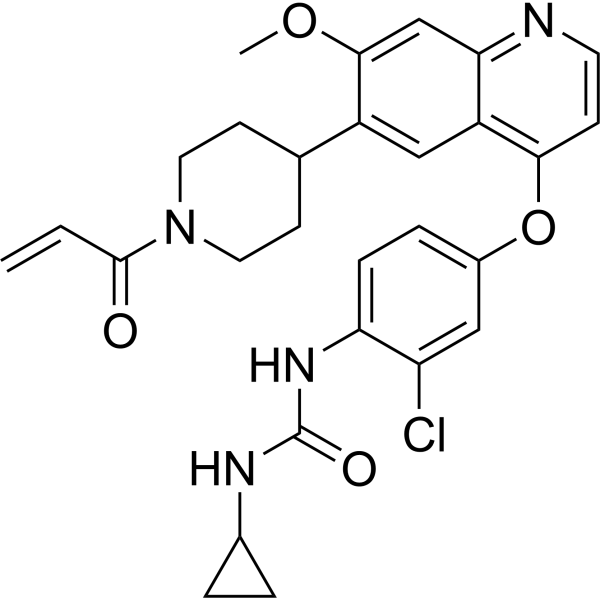 0 ImagesCat. No.: HY-155028CAS No.: 2658488-68-5FGFR-IN-11 (compound I-5) is an orally active and covalent FGFR inhibitor with IC50 values of 9.9 nM (FGFR1), 3.1 nM (FGFR2), 16 nM (FGFR3), and 1.8 nM (FGFR4), respectively. FGFR-IN-11 inhibits multiple cancer cell proliferation with nanomolar activity. FGFR-IN-11 inhibits tumor growth significantly in xenograft mice models.
-
3-Methylthienyl-carbonyl-JNJ-7706621
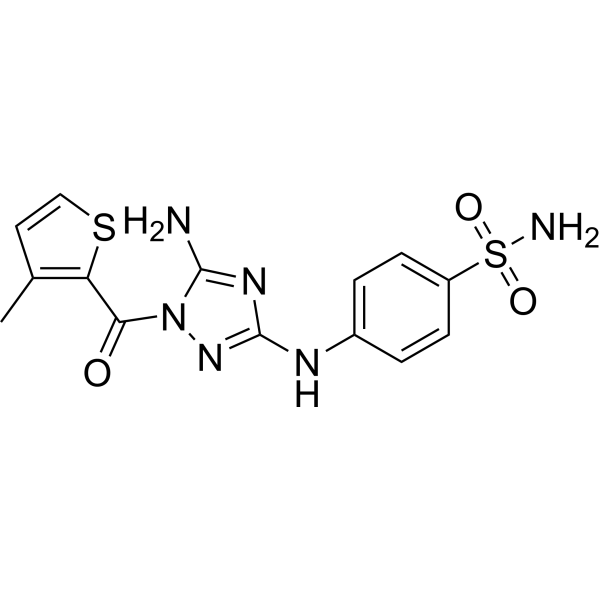 0 ImagesCat. No.: HY-141685CAS No.: 443798-09-23-Methylthienyl-carbonyl-JNJ-7706621 is a potent and selective inhibitor of cyclin-dependent kinase (CDK), with IC50s of 6.4 nM and 2 nM for CDK1/cyclin B and CDK2/cyclin A, respectively. 3-Methylthienyl-carbonyl-JNJ-7706621 also shows potent inhibition of GSK-3 (IC50=0.041 μM) and modest potency against CDK4, VEGF-R2, and FGF-R2 (IC50=0.11, 0.13, 0.22 μM, respectively). 3-Methylthienyl-carbonyl-JNJ-7706621 can be used for the research of cancer.
-
Tec-IN-14
 0 ImagesCat. No.: HY-111289CAS No.: 852838-07-4
-
FGFR4-IN-12
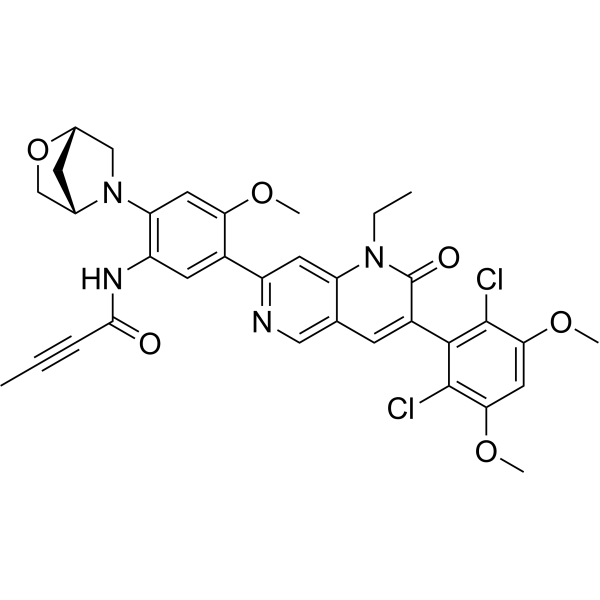 0 ImagesCat. No.: HY-147793CAS No.: 2423992-63-4FGFR4-IN-12 (Compound A34) is a potent inhibitor of FGFR4. FGFR4-IN-12 exhibits improved FGFR4 inhibitory capability and selectivity and excellent anti-proliferative activities against FGFR4-dependent HCC cell lines. FGFR4-IN-12 has the potential for the research of cancer diseases. FGFR4-IN-12 is a click chemistry reagent, it contains an Alkyne group and can undergo copper-catalyzed azide-alkyne cycloaddition (CuAAc) with molecules containing Azide groups.
-
Antitumor agent-176
 0 ImagesCat. No.: HY-161840Antitumor agent-176 (Compound 22), an antitumor agent, can effectively bind to FGF2 and inhibit the activation of fibroblast growth factor receptor (FGFR) in multiple myeloma (MM) cells, exhibiting significant antitumor activity both in vivo and in vitro against MM.
-
FGFR-IN-13
 0 ImagesCat. No.: HY-163527CAS No.: 2962941-25-7FGFR-IN-13 (compound III-30) is an irreversible covalent fibroblast growth factor receptor (FGFR) inhibitor. FGFR-IN-13 regulates endogenous FGFR1(IC50=0.20±0.02 nM) and FGFR4(IC50=0.40±0.03 nM) mediated signaling pathways by inhibiting the expression of key proteins. FGFR-IN-13 inhibits total-PARP and Bcl-2 protein expressions, and promote Cleaved-PARP and Bax protein expressions in a dose-dependent manner. FGFR-IN-13 has significant antitumor activity and oral activity.

-
PD173074 (GMP)
 0 ImagesCat. No.: HY-10321GCAS No.: 219580-11-7PD173074 GMP is PD173074 (HY-10321) produced by using GMP guidelines. GMP small molecules works appropriately as an auxiliary reagent for cell therapy manufacture. PD173074 is an orally active FGFR inhibitor that targets the transphosphorylation of FGFR1 and FGFR2 and blocks the FGF signaling pathway. By reducing the phosphorylation level of SMAD2 and altering the expression of Nodal/Activin target genes, PD173074 eliminates endothelial differentiation potential, thereby inhibiting the formation of capillary-like structures. PD173074 blocks the proliferation and colony formation of tumor cells and increases intratumoral cell apoptosis. PD173074 successfully reverses FGF-2-induced chemoresistance to enhance the effect of cisplatin (HY-17394) in small cell lung cancer models. PD173074 can be applied to research related to critical limb ischemia and small cell lung cancer.
-
FGFR4 Human Pre-designed siRNA Set A
 0 ImagesCat. No.: HY-RS04921
FGFR4 Human Pre-designed siRNA Set A contains three designed siRNAs for FGFR4 gene (Human), as well as a negative control, a positive control, and a FAM-labeled negative control.




