



FGFR Activator
-
Efruxifermin
 0 ImagesSynonyms: AKR-001; AMG-876
Efruxifermin is an Fc-FGF21 fusion protein (human IgG1 Fc domain linked to a modified human FGF21). Efruxifermin has prolonged half-life and enhanced receptor affinity compared with native human FGF21. Efruxifermin can be used for the research of non-alcoholic steatohepatitis.
-
Secretoneurin, rat
 0 Images
Secretoneurin, rat is a 33-amino acid neuropeptide produced by proteolytic processing of chromogranin II, widely distributed in the central and peripheral nervous systems, and its release is calcium-dependent. Secretoneurin, rat modulates the activities of caspase-3, caspase-1, the NLRP3 inflammasome, IGF-1R, VEGFR1, VEGFR2, FGFR3, AMPK, ERK1/2/MAPK, and Jak2/Stat3 pathways. Secretoneurin, rat regulates neuronal apoptosis, synaptic structure, inflammation, neurogenesis, angiogenesis, oxidative stress, cardiomyocyte hypertrophy, dopamine release, and cell migration and proliferation. Secretoneurin, rat is used in studies of global cerebral ischemia, myocardial infarction, stroke, and cardiac hypertrophy.
-
FGL peptide
 0 Images
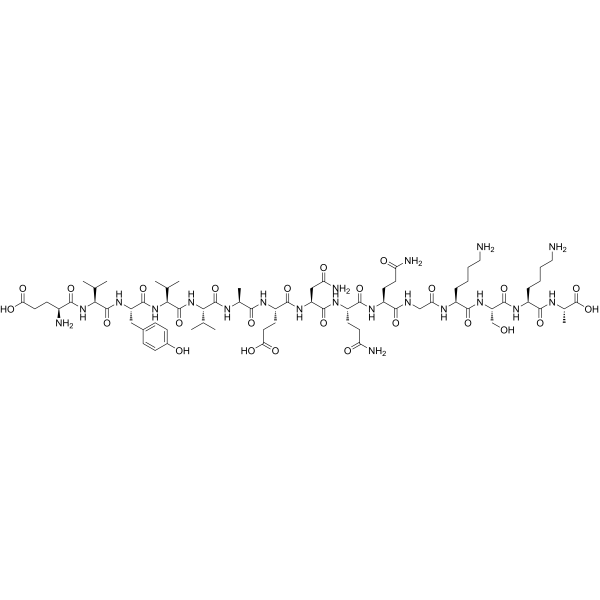
FGL peptide is a fibroblast growth factor receptor (FGFR) modulator and blood-brain barrier-penetrant. FGL peptide activates NCAM-FGFR and FGFR1 signaling pathways. FGL peptide alters expression of apoptosis, signal transduction and metabolism regulator genes in traumatic brain injury contexts. FGL peptide can be used for the research of traumatic brain injury.
-
FGF7p
 0 Images
FGF7p is a small molecule peptide and a potential bladder protector. FGF7p can activate downstream signaling pathways of FGFR2 in the urinary tract epithelium (pFRS2α, pAKT and pERK). FGF7p alleviates cyclophosphamide induced apoptosis and tissue damage in urinary tract epithelial cells by activating AKT and its downstream anti apoptotic targets (pBAD, pS6/mTORC1). FGF7p is commonly used in the study of inflammatory conditions.
-
IUB288
 0 ImagesArt. -Nr.: HY-P11881Reinheit: 98.88%
IUB288 is a stable and long-acting glucagon-modified peptide, as well as a highly selective Glucagon Receptor agonist. IUB288 stimulates the production of cAMP, increases the expression levels of FGF21 in plasma and liver, regulates bile acid metabolism, and inhibits the expression of hepatic HMGCR. IUB288 improves hypercholesterolemia, enhances insulin sensitivity, increases core body temperature, boosts energy expenditure, suppresses food intake, and can also induce hyperglycemia and glucose intolerance. IUB288 is applicable to the research of diet-induced obesity, type 2 diabetes, and obesity-related glucose intolerance.
-
PAIR2
 0 Images
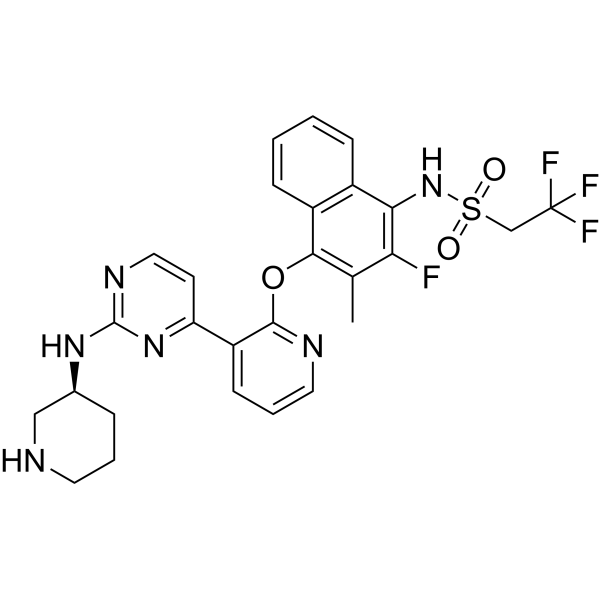
PAIR2 is a highly selective inhibitor targeting the kinase domain of human IRE1α, with a Ki value of 8.8 nM against human IRE1α. PAIR2 fully occupies the ATP-binding site of the IRE1α kinase domain, partially antagonizes the ribonuclease activity of IRE1α, specifically inhibits regulated IRE1α-dependent decay (RIDD) and its mediated substrate cleavage, while preserving the splicing function of Xbp1 mRNA. PAIR2 also promotes the differentiation of B cells into plasma cells, blocks IRE1α-induced cell apoptosis, and restores the expression of Fgfr2 mRNA in AT2 cells. PAIR2 effectively reaches a steady-state concentration in the lung tissues of Mus musculus, and serves as an important tool for investigating the function of the IRE1α signaling pathway in diseases such as pulmonary fibrosis.



