



499993-62-3
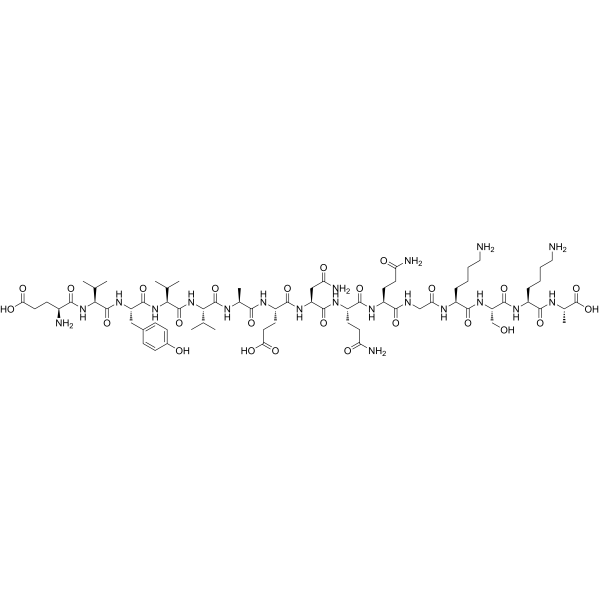
Chemical Structure
FGL peptide
- CAS No.: 499993-62-3
- Formula:C71H116N20O25
- Molecular Weight:1649.80
InChIKey: HKTHLRGRESMZQO-RBXNGMIHSA-N
SMILES: O=C(N[C@@H](C(C)C)C(N[C@@H](CC1=CC=C(C=C1)O)C(N[C@@H](C(C)C)C(N[C@@H](C(C)C)C(N[C@@H](C)C(N[C@@H](CCC(O)=O)C(N[C@@H](CC(N)=O)C(N[C@@H](CCC(N)=O)C(N[C@@H](CCC(N)=O)C(NCC(N[C@@H](CCCCN)C(N[C@@H](CO)C(N[C@@H](CCCCN)C(N[C@@H](C)C(O)=O)=O)=O)=O)=O)=O)=O)=O)=O)=O)=O)=O)=O)=O)[C@H](CCC(O)=O)N
Biological Activity: FGL peptide is a fibroblast growth factor receptor (FGFR) modulator and blood-brain barrier-penetrant. FGL peptide activates NCAM-FGFR and FGFR1 signaling pathways. FGL peptide alters expression of apoptosis, signal transduction and metabolism regulator genes in traumatic brain injury contexts. FGL peptide can be used for the research of traumatic brain injury[1][2].
| Cat. No. | Product Name | Purity | Description | Pricing | |||||||||||||||||||
|---|---|---|---|---|---|---|---|---|---|---|---|---|---|---|---|---|---|---|---|---|---|---|---|
|
|
FGL peptide | 99.69% | FGL peptide is a fibroblast growth factor receptor (FGFR) modulator and blood-brain barrier-penetrant. FGL peptide activates NCAM-FGFR and FGFR1 signaling pathways. FGL peptide alters expression of apoptosis, signal transduction and metabolism regulator genes in traumatic brain injury contexts. FGL peptide can be used for the research of traumatic brain injury. | ||||||||||||||||||||
|
loading...
/
|
|||||||||||||||||||||||
-
Similarity Score 0.81
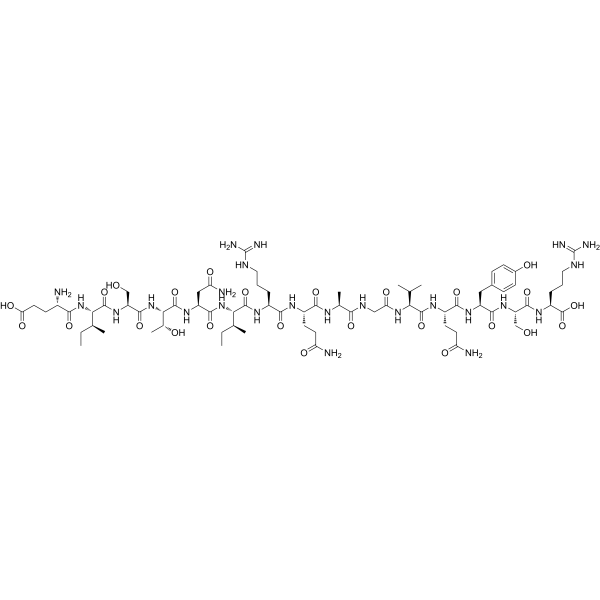 HY-P5453CFP10 (71–85)
-
Similarity Score 0.79
 HY-P11058OVA(250-264)
-
Similarity Score 0.79
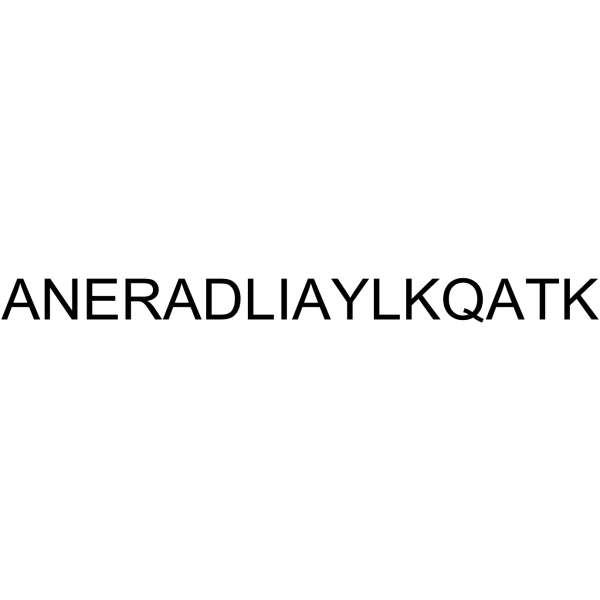 HY-P1735Moth Cytochrome C (MCC) (88-103)
-
Similarity Score 0.78
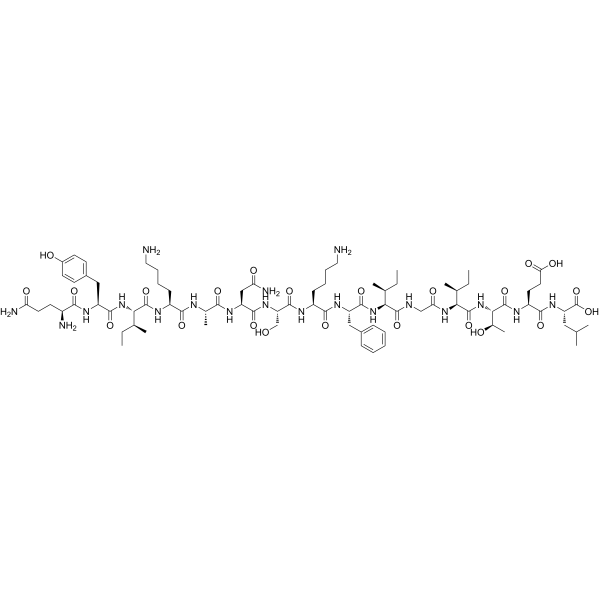 HY-P5425Tetanus Toxin (830–844)
-
Similarity Score 0.78
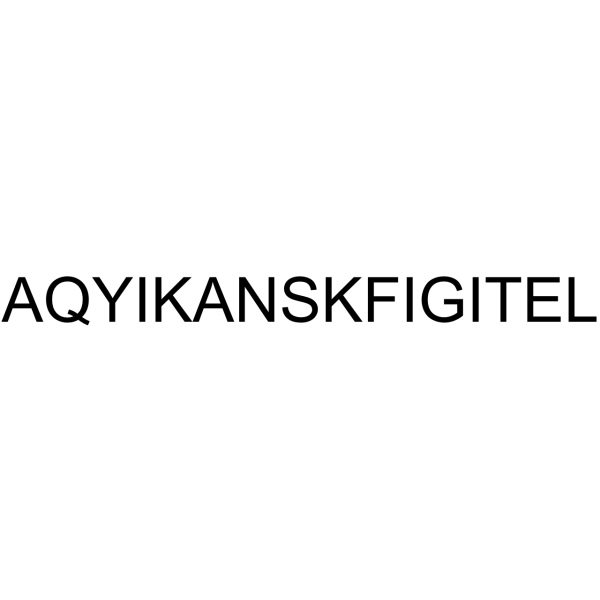 HY-P2514TET 830 modified/T-helper epitope from tetanus toxoid
-
Similarity Score 0.77
 HY-P2515Transcriptional Intermediary Factor 2 (TIF2) (740-753)
-
Similarity Score 0.77
 HY-P4024KKEDVV-Abu-CS-Abu-SYKK-NH2
-
Similarity Score 0.76
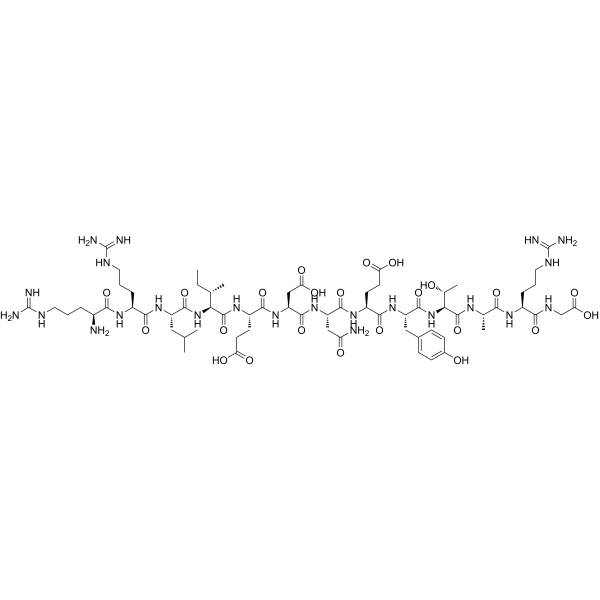 HY-P3744pp60v-src Autophosphorylation site
-
Similarity Score 0.76
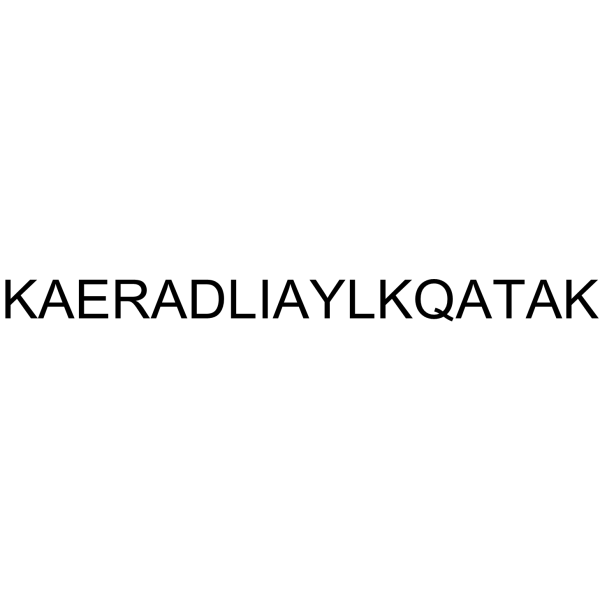 HY-P1089Cytochrome c-pigeon (88-104)
-

Explore the MedChemAI to find more analogs


References
- [1]. Pedersen MV, et al. The synthetic NCAM-derived peptide, FGL, modulates the transcriptional response to traumatic brain injury. Neurosci Lett. 2008;437(2):148-153. [Content Brief]
- [2]. Secher T, et al. A neural cell adhesion molecule-derived fibroblast growth factor receptor agonist, the FGL-peptide, promotes early postnatal sensorimotor development and enhances social memory retention. Neuroscience. 2006;141(3):1289-1299. [Content Brief]



