



Glycosidase
Glycosidase
Glycosidase are a class of enzymes which catalyze the hydrolysis of glycosidic bonds. In living organisms, Glycosidase are involved in carbohydrate metabolism. They can degrade polysaccharides such as starch and glycogen into monosaccharides, providing energy for cells. Glycosidase also participate in the synthesis and modification of biological macromolecules such as glycoproteins and glycolipids, playing a crucial role in cell recognition and signal transduction. Additionally, in plants and microorganisms, Glycosidase are involved in the metabolism of cell wall polysaccharide components, affecting cell growth, differentiation, and morphogenesis. Gene mutations of Glycosidase can trigger genetic diseases, leading to abnormal metabolism in the body and damage to organ functions. Changes in their activity are associated with various diseases such as diabetes, infectious diseases, and tumors, and can influence the occurrence and development of diseases[1][2].
References:
- [1]. Wang X, et al. Metabolites extracted from microorganisms as potential inhibitors of glycosidases (α-glucosidase and α-amylase): A review. Front Microbiol. 2022 Nov 17;13:1050869.
- [2]. Ohtsubo K, et al. Glycosylation in cellular mechanisms of health and disease. Cell. 2006 Sep 8;126(5):855-67. [Content Brief]
All Product Categories
-
Glycosidase Inhibitors
(447)
View all products
-
Glycosidase Antagonist
(1)
View all products
-
Glycosidase Activators
(20)
View all products
-
Glycosidase Modulators
(8)
View all products
-
Glycosidase Chemical
(1)
View all products
-
Glycosidase Inducers
(2)
View all products
-
Glycosidase Degrader
(1)
View all products
-
Glycosidase Controls
(5)
View all products
-
Glycosidase Substrates
(23)
View all products
-
Glycosidase Ligands
(3)
View all products
-
Glycosidase Related Products (687)
Related Products (687)

-
Antibodies (3)
-
Glucosylsphingosine
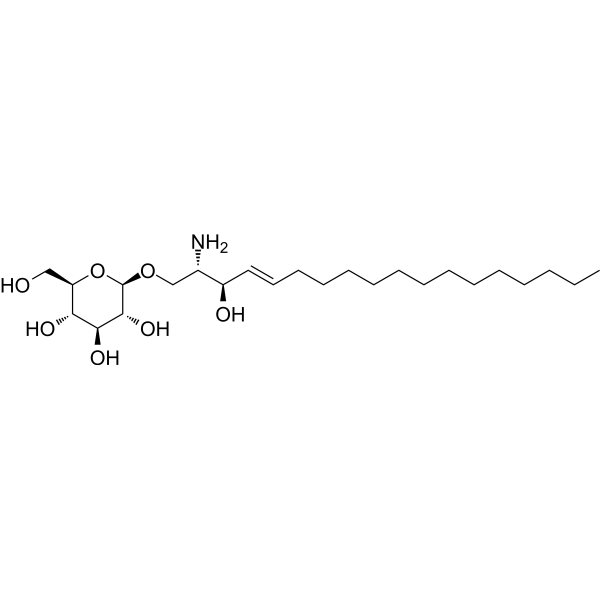 0 ImagesSynonyms: Glucopsychosine; Lyso-Gb1; Lyso-GL1Glucosylsphingosine (lyso-Gb1) is a deacylated form of glucosylceramide with neurotoxicity and is also a noncompetitively inhibitor of glucocerebrosidase with a Ki value of 30 μM. Glucosylsphingosine is promising for research of Krabbe and Gaucher disease.
-
DCG04
 0 ImagesDCG04 is a multivalent ligand for the mannose-6-phosphate receptor. DCG-04 is an activity-based probe for cysteine cathepsins, and can be used for labelling numerous cysteine cathepsins in cell and tissue lysates.
-
Glucoamylase, Aspergillus niger
 0 ImagesAmyloglucosidase, Aspergillus niger (Amyloglucosidase, Aspergillus niger) is a starch-hydrolyzing enzyme with high catalytic efficiency towards soluble starch and raw starch. Amyloglucosidase, Aspergillus niger hydrolyzes α-1,4 and α-1,6 glycosidic linkages in starch and similar substrates, and primarily releases β-glucose molecules from the non-reducing ends. Amyloglucosidase, Aspergillus niger participates in glycogen metabolism and is associated with type II glycogen storage disease. Amyloglucosidase, Aspergillus niger converts starch into glucose, and is applicable to the industrial production of high-fructose syrup, ethanol and other fermented products.
-
CHI3L1-IN-1
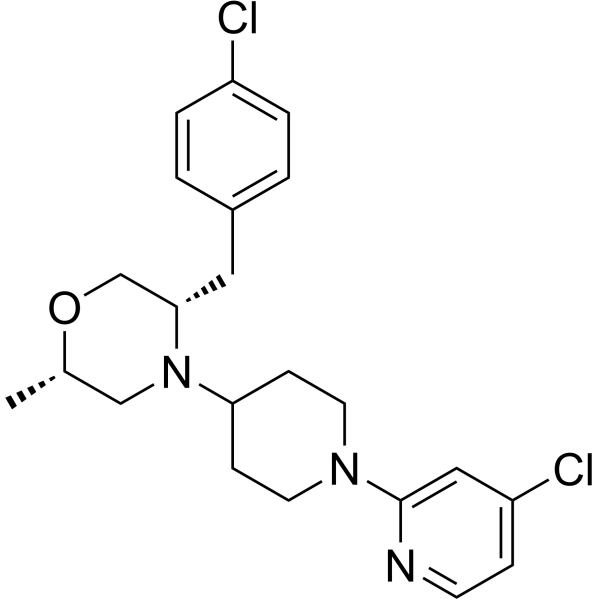 0 ImagesCHI3L1-IN-1 (Compound 30) is an inhibitor for Chitinase-3-like protein 1 (CHI3L1) (YKL-40) with IC50 of 50 nM. CHI3L1-IN-1 inhibits hERG channel with an IC50 of 2.3 μM.
-
PNGase F-Fast
 0 ImagesCat. No.: HY-P2929ACAS No.: 83534-39-8PNGase F-Fast is a glycosidase that catalyzes the cleavage of internal glycosidic bonds in oligosaccharides. PNGase F-Fast removes almost all N-linked oligosaccharides from glycoproteins. PNGase F-Fast can release N-glycans from glycoproteins in the sugar analysis workflow. The cleavage site is: the glycosidic bond between the innermost N-acetylglucosamine and asparagine. PNGase F-Fast is an improved reagent that allows for rapid deglycosylation of antibodies and antibody fusions within minutes.
-
Dextranase, Trichoderma reesei
 0 ImagesDextranase, Trichoderma reesei belongs to glycoside hydrolase family 49. It catalyzes the hydrolysis of α-1,6-glycosidic linkages in dextran via a single-displacement reaction, ultimately releasing shorter isomaltooligosaccharides. Dextranase, Trichoderma reesei reduces the molecular size of dextran, inhibits the formation of insoluble dextran and dental plaque, and decreases the viscosity of dextran-contaminated sugar juice. Dextranase, Trichoderma reesei can be used in relevant research in fields such as chemical production, including beer manufacturing, feed additives, and toothpaste formulations.
-
Xylotriose
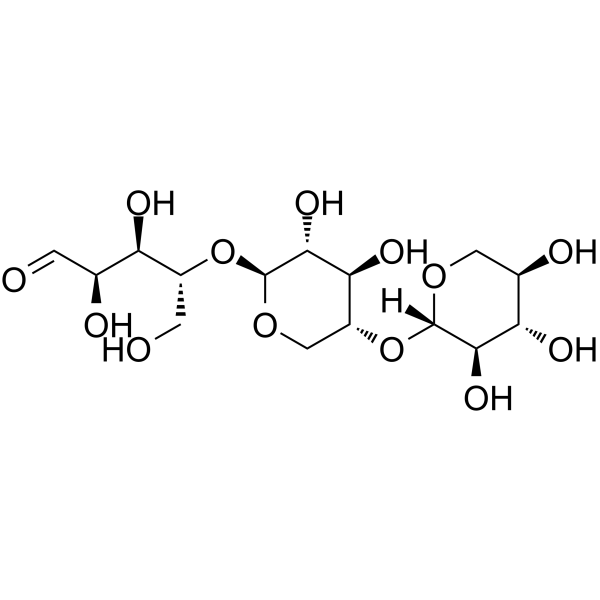 0 ImagesXylotriose is a natural xylooligosaccharide, acts as a bifidogenic factor.
-
Voglibose
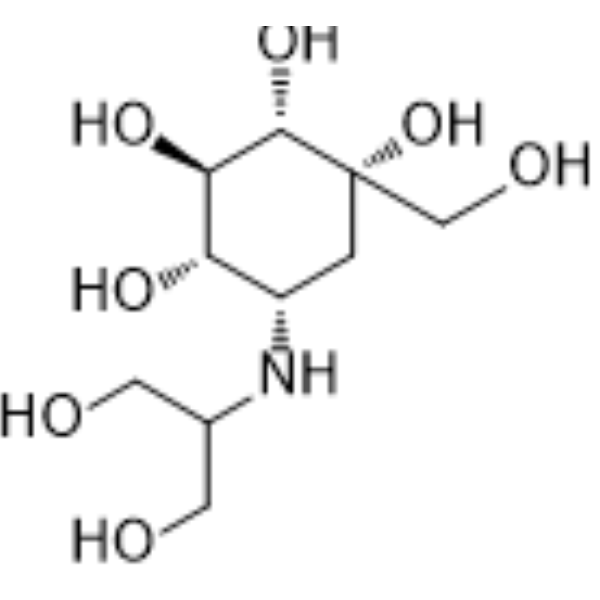 0 ImagesVoglibose is an orally active alpha-glucosidase inhibitor that prevents the development of colorectal precancerous lesions induced by obesity and diabetes. Voglibose reduces oxidative stress in an inflammatory environment and inhibits the insulin-like growth factor/insulin-like growth factor-1 receptor (IGF/IGF-1R) functional axis.
-
β-Glucosidase, almond
 0 Imagesβ-Glucosidase, almond is the rate-limiting enzyme in cellulose degradation. β-Glucosidase is a major group among glycoside hydrolases. β-Glucosidase is involved in the degradation of cellulose in soils and has potential for monitoring soil quality.
-
4-Nitrophenyl β-D-Cellobioside
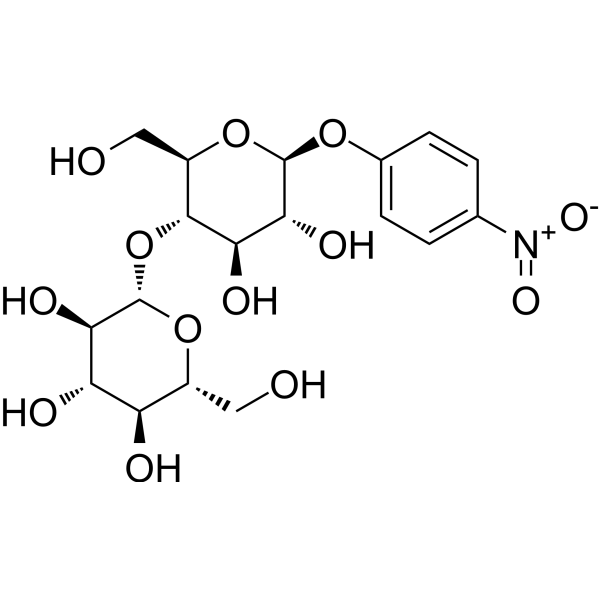 0 Images4-Nitrophenyl β-D-Cellobioside (p-Nitrophenyl β-D-cellobioside) is a cellotriose analog. 4-Nitrophenyl β-D-Cellobioside is hydrolyzed by β-glucosidases such as TxGH116 and ThCel7B. 4-Nitrophenyl β-D-Cellobioside can also be hydrolyzed by exoglucanases and endoglucanases to produce p-nitrophenol (PNP). 4-Nitrophenyl β-D-Cellobioside can be used to detect cellulase activity.
-
GIP, rat TFA
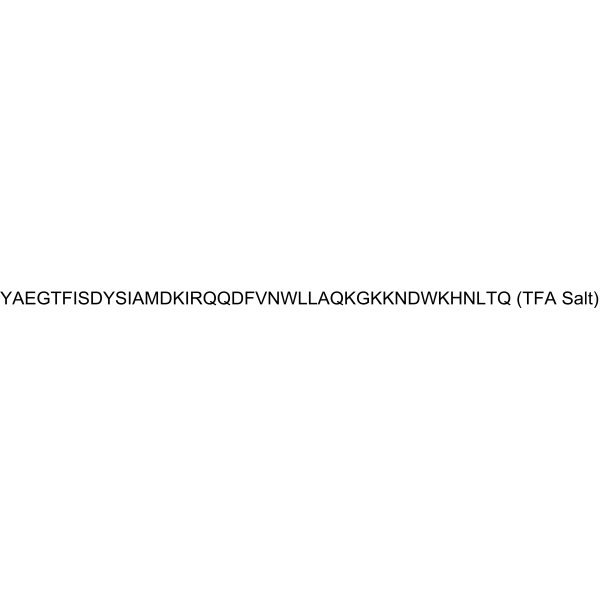 0 ImagesCat. No.: HY-P5390APurity: 99.81%GIP, rat TFA is a bioactive peptide derived from rats. GIP, rat TFA inhibits GIP-mediated postprandial insulin release as well as GIP-promoted glucose uptake in the upper small intestine. GIP, rat TFA can be used in research related to insulin resistance, glucose intolerance, and type 2 diabetes.
-
α-Galactosidase, Aspergillus niger
 0 Imagesα-Galactosidase, Aspergillus niger (EC 3.2.1.22), that is, α-galactosidase, is a glycoside hydrolase that widely exists in animals, plants and microorganisms, and is often used in biochemical research. α-Galactosidase catalyzes the hydrolysis of α-1,6-linked terminal galactose residues, including galactooligosaccharides, galactomannans, and galactolipids. Catalyzes many catabolic processes including cleavage of glycoproteins, glycolipids and polysaccharides.
-
1,4-b-D-Xylopentaose
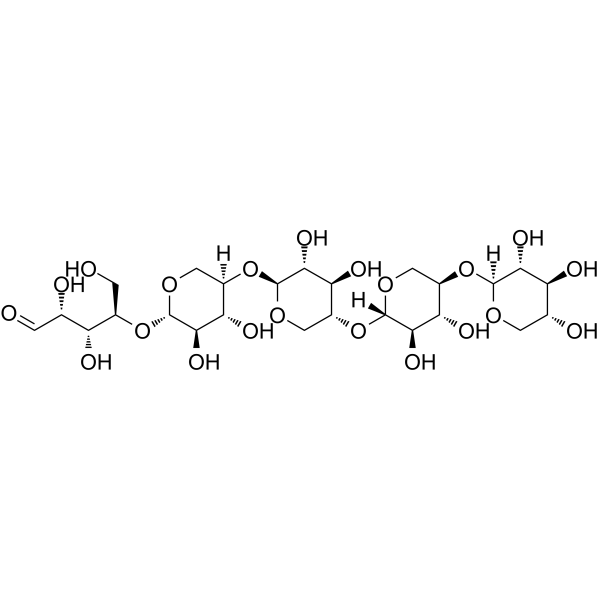 0 Images1,4-b-D-Xylopentaose is a linear pentasaccharide composed of 5 β-D-xylose units linked via 1,4-glycosidic bonds, and serves as a specific substrate for barley α-L-arabinofuranosidase.
-
2-(2-Phenylethyl)chromone
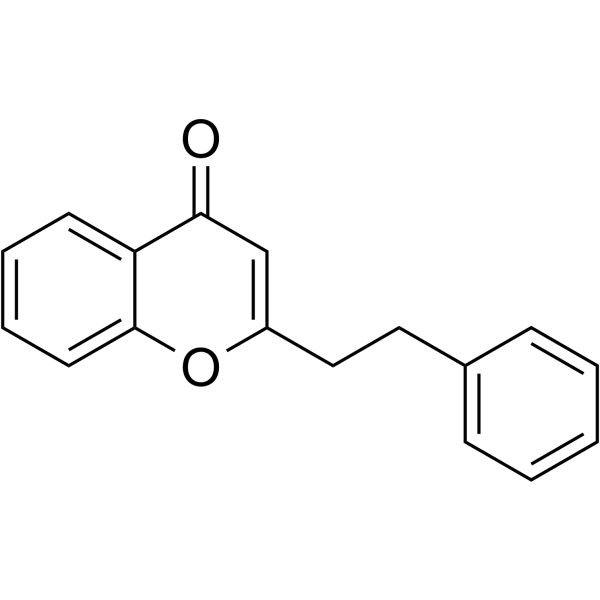 0 ImagesSynonyms: Flidersiachromone2-(2-Phenylethyl) chromone (Flidersiachromone) is a chromone derivative and antioxidant. 2-(2-Phenylethyl) chromone scavenges ABTS·+ free radicals, and its derivatives exhibit diverse activities including anti-inflammatory, neuroprotective, anti-tumor, and α-glucosidase inhibitory effects. 2-(2-Phenylethyl) chromone is applicable to experimental research in fields such as inflammation-related diseases, tumors, and neurodegenerative diseases.
-
Ethylidene-4-nitrophenyl-a-D-Maltoheptaoside
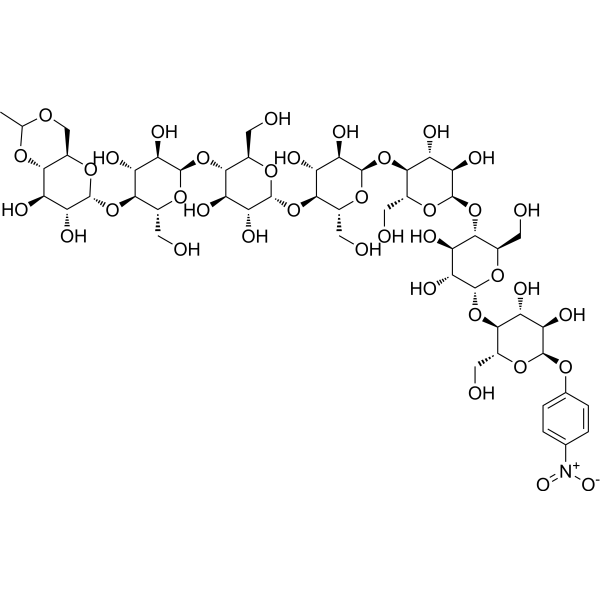 0 ImagesSynonyms: pNP-G7Ethylidene-4-nitrophenyl-α-D-Maltoheptaoside (EPS; pNP-G7) serves as a substrate for α-amylase. In the presence of an auxiliary enzyme such as α-glucosidase (α-glucosidase), Ethylidene-4-nitrophenyl-α-D-Maltoheptaoside is degraded by amylase (Amylase) to release a chromophore, enabling the measurement of amylase activity. Ethylidene-4-nitrophenyl-α-D-Maltoheptaoside is applicable for the diagnosis of pancreatitis[2].
-
OATD-01
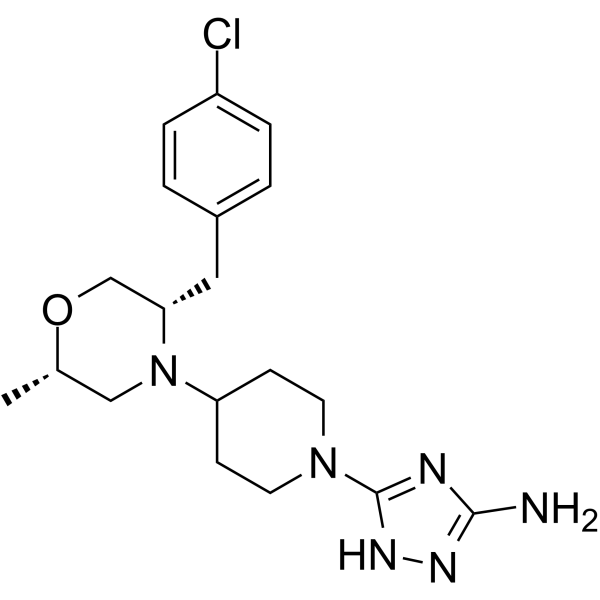 0 ImagesOATD-01 is a highly potent, first-in-class, orally active and selective chitinase inhibitor with low nanomolar activity toward CHIT1 (hCHIT1,IC50=23 nM). OATD-01 shows excellect PK profile in multiple species and is selectivity against a panel of other off-targets. OATD-01 exhibits significant antifibrotic efficacy in vivo and can be used for pulmonary fibrosis (IPF) research.
-
Quinoline-2-carboxylic acid
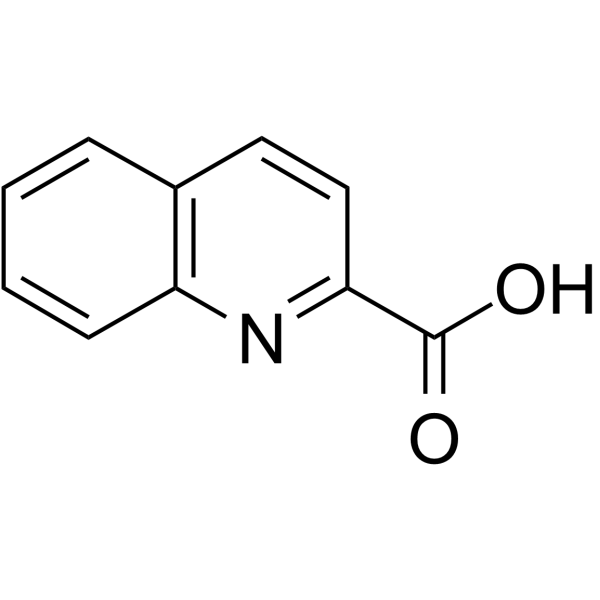 0 ImagesQuinoline-2-carboxylic acid exhibits antidiabetic activity. Quinoline-2-carboxylic acid can be used as drug intermediate for synthesis of various active compounds.
-
Hexylresorcinol
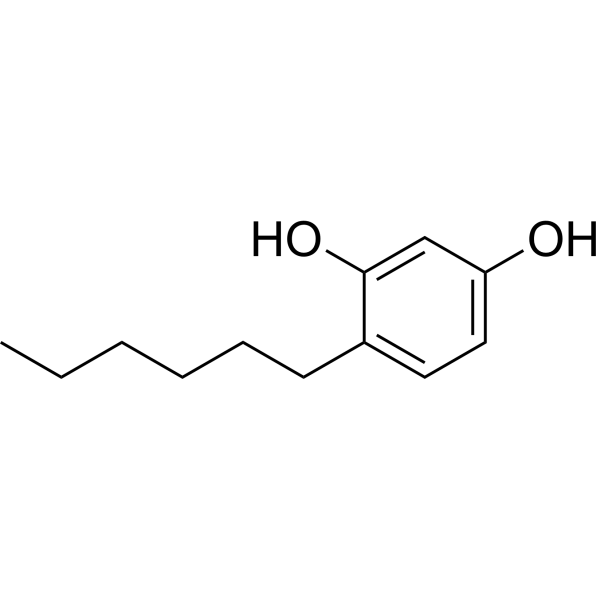 0 ImagesHexylresorcinol (4-Hexylresorcinol) is a natural compound found in plants with antimicrobial, anthelmintic, antiseptic and antitumor activities. Hexylresorcinol can induce apoptosis in squamous carcinoma cells. Hexylresorcinol is a reversible and noncompetitive inhibitor of α-glucosidase. Hexylresorcinol has protective effects against oxidative DNA damage.
-
Resveratroloside
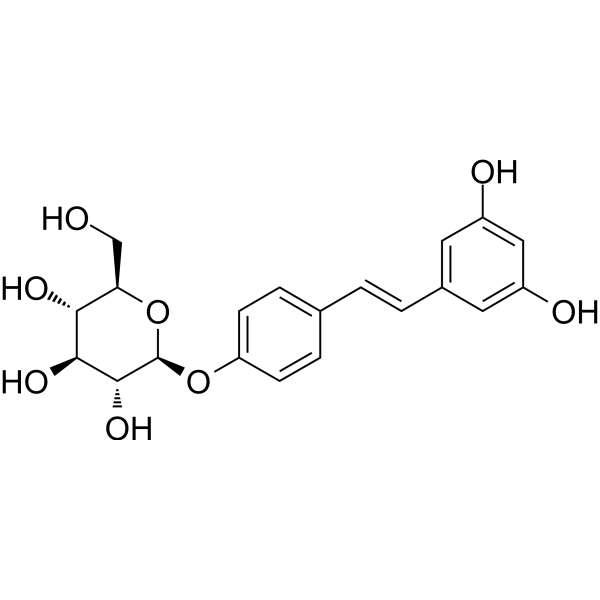 0 ImagesSynonyms: Resveratrol glycoside; trans-Resveratrol 4'-O-β-D-glucopyranosideResveratroloside (Resveratrol glycoside) is an orally active competitive inhibitor of α-glucosidase. Resveratroloside has hypoglycemic and cardioprotective effects. Resveratroloside can be used for the research of diabetes and heart system diseases.
-
Acarbose (Standard)
 0 ImagesSynonyms: BAY g 5421 (Standard)Acarbose (Standard) is the analytical standard of Acarbose. This product is intended for research and analytical applications. Acarbose (BAY g 5421), antihyperglycemic agent, is an orally active alpha-glucosidase inhibitor (IC50=11 nM). Acarbose can potentiate the hypoglycemic effects of sulfonylureas or insulin.




