



Glucosylsphingosine
Based on 2 publication(s) in Google Scholar
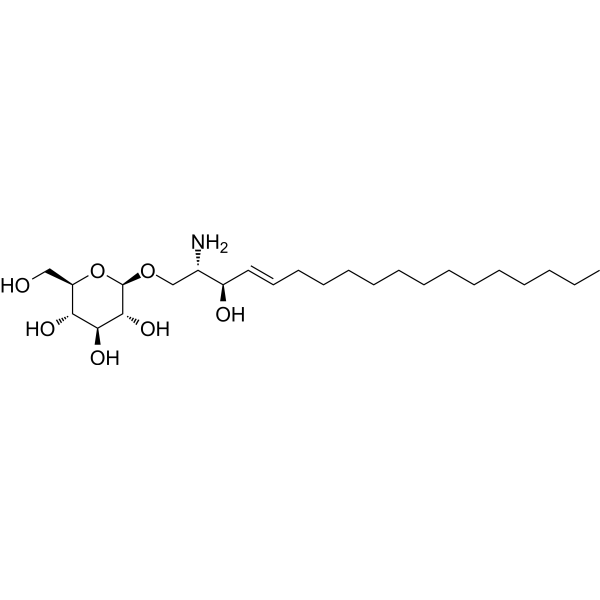
Glucosylsphingosine (lyso-Gb1) is a deacylated form of glucosylceramide with neurotoxicity and is also a noncompetitively inhibitor of glucocerebrosidase with a Ki value of 30 μM. Glucosylsphingosine is promising for research of Krabbe and Gaucher disease.
For research use only. We do not sell to patients.
- Purity : 99.68%
- CAS No.: 52050-17-6
- Formula: C24H47NO7
- Molecular Weight:461.63
-
Storage:
4°C, protect from light
* In solvent : -80°C, 6 months; -20°C, 1 month (protect from light)

To place orders, for customer services and technical support, please contact: MedChemExpress USA
Tel: 609-228-6898 E-mail: [email protected] [email protected]


-
 Biological Activity
-
Chemical Information
-
Solvent & Solubility
- Protocols
- Purity & Documentation
- References
-
 Help & FAQs


-

HY-170035
GlcCer (d18:1/18:0)Glycosphingolipids -
HY-N12408
GlobotriaosylsphingosineGlobotriaosylceramide -
HY-136490
PsychosineCytotoxic Lipid -
HY-N7745S
Glucosylsphingosine-d7Stable Isotope -
HY-146900S
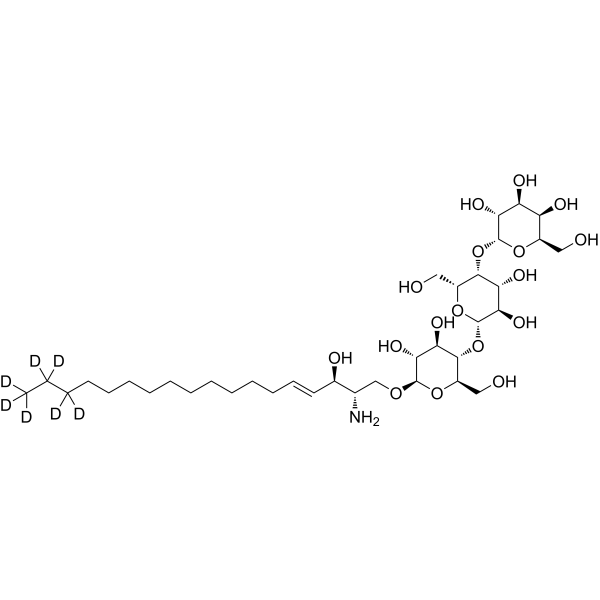
Lyso GB3-d7Stable Isotope -
HY-14905
Uridine triacetateUridine Prodrug -
HY-113335
Trihydroxycholestanoic acidEndogenous Metabolite -
HY-136490S
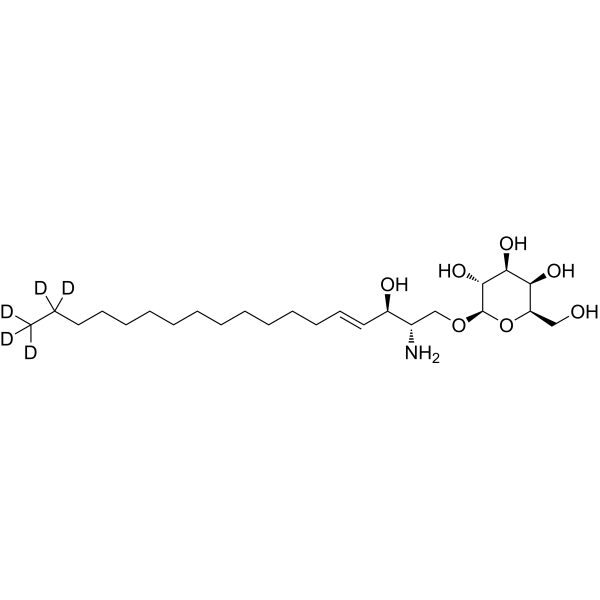
Psychosine-d5Stable Isotope -

HY-151240
GalactosylceramideGlucosylceramide -
HY-N0391
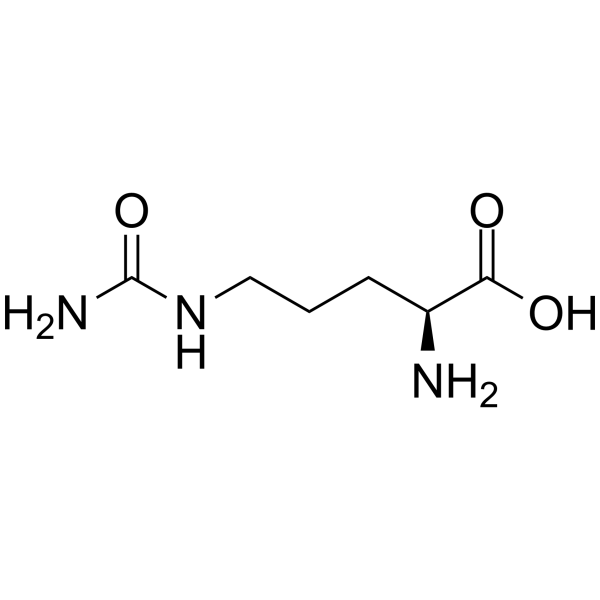
L-CitrullineEndogenous Metabolite -

HY-N0391R
L-Citrulline (Standard)Endogenous Metabolite -
HY-154921
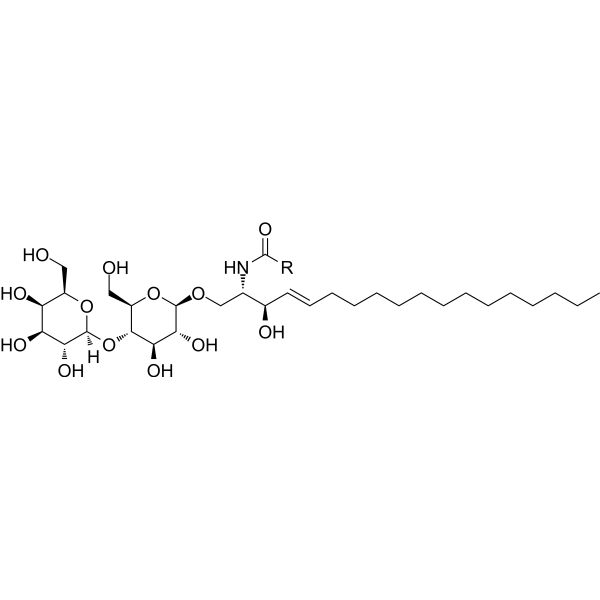
Lactosylceramide (bovine buttermilk)Glycosphingolipid
Publications Citing Use of MedChemExpress (MCE) Glucosylsphingosine
More

Biological Activity
Description
In Vitro
Glucosylsphingosine (1-10 μM, 18 h) induces LA-N-2 cells shriveled, suppresses neurite outgrowth, and reduces the activities of the lysosomal enzymes glucocerebrosidase, sphingomyelinase, and β-galactosidase[3].
Glucosylsphingosine (20-45 μM, 48 h) kills MCF7 cells with a lethal concentration 50 (LC50) value of 33 μM, independent of apoptosis, ferroptosis, and necroptosis[4].
Glucosylsphingosine (40 μM, 48 h) activates cAMP signalling pathway required for cationic amphiphilic drug (CAD)-induced lysosome-dependent cell death[4].
MedChemExpress (MCE) has not independently confirmed the accuracy of these methods. They are for reference only.
In Vivo
MedChemExpress (MCE) has not independently confirmed the accuracy of these methods. They are for reference only.
-
Animal Model:Adult male C57BL/6JRj mice[6]
-
Dosage:10 mg/kg
-
Administration:s.c., daily for 12 weeks
-
Result:Accumulated in peripheral tissues and induced the mice hematological symptoms such as reduced hemoglobin and hematocrit, increased spleen weights and a slight inflammatory tissue response.


Chemical Information
-
CAS No. 52050-17-6
-
Appearance Solid
-
Molecular Weight 461.63
-
Formula C24H47NO7
-
Color White to off-white
-
SMILES
O[C@H]([C@H]([C@@H]([C@@H](CO)O1)O)O)[C@@H]1OC[C@H](N)[C@H](O)/C=C/CCCCCCCCCCCCC
-
Synonyms
Glucopsychosine; Lyso-Gb1; Lyso-GL1
-
Structure Classification
-
Initial Source
-
Shipping
Room temperature in continental US; may vary elsewhere.
-
Storage
4°C, protect from light
* In solvent : -80°C, 6 months; -20°C, 1 month (protect from light)


Publications (2)
-
Journal Impact Factor
-
Most Recent
-
Cells
2024 Apr 20;13(8):716. PMID: 38667330 -
Nutrients
Curcumin Combined with Flaxseed Oil Modulates Lipid Metabolism in Hamsters Fed a High-Fat, High-Cholesterol Diet: Insights from Lipidomics. [Abstract]2026 May 29;18(11):1747. PMID: 42280390


Solvent & Solubility
In Vitro:
H2O : 125 mg/mL (270.78 mM; Need ultrasonic)
DMSO : 50 mg/mL (108.31 mM; Need ultrasonic; Hygroscopic DMSO has a significant impact on the solubility of product, please use newly opened DMSO)
Please refer to the solubility information to select the appropriate solvent. Once prepared, please aliquot and store the solution to prevent product inactivation from repeated freeze-thaw cycles.
Storage method and period of stock solution: -80°C, 6 months; -20°C, 1 month (protect from light). When stored at -80°C, please use it within 6 months. When stored at -20°C, please use it within 1 month.
* Note: If you choose water as the stock solution, please dilute it to the working solution, then filter and sterilize it with a 0.22 μm filter before use.
Please refer to the solubility information to select the appropriate solvent. Once prepared, please aliquot and store the solution to prevent product inactivation from repeated freeze-thaw cycles.
Storage method and period of stock solution: -80°C, 6 months; -20°C, 1 month (protect from light). When stored at -80°C, please use it within 6 months. When stored at -20°C, please use it within 1 month.
* Note: If you choose water as the stock solution, please dilute it to the working solution, then filter and sterilize it with a 0.22 μm filter before use.
Concentration (start) × Volume (start) = Concentration (final) × Volume (final)
In Vivo:
Select the appropriate dissolution method based on your experimental animal and administration route.
- For the following dissolution methods, please ensure to first prepare a clear stock solution using an In Vitro approach and then sequentially add co-solvents:
- To ensure reliable experimental results, the clarified stock solution can be appropriately stored based on storage conditions. As for the working solution for In Vivo experiments, it is recommended to prepare freshly and use it on the same day.
- The percentages shown for the solvents indicate their volumetric ratio in the final prepared solution. If precipitation or phase separation occurs during preparation, heat and/or sonication can be used to aid dissolution.
Add each solvent one by one: 10% DMSO 40% PEG300 5% Tween-80 45% Saline
Solubility: ≥ 1.25 mg/mL (2.71 mM); Clear solution
This protocol yields a clear solution of ≥ 1.25 mg/mL (saturation unknown).
Taking 1 mL working solution as an example, add 100 μL DMSO stock solution (12.5 mg/mL) to 400 μL PEG300, and mix evenly; then add 50 μL Tween-80 and mix evenly; then add 450 μL Saline to adjust the volume to 1 mL.
Preparation of Saline: Dissolve 0.9 g sodium chloride in ddH₂O and dilute to 100 mL to obtain a clear Saline solution.
Add each solvent one by one: 10% DMSO 90% (20% SBE-β-CD in Saline)
Solubility: ≥ 1.25 mg/mL (2.71 mM); Clear solution
This protocol yields a clear solution of ≥ 1.25 mg/mL (saturation unknown).
Taking 1 mL working solution as an example, add 100 μL DMSO stock solution (12.5 mg/mL) to 900 μL 20% SBE-β-CD in Saline, and mix evenly.
Preparation of 20% SBE-β-CD in Saline (4°C, storage for one week): 2 g SBE-β-CD powder is dissolved in 10 mL Saline, completely dissolve until clear.
In Vivo Dissolution Calculator
Please enter the basic information of animal experiments:
-
-
-
-
Recommended: Prepare an additional quantity of animals to account for potential losses during experiments.
Working solution concentration: 0.22 mg/mL
This product has good water solubility, please refer to the measured solubility data in water/PBS/Saline for details.


Purity & Documentation
-
Data Sheet (274 KB)
-
SDS (252 KB)
- English - EN (252 KB)
- Français - FR (252 KB)
- Deutsch - DE (252 KB)
- Norwegian - NO (252 KB)
- Español - ES (252 KB)
- Swedish - SV (252 KB)
- Italian - IT (252 KB)
- Korean - KR (252 KB)
- Portuguese - PT (252 KB)
-
Handling Instructions (2659 KB)
References
[1]. Hurvitz N, et al. Glucosylsphingosine (lyso-Gb1) as a Biomarker for Monitoring Treated and Untreated Children with Gaucher Disease. Int J Mol Sci. 2019 Jun 21;20(12):3033. [Content Brief]
[2]. Dekker N, et al. Elevated plasma glucosylsphingosine in Gaucher disease: relation to phenotype, storage cell markers, and therapeutic response. Blood. 2011 Oct 20;118(16):e118-27. [Content Brief]
[3]. Schueler UH, et al. Toxicity of glucosylsphingosine (glucopsychosine) to cultured neuronal cells: a model system for assessing neuronal damage in Gaucher disease type 2 and 3. Neurobiol Dis. 2003 Dec;14(3):595-601. [Content Brief]
[4]. Stahl-Meyer K, et al. Galactosyl- and glucosylsphingosine induce lysosomal membrane permeabilization and cell death in cancer cells. PLoS One. 2022 Nov 21;17(11):e0277058. [Content Brief]
[5]. Atsumi S, et al. Accumulation of tissue glucosylsphingosine in Gaucher-like mouse induced by the glucosylceramidase inhibitor cyclophellitol. Arch Biochem Biophys. 1993 Jul;304(1):302-4. [Content Brief]
[6]. Lukas J, et al. Glucosylsphingosine Causes Hematological and Visceral Changes in Mice-Evidence for a Pathophysiological Role in Gaucher Disease. Int J Mol Sci. 2017 Oct 20;18(10):2192. [Content Brief]


Complete Stock Solution Preparation Table
Please refer to the solubility information to select the appropriate solvent. Once prepared, please aliquot and store the solution to prevent product inactivation from repeated freeze-thaw cycles.
Storage method and period of stock solution: -80°C, 6 months; -20°C, 1 month (protect from light). When stored at -80°C, please use it within 6 months. When stored at -20°C, please use it within 1 month.
| Optional Solvent | Concentration Solvent Mass | 1 mg | 5 mg | 10 mg | 25 mg |
|---|---|---|---|---|---|
| DMSO / H2O | 1 mM | 2.1662 mL | 10.8312 mL | 21.6624 mL | 54.1559 mL |
| 5 mM | 0.4332 mL | 2.1662 mL | 4.3325 mL | 10.8312 mL | |
| 10 mM | 0.2166 mL | 1.0831 mL | 2.1662 mL | 5.4156 mL | |
| 15 mM | 0.1444 mL | 0.7221 mL | 1.4442 mL | 3.6104 mL | |
| 20 mM | 0.1083 mL | 0.5416 mL | 1.0831 mL | 2.7078 mL | |
| 25 mM | 0.0866 mL | 0.4332 mL | 0.8665 mL | 2.1662 mL | |
| 30 mM | 0.0722 mL | 0.3610 mL | 0.7221 mL | 1.8052 mL | |
| 40 mM | 0.0542 mL | 0.2708 mL | 0.5416 mL | 1.3539 mL | |
| 50 mM | 0.0433 mL | 0.2166 mL | 0.4332 mL | 1.0831 mL | |
| 60 mM | 0.0361 mL | 0.1805 mL | 0.3610 mL | 0.9026 mL | |
| 80 mM | 0.0271 mL | 0.1354 mL | 0.2708 mL | 0.6769 mL | |
| 100 mM | 0.0217 mL | 0.1083 mL | 0.2166 mL | 0.5416 mL |
* Note: If you choose water as the stock solution, please dilute it to the working solution, then filter and sterilize it with a 0.22 μm filter before use.


Glucosylsphingosine Related Classifications
HY-N7745 Related Classifications
 Powered by Bioz