



HDAC6
HDAC6 (histone deacetylase 6) is a unique class IIb histone deacetylase that localizes predominantly in the cytoplasm and preferentially targets non-histone substrates rather than chromatin-associated proteins[1][2]. HDAC6 regulates fundamental cellular functions through deacetylation of α-tubulin, Hsp90, and ubiquitin-associated protein complexes, thereby controlling microtubule dynamics, protein trafficking, stress responses, and protein quality-control mechanisms[2][3][4]. Mechanistically, HDAC6 functions at the intersection of the ubiquitin-proteasome system and autophagy-related pathways, where its ubiquitin-binding capability facilitates the processing and clearance of misfolded or aggregated proteins[3][4]. Therefore, HDAC6 has emerged as an important regulator of cellular proteostasis and cytoskeletal remodeling in both physiological and pathological contexts[2][3]. In disease models, HDAC6 has been implicated in cancer progression, neurodegenerative disorders, and inflammatory conditions through its effects on cell motility, intracellular transport, protein aggregation, and stress signaling pathways[2][4][5]. Increased HDAC6 activity promotes α-tubulin deacetylation and influences processes associated with tumor cell migration and metastasis, while modulation of HDAC6 activity alters axonal transport and protein aggregate handling in neurodegenerative disease models[4][5]. Compared with related HDAC isoforms, HDAC6 is distinguished by its predominantly cytoplasmic localization, preference for non-histone substrates, dual catalytic domains, and zinc-finger ubiquitin-binding domain, features that confer specialized biological functions not shared by most nuclear HDAC family members[2][5]. For experimental applications, HDAC6-selective inhibitors have become widely used chemical probes because they enable investigation of HDAC6-dependent signaling and protein homeostasis pathways while potentially reducing the off-target effects associated with pan-HDAC inhibition[3][6].
References:
- [1]. Park SY, et al. A short guide to histone deacetylases including recent progress on class II enzymes. Exp Mol Med. 2020 Feb;52(2):204-212. [Content Brief]
- [2]. Simões-Pires C, et al. HDAC6 as a target for neurodegenerative diseases: what makes it different from the other HDACs? Mol Neurodegener. 2013 Jan 29;8:7. doi: 10.1186/1750-1326-8-7. PMID: 23356410; PMCID: PMC3615964. [Content Brief]
- [3]. Brindisi M, et al. Old but Gold: Tracking the New Guise of Histone Deacetylase 6 (HDAC6) Enzyme as a Biomarker and Therapeutic Target in Rare Diseases. J Med Chem. 2020 Jan 9;63(1):23-39. [Content Brief]
- [4]. HDAC6 gene information from NCBI.
- [5]. Li G, et al. HDAC6 α-tubulin deacetylase: a potential therapeutic target in neurodegenerative diseases. J Neurol Sci. 2011 May 15;304(1-2):1-8. [Content Brief]
- [6]. Zhang Y, et al. Tanshinone IIA sodium sulfonate facilitates endocytic HMGB1 uptake. Biochem Pharmacol. 2012 Dec 1;84(11):1492-500. [Content Brief]
-
HDAC6 Related Products (335)
Related Products (335)

-
Antibodies (2)
-
C1A
 0 ImagesCat. No.: HY-124946CAS No.: 1021463-02-4
-
HDAC6-IN-31
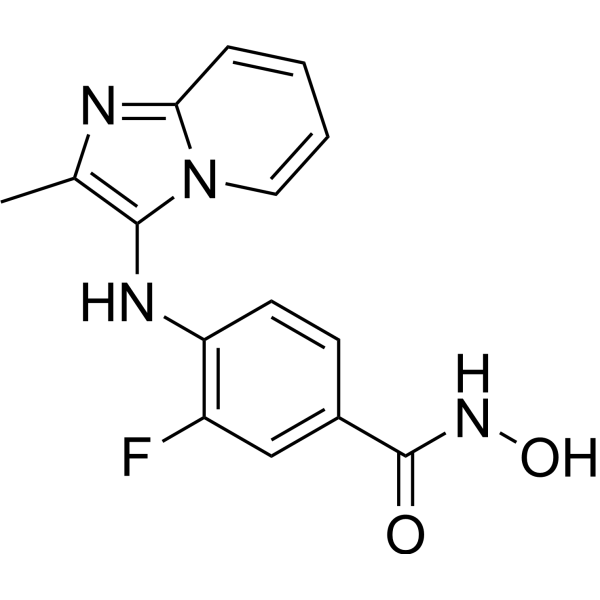 0 ImagesCat. No.: HY-161155HDAC6-IN-31 (compound 8m) is a selective HDAC6 inhibitor, with the IC50 value of 0.026 μM, that significantly inhibits the production and release of pro-inflammatory cytokines. While HDAC6 is critically involved in the activation of inflammasomes, HDAC6-IN-31 has the potential to inhibit NLRP3 inflammasome-driven inflammatory diseases. HDAC6-IN-31 also inhibits glioblastoma cell migration.
-
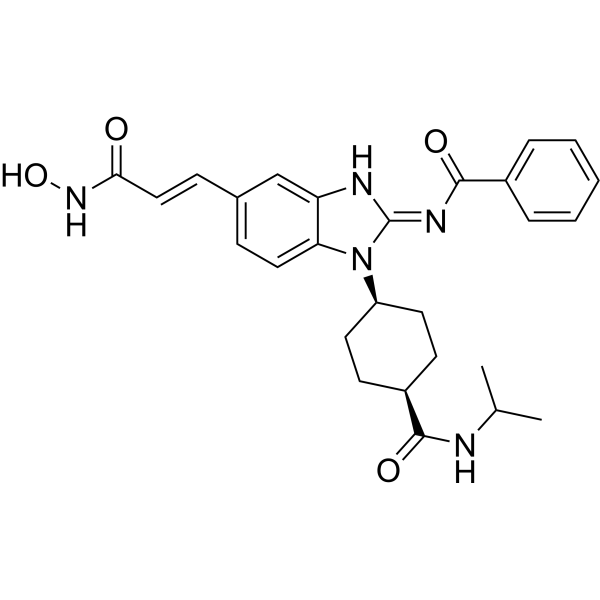
HDAC-IN-42
 0 ImagesCat. No.: HY-147892CAS No.: 2454024-18-9HDAC-IN-42 (compound 14f) is a potent and selective HDAC inhibitor with IC50 values of 0.19 and 4.98 µM for HDAC1 and HDAC6, respectively. HDAC-IN-42 shows anticancer and anti-proliferative activity. HDAC-IN-42 induces apoptosis and cell cycle arrest at G2/M phase.
-
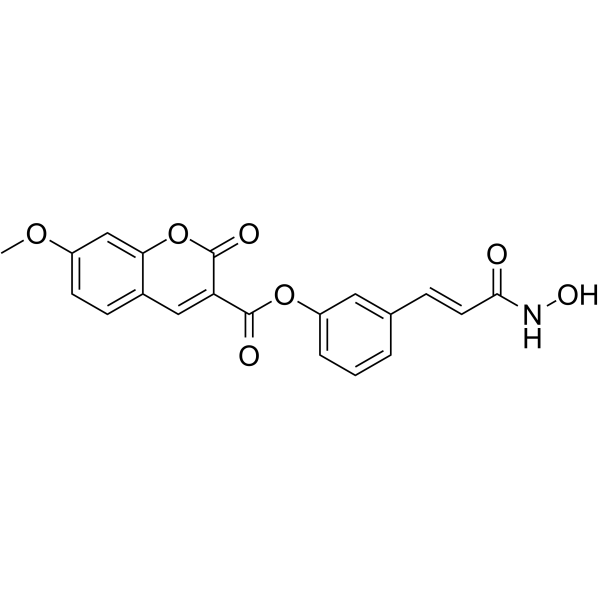
HDAC6-IN-87
 0 ImagesCat. No.: HY-189296CAS No.: 3122437-17-3HDAC6-IN-87 is a selective HDAC6 inhibitor (IC50 = 4.29 nM). HDAC6-IN-87 weakly inhibits HDAC1 (IC50 = 749.59 nM), HDAC3 (IC50 = 813.09 nM), and HDAC10 (IC50 = 679.25 nM). HDAC6-IN-87 exhibits broad-spectrum antitumor activity, elevates α-tubulin acetylation levels without affecting histone H3 acetylation, and induces cell cycle arrest and apoptosis. HDAC6-IN-87 can be used for cancer-related research.
-
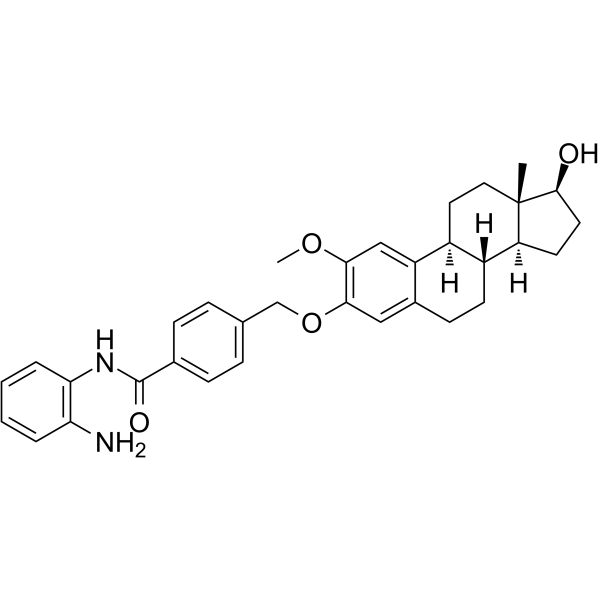
(±)-trans-BAS-2
 0 ImagesCat. No.: HY-184505CAS No.: 2790482-16-3(±)-trans-BAS-2 is a hHDAC6 inhibitor with an IC50 value of 0.462 μM. (±)-trans-BAS-2 serves as a scaffold for the design of proteolysis-targeting chimeras (PROTACs) and induces proteasome-dependent degradation of hHDAC6 in cells. (±)-trans-BAS-2 can be used in the research of triple-negative breast cancer and multiple myeloma.
-
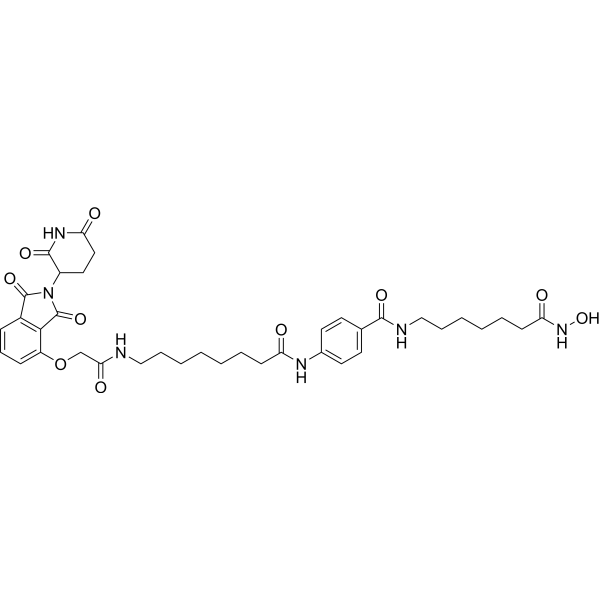
Top/HDAC-IN-2
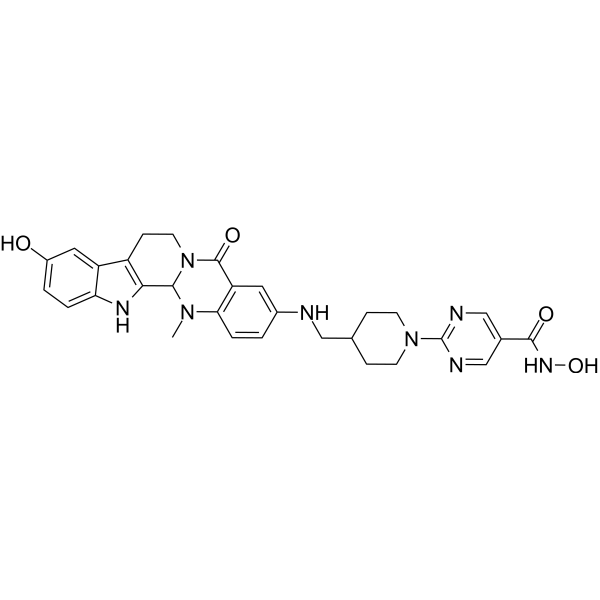 0 ImagesCat. No.: HY-145852CAS No.: 2775446-64-3

-
Fibrostat
 0 ImagesCat. No.: HY-169940Fibrostat (Compound 5n) is a selective HDAC6 inhibitor that exerts antifibrotic effects by inhibiting HDAC6 activity, with an IC50 value of 63 nM. It also exhibits good selectivity over HDAC1, HDAC3, HDAC5, HDAC8, HDAC10, and HDAC11. Fibrostat significantly downregulates fibrotic markers (fibronectin and collagen 1) in fibroblasts. Additionally, Fibrostat demonstrated no toxicity in rat-perfused heart and zebrafish larvae models. Fibrostat shows potential for research into fibrosis-related diseases.
-
COX-2/HDAC6-IN-1
 0 ImagesCat. No.: HY-181926COX-2/HDAC6-IN-1 (Compound 11e) is a dual COX-2 and HDAC6 inhibitor, with an IC50 of 0.12 μM against HDAC6 and an IC50 of 0.66 μM against COX-2. COX-2/HDAC6-IN-1 enhances the acetylation level of α-tubulin, regulates epigenetic gene expression, and inhibits the expression of pro-inflammatory mediators (COX-2, IL-1β, IL-6 and TNF-α). COX-2/HDAC6-IN-1 promotes Amyloid-β clearance and reduces excessive phosphorylation of Tau protein. COX-2/HDAC6-IN-1 maintains neuronal morphology by stabilizing MAP2, protects synaptic integrity by regulating synapsin, and restores the expression of memory-related genes. COX-2/HDAC6-IN-1 possesses neuroprotective activity and improves learning and memory abilities in Scopolamine (HY-N0296)-induced Alzheimer's disease mouse models. COX-2/HDAC6-IN-1 is applicable to research related to Alzheimer's disease.
-
HDAC6-IN-45
 0 ImagesCat. No.: HY-161783CAS No.: 3048532-05-1HDAC6-IN-45 (Compound 15) is a selective inhibitor for HDAC6 with IC50 of 15.2 nM. HDAC6-IN-45 exhibits neurotrophic through the upregulation of GAP43 and Beta-3 tubulin markers. HDAC6-IN-45 activates the Nrf2 signaling pathway, reduces H2O2-induced ROS production, inhibits apoptosis in PC12, and exhibits neuroprotective efficacy in SCOP-induced zebrafish Alzheimer's Disease models. HDAC6-IN-45 exhibits antioxidant activity and good blood-brain barrier (BBB) permeability.
-
PD-L1/HDAC6-IN-1 TFA
 0 ImagesCat. No.: HY-172200APurity: 99.55%PD-L1/HDAC6-IN-1 TFA is an orally active dual inhibitor of PD-L1 and HDAC6, with IC50 values of 26.8 nM and 78 nM, respectively. PD-L1/HDAC6-IN-1 TFA binds to human and murine PD-L1 proteins with high affinity, while it reduces STAT3 phosphorylation and downregulates PD-L1 expression by inhibiting HDAC6, thus blocking the PD-1/PD-L1 interaction. PD-L1/HDAC6-IN-1 TFA exhibits potent anti-tumor activity in a mouse melanoma model. PD-L1/HDAC6-IN-1 is suitable for research on tumor immune regulation related to melanoma.
-
sEH/HDAC6-IN-1
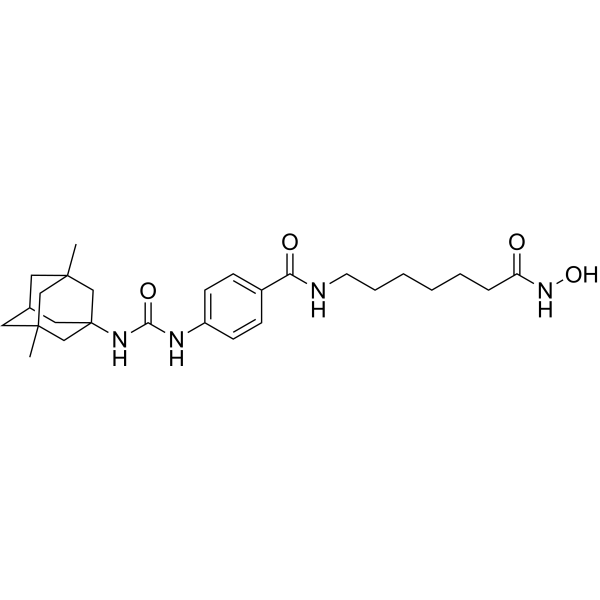 0 ImagesCat. No.: HY-163207CAS No.: 2847838-67-7
-
HDAC6-IN-38
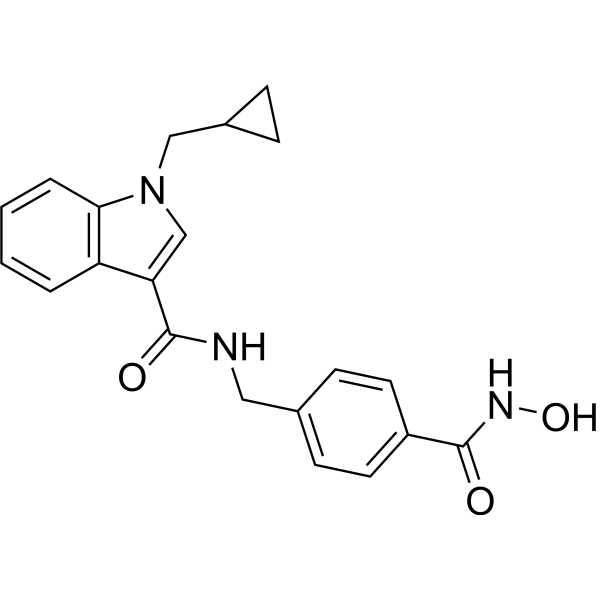 0 ImagesCat. No.: HY-163503CAS No.: 3030872-95-5HDAC6-IN-38 (Compound Z-7) is an inhibitor for histone deacetylase 6 (HDAC6), with an IC50 of 3.25 nM. HDAC6-IN-38 inhibits proliferation of cells MGC 803.
-
SH-17
 0 ImagesCat. No.: HY-187212SH-17 is a STAT3 and HDAC inhibitor, with a Kd of 0.87 μM for STAT3, and IC50 values of 115.2 nM and 9.8 nM for HDAC1 and HDAC6, respectively. SH-17 blocks intracellular ATP production and mitochondrial oxidative phosphorylation, induces cell cycle arrest at the G0/G1 phase, and triggers apoptosis. SH-17 is applicable to colon cancer research.
-
PROTAC HDAC6 degrader 8
 0 ImagesCat. No.: HY-177758PROTAC HDAC6 degrader 8 is a potent and selective HDAC6 PROTAC degrader with a DC50 of 1.94 nM. PROTAC HDAC6 degrader 8 induces HDAC6 degradation in cancer cells with a hook effect, and exerts no impact on other HDAC subtypes, IKZF1, IKZF3 or GSPT1. PROTAC HDAC6 degrader 8 can be used in studies related to multiple myeloma.
-
HDAC/Top-IN-1
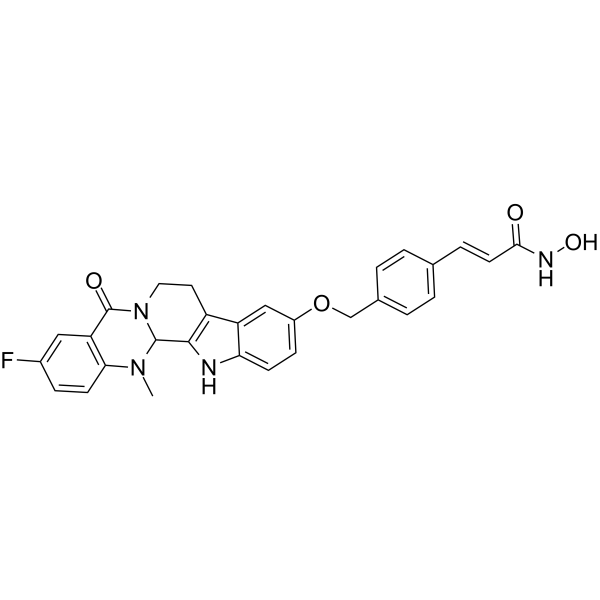 0 ImagesCat. No.: HY-144654CAS No.: 2411379-14-9HDAC/Top-IN-1 is an orally active and pan HDAC/Top dual inhibitor with IC50s of 0.036 μM, 0.14 μM, 0.059 μM, 0.089 μM and 9.8 μM for HDAC1, HDAC2, HDAC3, HDAC6 and HDAC8. HDAC/Top-IN-1 efficiently induces apoptosis with S cell-cycle arrest in HEL cells. HDAC/Top-IN-1 has exhibits excellent in vivo antitumor efficacy.
-
GV-001
 0 ImagesCat. No.: HY-182904CAS No.: 3082707-76-1GV-001 is a selective and orally active HDAC6 inhibitor with an IC50 of 1.18 nM against HDAC6. GV-001 selectively enhances α-tubulin acetylation, reduces sIL-6 and Collagen I levels, suppresses renal cyst growth, and upregulates PC1 expression. GV-001 can be used for the study of autosomal dominant polycystic kidney disease (ADPKD).




