



HIV
Human immunodeficiency virus
HIV (Human immunodeficiency virus) is a lentivirus (a subgroup of retrovirus) that causes the acquired immunodeficiency syndrome (AIDS), a condition in humans in which progressive failure of the immune system allows life-threatening opportunistic infections and cancers to thrive. Infection with HIV occurs by the transfer of blood, semen, vaginal fluid, pre-ejaculate, or breast milk. Within these bodily fluids, HIV is present as both free virus particles and virus within infected immune cells. HIV infects vital cells in the human immune system such as helper T cells (specifically CD4+ T cells), macrophages, and dendritic cells. HIV infection leads to low levels of CD4+ T cells through a number of mechanisms, including apoptosis of uninfected bystander cells, direct viral killing of infected cells, and killing of infected CD4+ T cells by CD8 cytotoxic lymphocytes that recognize infected cells. When CD4+ T cell numbers decline below a critical level, cell-mediated immunity is lost, and the body becomes progressively more susceptible to opportunistic infections.
HIV Isoform Specific Products
All Product Categories
-
HIV Inhibitors
(1218)
View all products
-
HIV Antagonists
(4)
View all products
-
HIV Activators
(19)
View all products
-
HIV Modulator
(1)
View all products
-
HIV Inducers
(2)
View all products
-
HIV Degrader
(1)
View all products
-
HIV Controls
(4)
View all products
-
HIV Ligand
(1)
View all products
-
HIV Proteins
(27)
View all products
-
HIV Related Products (1390)
Related Products (1390)

-
Recombinant Proteins (27)
-
Antibodies (6)
-
HIV Isoform Comparison
-
Talviraline
 0 ImagesCat. No.: HY-106958CAS No.: 163451-80-7Synonyms: HBY 097Talviraline is a non-nucleoside reverse transcriptase (NNRT) inhibitor that is primarily used to inhibit the replication of human immunodeficiency virus type 1 (HIV-1). Talviraline inhibits the viral replication process by binding to a specific site of HIV-1 reverse transcriptase (RT). Talviraline can be used to study the potential countermeasures and safety of HIV-1 infection.
-
3′-Azido-2′,3′-dideoxyuridine
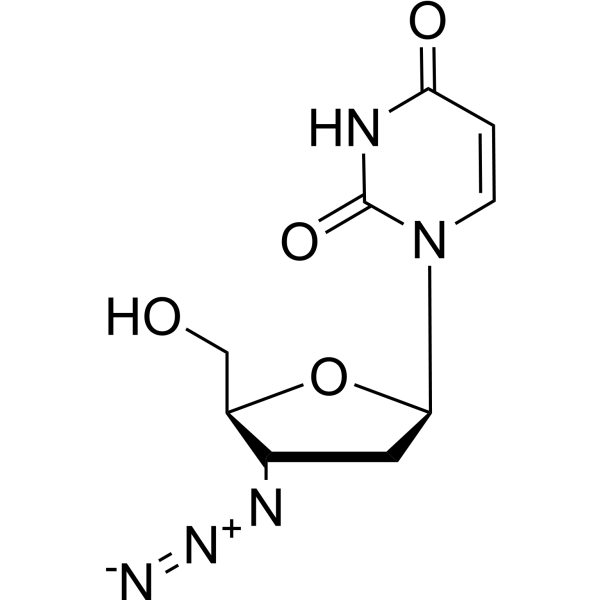 0 ImagesSynonyms: AzdU; AzddU; CS-873′-Azido-2′,3′-dideoxyuridine (AzdU) is a nucleoside analog of Zidovudine (HY-17413). 3′-Azido-2′,3′-dideoxyuridine is a potent inhibitor of human immunodeficiency virus (HIV) replication in human peripheral blood mononuclear cells (PBMC) with limited toxicity for human bone marrow cells (BMC). 3′-Azido-2′,3′-dideoxyuridine is a click chemistry reagent, it contains an Azide group and can undergo copper-catalyzed azide-alkyne cycloaddition reaction (CuAAc) with molecules containing Alkyne groups. It can also undergo strain-promoted alkyne-azide cycloaddition (SPAAC) reactions with molecules containing DBCO or BCN groups.
-
Tenofovir hydrate (Standard)
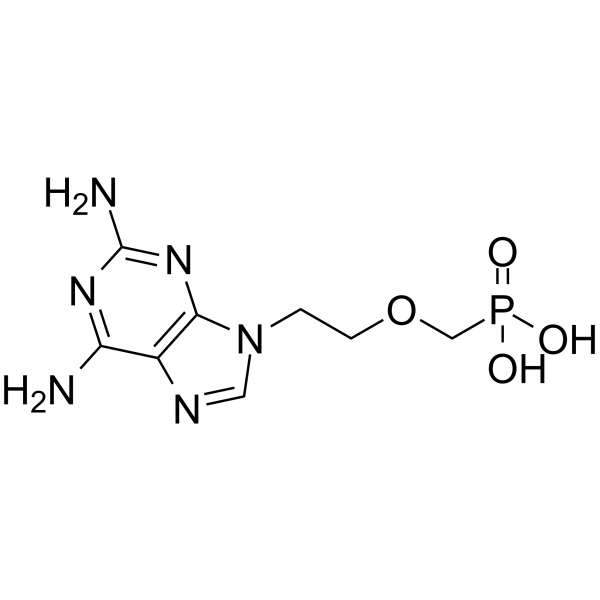
 0 ImagesSynonyms: GS 1278 hydrate (Standard); PMPA hydrate (Standard)Tenofovir hydrate (Standard) (GS 1278 hydrate (Standard); PMPA hydrate (Standard)) is the analytical standard of Tenofovir hydrate (HY-13910A). This product is intended for research and analytical applications. Tenofovir hydrate (GS 1278 hydrate; PMPA hydrate) is a nucleotide reverse transcriptase inhibitor to treat HIV and chronic Hepatitis B (HBV).
-
Tat-beclin 1 scrambled TFA
 0 ImagesCat. No.: HY-P2260CTat-beclin 1 scrambled TFA is the scrambled part and a scrambled control of Tat-beclin 1 (HY-P2260), which is derived from a region of the autophagy protein, beclin 1. beclin 1 induces autophagy via binding human immunodeficiency virus, HIV-1 Nef and interacting with negative regulator GAPR-1 (GLIPR2). Tat-beclin 1 decreases the accumulation of polyglutamine expansion protein aggregates and the replication of several pathogens, such as HIV-1. Tat-beclin 1 also reduces mortality in mice infected with chikungunya or West Nile virus.
-
Hydroxyurea-15N
 0 ImagesCat. No.: HY-W698472CAS No.: 214331-53-0Synonyms: Hydroxycarbamide-15NHydroxyurea-15N (Hydroxycarbamide-15N) is the 15N labeled Hydroxyurea (HY-B0313). Hydroxyurea is a cell apoptosis inducer that inhibit DNA synthesis through inhibition of ribonucleotide reductase. Hydroxyurea shows anti-orthopoxvirus activity.
-
Wilfortrine
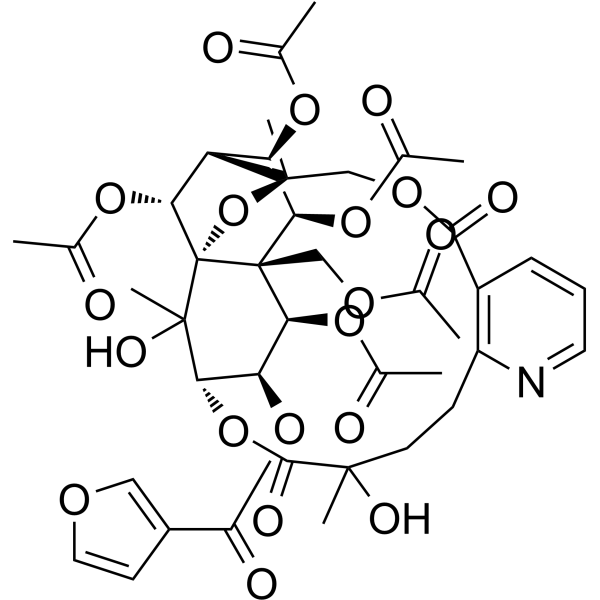 0 ImagesWilfortrine is a bioactive sesquiterpene alkaloid. Wilfortrine exhibits immunosuppresive effects. Wilfortrine also can inhibit leukaemia cell growth in mice and shows anti-HIV activity.
-
Retrocyclin-101 TFA
 0 ImagesCat. No.: HY-P5642ASynonyms: RC-101 TFARetrocyclin-101 (RC-101) TFA is an artificially synthesized, cyclic-structured θ-defensin, a broad-spectrum agent with antimicrobial (covering viruses, bacteria, and fungi) activity and anti-inflammatory activity. Retrocyclin-101 TFA can inhibit the serine protease activity of ZIKV NS2B-NS3, with an IC50 of 7.20 μM. Retrocyclin-101 TFA has significant inhibitory activity against HIV, SARS-CoV-2, flaviviruses, influenza viruses, HSV-1/2, Staphylococcus aureus, etc. Retrocyclin-101 TFA inhibits the signal transduction mediated by TLR4 and TLR2, reducing the expression of pro-inflammatory cytokines.
-
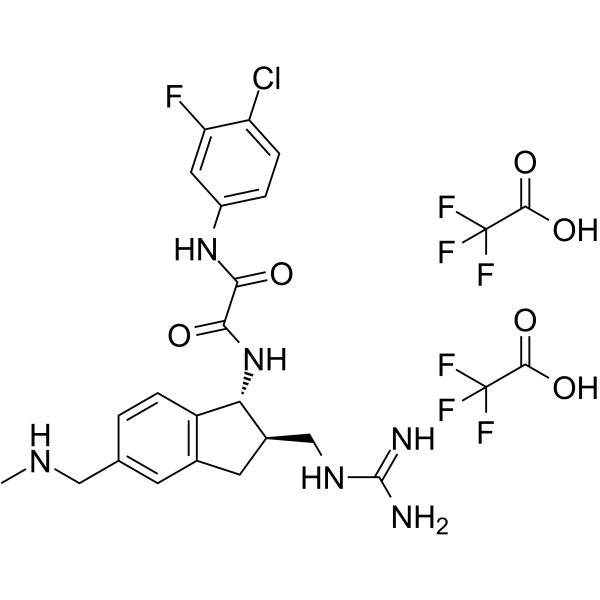
Fosdevirine
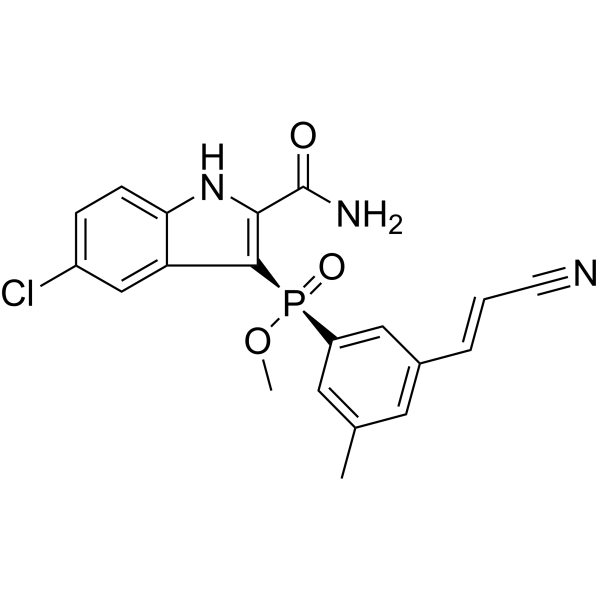 0 ImagesCat. No.: HY-14891CAS No.: 1018450-26-4Synonyms: GSK2248761; FDVFosdevirine (GSK2248761) is is a potent, selective, non-nucleoside reverse transcriptase inhibitor (NNRTI) of human immunodeficiency virus type 1 (HIV-1) replication with low nanomolar activity in vitro. Fosdevirine shows good activity against a broad range of HIV-1 strains, including efavirenz (HY-10572)-resistant clinical isolates.
-
Trovirdine
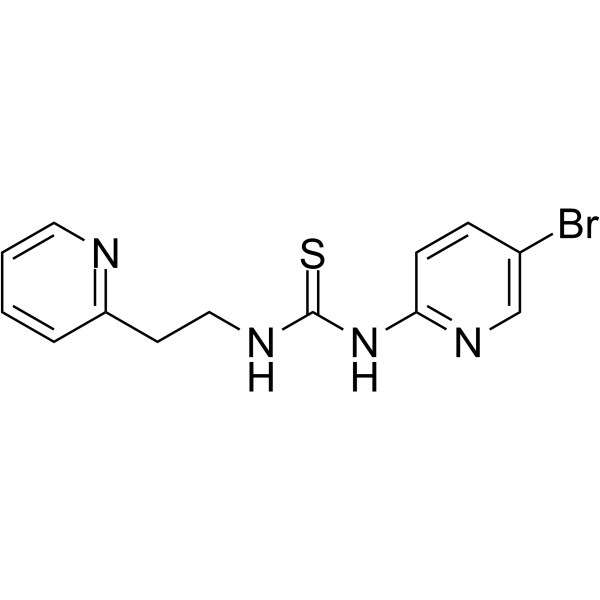 0 ImagesSynonyms: LY300046Trovirdine (LY300046) is a selective non-nucleoside HIV-1 reverse transcriptase inhibitor, with an IC50 value of 0.012 μM against the wild-type enzyme. Trovirdine inhibits the replication of both wild-type and mutant HIV-1, and exerts synergistic or additive effects when combined with some antiviral drugs. Trovirdine is applicable to research related to HIV-1 infection.
-
GSK-364735
 0 ImagesCat. No.: HY-16907CAS No.: 863434-13-3Synonyms: S/GSK-364735
-
HIV-1 integrase inhibitor 4
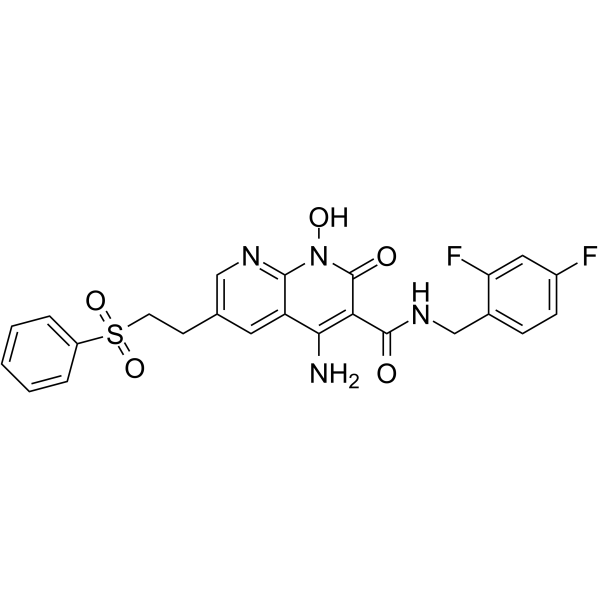 0 ImagesCat. No.: HY-108820CAS No.: 1638504-66-1
-
HIV-1 integrase inhibitor 3
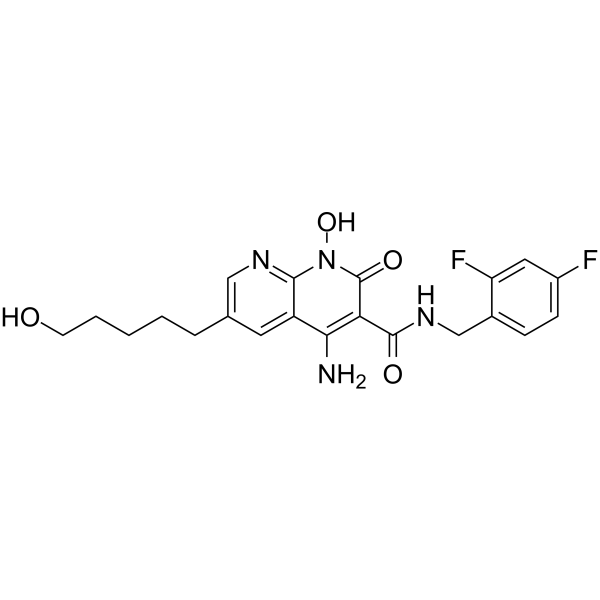 0 ImagesCat. No.: HY-108817CAS No.: 1638504-56-9
-
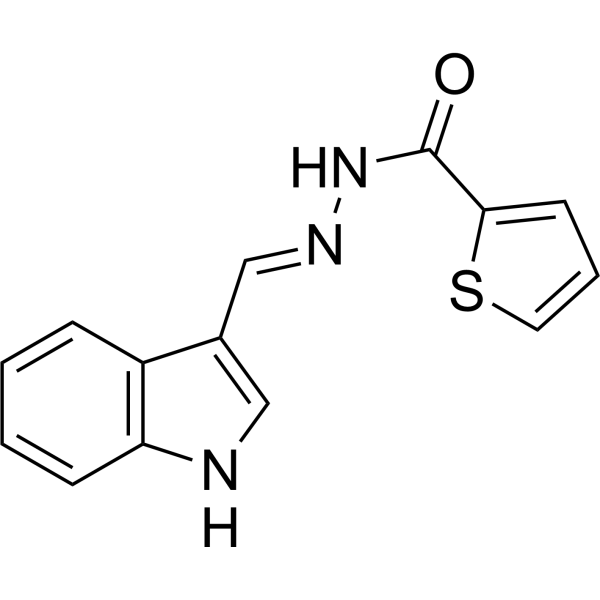
Neuraminidase, arthrobacter ureafaciens
 0 ImagesNeuraminidase, arthrobacter ureafaciens is a neuraminidase derived from Arthrobacter ureafaciens. Neuraminidase, arthrobacter ureafaciens catalyzes the removal of sialic acid residues from cell surfaces and viral glycoconjugates. Neuraminidase, arthrobacter ureafaciens enhances HIV-1-mediated syncytium formation and promotes the viral binding and entry steps in the HIV-1 replication cycle.
-
Apelin-36(human) TFA
 0 ImagesCat. No.: HY-P1064APurity: 99.42%Apelin-36(human) TFA is an endogenous orphan G protein-coupled receptor APJ agonist, with an EC50 of 20 nM. Apelin-36(human) TFA shows high affinity to human APJ receptors expressed in HEK 293 cells (pIC550=8.61). Apelin-36(human) TFA has been linked to two major types of biological activities: cardiovascular and metabolic. Apelin-36(human) TFA inhibits the entry of some HIV-1 and HIV-2 into the NP2/CD4 cells expressing APJ.
-
(1R)-Tenofovir amibufenamide
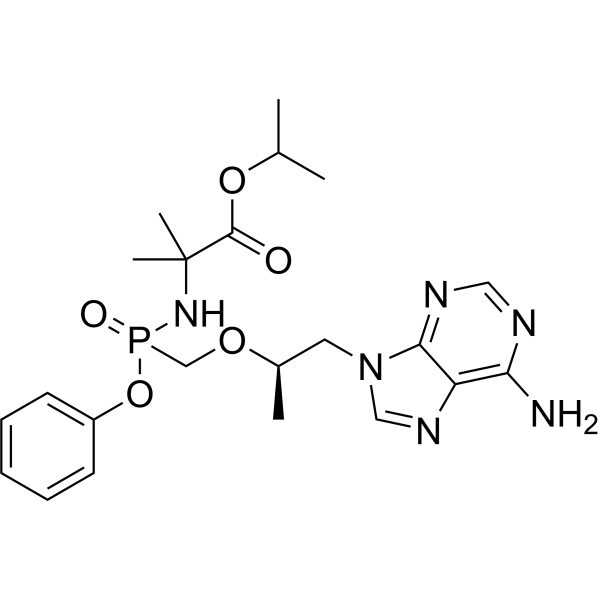 0 ImagesSynonyms: (1R)-HS-10234(1R)-Tenofovir amibufenamide ((1R)-HS-10234) is the isomer of Tenofovir amibufenamide, is an orally active antiviral agent. (1R)-Tenofovir amibufenamide ((1R)-HS-10234) is a HIV infection inhibitor and HBV infection inhibitor. (1R)-Tenofovir amibufenamide ((1R)-HS-10234) can be used for HIV infections, hepatitis B research.
-
Bromhexine-d3 hydrochloride
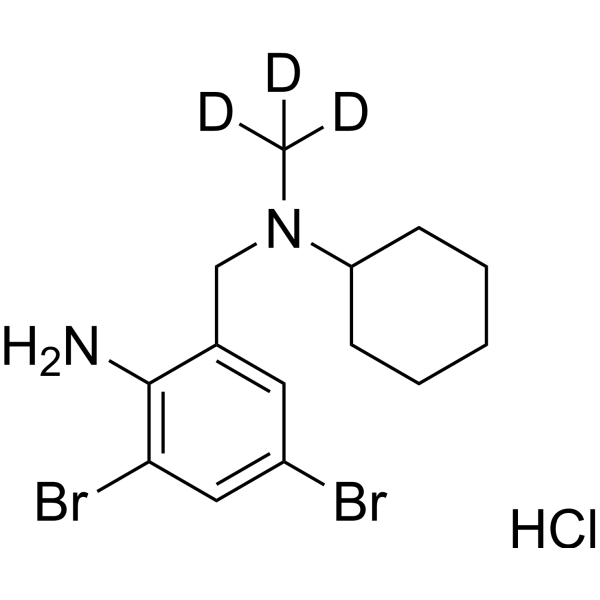 0 ImagesCat. No.: HY-B0372ASPurity: 99.0%Bromhexine-d3 (hydrochloride) is deuterium labeled Bromhexine (hydrochloride). Bromhexine hydrochloride is a potent and specific TMPRSS2 protease inhibitor with an IC50 of 0.75 μM. Bromhexine hydrochloride can prevent and manage SARS-CoV-2 infection. Bromhexine hydrochloride is an autophagy agonist. Bromhexine hydrochloride is a mucolytic cough suppressant and has the potential for a range of respiratory conditions.
-
Emivirine
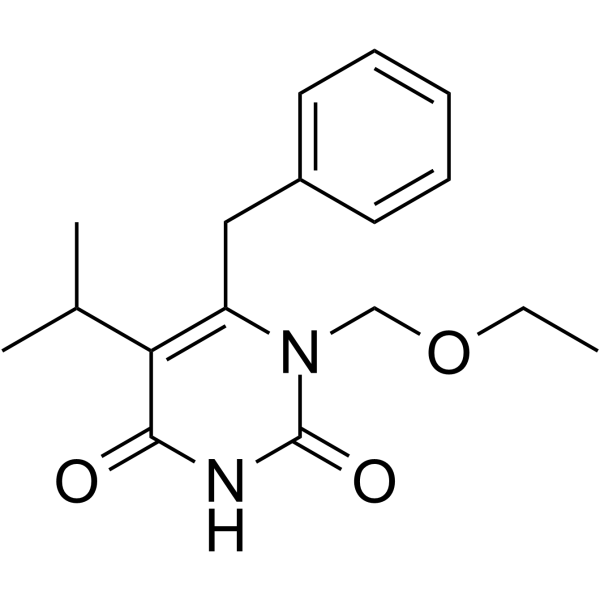 0 ImagesSynonyms: MKC-442Emivirine (MKC-442) is a non-nucleoside reverse transcriptase inhibitors (NNRTIs) with Ki values of 0.20 and 0.01 μM for dTTP- and dGTP-dependent DNA or RNA polymerase activity, respectively. Emivirine displays potent and selective anti-human immunodeficiency virus type 1 (HIV-1) activity.




