



IFNAR
Interferon-α/β receptor; Interferon-alpha/beta receptor
The interferon-α/β receptor (IFNAR) is composed of two subunits, IFNAR1 and IFNAR2, encoding transmembrane polypeptides. Type-I IFNs, interferon α (IFN-α) and interferon β (IFN-β), act through a shared receptor complex, IFNAR. Binding of type-I IFN to IFNAR1 will robustly activate Janus activated kinase-signal transducer and activator of transcription (JAK-STAT) signaling pathway. Aberrant activation of the type-I IFN response results in a spectrum of disorders called interferonopathies.
Type-I IFN response occurs when IFN-α/β binds to their receptor complex, IFNAR. The ligand-receptor complex is phosphorylated, presumably by pre-associated Janus activated kinases (JAKs) namely tyrosine kinase 2 (TYK2) on IFNAR1 and JAK1 on IFNAR2. The phosphorylated receptors are docking sites for signal transducers and activators of transcription (STAT) factors that dimerise and translocate to the nucleus. STATs 1, 2, 3, 4, and 5 are activated by type-I IFNs in many cell types. Other kinases (e.g., mitogen-activated protein kinases) and transcription factors (e.g., nuclear factor-κB) can also be activated in response to type-I IFNs. Multiple pathways and IFN-regulated genes are activated by IFNs, many of which remain unknown.
All Product Categories
-
IFNAR Inhibitors
(123)
View all products
-
IFNAR Agonists
(11)
View all products
-
IFNAR Antagonists
(6)
View all products
-
IFNAR Activators
(84)
View all products
-
IFNAR Modulators
(4)
View all products
-
IFNAR Inducers
(23)
View all products
-
IFNAR Degrader
(1)
View all products
-
IFNAR Control
(1)
View all products
-
IFN-α/β Receptor Proteins
(16)
View all products
-
IFN-alpha/beta R2 Proteins
(6)
View all products
-
IFNAR Related Products (324)
Related Products (324)

-
Recombinant Proteins (16)
-
Antibodies (14)

-
KSI-028
 0 ImagesCat. No.: HY-183537KSI-028 is a STING inhibitor. KSI-028 disrupts STING-mediated signal transduction, reduces IFN-β and pro-inflammatory cytokine (IL-6, IL-1β and TNF-α) production. KSI-028 inhibits the phosphorylation of STING, TBK1, IRF3, and STAT1. KSI-028 attenuates renal and hepatic injury in a Cisplatin (HY-17394)-induced acute kidney injury mouse model.
-
AGS-009
 0 ImagesCat. No.: HY-P991655AGS-009 is a humanized monoclonal neutralising antibody targeting IFN-α. AGS-009 significantly reduces activated lymphocytes, such as CD4+ and CD8+ T cells as well as B cells in SIV infection rhesus macaque models. AGS-009 can be used for autoimmune diseases like systemic lupus erythematosus (SLE) and HIV infections research.
-
DLX-105
 0 ImagesCat. No.: HY-P991408
-
Delmitide
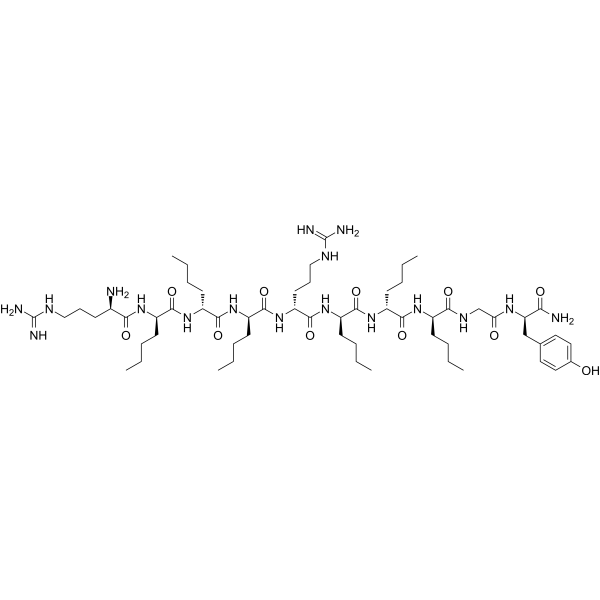 0 ImagesCat. No.: HY-106359CAS No.: 287096-87-1Synonyms: RDP-58Delmitide (RDP58) is an orally active d-isomer decapeptide with potent anti-inflammatory activity. Delmitide inhibits production of TNF-α, IFN-γ, and interleukin (IL)-12, and up-regulates heme oxygenase 1 activity. Delmitide can be used for the research of ulcerative colitis.
-
IBI-325
 0 ImagesCat. No.: HY-P991634IBI-325 is a humanized monoclonal antibody inhibitor targeting CD73. IBI-325 completely inhibits CD73 enzymatic activity without hook effect. IBI-325 reverses Adenosine monophosphate (HY-A0181)-mediated immune suppression and significantly inhibits T cell proliferation and cytokines (IL-2, IFN-γ and TNF-α) release. IBI-325 has potent antitumor activities in hPBMC-reconstituted mice model and hCD73 knock-in mice model. IBI-325 can be used for cancer immunotherapy research.
-
5-LOX-IN-8
 0 ImagesCat. No.: HY-1731805-LOX-IN-8 is a 5-LOX inhibitor with anti-inflammatory activity. 5-LOX-IN-8 suppresses IL-6, IL-1β, TNF-α and IFN-γ in macrophages and reduces IL-8 secretion in SW480 cells. 5-LOX-IN-8 reduces disease activity in a DSS colitis model. 5-LOX-IN-8 can be used for research of inflammatory bowel disease (IBD).
-
STING-IN-16
 0 ImagesCat. No.: HY-175210CAS No.: 2982807-58-7STING-IN-16 is a STING inhibitor with IC50 values of 44 nM (human) and 32 nM (mice) for cellular STING inhibition. STING-IN-16 effectively inhibits the activation of the STING axis in both human and murine cells. STING-IN-16 can restore renal mitochondrial function, suppress reactive oxygen species (ROS) production, and reduce cell apoptosis. STING-IN-16 shows robust anti-inflammatory efiicacy in vivo. STING-IN-16 can be used for the study of autoimmune and autoinflammatory diseases.
-
TAK-603
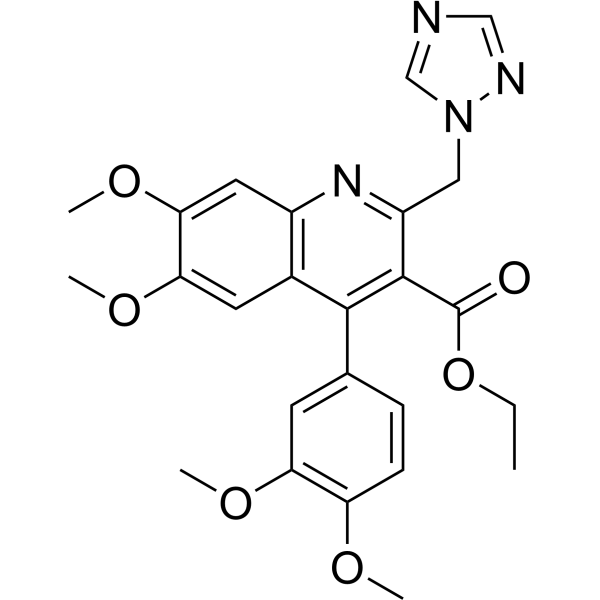 0 ImagesCat. No.: HY-120049CAS No.: 158146-85-1TAK-603 is a potent and orally active antirheumatic agent. TAK-603 inhibits Thl-type cytokine production. TAK-603 has the potential for the research of adjuvant arthritis.
-
PROTAC IRAK4 degrader-14
 0 ImagesCat. No.: HY-181708CAS No.: 3113890-51-7
-
STING Degrader-3
 0 ImagesCat. No.: HY-168554STING Degrader-3 is a PROTAC-like STING degrader with a DC50 of 2.58 μM in THP-1 cells. STING Degrader-3 degrades STING protein via the lysosomal pathway. STING Degrader-3 functions as a non-degradative inhibitor in macrophages. STING Degrader-3 reduces the phosphorylation levels of TBK1 and IRF3, and downregulates the expression of IFN-β, CXCL10, IL-6, TNFα, IL-1β, ISG15 and ISG56. STING Degrader-3 exhibits renoprotective properties in a cisplatin-induced acute kidney injury model. STING Degrader-3 can be used in studies related to acute kidney injury. ((Pink: STING ligand (HY-168676); Blue: CRBN ligand (HY-126457); Black: linker (HY-W123015); CRBN ligand + linker: (HY-168677)).
-
MyD88-IN-4
 0 ImagesCat. No.: HY-178690CAS No.: 1801552-15-7MyD88-IN-4 is a MyD88 inhibitor. MyD88-IN-4 exerts antiviral effects by up-regulating IFN-β, and anti-inflammatory effects by inhibiting pro-inflammatory cytokine production. MyD88-IN-4 prevents MyD88 homodimer formation and its interaction with IRF3/IRF7. MyD88-IN-4 demonstrates efficacy against encephalitic alphavirus infections by reducing viral replication and improving survival in VEEV TC-83-infected mouse models. MyD88-IN-4 can be used for the study of alphavirus infections, bacterial toxin-related diseases, and sepsis.
-
Deucravacitinib-13C,d3
 0 ImagesCat. No.: HY-166594SDeucravacitinib-13C,d3 is the 13C- and deuterium labeled Deucravacitinib. Deucravacitinib (BMS-986165) is a highly selective, orally bioavailable allosteric TYK2 inhibitor for the treatment of autoimmune diseases, which selectively binds to TYK2 pseudokinase (JH2) domain (IC50=1.0 nM) and blocks receptor-mediated Tyk2 activation by stabilizing the regulatory JH2 domain. Deucravacitinib inhibits IL-12/23 and type I IFN pathways. Deucravacitinib, the FDA's world first de novo deuterium, is available for study in moderate to severe plaque psoriasis.
-
ANB032
 0 ImagesCat. No.: HY-P992182ANB032 is a human IgG4 kappa BTLA agonist monoclonal antibody. ANB032 inhibits activated T cell proliferation and reduces secretion of inflammatory cytokines. ANB032 can be used for the research of atopic dermatitis[1].

-
Tyk2-IN-18-d3
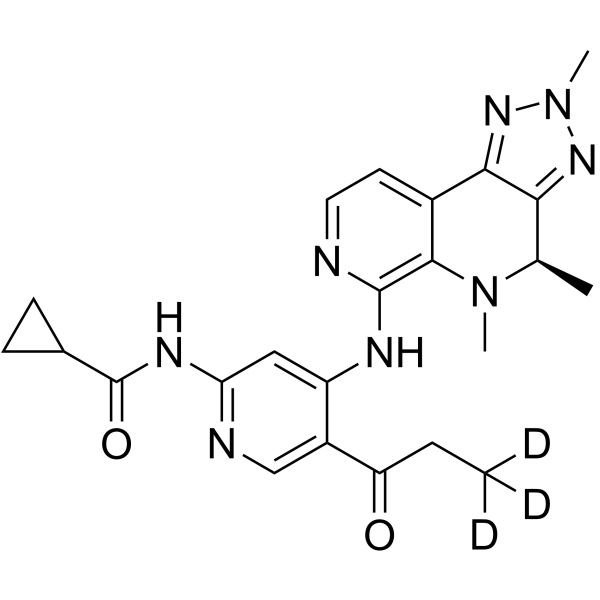 0 ImagesCat. No.: HY-163314SCAS No.: 3018160-68-1
-
CD28-IN-3
 0 ImagesCat. No.: HY-181507CAS No.: 850550-70-8CD28-IN-3 is a CD28 inhibitor with an IC50 of 7.80 μM and a Kd of 52.45 μM. CD28-IN-3 selectively blocks the CD28-B7 interaction, thereby inhibiting CD28-mediated costimulation. CD28-IN-3 suppresses the production of proinflammatory cytokines IFN-γ, IL-2 and TNF-α. CD28-IN-3 can be used in the research of checkpoint-resistant cancers.
-
Anti-Mouse IFN Beta Antibody (MIB-5E9.1)
 0 ImagesCat. No.: HY-P991801Anti-Mouse IFN Beta Antibody (MIB-5E9.1) is an antibody targeting mouse IFN-β. Anti-Mouse IFN Beta Antibody (MIB-5E9.1) blocks the IFN-β signaling pathway, abolishes LPS-induced upregulation of B7H1 and GITRL in dendritic cells, restores dendritic cell-dependent T cell proliferation impaired by LPS exposure, and reverses LPS-induced upregulation of PD-1 on splenic T cells. Anti-Mouse IFN Beta Antibody (MIB-5E9.1) reduces LPS-induced upregulation of GITR on splenic T cells and inhibits LPS-mediated Treg priming.
-
RIG012 (Standard)
 0 ImagesCat. No.: HY-147124RCAS No.: 2642218-43-5
-
AX-024 hydrochloride (Standard)
 0 ImagesCat. No.: HY-107390ARCAS No.: 1704801-24-0AX-024 hydrochloride (Standard) is the analytical standard of AX-024 (hydrochloride) (HY-107390A). This product is intended for research and analytical applications. AX-024 hydrochloride is an orally available, first-in-class inhibitor of the TCR-Nck interaction that selectively inhibits TCR-triggered T cell activation with an IC50 ~1 nM. AX-024 hydrochloride modulates cell signaling by targeting SH3 domains. AX-024 hydrochloride has low-acute toxicity and high potency and selectivity, and strongly inhibit the production of IL-6, TNF-α, IFN-γ, IL-10 and IL-17A.




