MDM-2/p53
The p53 tumor suppressor is a principal mediator of growth arrest, senescence, and apoptosis in response to a broad array of cellular damage. p53 is a short-lived protein that is maintained at low, often undetectable, levels in normal cells. Under stress conditions, the p53 protein accumulates in the cell, binds in its tetrameric form to p53-response elements and induces the transcription of various genes.
MDM-2 is transcriptionally activated by p53 and MDM-2, in turn, inhibits p53 activity in several ways. MDM-2 binds to the p53 transactivation domain and thereby inhibits p53-mediated transactivation. MDM-2 also contains a signal sequence that is similar to the nuclear export signal of various viral proteins and, after binding to p53, it induces its nuclear export. As p53 is a transcription factor, it needs to be in the nucleus to be able to access the DNA; its transport to the cytoplasm by MDM-2 prevents this. Finally, MDM-2 is a ubiquitin ligase, so is able to target p53 for degradation by the proteasome.
In many tumors p53 is inactivated by the overexpression of the negative regulators MDM2 and MDM4 or by the loss of activity of the MDM2 inhibitor ARF. The pathway can be reactivated in these tumors by small molecules that inhibit the interaction of MDM2 and/or MDM4 with p53. Such molecules are now in clinical trials.
All Product Categories
-
MDM-2/p53 Inhibitors
(112)
View all products
-
MDM-2/p53 Agonists
(8)
View all products
-
MDM-2/p53 Antagonists
(4)
View all products
-
MDM-2/p53 Activators
(154)
View all products
-
MDM-2/p53 Modulators
(29)
View all products
-
MDM-2/p53 MDM2 Inhibitors
(65)
View all products
-
MDM-2/p53 p53 Activators
(114)
View all products
-
MDM-2/p53 p53 Inhibitors
(16)
View all products
-
MDM-2/p53 Inducers
(17)
View all products
-
MDM-2/p53 Degraders
(8)
View all products
-
MDM-2/p53 Controls
(6)
View all products
-
MDM-2/p53 Ligands
(8)
View all products
-
MDM-2/p53 Related Products (621)
Related Products (621)

-
Antibodies (17)
-
MDM-2/p53 Signaling Pathway
-
ZS3-046
 0 ImagesCat. No.: HY-176457CAS No.: 3087879-97-5ZS3-046 is a potent TAF1 PROTAC degrader with a DC50 < 10 nM. ZS3-046 recruits the CRBN E3 ubiquitin ligase, promotes polyubiquitination and proteasomal degradation of TAF1, thereby activating p53 and downregulating c-Myc, and ultimately induces apoptosis of tumor cells. ZS3-046 can be used in research related to acute myeloid leukemia.
-
ZSL-M028
 0 ImagesCat. No.: HY-187506ZSL-M028 is an orally active and selective Polo-like kinase 4 (PLK4) inhibitor with an IC50 value of 1.1 nM. ZSL-M028 exhibits anti-tumor activity against TRIM37-amplified neuroblastoma, downregulates SAS6, upregulates FBXW5, induces G2-phase cell cycle arrest and apoptosis, activates the p53 signaling pathway, and inhibits tumor cell colony formation and migration. ZSL-M028 shows significant tumor growth inhibitory activity in the IMR-32 neuroblastoma xenograft model. ZSL-M028 can be used in neuroblastoma-related research.
-
MD-4251
 0 ImagesCat. No.: HY-174458MD-4251 is an orally active MDM2 PROTAC degrader with a DC50 of 0.2 nM in RS4;11 cells. MD-4251 induces cereblon-dependent depletion and degradation of MDM2 protein, elevates p53 protein levels and activates p53. MD-4251 inhibits the proliferation of wild-type p53 acute leukemia cells, induces complete and durable tumor regression in xenograft models, and upregulates the protein levels of DSC1, NBEA and CASP14. MD-4251 can be used in studies related to acute leukemia.
-
DS-5272
 0 ImagesCat. No.: HY-120667CAS No.: 1235575-97-9DS-5272 is an orally acitve inhibitor for p53-MDM2 with an IC50 of 20 nM. DS-5272 inhibits the proliferation of SJSA-1 (wildtype p53, IC50=0.17 μM) and DLD-1 (mutant p53). DS-5272 arrest the cell cycle, and induces apoptosis in SJSA-1. DS-5272 exhibits antitumor efficacy in mice.
-
MK-4688
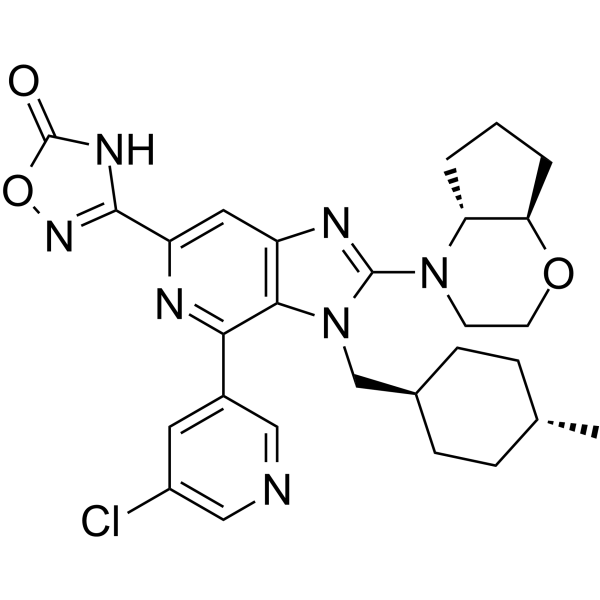 0 ImagesCat. No.: HY-139846CAS No.: 1616428-79-5MK-4688 is an efficient inhibitor of the HDM2-p53 protein-protein interaction.
-
MA242 free base
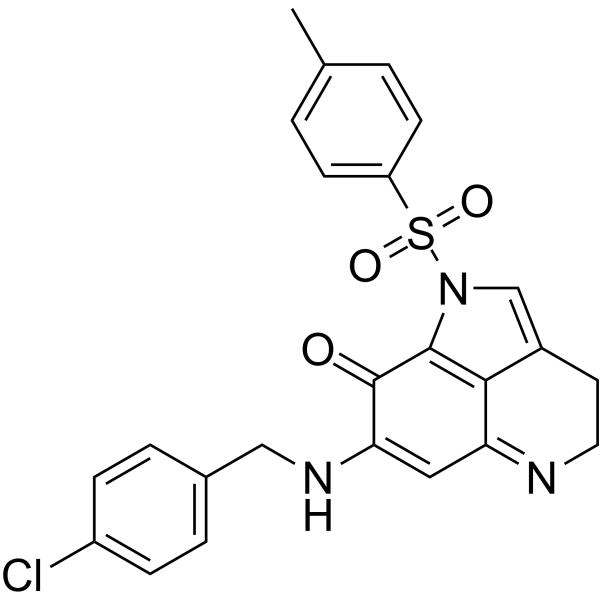 0 ImagesCat. No.: HY-112816ACAS No.: 1049704-17-7MA242 free base is a specific dual inhibitor of MDM2 and NFAT1. MA242 free base directly binds both MDM2 and NFAT1 with high affinity, induces their protein degradation, and inhibits NFAT1-mediated transcription of MDM2. MA242 free base induces apoptosis in pancreatic cancer cell lines regardless of p53 status.
-
Milademetan tosylate
 0 ImagesCat. No.: HY-101266ACAS No.: 1398569-75-9Synonyms: DS-3032 tosylateMilademetan tosylate is the tosylate salt form of Milademetan (HY-101266). Milademetan tosylate is an orally active inhibitor for MDM2. Milademetan tosylate arrests the cell cycle at G1 pahse, induces the apoptosis Milademetan tosylate restores the p53 activity by targeting the p53-MDM2 interaction, and exhibits anticancer activity against Merkel cell carcinoma (MCC).
-
JN122
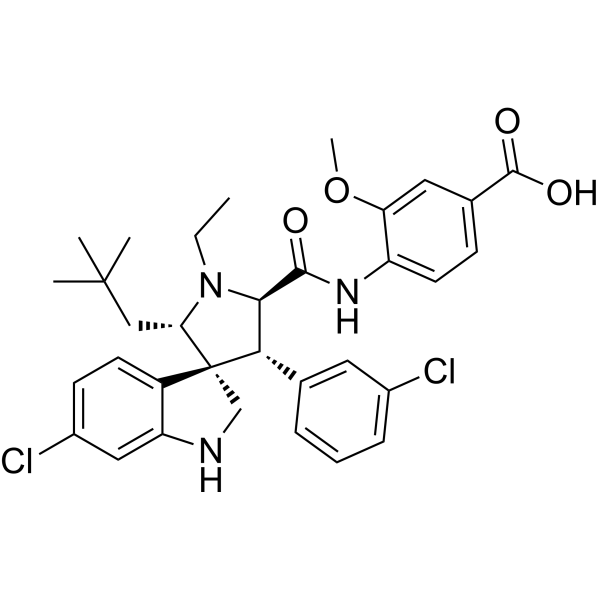 0 ImagesCat. No.: HY-163083CAS No.: 3035577-19-3JN122, a spiroindoline-containing molecule, is a MDM2 inhibitor. JN122 Inhibits MDM2/p53 protein–protein interaction and exerts robust in vivo antitumor efficacy. JN122 has antiproliferative activity in HCT-116 cells and HEK-293 cells with IC50 values of 39.6 nM and 4.28μM, respectively. JN122 can promote activation of p53 and its target genes, inhibited cell cycle progression, and induced cell apoptosis.
-
Azurin p28 peptide TFA
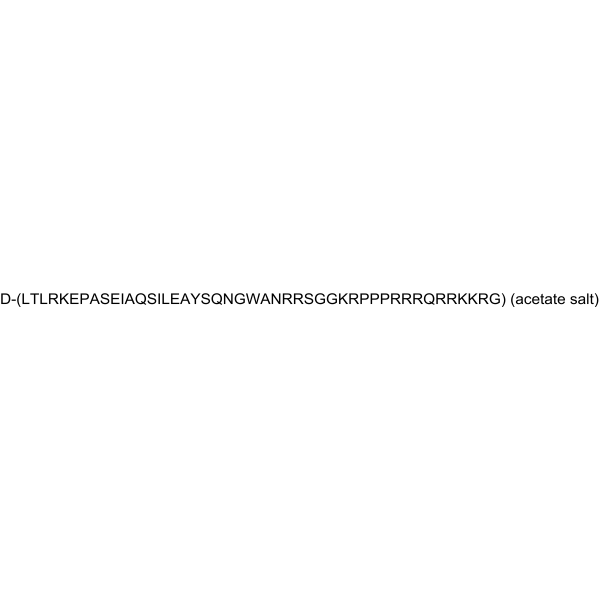
 0 ImagesCat. No.: HY-P5910AAzurin p28 peptide TFA is a tumor-penetrated antitumor peptide. Azurin p28 peptide TFA redues proteasomal degradation of p53 through formation of a p28: p53 complex. Azurin p28 peptide TFA induces apoptosis or cell cycle arrest. Azurin p28 peptide TFA inhibits p53-positive tumor growths. Azurin p28 peptide TFA shows antiangiogenic effect by inhibiting phosphorylation of VEGFR-2, FAK and Akt.
-
ATSP-7342
 0 ImagesCat. No.: HY-P11635CAS No.: 1451198-97-2ATSP-7342 is a negative control analog of ATSP-7041. ATSP-7342 exhibits lower binding affinity to both MDM2 (Ki = 536 nM) and MDMX (Ki >1000 nM), compared with ATSP-7041.
-
NM-3
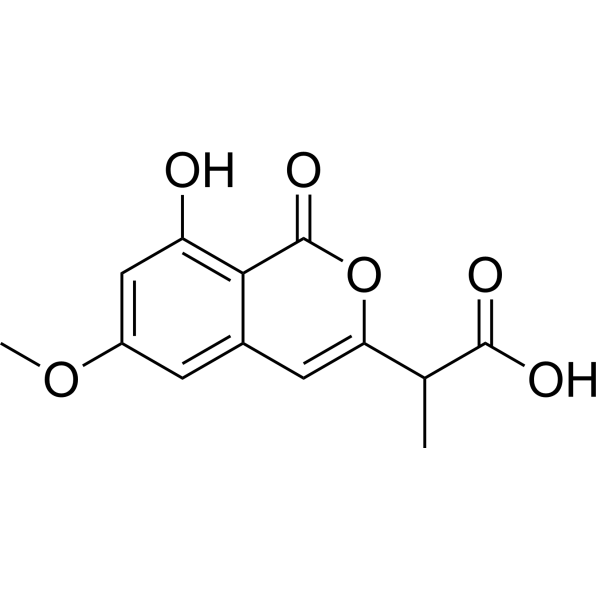 0 ImagesCat. No.: HY-13705CAS No.: 181427-78-1NM-3 is an isocoumarin with antiarthritic and antiangiogenic effects. NM-3 is an orally active antiangiogenic agent with low toxicity.
-
SIRT-IN-7
 0 ImagesCat. No.: HY-172204CAS No.: 1620634-65-2
-
SEN205A
 0 ImagesCat. No.: HY-W237439CAS No.: 958712-85-1SEN205A is a fragment compound that binds to the hydrophobic pocket of human S100B (Kd=0.5-1.0 mM), which is the key region for the interaction of S100B with TRTK-12 and p53, and SEN205A can be displaced from this site by TRTK-12. SEN205A exhibits excellent in vitro ADME properties, including high metabolic stability, chemical stability, and good solubility under physiological pH conditions. SEN205A can serve as a starting fragment for structure-based optimization to develop inhibitors targeting the S100B-p53 protein-protein interaction and investigate the pathogenesis of malignant melanoma.
-
RETRA hydrobromide
 0 ImagesCat. No.: HY-113843CAS No.: 1035875-01-4RETRA (hydrobromide) is a mutant p53-dependent activator of p73 that can inhibit cancer cells carrying mutant p53. RETRA (hydrobromide) increases the expression level of p73, induces transcriptional activation of several common to transcriptional targets p53 and p73, which leads to mutant p53- and p73-dependent inhibition of tumor growth, reduction of colony formation and induction of effector caspases.
-
Neuroprotective agent 11
 0 ImagesCat. No.: HY-174260CAS No.: 3081915-81-0Neuroprotective agent 11 (Compound 1a) is an orally active polyphenol compound with significant protective effects against cerebral ischemia. The main activities of Neuroprotective agent 11 include inhibiting neuronal inflammation and apoptosis, reducing cerebral infarction volume, and improving behavioral symptoms of cerebral ischemic mice. Neuroprotective agent 11 exerts its regulatory mechanism by downregulating the expression of inflammatory factors (iNOS、COX-2) and apoptotic proteins (cleaved-Caspase3, p53). Neuroprotective agent 11 can be used in the study of cerebral ischemia-related diseases (such as ischemic stroke).
-
BI-0252
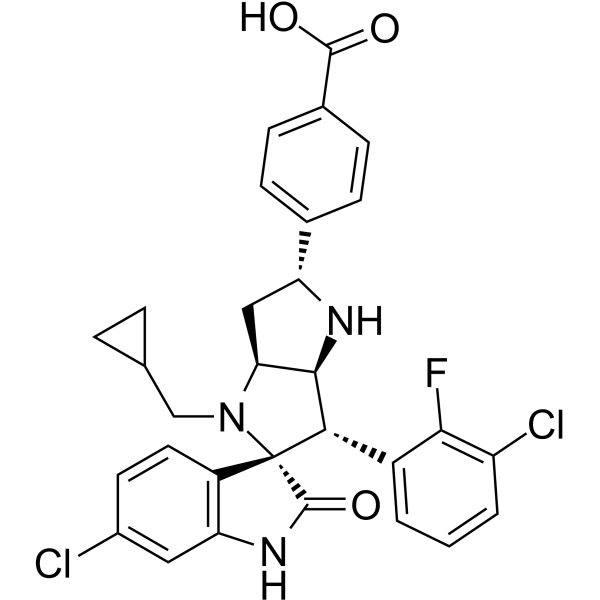 0 ImagesCat. No.: HY-100765CAS No.: 1818291-27-8
-
MC3817 free base
 0 ImagesCat. No.: HY-179409AMC3817 free base is a selective DNMT1 inhibitor. MC3817 free base inhibits DNMT1 and DNMT3A/3L with IC50s of 0.044 μM and > 10μM, respectively. MC3817 free base inhibits P53-dependent cancer cell proliferation, induces apoptosis and DNA damage. MC3817 free base elevates cleaved Caspase 3, P53, and γH2AX. MC3817 free base can be used in non-small cell lung cancer, colon cancer, cervical cancer, triple-negative breast cancer and histiocytic lymphoma research.
-
Antitumor agent-60
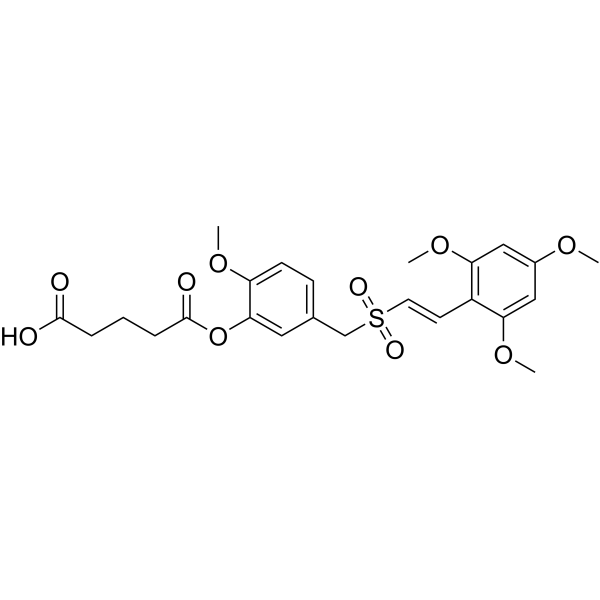 0 ImagesCat. No.: HY-146432CAS No.: 865784-65-2Antitumor agent-60 (compound 20) is a potent antitumor agent, targeting RAS-RAF signaling pathway and binding to CRAF with a Kd value of 3.93 μM. Antitumor agent-60 induces apoptosis by blocking cell cycle at G2/M phase. Antitumor agent-60 enhances the level of p53 and ROS. Antitumor agent-60 causes oval and irregular nucleus in cancer cells. Antitumor agent-60 can suppress the growth of tumor to some extent in A549 xenograft model.
-
WMJ-J-09
 0 ImagesWMJ-J-09 is an HDAC inhibitor with IC50 values of 7.5 nM (HDAC1), 21.3 nM (HDAC2), 18.4 nM (HDAC3), 90.9 nM (HDAC8), 3.9 nM (HDAC6) and 8715.7 nM (HDAC4). WMJ-J-09 blocks the cell cycle and induces apoptosis in cancer cells. WMJ-J-09 induces cancer cell death through the LKB1-AMPK-p38MAPK-p63-survivin signaling cascade.WMJ-J-09 inhibits HDAC enzyme activity, leading to acetylation of key proteins and thereby regulating cancer cell death. WMJ-J-09 can be used in HCT116 cells and FaDu cells research[1][2].